


How to Maintain the Sharp Crease in Your Dress Trousers
Reading time 13 min • 2567 words
A sharp crease running from the break of the trouser to the top of the waistband is not decoration. It is structure. It tells a room that the man wearing those trousers understands that clothing requires attention, and that he gives it willingly.
Most men lose their crease not from wear but from poor pressing technique, the wrong hanger, or fabric that simply cannot hold a line. The fix is rarely expensive. It is mostly a matter of knowing what you are working with and following a short, repeatable process.
This guide covers that process in full, from choosing a trouser that is worth pressing in the first place, to the exact ironing method that sets a crease cleanly, to the storage habits that keep it there between wears.
Key takeaways
- Always press trousers with a damp pressing cloth between the iron and the fabric to avoid shine and scorching.
- Worsted wool holds a crease far longer than cotton or linen blends, making fabric choice the first decision.
- Hang trousers by the hem on a proper trouser hanger immediately after wearing, never folded over a rail.
- Store creased trousers under a flat weight or use a trouser press overnight to reinforce the line between wears.
- Re-press from the waistband downward in a single, deliberate stroke rather than short back-and-forth passes.
In this guide
Start With the Right Fabric
No pressing technique can compensate for a fabric that refuses to hold a crease. Before discussing irons and cloths, the fabric question has to be settled.
Worsted wool is the gold standard. The tight, smooth weave created by combing the fibres parallel before spinning produces a surface that responds to heat and pressure with precision. A crease pressed into worsted wool stays sharp through a full day of wear and, with good storage, through the next one too. Worsted wool trousers are the correct starting point for any man serious about maintaining a clean trouser line.
Wool-linen blends and herringbone weaves hold a crease reasonably well, though the texture of a herringbone means you need to press with more care to avoid flattening the weave. The herringbone business trousers in a grey wool composition are a practical choice for office wear where a crease is expected daily.
Cotton and linen are honest fabrics for warmer months, but they require more frequent pressing. Pure linen in particular relaxes quickly, especially in humidity. If you wear linen trousers in summer, plan to press them the morning of wearing rather than the evening before.
Synthetic blends are the most problematic. Low-grade polyester content makes fabric prone to shine under the iron and resistant to holding a crease cleanly. If your trousers feel slick to the touch, they will fight you at the ironing board.
Expert insightThe tighter the weave, the sharper and more durable the crease. When buying trousers specifically for formal or business wear, hold the fabric up to the light. A dense, fine weave with minimal transparency is what you are looking for.

The Correct Pressing Technique
Pressing and ironing are not the same action. Ironing is moving the iron back and forth across fabric. Pressing is placing the iron down, applying weight, lifting, and moving to the next position. For a trouser crease, you press. You never iron.
What you need: - A sturdy ironing board with a firm pad, not a soft one - A clean, white cotton pressing cloth, dampened but not wet - A steam iron set to the correct temperature for the fabric - Five minutes of unhurried attention
Step one: lay the trousers flat. Fold one leg over the other so the inseam and outseam of the front leg align exactly. The crease runs from the bottom of the front pleat, if there is one, straight down to the hem. Smooth the fabric with your hand before touching it with the iron.
Step two: place the damp pressing cloth over the crease line. This is non-negotiable. Direct iron contact on worsted wool or any fine fabric produces shine, which is permanent. The pressing cloth creates a steam barrier that sets the crease without damaging the surface.
Step three: press from the waistband down to the hem in deliberate, overlapping sections. Hold the iron in place for three to four seconds per section. Do not slide. Lift, move, press again. For the pleated dress trousers with a front pleat, start just below the pleat fold and work downward.
Step four: allow the fabric to cool completely before moving the trousers. A crease is set by heat and then fixed by cooling. If you fold or hang the trouser while it is still warm, you will lose half the work you just did.
For wool, use a steam iron at 140 to 160 degrees Celsius. For cotton-linen blends such as the breathable business casual trousers, a slightly higher temperature, around 180 degrees, is appropriate. Always test on an inside seam if pressing a new fabric for the first time.
Expert insightA crease pressed without a cloth on worsted wool may look fine immediately but will develop a permanent shine within a few wears. Once that shine is there, it cannot be removed. The pressing cloth is not optional.

Setting the Crease Line Precisely
Where the crease falls is as important as how it is pressed. A crease in the wrong position makes even well-cut trousers look careless.
On a well-tailored trouser, the front crease runs from the centre of the waistband, through the front of the thigh, and terminates at the centre of the trouser hem. It should bisect the cap of the shoe when standing upright. The back crease mirrors this line on the reverse of the leg.
For high-waisted trousers, the crease line is particularly visible because the rise draws the eye upward along the full length of the leg. Getting this line right matters more on a high-waisted cut than on a lower-rise trouser. Take extra time to align the seams before pressing.
For wider cuts, including the loose straight-leg trousers, the crease anchors the silhouette. Without it, a wide-leg trouser reads as sloppy. With a clean crease, the same trouser reads as considered and architectural. The crease is doing structural work on a wide leg.
If you are unsure where the original crease line falls, look at the inside of the trouser. The original factory crease will have left a faint mark in the lining or the inner fabric. Follow that line. On a made-to-measure or bespoke trouser, the tailor will have set the crease to your specific proportions. Respect that line exactly.
The Gentleman's Gazette guide to trouser anatomy provides a useful reference for understanding how crease placement relates to the overall balance of a tailored trouser.
Expert insightOn striped trousers, use the stripe itself as your alignment guide. The crease should run parallel to the stripe, or on a narrow stripe, directly along one stripe line. This makes the alignment self-correcting.

Storage Habits That Preserve the Crease
Pressing a perfect crease and then folding the trousers over a chair back overnight undoes the work entirely. Storage is where most men lose the battle.
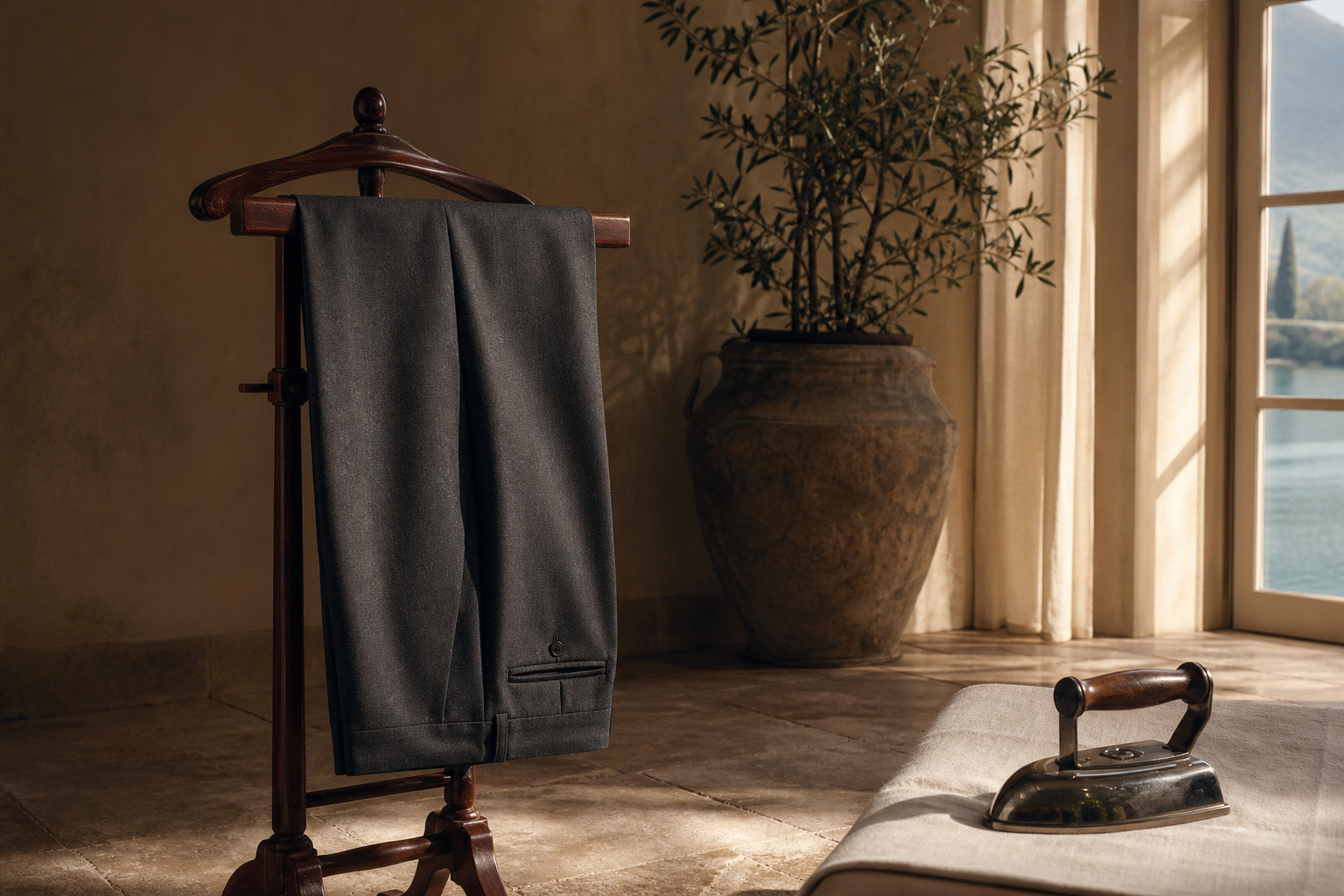
The trouser hanger is the correct tool. A proper trouser hanger grips the hem of the trouser, allowing the weight of the fabric to hang vertically. This maintains the crease line through gravity and prevents the creasing across the thigh that comes from folding. Hang the trouser immediately after removing it, while it still holds some warmth from the body.
A trouser press is worth owning if you wear dress trousers four or more days a week. Leaving a trouser in a press overnight reinforces the crease without any additional ironing. It is a passive, low-effort habit that pays off visibly.
Cedar blocks and garment bags matter for wool trousers in particular. Wool is vulnerable to moth damage in storage. A breathable garment bag with a cedar block inside protects the fabric without trapping moisture. Do not use plastic dry-cleaning bags for long-term storage. They trap humidity and can cause fabric to yellow.
For seasonal storage of heavier wool pieces, including the high-end woolen trousers, clean the garment before storing. Moth larvae are attracted to body oils and food residue in fabric. A clean trouser stored correctly will come out the following season in almost the same condition it went in.
If you own a pair of double-pleated herringbone trousers, be particularly careful about storage. The pleat structure adds depth to the front of the trouser, and crushing it in a drawer will require significant re-pressing to restore.

Between Wears: Maintenance Without an Iron
Not every day calls for a full press. Between formal wears, there are faster methods for keeping a crease presentable without setting up the ironing board.
A clothes brush removes surface dust and lint from wool trousers and keeps the fibres lying in the same direction. Brush downward along the crease line after each wear. This takes thirty seconds and makes a visible difference in how the fabric presents.
Steaming is the quickest way to refresh a crease that has softened slightly. A handheld garment steamer held two to three centimetres from the crease line, moving slowly from top to bottom, will tighten the line without the full pressing process. Allow the fabric to cool before wearing. This works well on wool and cotton-linen blends. It is less effective on pure linen, which needs the pressure of an iron to set a crease.
For linen trousers specifically, refer to the detailed advice in our guide on how to stop linen trousers from wrinkling, which covers steaming and pressing technique for that fabric in depth.
Spot pressing is appropriate when the crease has held well overall but has lost definition at one section, usually the knee. Lay the trouser flat on the ironing board, place the pressing cloth over the affected section only, and press that area alone. There is no need to re-press the entire leg.
For the broader question of trouser colour and how different fabrics and finishes behave across the wardrobe, the article on the best trouser colours for an old money wardrobe gives useful context on which pieces are worth investing your pressing time in most consistently.

When to Re-Crease Versus When to Re-Press
There is a distinction worth understanding between re-pressing an existing crease and re-creasing a trouser from scratch.
Re-pressing means reinforcing a crease that is already in the correct position but has softened. This is the routine maintenance described above, done once or twice a week depending on wear frequency.
Re-creasing means setting a new crease line, either because the original has drifted or because the trouser has been washed and the previous crease has been removed entirely. This requires more care, because you are establishing a new permanent line in the fabric.
For cotton-linen blend trousers, washing will remove the crease completely. These need to be re-creased after each wash using the full pressing technique described above. For wool trousers, dry cleaning preserves the crease better than home washing, though a careful cold-water hand wash followed by immediate pressing can work on less structured pieces.
If a trouser has been machine washed and tumble dried, the crease is almost certainly gone, and the fabric may have shrunk or distorted enough that re-creasing is difficult. Worsted wool in particular should never go near a tumble dryer. The heat causes the fibres to felt, a process that is irreversible.
When re-creasing from scratch, take time to identify the correct crease position before pressing. On a trouser you have worn before, the body will have left faint marks that indicate where the original line sat. Follow those marks rather than guessing.
The full range of men's tailored trousers at Lovau uses fabrics selected partly for their crease retention. Choosing well from the start reduces the maintenance burden considerably.

| Fabric | Crease Retention | Pressing Frequency | Iron Temperature | Best For |
|---|---|---|---|---|
| Worsted Wool | Excellent, holds 2 to 4 wears | Once per week | 140 to 160°C with cloth | Business, formal, daily dress |
| Wool Herringbone | Good, holds 1 to 3 wears | Twice per week | 140 to 150°C with cloth | Business casual, autumn-winter |
| Cotton-Linen Blend | Moderate, softens within a day | After each wear | 170 to 185°C with cloth | Summer business, warm climates |
| Pure Linen | Poor, relaxes within hours | Morning of wearing | 200 to 220°C with damp cloth | Resort, Mediterranean summer |
| Synthetic Blend | Inconsistent, prone to shine | As needed, with caution | 100 to 120°C, low steam | Avoid for dress trousers |
Frequently asked questions
How often should I press my dress trousers?
For worsted wool, once a week is usually sufficient if you hang the trousers correctly after each wear. For cotton or linen blends, press before each wearing. The frequency depends more on storage habits than on how often you wear them.
Can I use starch to make a crease last longer?
Light spray starch on cotton dress trousers will extend the crease slightly, but avoid it on wool. Starch builds up in wool fibres over time, attracting moths and degrading the fabric. On wool, a damp pressing cloth and correct technique will hold a crease longer than starch ever will.
My trousers keep developing a crease in the wrong place. How do I fix this?
A ghost crease, one in the wrong position, usually comes from folding the trouser over a hanger rail rather than hanging from the hem. Re-press the trouser correctly, then hang it by the hem immediately. Over two or three presses, the correct crease will dominate and the ghost line will fade. For pleated styles like the three-dimensional tailored trousers, ensure the pleats are lying flat before pressing.
Does the fit of the trouser affect how well a crease holds?
Yes, directly. A trouser that is too tight across the thigh will pull the crease sideways with every step, breaking it within an hour of wearing. The crease holds longest on a trouser with enough room in the thigh and knee for the fabric to hang without tension. This is one reason why a slightly relaxed, straight-leg cut is better for maintaining a sharp crease than a very slim fit.
A sharp crease is a discipline, not a one-time effort. Choose fabric that is worth pressing, press it correctly with a cloth and deliberate pressure, hang it properly after every wear, and revisit it once a week. That is the full practice. It takes less time than most men expect, and the result, a trouser that holds its line through a long day, is one of the clearest marks of a man who dresses with intention. Start with the right foundation by exploring the full range of tailored dress trousers built from fabrics that reward this kind of care.