


How to Stop Linen Trousers from Wrinkling: 5 Expert Tricks
Reading time 12 min • 2427 words
Linen trousers are one of the most intelligent choices a person can make for warm weather dressing. The fibre is breathable, it ages beautifully, and it carries a particular quality of light that synthetic fabrics simply cannot replicate. It is also, by its very nature, prone to creasing. The same open, loosely woven cellulose structure that makes linen so cool against the skin is precisely what causes it to crease the moment you sit down, cross your legs, or spend thirty minutes in a car.
The good news is that wrinkling in linen is manageable. Not eliminated entirely, but managed to the point where it reads as textural character rather than carelessness. The difference lies almost entirely in how you wash, dry, store, and wear the garment. These are not complicated interventions. They are habits, and once they become automatic, keeping linen trousers looking composed takes almost no effort at all.
This guide covers five specific, practical tricks drawn from garment care principles and years of working with Mediterranean linen. Whether you own a single pair of linen trousers or rotate through several across the warmer months, the advice below applies directly.
Key takeaways
- Store linen trousers hung, never folded, to prevent deep creases from setting overnight.
- Wash in cool water and remove immediately from the machine to stop wrinkles from locking in during the spin cycle.
- Linen blend fabrics, particularly cotton-linen and lyocell-linen, wrinkle noticeably less than pure linen.
- A light misting of water and a smooth tug along the grain while the fabric is still damp is the fastest crease fix available.
- Loose, relaxed cuts disguise residual wrinkling far better than slim or tailored cuts because the fabric moves freely rather than pulling across the thigh.
In this guide
- Why Linen Wrinkles More Than Other Fabrics
- Trick 1: Wash Cool and Remove Immediately
- Trick 2: Dry Hanging, Not Flat or in a Tumble Dryer
- Trick 3: Press Correctly, or Mist and Smooth
- Trick 4: Store Hung, and Choose the Right Hanger
- Trick 5: Choose the Right Cut and Fabric Blend
- Frequently asked questions
Why Linen Wrinkles More Than Other Fabrics
Before fixing a problem, it helps to understand its source. Linen is made from the fibres of the flax plant. Those fibres are long, strong, and low in elasticity. Unlike wool, which has a natural crimp that allows it to spring back after compression, or synthetic fibres engineered to resist deformation, linen fibres have almost no mechanical recovery. When you compress linen, by sitting, folding, or even gripping it tightly, the fibre bends and stays bent. That is a crease.
The cellulose structure of linen also absorbs moisture readily, which is part of what makes it so breathable. But that same absorption means body heat and humidity, the conditions of a warm afternoon, can actually help set creases more firmly over time. This is why linen trousers that were smooth when you put them on at noon can look heavily wrinkled by three in the afternoon.
The practical implication is that wrinkle prevention must happen at every stage: washing, drying, storing, and wearing. Addressing only one stage and ignoring the others will produce inconsistent results. The tricks below cover all four stages, plus one styling adjustment that changes how visible any remaining wrinkling actually is.
Expert insightHigh thread-count linen, sometimes labelled fine linen or high-count linen, wrinkles less than coarser weaves because the fibres are packed more tightly and have less room to shift independently. When buying linen trousers, a tighter, smoother hand-feel is a reliable indicator of better crease resistance.

Trick 1: Wash Cool and Remove Immediately
The washing machine is where most linen wrinkling begins, not on the body. Hot water causes linen fibres to contract and tighten, which makes creases sharper and harder to remove later. A long, hot spin cycle compounds this by wringing the fabric into tight folds under tension and then holding it there until you remember to take it out.
The correct approach: - Wash linen trousers at 30 degrees Celsius, cold cycle preferred. - Use a gentle or delicate machine programme with a low spin speed, 600 to 800 RPM maximum. - Remove the trousers from the drum immediately when the cycle ends. Do not leave them sitting. - Shake the trousers firmly two or three times to loosen the weave, then smooth the fabric along its grain with your hands before hanging.
If you cannot get to the machine immediately, set a timer. Linen left compressed and damp in a drum for even thirty minutes will develop creases that require significant pressing to remove.
For hand washing, the same logic applies. Rinse in cool water, do not wring or twist, and press the water out gently by folding the trouser flat and applying light pressure. Then hang immediately.
Expert insightTurning linen trousers inside out before washing reduces friction between the outer surface and the drum, which helps preserve the fabric's finish and reduces the surface-level abrasion that contributes to pilling and uneven texture over time.

Trick 2: Dry Hanging, Not Flat or in a Tumble Dryer
How you dry linen matters as much as how you wash it. A tumble dryer, even on a low heat setting, tumbles the fabric continuously, which means the trousers are being compressed, released, and compressed again hundreds of times as they dry. The result is a garment covered in small, random creases that are difficult to press out because they run in every direction.
Hang linen trousers on a wide-shouldered or trouser hanger immediately after washing. Clip hangers that grip the hem of each leg are particularly effective because the weight of the fabric pulls the trouser straight as it dries, doing some of the pressing work for you.
Hang in a well-ventilated area out of direct sunlight. Strong direct sun can fade linen and cause uneven drying, which creates tension lines in the fabric. A shaded outdoor space or an indoor room with airflow is ideal.
If the trousers come out of the wash with a few stubborn creases despite your best efforts, address them while the fabric is still slightly damp. Smooth the crease with your fingers, pulling gently along the grain of the fabric. Damp linen is extraordinarily responsive to this kind of manipulation. Once it dries in the corrected position, the crease is gone.
This approach works particularly well with relaxed-cut styles like the Marbella Linen Trousers Elastic Waist Relaxed Fit, where the looser silhouette means the fabric hangs naturally rather than pulling tight.

Trick 3: Press Correctly, or Mist and Smooth
Ironing linen incorrectly is one of the fastest ways to damage it. Pressing a dry linen trouser with a very hot iron on the wrong side can scorch the fibre and create a hard, flattened texture that looks stiff rather than composed. The correct method is specific.
To iron linen trousers properly: - Use a medium-to-high heat setting with steam. Linen responds well to steam because moisture relaxes the fibre and makes it pliable. - Press while the fabric is slightly damp, or use a damp pressing cloth between the iron and the fabric. - Iron on the reverse side of the trouser for most of the work. This prevents the fabric from developing an unwanted shine. - For the front crease, if the style calls for one, press from the right side with a pressing cloth. - Work in the direction of the grain, not across it.
For those who do not want to iron at all, the misting method is a practical alternative for minor creasing. Fill a clean spray bottle with water and mist the creased area lightly. Pull the fabric smooth with both hands, applying gentle tension along the grain. Hang and allow to dry. For most everyday wrinkling, this removes enough of the crease to look entirely presentable.
The Ibiza Linen Trousers Limited Edition and the Rome Italian Linen Trousers White both respond very well to the steam iron method given their clean, straight cuts where a smooth finish is most visible.
Expert insightA travel steamer is one of the most useful tools for linen care on the road. Hold the steamer head two to three centimetres from the fabric and let the steam do the work. Pull the trouser gently taut with your free hand. The crease releases in seconds.

Trick 4: Store Hung, and Choose the Right Hanger
Storage is where wrinkle prevention is either won or lost between wears. Folding linen trousers and placing them in a drawer, even neatly, creates fold lines that press into the fabric over hours and days. By the time you take them out for the following morning, those lines are set.
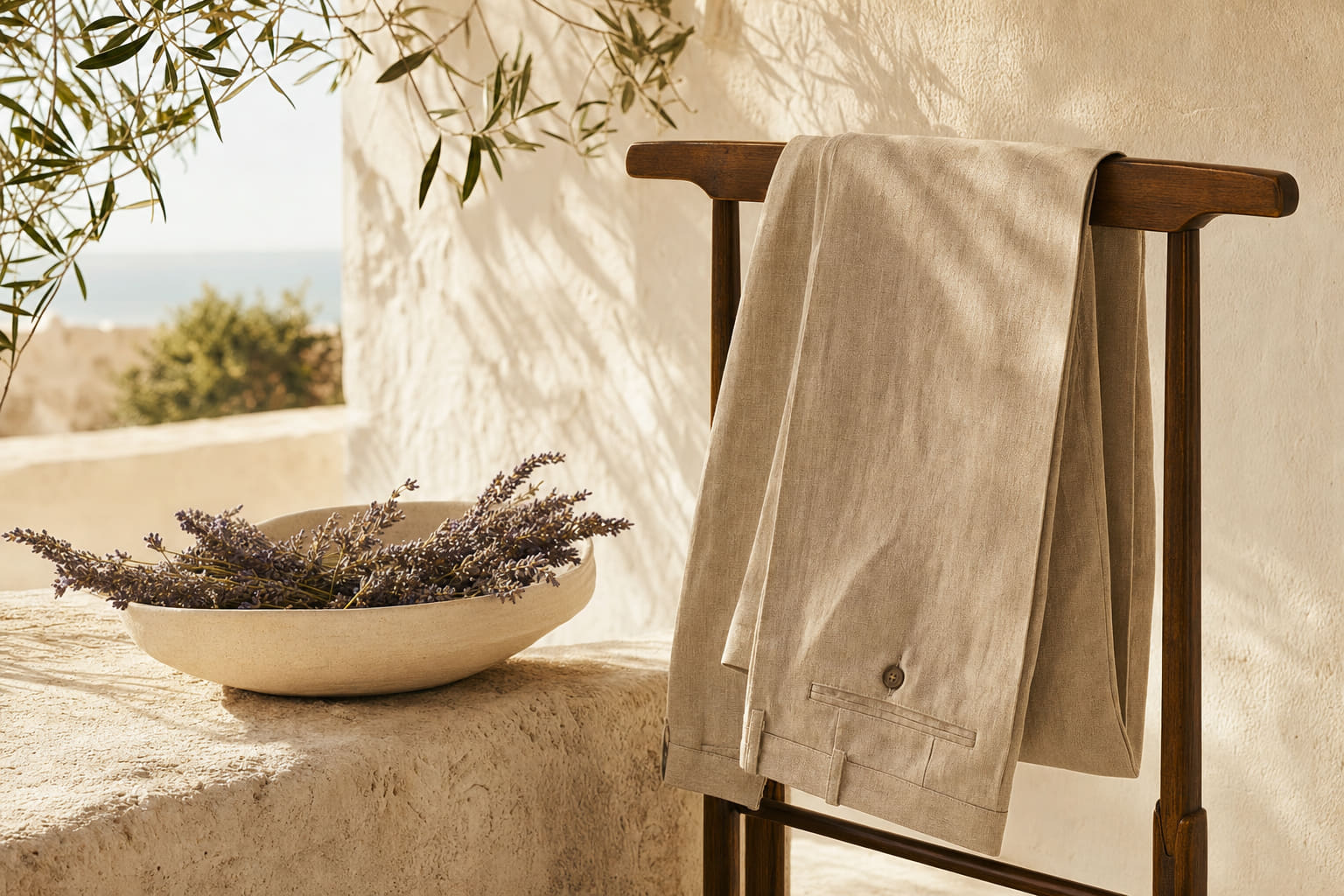
Always store linen trousers on a hanger. A trouser hanger with a horizontal bar and foam or rubber coating is ideal. The coating prevents slipping and distributes the weight of the trouser evenly across the bar, avoiding a sharp crease at the fold point. If you use a clip hanger, hang from the hem so the waistband is at the bottom and the weight of the fabric keeps everything straight.
Give the trousers adequate space in the wardrobe. Linen compressed against other garments will take on the shape of whatever is pressing against it. A few centimetres of breathing room on either side is enough.
For travel, roll linen trousers loosely rather than folding them. Rolling creates soft, rounded compression rather than sharp fold lines. Place them on top of heavier items in your bag so they are not compressed under weight. When you arrive, hang immediately and mist if needed.
Browsing the full linen trousers collection gives a clear sense of which cuts, from relaxed straight-leg to double-pleated, are best suited to your storage situation and travel habits.

Trick 5: Choose the Right Cut and Fabric Blend
The most underused wrinkle strategy is choosing the right trouser in the first place. Cut and fabric composition have a direct effect on how much wrinkling is visible in wear, regardless of how carefully you wash and store the garment.
On cut: Slim and straight-cut linen trousers show every crease because the fabric is pulled taut across the thigh and knee. Any compression creates an immediately visible line. Relaxed, wide-leg, and pleated cuts carry wrinkling far more gracefully because the fabric has room to move. A crease in a loose trouser reads as drape. A crease in a slim trouser reads as neglect.
Styles like the old money style trousers with a loose straight-leg fit or the Lovau pleated trousers with a three-dimensional tailored cut are designed with this in mind. The volume in the leg absorbs movement and compression without broadcasting it.
On fabric blend: Pure linen is the most prone to creasing. Blended fabrics introduce fibres with better elastic recovery. A cotton and linen blend trouser wrinkles less than pure linen because the cotton fibre has slightly better recovery. Lyocell-linen blends, where lyocell is a semi-synthetic fibre derived from wood pulp, offer even better crease resistance alongside a softer drape.
The linen blend herringbone double-pleated trousers demonstrate this principle well. The blend and the pleated structure together mean the trouser holds its shape across a full day of wear far better than a single-fibre, flat-front alternative.
Pair your linen trousers with a high count fine linen shirt for a complete warm-weather look that maintains the same standard of care throughout the outfit.

| Fabric | Wrinkle Resistance | Breathability | Best For | Care Effort |
|---|---|---|---|---|
| Pure linen | Low | Excellent | Resort, relaxed occasions, warm climates | High, requires prompt drying and pressing |
| Cotton-linen blend | Medium | Very good | Business casual, travel, all-day wear | Moderate, less pressing needed |
| Lyocell-linen blend | Medium-high | Good | Smart casual, travel, transitional seasons | Low, drapes smooth with minimal ironing |
| Linen-wool blend | Medium | Moderate | Cooler evenings, smart occasions | Moderate, dry clean or gentle cool wash |
| Pure cotton (comparison) | Medium | Good | Everyday wear, formal occasions | Moderate, responds well to ironing |
Frequently asked questions
Should I iron linen trousers inside out or on the right side?
Iron primarily on the reverse side using steam and a slightly damp cloth. This removes creases without creating the glazed, shiny finish that a hot iron pressed directly onto the face of linen can produce. For a front crease on tailored styles, press from the right side with a pressing cloth between the iron and the fabric.
Can I put linen trousers in the tumble dryer?
It is best avoided. Tumble drying creates random, multi-directional creases that are difficult to press out and can also cause the fabric to shrink unevenly. If you must use a dryer, use the lowest heat setting and remove the trousers while still slightly damp, then hang immediately. The Milano Linen Trousers and similar pure-linen styles are particularly sensitive to heat.
Why do my linen trousers wrinkle so badly at the back of the knees?
The back of the knee is a high-compression point. Every time you bend your leg, the fabric folds at exactly the same place. Slim-cut trousers are most affected because the fabric has nowhere to move. Choosing a relaxed or wide-leg cut reduces this significantly. Misting the area with water and pulling the fabric smooth while still damp will remove the crease between wears.
Do linen trousers wrinkle less as they get older?
Yes, to a degree. Linen fibres soften with repeated washing and wearing, and softer fibres are slightly more pliable and less prone to holding sharp creases. This is part of why well-worn linen has that particular relaxed quality. The improvement is gradual but noticeable after a full season of regular wear.
Linen wrinkling is not a flaw to be eliminated. It is a property of the fibre, and part of what gives linen its honest, natural character. The goal is not to make linen look like polyester. It is to keep it composed enough that the wrinkling reads as texture rather than neglect. With cool washing, immediate removal from the machine, careful hanging, correct pressing, and the right choice of cut and blend, that is entirely achievable. For a starting point, the full linen trousers collection covers the range from pure linen resort styles to blended business-ready options, each suited to a different level of care and occasion.