


How to Dress Professionally When the Office A/C is Freezing
Reading time 13 min • 2539 words
The office thermostat is one of the great injustices of professional life. You dress for a September morning, arrive at your desk, and spend the next eight hours quietly freezing while the building's air conditioning runs as though it is cooling a wine cellar. It is a problem that has nothing to do with fashion sense and everything to do with fabric science and layering logic.
The good news is that dressing for a cold office does not mean compromising on refinement. The most practical solutions are also, very often, the most elegant ones: a dress in a warm-weight knit, a wool-blend layer kept at your desk, a collar that keeps the chill off your neck. These are not compromises. They are considered choices.
This guide works through exactly how to build professional outfits that hold warmth throughout the day, with specific attention to dress styles, fabric choices, and the layering pieces that make the difference between shivering through a meeting and sitting through it with complete composure.
Key takeaways
- Choose dresses in wool, knit, or velvet as your base layer, they hold warmth without adding bulk.
- A long-sleeved dress is the single most efficient cold-office garment: one piece, no gaps where cold air creeps in.
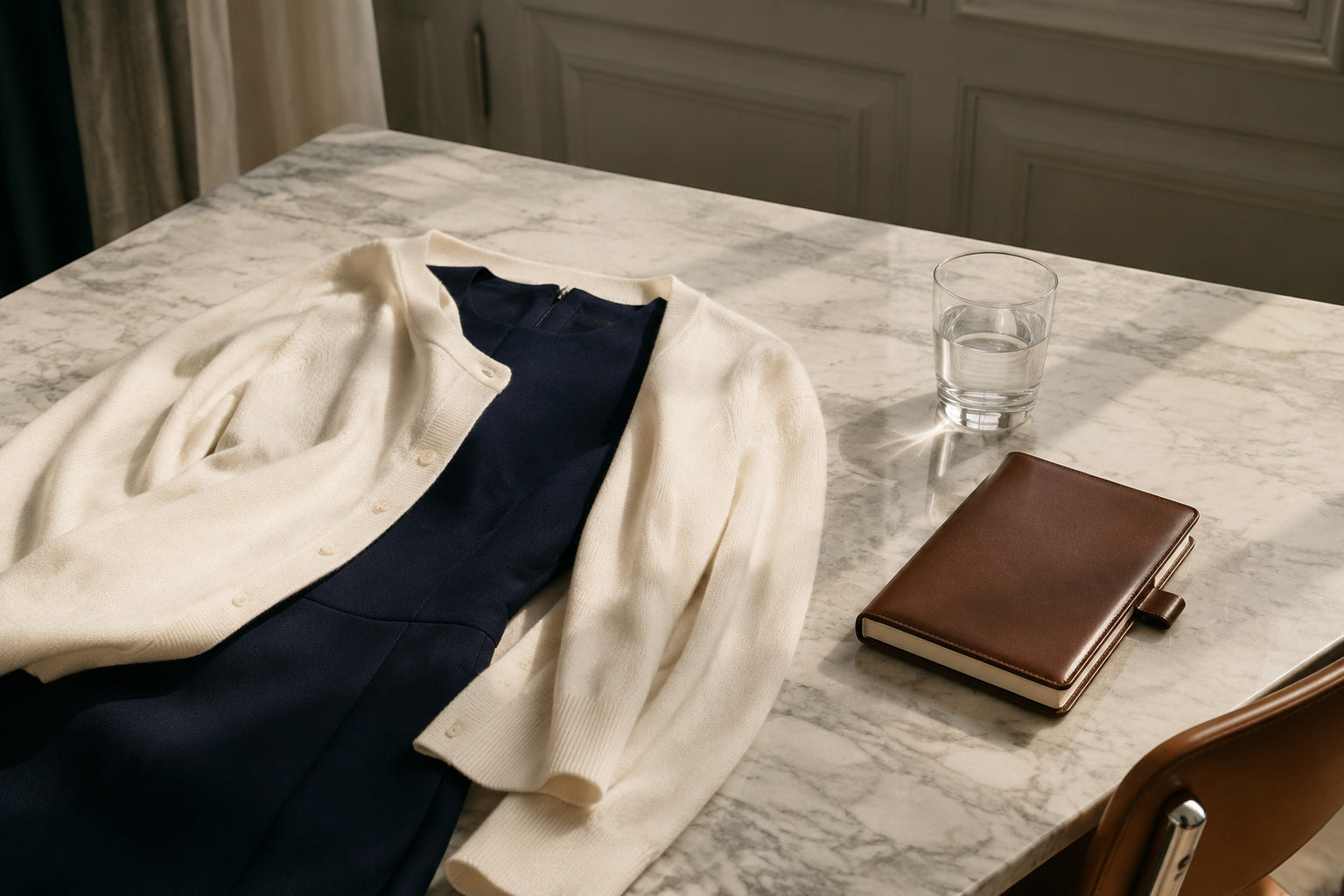
- Layer a structured blazer or fine-knit cardigan over any dress to add warmth that reads as intentional style, not afterthought.
- Fabric weight matters more than colour: a lightweight polyester dress will always feel cold, a mid-weight wool or knitted dress will not.
- Keep a dedicated office layer at your desk rather than carrying it to and from meetings, it saves you from the awkward coat-at-the-conference-table moment.
In this guide
- Start With the Right Dress Fabric
- Choose Long Sleeves Over Layering Whenever Possible
- How to Layer a Blazer or Cardigan Over a Dress Without Losing the Line
- Dress Styles That Work Particularly Well in Cold Office Environments
- Shoes and Accessories That Complete the Cold-Office Look
- Building a Cold-Office Dress Wardrobe: Three Complete Outfits
- Frequently asked questions
Start With the Right Dress Fabric
Before you think about layers, think about your base. The dress you choose sets the thermal foundation for the entire outfit, and most cold-office problems begin here, with a dress in a fabric that simply cannot retain heat.
Wool and wool blends are the most reliable choice. A wool dress in an old money silhouette holds body heat without feeling heavy, resists wrinkling through a long day, and drapes with the kind of quiet authority that reads as thoroughly professional. Mid-weight wool, around 200 to 300 grams per square metre, is the sweet spot for office wear: warm enough to counter aggressive air conditioning, not so heavy that you overheat on the commute.
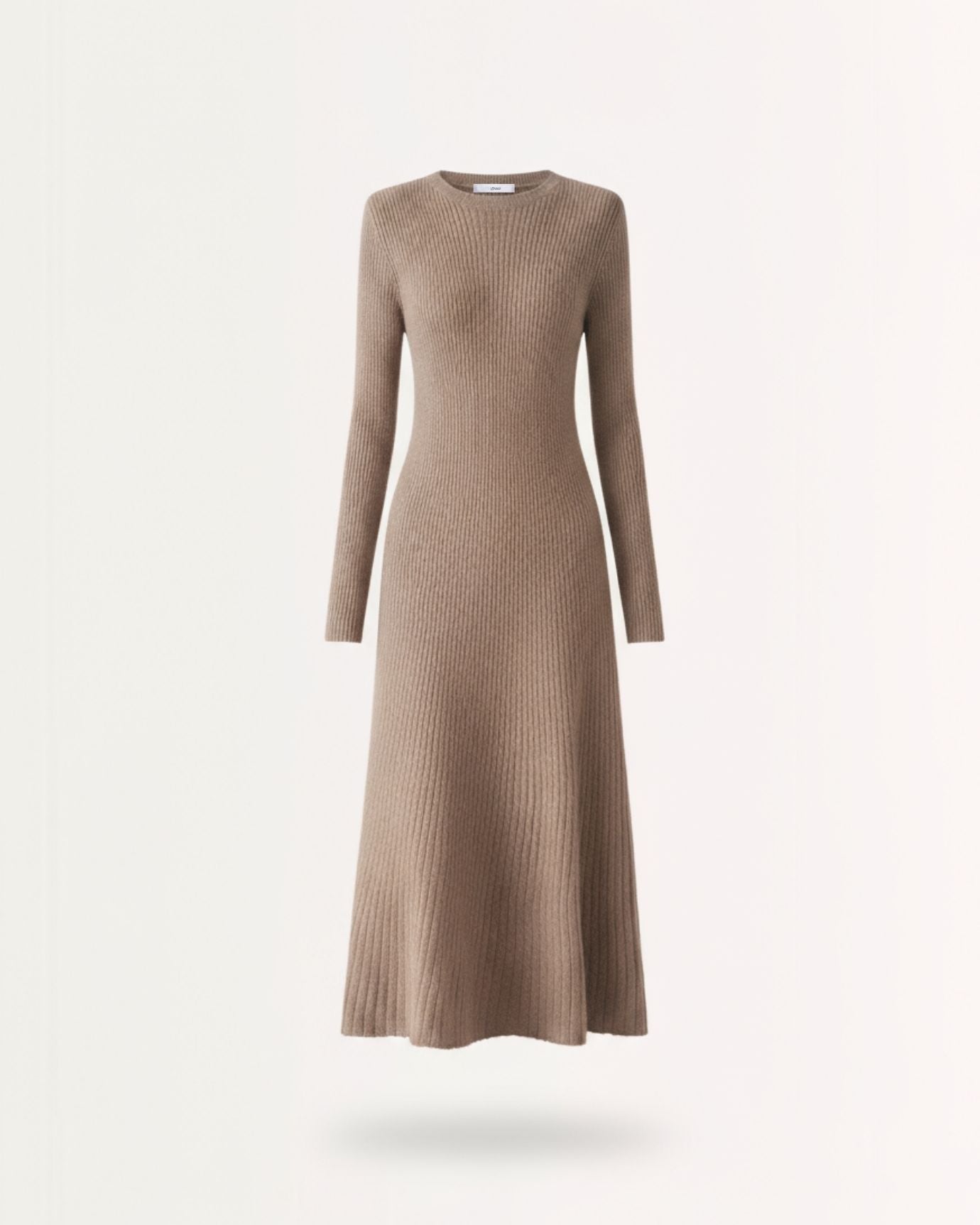
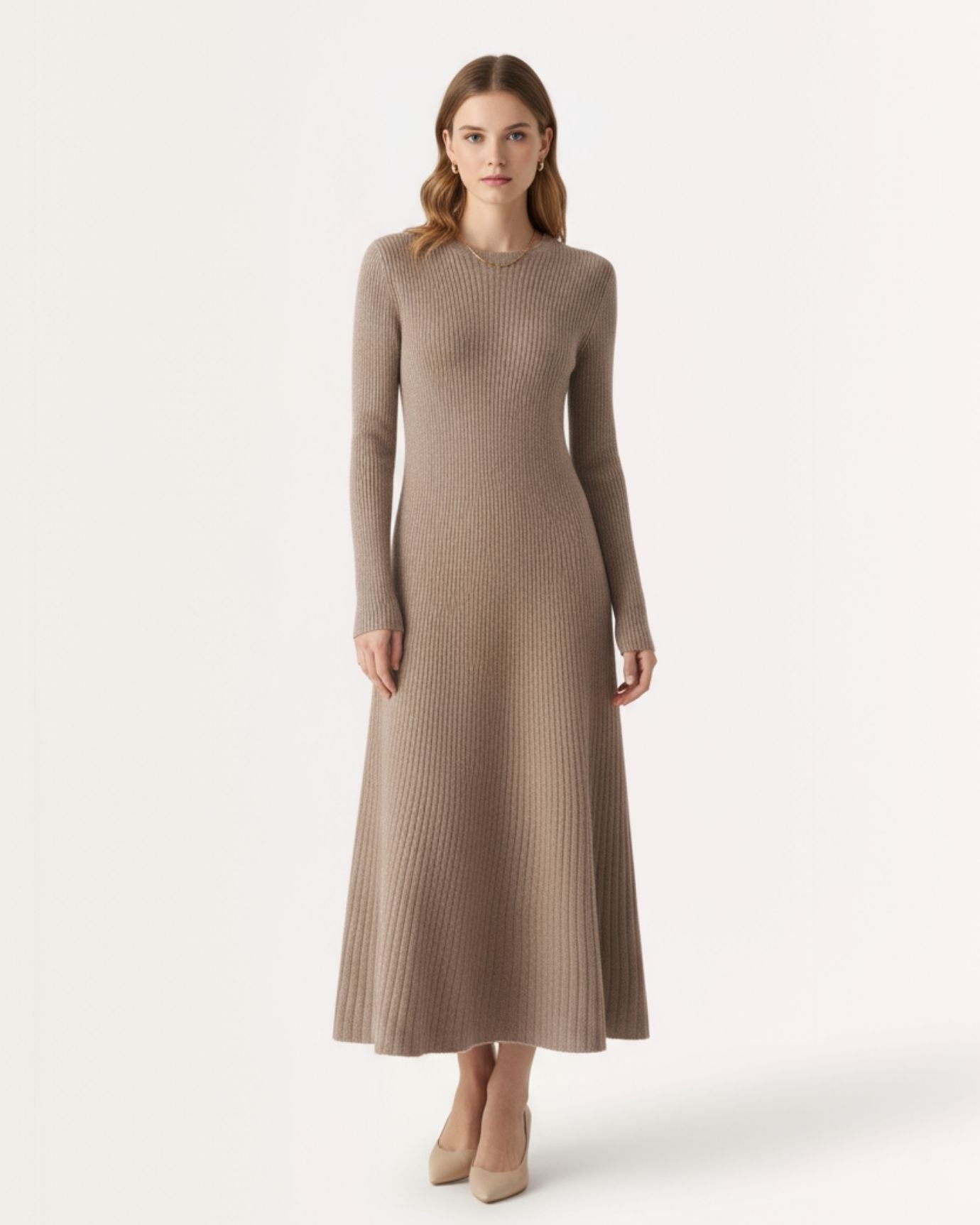
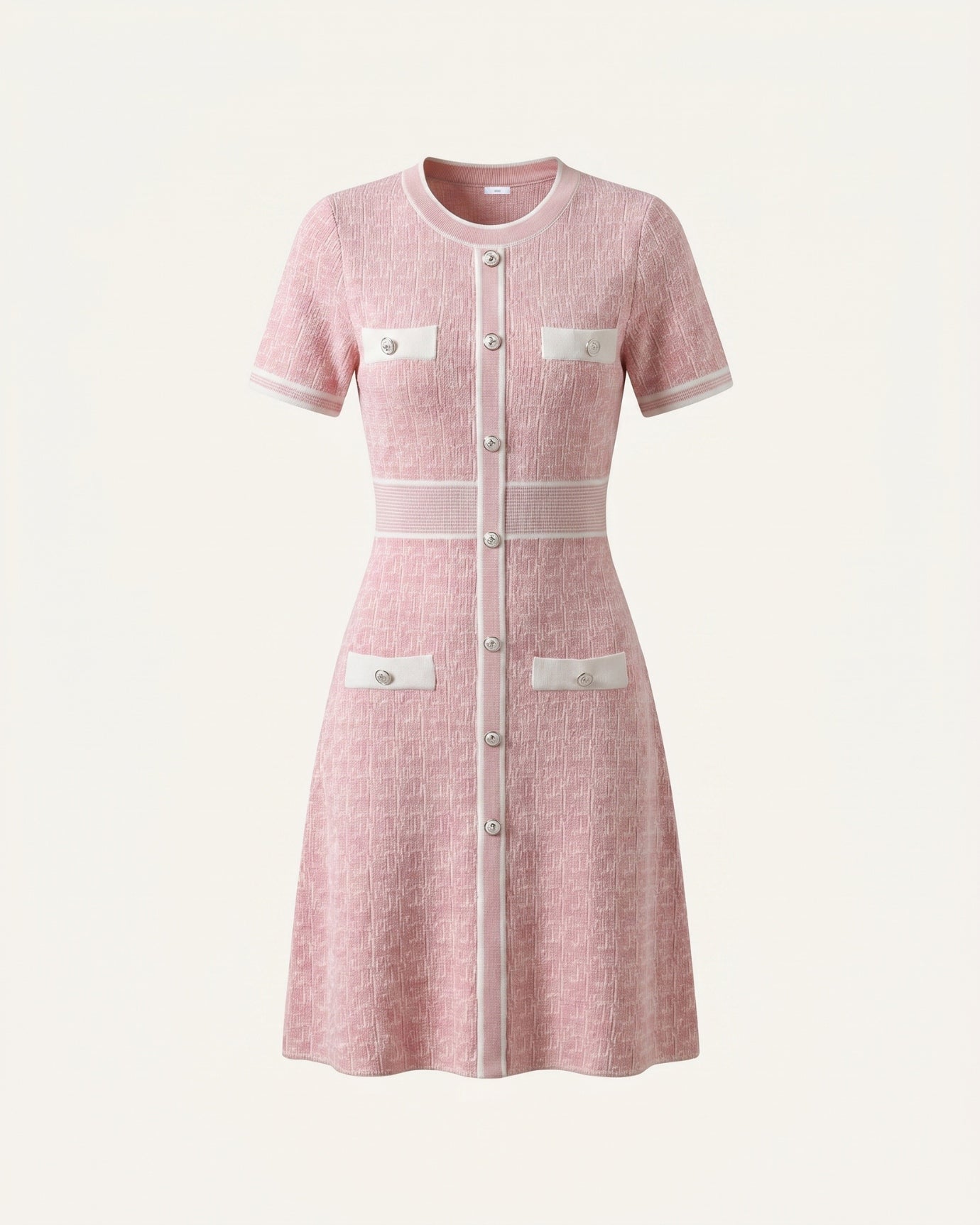
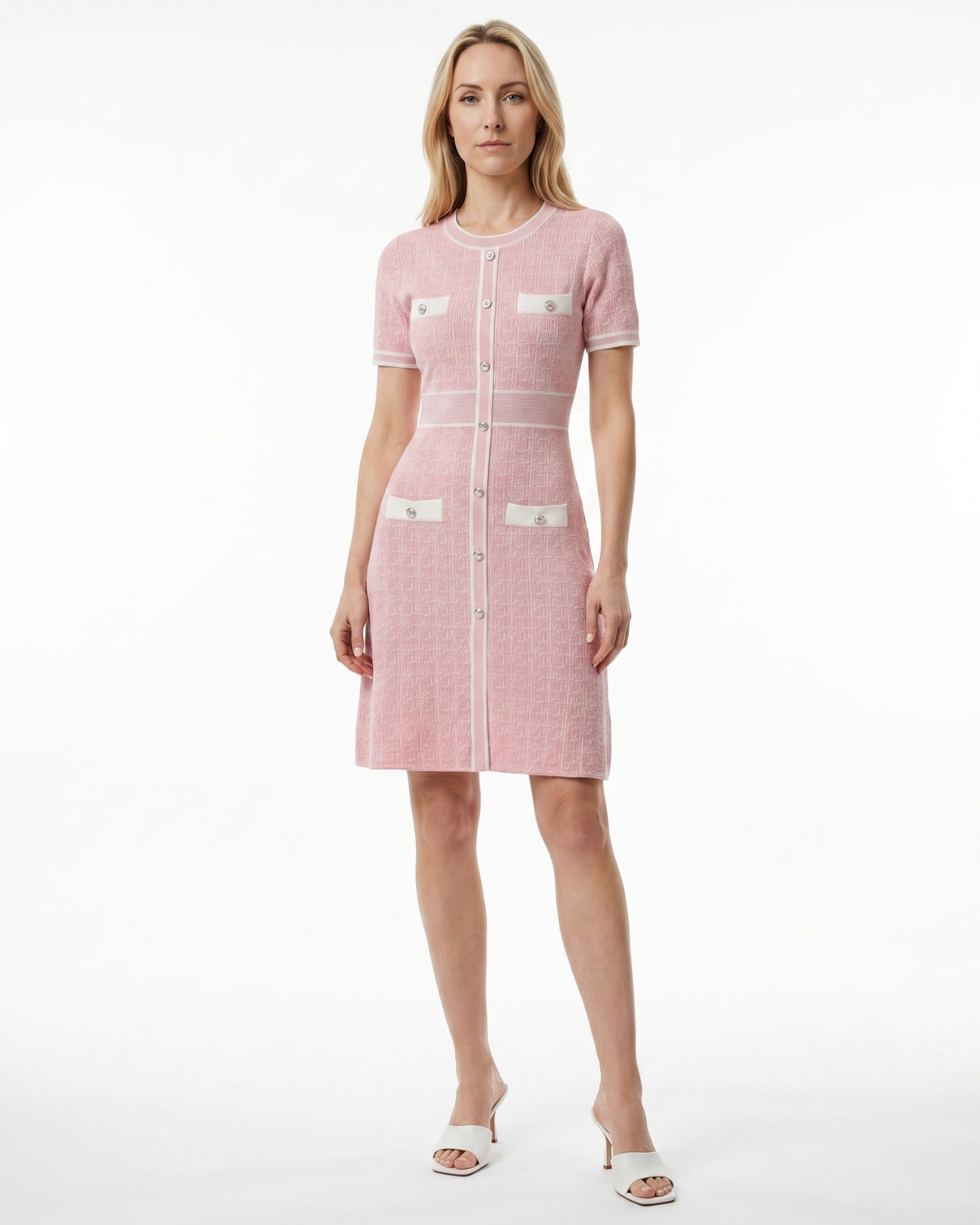
Knitted fabrics are the second strong option. A well-structured knit is not the same as a casual sweater dress. Look for a finer gauge, a fitted or A-line silhouette, and a collar or neckline with some structure. The A-line knitted dress sits in this category precisely: it reads as a dress, not as knitwear, and it traps warmth in the same way a fine-knit jumper does without looking as though you raided the weekend wardrobe.
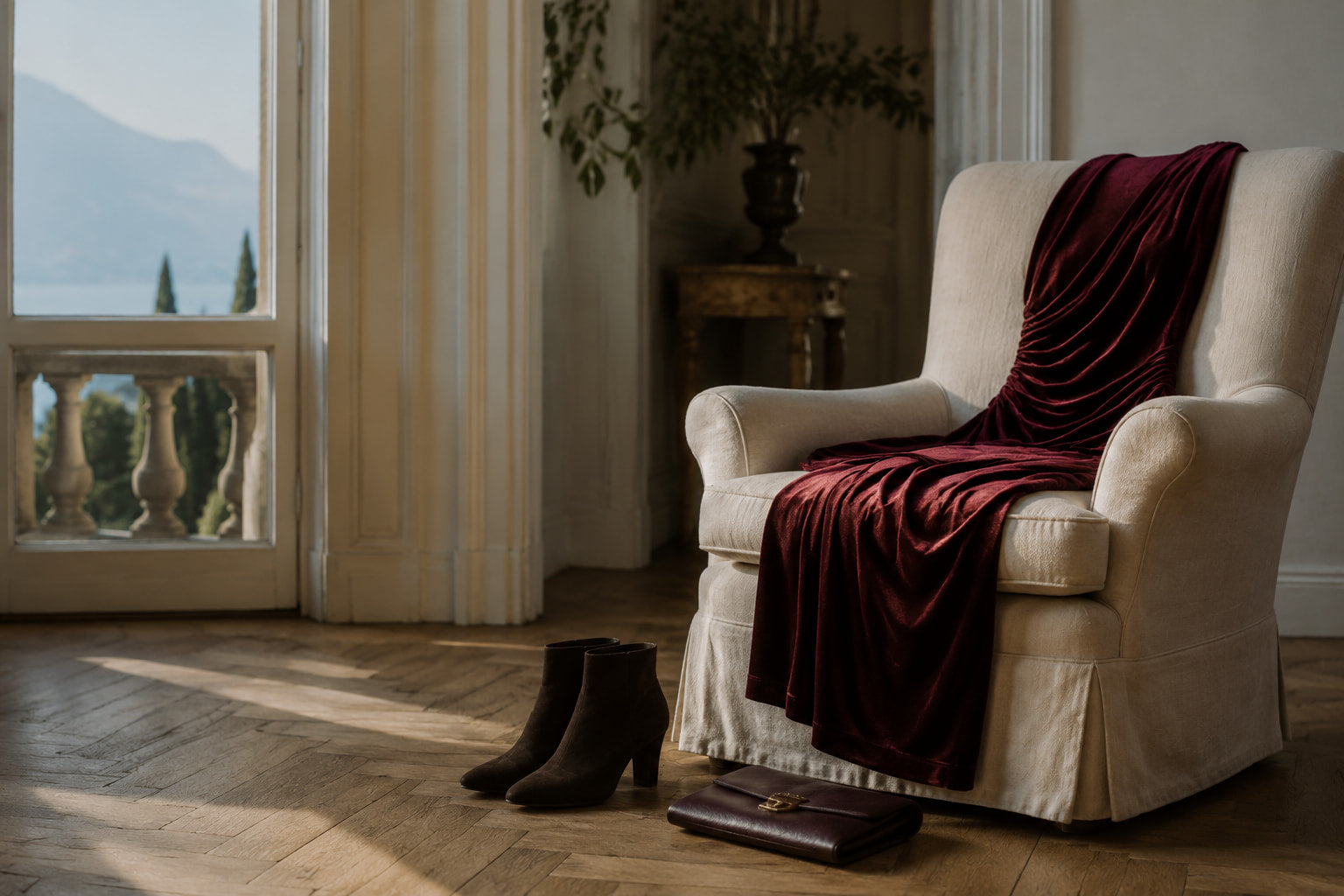
Velvet is underused in office dressing. It is a dense, pile-woven fabric that has been used in formal European dress for centuries and it holds warmth remarkably well. A structured velvet dress in a dark jewel tone, navy, deep burgundy, forest green, is both warm and unmistakably elegant.
Avoid: thin polyester crepe, lightweight chiffon, and unlined cotton. These fabrics do not trap warmth and will leave you cold within the first hour.
Expert insightIf you cannot identify the fabric content of a dress by touch alone, check the label before purchase. A dress labelled 'polyester woven' will always feel cold in an air-conditioned room. A dress with even 30% wool in the blend will perform noticeably better.

Choose Long Sleeves Over Layering Whenever Possible
The most thermally efficient dress for a cold office is one that does not require a layer at all: a long-sleeved dress in a warm-weight fabric. There are no gaps, no bunching at the shoulders, no cardigan that slips off the back of your chair during a presentation.
The long-sleeved dress with belt is exactly the kind of piece that solves the cold-office problem structurally. The belt defines the waist so the silhouette stays polished rather than shapeless, the long sleeve covers the arms completely, and the overall effect is composed and intentional. This is not a compromise between warmth and style. It is both, simultaneously.
For offices with a more formal dress code, look at long sleeve dress options in solid colours or fine stripes. These read as deliberate and professional in a way that a summer dress plus cardigan often does not.
If your office oscillates between cold and warm throughout the day, a long-sleeved dress in a medium-weight knit is still your best option. You can roll the sleeves to three-quarter length when the thermostat shifts, which is far less disruptive than removing a layer entirely.
Expert insightA belted long-sleeved dress also photographs better on video calls than a layered outfit, where cardigans and blazers can create visual bulk around the shoulders. One well-cut piece is always cleaner on screen.

How to Layer a Blazer or Cardigan Over a Dress Without Losing the Line
Not every dress in your professional rotation will be long-sleeved or wool. You will have dresses you love that happen to be sleeveless or in a lighter fabric. Layering is the answer, but layering done with precision rather than as an afterthought.
The key principle: the layer should look as though it belongs with the dress, not as though it was grabbed in a hurry because you were cold. This means proportion and colour have to be considered together.
Blazers are the strongest choice for formal offices. A blazer in a complementary colour, or the same colour family as the dress, creates a coherent silhouette. If you want to understand exactly how to carry this off, the guide on how to wear a tailored blazer over a silk maxi dress covers the proportions in detail. The same principles apply to midi and knee-length dresses.
Fine-knit cardigans work better for less formal environments. Keep the cardigan close to the body in fit, and choose a length that does not break the dress's silhouette at an odd point. A hip-length cardigan over a midi dress works. A cropped cardigan over the same dress can look unbalanced.
The contrast collar pleated dress in navy and white is a good example of a sleeveless dress that layers well. The structured collar gives the neckline visual weight even without a layer, and the navy palette works naturally with a cream or white blazer. The two-piece construction also means it already reads as a considered outfit rather than a single item.
One practical note: keep your office layer at your desk. Do not carry it in your bag, do not wear it on the commute. Having a dedicated desk cardigan or blazer means you are not constantly making decisions about it, and it is always there when the air conditioning ramps up after lunch.
Expert insightA blazer that fits correctly across the shoulders will always look intentional, even if the rest of the outfit is simple. If your blazer pulls at the back or gaps at the front, no amount of styling will make the layer look deliberate. See our guide on small alterations that transform an outfit for how a single shoulder seam adjustment changes everything.

Dress Styles That Work Particularly Well in Cold Office Environments
Beyond fabric and sleeve length, the silhouette of the dress itself affects how warm you will feel and how polished you will look throughout the day.
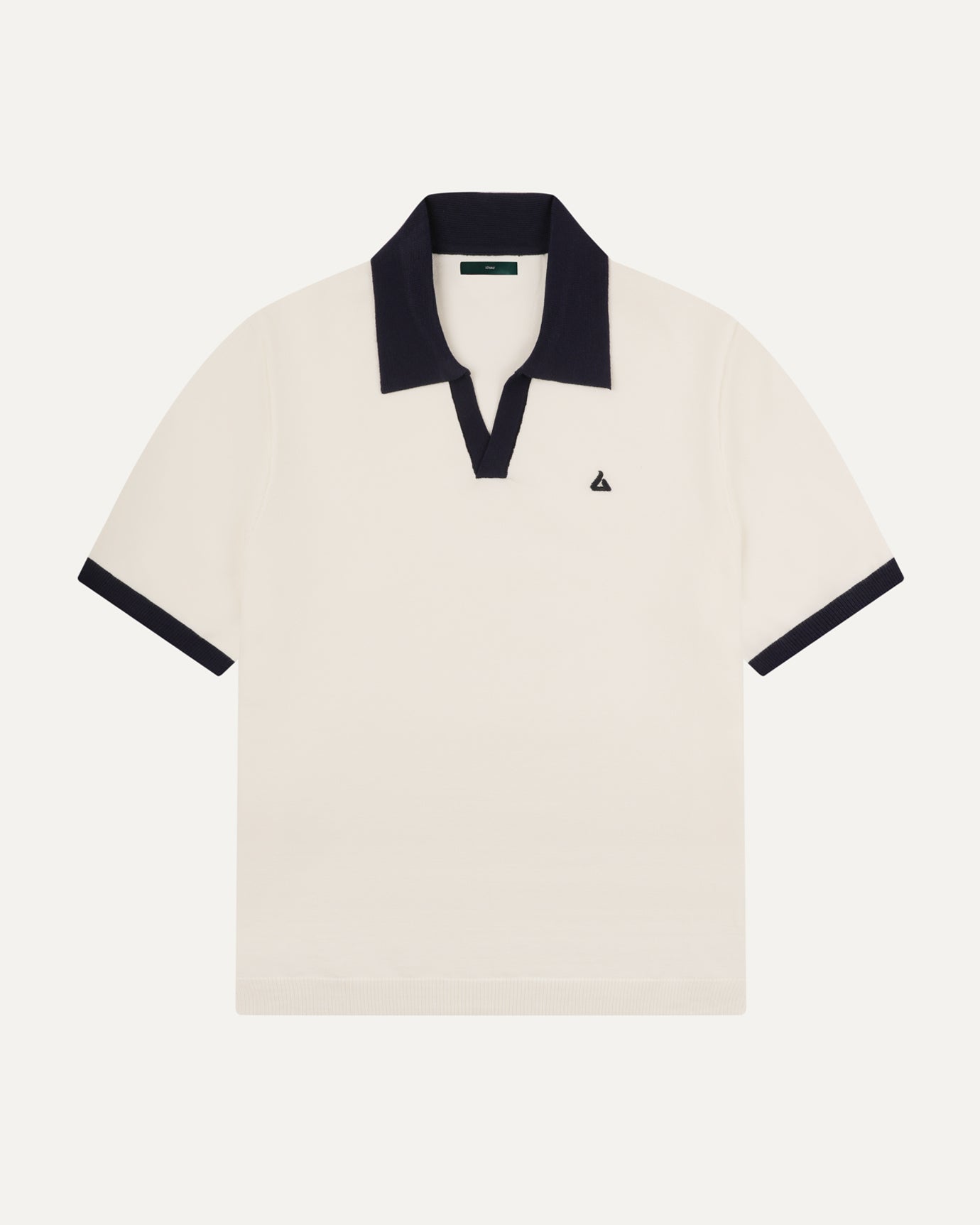
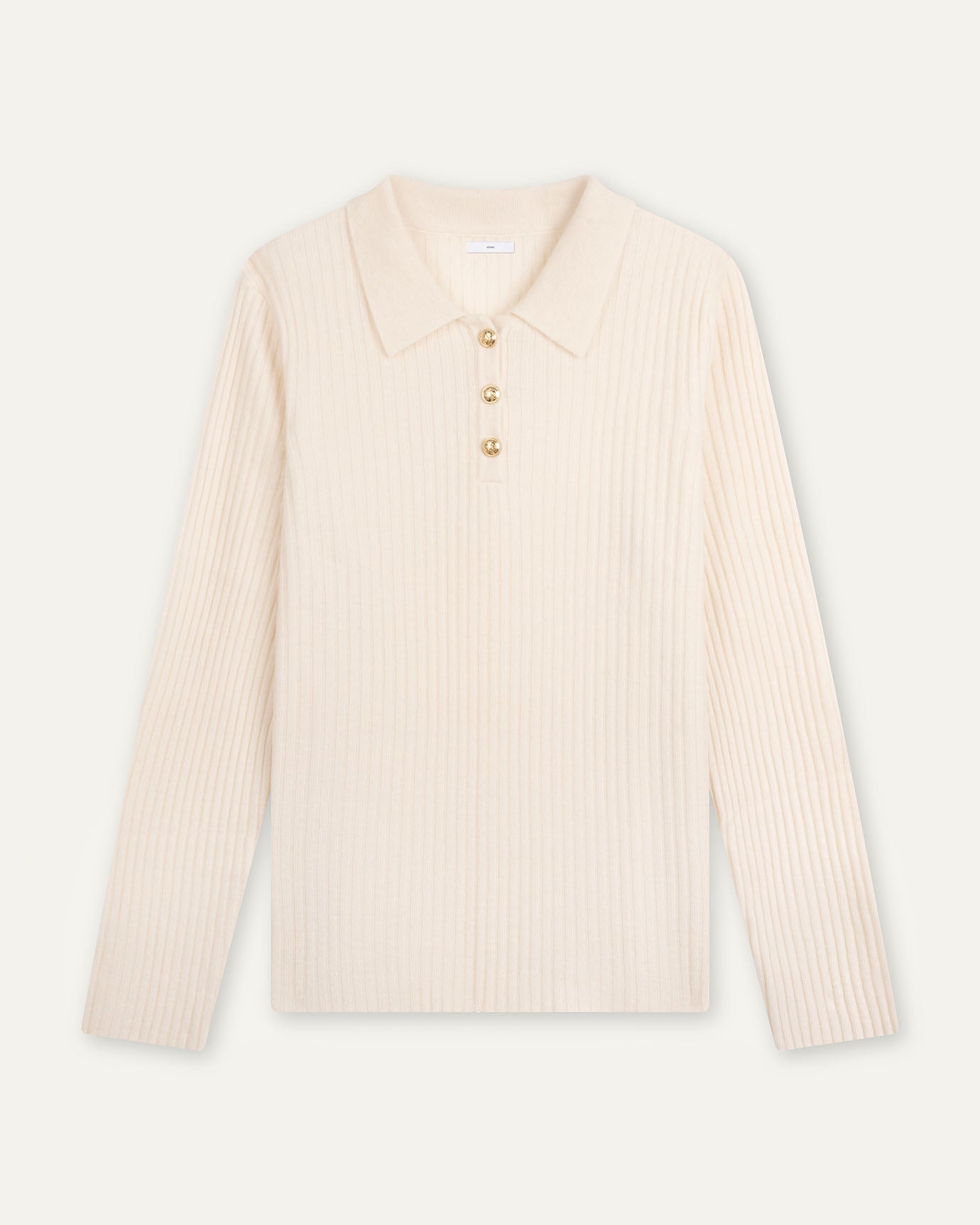
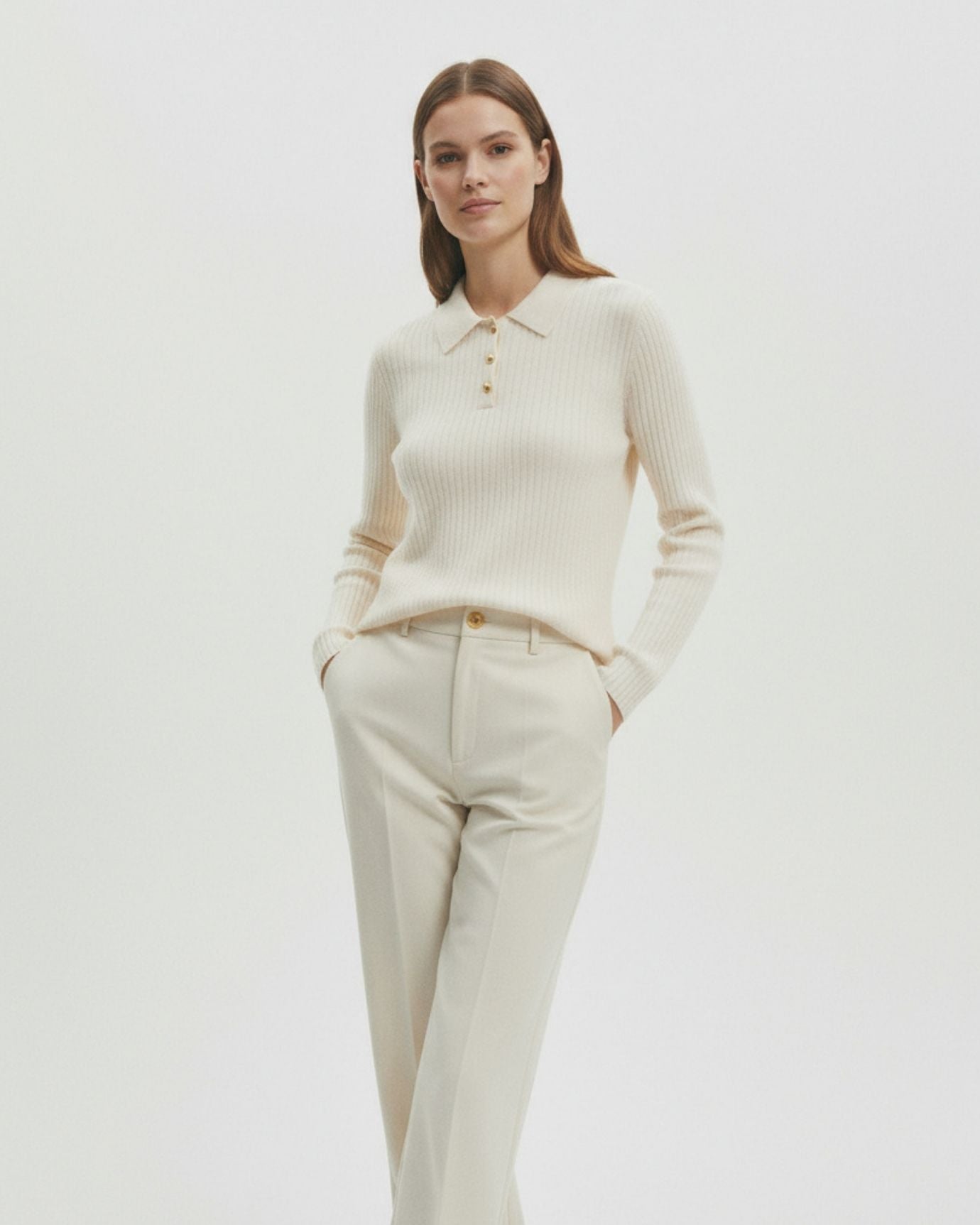
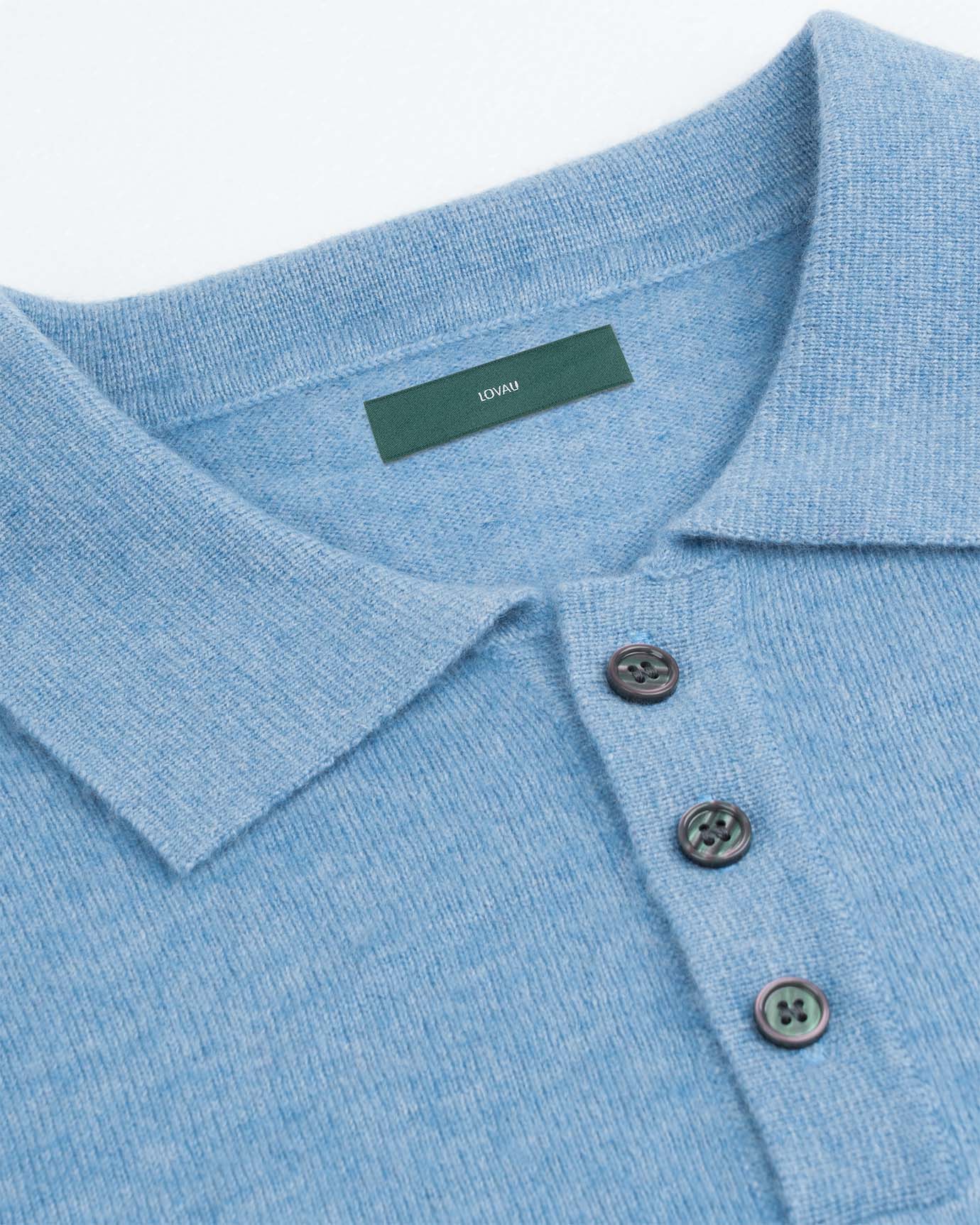
Collared dresses keep the neck warm, which makes a significant difference to overall comfort. The neck and wrists are the two areas where cold air has the most noticeable effect. A dress with a defined collar, whether a shirt collar, a Mandarin collar, or a contrast collar, eliminates the need for a scarf while adding visual structure.
Midi-length dresses cover more of the body than knee-length options and are consistently professional across industries. A day dress in a structured fabric at midi length is one of the most versatile professional pieces you can own.
Pleated dresses in heavier fabrics sit well throughout the day, do not cling as temperatures fluctuate, and retain their shape even after hours at a desk. The Anna collared knit short dress combines the collared and knit advantages in a single piece: the collar handles the neckline warmth, the knit handles the body warmth, and the overall silhouette is structured enough for a professional setting.
For offices that lean more creative or where the dress code is smart-casual, the blue striped dress in a clean stripe pattern reads as polished without being severe, and the stripe works as a visual anchor that makes layering easier because you are working with a pattern rather than trying to match solids.

Shoes and Accessories That Complete the Cold-Office Look
Shoes matter more in a cold office than people expect. Open-toe sandals and bare feet in cold air conditioning is a specific misery. Closed-toe shoes, particularly those with a slight heel or a structured sole, are both warmer and more formally appropriate in most professional environments.
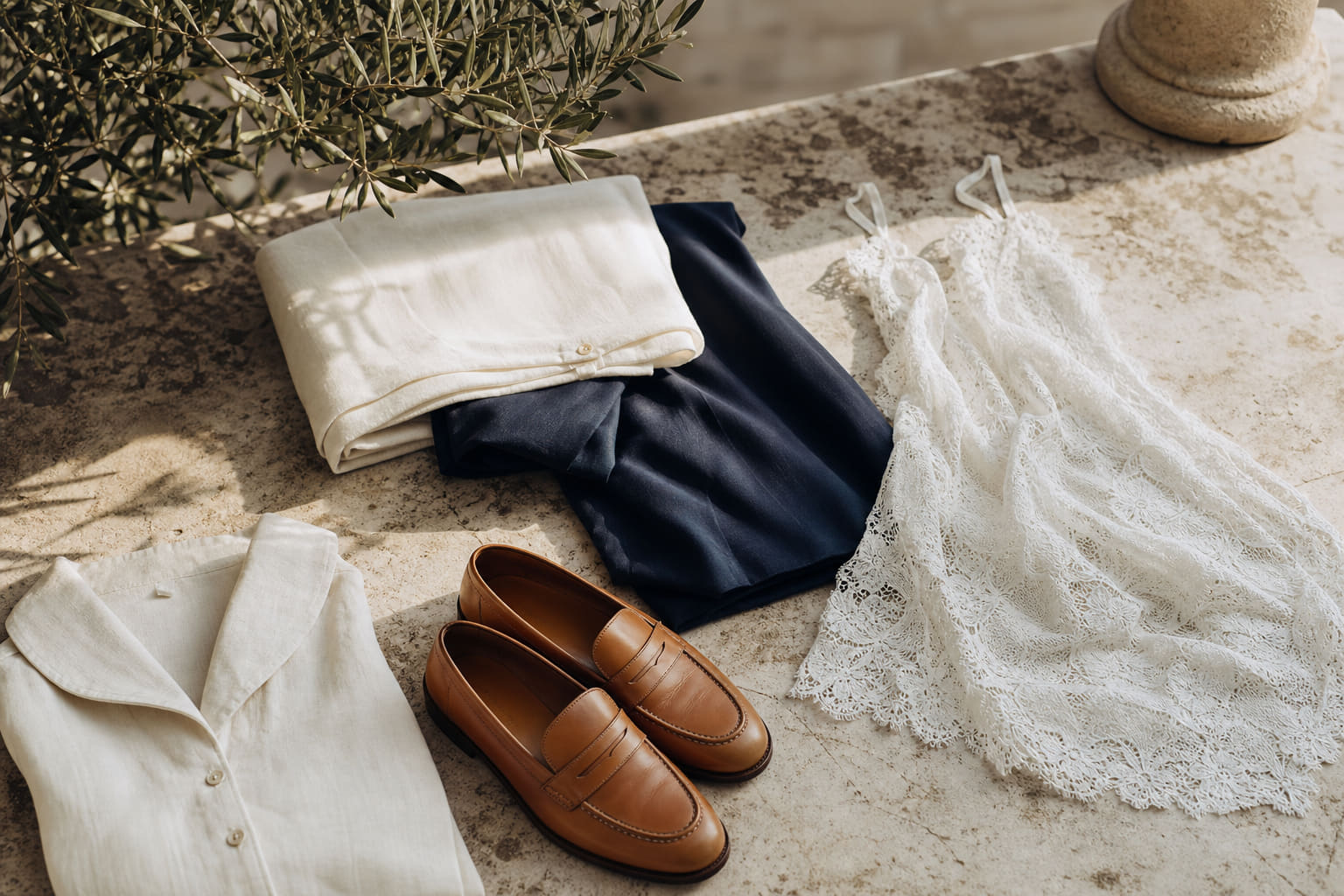
Loafers in a classic silhouette are the most versatile choice: they work with midi dresses, with pleated dresses, with knitted dresses. They are closed-toe, they have enough sole thickness to insulate from cold floors, and they are the kind of shoe that has been a staple of European professional dressing for decades. For more on what makes a well-made loafer worth the investment, the article on the anatomy of a perfect suede loafer goes through the construction details.
For accessories, a silk scarf worn loosely around the neck serves the same function as a dress collar: it keeps the area warm while adding a layer of visual interest. In a cold office, this is not affectation. It is practical.
A structured leather tote in a neutral colour, navy, cognac, or black, grounds the outfit and provides a place to carry the layers you are not wearing at any given moment. The guide on how to choose a leather tote bag that complements any outfit is useful here, particularly the section on proportion relative to dress length.
Finally, consider dress shoes with a low block heel for days when you know you will be in meetings. The heel keeps the foot slightly refined from the cold floor and adds a degree of formality that ties together a knitted or velvet dress that might otherwise read as too relaxed.
Building a Cold-Office Dress Wardrobe: Three Complete Outfits
Rather than abstract principles, here are three specific outfits built for the cold-office scenario at three different formality levels.
Formal office, client-facing days: The velvet dress in an old money silhouette in a deep tone paired with a single-button blazer in cream or ivory, closed-toe block-heel shoes, and a structured leather tote. No accessories beyond small gold earrings. The velvet handles warmth, the blazer handles the formal register, and the restraint of the accessories keeps the whole look authoritative rather than overdressed.
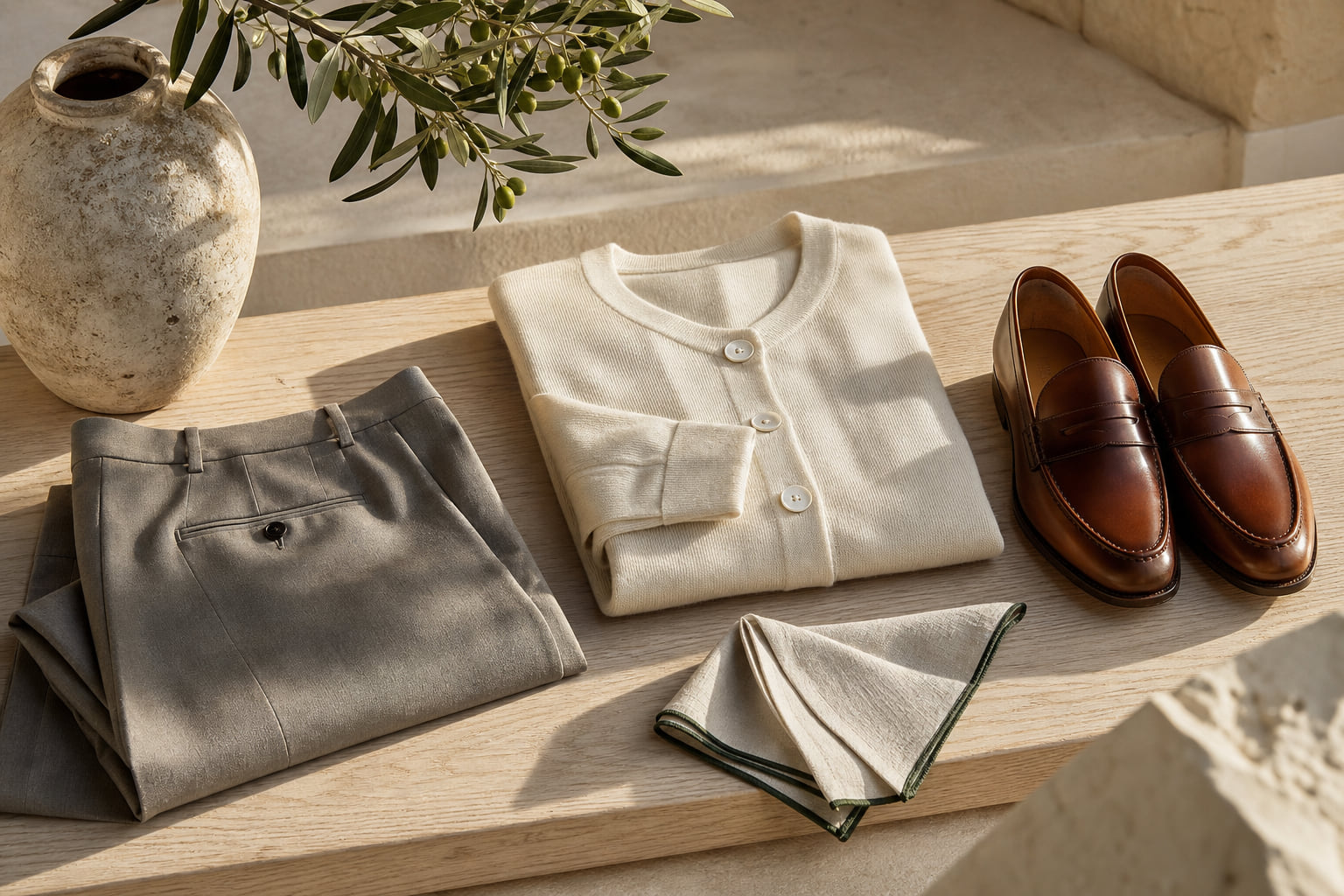
Business casual, standard working day: The A-line knitted dress in a neutral tone with a fine-knit longline cardigan in a tonal shade, loafers, and 40-denier tights. A silk scarf at the neck if the office runs particularly cold. This outfit requires almost no thought and holds its shape through an eight-hour day.
Creative or smart-casual office: The blue striped dress with a white blazer kept at the desk, white loafers, and minimal jewellery. The stripe keeps the outfit visually interesting without effort, and the white blazer references the stripe's lighter tone so the layer looks intentional rather than added.
All three outfits follow the same logic: a dress with inherent warmth as the base, a layer that adds both warmth and formality, and shoes that are closed and grounded. The details change, the principle does not. For more outfit ideas built around the dress as the central piece, the full woman dress collection is the most direct place to start.

| Fabric | Warmth Rating | Formality | Wrinkle Resistance | Best For |
|---|---|---|---|---|
| Wool / Wool Blend | High | Formal to business casual | Excellent | Client-facing days, formal offices |
| Fine Knit (structured) | Medium-High | Business casual | Good | Standard working days, creative offices |
| Velvet | High | Formal | Excellent | Presentations, client meetings, formal dress codes |
| Cotton Poplin (lined) | Low-Medium | Business casual to formal | Poor without lining | Warmer offices, paired with a blazer |
| Lightweight Polyester Crepe | Low | Business casual | Good | Not recommended for cold offices |
Frequently asked questions
What is the warmest type of dress to wear in a cold office without looking casual?
A mid-weight wool dress or a fine-knit dress in a structured silhouette. Both hold warmth effectively and read as professional. The woman wool dress in an old money style is a good example: it has the weight to counter air conditioning and the clean lines to work in a formal environment.
Can I wear a sleeveless dress to a cold office?
Yes, but you need a layer that looks intentional rather than reactive. A well-fitted blazer or a fine-knit cardigan in a tonal colour will do the job. The layer should be kept at your desk so it is always available. The contrast collar pleated dress in navy and white pairs particularly well with a cream or white blazer because the collar gives the neckline structure even before the layer goes on.
Are thermal tights appropriate for a professional setting?
Completely. A 40 to 60 denier thermal tight in a neutral tone is invisible under a midi dress and makes a measurable difference to warmth. Choose a shade close to your skin tone rather than black, which can draw attention to the leg under a lighter-coloured dress.
How do I stop my cardigan from looking sloppy over a dress at work?
Proportion and fit. The cardigan should be close to the body rather than oversized, and its length should not cut the dress at an awkward point. A hip-length fine-knit cardigan over a midi dress works well. If the cardigan is too long or too loose, it reads as loungewear rather than office wear. For more on how small fit adjustments change the entire impression of an outfit, the guide on tailoring small alterations that transform an outfit is worth reading.
Dressing for a cold office is, at its core, a fabric and structure problem, not a fashion problem. Choose a dress with inherent warmth, pay attention to sleeve length and neckline coverage, and keep one considered layer at your desk. Do those three things and the air conditioning becomes irrelevant. For a starting point, the full range of day dresses at Lovau covers the silhouettes and fabric weights that work best in exactly this situation.