


How to Choose the Right Coat Length for Your Midi Dresses
Reading time 14 min • 2839 words
The midi dress is, by almost every measure, the most versatile length in a woman's wardrobe. It works across seasons, occasions, and body types, and it holds its elegance in a way that shorter or longer lengths sometimes struggle to. But layer a coat over it carelessly and the whole effect collapses. The wrong coat length can make the outfit look unfinished, truncate the leg, or fight the dress for visual attention.
The good news is that this is a solvable problem with a clear set of principles. Coat length is not about following a rule blindly; it is about understanding proportion and how two hemlines interact. Once you understand that, the decision becomes straightforward.
This guide walks through every relevant coat length, what it does to the silhouette of a midi dress, which occasions call for which pairing, and which fabrics make each combination work. We have also referenced pieces from our own collection throughout, because the advice is only useful if you can see it applied to real garments.
Key takeaways
- A coat that ends at or below the midi hem creates a clean, polished column of fabric, the most flattering silhouette for most heights.
- Cropped coats work beautifully with midi dresses when the coat hits at the natural waist or just above, not at the hips.
- Avoid coats that end mid-calf and cut across the widest point of a flared midi skirt, as this shortens the leg visually.
- Fabric weight matters: pair heavier wool coats with structured midi dresses, and lighter coats with floaty or lace midi styles.
- Occasion should guide your choice as much as proportion: a long trench reads differently than a tailored knee-length coat, even at the same length.
In this guide
- Why Coat and Dress Hemlines Interact the Way They Do
- The Long Coat: When It Falls Below the Midi Hem
- The Knee-Length Coat: Precision Matters
- The Cropped Coat: How to Make It Work with Midi Length
- Matching Coat Choice to Occasion and Dress Style
- Fabric and Colour: The Details That Complete the Pairing
- Frequently asked questions
Why Coat and Dress Hemlines Interact the Way They Do
Before getting into specific lengths, it helps to understand the underlying principle. When two hemlines appear close together but do not align, the eye reads them as a mistake. When they align, or when one is clearly and deliberately longer than the other, the eye reads it as a choice.
This is why the most consistently elegant coat-and-midi combinations are either full-length coats that fall below the dress hem or cropped coats that end well above the dress hem. The problematic zone is the range of roughly 5 to 15 centimetres above the midi hem, where a coat appears to almost match the dress but does not quite succeed.
Midi dresses themselves vary in hemline position. A true midi sits between the knee and the ankle, typically around mid-calf. If you are unsure how your proportions interact with different midi lengths, our article on finding the perfect hem length for midi dresses based on height is a useful starting point before you think about layering.
The other factor is skirt shape. A straight or column midi dress behaves differently under a coat than a pleated or A-line midi. A fitted silhouette allows almost any coat length to work. A full-skirted midi creates more visual bulk, which means coat proportions need to be chosen more carefully.
Expert insightWhen trying on a coat over a midi dress in a fitting room, look at the full-length mirror from a distance of at least two metres. The hemline relationship only becomes clear from a step back, not up close.

The Long Coat: When It Falls Below the Midi Hem
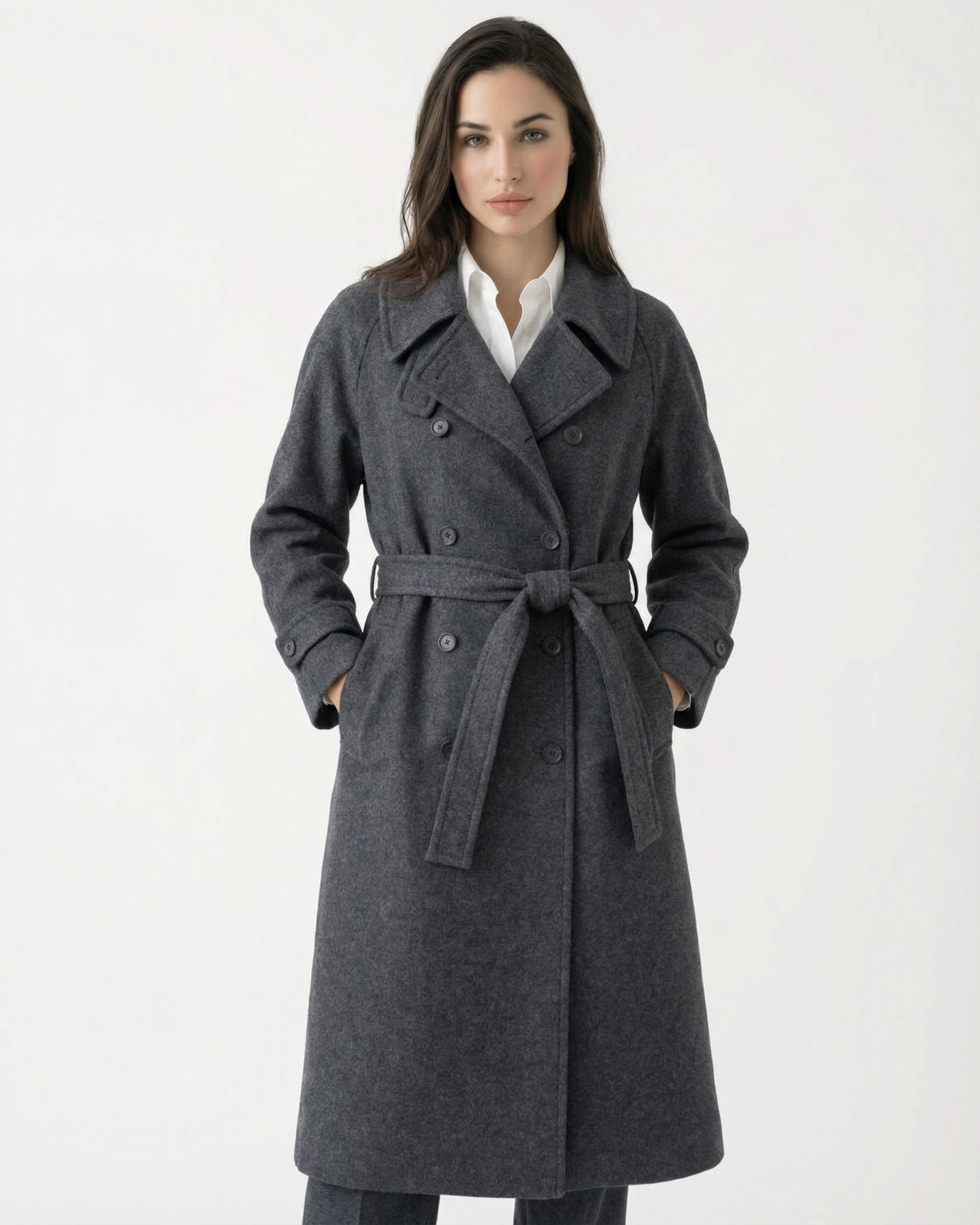
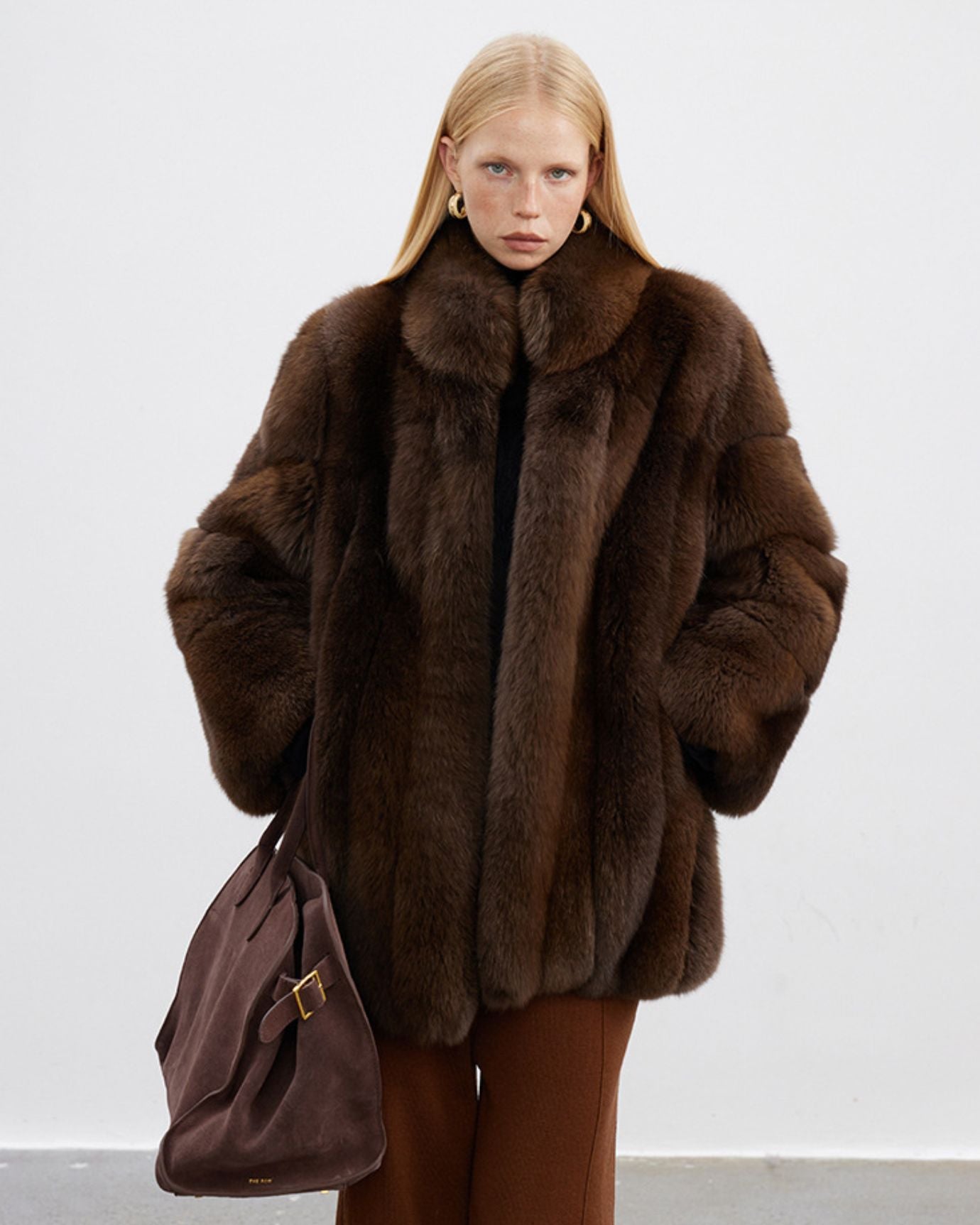
A coat that falls to the ankle or at least several centimetres below the midi hem is the most formally elegant option. It creates a single, unbroken vertical line from shoulder to hem, which is particularly flattering and reads as deliberate and composed.
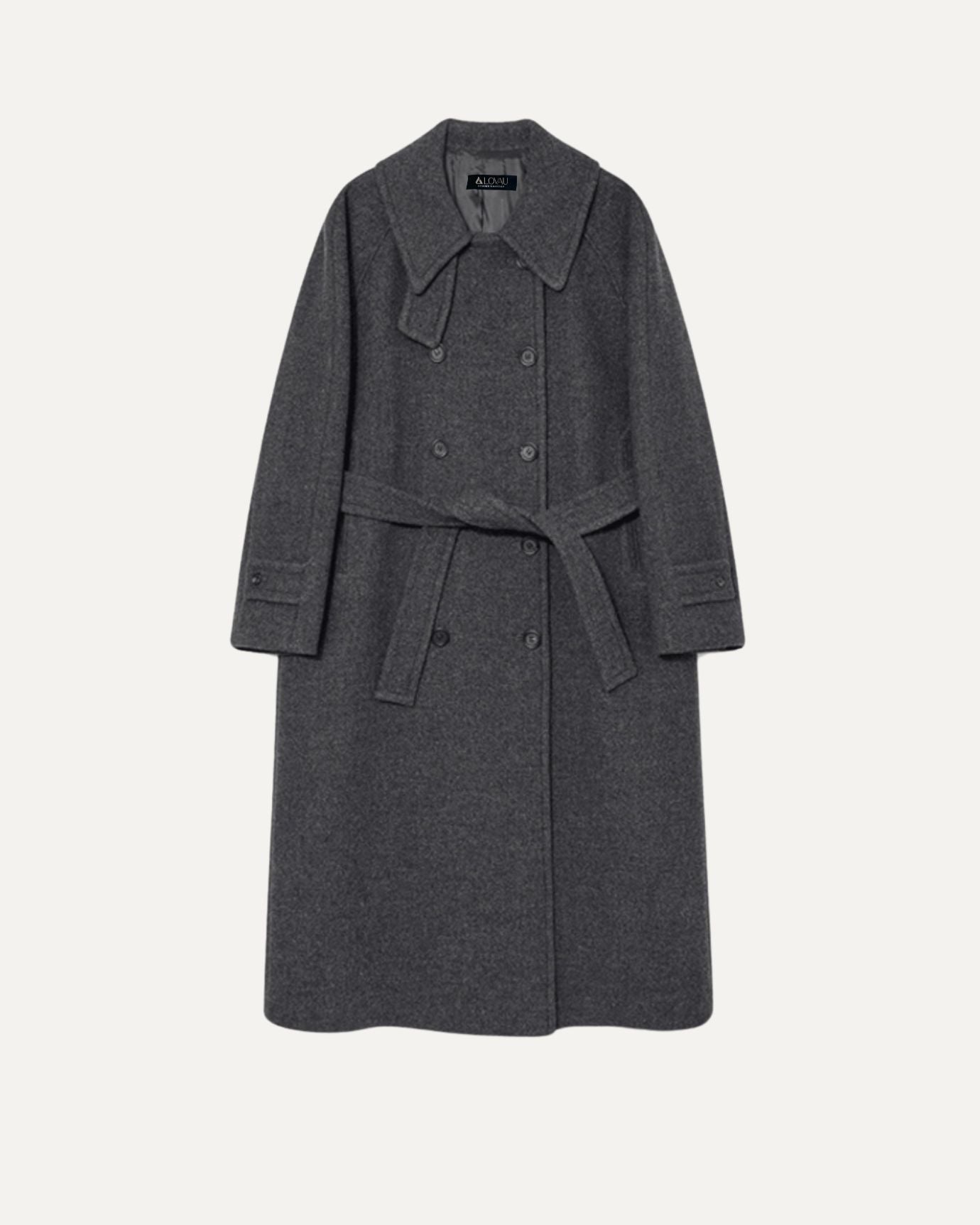
Trench coats in this length are a reliable choice for transitional weather, spring through early autumn. A belted trench over a midi French dress with floral print creates a classic Parisian pairing: the softness of the print balanced by the structure of the cotton gabardine.
Long wool coats in camel, charcoal, or deep navy are the winter iteration of the same idea. They work especially well over structured midi dresses. A velvet midi dress in a deep tone under a long camel coat is a combination that requires nothing else: no statement accessories, no layering complexity. The richness of the velvet does the work.
One practical note on long coats: they work best when the coat is not significantly wider than the dress beneath it. A very voluminous long coat over a narrow midi creates a silhouette that reads as shapeless. Either choose a coat with a defined waist, or belt it.
For more ideas on pairing outerwear with longer dress lengths, our piece on the best outerwear to pair with floor-length dresses covers complementary principles.
Expert insightA long coat in a tonal colour to the dress beneath it, such as navy over navy or ivory over white, creates a monochromatic column effect that reads as extremely polished in formal or professional settings.

The Knee-Length Coat: Precision Matters
A coat that ends at or just above the knee is the most commonly owned coat length, and it is also the one that requires the most thought when worn over a midi dress.
If the coat hem lands at the knee and the dress hem falls to mid-calf, there is a clear visual gap between the two hemlines. This works. The key is that the gap must be generous enough to read as intentional. A 15-centimetre or more difference between coat hem and dress hem is comfortable. Less than that, and the two hemlines begin to compete.
A structured knee-length coat in a solid colour is the most versatile version of this pairing. It is appropriate for office dressing, gallery openings, afternoon events, and travel. Worn over the Olivia Classic Square Neck Waist-Tie Mid-Length Dress, a knee-length coat in camel or stone lets the dress's waist-tie detail remain visible at the hem of the coat, which adds visual interest without effort.
Where this length becomes complicated is with full-skirted midi dresses. A pleated or gathered midi skirt creates volume at the hem that a knee-length coat does not contain. The skirt fans out below the coat, which can look charming in a relaxed context but reads as unpolished in a formal one. For those occasions, choose a long coat or a cropped coat instead.
Fabric consideration: a double-faced wool or cashmere-blend knee-length coat holds its shape and does not distort around the volume of the dress beneath it. Avoid very lightweight fabrics at this length when wearing over structured dresses, as they tend to bunch.

The Cropped Coat: How to Make It Work with Midi Length
A cropped coat worn over a midi dress is a more contemporary pairing, and it is one that works extremely well when the proportions are handled correctly. The rule is simple: the coat must end at the natural waist or just above it. A coat that ends at the hip, or at an undefined point between waist and hip, is the problematic version.
When a cropped coat ends at the natural waist, it frames the upper body and allows the full length of the midi dress to be visible below. This creates a clear two-part silhouette: structured top, flowing skirt. It is a strong, graphic look that suits both casual and smart-casual occasions.
This pairing works particularly well with high-waisted midi dresses. The Strapless High Waist Mid Length-Dress is a good example: its high waistline means that even a short crop of a coat rests above the seam, preserving the dress's silhouette entirely.
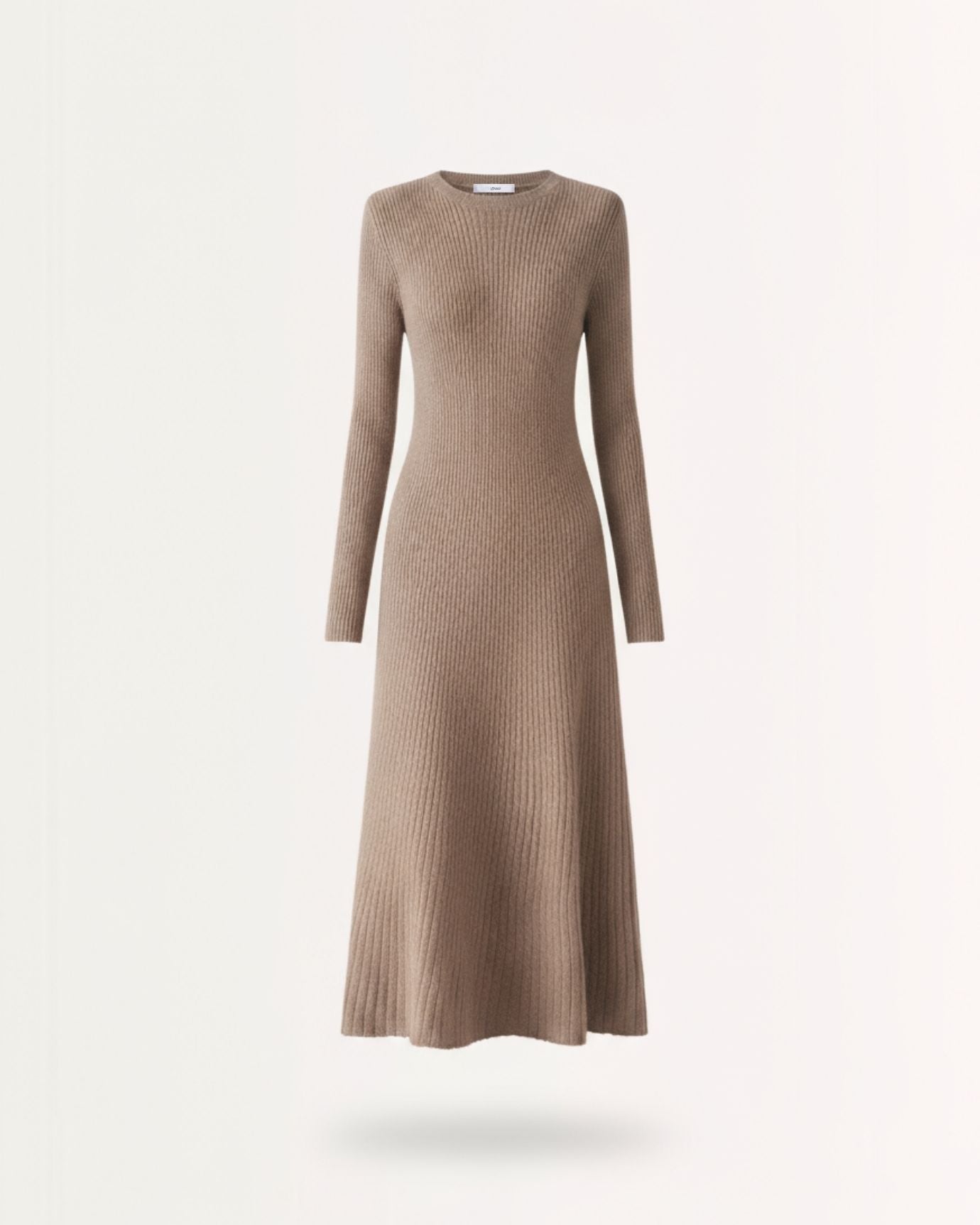
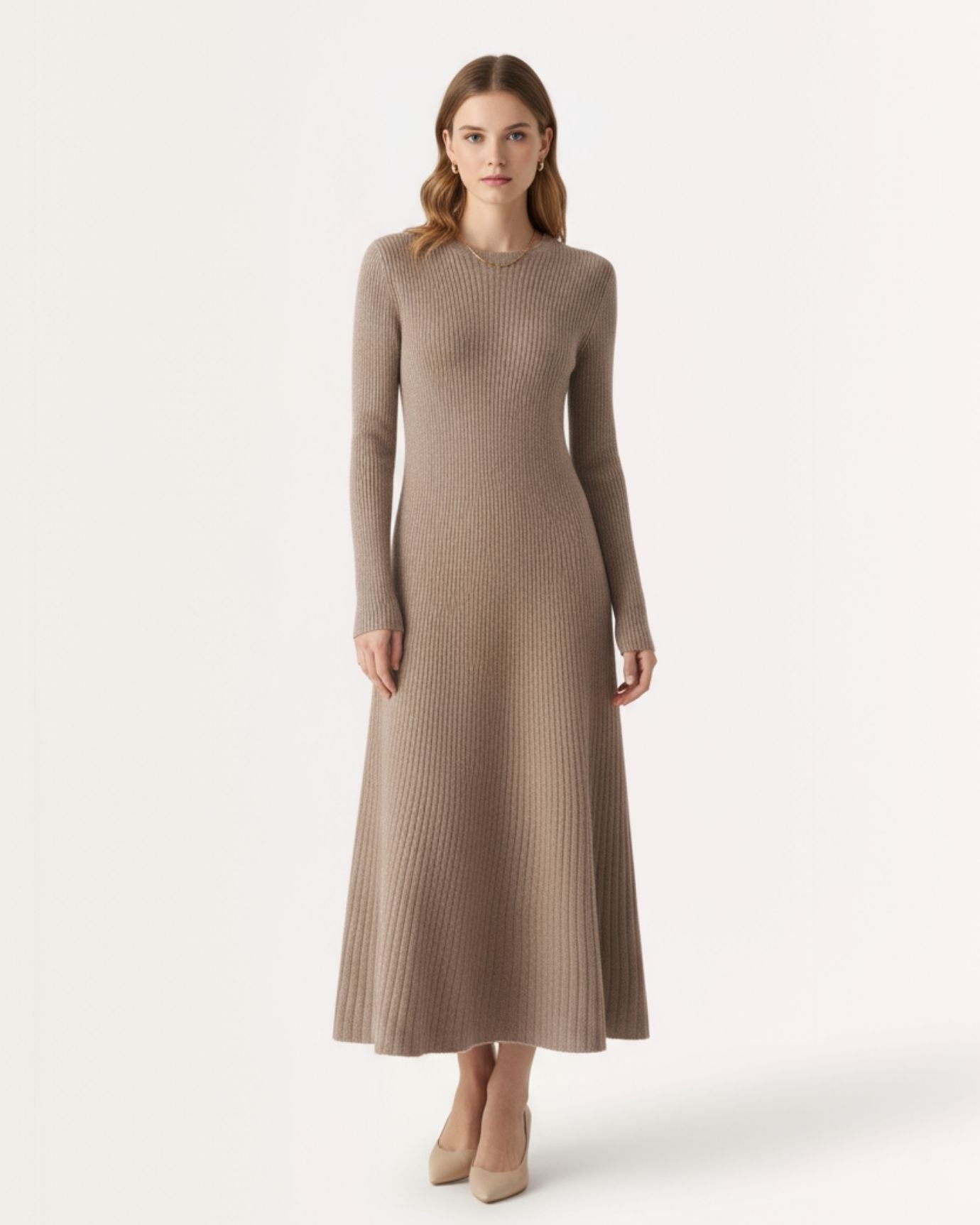
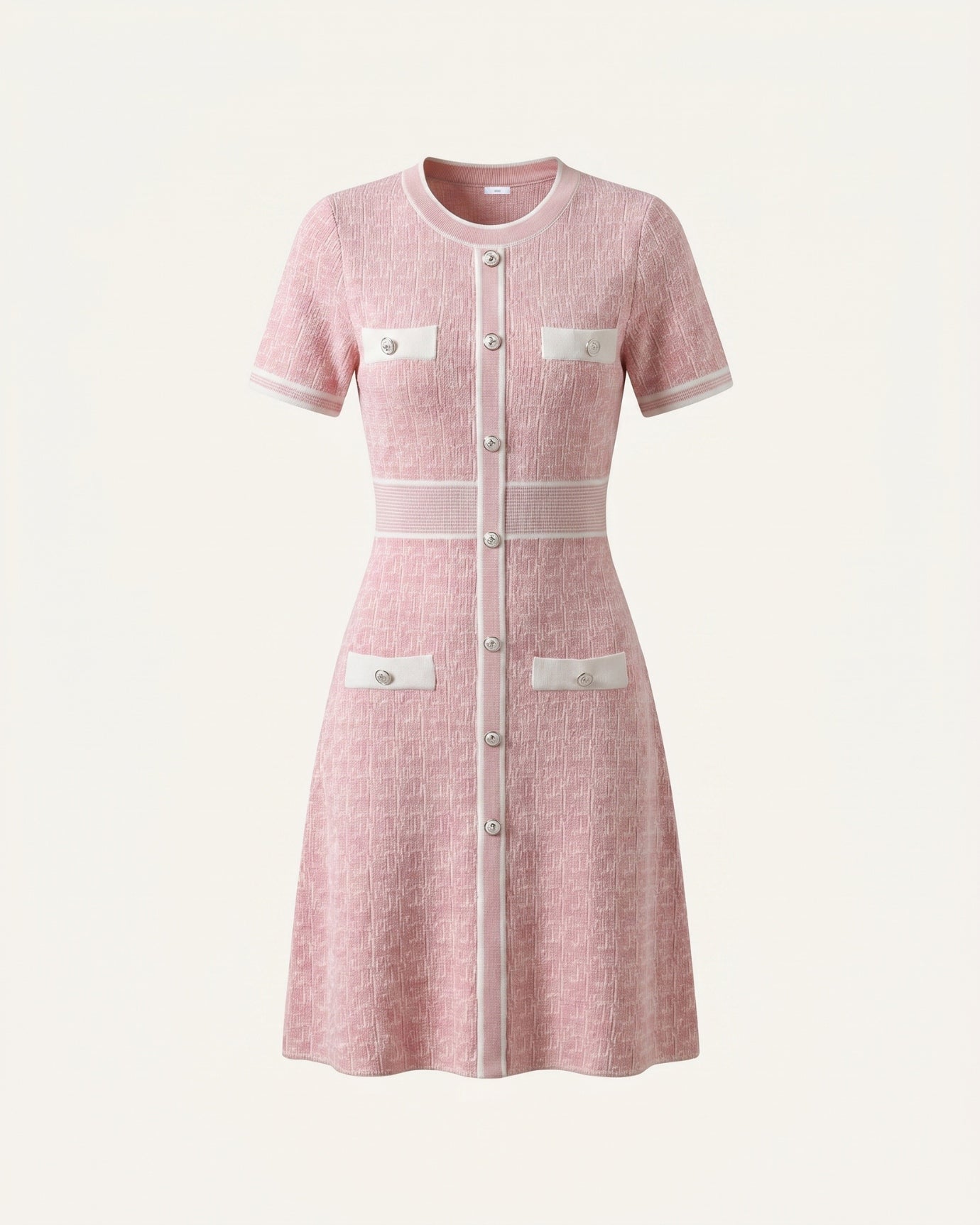
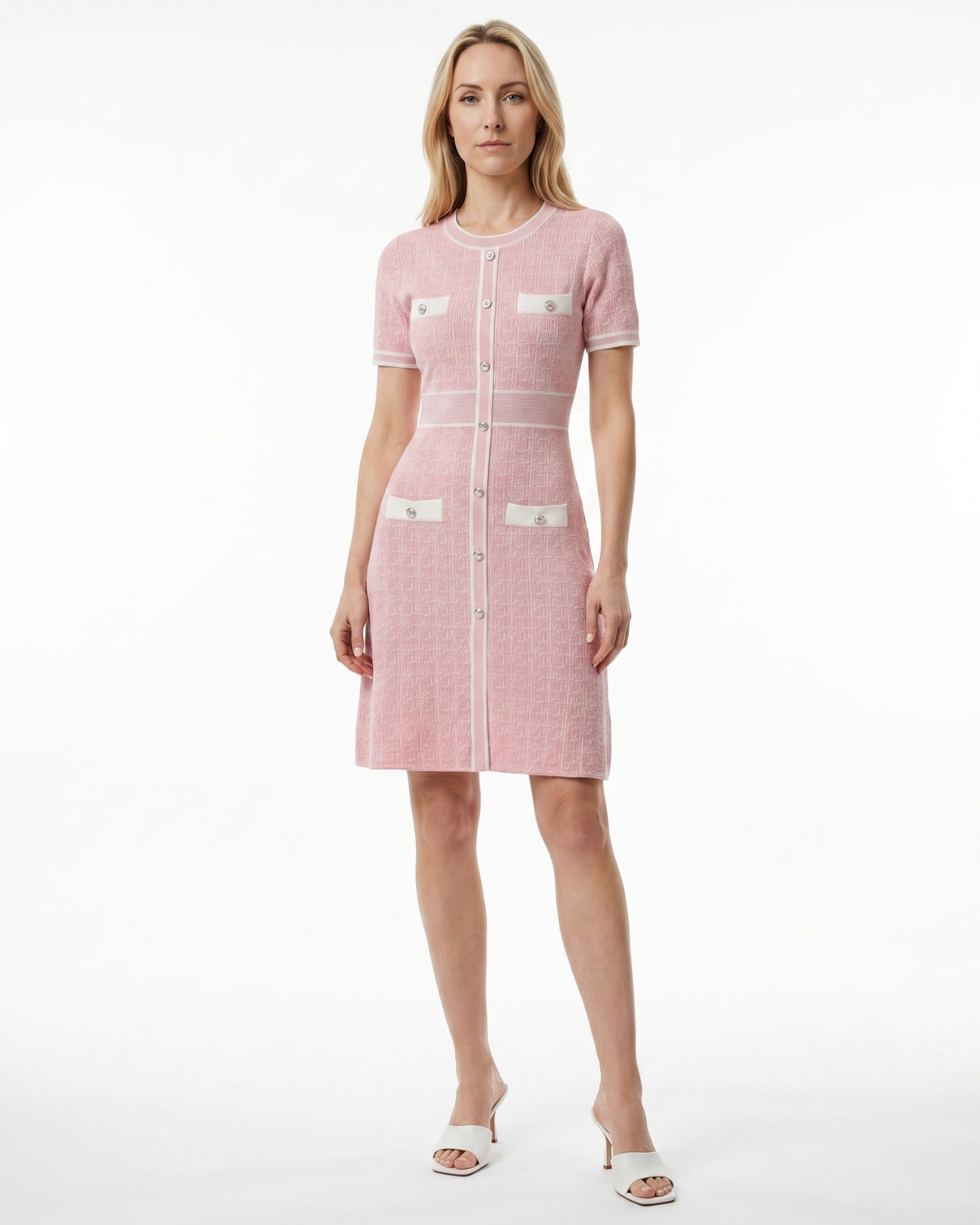
For cooler months, a knitted midi dress responds well to a cropped coat. The Lovau Style A-Line Knitted Dress has enough structure in its knit to hold its shape under a fitted cropped coat without bunching or losing its A-line flare.
Cropped coats in boucle, tweed, or textured wool are the most elegant versions of this pairing. They add visual weight to the upper body, which balances the length of the midi skirt below. Avoid cropped coats in very lightweight fabrics at this length, as they tend to look informal rather than intentional.
As Harper's Bazaar notes on coat proportions, the cropped-over-midi combination has become one of the defining silhouettes of considered European dressing, precisely because it respects both garments rather than subordinating one to the other.
Expert insightIf your cropped coat has a structured shoulder, you can wear it slightly off the shoulder over a strapless or thin-strap midi dress for a more relaxed but still polished effect, particularly appropriate for daytime events in warmer months.

Matching Coat Choice to Occasion and Dress Style
Proportion is the technical foundation, but occasion is what determines which technically correct option to actually choose. A long wool coat and a cropped boucle jacket might both work over the same midi dress in terms of hemline proportion, but they communicate entirely different things.
For work and professional settings, the knee-length or long coat in a solid, neutral colour is the most appropriate choice. Worn over the Contrast Collar Pleated Dress in Navy and White, a navy or camel knee-length coat creates a complete, authoritative look that requires no further adjustment.
For afternoon social occasions, such as a gallery visit, a lunch, or a cultural event, a cropped coat or a shorter trench over a polka dot midi dress or a lace midi dress reads as relaxed but considered. The print or texture of the dress is visible and carries the visual interest; the coat provides structure without competing.
For evening occasions, a long coat is almost always the right answer. It preserves the formality of the outfit and protects the dress beneath it. Over the Giulia Midi Burgundy Dress, a long charcoal or black coat creates an evening look that is complete from the moment you arrive.
For travel, the long trench coat is the most practical and elegant choice. It works over almost every midi dress in our midi dresses collection, it packs well, and it functions as a layer across a wide temperature range.
If you are building a wardrobe of midi dresses and want to understand which styles suit different body types before deciding on coat pairings, our article on how to choose the right dress for your body shape covers the foundational decisions that inform every layering choice.
For a full view of the range, our day dresses collection and evening dresses collection both include midi options suited to different coat pairings.

Fabric and Colour: The Details That Complete the Pairing
Once you have settled on the right coat length for your midi dress and occasion, the remaining decisions are about fabric weight and colour relationship. These are not afterthoughts; they are what separate a good outfit from a genuinely polished one.
Fabric weight pairing: match the weight of the coat to the weight of the dress. A heavy double-faced wool coat over a fine silk or chiffon midi dress creates an imbalance where the coat visually crushes the dress. A better approach is to choose a coat in a medium-weight fabric, such as a light wool, a structured cotton, or a fine cashmere blend, that moves in proportion with the dress beneath it. The woman wool dress in old money style is a midi dress with enough structural weight to support a full-weight wool coat without losing its shape.
Colour relationships: there are three approaches that consistently work. First, tonal dressing, where coat and dress are in the same colour family, perhaps a stone coat over a cream dress, or a deep navy coat over a lighter blue midi. Second, contrast, where a clearly different coat colour frames the dress, such as a camel coat over a burgundy midi. Third, neutral coat over printed dress, which is the most reliable formula for printed or textured midi dresses. A plain coat in ivory, camel, grey, or black will never fight a printed dress.
The approach to avoid is a printed coat over a printed dress unless you are very confident in your pattern-mixing. Most of the time, one pattern is enough.
According to Vogue's style guides on outerwear, the most enduring coat-and-dress combinations in European fashion have consistently relied on tonal restraint: one strong colour or print per outfit, with the other piece providing a quiet, structural counterpoint. This is the principle that underlies the old money aesthetic, and it applies here as directly as anywhere.

| Coat Length | Best Midi Dress Silhouette | Occasion | Fabric to Choose | What to Avoid |
|---|---|---|---|---|
| Long (ankle-length) | Straight, column, or fitted midi | Evening, formal, travel | Wool, cashmere blend, gabardine trench | Very voluminous coat over full-skirted midi |
| Knee-length | Fitted or lightly A-line midi | Work, smart-casual, afternoon events | Double-faced wool, structured cotton | Ending too close to a full-skirted midi hem |
| Cropped (at natural waist) | High-waisted, A-line, or pleated midi | Daytime, casual-smart, cultural occasions | Boucle, tweed, textured wool | Cropped coat ending at the hip rather than the waist |
| Mid-thigh | Narrow or column midi only | Transitional weather, relaxed daytime | Light wool, linen blend | Pairing with full or gathered midi skirts |
| Below-knee (just above midi hem) | Straight midi only, with significant hem gap | Autumn, layered daytime dressing | Structured wool or trench fabric | Hemlines within 10 cm of each other |
Frequently asked questions
Can a coat be shorter than a midi dress?
Yes, and it often looks better than a coat that almost matches the midi hem. The key is that the coat must end clearly above the dress hem, ideally at the natural waist for a cropped coat, or at the knee for a mid-length coat, leaving a visible and deliberate gap. A coat that ends within 10 centimetres of the midi hem tends to look unresolved. For structured midi dresses that suit layering, the Giulia Midi Black Dress is a good reference point for how much hem should remain visible below a knee-length coat.
What coat works with a pleated midi dress?
A pleated midi dress creates volume at the hem, so the two best coat options are a long coat that falls below the pleating entirely, or a cropped coat that ends above the waist and lets the pleats move freely. A knee-length coat over a heavily pleated midi tends to interrupt the skirt's movement and create a silhouette that reads as bulky. The Contrast Collar Pleated Dress in Navy and White pairs well with a long navy or camel coat for exactly this reason.
What coat length is most flattering for petite women wearing midi dresses?
For petite women, a long coat that falls to the ankle or just below the midi hem creates the most flattering vertical line, as it avoids any horizontal interruption across the leg. A cropped coat at the natural waist is also a strong option, because it keeps the eye moving downward through the full length of the midi skirt. The length to be most careful with is the knee-length coat, which can cut across the leg at a point that shortens the silhouette. Our article on finding the perfect hem length for midi dresses based on height goes into further detail on this.
Can I wear a trench coat over a midi dress in winter?
A trench coat over a midi dress works in winter if you layer correctly beneath it. The trench itself is not a warm coat, so the warmth needs to come from the dress: a wool midi, a velvet midi, or a dress worn over opaque tights and a fine knit underlayer. The Woman Wool Dress Old Money Style is warm enough to make a trench coat functional in cool temperatures without requiring additional visible layering.
Choosing the right coat length for a midi dress comes down to three things: the gap between hemlines, the occasion, and the fabric weight of both pieces. Long coats offer the cleanest silhouette and the most formal result. Cropped coats, when they end at the natural waist, create a graphic and modern pairing. Knee-length coats work best when the dress is fitted and the hemline gap is generous. What all three approaches share is intentionality: the coat and the dress should look as though they were chosen together, not simply layered out of necessity. Browse the full midi dresses collection to find the dress first, and let the coat choice follow from there.