


Finding the Perfect Maxi Dress That Doesn't Drag on the Floor
Reading time 15 min • 2903 words
The maxi dress is one of the most enduring silhouettes in a woman's wardrobe, and also one of the most frequently returned. The reason is almost always the same: the hem drags, bunches at the ankle, or hits at an unflattering in-between point that is neither floor-length nor midi. None of this is a flaw in the dress itself. It is a fit problem, and fit problems have solutions.
Getting a maxi dress right requires three things working together: knowing your standing measurement, understanding how fabric weight changes where the hem lands, and choosing a silhouette that suits your proportions. This is not complicated, but it does require a small amount of attention before you buy, rather than after the package arrives.
At Lovau, we design for women who dress with intention. The pieces in our maxi dress collection are cut to skim, not swamp. This guide will give you the framework to find your fit, whether you are shopping with us or anywhere else.
Key takeaways
- Measure from your natural waist to the floor while wearing the heel height you plan to pair with the dress, then compare against the garment's listed length before ordering.
- Fabric weight determines how a hem behaves: chiffon floats and adds length visually, linen falls straight, jersey clings and shortens.
- A hem that grazes the top of the foot is the most versatile finish for a maxi dress, working with both flat sandals and low heels.
- Petite women can wear maxi dresses successfully by choosing styles with a high waist seam, avoiding heavy fabrics that compress the silhouette.
- A structured wide-brim hat balances a long hemline and keeps the proportion from feeling overwhelming.
In this guide
- How to Measure Yourself for a Maxi Dress Before You Order
- How Fabric Weight Changes Where Your Hem Actually Lands
- Silhouette Choices That Make Length Work for Your Proportions
- The Right Shoes Change Everything About Maxi Dress Length
- When and How to Have a Maxi Dress Hemmed
- Completing the Look: Proportion, Accessories, and the Case for a Hat
- Frequently asked questions
How to Measure Yourself for a Maxi Dress Before You Order
The single most useful thing you can do before ordering any floor-length dress is take one measurement: the distance from your natural waist to the floor. Do this standing in bare feet on a hard floor, with a soft tape measure held straight down the side of your body. Write that number down.
Now add the heel height of the shoes you plan to wear most often with the dress. If you typically wear flat sandals, your bare-foot measurement is your working number. If you favour a 5 cm block heel, subtract that from your floor-to-waist measurement to get your effective dress length.
Most maxi dresses are sized for a woman standing 170 to 175 cm tall in flat shoes. If you are shorter, a standard maxi will drag. If you are taller, it may hit mid-calf and lose the silhouette entirely. Neither outcome is the one you want.
When you find a dress you like, check the product's listed length measurement, usually given from the shoulder or from the waist seam depending on the style. Compare it against your own number. A difference of 3 to 4 cm is manageable with a simple hem alteration. More than that and you are looking at a significant tailoring job, which may or may not be worth the cost of the dress.
For a broader look at how hem length interacts with height across different dress styles, our guide on finding the perfect hem length for midi dresses based on height covers the same principle applied to shorter silhouettes.
Expert insightTake your measurement twice, once in the morning and once after you have been standing for a few hours. Posture changes through the day and can affect where a hem sits by as much as a centimetre.

How Fabric Weight Changes Where Your Hem Actually Lands
Two dresses can share identical measurements and behave completely differently at the hem. The reason is fabric weight and drape, and understanding this will save you from repeated disappointment.
Chiffon and georgette are lightweight and fluid. They float slightly away from the body and can add 2 to 3 cm of visual length because the hem moves and catches air. If you are on the shorter side, a chiffon maxi will almost always need shortening.
Linen and cotton fall straight. What the tape measure says is what you get. These fabrics do not float or cling, so they are the most predictable to fit. A linen maxi in the right length is one of the most honest garments you can own. Our French niche style white dress in a clean cotton weave is a good example of this predictability in practice.
Jersey and ponte cling to the body and pull slightly downward due to their weight. A jersey maxi may sit 1 to 2 cm lower at the hem than the same measurement in woven fabric. For taller women, this is rarely a problem. For petite women, it compounds the dragging issue.
Velvet is heavy and structured. It does not float, it does not cling, it hangs with authority. The velvet designer old money style dress is cut with this in mind, but it is worth noting that velvet hems read longer visually because the fabric has presence.
The practical rule: if the fabric is light and floaty, order slightly shorter or plan for a hem. If the fabric is structured and heavy, the listed length is close to what you will experience.
Expert insightHold a fabric swatch at arm's length and let it fall. If it floats back up, the hem will behave the same way on your body. If it drops straight, you can trust the measurement.

Silhouette Choices That Make Length Work for Your Proportions
The silhouette of a maxi dress is not just an aesthetic choice. It directly affects how the length reads on your body and whether the hem sits where it should.
High-waisted and empire cuts are the most forgiving for petite women. By placing the waist seam above the natural waist, these styles create a longer leg line and allow the skirt portion to fall cleanly to the floor without the extra fabric a standard waist cut would create. The blue striped dress in Lovau style uses vertical stripe patterning alongside a clean waist to achieve exactly this effect.
A-line silhouettes are universally reliable. The skirt flares gradually from the waist, which means the hem circumference is wide enough to move freely without dragging at the front while the back catches. This is the silhouette least likely to cause uneven hem issues when you walk. For more on the mechanics of this shape, our piece on the anatomy of a perfect fit-and-flare dress silhouette goes into detail.
Straight-cut and column silhouettes require the most precise length. Because the hem circumference is narrow, there is no room for error. A column maxi that is 3 cm too long will drag visibly and consistently. These are beautiful on taller women with the right heel, but they demand accuracy.
Tiered and ruffled hems are more forgiving because the layering creates visual interest that disguises minor length variations. The dreamy retro gentle floral dress uses soft tiering that allows the hem to float rather than land at a single fixed point, which is practical as much as it is pretty.
If you are working out which silhouette suits your body shape more broadly, our guide on how to choose the right dress for your body shape is a useful companion read.

The Right Shoes Change Everything About Maxi Dress Length
A maxi dress and a flat sandal are a natural pairing, but the combination requires the dress to be cut for flat shoes, which most are not. Standard maxi lengths assume at least a small heel, roughly 3 to 5 cm, to keep the hem off the ground. If you prefer to wear flats, you have two options: buy a dress specifically noted as suitable for flat shoes, or plan to have it hemmed.
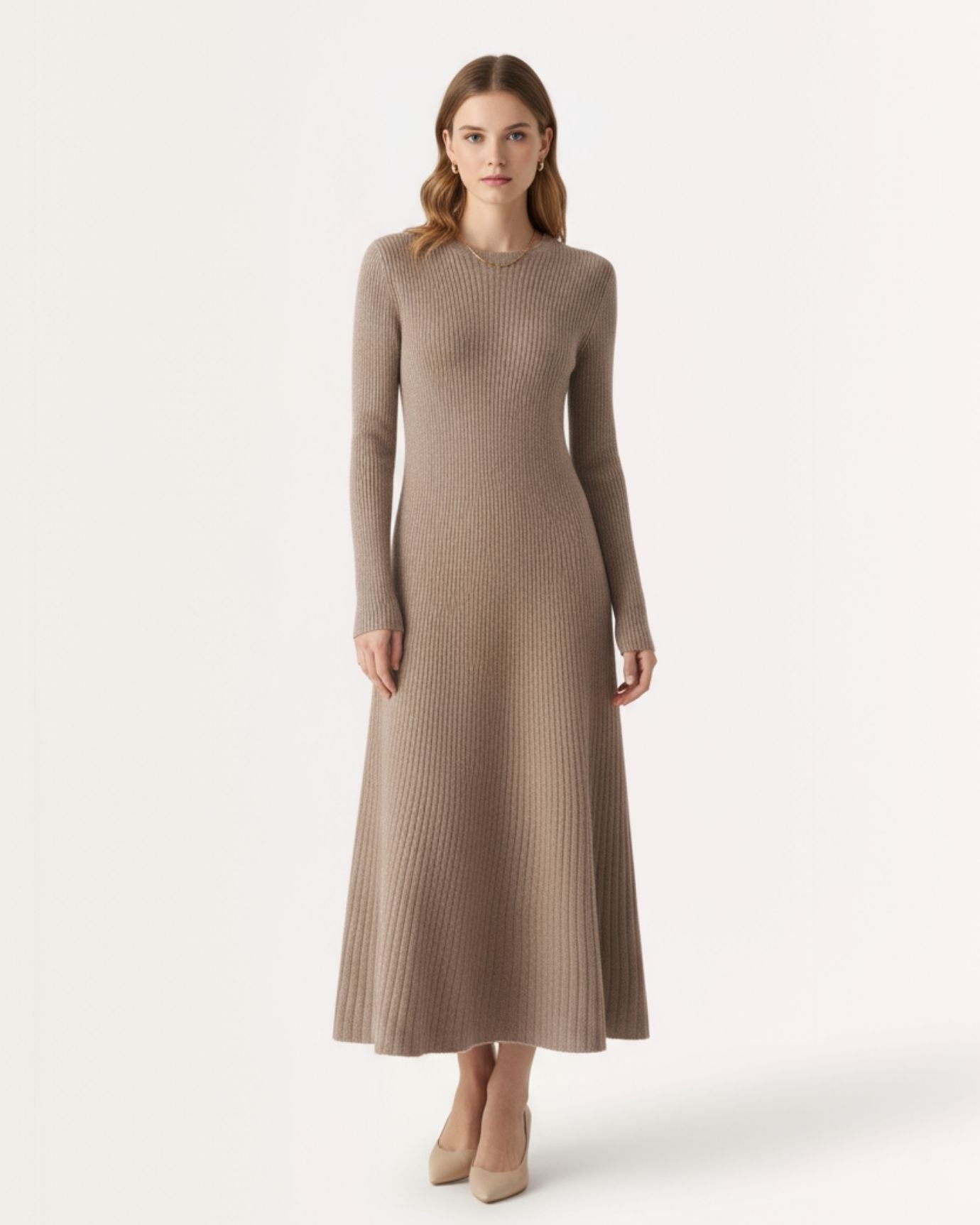
The ideal hem height for flat shoes is 1 to 2 cm above the floor at the front, grazing the top of the foot. This reads as intentional and allows you to walk without catching the fabric. Any lower and you are fighting the dress with every step.
With a block heel or wedge, a hem that brushes the floor at the back is elegant and deliberate. The slight train effect, when controlled, is a classic look. The key word is controlled: if the fabric is bunching rather than trailing cleanly, the dress is too long for the shoe.
With strappy flat sandals, a hem at ankle bone height is actually the most practical and polished choice. It shows the sandal, keeps the fabric out of the dirt, and works well for warm-weather occasions. Pairing this with a wide-brim sun hat creates a proportion that is confident and complete.
For footwear that works across all these scenarios, our loafers in old money style and broader dress shoes collection offer options that pair well with floor-length silhouettes without adding excessive height.
Vogue has consistently noted that the relationship between hem height and shoe choice is one of the most frequently misjudged aspects of dressing, and it is one of the easiest to correct with a little planning.
Expert insightBring the shoes you plan to wear to any fitting or hemming appointment. A tailor cannot set the right length without knowing the heel height.

When and How to Have a Maxi Dress Hemmed
Hemming a maxi dress is a straightforward alteration that most tailors can complete in under an hour. It is not a drastic intervention. It is routine maintenance for a garment you intend to wear properly.
When to hem: If your dress drags more than 1 cm at the front when you are wearing your intended shoes, hem it. If it bunches at the ankle when you walk, hem it. If the fabric is catching under your feet, hem it immediately.
What to tell the tailor: Wear the shoes you will wear with the dress. Stand naturally, not on your toes, not with exaggerated posture. Ask the tailor to pin the hem so it grazes the top of the foot at the front and touches the floor lightly at the back. This is the classic maxi hem position.
Fabric-specific considerations: Chiffon and georgette require a rolled hem or a French seam finish to avoid fraying. Linen and cotton can take a simple folded hem. Jersey needs a stretch stitch or a serger finish, not a straight stitch, which will pop when the fabric moves. Velvet should be hand-stitched at the hem to avoid a visible ridge on the face of the fabric.
Cost: In most European cities, a basic maxi hem costs between 15 and 35 euros depending on the fabric. Delicate fabrics like chiffon cost more because they require more time. Budget this into the cost of the dress when you are deciding whether to buy.
For dresses that are already well-proportioned out of the box, the in Paris style long-sleeved dress with belt is cut with a belted waist that makes length adjustments visually clean, and the woman wool dress old money style has a structured hem that responds well to alteration. For more on caring for and styling floor-length pieces, our article on the best outerwear to pair with floor-length dresses is worth reading alongside this one.
For context on why hem construction matters structurally, the Wikipedia article on sewing covers the technical basis of seam and hem types used in garment construction.

Completing the Look: Proportion, Accessories, and the Case for a Hat
A maxi dress that fits correctly is already doing most of the work. What you add on top should reinforce the proportion, not compete with it.
The hat question: A wide-brim hat is one of the most effective accessories for a floor-length dress because it creates a visual anchor at the top that balances the length at the bottom. Without something at the head, a very long dress can feel like it is pulling the eye downward. A structured straw hat or a felt wide-brim keeps the proportion vertical and gives the whole look a sense of intention. Browse the Lovau woman sunglasses and accessories collection for pieces that work with this principle.
Layering: A tailored blazer or light jacket over a maxi dress is one of the most practical and polished combinations in a warm-weather wardrobe. The structured shoulder of a blazer creates a clean top line that the flowing skirt works against. For a detailed approach to this pairing, our article on how to wear a tailored blazer over a silk maxi dress covers the specifics.
Belts and waist definition: If your maxi dress has no waist seam, a slim belt at the natural waist breaks the column of fabric and makes the length feel deliberate rather than accidental. This is especially useful on straight-cut styles.
Colour and pattern: Vertical stripes and small-scale prints make a maxi dress feel lighter and less overwhelming. Large horizontal patterns on a floor-length dress can feel heavy. Solid colours in medium to light tones are the most versatile and the easiest to proportion correctly.
For occasions that call for something more formal, the evening dresses collection includes floor-length options designed with length precision in mind.

| Fabric | Drape & Movement | Length Behaviour | Hem Ease | Best For |
|---|---|---|---|---|
| Chiffon / Georgette | Floats, very fluid | Adds 2-3 cm visually | Requires rolled or French hem | Summer occasions, warm evenings |
| Linen / Cotton | Falls straight, minimal float | True to measurement | Simple folded hem | Daywear, travel, resort |
| Jersey / Viscose | Clings, pulls downward | Sits 1-2 cm lower than listed | Needs stretch stitch finish | Casual wear, comfort dressing |
| Velvet | Structured, heavy hang | Reads longer visually | Hand-stitch only at hem | Autumn, winter, formal occasions |
| Wool crepe | Smooth, controlled drape | Very true to measurement | Clean folded hem, press well | Year-round, smart occasions |
Frequently asked questions
How long should a maxi dress be if I am petite?
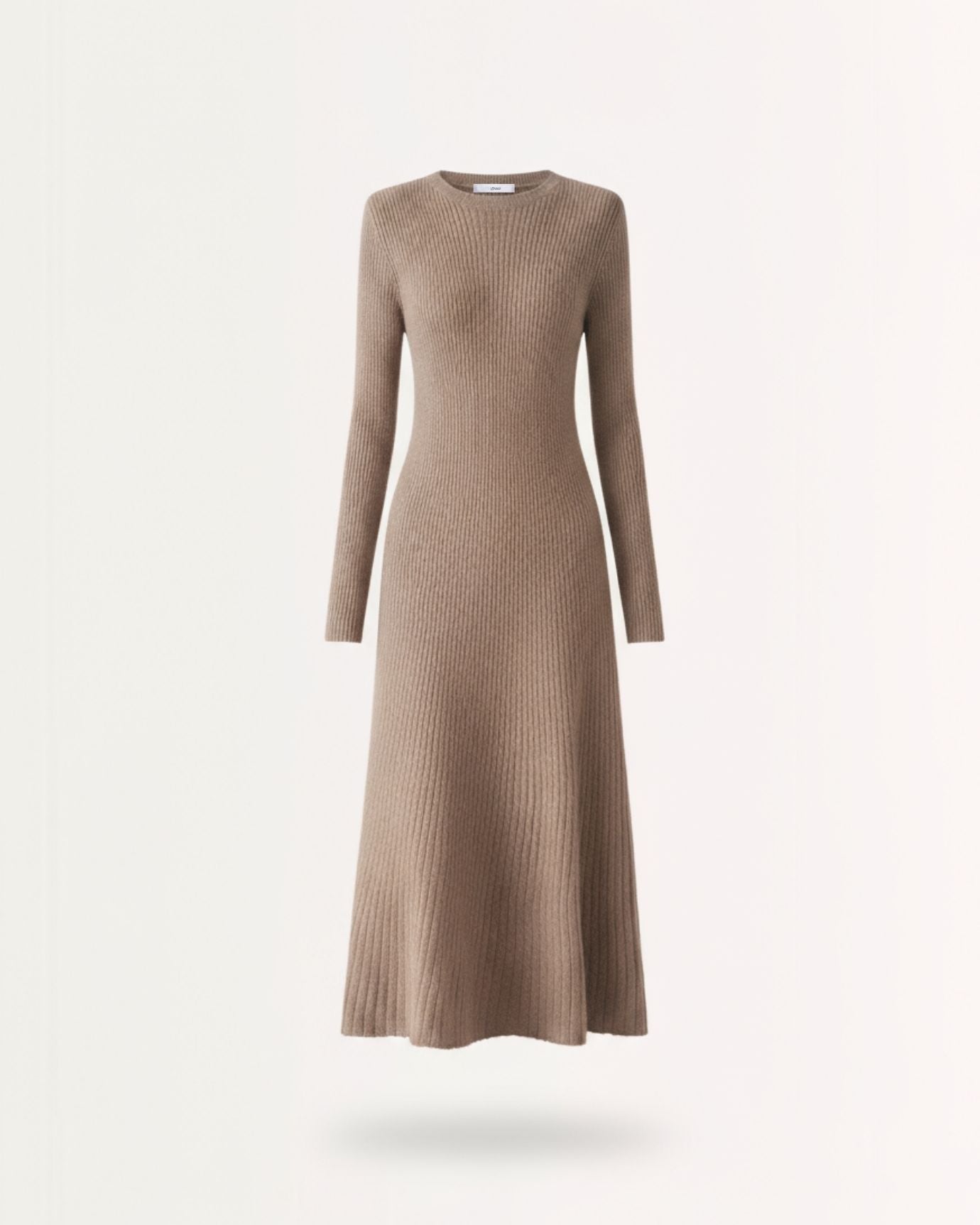
For women under 163 cm, a maxi dress should ideally sit 1 to 2 cm above the floor at the front when worn with flat shoes. Most standard maxi dresses are cut for women around 170 cm, so expect to have 5 to 8 cm removed by a tailor. Choosing styles with a high waist seam helps, as the skirt portion falls from a higher point and covers less distance to the floor. Our maxi dresses collection includes styles with high waist construction that work well for shorter proportions.
Can I wear a maxi dress with flat sandals without it dragging?
Yes, but the dress needs to be the right length for flat shoes specifically. Most maxi dresses are cut assuming a 3 to 5 cm heel. If you prefer flat sandals, either look for a dress described as suitable for flat wear, or have the hem raised by a tailor before you wear it. A hem that sits at the top of the foot, roughly 1 to 2 cm off the floor, is the correct position for flat sandals.
What is the easiest way to temporarily shorten a maxi dress without cutting it?
The most reliable temporary method is to fold the hem up from the inside and secure it with hem tape, which is a heat-activated adhesive strip available at most fabric shops. This works well on cotton and linen. For jersey or chiffon, hem tape can leave marks, so folding and using a few hand stitches in a thread that matches the lining is a cleaner option. Both methods are reversible.
Does a maxi dress need to be floor-length, or can it be slightly shorter?
A maxi dress technically refers to any dress that falls to the ankle or below, so there is a range. A hem at the ankle bone is technically a maxi and is often more practical for everyday wear. A hem that grazes the floor is more formal and deliberate. Neither is wrong. The key is that the length looks chosen, not accidental. For the range between maxi and midi, our article on finding the perfect hem length for midi dresses based on height addresses the in-between zone specifically.
A maxi dress that fits is one of the most versatile and enduring pieces a woman can own. It works across seasons, occasions, and decades, and it asks very little of you beyond the initial effort of getting the length right. Measure before you buy, understand your fabric, and do not hesitate to take a dress to a tailor if the hem is off by even a few centimetres. The difference between a dress that drags and one that skims is often less than the cost of a good lunch. Start with something well-made and correctly proportioned, and the rest follows naturally. Explore the full woman dress collection to find pieces built with that kind of precision from the start.