


The Right Way to Steam and Press Premium Cotton Shirts
Reading time 13 min • 2560 words
A well-pressed shirt is one of the clearest signals of personal discipline. It requires no explanation and no accessory to reinforce it. The shirt simply looks right, and that quiet correctness is the whole point.
Premium cotton, whether a fine poplin, a mercerized two-ply, or a heavier Oxford weave, responds differently to heat and moisture than the blended fabrics most irons are calibrated for. Press it too hot and you flatten the weave permanently, or worse, leave a shine that no amount of re-pressing will fix. Press it too cool and the wrinkles barely move. The margin is narrow, but the technique is entirely learnable.
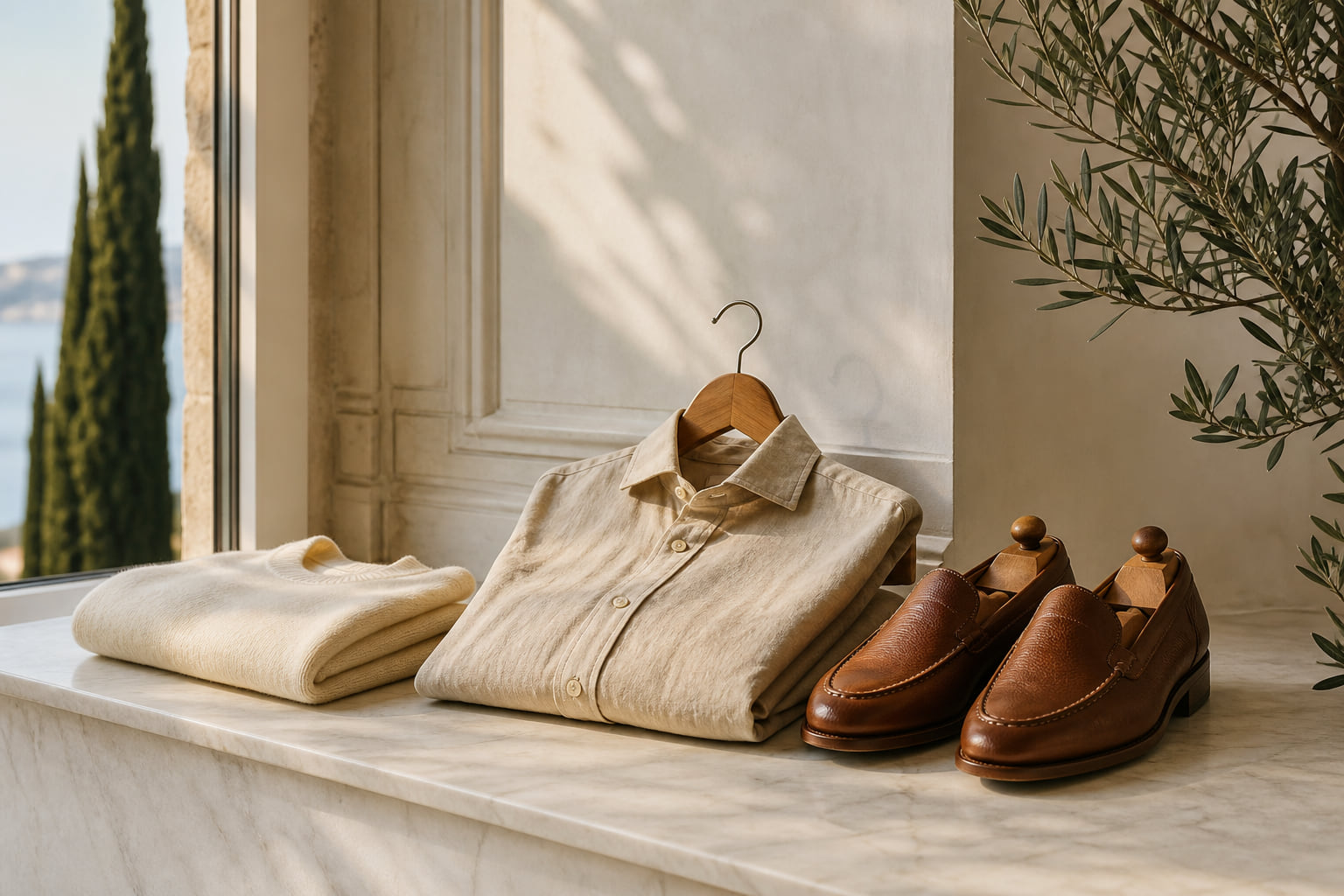
This guide covers the full process: preparing the shirt, choosing between steaming and pressing, working through each section in the correct order, and finishing so the result actually holds. It applies equally to a crisp premium cotton dress shirt worn to a business meeting and to a relaxed linen-cotton piece worn on a warm evening in the city.
Key takeaways
- Always press cotton shirts slightly damp, either misted with water or steamed first, for a clean, flat result without scorching.
- Use a pressing cloth between the iron and any fine-weave or mercerized cotton to protect the fabric's surface sheen.
- Press collars from the collar points inward to avoid creasing the tips.
- Hang a pressed shirt immediately on a wooden hanger; leaving it folded reintroduces creases within minutes.
- A handheld steamer is best for refreshing a shirt between wears; a flat iron is essential for a truly sharp finish on cuffs and plackets.
In this guide
- Understanding Your Cotton Before You Apply Any Heat
- Steamer vs. Iron: When to Use Each One
- Temperature, Pressure, and the Pressing Cloth
- The Correct Order: Working Through the Shirt Section by Section
- Common Mistakes That Damage Fine Cotton
- Maintaining the Result: Storage and Between-Wear Care
- Frequently asked questions
Understanding Your Cotton Before You Apply Any Heat
Not all cotton shirts are the same fabric, and the differences matter the moment you pick up an iron. Cotton is a natural cellulose fibre that responds well to heat and steam, but the way the yarn has been treated and woven changes its tolerance considerably.
Plain-weave poplin is the most common shirt fabric. It has a tight, smooth surface and tolerates direct heat well at around 200°C, provided the shirt is damp.
Oxford weave is heavier and more textured, with a basket-like construction. It holds wrinkles more stubbornly and benefits from a longer steam phase before pressing.
Mercerized cotton has been treated with sodium hydroxide under tension, which swells the fibres and produces a notable surface sheen. This finish is permanent, but it is also sensitive to aggressive ironing. Press mercerized cotton with a pressing cloth to protect the lustre. If you want to understand why this process is worth the investment in the first place, our article on why mercerized cotton t-shirts are worth the money explains it in detail.
Cotton-linen blends, like those used in the Italian Cotton Linen Shirt, require a slightly lower temperature than pure cotton because linen fibres are less forgiving of excess heat. Set your iron to the cotton setting but test on an inside seam first.
Before you do anything else, check the care label. A shirt labelled 'cotton' may still have a small percentage of elastane or modal blended in, which lowers the safe ironing temperature to around 150°C.
Expert insightIf your shirt has no care label or the label has faded, test heat tolerance on the inside of the back hem, never on the collar or placket where a mistake is immediately visible.

Steamer vs. Iron: When to Use Each One
The debate between steaming and ironing is not a matter of which is better overall. They do different things, and the best results come from using both in sequence.
A handheld garment steamer works by relaxing the cotton fibres with hot vapour without applying direct pressure. This is ideal for removing light travel creases, refreshing a shirt between wears, and preparing fabric for pressing. It will not produce a sharp crease on a cuff or a flat placket. For a shirt that needs to look genuinely pressed rather than just unwrinkled, steaming alone is not enough.
A flat iron applies heat and pressure together, which is what sets a crease permanently and produces the clean, flat surface associated with a properly dressed shirt. The limitation is that a dry iron on dry cotton risks scorching. Always introduce moisture.
The most effective method is to steam the shirt first, either with a garment steamer or by hanging it in a hot shower for ten minutes, then press it while still slightly damp. The steam relaxes the fibres; the iron sets them flat.
For the Cotton Old Money Shirt, which has a structured, traditional cut that rewards a sharp finish, the combined approach makes a visible difference. The collar and cuffs press to a clean edge, and the front placket lies perfectly flat.
Expert insightFill your steam iron with distilled water, not tap water. Mineral deposits from tap water accumulate in the steam vents and eventually spit brown marks onto white or light-coloured fabric.

Temperature, Pressure, and the Pressing Cloth
Temperature settings for cotton shirts:
- Pure fine poplin or broadcloth: 190 to 210°C (cotton setting on most irons)
- Oxford weave cotton: 180 to 200°C
- Cotton-linen blend: 160 to 180°C
- Mercerized cotton: 150 to 170°C with a pressing cloth
Always let the iron reach full temperature before you begin. Starting to press while the iron is still heating up means inconsistent results across the shirt.
Pressure matters as much as heat. On fine cotton, use moderate pressure and let the steam do the work. Pressing down hard with a very hot iron on a fine weave will flatten the texture and produce a synthetic-looking shine. On heavier Oxford fabric, firm pressure is appropriate and necessary.
The pressing cloth is a thin piece of cotton muslin or fine linen placed between the iron and the shirt. It diffuses heat slightly and protects the fabric surface from direct contact. It is essential for mercerized cotton and any shirt with a visible weave texture you want to preserve. You can buy pressing cloths from any good haberdashery, or use a clean white cotton handkerchief.
A pressing cloth is also useful when pressing the outside of a collar, where the iron can catch the edge and leave a ridge if applied directly. Our guide on how to keep white shirts brilliant white without bleach covers related fabric care points worth reading alongside this one.
Expert insightNever use a pressing cloth that is coloured or printed. Any dye in the cloth can transfer to a damp shirt under heat, particularly on white or pale fabric.

The Correct Order: Working Through the Shirt Section by Section
Pressing a shirt in the wrong order means you re-crease sections you have already finished. The correct sequence is:
1. Collar Unfold the collar and press the underside first, working from the collar points toward the centre back. Flip it over and press the outer surface with a pressing cloth. Then fold the collar down and press along the fold line lightly. Never press the collar while it is already folded up, as this sets a crease at the wrong angle.
2. Cuffs Unbutton the cuffs and open them flat. Press the inside first, then the outside. Work from the button end toward the seam. On double-cuff (French cuff) shirts, press the entire cuff flat before folding it.
3. Sleeves Lay the sleeve flat along the ironing board, aligning the seams. Press the underside, then flip and press the top. A sharp crease along the top of the sleeve is a traditional detail on dress shirts. If you prefer no crease, avoid pressing directly along the fold line.
4. Back Start with the yoke (the panel across the upper back). Drape it over the narrow end of the ironing board and press. Then work down the back panel in long strokes.
5. Front panels and placket Press the buttonhole side first, using the tip of the iron to navigate around the buttons without pressing directly over them. Then the button side. Press the placket flat with firm strokes.
6. Hang immediately Place the finished shirt on a wooden hanger as soon as you are done. Do not leave it on the ironing board or fold it. The fabric is still warm and will set in whatever shape it holds in the first few minutes of cooling.
This sequence works equally well for the High Count Fine White Linen Shirt and for a classic cotton Oxford, with the only adjustment being a lower temperature for the linen blend.

Common Mistakes That Damage Fine Cotton
Most shirt damage from ironing comes from a small number of repeated errors. These are the ones worth knowing.
Pressing a completely dry shirt. Cotton needs moisture to respond to heat. A dry iron on dry cotton requires much higher pressure to remove wrinkles, which stresses the fibres and can cause shine or scorching. Mist the shirt with clean water from a spray bottle, or use a steam iron on full steam output.
Leaving the iron stationary. Even at the correct temperature, leaving a hot iron on fabric for more than a few seconds will scorch fine cotton. Keep the iron moving at all times.
Ironing over buttons. The heat can crack or dull resin buttons, and the edge of a button under the iron can leave a permanent impression in the fabric. Always press around buttons with the iron tip, never over them.
Pressing the collar fold too sharply. A collar that has been pressed into a very sharp fold along its roll line will break down at that point over time. Press the collar lightly along the fold, not with full pressure.
Storing a shirt while still warm. Folding or hanging a shirt in a tight wardrobe before it has cooled means the warmth sets new creases. Allow two to three minutes of open-air cooling on the hanger before putting it away.
For shirts with a particularly fine surface, such as the High-End Double Mercerized Lyocell Cotton Long Sleeve T-Shirt, the difference between careful technique and careless pressing is visible to anyone standing close enough to have a conversation.

Maintaining the Result: Storage and Between-Wear Care
Pressing a shirt well is only useful if the result holds until you wear it. Storage and between-wear habits determine whether a shirt looks pressed or merely ironed.
Wooden hangers are the correct choice for shirts. Wire hangers allow the shoulders to deform over time, creating a bump at the shoulder seam that no amount of pressing will fully correct. A wooden hanger with a shaped shoulder maintains the shirt's structure.
Wardrobe spacing matters. Shirts pressed flat against other garments will pick up creases from the surrounding fabric. Leave enough space between hanging shirts for air to circulate.
Between wears, a garment steamer used at a distance of five to eight centimetres will relax minor creases without requiring a full re-press. This is enough to keep a shirt looking considered for a second or third wear before it needs the iron again.
Collar and cuff rotation is a practical note: the collar and cuffs of a shirt accumulate wear faster than the body. Pressing them repeatedly in exactly the same position accelerates fibre breakdown at the fold. Vary the fold position slightly each time you press.
For those building a wardrobe around clean, considered pieces, the full range of premium men's shirts includes options in pure cotton, cotton-linen, and fine linen, each with its own care logic. The retro vintage lyocell linen shirt in particular benefits from steam rather than direct pressing, given the lyocell content, which responds to heat differently from pure cotton.
Garment care at this level is not complicated. It is consistent. The same twenty minutes of attention applied the same way each time produces results that accumulate into a wardrobe that simply always looks right.

| Shirt Fabric | Steam Only | Iron Only (dry) | Iron with Steam/Damp | Pressing Cloth Needed |
|---|---|---|---|---|
| Fine poplin cotton | Reduces creases, no sharp finish | Risk of shine and scorch | Best result, sharp finish | Recommended |
| Oxford weave cotton | Softens wrinkles, not flat | Adequate if fabric is damp | Best result, full texture preserved | Optional |
| Mercerized cotton | Good for refreshing, preserves sheen | High risk of sheen damage | Correct method, use low heat | Essential |
| Cotton-linen blend | Good for light creases | Risk of linen fibre damage | Best result at lower temperature | Recommended |
| Lyocell-cotton blend | Preferred method for daily refresh | Not recommended | Use with caution, low heat only | Essential |
Frequently asked questions
What temperature should I use to iron a premium cotton shirt?
For most fine poplin or broadcloth cotton shirts, set your iron between 190 and 210°C, which is the standard cotton setting on most irons. Cotton-linen blends should be pressed at 160 to 180°C, and mercerized cotton at 150 to 170°C with a pressing cloth. Always ensure the shirt is slightly damp before pressing.
Is it better to steam or iron a cotton shirt?
For a truly sharp, pressed finish, a flat iron is necessary. Steaming alone relaxes wrinkles but does not set a clean edge on collars, cuffs, or plackets. The best approach is to steam first to relax the fibres, then press while the fabric is still slightly damp. This applies to everything from a casual cotton Oxford striped long-sleeve shirt to a structured dress shirt.
How do I press a shirt collar without creasing the tips?
Always start at the collar points and work inward toward the centre back, on both the inside and outside of the collar. Never drag the iron outward toward the points, as this pushes the fabric and creates a puckered crease at the tip. Use the iron tip rather than the flat plate for the last two centimetres near each point.
How often should I press a premium cotton shirt?
A shirt that has been pressed correctly and stored on a wooden hanger in an uncrowded wardrobe will often only need a light steam refresh between wears. A full re-press is typically needed after every two to three wears, or after washing. Washing and pressing too frequently does accelerate fibre wear over time, so spot-cleaning the collar and cuffs between full washes extends the life of the shirt considerably.
Pressing a premium cotton shirt correctly takes roughly the same time as pressing it carelessly, but the results are entirely different. The technique is a matter of sequence, temperature, and moisture, applied consistently. Once it becomes routine, it requires no particular effort and produces a result that is visible from across a room. For shirts worth wearing, it is worth doing properly. If you are building out a wardrobe of pieces that reward this kind of attention, the full collection of men's shirts offers a range of fabrics and cuts, each made to be worn well and cared for with the same consideration.