


The Difference Between a Wrap Dress and a Slip Dress
Reading time 14 min • 2777 words
Two dresses. Both beloved, both endlessly referenced in the vocabulary of refined style. Yet the wrap dress and the slip dress are genuinely different garments, with different construction logic, different fabric requirements, and different moments in which each one performs at its best. Confusing them is easy because both tend toward simplicity of appearance, but understanding the distinction will sharpen every wardrobe decision you make.
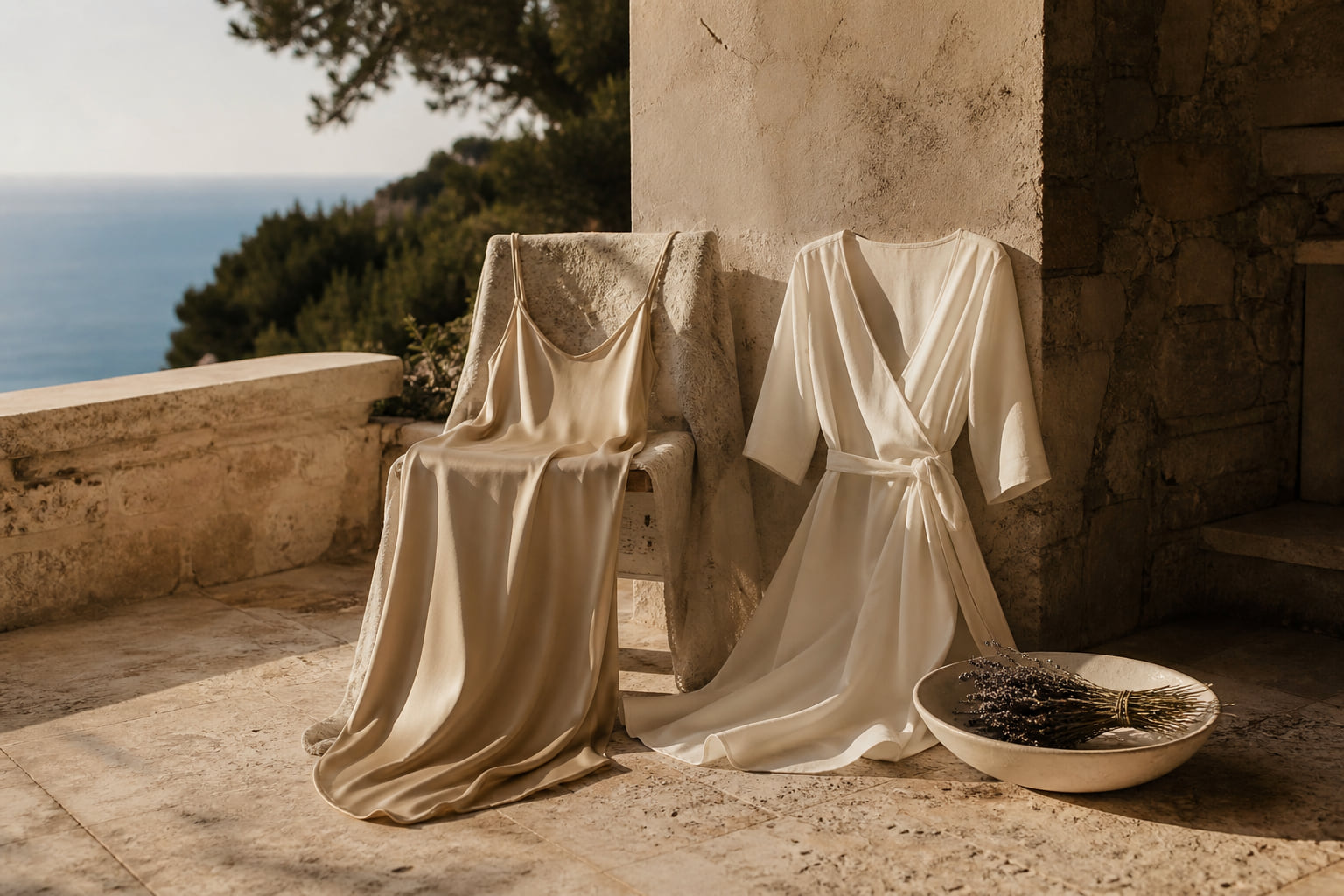
The wrap dress is defined by its closure: a front panel that crosses the body and ties at the waist, creating a natural V-neck and a silhouette that moves with you. The slip dress is defined by its absence of structure: it hangs from the shoulders, typically on thin straps, and relies entirely on the weight and drape of its fabric to follow the body. One is architectural. The other is sculptural.
Below, we work through every meaningful difference between these two silhouettes, from the cut and the fabric to the occasion and the shoes. We also show you specific pieces that demonstrate each approach at its best.
Key takeaways
- A wrap dress closes by tying at the waist, creating a V-neckline and adjustable fit, while a slip dress is a fixed, often bias-cut garment with minimal structure.
- Wrap dresses work across a wider range of body types because the tie closure lets you control the fit precisely at the waist.
- Slip dresses rely on the quality and drape of their fabric, typically silk, satin, or charmeuse, to create their effect.
- A wrap dress transitions easily from daytime to dinner; a slip dress reads more intentionally evening or resort unless layered carefully.
- Both silhouettes can anchor a quiet-luxury wardrobe, but they require different shoes, outerwear, and accessories to look polished rather than casual.
In this guide
Construction and Silhouette: How Each Dress Is Actually Built
The wrap dress traces its modern form to Diane von Furstenberg's 1974 jersey design, though wrapped and draped garments appear throughout fashion history going back centuries. You can read more about the wrap dress and its design history to appreciate how durable this construction really is. The defining feature is the front wrap: two panels cross over the body, one overlapping the other, and a tie or sash secures the waist. This creates a deep V-neckline as a natural consequence of the construction, not as a separate design decision. The waist is always defined. The skirt portion typically flares slightly from the hip, producing an A-line or softly flared silhouette.
The slip dress works from a completely different premise. It is essentially a structured undergarment refined to outerwear, a shift that became culturally legible in the 1990s when designers began showing satin slip dresses on the runway. Its construction is minimal: two panels, front and back, joined at the sides, suspended from the shoulders by straps. There are no darts in the traditional sense. Instead, a bias cut, fabric cut at a 45-degree angle to the grain, allows the cloth to stretch diagonally and conform to curves without any structural tailoring. The result is a dress that appears simple but depends entirely on precise cutting and fabric quality.
The practical difference: a wrap dress can be adjusted at the waist every time you put it on, making it genuinely adaptable to your body on any given day. A slip dress is a fixed garment, and its fit is determined at the point of purchase. If the fabric is right and the cut is accurate to your measurements, it will look extraordinary. If either element is slightly off, there is no adjustment to make.
Expert insightA wrap dress in a fluid fabric, crepe or matte jersey, will always read more refined than one in stiff cotton. The fabric needs to move with the wrap, not hold a shape against it.

Fabric: What Each Silhouette Demands
Fabric choice is not interchangeable between these two silhouettes. Each construction logic demands specific properties from its cloth.
For a wrap dress, you want fabric with enough body to hold the front panels in place and enough fluidity to drape without bunching at the tie. The classic choices are matte crepe, viscose jersey, and ponte. Matte crepe has a slight texture that prevents the fabric from sliding, which matters when the only thing holding the front panels together is a tie. Viscose jersey stretches gently and recovers well, which is why it became the signature fabric for the original wrap dress. Silk crepe de chine is the luxury option: it drapes beautifully and has just enough weight to keep the front panels from gaping. Avoid stiff fabrics like taffeta or thick cotton canvas; they will not fold and cross naturally at the front.
For a slip dress, the fabric is the entire point. Silk charmeuse and silk satin are the canonical choices because their weight and liquid drape are what make the silhouette read as intentional rather than underdressed. The bias cut only functions correctly in fabrics with natural drape and some give; a bias-cut slip dress in a stiff polyester will pull across the hips and bunch at the hem rather than flowing smoothly. Charmeuse has a matte reverse and a glossy face, which gives you some flexibility in how formally you wear it. Satin is uniformly high-sheen and reads more evening-specific.
If you are drawn to the slip dress silhouette but prefer something less overtly formal, look for pieces in washed silk or cupro, which has a similar drape to silk but a softer finish and a slightly lower price point. Our piece on the art of the silk slip dress in quiet luxury styling goes deeper on fabric selection for this specific silhouette.
Expert insightHold any slip dress fabric up to the light before buying. If it is semi-transparent, you will need a slip underneath, which changes the whole layering equation. Opacity matters as much as drape.

Fit and Body Considerations
This is where the two dresses diverge most practically.
The wrap dress is widely considered one of the most universally flattering silhouettes because the wearer controls the fit at the waist. You can tie it tighter for a more defined waist or looser for a more relaxed line. The V-neckline is inherently lengthening for the neck and upper body. The flared or A-line skirt balances the hip. Women with an hourglass or pear-shaped silhouette often find that a wrap dress in a fluid fabric works better than almost any other dress style because it follows the body's actual proportions rather than imposing a fixed shape onto them.
The slip dress is more demanding of the wearer. Because it has no structural waist definition, the visual effect depends on the relationship between the fabric's drape and the body underneath it. On a straighter silhouette, a well-cut bias slip dress can look extraordinarily elegant because the fabric falls in clean, uninterrupted lines. On a curvier figure, the bias cut will stretch and cling across the fullest points, which can look beautiful if that is the intention, but it requires confidence and the right undergarment choices. The kimberly waist-slimming strap dress is a good example of a slip-adjacent silhouette that incorporates subtle shaping into the construction itself, giving you the clean line of a slip dress with a more controlled fit.
For women who prefer the slip dress aesthetic but want more structure, look at pieces like the elegant Santorini strapless dress, which carries the minimal-strap spirit of a slip dress but with a structured bodice that removes the fit uncertainty entirely.
Expert insightIf a slip dress pulls across the hips when you walk, it is the wrong size or the wrong cut for your proportions. No amount of styling will fix a slip dress that is fighting your body.

Occasion: When to Reach for Each
The wrap dress is one of the most versatile silhouettes in daywear. It moves from a morning meeting to a lunch terrace to an early dinner without requiring a change of clothes or a change of accessories. A wrap dress in a dark matte crepe with simple pointed-toe flats from our loafers old money style collection reads polished and composed for professional settings. The same dress with strappy sandals and a linen tote reads relaxed and intentional for a weekend market or coastal afternoon. The in Paris style long-sleeved dress with belt captures this dual-use quality precisely: the belt detail reinforces the waist definition that makes wrap-style dresses so dependable across contexts.
The slip dress, by contrast, has a narrower natural occasion range. In its pure form, a silk or satin slip dress belongs to evening, resort, or a very specific kind of fashion-forward daytime dressing that requires layering to read as intentional rather than underdressed. A slip dress worn alone to a morning coffee reads as if you forgot something. The same dress over a fitted fine-knit turtleneck, or under a sharp blazer, immediately becomes a considered outfit. For evening dresses, the slip dress is often the most sophisticated choice precisely because its restraint stands out against more decorated alternatives.
If you want the slip dress aesthetic for daytime, layering is the answer. A fine ribbed long-sleeve underneath, or a light structured jacket on top, gives the slip dress the context it needs to read as dressed rather than undressed. Our piece on how to style a square neck dress for maximum elegance covers similar layering logic that applies directly here.

Styling: Shoes, Outerwear, and Accessories
The wrap dress and the slip dress ask for different supporting cast members.
With a wrap dress, the V-neckline creates an immediate focal point at the chest and neck. Keep jewellery simple: a single fine chain or small stud earrings. The neckline already does significant work. For shoes, the wrap dress is democratic. Block-heeled mules, pointed flats, loafers, and heeled sandals all work, depending on the formality of the occasion and the fabric of the dress. Outerwear should not fight the waist definition; a belted trench or a fitted blazer worn open will respect the silhouette. A shapeless puffer coat will undo it entirely. For transitional weather, the woman wool dress old money style shows how a structured, defined-waist dress in a heavier fabric can carry the same silhouette logic into cooler months.
With a slip dress, the restraint of the garment itself calls for restraint in everything else. Minimal jewellery: a thin gold chain, a simple bracelet. Shoes should be deliberately chosen: heeled mules or simple strappy sandals for evening, clean white trainers or pointed flats for a styled daytime look. The most common mistake with a slip dress is over-accessorising; the dress is already making a strong statement through its simplicity, and adding too much competes with that. For outerwear, a sharp single-breasted coat or a leather jacket worn off the shoulder works well. You can find layering inspiration in our day dresses collection, which includes pieces that bridge the gap between the two silhouettes.
For both dress types, sunglasses are a finishing detail that matters more than most people acknowledge. A classic frame from our woman sunglasses old money style collection can consolidate the entire aesthetic of either silhouette, particularly for outdoor occasions.

Choosing Between Them for Your Wardrobe
If you are building a wardrobe that works across multiple occasions without requiring constant reinvention, the wrap dress earns its place first. It is more adaptable, more forgiving of fit variation, and more legible across contexts. One wrap dress in a dark solid crepe and one in a small print will cover a remarkable range of situations from a professional presentation to a weekend lunch.
The slip dress earns its place as a more specialised investment. It is the dress you reach for when you want the room to notice the quality of your restraint. It requires more confidence to wear well, more thoughtfulness in layering for daytime, and more care in fabric selection. But when all of those elements align, the slip dress is genuinely one of the most sophisticated silhouettes available. Our lovau woman designer collection shows both approaches across a range of fabrics and occasions.
If you are newer to building a refined dress wardrobe, consider starting with a structured woman dress that borrows elements from both silhouettes: defined waist, clean neckline, quality fabric. The apricot ruffled tie dress is a useful example of a dress that uses a tie-waist detail borrowed from the wrap dress tradition while maintaining the clean, minimal line that makes slip-style dresses so appealing. You do not have to choose one aesthetic exclusively. The more interesting wardrobe often sits in the space between them.
For further reading on how specific dress silhouettes perform across seasons and styling contexts, our piece on how to incorporate velvet dresses into your winter rotation covers seasonal dress logic that applies broadly beyond velvet alone.

| Feature | Wrap Dress | Slip Dress |
|---|---|---|
| Construction | Overlapping front panels tied at the waist | Fixed panels suspended from shoulder straps, often bias-cut |
| Neckline | Deep V, created by the wrap itself | Typically square, V, or straight across, set by the cut |
| Waist definition | Adjustable via the tie, always defined | None built in; relies on bias cut and fabric weight |
| Best fabrics | Matte crepe, viscose jersey, silk crepe de chine | Silk charmeuse, silk satin, cupro, washed silk |
| Primary occasion | Day to dinner, professional to casual | Evening, resort, or layered daytime |
| Fit flexibility | High, the tie adjusts to your body each wearing | Low, fixed at purchase, depends on accurate sizing |
| Layering need | Optional, works standalone across most occasions | Often needed for daytime to read as intentional |
Frequently asked questions
Can a wrap dress be worn as a slip dress alternative for evening?
Yes, with the right fabric. A wrap dress in silk crepe de chine or a matte charmeuse blend will read as evening-appropriate when styled with heeled mules and minimal jewellery. The key is choosing a solid colour rather than a print, and a fabric with enough sheen or weight to signal formality. Browse our evening dresses collection for pieces that sit at this crossover point.
Is a slip dress appropriate for a professional setting?
On its own, rarely. The slip dress lacks the structural signals that professional environments typically read as composed and intentional. Layered under a sharp blazer or a structured cardigan, it can work in a creative office environment, but the slip dress is fundamentally an evening and resort silhouette. For professional dressing, a sheath, a wrap dress, or a belted midi will serve you better.
How do I stop a wrap dress from gaping or coming undone?
Two practical fixes. First, add a small snap or hook-and-eye at the waist underneath the tie, which prevents the front panels from shifting when you move. Second, choose a wrap dress with a sewn-in tie rather than a completely free wrap; many contemporary versions have one panel partially stitched to the bodice, which eliminates the gaping problem entirely while maintaining the adjustable-waist benefit.
What is the difference between a slip dress and a cami dress?
The terms are often used interchangeably, but there is a distinction. A slip dress typically refers to a longer garment, midi or maxi length, in a fluid fabric like silk or satin, with a bias cut. A cami dress is usually shorter and may be made in a wider range of fabrics including cotton and jersey. The slip dress has a stronger association with eveningwear heritage, while the cami dress reads more casually. Both share the thin-strap, minimal-structure construction logic.
The wrap dress and the slip dress are both worth understanding precisely because they are not interchangeable. One gives you daily versatility and a forgiving fit; the other gives you a specific, high-impact elegance that requires more careful deployment. A wardrobe that contains both, chosen in quality fabrics and worn with deliberate styling, covers a remarkable range of occasions without ever looking as though you are trying too hard. Start with the silhouette that matches your current lifestyle, and build from there. If you are still exploring which direction suits you, our full woman dress collection is the clearest place to see both approaches side by side.