


The Anatomy of a Perfect Fit-and-Flare Dress Silhouette
Reading time 15 min • 2969 words
The fit-and-flare dress is not a trend. It has appeared in every significant decade of twentieth-century fashion precisely because its geometry works with the female form rather than against it. A close-fitted bodice draws the eye to the narrowest point of the torso, and the outward flare of the skirt creates visual balance across the hips and legs. The result is a silhouette that reads as both structured and graceful.
What separates a genuinely well-constructed fit-and-flare from a dress that merely borrows the shape is almost entirely a matter of construction. The position of the waist seam, the internal boning or interfacing in the bodice, the cut of the skirt panels, and the weight of the fabric all determine whether the dress does its job or simply hangs. Understanding these details means you can shop with precision and dress with real intention.
This guide moves through every structural zone of the silhouette, from neckline to hem, and explains what to look for, what to avoid, and how to match the right version to your occasion and proportions.
Key takeaways
- A true fit-and-flare relies on a structured, seamed bodice that cinches at the natural waist, not just elastic gathering.
- The flare should begin at the hip or waist seam, not mid-thigh, to create genuine proportion.
- Fabric weight determines how the skirt moves: lighter weaves swing freely, heavier wovens hold a sculptural bell shape.
- Hem length changes the occasion entirely: mini reads playful, midi reads polished, knee-length reads classically versatile.
- Small tailoring adjustments at the waist seam or hem can transform an almost-right dress into a perfect one.
In this guide
- The Bodice: Where the Silhouette Begins and Ends
- The Waist Seam: Position Is Everything
- The Skirt: Panel Count, Flare Angle, and Hem Length
- Fabric Choices and How They Shape the Silhouette
- Proportion, Body Type, and Fit Adjustments
- Completing the Look: Footwear, Accessories, and Occasion Dressing
- Frequently asked questions
The Bodice: Where the Silhouette Begins and Ends
The bodice of a fit-and-flare dress carries the entire weight of the silhouette. If it does not fit precisely through the bust and torso, the waist seam will sit in the wrong place and the flare will begin too low or too high, distorting the proportions entirely.
A well-constructed bodice uses princess seaming, which means vertical seams that run from the shoulder or armhole down to the waist, curving around the bust. This technique allows the bodice to follow the natural contour of the torso without relying on darts alone. When you see a bodice that fits smoothly across the chest with no pulling at the bust and no wrinkling below the armhole, princess seaming is almost certainly responsible.
Internal structure matters as much as the outer fabric. Quality fit-and-flare dresses include a layer of interfacing or light boning at the bodice, particularly in strapless or sleeveless constructions. This prevents the bodice from collapsing inward as the day progresses. When shopping, press gently on the front panel of the bodice: it should have a subtle firmness, not feel limp.
The Contrast Collar Pleated Dress Sleeveless Two-Piece Style in Navy & White is a useful reference point here. Its structured sleeveless bodice sits cleanly at the natural waist, and the contrast collar creates a strong vertical line that draws the eye upward before the skirt takes over. This is exactly the architectural logic a good fit-and-flare bodice should follow.
Expert insightIf a dress bodice gaps at the back zip but fits perfectly through the bust and waist, a tailor can take in the back seam in under thirty minutes. Read more about these small adjustments in our guide to tailoring alterations that transform an outfit.

The Waist Seam: Position Is Everything
The waist seam is the architectural pivot of the fit-and-flare silhouette. Its position determines whether the dress flatters or frustrates, and it is the single most important measurement to verify before purchasing.
A natural waist seam sits at the narrowest point of the torso, typically one to two centimetres above the navel. This is the classical placement and produces the most balanced silhouette because the flare begins at the body's narrowest point, creating maximum visual contrast. A waist seam that sits too low, at the hip rather than the waist, produces a straight column effect through the torso and a flare that starts too late. A seam that sits too high, directly below the bust, creates an empire line, which is a different silhouette entirely.
When trying on a fit-and-flare dress, stand straight and check that the seam aligns with your natural waist. If it sits more than two centimetres off in either direction, the dress will not produce the correct proportion regardless of how well it fits elsewhere.
Waist definition through seaming versus gathering is another distinction worth understanding. A seamed waist uses structured panels sewn together at a fixed circumference, which gives a clean, precise fit. A gathered waist uses excess fabric pulled in by elastic or drawstring, which is more forgiving in sizing but produces a softer, less architectural line. For a truly polished fit-and-flare, a seamed waist is the stronger choice.
The In Paris Style Long-Sleeved Dress with Belt addresses waist definition through a different but equally effective method: a structured belt that cinches the natural waist from the outside. This works particularly well in cooler seasons when the dress fabric is heavier and the belt adds a second layer of visual structure.
Expert insightA belt added to a fit-and-flare dress must sit at the natural waist, not the hip. If the belt migrates downward during wear, the waist seam of the dress is likely sitting too low and the fit should be assessed by a tailor.

The Skirt: Panel Count, Flare Angle, and Hem Length
The skirt of a fit-and-flare dress is where the silhouette makes its statement. Three variables determine how it behaves: the number of panels, the angle of the flare, and the length of the hem.
Panel count affects both the shape and the movement of the skirt. A four-panel skirt produces a clean, geometric flare that holds its shape well in structured fabrics. A six or eight panel skirt creates a rounder, more fluid bell shape and moves more gracefully in lighter fabrics. Circle-cut skirts, which use a single piece of fabric cut in a full circle, produce the most dramatic swing but require a fabric with sufficient weight to avoid excessive volume.
Flare angle should be consistent from the waist seam to the hem. A skirt that flares sharply at the hip but then straightens toward the hem loses its visual energy. Conversely, a skirt that barely flares at all from a fitted waist is simply a sheath dress with a slightly wider hem, not a true fit-and-flare. Hold the dress at arm's length and look at the skirt from the front: the silhouette should form a clear, continuous A-shape from waist to hem.
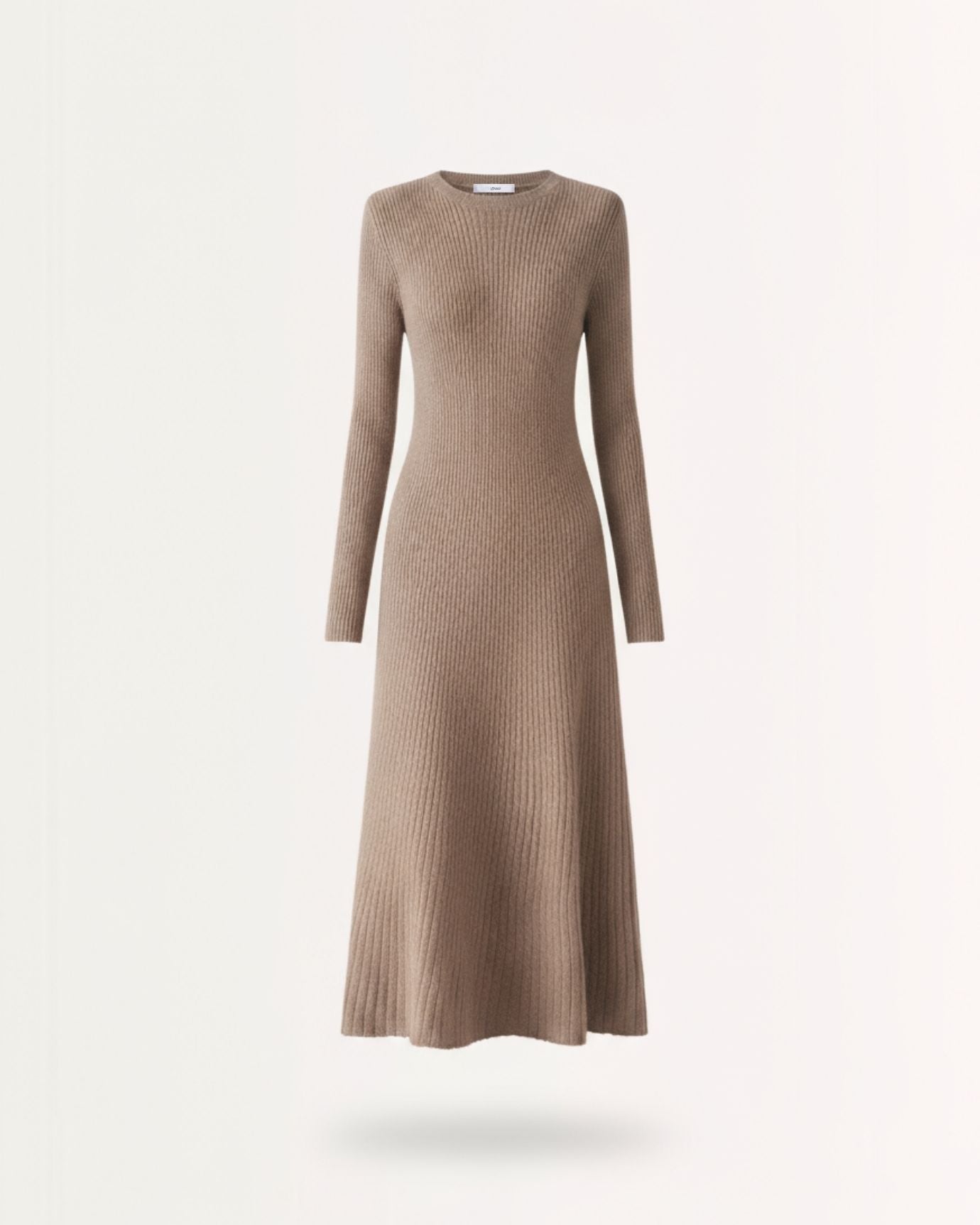
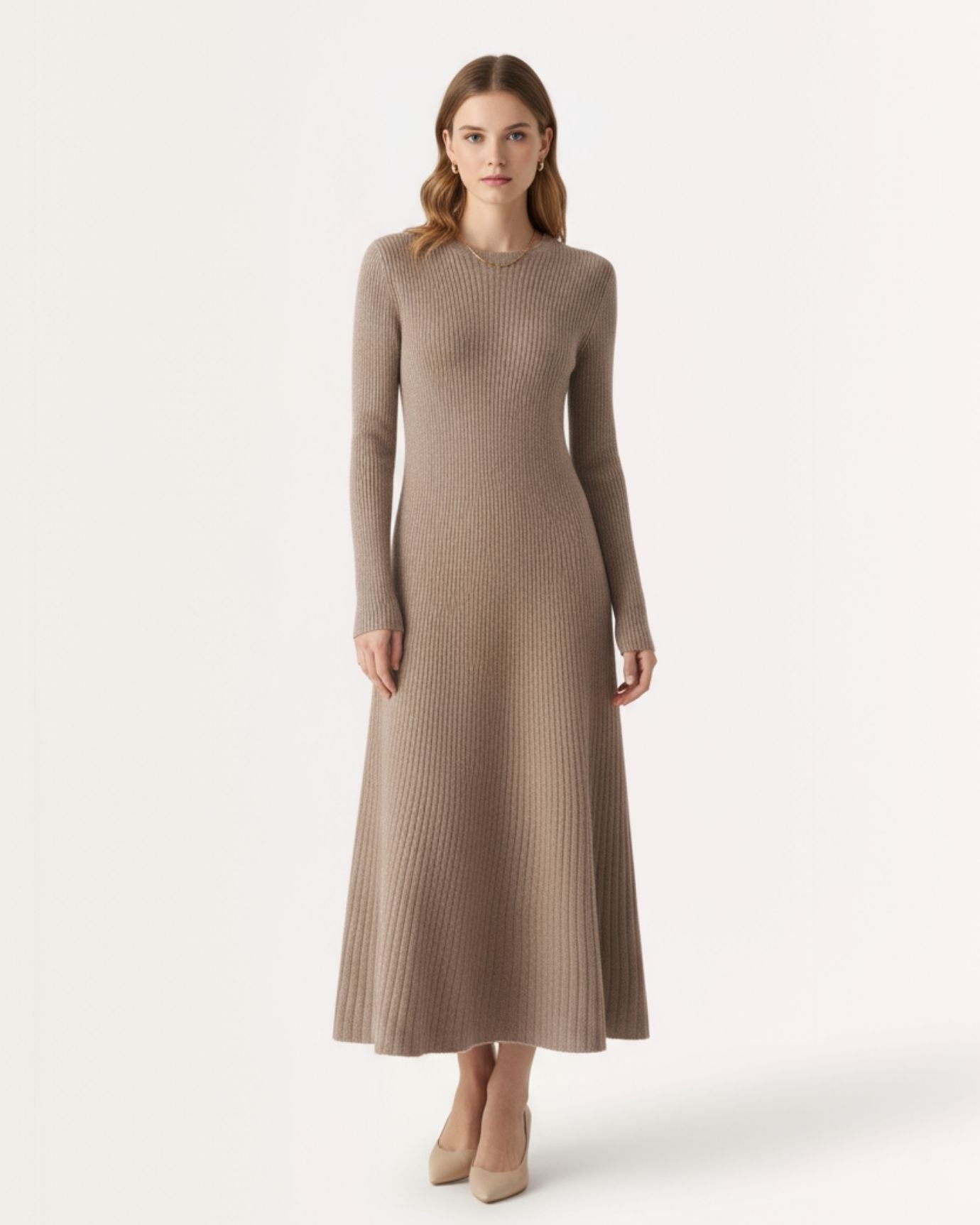
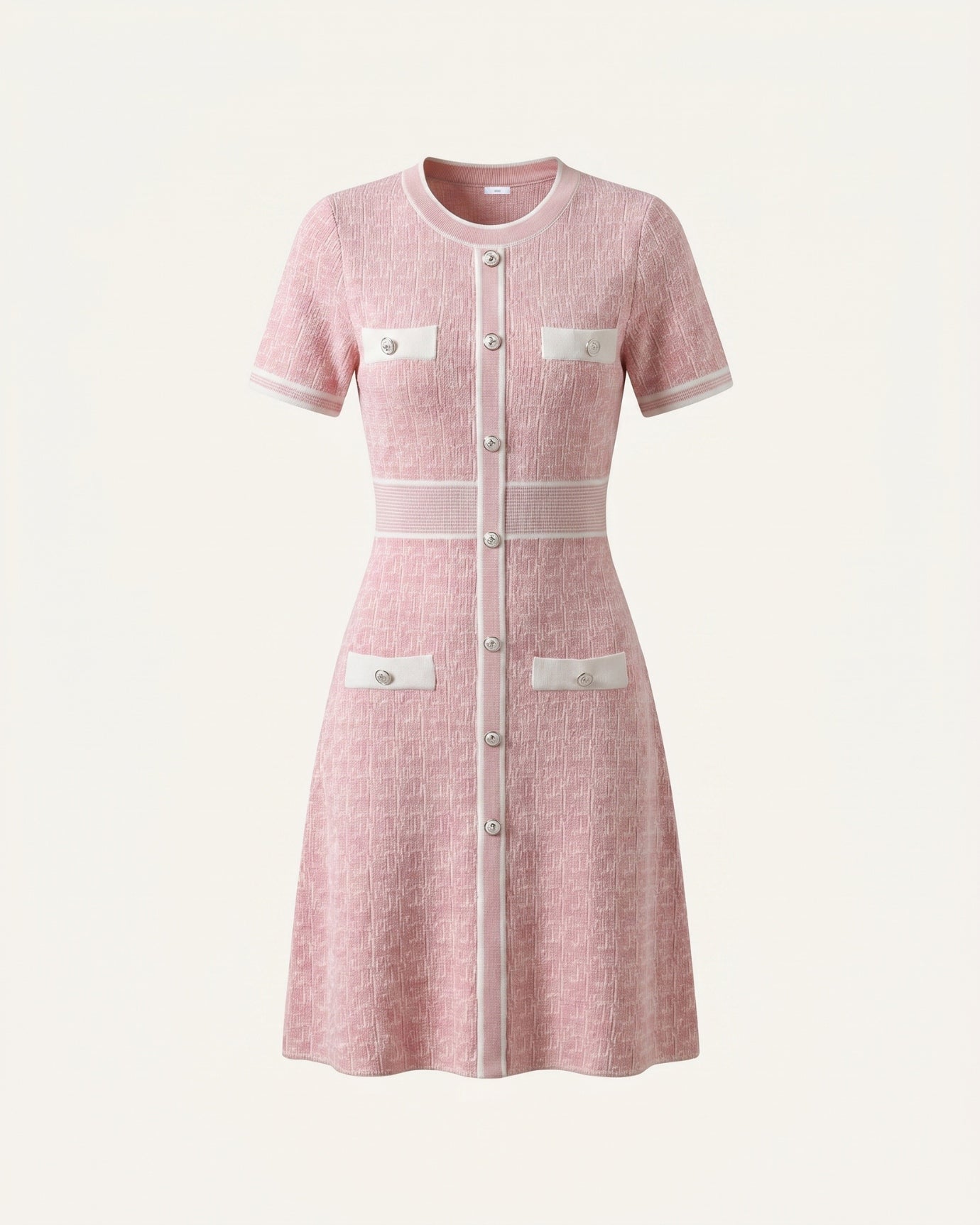
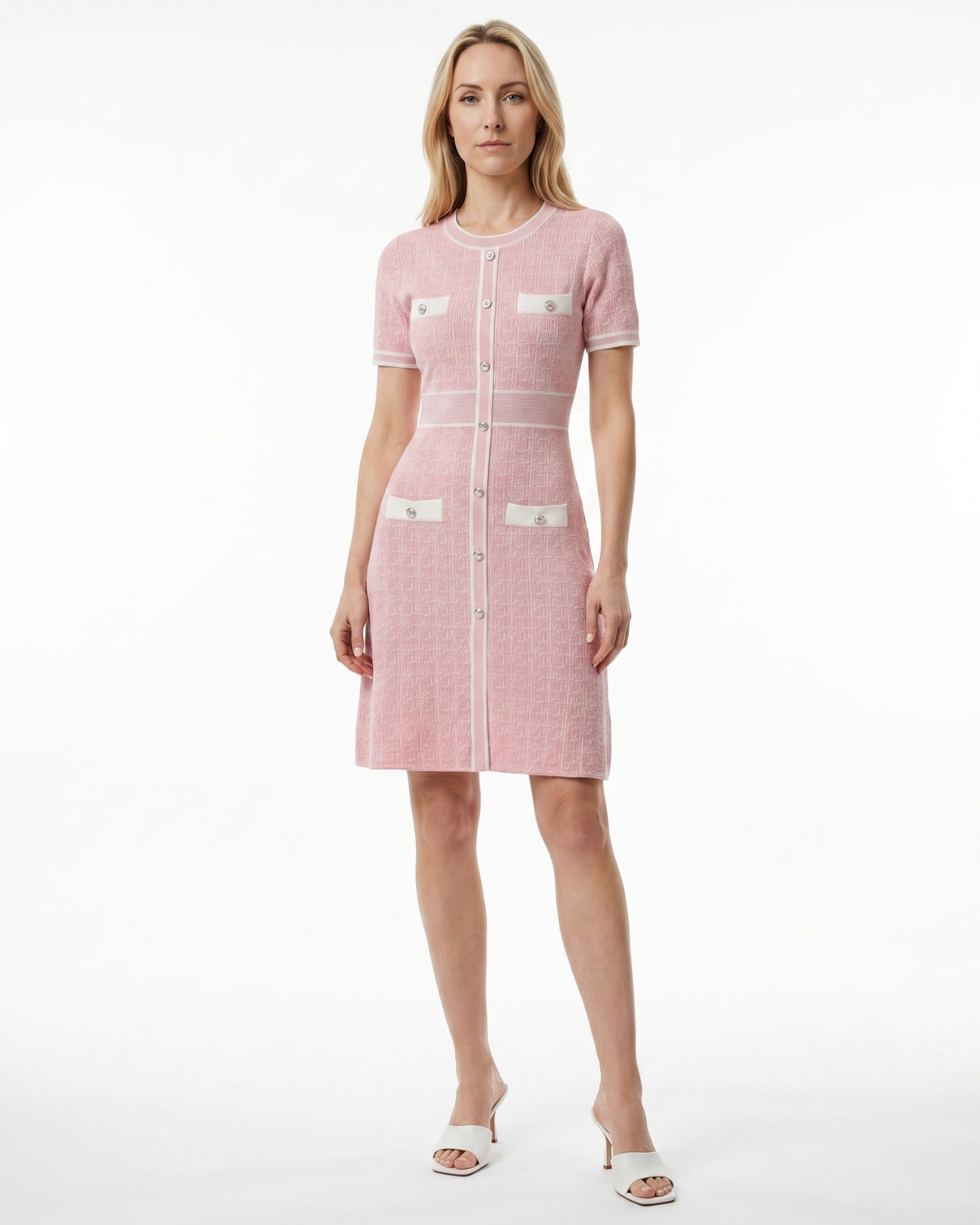
Hem length is a powerful variable. A mini hem, ending mid-thigh, reads playful and works well for summer occasions and casual settings. A knee-length hem is the most versatile, transitioning naturally between day and evening. A midi hem, falling below the knee to mid-calf, creates a more formal and refined impression and suits occasions where a longer line is appropriate. The Lovau Style A-Line Knitted Dress demonstrates the knee-length proportion particularly well, and its knit construction gives the skirt a soft, controlled flare that moves without excess volume.
For a more overtly romantic interpretation of the silhouette, the Dreamy Retro Gentle Floral Dress uses a printed fabric and a fuller skirt panel to amplify the flare while keeping the bodice trim. The floral scale is calibrated to the silhouette: larger prints work in fit-and-flare because the wide skirt gives the pattern room to read correctly.
You can explore the full range of day dresses to compare how different hem lengths and flare angles work across the collection.
Expert insightIf you are between hem lengths, choose the longer option and have the hem raised by a tailor. Taking a hem up is one of the simplest and least expensive alterations available, and it gives you precise control over the final proportion.

Fabric Choices and How They Shape the Silhouette
The fabric of a fit-and-flare dress is not a secondary consideration. It determines whether the silhouette holds its shape, how the skirt moves, and how the dress performs across different temperatures and occasions.
Woven fabrics with a medium to firm hand, such as cotton poplin, silk dupioni, structured crepe, and wool suiting, produce the most architectural fit-and-flare silhouette. The bodice holds its form without additional boning, and the skirt flares cleanly without collapsing. These fabrics are the traditional choice for daywear and formal occasions.
Knit fabrics produce a softer version of the silhouette. A fitted knit bodice with a flared knit skirt creates a more relaxed, body-conscious interpretation that works particularly well for transitional dressing. The Woman Wool Dress Old Money Style is a strong example: the wool knit construction creates a defined waist without rigid seaming, and the skirt has enough weight to hold a gentle flare. For advice on caring for this type of fabric, our guide on how to wash delicate knitwear without shrinking it covers the key techniques.
Lace is a fabric that requires careful handling in a fit-and-flare construction. Lace has little inherent structure, so it must be underlaid with a stable lining fabric that provides the actual shaping. When the lining is well-cut and the lace is applied as a surface layer, the result is a dress that reads as delicate while performing structurally. The Dina Short-Sleeve Lace Dress demonstrates this approach, with lace used as an overlay on a shaped underlining that maintains the bodice structure and skirt flare.
Velvet is the fabric of choice for evening fit-and-flare dresses in autumn and winter. Its weight creates a naturally full skirt and its surface absorbs light in a way that makes the silhouette appear even more sculptural. The Velvet Designer Old Money Style Dress is worth studying for how the fabric's drape reinforces the fitted-then-flared structure.
A useful external reference: Wikipedia's overview of dress silhouettes provides historical context for how fabric weight has always been central to silhouette construction in Western fashion.

Proportion, Body Type, and Fit Adjustments
The fit-and-flare silhouette is often described as universally flattering, and there is structural logic behind that claim. The defined waist creates a visual hourglass regardless of the body's natural measurements, and the flared skirt adds volume to the lower half in a controlled way. However, proportion still matters, and small adjustments can make a significant difference.
For a longer torso, look for a waist seam that is positioned slightly higher than the natural waist, or choose a dress with a belt that you can position precisely. A longer bodice on a longer torso can look balanced, but if the bodice length exceeds what the eye reads as the waist zone, the proportion shifts.
For a shorter torso, avoid deep waistbands and heavy belt details that visually shorten the bodice further. A clean seamed waist with no additional embellishment at the waistline keeps the torso looking proportionate.
For fuller hips, the fit-and-flare is genuinely accommodating because the skirt flares away from the hip rather than pulling across it. The key is ensuring the skirt has enough flare from the waist seam so it does not tighten across the hip before releasing. A six or eight panel skirt gives more room through the hip than a four panel cut.
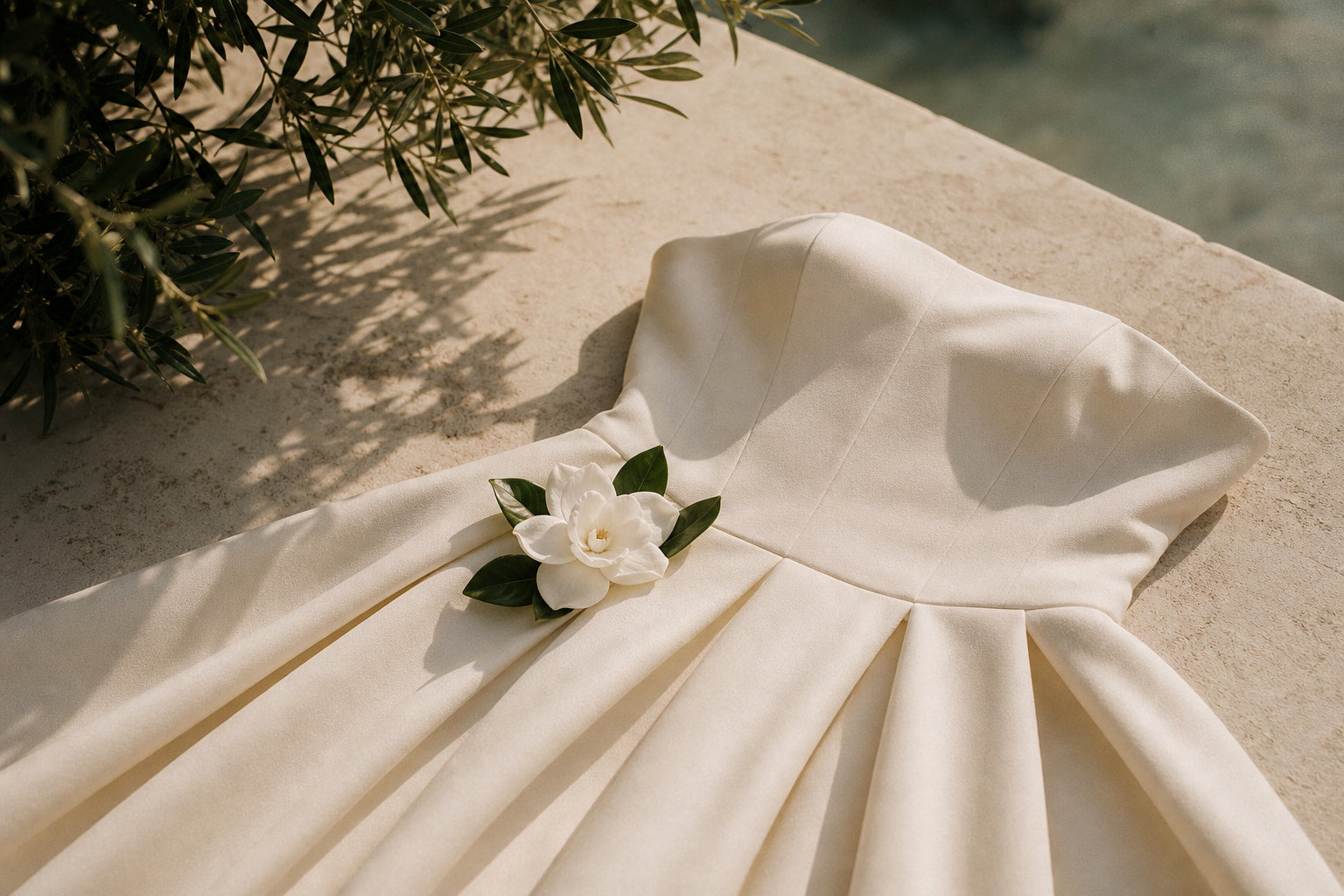
For a straighter figure, the fit-and-flare creates the waist definition and hip curve that a straight silhouette naturally lacks. Choosing a dress with a slightly nipped waist seam and a full skirt panel amplifies this effect. The French Niche Style White Dress works well here: its clean white construction and precise waist seam create strong definition even on a more linear figure.
For those navigating fit during pregnancy, our article on quiet luxury maternity dressing addresses how the fit-and-flare silhouette adapts across trimesters. The empire-waist variation of this silhouette is particularly relevant in that context.
The evening dresses collection shows how proportion shifts when the fit-and-flare is interpreted in longer, more formal lengths, which is a useful visual reference for understanding how hem and waist seam position work together.

Completing the Look: Footwear, Accessories, and Occasion Dressing
A fit-and-flare dress is a complete silhouette in itself, which means accessories and footwear should support the shape rather than compete with it.
Footwear has a direct effect on how the silhouette reads. A heel, whether block, kitten, or stiletto, lengthens the leg below the hem and gives the overall look a more formal register. A pointed-toe flat elongates the foot and maintains elegance without height. Avoid chunky platform soles, which visually interrupt the clean line from hem to floor. The loafers collection offers a range of options that sit well under a knee-length or midi fit-and-flare for daytime occasions.
Bags should be proportionate to the skirt volume. A small structured bag, a clutch, or a slim shoulder bag reads correctly against a full skirt. An oversized tote competes with the skirt's volume and makes the silhouette appear busy.
Jewellery follows a similar logic. The fit-and-flare bodice is often the visual focus, so a single strong piece, a pendant necklace, a pair of sculptural earrings, or a cuff bracelet, works better than layering multiple pieces across the neckline and wrists simultaneously.
Occasion calibration is largely a matter of fabric and hem length. A cotton or linen fit-and-flare in a mini or knee length reads as a confident daytime dress for lunch, gallery visits, or warm-weather occasions. A velvet or structured crepe version in a midi length moves naturally into cocktail or formal dinner territory. The Blue Striped Dress Lovau Style demonstrates the casual-to-smart day register: its stripe pattern and clean structure read appropriately across a wide range of daytime occasions without requiring a change of accessories.
For a broader view of how dresses from the collection are styled across different occasions, the woman dress collection is a useful reference. Harper's Bazaar's ongoing coverage of silhouette dressing also provides useful context for how the fit-and-flare continues to be interpreted by contemporary designers.

| Fabric | Bodice Structure | Skirt Behaviour | Best Occasion | Care Note |
|---|---|---|---|---|
| Cotton poplin | Holds shape without lining | Clean, geometric flare | Day, smart casual | Machine wash cold, press with steam |
| Structured crepe | Firm, self-supporting | Sculpted bell shape | Office, cocktail | Dry clean or gentle hand wash |
| Wool knit | Soft definition, stretch fit | Gentle, weighted flare | Transitional, day | Hand wash cold, flat dry |
| Lace over lining | Lining provides structure | Soft flare, depends on lining weight | Garden party, occasion | Dry clean recommended |
| Velvet | Heavy, self-supporting | Full, sculptural flare | Evening, formal | Dry clean, store hanging |
| Silk or silk blend | Fluid, requires lining | Flowing, light flare | Summer occasion, evening | Hand wash or dry clean |
Frequently asked questions
What is the difference between a fit-and-flare dress and an A-line dress?
Both silhouettes widen from the waist to the hem, but the distinction lies in the bodice. A fit-and-flare dress has a closely fitted bodice that follows the torso through the bust and waist before releasing into the skirt. An A-line dress typically has a less structured upper section and begins its outward flare from the hip or waist without a defined fitted zone above. The Lovau Style A-Line Knitted Dress illustrates how the A-line and fit-and-flare can overlap when a knit construction provides soft definition rather than rigid seaming.
How do I know if a fit-and-flare dress fits correctly?
Three checkpoints: the waist seam should sit at your natural waist with no pulling or gaping, the bodice should lie flat across the bust without horizontal stress lines, and the skirt should flare away from the hip without pulling tightly across it. If the skirt pulls across the hip before releasing into the flare, the dress is too small in the hip circumference and you should size up, then have the waist taken in if necessary.
Can a fit-and-flare dress work for formal evening occasions?
Yes, when the fabric and hem length are chosen correctly. A midi or floor-length fit-and-flare in velvet, structured crepe, or silk reads as formal and appropriate for cocktail events and dinners. The Velvet Designer Old Money Style Dress is a strong example of the silhouette in an evening register. Avoid lightweight printed fabrics for formal occasions, as they shift the dress toward a daytime reading regardless of the silhouette.
How should I store a fit-and-flare dress to keep the skirt shape intact?
Always hang a fit-and-flare dress rather than folding it. Folding compresses the skirt panels and creates permanent creases that are difficult to remove, particularly in structured wovens and velvet. Use a padded hanger to preserve the shoulder and bodice shape. For velvet, allow a small gap between the dress and neighbouring garments to prevent the pile from being crushed.
The fit-and-flare silhouette earns its place in a considered wardrobe not because it is fashionable in a given season but because it is structurally sound across decades. A well-made version, with a seamed bodice at the natural waist, a consistently angled skirt, and a fabric appropriate to the occasion, requires very little else to look complete. Understanding the construction means you shop with clarity and dress with genuine confidence. Begin with the woman dress collection to see the silhouette interpreted across fabrics, lengths, and occasions, and let the structure do the work.