


Smart Casual Trousers: The Old Money Fit Guide
Reading time 12 min • 2460 words
There is a particular kind of frustration that comes from owning trousers that look right on a hanger and wrong on your body. The waist gaps at the back. The seat pulls. The leg breaks awkwardly at the shoe. Most men blame their body. The real problem is almost always the fit, and fit is fixable once you know what to look for.
Smart casual trousers occupy a specific and demanding space in a man's wardrobe. They need to read as relaxed without looking sloppy, polished without looking stiff. That balance is achieved almost entirely through fit, fabric, and proportion, not through logos or trend.
This guide works through each fit zone from waist to hem, explains the most common errors, and points you toward the fabrics and cuts that make smart casual dressing look considered rather than accidental. Every recommendation here follows the old money principle: nothing should shout, but everything should be right.
Key takeaways
- The seat and thigh are the hardest fit areas to alter, so get those right off the rack before worrying about length.
- Trouser break is a stylistic choice, but for smart casual old money dressing, a half-break or no-break is almost always cleaner.
- Linen trousers suit spring and summer occasions; worsted wool and wool-cashmere blends carry autumn and transitional dressing with more structure.
- A high-rise trouser with a slightly fuller leg looks more considered than a low-rise slim cut at nearly every smart casual occasion.
- Double pleats add comfort and drape without adding visual bulk if the rise is correct and the fabric has enough weight.
In this guide
- Why Most Smart Casual Trousers Fit Badly
- The Five Fit Zones, Explained
- Linen Trousers: The Smart Casual Standard for Warm Weather
- Wool Trousers: Structure for Cooler Months and Formal Smart Casual
- Pleats, Flat Fronts, and Which to Choose
- Putting the Outfit Together: Proportion Above Everything
- Frequently asked questions
Why Most Smart Casual Trousers Fit Badly
The root cause of most trouser fit problems is that men buy trousers sized by waist measurement alone, ignoring the three other variables that determine whether a trouser actually fits: the rise, the seat, and the thigh.
Rise is the distance from the crotch seam to the waistband. Modern fast-fashion trousers cut this short, which forces the waistband to sit below the natural waist. This compresses the seat, strains the thigh, and makes even a well-proportioned man look thick through the middle.
Seat is the circumference at the fullest point of the backside. Too tight here and the trouser pulls horizontally across the back, creating drag lines. Too loose and the excess fabric bunches unattractively.
Thigh is where slim-cut trousers most often fail men who are not built like runway models. A trouser that grips the thigh creates a visual taper that reads as effortful rather than elegant.
The old money approach to trousers, refined over generations of Neapolitan and Roman tailoring, solves all three problems with a medium-to-high rise, a clean seat with just enough room to move, and a thigh that falls straight without clinging. Browse the old money trousers collection to see how this proportion translates across different fabrics and occasions.
Expert insightA tailor's rule of thumb: you should be able to pinch roughly one inch of fabric at the outer thigh seam. More than that and the trouser is too full for smart casual. Less than that and you will feel every step.
The Five Fit Zones, Explained
1. Waistband The waistband should sit at or just below your natural waist, which is the narrowest point of your torso, typically an inch or two above the navel. You should be able to slip two fingers inside the waistband comfortably. A gap at the back of the waistband usually means the rise is too long for your proportions, not that the waist is too small.
2. Seat Stand naturally and look in a mirror from the side. The fabric across the seat should be smooth with no horizontal creases pulling toward the crotch. Horizontal creases mean the seat is too tight. Vertical folds hanging below the seat mean it is too full.
3. Thigh Sit down. If the trouser strains across the thigh or the seams pull outward, the thigh is too narrow. For smart casual occasions, a straight or very slightly tapered thigh is correct. A true slim thigh belongs on a different type of garment.
4. Knee to hem The leg should taper gently from the thigh to the hem, maintaining a clean vertical line. Excessive taper below the knee is a casual signal that undermines a refined look.
5. Break The break is where the trouser hem meets the shoe. For smart casual dressing, a half-break (the hem just grazes the top of the shoe with a slight fold) or no-break (the hem sits just above the shoe with no fold) are both correct. A full break, where the hem pools on the shoe, is a formal tailoring convention and looks heavy in casual contexts.
For a deeper understanding of how trouser construction evolved through European tailoring traditions, the detail is worth knowing, as it explains why rise and seat proportions vary so much between Italian, British, and French cuts.
Expert insightIf you are between sizes, size up in the waist and have the waistband taken in by a tailor. It costs very little and preserves the correct seat and thigh proportions, which cannot be altered cheaply.

Linen Trousers: The Smart Casual Standard for Warm Weather
Linen is the correct fabric for smart casual trousers from late April through September in any Mediterranean or temperate climate. It breathes, it drapes, and when cut correctly, it carries an inherent ease that wool cannot replicate in heat.
The concern most men have about linen is creasing. This is largely a non-issue once you accept that linen is supposed to crease. A light crease on a well-cut linen trouser reads as lived-in refinement. A sharp pressed crease on a synthetic blend reads as effort. The distinction matters.
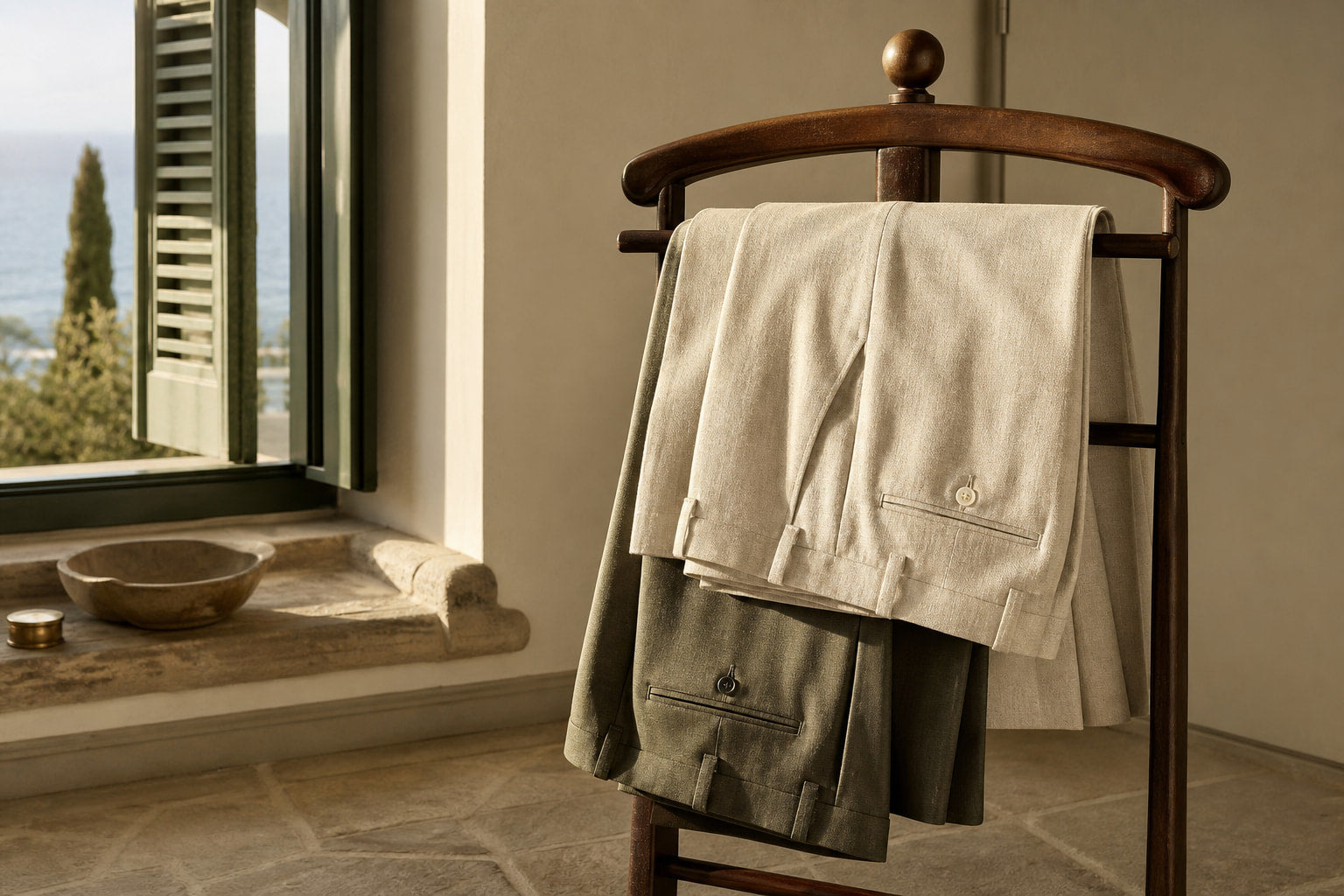
For a clean, versatile option, the Paris linen trousers offer a straight cut with a proper rise that works equally well at a terrace lunch or a relaxed evening gathering. For something with more visual texture, the herringbone double-pleated linen trousers in light blue introduce a subtle pattern and the added comfort of a double pleat, which gives the thigh and seat significantly more room to move without looking voluminous.
The Milano linen trousers take a slightly dressier approach, with a cleaner front and a refined silhouette that pairs well with a structured shirt or a light knit. For those who prefer white, both the Ibiza Vice white linen trousers and the Rome Italian white linen trousers offer the same base cut with a slightly different finish and weight.
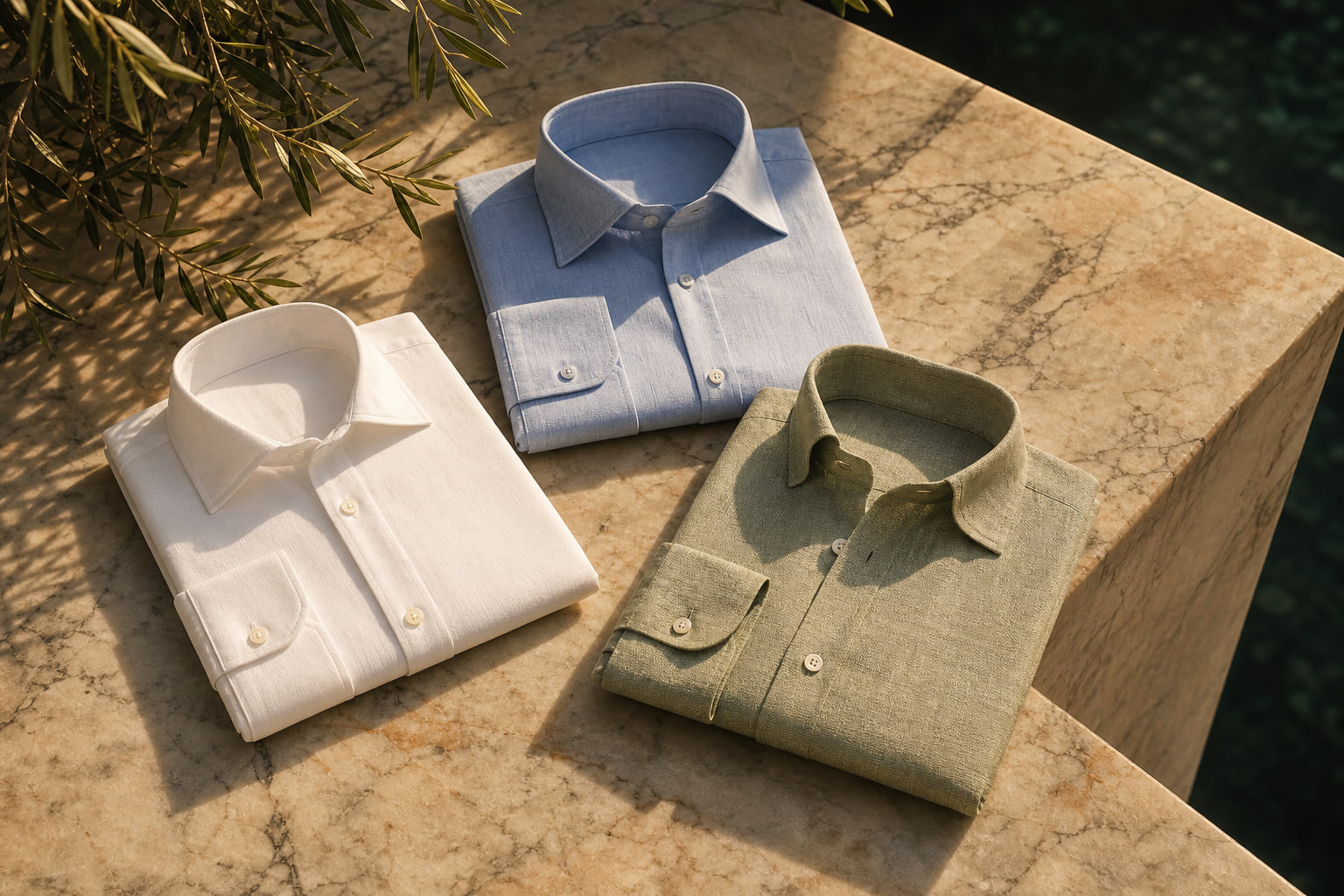
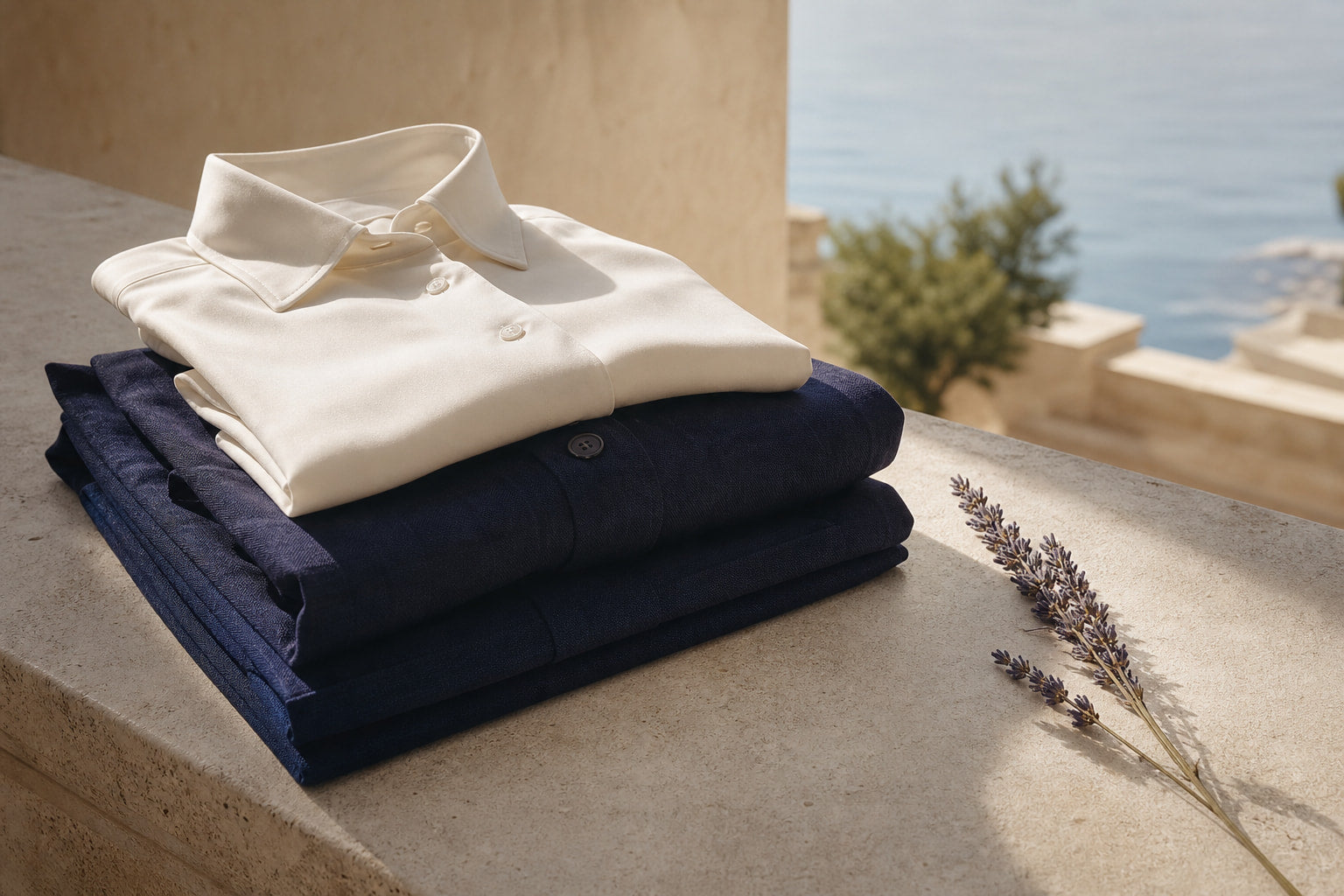
Pair any of these with a fine linen shirt in a complementary tone. Navy trousers with a light blue shirt. Cream trousers with a white or sage shirt. The palette should feel like it belongs in the same room, not like it is competing.
Expert insightHigh-count linen, meaning a tighter weave with finer yarns, creases less and drapes more smoothly than coarser linen. If crease resistance matters to you, look at the yarn count before the brand name.

Wool Trousers: Structure for Cooler Months and Formal Smart Casual
When the temperature drops or the occasion calls for something more structured, wool is the correct choice. Worsted wool in particular has a smooth surface, a firm hand, and a natural drape that linen cannot match in autumn and winter contexts.
The Italian worsted wool old money trousers are built on a classic Roman cut, with a mid-to-high rise, a clean seat, and a leg that falls straight without tapering aggressively. This is the trouser that works for a business lunch, an art opening, or a smart evening dinner without looking like it is trying too hard.
For occasions that call for more comfort without sacrificing refinement, the luxury loose-fit cashmere wool trousers offer a fuller leg cut from a cashmere-wool blend that is noticeably softer and warmer than pure worsted. The loose fit here is not the loose fit of casualwear. It is the considered fullness of classic European tailoring, where the trouser moves with the body rather than against it.
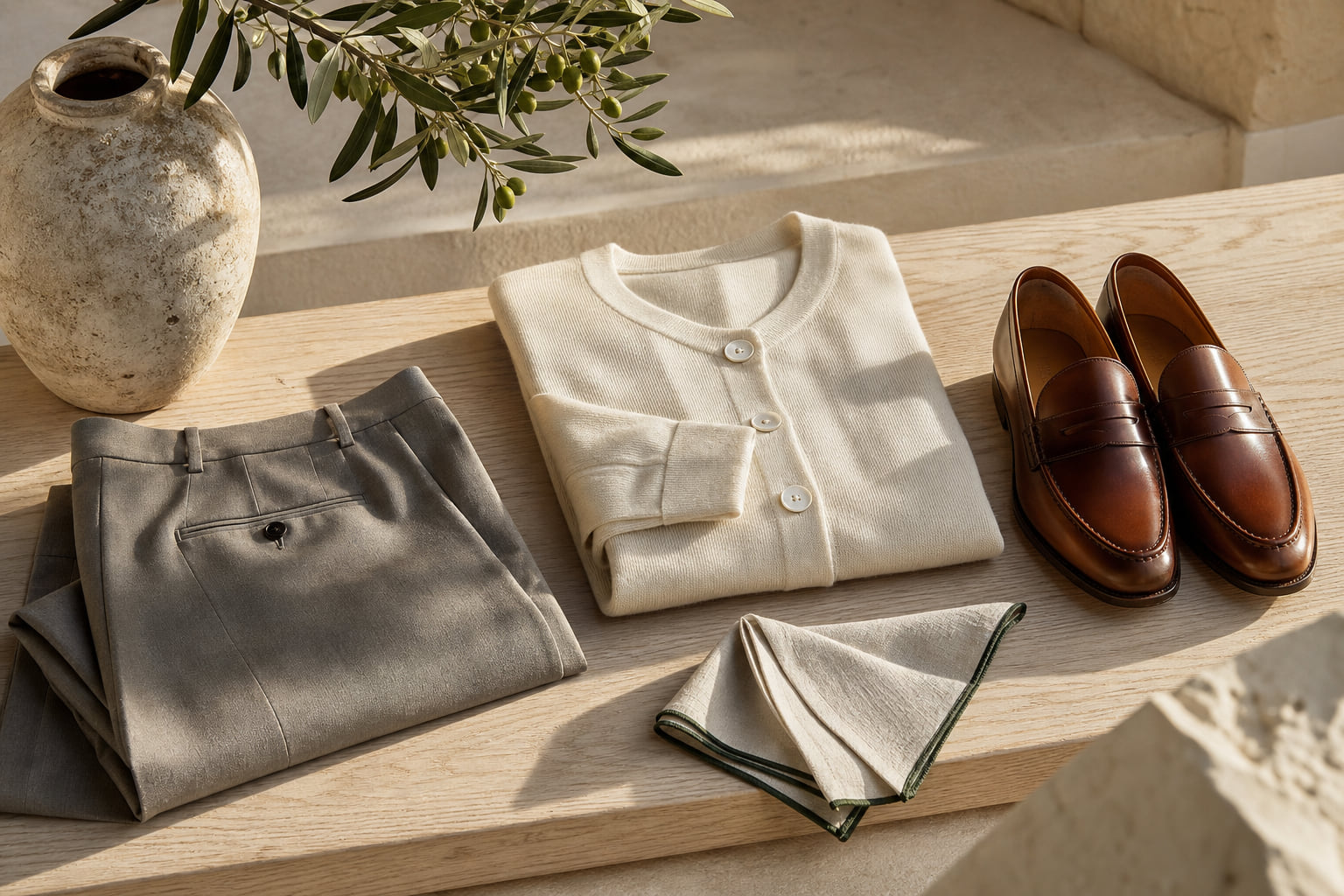
The Neapolitan wool trousers take their name and their construction from the Neapolitan tailoring tradition, which favours a softer shoulder and a more relaxed overall silhouette. Paired with a cashmere wool polo in a neutral tone, these trousers represent the old money smart casual formula at its most complete.
For transitional weather, the cotton and linen blend business trousers offer a middle ground: more structure than pure linen, more breathability than pure wool, at a price point that makes them a practical daily option.

Pleats, Flat Fronts, and Which to Choose
The pleat debate in menswear has been running for decades, and the correct answer is not ideological. It is functional.
Flat front trousers have a cleaner silhouette from the front. They work best on men with a slim-to-average build, particularly in lightweight fabrics like linen where the drape does the work. They also tend to look sharper when the fit is precise.
Single pleat trousers add one fold of fabric on each side of the front, which gives more room at the thigh and hip when sitting. They are more comfortable and they have a long history in Italian and American tailoring. A single pleat reads as classic without being fusty.
Double pleat trousers are the most comfortable option and have the most visual complexity at the front. They require a fabric with enough weight to drape properly, otherwise the pleats open awkwardly. In linen or wool with a medium weight, double pleats look excellent. In a thin cotton, they tend to puff.
The herringbone double-pleated linen trousers demonstrate how double pleats work in a lighter fabric when the weave has enough structure to keep them flat. The Italian business casual breathable trousers offer a clean flat-front option for those who prefer the simpler silhouette.
As Permanent Style has noted in their coverage of trouser construction, the revival of the double pleat is not a trend but a return to a proportion that tailors always knew worked. The key is pairing it with a correct rise and enough fabric in the seat to let the pleats lie flat.

Putting the Outfit Together: Proportion Above Everything
A well-fitted trouser still looks wrong if the proportions of the full outfit are off. Smart casual dressing is fundamentally about the relationship between the trouser and whatever sits above it.
The general rule is simple: a fuller-leg trouser pairs best with a tucked shirt or a fitted knit. A slimmer trouser can carry an untucked shirt, but only if the shirt hem is cut to be worn untucked rather than folded under.
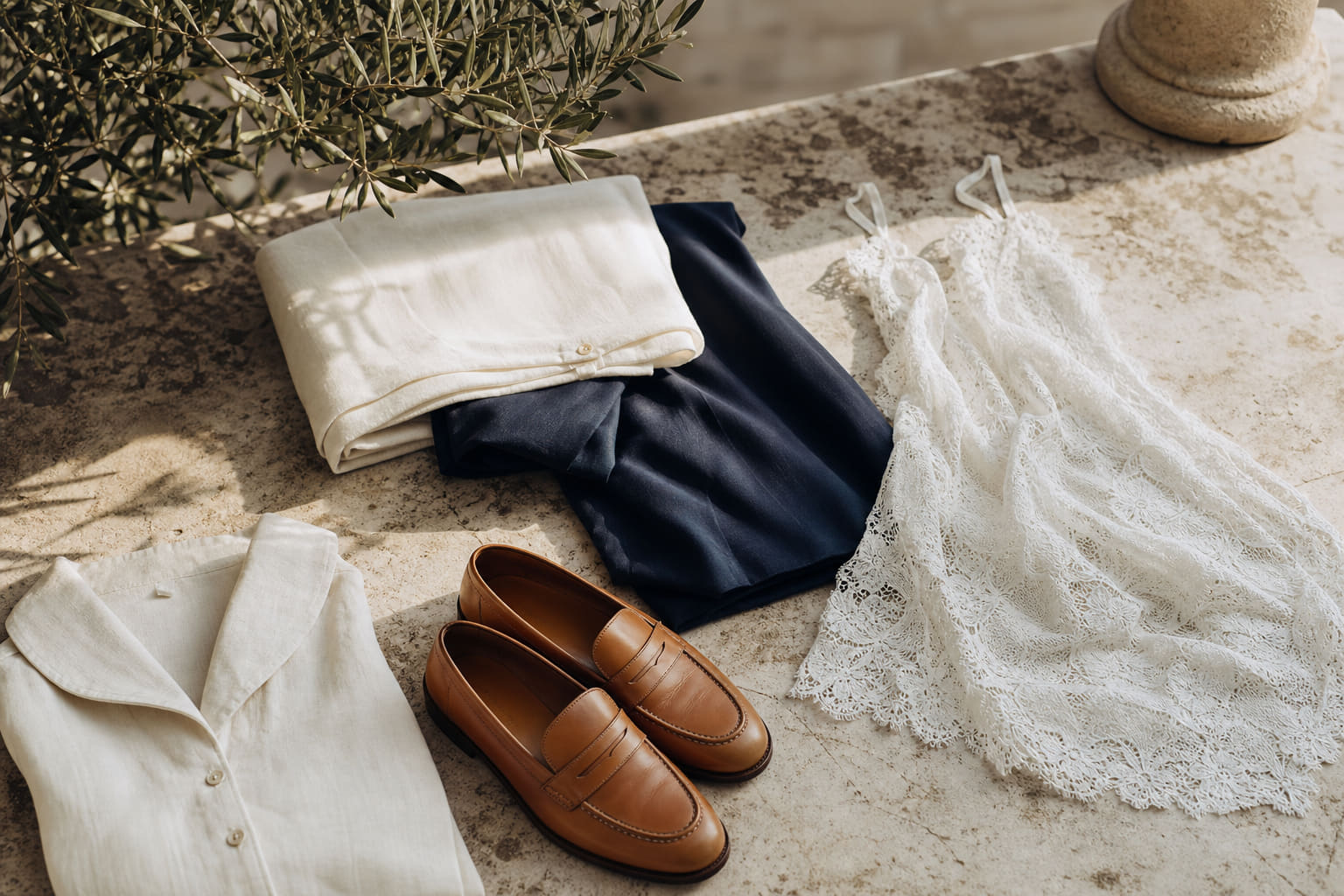
For a summer combination, try the Rome Italian white linen trousers with a high-count navy blue fine linen shirt tucked in and a pair of retro linen leather loafers. No belt if the trousers have side adjusters. A leather belt if they have belt loops, in a colour that matches the shoes.
For autumn, the Neapolitan wool trousers with a business wool cardigan in grey or navy creates a complete, considered look that requires nothing else. The cardigan replaces the jacket and reads as intentionally relaxed without looking underdressed.
Shoe choice matters as much as anything. Loafers are the default smart casual shoe for a reason: they have no laces to break the line of the trouser, and they read as relaxed without being casual. Browse the full range of men's footwear for options that work with both linen and wool trousers across seasons.

| Fabric | Best Season | Drape & Structure | Crease Resistance | Occasions | Price Range |
|---|---|---|---|---|---|
| Pure linen | Spring, Summer | Soft drape, low structure | Low, creases freely | Terrace, travel, resort, weekend | $89 to $115 |
| Worsted wool | Autumn, Winter | Firm drape, high structure | High, holds crease well | Business casual, evening, city | $125 |
| Cashmere-wool blend | Autumn, Winter | Soft drape, medium structure | Medium | Smart casual, evening, relaxed formal | $119 to $175 |
| Cotton-linen blend | Spring, Autumn | Medium drape, medium structure | Medium | Office, travel, transitional | $85 |
| Linen herringbone blend | Spring, Summer | Textured drape, medium structure | Medium-low | Smart casual, lunch, weekend city | $109 |
Frequently asked questions
How should smart casual trousers fit at the waist?
The waistband should sit at or just below your natural waist, the narrowest point of your torso. You should fit two fingers inside without strain. A gap at the back centre usually means the rise is too long, not that the waist is too large. If you are between sizes, size up and have the waistband taken in by a tailor.
What is the correct trouser break for smart casual occasions?
A half-break, where the hem just grazes the top of the shoe with a very slight fold, or a no-break, where the hem sits cleanly just above the shoe, are both correct for smart casual. A full break, where the hem folds heavily over the shoe, is a formal tailoring convention and looks heavy in relaxed contexts.
Are double pleat trousers appropriate for smart casual dressing?
Yes, when the fabric has enough weight to keep the pleats lying flat. The herringbone double-pleated linen trousers are a good example of how double pleats work in a lighter fabric when the weave has sufficient structure. Pair them with a correctly fitted rise and a clean seat, and double pleats look entirely at ease in smart casual settings.
What is the difference between linen and wool trousers for smart casual wear?
Linen trousers are the correct choice for warm months. They breathe well, drape softly, and carry an inherent ease. Wool trousers, particularly worsted wool, offer more structure and hold a crease better, making them suitable for cooler months and slightly more formal smart casual occasions. A cotton-linen blend sits between the two and works well in transitional weather.
Trouser fit is not complicated once you know what to look for. Get the rise, seat, and thigh right first. Choose the fabric for the season and the occasion. Then let the proportion of the full outfit do the rest. For a complete starting point, the old money trousers collection covers the full range of linen and wool options built around these principles, from summer linen to structured worsted wool, all cut with the same unhurried attention to fit that defines the Lovau approach.