


How to Care for Cashmere So It Lasts Forever
Reading time 11 min • 2277 words
Cashmere earns its reputation not through fragility but through precision. The fibre, combed from the undercoat of Cashmere goats in Mongolia and Inner China, has a diameter of roughly 14 to 19 microns, finer than the finest merino wool. That fineness is exactly why it feels the way it does against skin, and it is also why careless washing or storage shortens its life dramatically.
The fear most people carry around cashmere is understandable. You spend real money on a piece, the label says "dry clean only," and suddenly even looking at it the wrong way feels dangerous. In practice, the rules are straightforward. A cashmere sweater washed correctly at home will outlast one sent repeatedly to a dry cleaner, because dry cleaning solvents are harsh on natural protein fibres over time.
This guide covers everything: washing, drying, de-pilling, storage, and the small habits that separate a cashmere piece that lasts five years from one that lasts fifty.
Key takeaways
- Hand wash cashmere in cool water with a pH-neutral detergent, never hot water and never a standard spin cycle.
- Lay cashmere flat on a clean towel to dry, never hang it, as hanging distorts the knit under its own weight.
- De-pill with a fabric comb or cashmere stone every few wears to keep the surface clean and dense.
- Store folded in breathable cotton bags with cedar blocks or lavender sachets to deter moths.
- Rest cashmere pieces at least 24 hours between wears to allow the fibres to recover their natural loft.
In this guide
Understanding What Cashmere Actually Is
Before you can care for cashmere properly, it helps to understand what you are working with. Cashmere is a protein fibre, like silk and wool, built from keratin. It reacts badly to heat, alkaline detergents, and agitation, all of which cause the microscopic scales on each fibre to lift, lock together, and felt irreversibly.
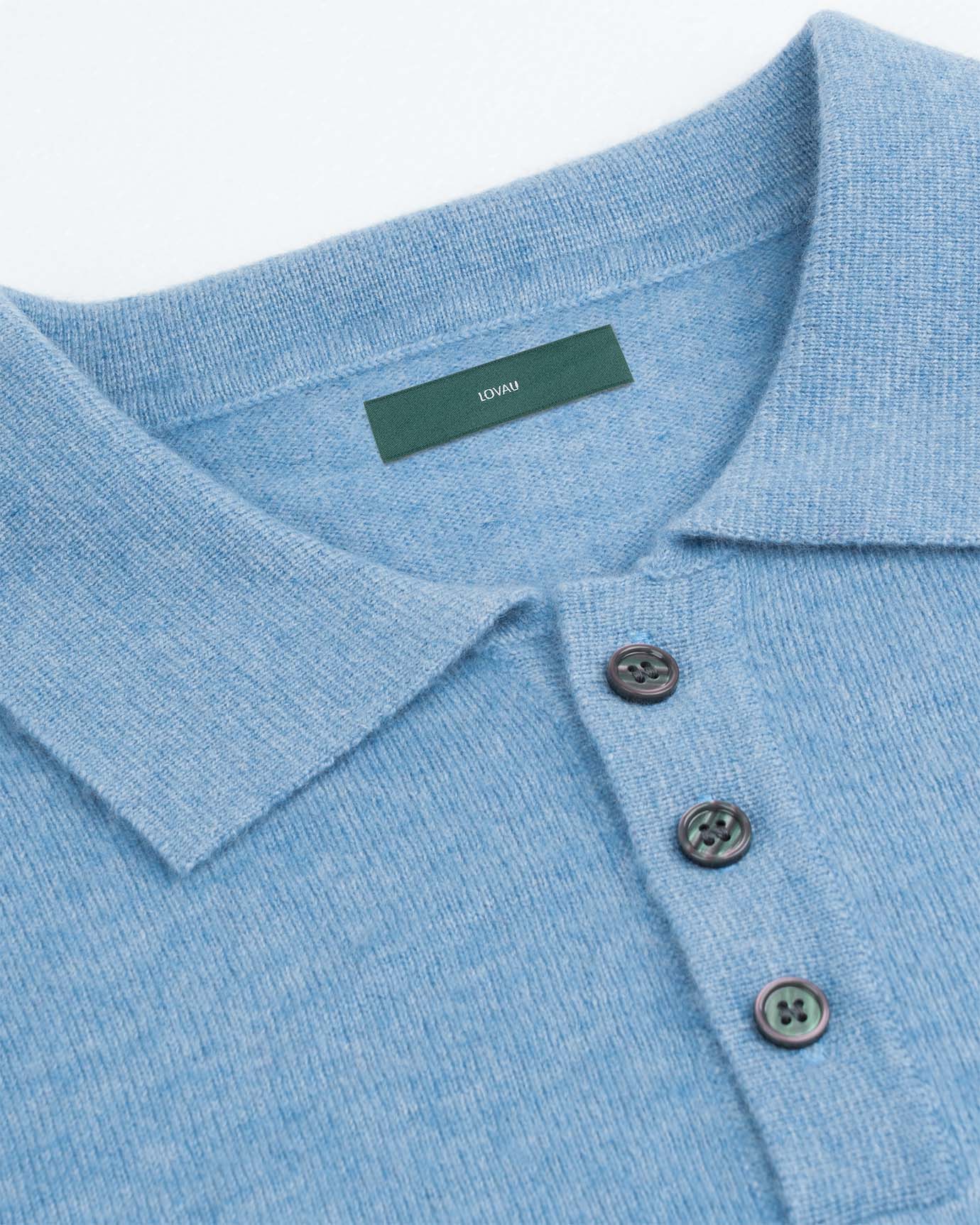
Grade matters too. Grade A cashmere uses fibres of 14 to 15.5 microns in diameter and at least 36 millimetres in length. It pills less, holds its shape longer, and feels consistently soft wash after wash. Lower grades use shorter, coarser fibres that pill quickly and lose their handle after a season. This is one reason why pieces from the Lovau cashmere collection hold up the way they do: the fibre selection starts at the source.
A practical test: hold a cashmere piece up to light. Grade A knits have a dense, even structure with no loose fibres floating on the surface. Thin, uneven patches are a warning sign of short-fibre blends.
Expert insightIf you are unsure whether a piece is pure cashmere or a blend, check the label for a percentage. A 90/10 cashmere-wool blend is still excellent and cares for the same way as pure cashmere, but a 50/50 blend behaves more like wool and tolerates slightly warmer water.

How to Wash Cashmere at Home Without Ruining It
Hand washing is the gold standard for cashmere care at home. Fill a clean basin or sink with cool to lukewarm water, no warmer than 30°C (86°F). Add a small amount of a pH-neutral detergent specifically formulated for wool or cashmere. Baby shampoo works in a pinch. Standard laundry detergent, fabric softener, and anything containing enzymes or bleach will degrade the fibre.
Submerge the garment and gently press it through the water. Do not wring, twist, scrub, or rub the fabric against itself. Agitation is the enemy. Let it soak for no more than 10 minutes, then drain the basin and refill with cool clean water to rinse. You may need two rinse cycles to remove all detergent residue. Leftover soap is one of the most common causes of cashmere going stiff or dull.
If you prefer machine washing, some modern machines have a dedicated wool or hand-wash cycle that uses minimal agitation. Use a mesh laundry bag, the coolest water temperature available, and a wool-specific detergent. Never use the standard spin cycle at full speed. A slow spin of 400 rpm maximum is acceptable to remove excess water before laying flat to dry.
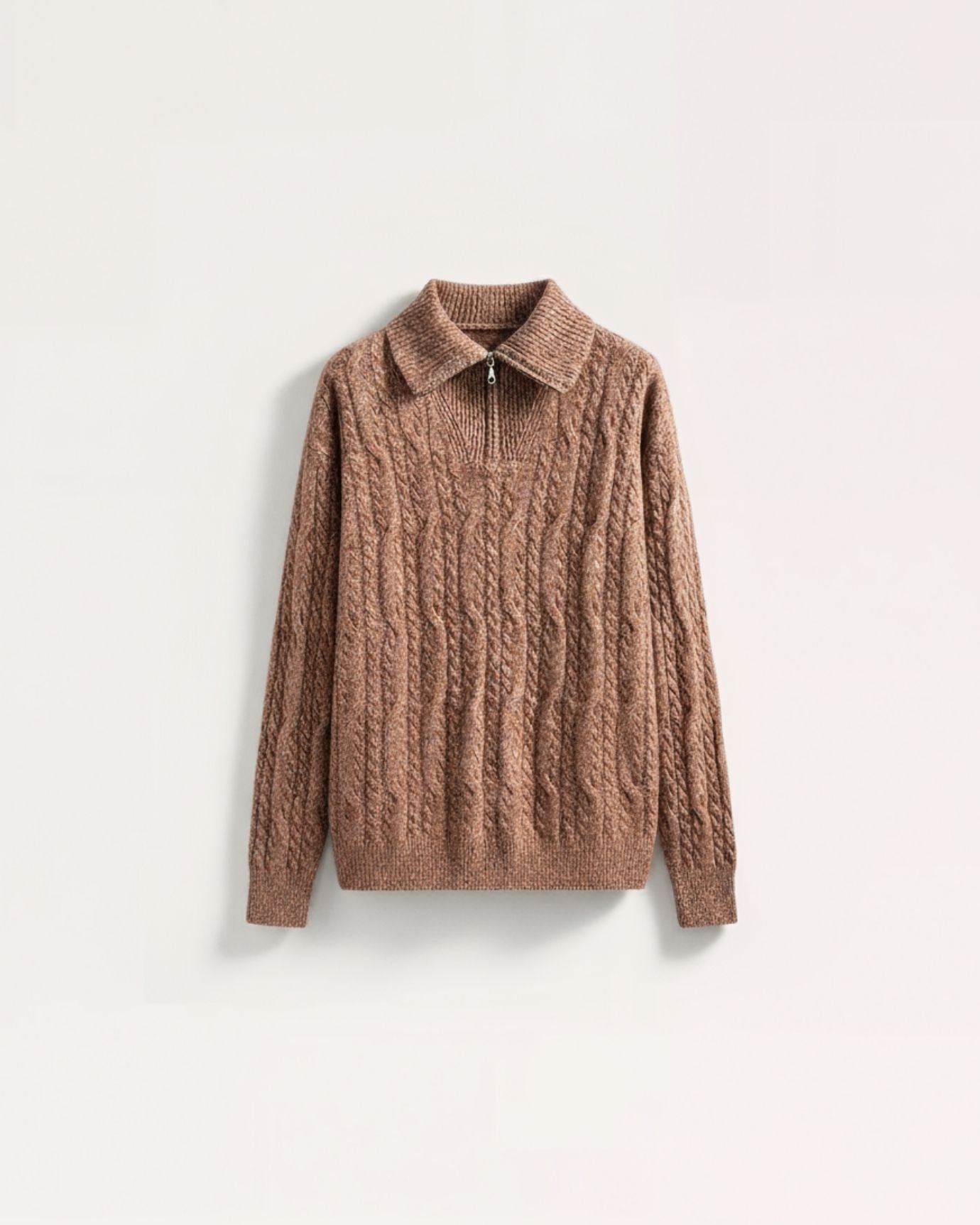
For a cashmere zip sweater or any piece with a zip or embellishment, close all fastenings before washing to prevent snagging.
Expert insightWash cashmere less often than you think you need to. Airing a piece outdoors for an hour after wearing removes most odour and refreshes the fibre without any water contact at all. Most cashmere pieces need washing only three or four times per season.

Drying Cashmere: The Step Most People Get Wrong
Drying is where the most damage happens. A wet cashmere garment is extremely vulnerable: the fibres are swollen with water and the knit structure can distort under its own weight.
Never hang a wet cashmere piece. The weight of the water will stretch the shoulders and body out of shape, and that distortion is permanent. Instead, lift the garment from the water by supporting its full weight with both hands. Lay it on a clean, dry towel, reshape it gently to its original dimensions, then roll the towel up with the garment inside and press firmly to absorb excess water. Unroll, transfer to a fresh dry towel or a flat drying rack, and leave it to air dry away from direct sunlight and any heat source.
Direct sun bleaches natural fibres and accelerates degradation. A radiator or tumble dryer does the same damage as hot wash water: it causes irreversible felting and shrinkage. At room temperature, most cashmere pieces dry fully in 12 to 24 hours.
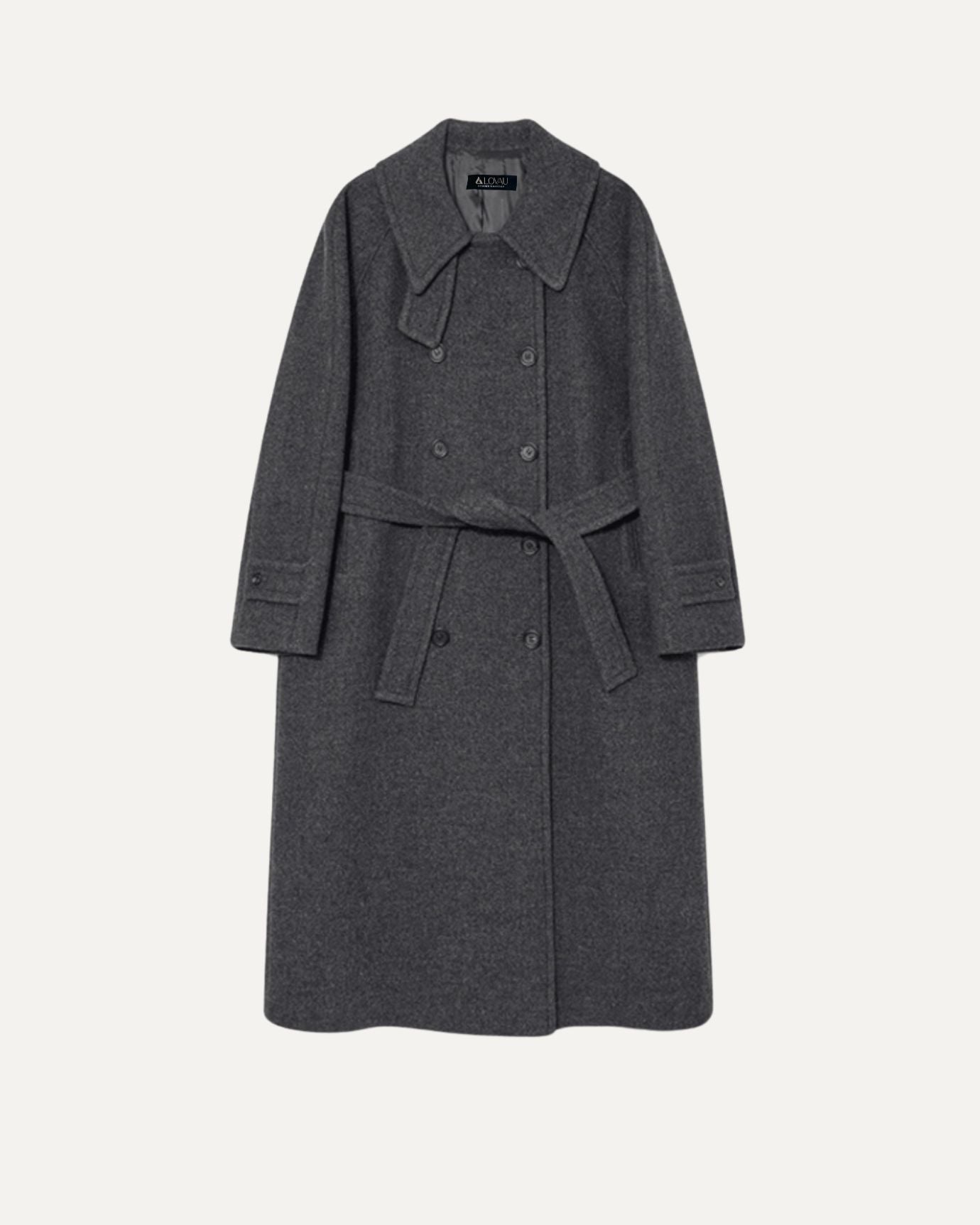
For heavier pieces like a cashmere and wool loose fit coat, the drying process may take longer. Flip the piece over halfway through to ensure even drying and prevent any damp patches from setting.
Expert insightReshape the piece while it is still slightly damp, not bone dry. Damp fibres are more cooperative. Gently pull the hem, sleeves, and neckline back to their correct proportions before the last stage of drying is complete.

De-Pilling: What Causes It and How to Fix It
Pilling is normal. It is not a sign of poor quality, it is a sign of wear. Pills form when short fibres work their way to the surface and tangle together through friction. They appear most often under the arms, at the cuffs, and anywhere a bag strap or seatbelt rubs the fabric.
The tool you need is a fabric comb or cashmere stone, not a battery-powered lint shaver. Electric shavers remove too much fibre and thin the knit over time. A fabric comb drawn lightly across the surface in one direction lifts pills cleanly without cutting into the underlying weave. Do this on a flat, well-lit surface every three to five wears, or whenever you notice the surface beginning to look fuzzy.
For pieces that pill heavily in a short time, the cause is usually friction from a rough coat lining, a leather bag worn against the body, or a seatbelt. Reducing that friction, by carrying the bag differently or wearing a smooth layer underneath, extends the life of the surface significantly.
Accessories made from fine cashmere, such as a cashmere knitted scarf or a cashmere neck cover, benefit from the same de-pilling routine. They are worn close to rough surfaces like coat collars and jacket lapels, which creates friction quickly.

Storing Cashmere Between Seasons
Improper storage is the most common reason cashmere does not last. Moths are the primary threat: specifically, the larvae of the Tineola bisselliella moth, which feed on protein fibres including cashmere, wool, and silk. They are drawn to fibres that carry traces of body oil, food, or perfume, which is why clean storage is non-negotiable.
Always wash or professionally clean cashmere before storing it for the season. Even if a piece looks clean, body oils invisible to the eye will attract moth larvae over six months in a dark wardrobe.
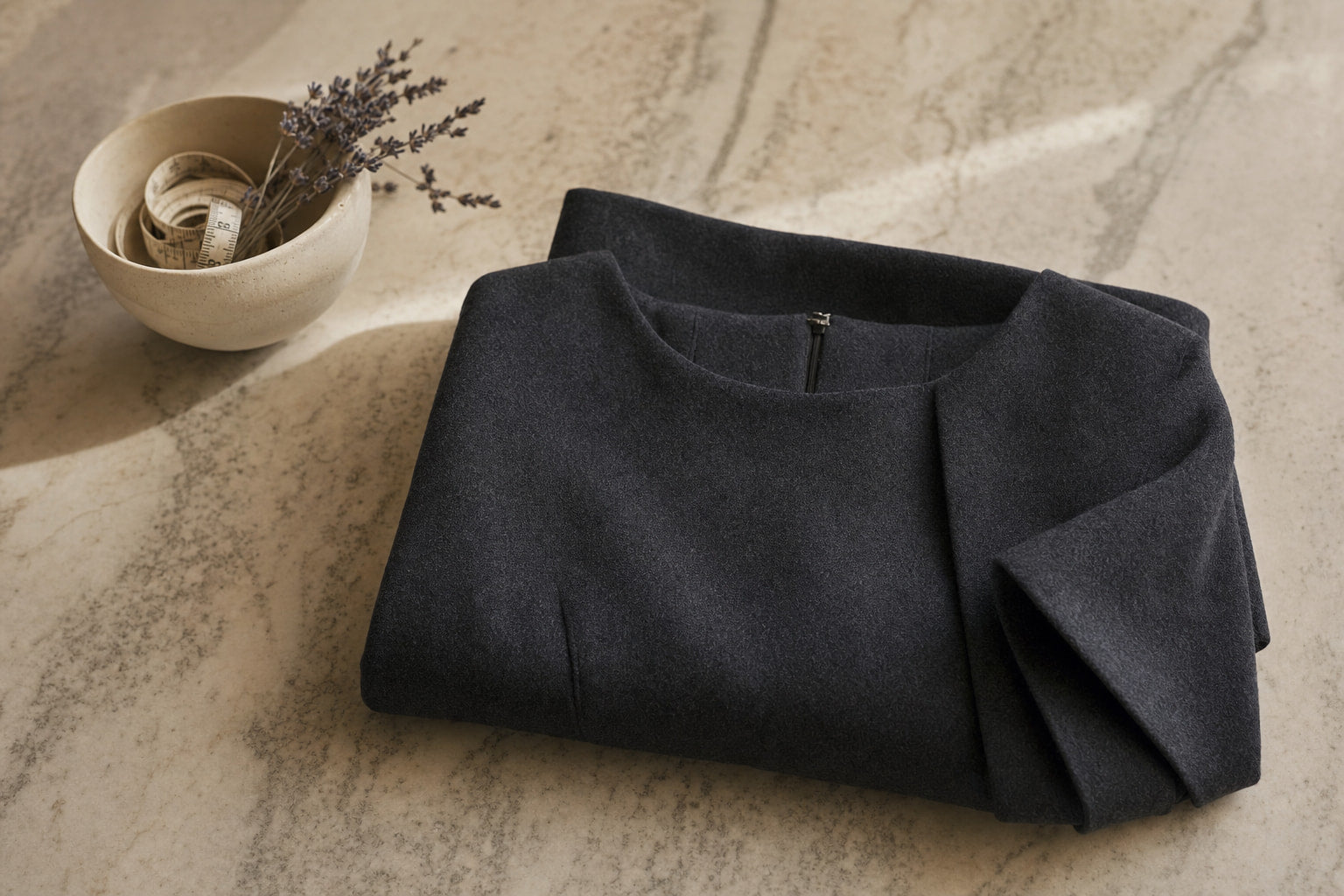
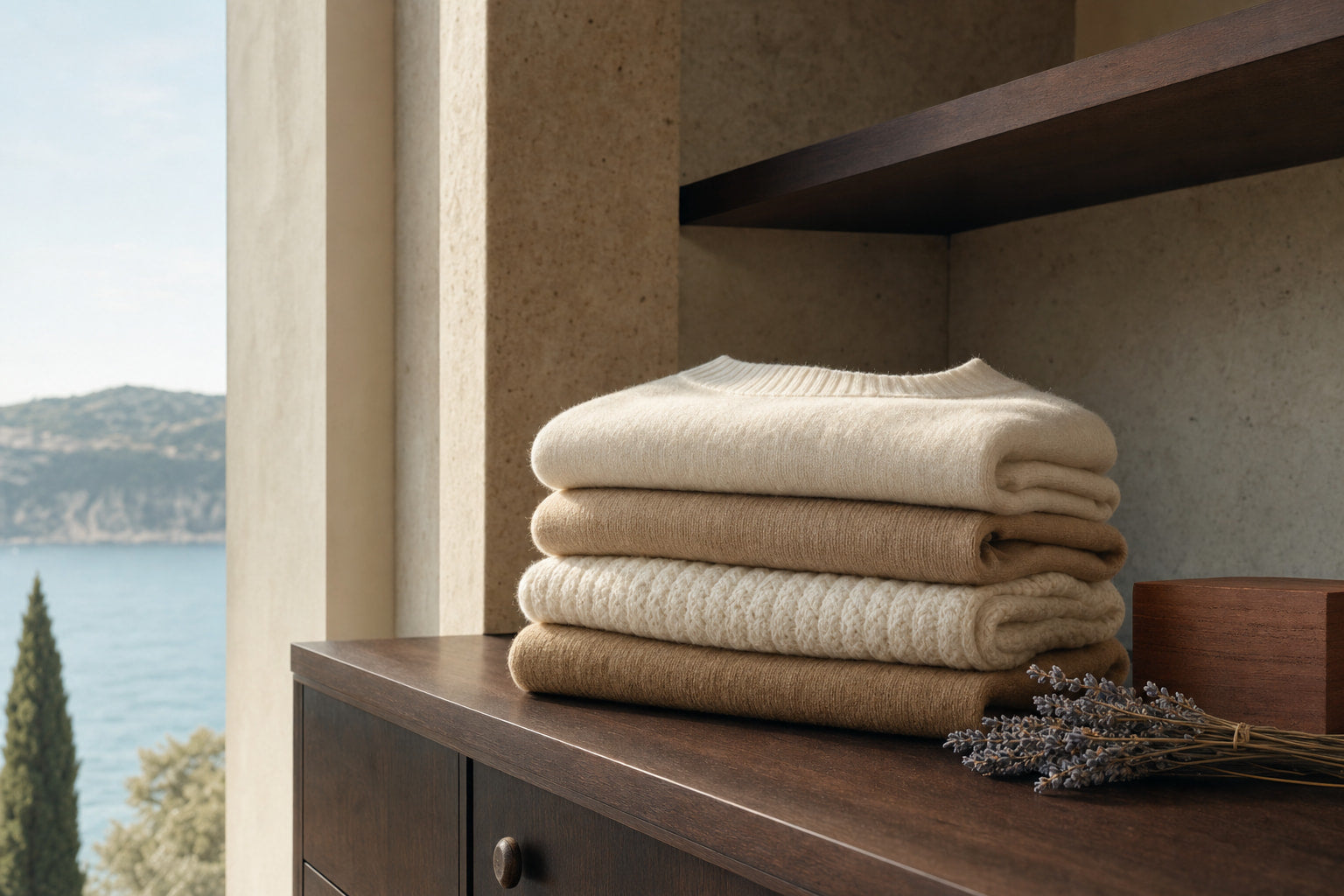
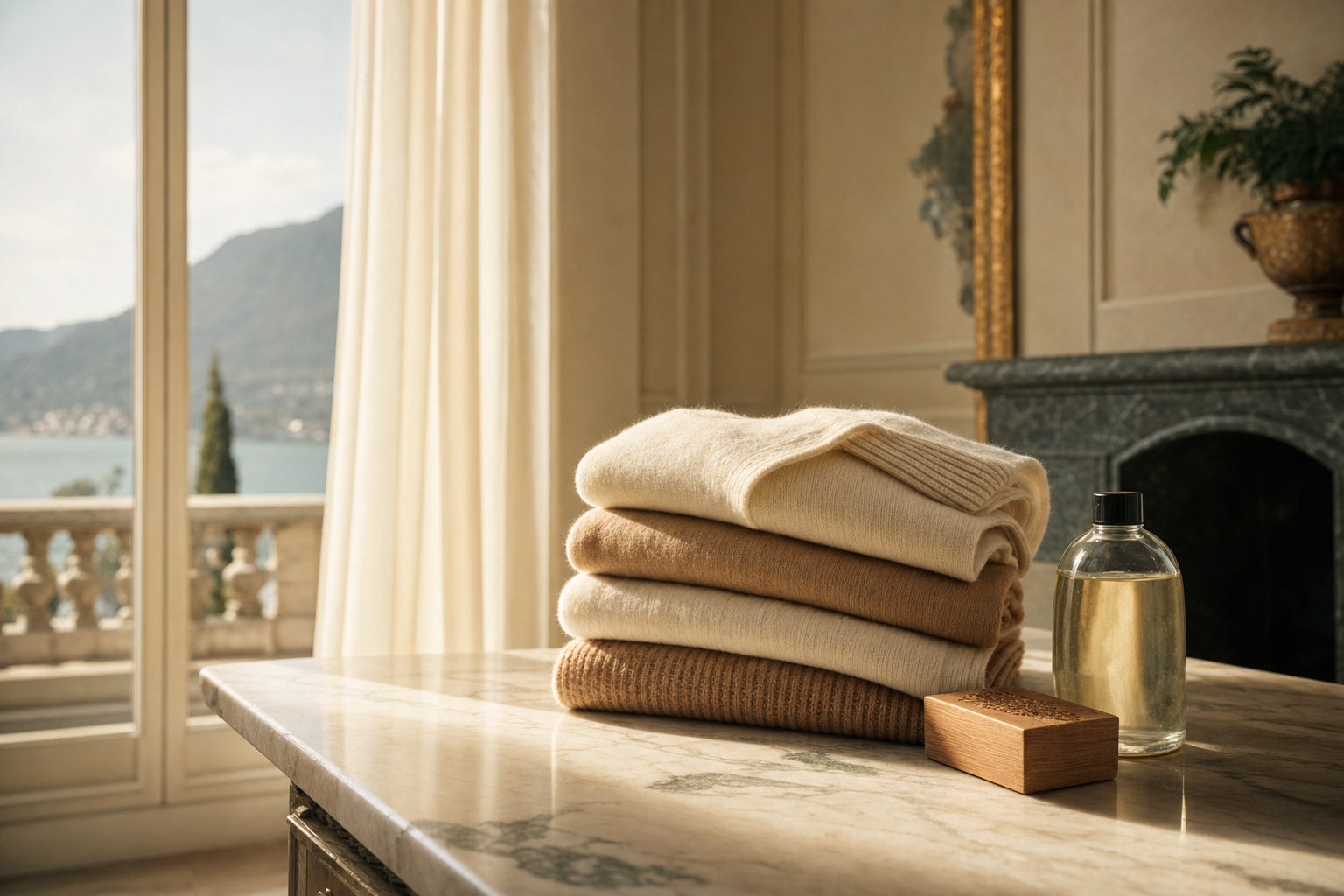
Store cashmere folded, never on a hanger. Use breathable cotton storage bags or acid-free tissue paper. Sealed plastic bags trap moisture and can cause mildew. Place cedar blocks or lavender sachets in each bag as a deterrent. Cedar loses its potency after about six months, so sand the surface lightly each season to refresh the scent.
For a high-end cashmere and silk set, separate the pieces before storing and wrap each individually. Silk and cashmere in contact can transfer dye over a long storage period if any residual moisture is present.
If you are building a wardrobe that spans seasons, browsing the high end cashmere range gives a clear sense of which pieces are worth the investment in proper long-term storage. The cost-per-wear on a well-maintained cashmere coat or cardigan is, over a decade, lower than almost any other fabric.

Daily Habits That Extend Cashmere's Life
Longevity is built in small decisions, not just in washing technique. A few consistent habits make the difference between a cashmere piece that looks tired after three years and one that looks considered after fifteen.
Rest pieces between wears. Cashmere fibres are elastic at the microscopic level. After a full day of wear, they need time to recover their natural loft. Wearing the same cashmere piece two days in a row prevents this recovery and accelerates surface wear.
Apply fragrance before dressing, not after. Perfume and cologne contain alcohol, which degrades protein fibres on contact. Spray your neck or wrists, let it dry, then put on your cashmere.
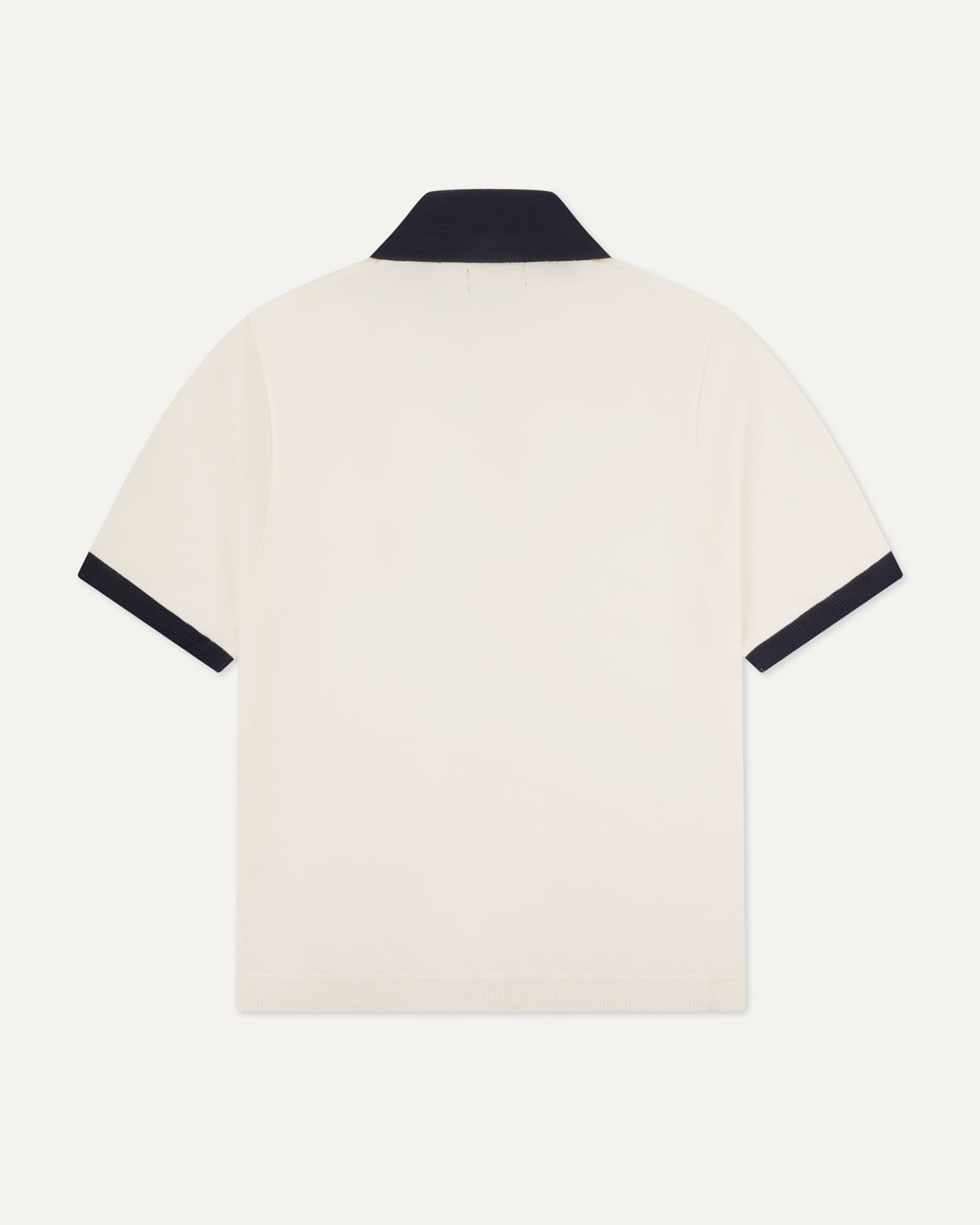
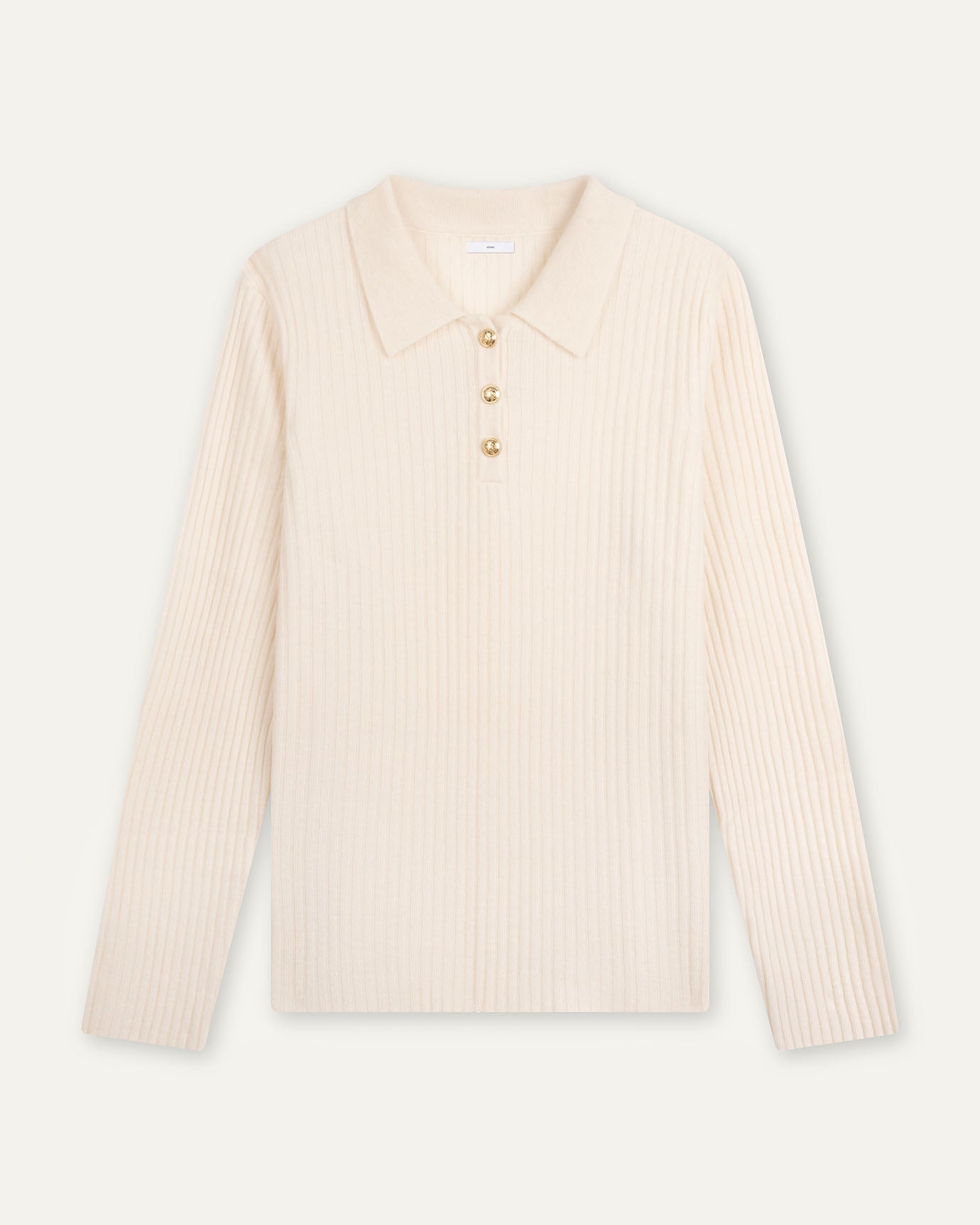
Be careful with jewellery. Rough-edged rings, bracelets, and watchbands are among the most common causes of snags and accelerated pilling on cashmere sleeves and cuffs. This applies equally to a cashmere polo for women worn with a bracelet stack and to a cashmere cardigan jacket worn with a metal watch.
For women building a complete cashmere wardrobe, the woman cashmere collection includes pieces across every category, from knitwear to accessories, all of which respond to the same care principles outlined here. For men, the man cashmere and wool sets offer coordinated pieces designed to be worn and stored together.
The last habit is the simplest: read the care label every time, even if you think you know the garment. Blended pieces with silk, like the High End Mulberry Silk and Worsted Cashmere Set, have slightly different tolerances than pure cashmere knits, and the label will tell you exactly where the limits are.

| Method | Best For | Water Temp | Risk Level | Frequency |
|---|---|---|---|---|
| Hand wash | All cashmere knits, delicate pieces | Cool, max 30°C | Low if done correctly | Every 3 to 5 wears |
| Machine wash (wool cycle) | Sturdier knits, blended pieces | Cold, max 30°C | Medium, use mesh bag | Every 3 to 5 wears |
| Dry clean | Structured coats, embellished pieces | N/A | Medium over time (solvents) | Once per season maximum |
| Spot clean only | Lightly soiled, between full washes | Cool damp cloth | Very low | As needed |
| Airing outdoors | Odour removal, freshening | N/A | None | After every 1 to 2 wears |
Frequently asked questions
Can I put cashmere in the washing machine?
Yes, with conditions. Use a machine with a dedicated wool or hand-wash cycle, a mesh laundry bag, cool water at 30°C or below, and a pH-neutral wool detergent. Never use a full spin cycle. A slow spin at 400 rpm maximum is acceptable. Hand washing remains the safest method for fine or embellished pieces.
Why does my cashmere pill so quickly?
Pilling is caused by short fibres surfacing through friction. It happens faster on lower-grade cashmere with shorter fibres, and on any area that experiences repeated rubbing, under arms, cuffs, and collar contact points. Use a fabric comb regularly and reduce friction sources. Pieces from the Lovau cashmere collection use longer-fibre grades that stabilise quickly after the first few wears.
How do I get rid of moths in my wardrobe?
Start by removing and washing or dry cleaning every protein-fibre garment in the affected space. Vacuum the wardrobe interior thoroughly, including corners and shelf edges. Place cedar blocks and lavender sachets in every storage area. For a serious infestation, pheromone moth traps placed near the wardrobe will capture adult males and break the breeding cycle. Never use mothballs on cashmere: the naphthalene content damages fibres and the odour is extremely difficult to remove.
How often should I wash a cashmere sweater?
Three to four times per wearing season is a reasonable baseline for a cashmere sweater worn regularly. Air the piece after each wear to remove surface odour. Washing too frequently is as damaging as washing incorrectly, because each wash cycle puts the fibres under stress. If a piece is not visibly soiled or noticeably odorous, airing is sufficient.
Cashmere does not ask for much. Cool water, a gentle detergent, a flat surface to dry on, and a clean, cedar-lined drawer at the end of the season. Follow those steps consistently and a well-made cashmere piece will remain in active rotation for a decade or more, softening slightly with each year rather than degrading. If you are building or refreshing your cashmere wardrobe, the Lovau cashmere collection is a sensible place to start, because the quality of the fibre is the foundation everything else is built on.