


Denim Shirts for Women: How to Do Double Denim with Class
Reading time 13 min • 2685 words
Double denim arrived in the popular imagination as a mistake, something to be laughed at rather than learned from. That reading has always been too hasty. The French have worn denim shirts tucked into denim trousers for decades without apology, and the Italians have long understood that indigo is, at its core, a neutral. The problem was never the combination itself. It was the execution.
The rules that make double denim work are the same rules that govern any tonal dressing: contrast in shade, variation in texture, and a clear sense of proportion. Once you understand those principles, the pairing becomes one of the more versatile things in a considered wardrobe. It moves from weekend errands to a terrace lunch without much effort, provided the pieces themselves are worth wearing.
This guide covers exactly how to build a double denim look that reads as intentional rather than accidental, which denim shirts to reach for, how to balance silhouettes, and where to place the non-denim elements that pull everything together.
Key takeaways
- Match denim shades that are at least two tones apart to avoid a heavy, monolithic look.
- One piece should be structured and one relaxed; mixing silhouettes creates visual balance.
- Fabric weight matters: a stiff chambray shirt over a softer denim skirt reads more polished than two identical weights.
- Break the denim with a single non-denim element, a leather belt, a linen tote, a silk scarf, to anchor the outfit.
- Fit is the deciding factor between double denim that looks considered and double denim that looks accidental.
In this guide
- Why Denim Is a True Neutral (and Why That Changes Everything)
- Choosing the Right Denim Shirt: Fabric, Weight, and Cut
- Building the Double Denim Outfit: Proportion and Silhouette
- The Non-Denim Element: How to Break the Look Correctly
- Occasion and Context: Where Double Denim Actually Works
- Care and Longevity: Keeping Denim Shirts Looking Sharp
- Frequently asked questions
Why Denim Is a True Neutral (and Why That Changes Everything)
Most women treat denim as a category unto itself, separate from the neutral wardrobe of cream, navy, and camel. That separation is the source of most double denim anxiety. In reality, denim is a cotton twill, and its indigo dye places it firmly in the blue family, which sits alongside white, stone, and grey as one of the most versatile tonal anchors in European dress.
Once you accept denim as a neutral, doubling it becomes no more complicated than wearing a navy blazer over a lighter blue shirt. The logic is identical. What matters is the relationship between the two shades, not the fact that both are denim.
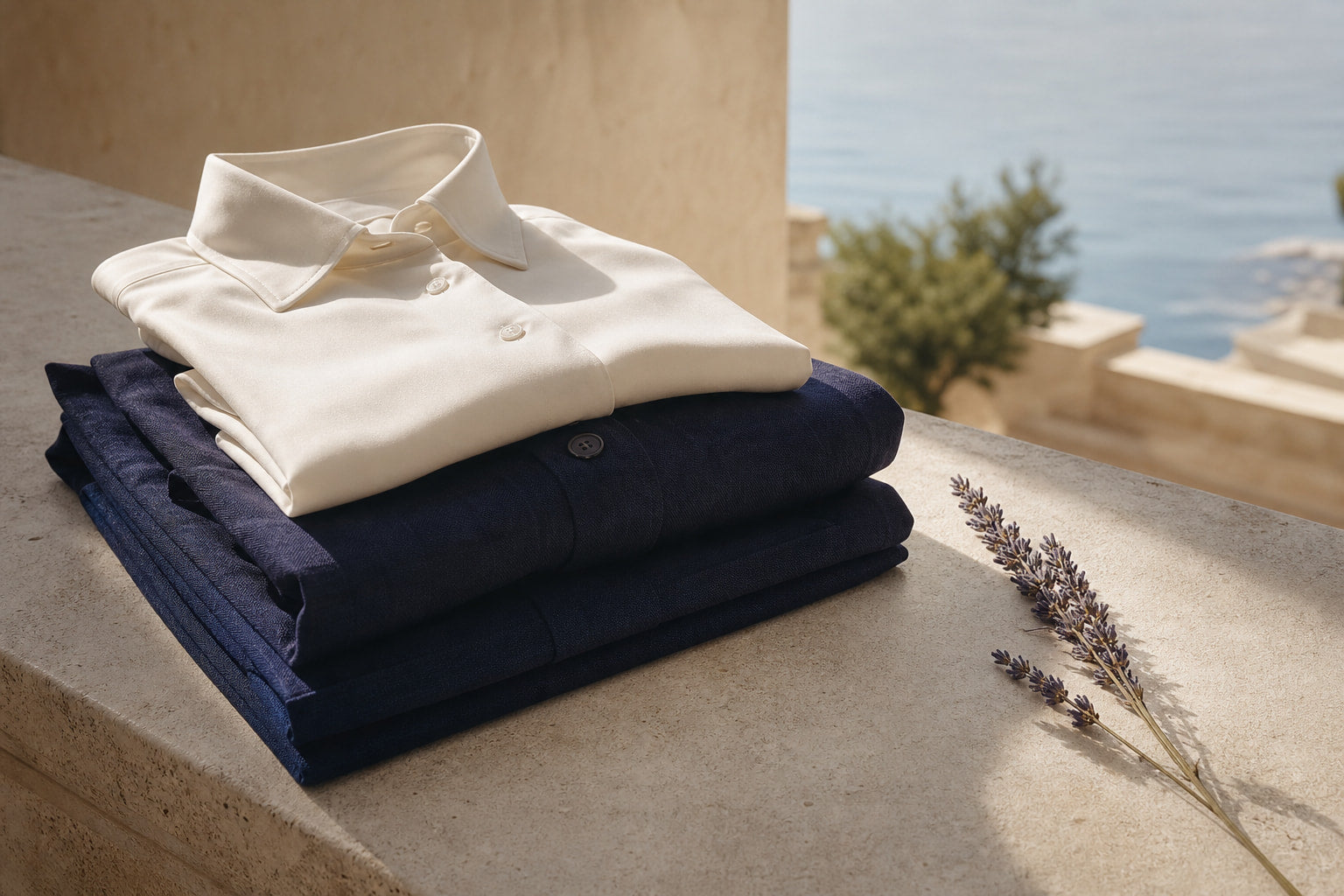
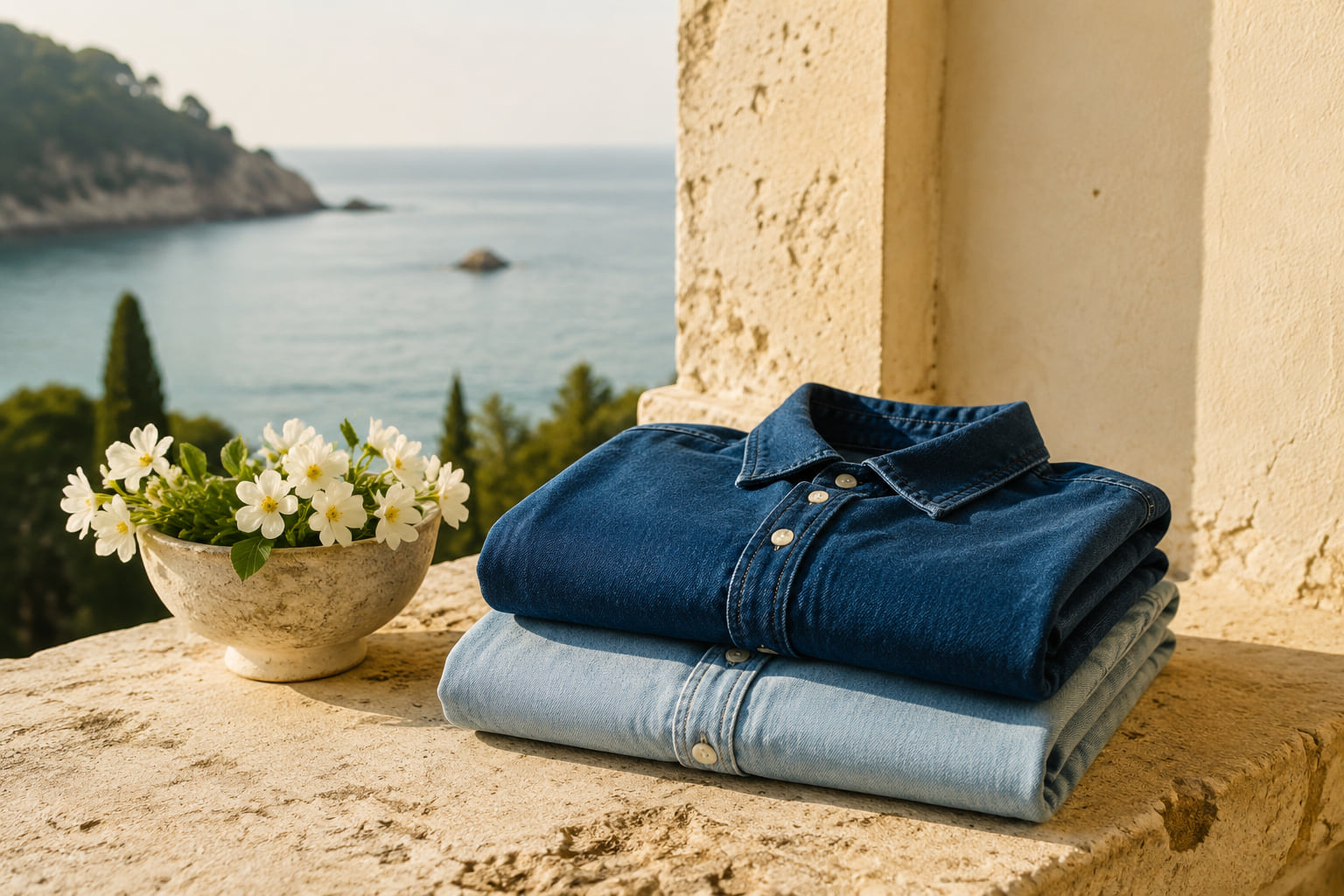
The classic error is reaching for two pieces in the same wash. A mid-blue shirt worn over mid-blue jeans creates a flat, undifferentiated block of colour that reads as an oversight. Separate the shades by at least two tonal steps: a pale chambray shirt over a deep indigo skirt, or a dark navy denim shirt over a lighter washed piece. The eye needs somewhere to travel.
For women building a refined wardrobe, this tonal logic is already familiar from other pairings. The same instinct that tells you not to wear a camel coat over a camel jumper applies here, just in blue.
Expert insightHold both denim pieces up to natural light before you dress. If the shades look almost identical indoors, they will read as a single flat tone outside. You need a visible difference even in dim light.

Choosing the Right Denim Shirt: Fabric, Weight, and Cut
Not all denim shirts are equal, and the shirt is where the outfit starts. The weight of the fabric, the quality of the finish, and the precision of the cut determine whether the whole look holds together.
Fabric weight is the first consideration. A lightweight chambray shirt, which is a looser, plain-weave cotton that mimics denim's colour without its heft, is the most versatile option for double denim. It sits neatly over other pieces without adding bulk. A heavier denim shirt, something closer to 8 or 10 ounce fabric, works better worn open over a fine-knit or a simple top as a layer.
Cut and collar shape the formality of the look. A classic pointed collar reads more structured and suits a tucked-in styling. A band collar or a softer spread collar moves the outfit toward weekend ease. Both are valid; the choice depends on where you are going.
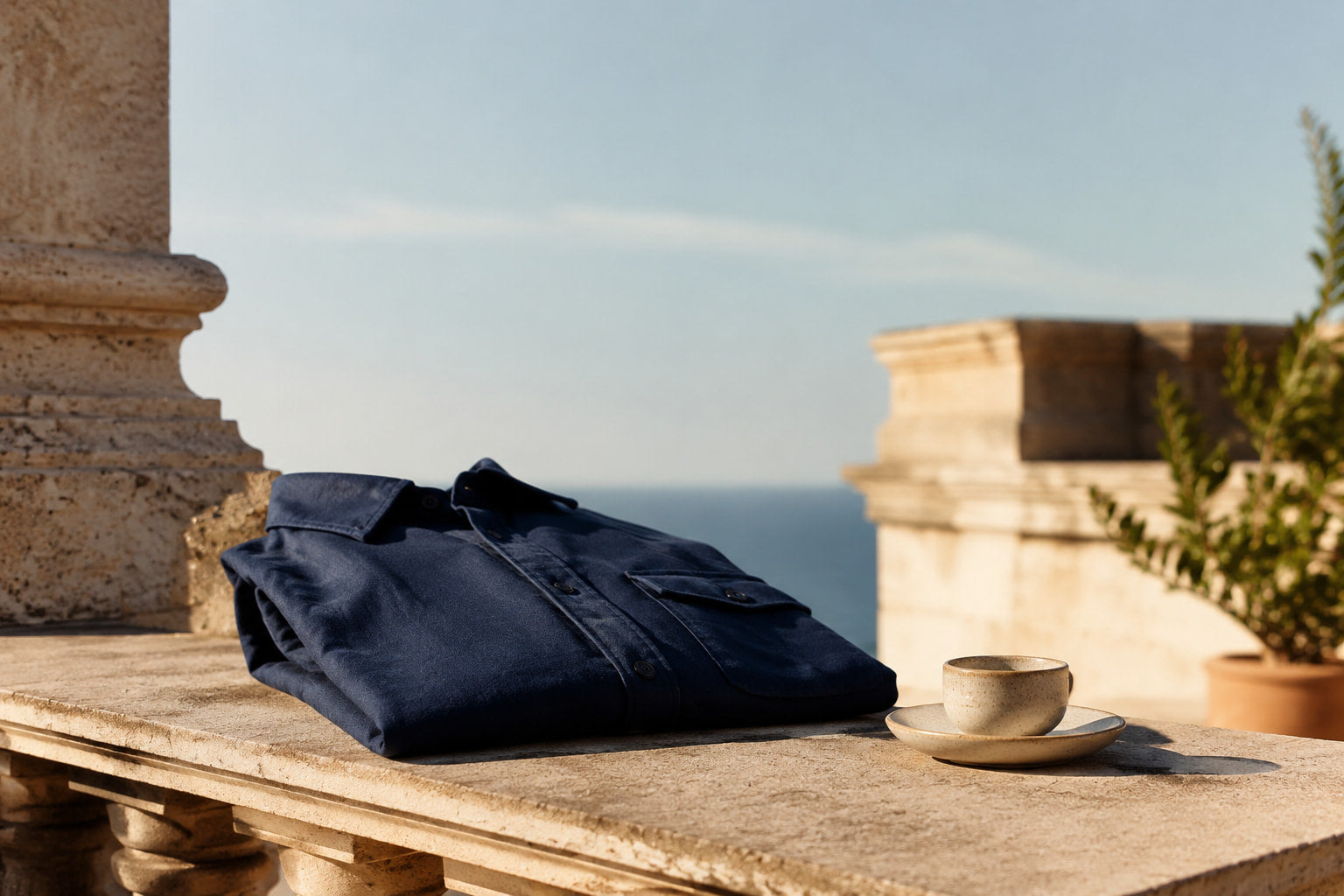
The New York Navy Blue Denim Shirt is a good example of what to look for: a clean, tailored cut without excessive detailing, a pointed collar, and a deep navy wash that contrasts naturally against lighter denim pieces below. For a slightly more relaxed version, the woman shirt old money collection includes several shirt weights worth considering alongside the denim pieces.
Fit at the shoulder is non-negotiable. A denim shirt that pulls across the back or droops at the shoulder seam undermines the whole look regardless of how well the rest is assembled. If you are between sizes, take the smaller size and have the body let out slightly rather than accepting a shoulder seam that sits off the joint. Our guide on how to tailor a button-down shirt to accentuate your frame covers exactly this kind of targeted adjustment.
Expert insightA denim shirt worn half-tucked, front hem tucked in and back left out, is a common shortcut that usually looks unresolved. Commit to a full tuck or leave it fully out, and press the shirt first so the hem falls cleanly either way.

Building the Double Denim Outfit: Proportion and Silhouette
Once you have the shirt, the question is what goes with it. The core principle is contrast in silhouette: if the shirt is relaxed and oversized, the bottom piece should be more fitted, and vice versa. Two voluminous pieces in denim read as costume. Two fitted pieces can read as a uniform. The middle ground, one relaxed and one structured, is where the look becomes genuinely wearable.
The most polished version of double denim for women pairs a tailored denim shirt, buttoned to the second button from the top and neatly tucked, with a straight or A-line denim skirt in a contrasting wash. This combination has the quiet authority of a co-ordinated set without the formality of suiting. It works for a gallery visit, a slow Saturday lunch, or a coastal town in August.
A second strong option is wearing the denim shirt open over a simple fitted top, then pairing it with a denim skirt. The open shirt acts as a layer rather than a top, which reduces the visual weight of the denim and gives the outfit more air. The woman shirts collection at Lovau includes several styles that layer cleanly this way.
For those who prefer trousers, the denim shirt tucked into wide-leg or straight-cut denim trousers in a darker wash is the contemporary version of the so-called Canadian tuxedo, and it has become a genuinely accepted silhouette in European fashion cities over the past several seasons. The key is keeping the shirt crisp. Refer to our advice on the right way to steam and press premium cotton shirts to keep the shirt looking sharp rather than lived-in.
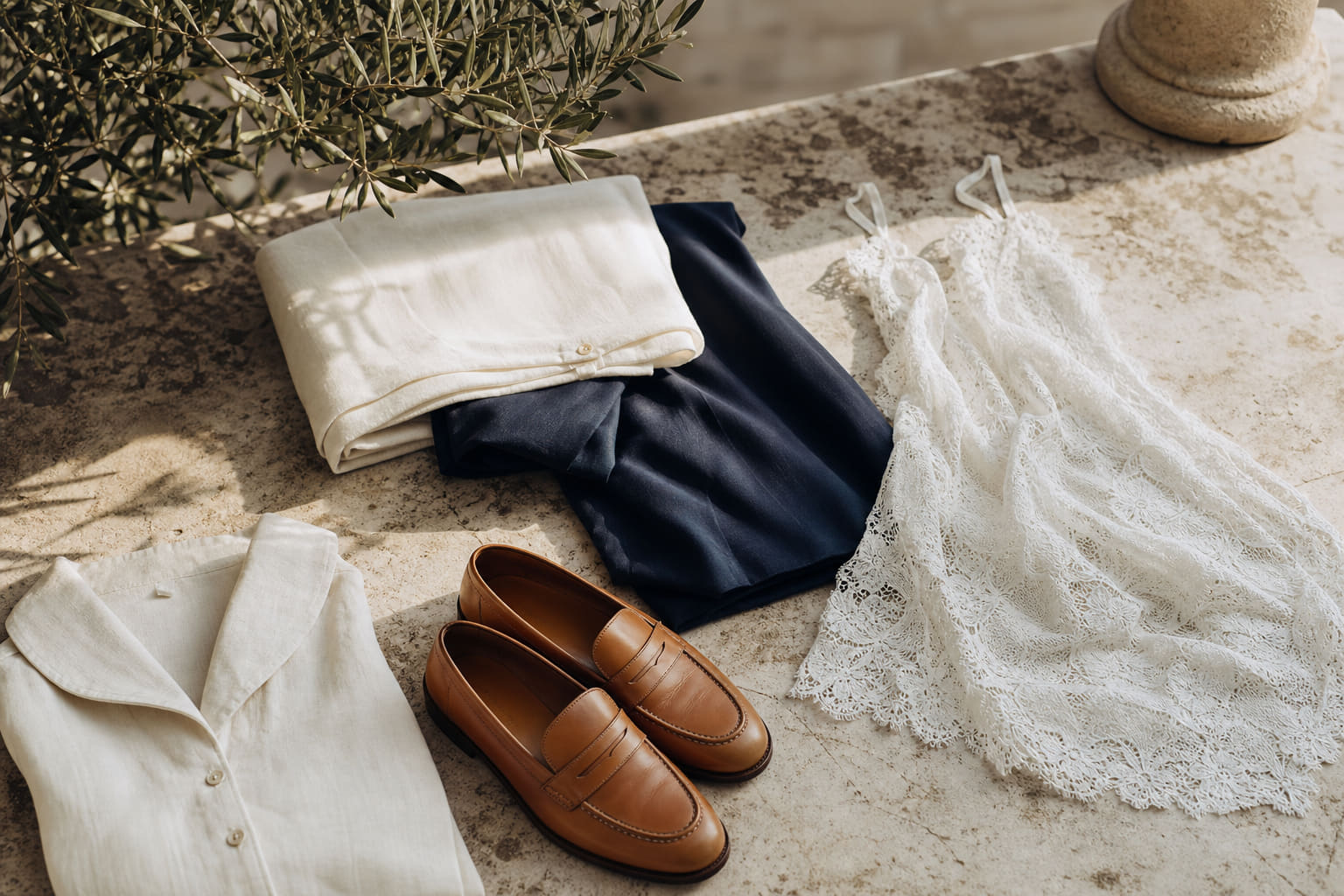
Shoes close the look. Leather loafers in tan or cognac interrupt the blue-on-blue palette with warmth and read immediately as considered. The old money style women's loafers in genuine leather are the natural companion here: a clean, unembellished silhouette that does not compete with the outfit.
Expert insightThe single most effective way to make double denim look intentional is to press both pieces. Creased denim reads as lazy; pressed denim reads as deliberate. Five minutes with a steam iron changes the entire register of the outfit.

The Non-Denim Element: How to Break the Look Correctly
Every strong double denim outfit includes at least one element that is not denim. This is not a concession to the old anxiety about wearing too much of the same fabric. It is simply good dressing. A single contrasting texture or colour gives the eye a resting point and signals that the outfit was assembled with thought.
The most effective non-denim elements are those with their own material presence: a leather belt in tan or bone, a silk scarf tied loosely at the neck or knotted through a bag handle, a woven straw bag, or a pair of leather loafers as mentioned above. These are all materials with distinct tactile qualities that read against denim's matte cotton surface.
A white or cream top worn under an open denim shirt is another reliable anchor. The White Top-Shirt French Dreamy in its clean off-white sits particularly well under a darker navy denim shirt, creating a crisp break between the two blue tones. Similarly, the Mia Lace Top Shirt adds texture through its lace detail, which softens the utilitarian quality of denim and shifts the overall register toward something more feminine and considered.
What to avoid: a third piece in denim, whether a jacket, a bag, or a cap. Two denim pieces in deliberate contrast is a statement. Three is an excess that tips back into the territory the outfit was trying to leave.
Colour beyond blue can work, but keep it to one accent and keep it muted. A stone-coloured linen tote, an ivory silk scarf, a pair of nude leather mules. These additions complement without overpowering. For more on how accessories complete a refined look, our piece on how to choose a leather tote bag that complements any outfit is worth reading before you dress.

Occasion and Context: Where Double Denim Actually Works
Double denim is not a look for every occasion, and knowing its natural context is part of wearing it well. At its most polished, it suits daytime social settings: weekend markets, gallery openings, coastal lunches, city walks in European summer. It is not office attire in the traditional sense, though a very tailored version in dark indigo with clean, pressed lines can work in a creative or relaxed professional environment.
For travel, double denim is genuinely practical. Both pieces are durable, pack well, and resist the kind of visible wear that lighter fabrics show after a long day. A dark navy denim shirt worn over a lighter denim skirt with leather sandals is a complete, considered outfit that moves from a morning flight to an evening restaurant without needing to change.
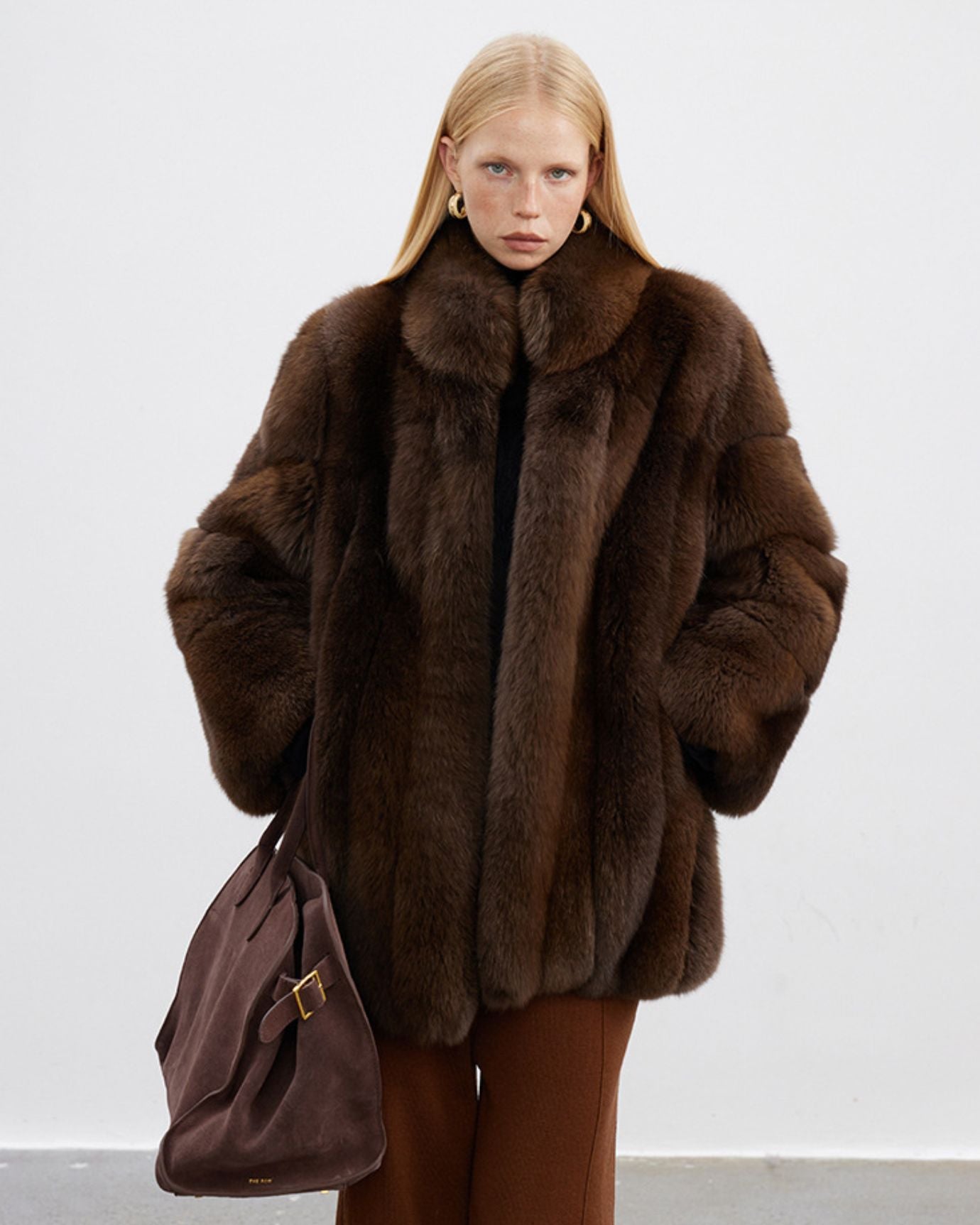
In cooler months, the denim shirt becomes a mid-layer. Worn under a fine wool coat or a structured blazer, with the collar visible above the lapel, it adds texture and depth to an autumn or winter outfit without reading as casual. The Divina Double-Sided Wool Coat with Fox Fur Collar over a dark denim shirt and a lighter denim skirt is exactly this kind of layered, seasonally appropriate combination.
For those building a broader wardrobe around the same aesthetic, the women old money woman home collection provides a useful reference for the pieces that sit naturally alongside a denim shirt in a refined, understated wardrobe. The denim shirt is not a standalone statement. It is one piece in a considered rotation, and it works best when the rest of the wardrobe shares its quiet, unhurried quality.

Care and Longevity: Keeping Denim Shirts Looking Sharp
Denim shirts age in two directions. Cared for well, they develop a beautiful, gradual fade that adds character and makes them look more expensive with time. Neglected, they go grey and limp, losing the depth of colour that makes them worth wearing.
Washing frequency is the most important variable. Denim does not need washing after every wear. Unless the shirt is visibly soiled, airing it between wears and washing every three to four uses preserves the indigo dye and reduces fabric stress. When you do wash, turn the shirt inside out, use cold water, and avoid any detergent with bleach or optical brighteners, which strip indigo faster than anything else.
Drying should always be in open air rather than a tumble dryer. Heat contracts denim fibres and accelerates fading in uneven patches. Hang the shirt by its shoulders immediately after washing, buttoned to prevent the collar from distorting, and allow it to dry flat in shape.
Pressing before wear is what separates a denim shirt that looks considered from one that looks like an afterthought. Use a medium-hot iron with steam on the wrong side of the fabric for the body, and press the collar and cuffs on the right side under a damp pressing cloth to get them sharp without scorching. Our full guide on how to style linen shirts without looking wrinkled applies many of the same pressing principles to cotton shirts and is worth reading alongside this.
Stored correctly, a quality denim shirt lasts many years. Hang it rather than folding it to prevent permanent crease lines at the fold points, and keep it away from direct sunlight in storage, which fades indigo unevenly.
| Top Piece | Bottom Piece | Tone Contrast | Best Occasion | Key Addition |
|---|---|---|---|---|
| Pale chambray shirt (light wash) | Dark indigo denim skirt | High | Weekend lunch, city walk | Cognac leather belt + tan loafers |
| Dark navy denim shirt | Light-wash straight denim skirt | High | Coastal day, travel | White linen top underneath, straw bag |
| Mid-blue denim shirt (tucked) | Darker straight-leg denim trousers | Medium | Creative office, gallery | Ivory silk scarf, leather loafers |
| Dark denim shirt (open, layered) | Light denim midi skirt | High | Evening terrace, summer dinner | Fitted white top underneath, gold earrings |
| Chambray shirt (half-layer under coat) | Dark denim skirt | Medium | Autumn day, travel | Structured wool coat, leather ankle boots |
Frequently asked questions
What is the most important rule for wearing double denim?
Tonal contrast. The two denim pieces must be visibly different in shade, at least two tonal steps apart, so the combination reads as deliberate rather than accidental. A pale chambray shirt over a deep indigo skirt is a clear example. Two pieces in the same mid-blue wash is what creates the flat, unflattering effect that gave double denim its bad reputation.
Can a denim shirt be worn in a polished, non-casual way?
Yes, provided the shirt itself is well-cut and properly pressed. A dark navy denim shirt for women with a sharp collar, tucked into a tailored skirt or wide-leg trousers, sits comfortably in creative professional and smart-casual social settings. The key is fit and pressing, both of which move the shirt away from its workwear origins.
How do I stop my denim shirt from fading too quickly?
Wash it infrequently, in cold water, turned inside out, with a detergent that contains no bleach or optical brighteners. Dry it in open air rather than a tumble dryer, and add a small amount of white wine vinegar to the rinse cycle as a natural colour fixative. Avoid storing it in direct sunlight, which causes uneven fading over time.
What shoes work best with a double denim outfit?
Leather loafers in tan, cognate, or bone are the most reliable choice. They interrupt the blue-on-blue palette with warmth and read as considered rather than casual. White leather trainers work for a more relaxed, contemporary version. Heeled sandals in nude or metallic lift the formality slightly for an evening context. What to avoid: very chunky or heavily branded footwear, which pulls the outfit downward in register.
Double denim is one of those combinations that rewards a small amount of attention and repays it generously. Get the tonal contrast right, press both pieces, add one non-denim element with its own material weight, and the outfit does the rest. It is not a trend to chase or abandon. It is a dressing logic, the same logic that governs all tonal pairing, applied to one of the most durable and versatile fabrics in the wardrobe. Start with a well-cut women's denim shirt in a shade that contrasts with what you already own, and build from there.