


Best Sunglasses Colors and Tints for 2026
Reading time 14 min • 2765 words
The frame gets most of the attention. The lens tint does most of the work. It determines how clearly you see in bright sun, how accurately colors read to your eye, and, quietly, how the whole pair reads against your face and outfit. Choosing the wrong tint for your environment or complexion is one of the most common and easily corrected mistakes in building a considered wardrobe.
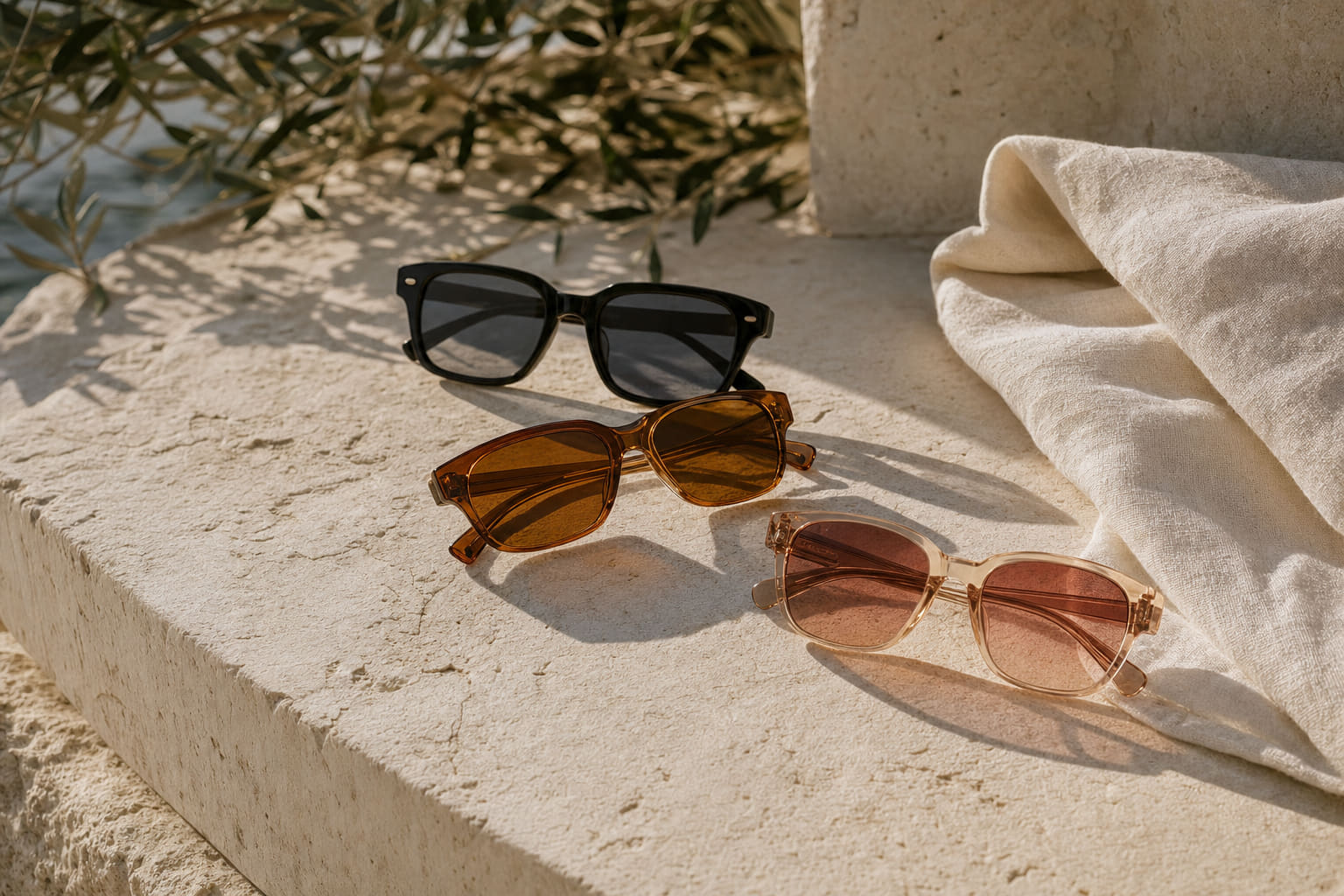
For 2026, the direction in refined circles is toward lenses that earn their place optically as much as aesthetically. Neutral gray and warm amber are holding their ground as the sensible anchors. Rose and soft green are gaining ground as the more expressive options, provided they sit in a frame serious enough to carry them. Mirrored and flash-coated lenses have retreated; the preference now is for depth and subtlety over surface effect.
This guide covers every significant tint category, what each one does to light and color, which conditions it suits best, and how to match it to your coloring and the rest of your dress. The Lovau sunglasses collection spans all of these tints, so specific recommendations are woven in throughout.
Key takeaways
- Gray lenses are the most versatile tint: they preserve true color perception and suit almost every light condition and skin tone.
- Rose and pink gradient lenses enhance contrast in low to moderate light and read as refined rather than casual when set in a dark or tortoiseshell frame.
- Amber and brown lenses are ideal for driving and variable cloud cover because they boost contrast and reduce blue-light scatter.
- Green lenses balance contrast enhancement with color accuracy, making them a strong all-day choice with a heritage European pedigree.
- Gradient lenses, darker at the top and lighter at the base, are the most flattering tint for extended outdoor wear and pair naturally with formal or smart-casual dress.
In this guide
- Gray and Dark Gray: The Benchmark Tint
- Rose and Pink: Precision Warmth, Not Sweetness
- Amber and Brown: The Functional Luxury
- Green: The European Heritage Tint
- Gradient and Smoke: Refinement in Degrees
- Limited and Statement Tints: Blue, Orange, and the Case for One Expressive Pair
- Frequently asked questions
Gray and Dark Gray: The Benchmark Tint
Gray is the standard against which every other lens tint is measured, and for good reason. A gray lens reduces overall light intensity without shifting the color spectrum, which means the world looks exactly as it is, only dimmer. That optical neutrality matters practically: you read traffic signals, water color, and fabric accurately. It matters aesthetically, too, because gray lenses photograph cleanly and age without looking dated.
For 2026, dark gray lenses in a black acetate frame remain the most authoritative choice for both men and women. They signal nothing beyond confidence and good judgment, which is precisely the point in a wardrobe built on restraint.
Best conditions: Bright sun, coastal light, high-altitude environments, driving on clear days.
Skin tone: Gray lenses are genuinely universal. They work as well against olive and deeper skin tones as they do against fair northern European complexions, because they introduce no competing warmth or coolness.
For women, the dark gray tint 90s sunglasses in a black frame bring a sharp architectural silhouette that suits the oversized proportion trend without abandoning discipline. The classic black gray tint sunglasses offer a slightly softer oval shape for those who prefer a less angular line.
For men, the black gray tint sunglasses are the clean starting point, and the Milano black square sunglasses in gray gradient tint add the gradient treatment for anyone who wants to soften the base of the lens, which is particularly useful with reading material or a menu at a terrace lunch.
Expert insightA gray lens with a polarized coating is not a separate category, it is an upgrade. Polarization eliminates horizontal glare from water, wet roads, and white stone, which is the dominant light condition along any Mediterranean coastline. If you wear one pair of sunglasses for travel, choose gray polarized.

Rose and Pink: Precision Warmth, Not Sweetness
Rose tints occupy an interesting position. They are widely misread as purely decorative, associated with softness or femininity in the casual market. In reality, a rose or light pink lens enhances depth perception and contrast in low-to-moderate light conditions because it filters blue light while allowing warm wavelengths through. The result is a slightly richer, more three-dimensional view of the world, particularly useful in overcast or hazy conditions.
The key to wearing a rose lens with authority is the frame. A black or dark tortoiseshell frame anchors the warmth of the lens and prevents the pair from reading as playful. A gold or silver wire frame does the same with a lighter touch.
Best conditions: Overcast days, early morning, late afternoon, indoor-outdoor transitions, driving in variable light.
Skin tone: Rose lenses are particularly flattering against warm and neutral skin tones. Against very cool or blue-toned complexions, they can read slightly at odds; a light gray-rose gradient is a better compromise in that case.
For men, the black rose tint sunglasses demonstrate exactly how this tint functions in a serious context: the frame does the structural work, the lens adds warmth without softness. The L3 black rose tint sunglasses offer a slightly larger silhouette for men with broader face structures.
For women, the Marbella rose gold sunglasses in pink gradient are the more expressive option, where the rose-gold metal frame and gradient lens work together as a coherent statement rather than a contrast. The black light pink cat eye sunglasses are the more restrained choice, letting the cat-eye silhouette carry the character while the lens stays quiet.
As the psychology of color in old money fashion makes clear, warm tones in accessories communicate ease and approachability without sacrificing authority, which is exactly what a rose lens does when worn correctly.
Expert insightRose lenses at a density of around 50 to 60 percent transmission, meaning lighter rather than dark, are more versatile than deep rose. They transition from bright outdoor light to shaded terraces without requiring you to remove the glasses entirely.

Amber and Brown: The Functional Luxury
Amber and brown lenses are the choice of people who spend real time outdoors in variable conditions. They block blue light aggressively, which increases contrast and makes edges appear sharper. On a partly cloudy day, an amber or brown lens makes the landscape read more vividly than a gray lens would. For driving, sailing, or any activity where depth perception and spatial clarity matter, amber and brown are the technically superior choice.
Aesthetically, they belong to a warm, earthed palette. Tortoiseshell frames, brown leather, camel coats, and sand-colored linen all sit naturally alongside a warm brown lens. They are less at home with a cool navy or charcoal suit, where a gray lens would integrate more cleanly.
Best conditions: Variable cloud cover, driving, water sports, golf, countryside environments.
Skin tone: Warm and deep skin tones benefit most from amber and brown lenses, which add complementary warmth. Olive complexions in particular are enhanced. Fair, cool-toned skin can carry them well if the frame is warm, such as tortoiseshell or gold.
The amber brown geometric rectangular sunglasses are the most direct expression of this tint in the Lovau men's collection: a clean rectangular frame in a warm acetate, with a lens that reads as considered rather than sporty. For women, the Anna sand-beige brown sunglasses pair a warm frame with a brown lens for a fully tonal, quietly luxurious result that works particularly well against the Spring Summer Woman Old Money Collection 2026 palette of ivory, sand, and warm white.
The science behind why amber lenses improve contrast is well documented: blue light scatter, known as the Tyndall effect, is the primary cause of visual haze, and amber lenses filter it more effectively than any other tint.
Expert insightAn amber lens at around 75 to 80 percent light blockage is the sweet spot for driving. Darker than that and you lose too much light in tunnel entries and shaded roads; lighter and the contrast benefit diminishes noticeably.

Green: The European Heritage Tint
Green lenses have a long history in European optical tradition. They were the standard lens color in mid-century Italian and French sunglasses, chosen because they offer a middle ground between the color neutrality of gray and the contrast enhancement of amber. A green lens reduces glare, preserves color accuracy reasonably well, and adds a very slight warm-cool balance that many wearers find restful over long periods of wear.
For 2026, green lenses are returning to prominence in a natural, un-mirrored form. Dark olive-green and forest-green lenses in tortoiseshell or black frames are the most refined expressions of this tint. They read as quietly distinctive without being conspicuous.
Best conditions: Bright to moderate sun, extended outdoor wear, coastal and garden settings.
Skin tone: Green lenses suit a wide range of complexions. They are particularly effective against warm olive skin tones, where they create a natural harmony. Against very fair skin, a darker green lens can appear heavy; a lighter sage or bottle-green is a better proportion.
The Lana tortoiseshell green oval sunglasses are the clearest statement of this tint in the women's collection: the oval silhouette is historically grounded, the tortoiseshell frame adds warmth, and the green lens sits within that warm palette rather than contradicting it. For men, the Lovau iconic green sunglasses take a bolder position with a more structured frame, suited to those who want the green tint to function as a signature rather than a background note.
If you are building a considered sunglasses wardrobe for the first time, the guidance in aviator vs square sunglasses: which suits you best is a useful companion to this tint guide, since frame shape and lens color interact directly.

Gradient and Smoke: Refinement in Degrees
A gradient lens is darker at the top and fades to a lighter tint at the base. The practical effect is that it blocks direct overhead sun while leaving the lower field of vision clearer, which is why gradient lenses have always been associated with driving and dining outdoors. They are also inherently flattering on the face because the gradation of tone mirrors the natural shading of a well-designed frame.
Smoke, as a lens descriptor, refers to a very dark gray with a slight brown or cool undertone, denser than standard gray but without the full opacity of a solid dark lens. It sits between gray and a true dark lens, offering a slightly more atmospheric quality.
Best conditions: Driving, terrace dining, indoor-outdoor transitions, overcast bright days.
Skin tone: Gradient lenses are among the most universally flattering because the lighter lower portion reflects less color onto the face, reducing the risk of a tint that clashes with skin tone.
The cat eye black smoke tint sunglasses demonstrate how a smoke lens in a strong silhouette reads as genuinely sophisticated rather than merely dark. The Milano black square sunglasses in gray gradient for men show the same principle in a square frame, where the gradient softens what could otherwise be a very hard architectural shape.
For a broader view of how tints integrate into the full woman sunglasses old money style collection, or the complete man sunglasses range, both pages are organized by frame family, which makes it easier to compare tints within the same silhouette.
As Vogue has noted in its coverage of quiet luxury dressing, the shift toward gradient and smoke lenses over mirrored finishes reflects a broader move away from surface spectacle toward depth and material quality.

Limited and Statement Tints: Blue, Orange, and the Case for One Expressive Pair
A well-considered sunglasses wardrobe of three or four pairs benefits from one pair that steps outside the neutral core. Blue, light orange, and amber-orange lenses occupy this role. They are not novelties; each has specific optical properties and a history in both sport and fashion contexts. Blue lenses reduce glare from snow and sand. Orange lenses enhance contrast in low-light and hazy conditions, making them the traditional choice for shooting sports and skiing.
In 2026, the interest in these tints comes from their restraint within a strong frame rather than from any trend toward maximalism. A light blue lens in a clean black aviator frame, or a pale orange lens in a structured metal frame, reads as intentional and precise rather than decorative.
- The black aviator light orange lens sunglasses are a limited edition that pairs the most classic frame shape in the canon with a tint that has genuine optical purpose.
- The blue light orange sunglasses take a more expressive position, where the blue frame and orange lens create a deliberate contrast that works best as a single statement piece against an otherwise neutral outfit.
- The hero light blue sunglasses offer a cooler, more restrained version of the statement tint category.
For women, the brown leopard sunglasses and the Diana black leopard sunglasses take the expressive route through pattern rather than tint, which is worth noting: a patterned frame with a neutral lens is an equally valid way to introduce personality without compromising optical clarity.
For guidance on building color across a full wardrobe, old money color palettes for spring and summer provides the broader framework within which these tint choices sit.

| Lens Tint | Light Reduction | Color Accuracy | Best Conditions | Skin Tone Suitability |
|---|---|---|---|---|
| Gray | High (80-90%) | Excellent, neutral | Bright sun, coastal, driving clear days | Universal |
| Rose / Pink | Moderate (40-60%) | Warm shift, enhances depth | Overcast, low light, variable cloud | Warm and neutral tones; avoid very cool complexions |
| Amber / Brown | High (75-85%) | Contrast enhanced, slight warm shift | Variable cloud, driving, countryside | Warm, olive, and deep skin tones |
| Green | High (80-85%) | Near-neutral with slight warmth | Bright to moderate sun, extended wear | Wide range; olive and warm tones especially |
| Gray Gradient | High top, Moderate base | Neutral, graduated | Driving, terrace dining, indoor-outdoor | Universal, among most flattering |
| Amber / Blue / Orange (statement) | Low to Moderate (30-60%) | Contrast or haze-specific | Hazy, snowy, low-light, sport | Best as accent pair; varies by tint |
Frequently asked questions
Which lens tint is best for everyday use in 2026?
Gray remains the strongest everyday choice because it reduces brightness without distorting color, which means it works in every environment from a city street to a coastal terrace. A gray gradient is a slight refinement on the solid gray, offering more comfort during long outdoor lunches or drives. The Milano black square sunglasses in gray gradient tint are a practical and refined starting point for men.
Are rose or pink lens sunglasses suitable for men?
Yes, provided the frame is structured and dark enough to carry the warmth of the lens. A black or dark tortoiseshell frame with a rose lens reads as considered and precise rather than decorative. The black rose tint sunglasses demonstrate this balance directly. The tint also has a functional argument: it enhances contrast in overcast light, which is a legitimate optical advantage.
Do lens tints affect UV protection?
Tint and UV protection are separate properties. The darkness or color of a lens does not determine how much ultraviolet radiation it blocks. UV protection is a coating or material property applied independently of tint. A pale rose lens can offer full UV400 protection while a very dark gray lens without the coating can offer none. Always confirm UV400 certification regardless of the tint you choose.
How do I match a lens tint to my skin tone?
The general principle is that warm tints, amber, brown, and rose, complement warm and olive complexions, while cool tints, gray and green, are more neutral and work across a wider range. For a deeper discussion of how color functions in a refined wardrobe, the best colors for old money women's fashion and the best colors for old money men both address the relationship between complexion and palette in practical terms.
Choosing a lens tint is a practical decision dressed in aesthetic terms. Gray anchors the wardrobe. Amber and brown serve variable light. Rose and green offer character without sacrifice. Gradient softens and flatters. One expressive tint, worn with conviction, completes the set. The full range of options, across every silhouette and tint category, is available in the Lovau sunglasses collection, organized to make the comparison straightforward.