


How to Spot Fake Cashmere When Shopping Online
Reading time 14 min • 2822 words
Cashmere has a counterfeiting problem. Unlike a forged watch or a fake leather bag, adulterated cashmere is nearly impossible to detect with a glance. A sweater labelled 100% cashmere can legally contain up to a small percentage of other fibres under certain jurisdictions, and less scrupulous sellers exploit every grey area available to them. The result is a market flooded with blends, coarse-grade fibres and outright synthetic substitutes, all sold under the same name as one of the finest natural fibres on earth.
For a man who takes his wardrobe seriously, this matters beyond the price paid. Fake or low-grade cashmere pills aggressively within weeks, loses its shape, and provides none of the temperature-regulating performance that makes the real thing worth owning. Knowing how to identify genuine cashmere before you buy is not pedantry, it is basic due diligence.
This guide covers every practical method available to you when shopping online, from reading a label correctly to understanding what price points signal quality versus fraud, to the physical tests you can run the moment a piece arrives.
Key takeaways
- Check the care label: genuine cashmere lists '100% cashmere' or a declared blend percentage, never vague terms like 'cashmere-like' or 'cashmere touch'.
- Price is a reliable proxy: pure Grade A cashmere sweaters cost a minimum of $100 to $150 to produce honestly, so anything priced at $30 is almost certainly adulterated.
- The burn test is the most reliable at-home verification: real cashmere burns slowly, smells of singed hair and leaves a crushable ash, not a hard plastic bead.
- Fibre diameter matters: Grade A cashmere measures 14 to 15.5 microns; anything coarser than 19 microns is technically wool, regardless of labelling.
- Buy from retailers who publish fibre composition, ply count and sourcing region, and who stand behind their products with traceable quality claims.
In this guide
- What Real Cashmere Actually Is
- Reading the Label: What to Look For and What to Avoid
- Price as a Quality Signal: The Honest Benchmarks
- Physical Tests You Can Run When the Garment Arrives
- What Genuine Cashmere Looks Like in a Well-Made Garment
- Buying Smart: Platforms, Brands and Questions to Ask
- Frequently asked questions
What Real Cashmere Actually Is
Cashmere comes from the undercoat of the Capra hircus goat, combed during the spring moult primarily in Mongolia, Inner Mongolia and parts of China, Iran and Afghanistan. The fibre's value comes from its diameter. Cashmere fibre classified as Grade A measures between 14 and 15.5 microns, finer than the finest merino wool and roughly a fifth of the diameter of a human hair. That fineness is what produces the characteristic softness, the lightweight warmth and the drape that no synthetic can replicate.
Grade B cashmere runs from 15.5 to 18 microns, still genuinely luxurious but slightly coarser. Anything above 19 microns is reclassified as wool under most international fibre standards. This is the gap that dishonest suppliers exploit: coarser fibres from lower-quality goats, or fibres blended with merino, angora or acrylic, can be processed to feel passably soft in a shop but will behave very differently after a few wears and washes.
If you want to understand why this material commands the prices it does, our article on why cashmere is worth the investment covers the full picture. For now, the key point is this: genuine cashmere is scarce, labour-intensive and naturally limited in supply. Anything priced as though it were abundant is almost certainly not the real article.
Expert insightA two-ply cashmere sweater uses two strands twisted together for durability and body. Single-ply is lighter but more fragile. If a listing does not state the ply count, that is itself a warning sign.

Reading the Label: What to Look For and What to Avoid
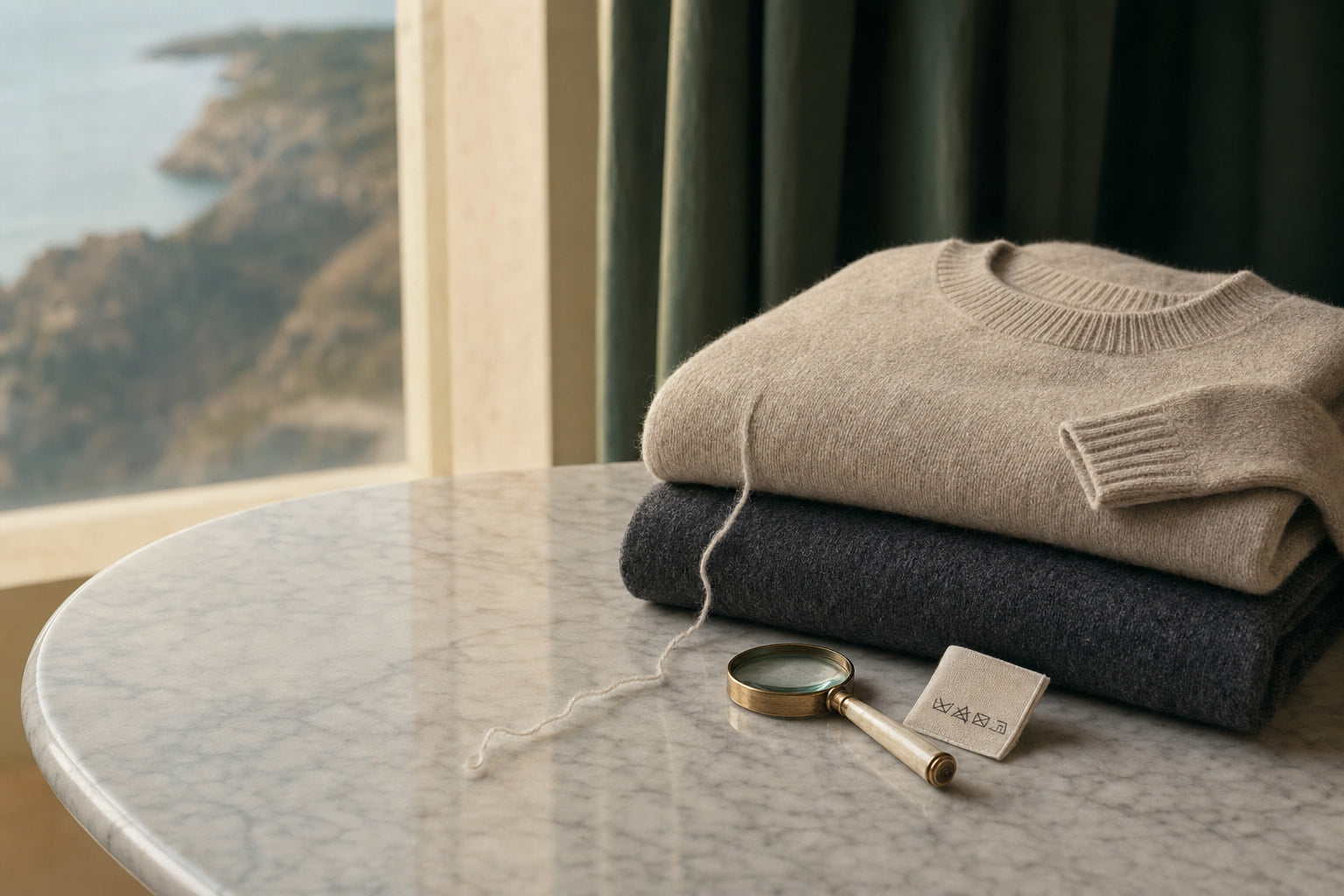
The care label is your first and most accessible tool. A legitimate cashmere garment will state the fibre content precisely: 100% cashmere, or in the case of an intentional blend, a declared percentage such as 70% cashmere, 30% merino wool. Both are honest. What is not honest is language designed to imply cashmere without committing to it.
Phrases that should raise immediate concern: - 'Cashmere-like', 'cashmere touch', 'cashmere feel' or 'cashmere blend' without stated percentages - 'Soft wool' or 'fine wool' with no fibre name - Labels listing only the country of finishing rather than the country of fibre origin - No care label at all, or a label that has been removed
In the United States, the Wool Products Labeling Act and FTC regulations require that any garment labelled cashmere contain fibres with a mean diameter of no more than 19 microns. In the EU, similar rules apply under textile labelling regulations. However, enforcement is inconsistent, and online marketplaces operate across multiple jurisdictions simultaneously.
When a listing on a third-party platform claims cashmere but provides no fibre breakdown, no ply count and no sourcing information, treat it as suspect. Reputable brands, including those in our cashmere collection, publish full fibre composition because they have nothing to hide.
Also look at the country of origin declaration. Most genuine cashmere is processed in Scotland, Italy, China or Mongolia. A label reading 'Made in [country]' refers to where the garment was assembled, not where the fibre originated. Both pieces of information matter.
Expert insightItalian-processed cashmere, particularly from the Biella region, is held to exceptionally tight quality standards. If a brand references Italian manufacture and can substantiate it, that is a meaningful quality signal.

Price as a Quality Signal: The Honest Benchmarks
Price alone does not guarantee authenticity, but it is one of the most reliable filters available when shopping online. Understanding why genuine cashmere costs what it costs makes it much easier to recognise when a price is simply too low to be credible.
A kilogram of Grade A raw cashmere fibre costs roughly $75 to $120 at source, before processing, spinning, dyeing, knitting and finishing. A standard men's sweater uses between 200 and 300 grams of finished yarn. Add labour, quality control, logistics and a reasonable retail margin, and a genuinely honest price for a 100% cashmere sweater starts around $100 to $150 at the budget end, and rises significantly for heavier weights, finer grades and more complex constructions.
What different price points typically indicate: - Under $50: Almost certainly acrylic, viscose or a heavily adulterated blend. Avoid. - $50 to $100: Possible low-grade cashmere blend, or coarse fibres above 18 microns. Scrutinise carefully. - $100 to $200: Plausible range for genuine cashmere, particularly blends with merino. Verify label and brand reputation. - $200 and above: Consistent with pure, fine-grade cashmere, heavier ply counts or exceptional sourcing.
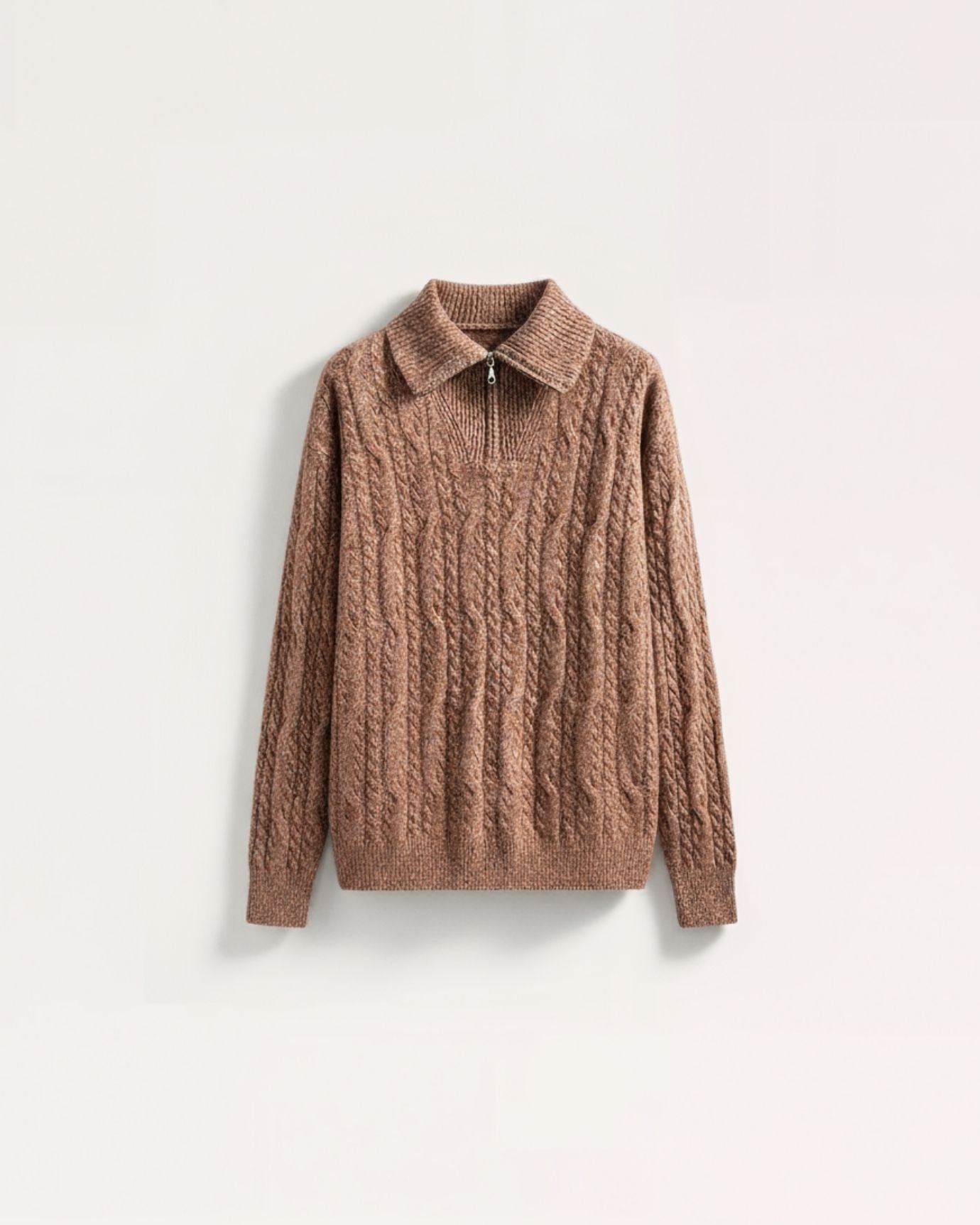
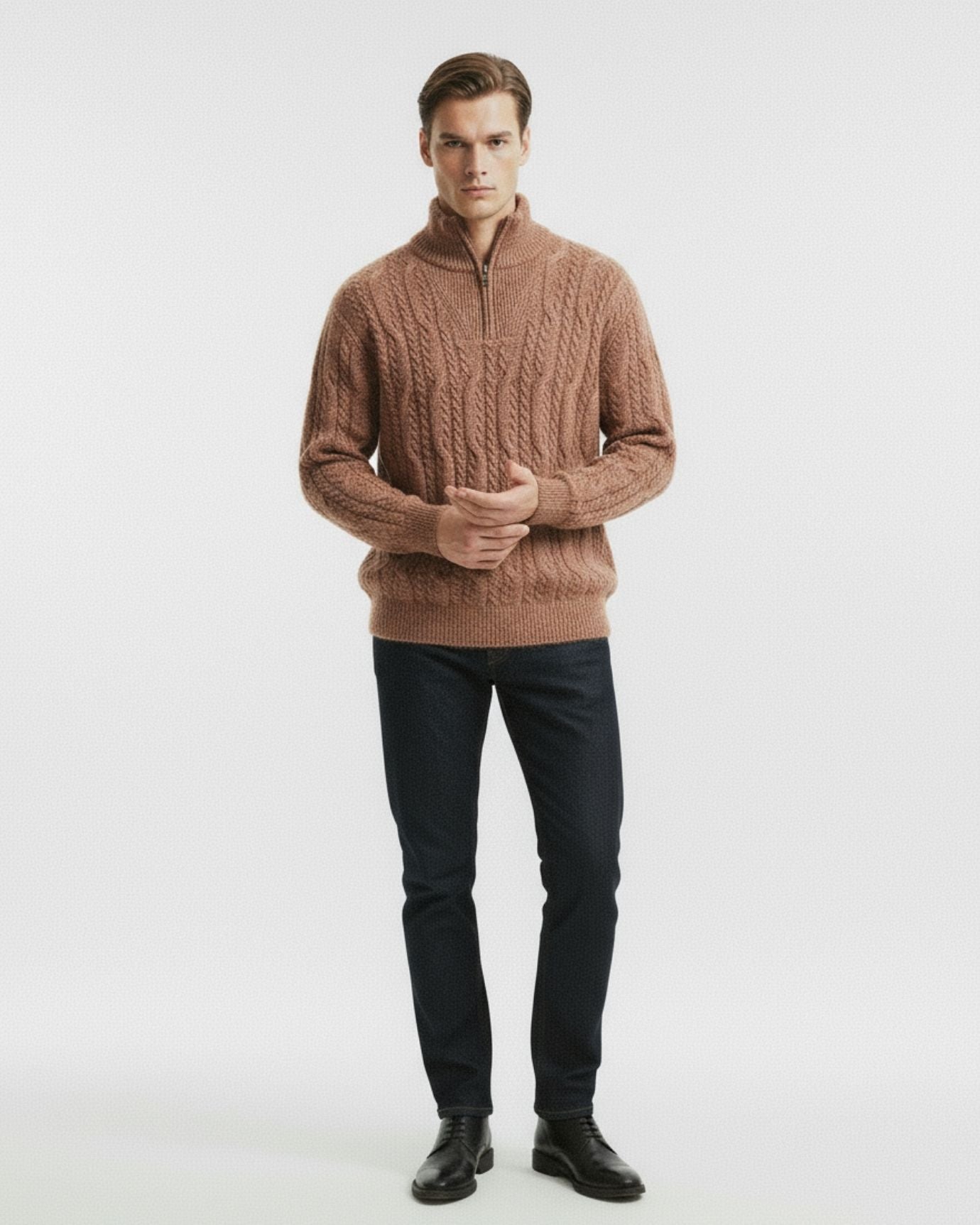
Our Berlin Cashmere Sweater Zip sits at $215, which reflects genuine fibre cost, proper construction and a piece built to last years rather than a single season. Compare that to a $35 listing on a fast-fashion platform claiming the same material and the arithmetic alone tells the story.
For context on how cashmere compares to other fine fibres in both quality and price, our cashmere vs merino wool comparison is worth reading before you commit to a purchase.

Physical Tests You Can Run When the Garment Arrives
Even when shopping online, you can run definitive tests once the piece is in your hands. If a seller offers free returns, use this window to verify what you bought.
The Burn Test This is the most reliable home method. Pull a few loose fibres from an interior seam, hold them with tweezers and apply a flame. Genuine cashmere, like all protein fibres, burns slowly and reluctantly. It smells distinctly of burning hair or singed feathers, and the residue is a soft, crushable grey ash. Synthetic fibres melt rather than burn, produce a chemical or plastic smell, and leave a hard, shiny bead. Coarse wool burns similarly to cashmere but more readily; the smell is the key differentiator.
The Pill Test Rub the fabric briskly against itself for thirty seconds. Genuine fine-grade cashmere will produce minimal or no pilling immediately. Low-grade or blended cashmere pills almost instantly because the shorter, coarser fibres work loose from the weave under friction. Note: even genuine cashmere can pill with heavy wear over time, but it should not happen after thirty seconds of light rubbing.
The Hand Feel Test High-quality cashmere feels warm against the skin almost immediately, as though it is drawing heat toward you rather than simply not conducting it away. It has a slight natural give and recovery. If a garment feels immediately cold, stiff or plasticky, those are signs of synthetic content. Genuine cashmere also has a subtle natural sheen without looking glossy.
The Stretch and Recovery Test Gently stretch a section of the fabric and release it. Real cashmere recovers its shape within a second or two. A garment that stays stretched or takes noticeably longer to recover has likely been blended with fibres that lack the natural elasticity of cashmere.
For a broader understanding of what separates genuine luxury fabric from convincing imitations, our guide on how to spot fake luxury clothing covers these principles across multiple material categories.
Expert insightThe burn test works equally well on cashmere blends with wool, but the smell is the giveaway for synthetics. If in doubt, burn a known synthetic thread alongside for direct comparison.

What Genuine Cashmere Looks Like in a Well-Made Garment
Beyond fibre authenticity, construction quality is inseparable from the question of value. A garment made from genuine cashmere but constructed carelessly is still a poor investment. When evaluating a piece online, look for the following specifics in product photography and descriptions.
Knit structure: Fine cashmere garments show a consistent, even knit with no dropped stitches, loose loops or irregular tension visible even in close-up photography. A two-ply or heavier construction will show a denser, more substantial surface.
Seam finishing: Legitimate cashmere pieces use linked seams rather than sewn seams at the shoulder and sleeve joins. Linked seams are flat and virtually invisible; sewn seams create a visible ridge. This detail is difficult to fake at low cost.
Weight: A genuine cashmere sweater has appreciable weight for its apparent fineness. If a listing describes a piece as cashmere but the weight listed is 150 grams or under for a full sweater, that is unusually light and warrants scepticism.
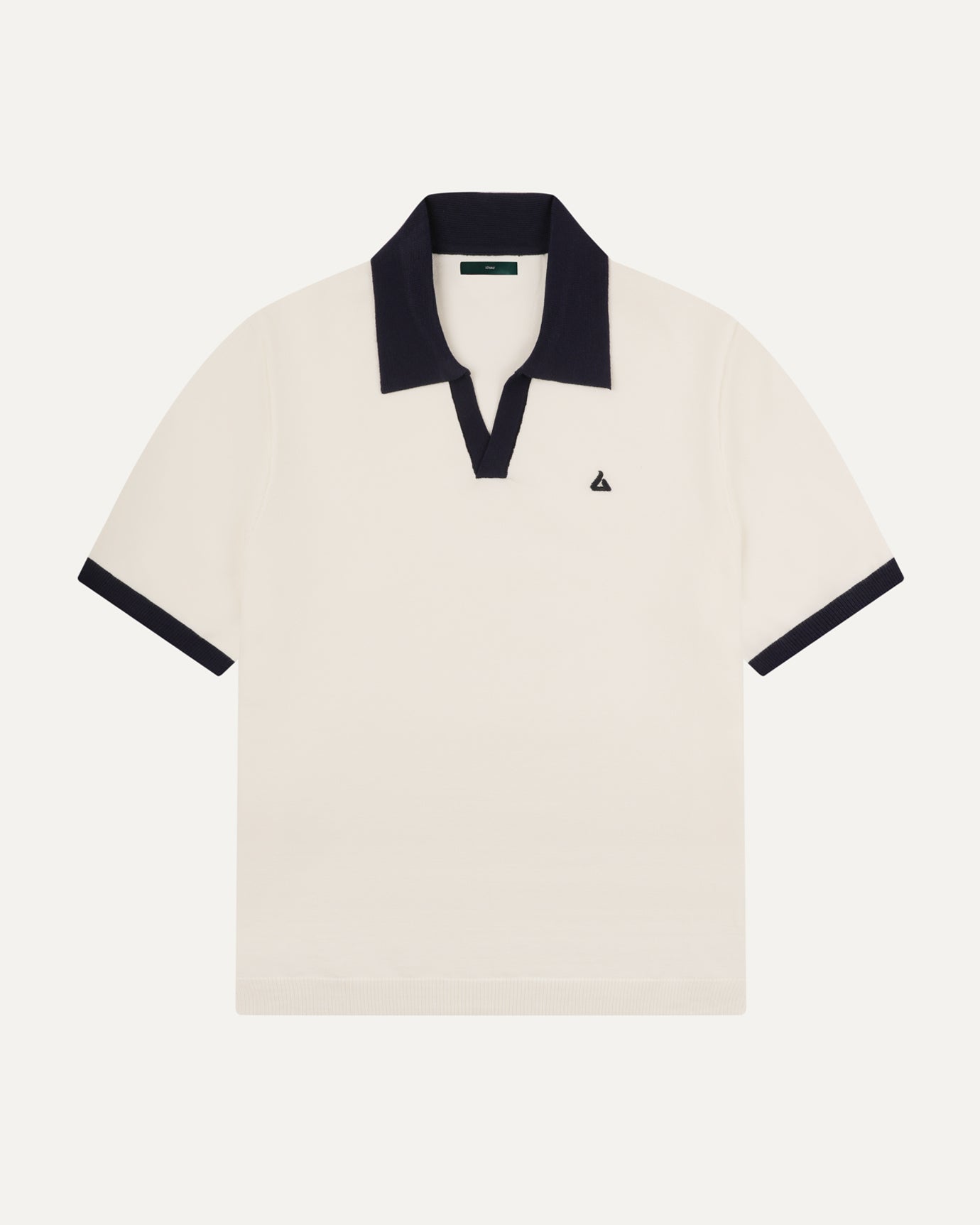
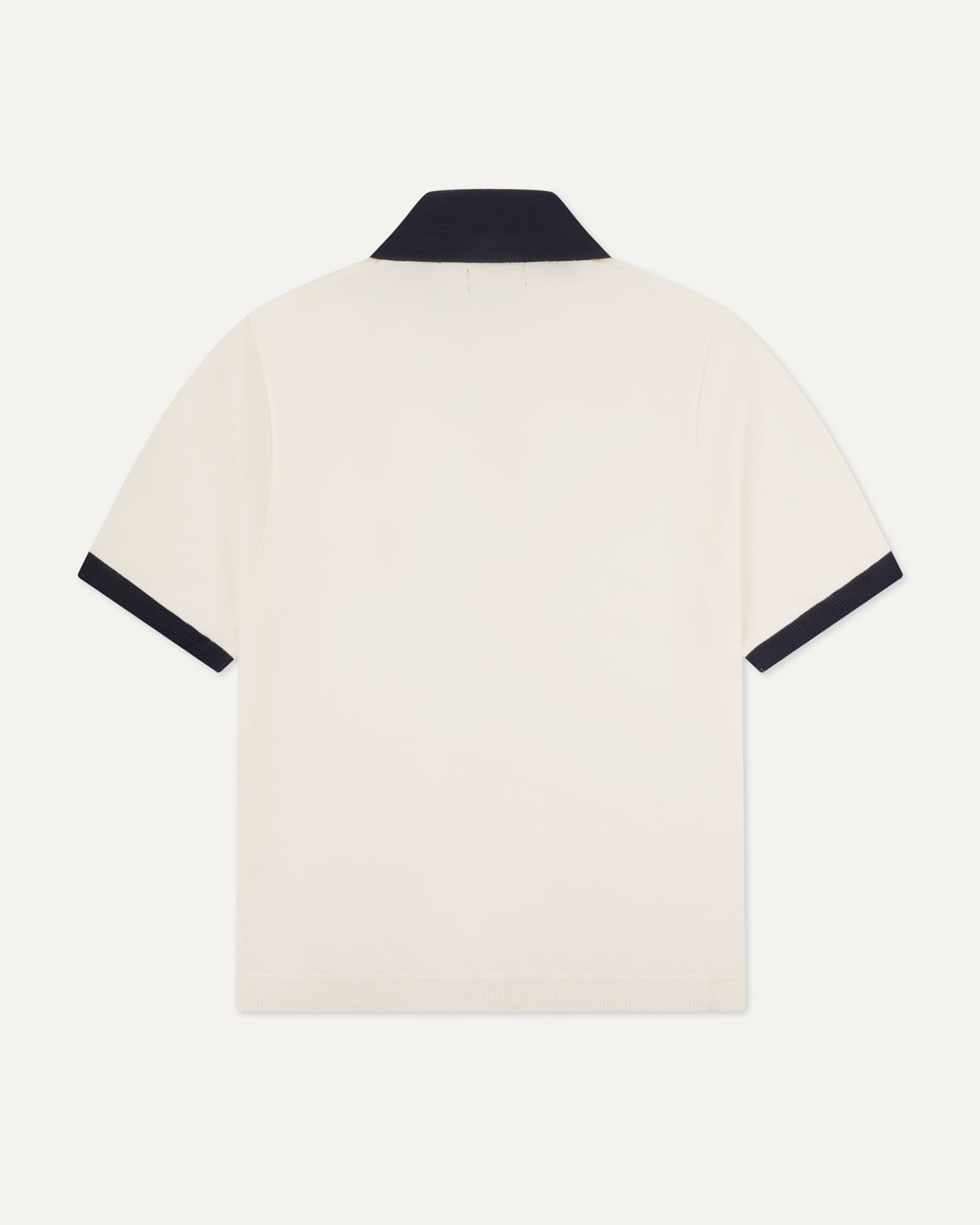
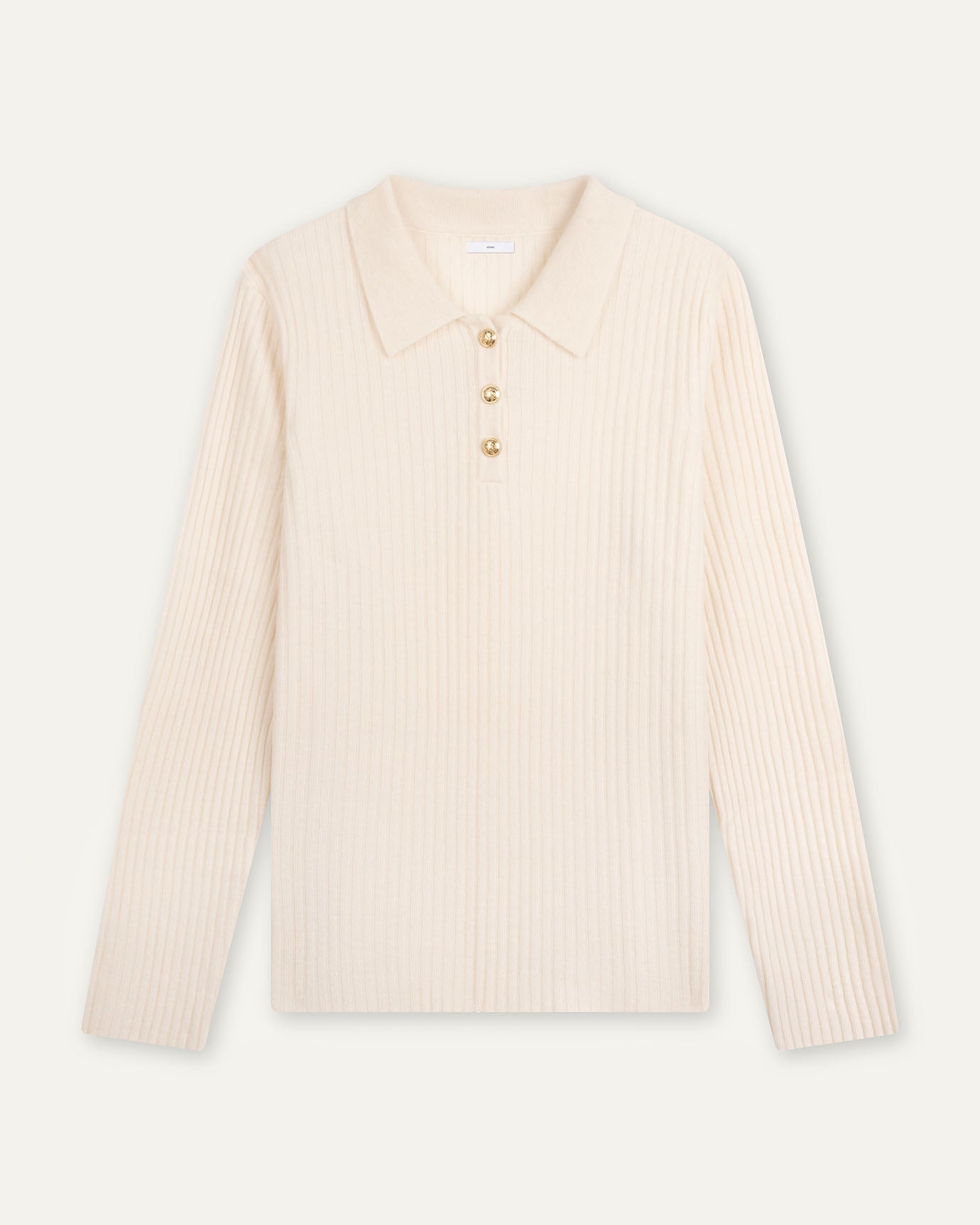
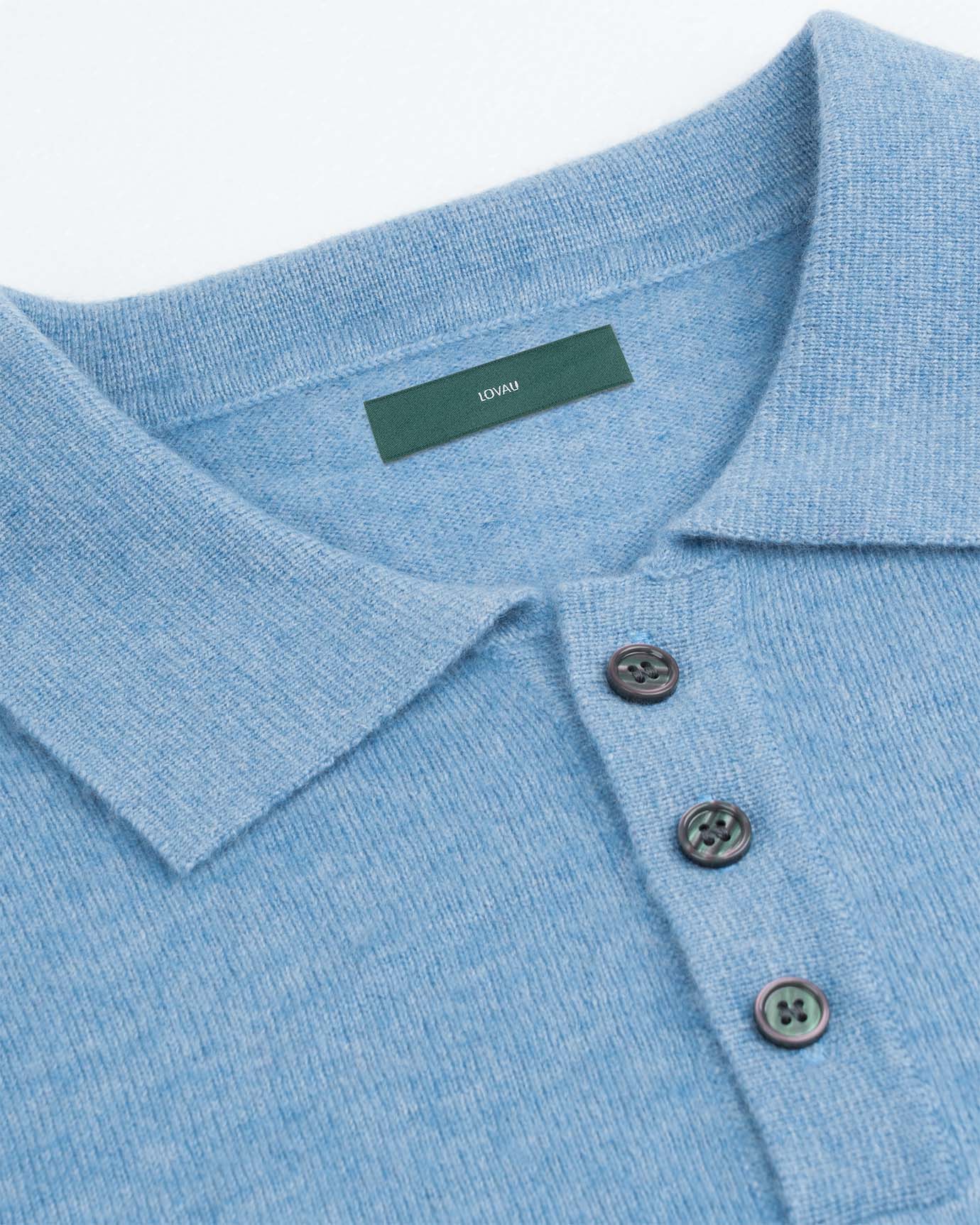
The fine cashmere polo long sleeve is a good reference point for what properly constructed cashmere knitwear looks like in practice: even tension, clean finishing and a weight that communicates substance without bulk.
For men building a wardrobe around natural fibres, our article on what fabrics old money men wear provides useful context on how cashmere sits within a broader considered wardrobe. Pieces like the high-end mulberry silk and worsted cashmere set demonstrate how genuine fibre quality reads differently from synthetic alternatives even in a photograph, if you know what to look for.

Buying Smart: Platforms, Brands and Questions to Ask
The platform matters as much as the product listing. Third-party marketplaces aggregate thousands of sellers, and while many are legitimate, the absence of centralised quality control creates obvious opportunities for mislabelling. A few practical principles reduce your risk considerably.
Buy from brands with a traceable identity. A brand with a named founder, a declared aesthetic, a consistent design language and a physical or clearly documented presence is accountable in a way that an anonymous marketplace seller is not. Look for brands that discuss their fibres openly, reference sourcing regions and publish care instructions specific to the material.
Ask direct questions before purchasing. On any platform that allows messaging, ask: what is the fibre diameter in microns, what is the ply count, and where was the fibre processed? A legitimate seller can answer these questions. An evasive or generic response is informative in its own right.
Check return policies before committing. If a seller does not offer returns on garments that fail fibre tests, that is a red flag. Confidence in the product should mean confidence in standing behind it.
Look at the full collection context. A brand that sells only cashmere at suspiciously uniform low prices across dozens of styles is more likely to be sourcing opportunistically than one with a considered range at differentiated price points reflecting real material differences. Browsing the high end cashmere collection gives a sense of what a coherent, quality-focused cashmere range looks like in practice.
Finally, read independent reviews that specifically mention longevity, pilling after multiple washes and how the garment holds its shape over time. Single-wear impressions can be deceiving; cashmere quality reveals itself over months, not minutes. The Lovau cardigan blazer wool cashmere blend is one example of a piece designed for years of wear, where the fibre quality is visible in how it behaves long after purchase, not just on first contact.

| Characteristic | Grade A Cashmere | Low-Grade Cashmere / Wool Blend | Acrylic / Synthetic |
|---|---|---|---|
| Fibre diameter | 14 to 15.5 microns | 16 to 22 microns | Varies, often irregular |
| Burn behaviour | Burns slowly, singed hair smell, crushable ash | Burns more readily, similar smell, rougher ash | Melts, plastic or chemical smell, hard bead residue |
| Pilling (first 30 seconds rubbing) | Minimal to none | Moderate to heavy | Varies, often moderate initially |
| Price range (men's sweater) | $150 and above | $60 to $150 | $15 to $60 |
| Feel against skin | Immediately warm, soft, slight natural give | Softer than standard wool, some scratchiness | Cool initially, may feel plasticky or stiff |
| Longevity with proper care | 5 to 20 years | 2 to 5 years | 1 to 3 years before significant degradation |
Frequently asked questions
Can a cashmere blend be just as good as 100% cashmere?
It depends on what it is blended with and why. A deliberate blend of cashmere with fine merino wool, for example, can produce a more durable and slightly more structured garment than single-ply pure cashmere, while retaining most of the softness. The key is transparency: the blend should be declared with exact percentages, and the cashmere content should be the dominant fibre. A blend that is 70% cashmere and 30% merino is a legitimate product. A blend that is 10% cashmere and 90% acrylic, sold as 'cashmere blend', is not. Our cashmere and wool cardigan jacket is a good example of an honest blend done properly.
Does pilling mean my cashmere is fake?
Not necessarily, but it is a strong indicator of quality grade. All cashmere pills to some degree over time, particularly in areas of friction like the underarms and cuffs. The difference is when and how severely it happens. Genuine Grade A cashmere may develop light pilling after several months of regular wear; low-grade or blended cashmere pills heavily within the first few wears. If your sweater looked noticeably pilled after a single outing, the fibre quality was almost certainly poor regardless of what the label said.
Is cashmere from China lower quality than Scottish or Italian cashmere?
The origin of the fibre and the origin of the processing are different things. The finest raw cashmere fibre in the world comes from Mongolia and Inner Mongolia, both of which are in or adjacent to China. The quality of the finished garment depends on how that fibre is processed and manufactured. Scottish and Italian mills, particularly in Hawick and Biella respectively, are renowned for processing standards that preserve fibre quality. Chinese manufacturing varies enormously, from world-class to very poor. Country of origin alone is not a reliable quality indicator; the specific mill, the fibre grade and the brand's quality standards matter far more.
What is the safest way to buy cashmere online without being able to touch it first?
Buy from brands that publish full fibre specifications including micron count and ply, offer genuine return policies, and have a consistent track record documented in detailed long-term reviews. Price is a useful filter: anything under $100 for a men's sweater claiming 100% cashmere warrants serious scepticism. Browsing a dedicated cashmere menswear collection from a brand with a clear identity and transparent product information is the most reliable approach available when you cannot handle the fabric in person.
Genuine cashmere rewards patience and attention. The men who build wardrobes that last decades are not the ones who chase the lowest price on a marketplace listing; they are the ones who understand what they are buying and why it costs what it costs. Armed with the label-reading knowledge, price benchmarks and physical tests in this guide, you are in a strong position to avoid the counterfeits and invest in pieces that will still be worth wearing in ten years. Start with something foundational, a sweater or a layering piece in a neutral, and let quality do the rest. The half-zip cashmere wool sweater is exactly the kind of considered starting point worth building from.