


Capsule Wardrobe vs Trend-Chasing: Which Saves More Money?
Reading time 13 min • 2510 words
There is a calculation most people never make. They see a €30 trend piece and feel they have saved money. They see a €129 linen shirt and hesitate. But the €30 piece gets worn four times before it pills, fades, or simply looks dated. The €129 shirt gets worn forty times across three summers, improves with each wash, and still looks correct at a dinner table in Porto or a terrace in Antibes.
This is the core argument for the capsule wardrobe, and it is not a sentimental one. It is arithmetic. The question this article answers is specific: over a two-year period, which approach actually costs less, and which one leaves you better dressed?
The answer is not as simple as 'buy less, buy better', a phrase that has been repeated until it lost all meaning. What follows is a concrete breakdown of how each approach works, where the money actually goes, and what a real capsule wardrobe looks like in practice.
Key takeaways
- Cost-per-wear on a well-made linen or cashmere piece is almost always lower than fast-fashion equivalents bought and discarded each season.
- A functional capsule wardrobe of 20 to 30 pieces covers every occasion from coastal weekends to city dinners, with no redundancy.
- Trend-driven wardrobes accumulate hidden costs: dry-cleaning items worn twice, storage, and the psychological cost of decision fatigue.
- Neutral base colours, natural fabrics, and classic cuts are the three pillars that make capsule pieces genuinely interchangeable.
- Starting with five to seven anchor pieces in quality fabric is more effective than buying fifteen mediocre items at once.
In this guide
- How Trend-Chasing Accumulates Real Cost
- What a Capsule Wardrobe Actually Costs to Build
- The Fabric Question: Why Material Determines Longevity
- The Psychology of Dressing: Confidence vs Novelty
- Building the Capsule: Specific Pieces That Anchor a Wardrobe
- When Trends Are Worth Following (And When They Are Not)
- Frequently asked questions
How Trend-Chasing Accumulates Real Cost
The fashion industry operates on a deliberate cycle. According to Wikipedia's overview of fast fashion, the fast-fashion model compresses trend cycles from two seasons per year to as many as fifty-two micro-seasons, creating constant pressure to refresh a wardrobe. Each individual purchase seems minor. Collectively, they add up faster than most people track.
Consider a realistic trend-chasing pattern for one year: four to six seasonal statement pieces at €40 to €80 each, two pairs of shoes that match a specific trend at €60 to €120 each, accessories tied to a particular moment. That is conservatively €500 to €800 spent on items with a functional life of one to two seasons.
The hidden costs compound the problem. Trend pieces are often made in synthetic fabrics, polyester blends, or low-grade cotton that does not breathe, wrinkles immediately, and requires more frequent washing. Higher wash frequency degrades the fabric faster, shortens the garment's life, and increases your electricity and dry-cleaning costs. Storage becomes an issue as unworn items accumulate. Many people eventually donate or discard items they paid full price for months earlier.
There is also the cost of decision fatigue. A wardrobe full of mismatched trend purchases, each tied to a different aesthetic moment, makes daily dressing slower and more stressful. This is a real, documented productivity cost, even if it does not show up on a receipt.
Expert insightTrack your actual cost-per-wear for three months. Note every item worn and divide the purchase price by the number of wears. Most people are surprised to find their cheapest-seeming pieces have the highest cost-per-wear.
What a Capsule Wardrobe Actually Costs to Build
A capsule wardrobe is not a minimalist aesthetic choice. It is a financial strategy with a front-loaded cost and a long-term return. The initial investment is higher than a season of trend purchases. The total spend over three years is considerably lower.
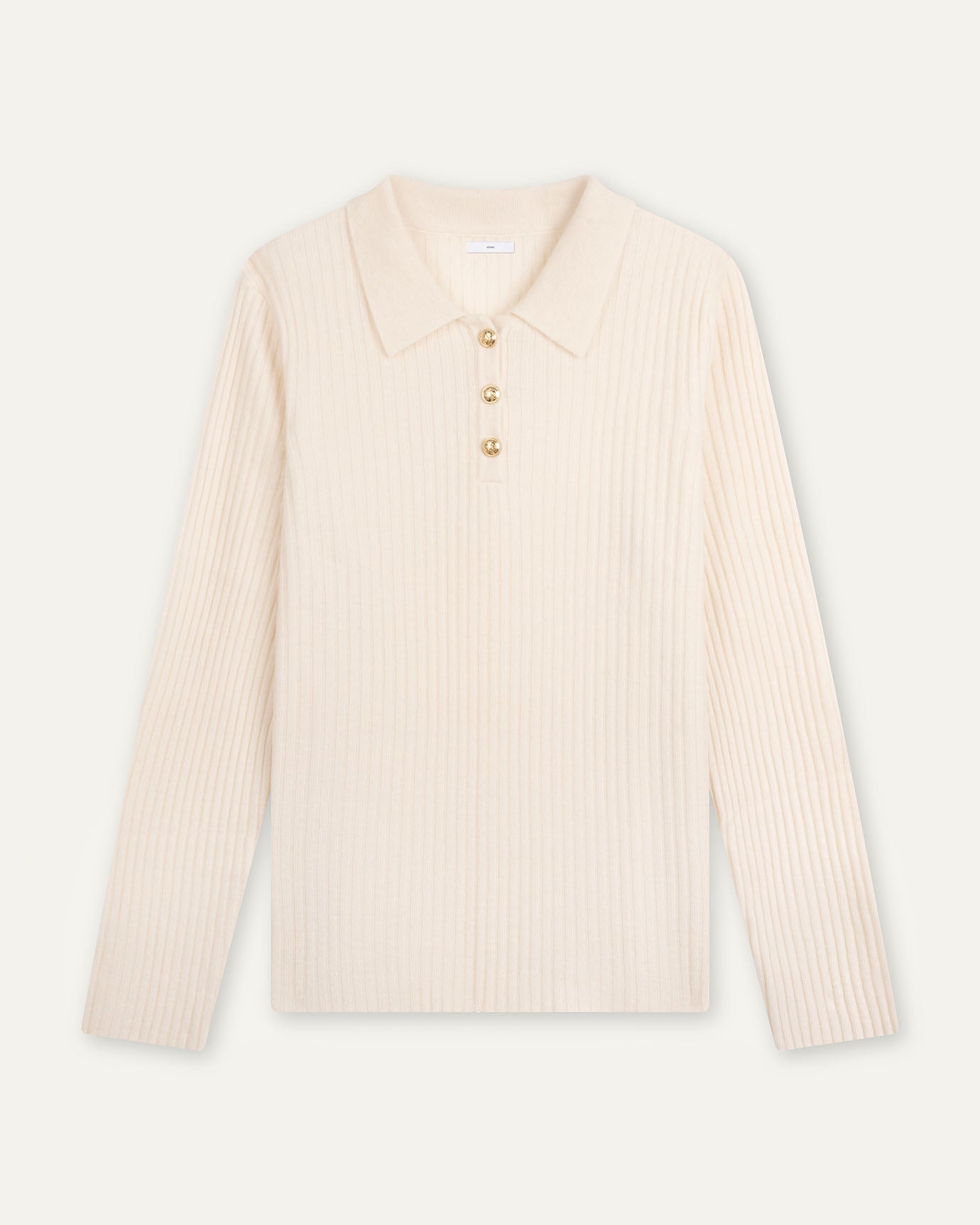
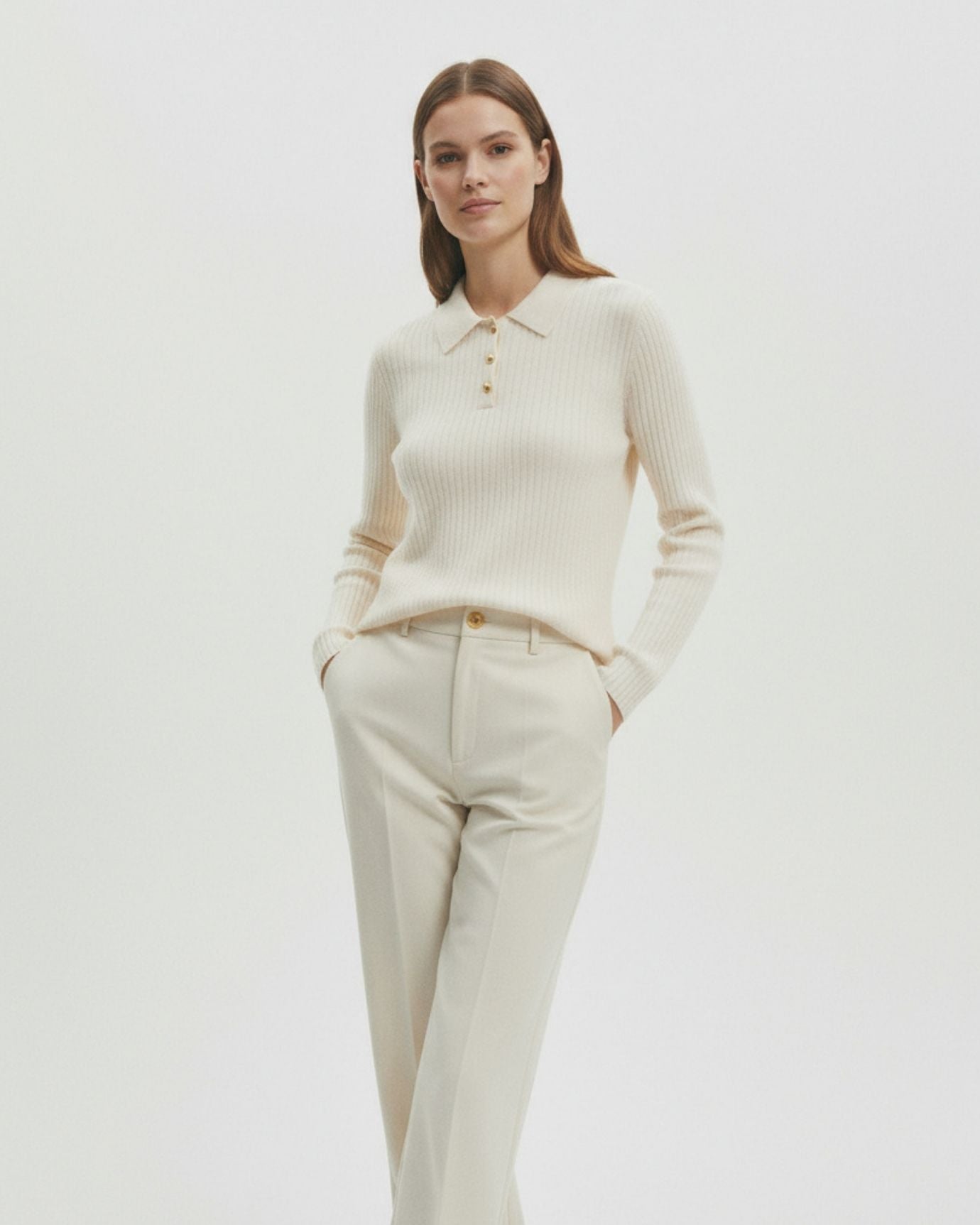
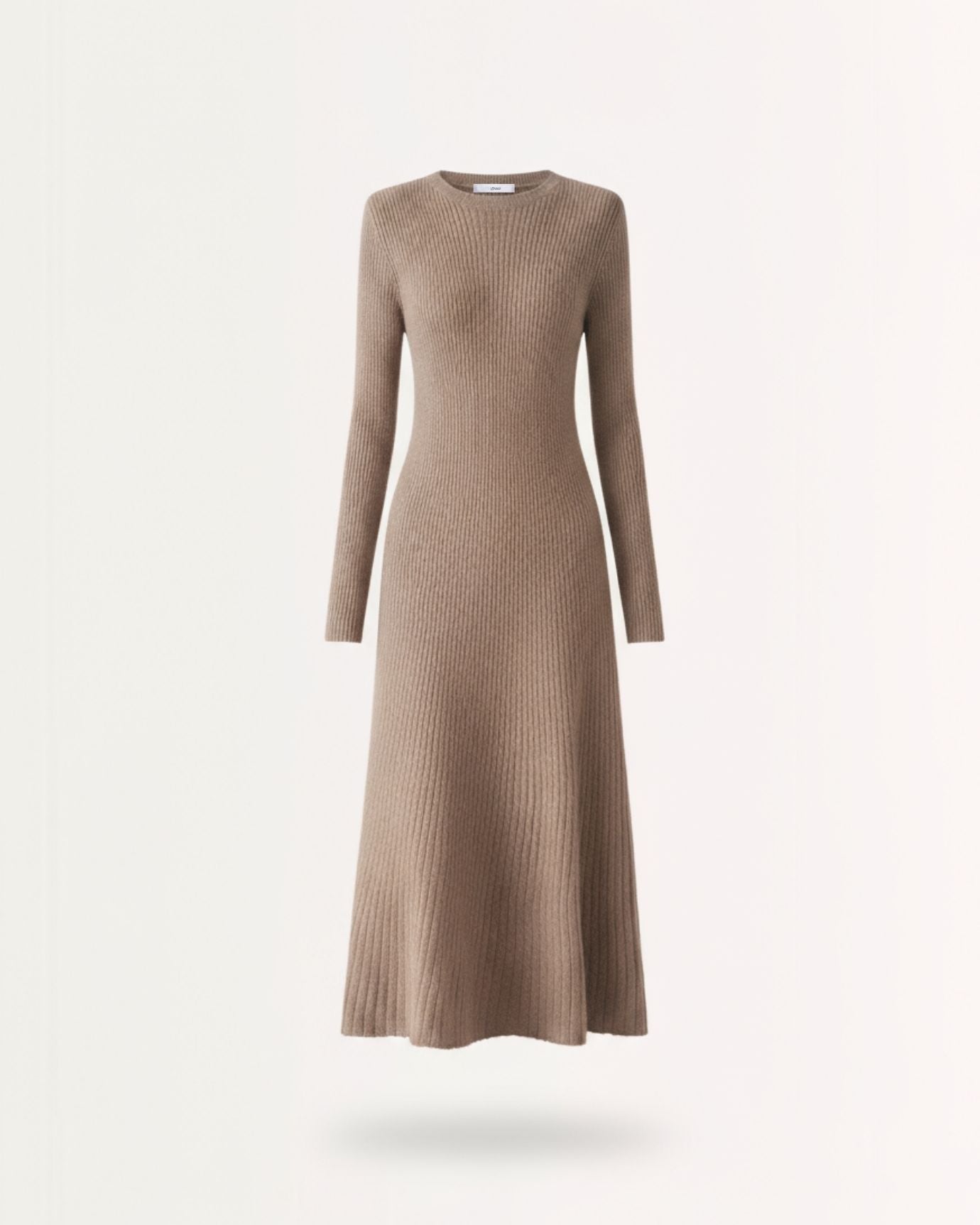
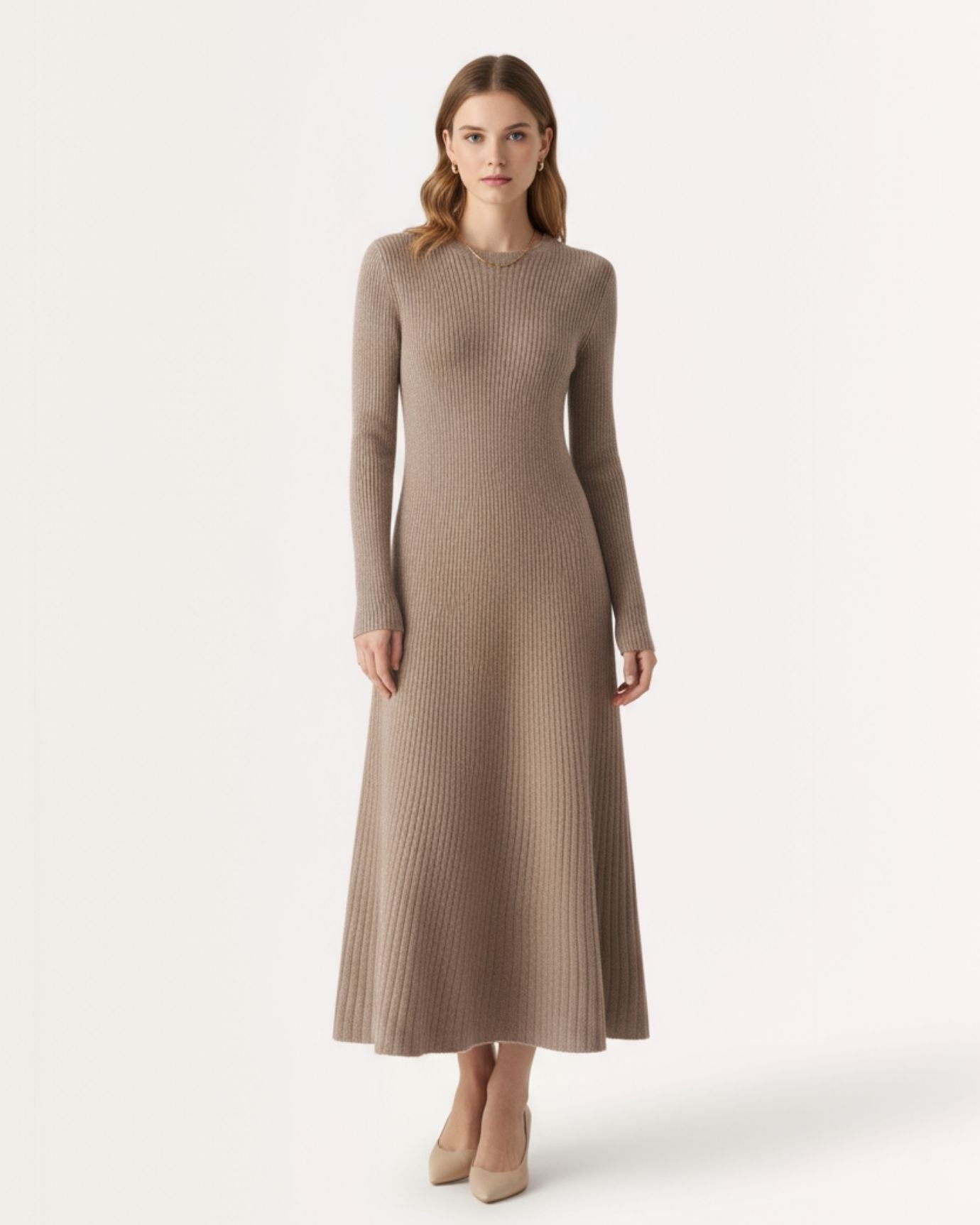
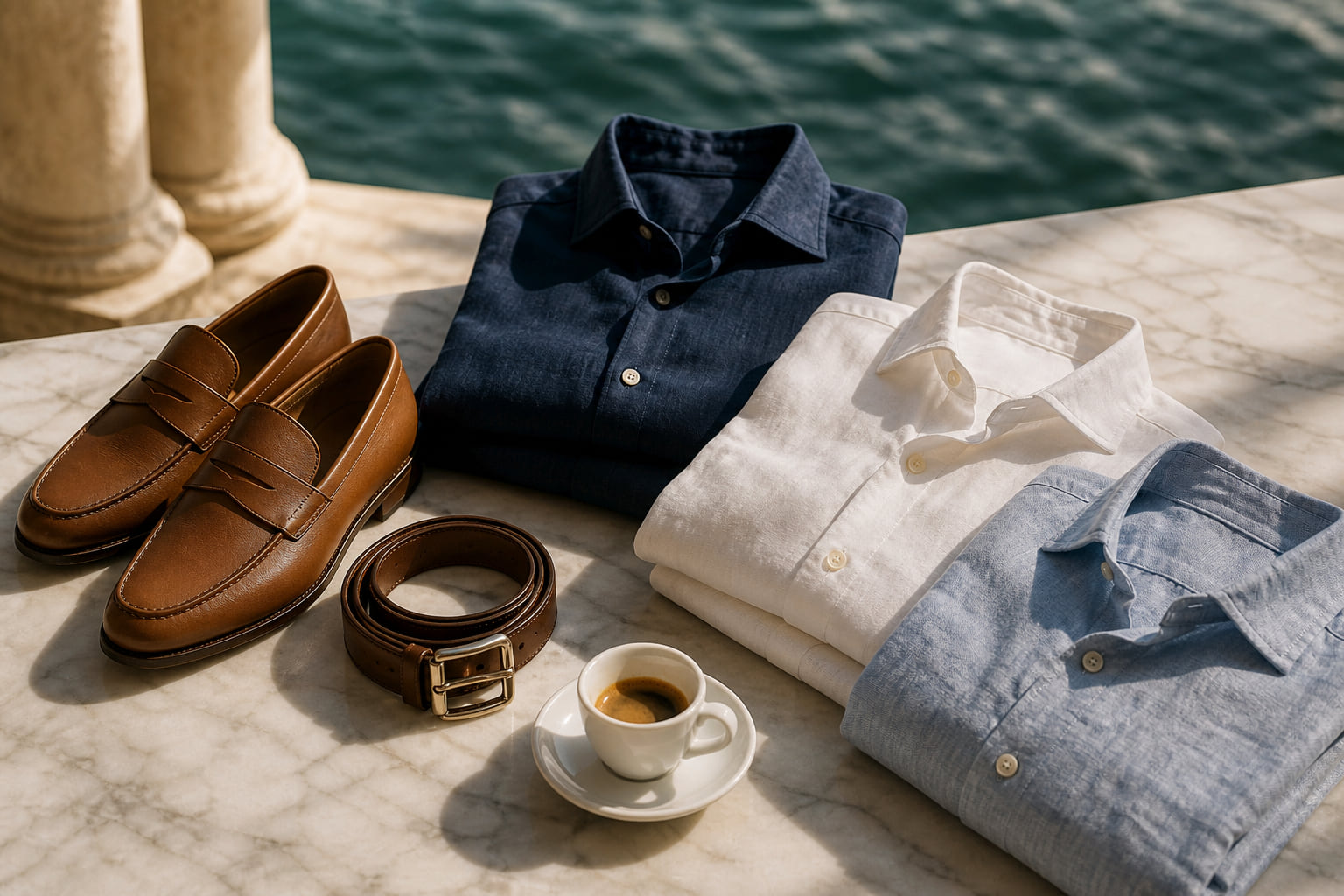
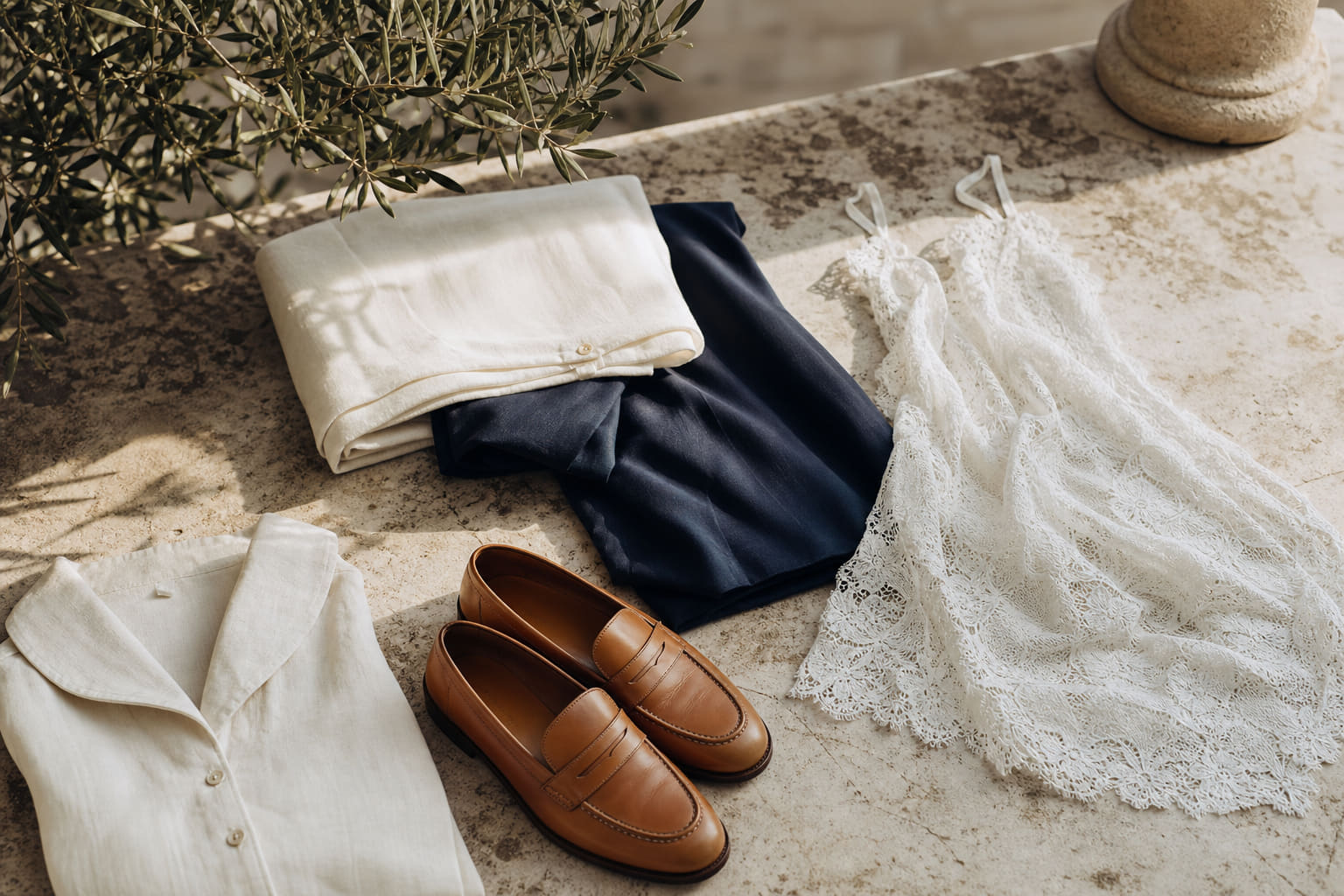
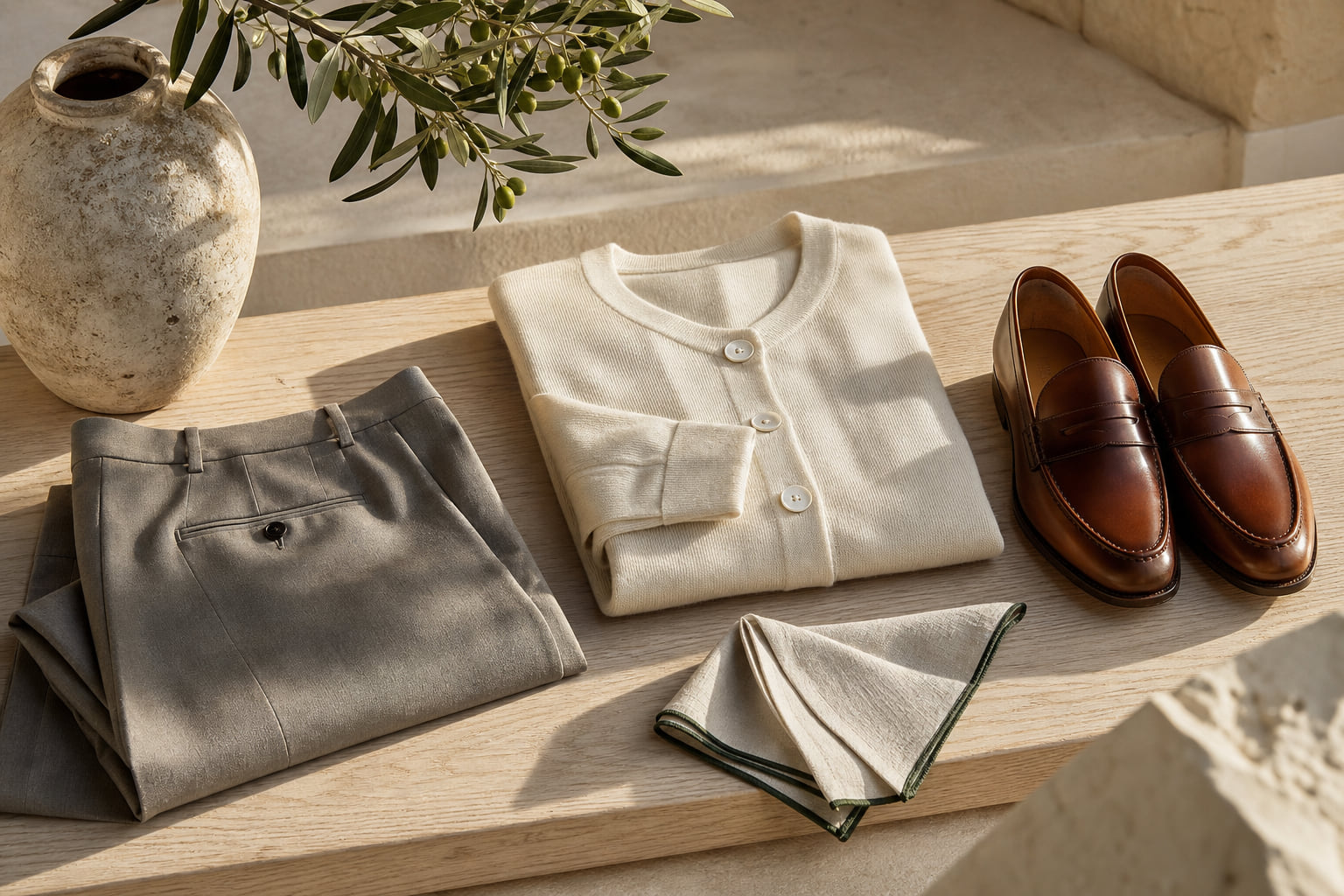
A working men's capsule wardrobe, built around Mediterranean warm-weather living and European city dressing, might include: three to four linen shirts in neutral and versatile colours, two pairs of well-cut trousers, one or two quality polos, a cashmere layer for cooler evenings, two pairs of leather shoes, and a handful of accessories. For women, the structure mirrors this: anchor tops, two to three key trousers or skirts, a quality knit, and shoes that cross occasions.
The total investment for a complete capsule runs between €600 and €1,200 if you buy thoughtfully. That sounds like more than a season of trend shopping. It is, upfront. But these pieces do not need replacing the following season. A high-count fine white linen shirt in 100% fine linen, properly cared for, will last five to eight summers. The cost-per-wear on that single shirt, worn thirty times a year, is under €1 by the second summer.
The capsule approach also eliminates redundancy. Every piece is chosen because it works with at least three other pieces in the wardrobe. Nothing sits unworn because it only matched one outfit that no longer fits your rotation. Explore the Lovau linen shirts collection for a sense of how a few well-chosen shirts can anchor an entire warm-weather wardrobe.
For women considering a similar approach, the Lovau Woman Seasonal Trend Report offers a useful framework for building around enduring pieces rather than seasonal moments.
Expert insightStart your capsule with the pieces you already reach for instinctively. Those are the ones worth upgrading in quality first, because you know the cost-per-wear will be high.

The Fabric Question: Why Material Determines Longevity
Cost-per-wear is almost entirely a function of fabric quality and construction. A polyester shirt and a fine linen shirt may look similar on a hanger. After twenty washes, they look nothing alike.
Natural fibres, cut and finished well, age better than synthetic alternatives. Linen softens and improves with washing. Cashmere, if brushed and stored correctly, holds its shape for years. Genuine suede and leather develop a patina that synthetic versions simply cannot replicate. These are not marketing claims. They are material science.
For warm-weather dressing, high-count linen is the most practical capsule fabric available. It breathes in heat, resists odour better than cotton, and presses well. A light blue fine linen shirt in a classic straight cut works for a morning meeting, a harbour lunch, and a terrace dinner. One shirt, three occasions, no change of plan required.
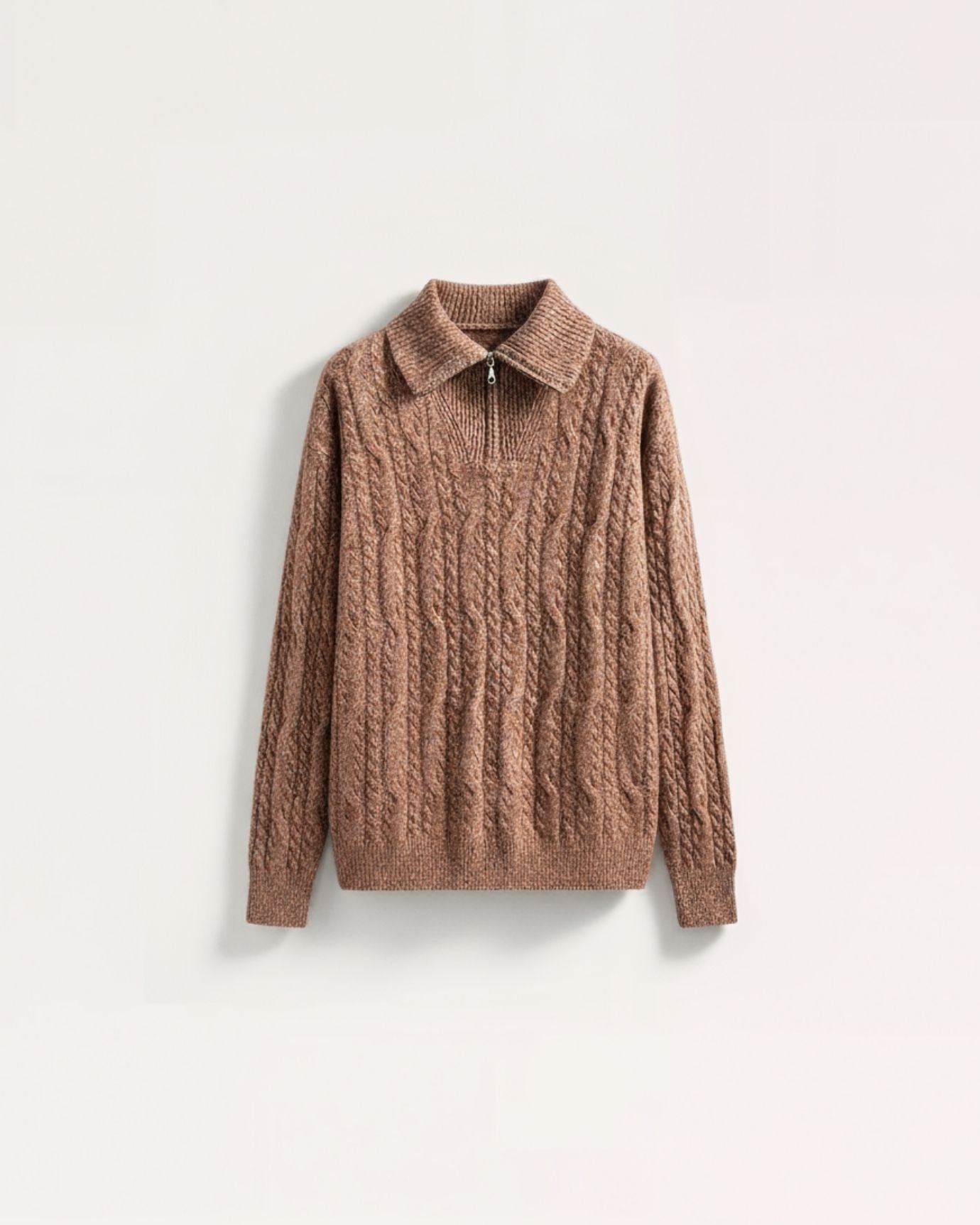
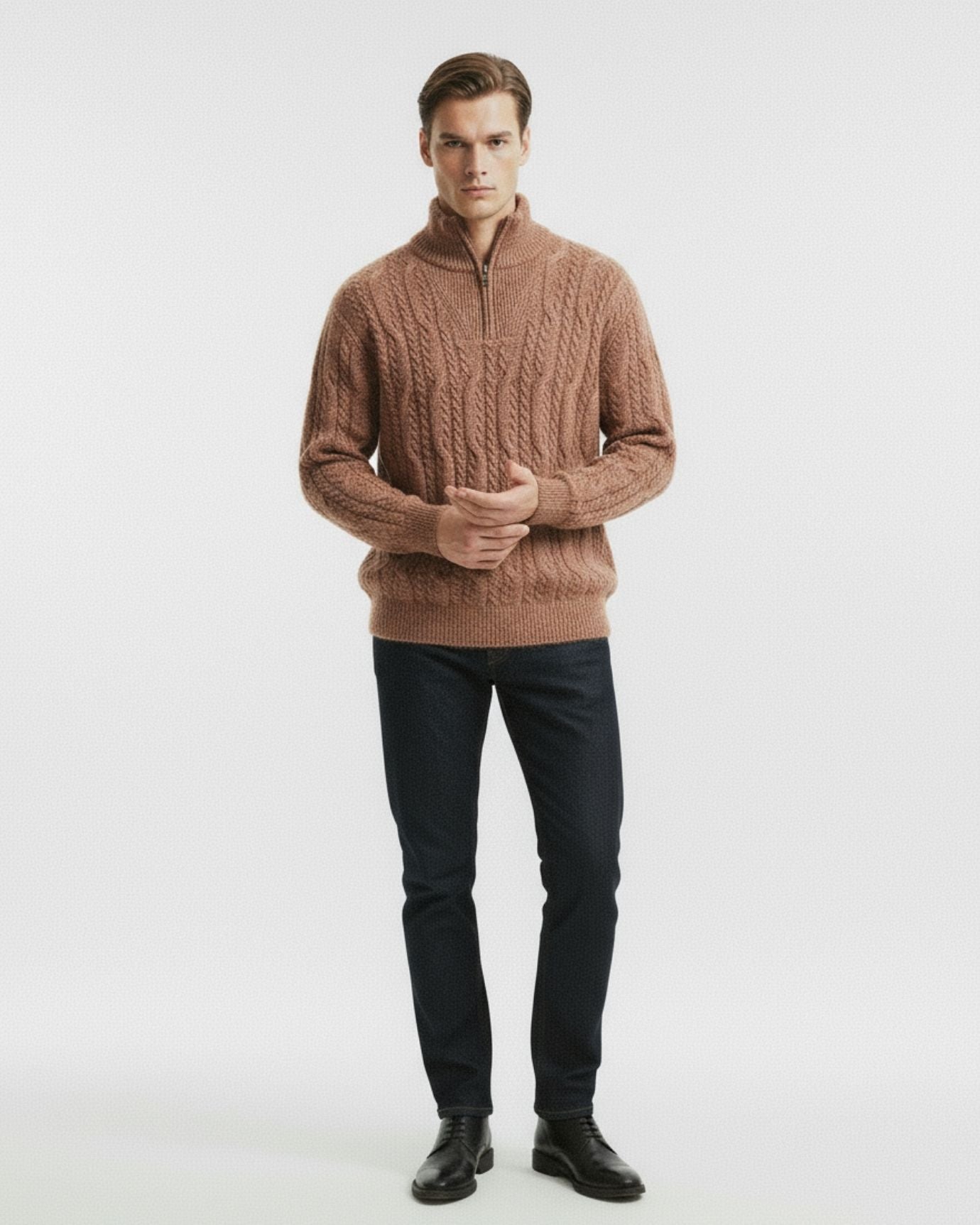
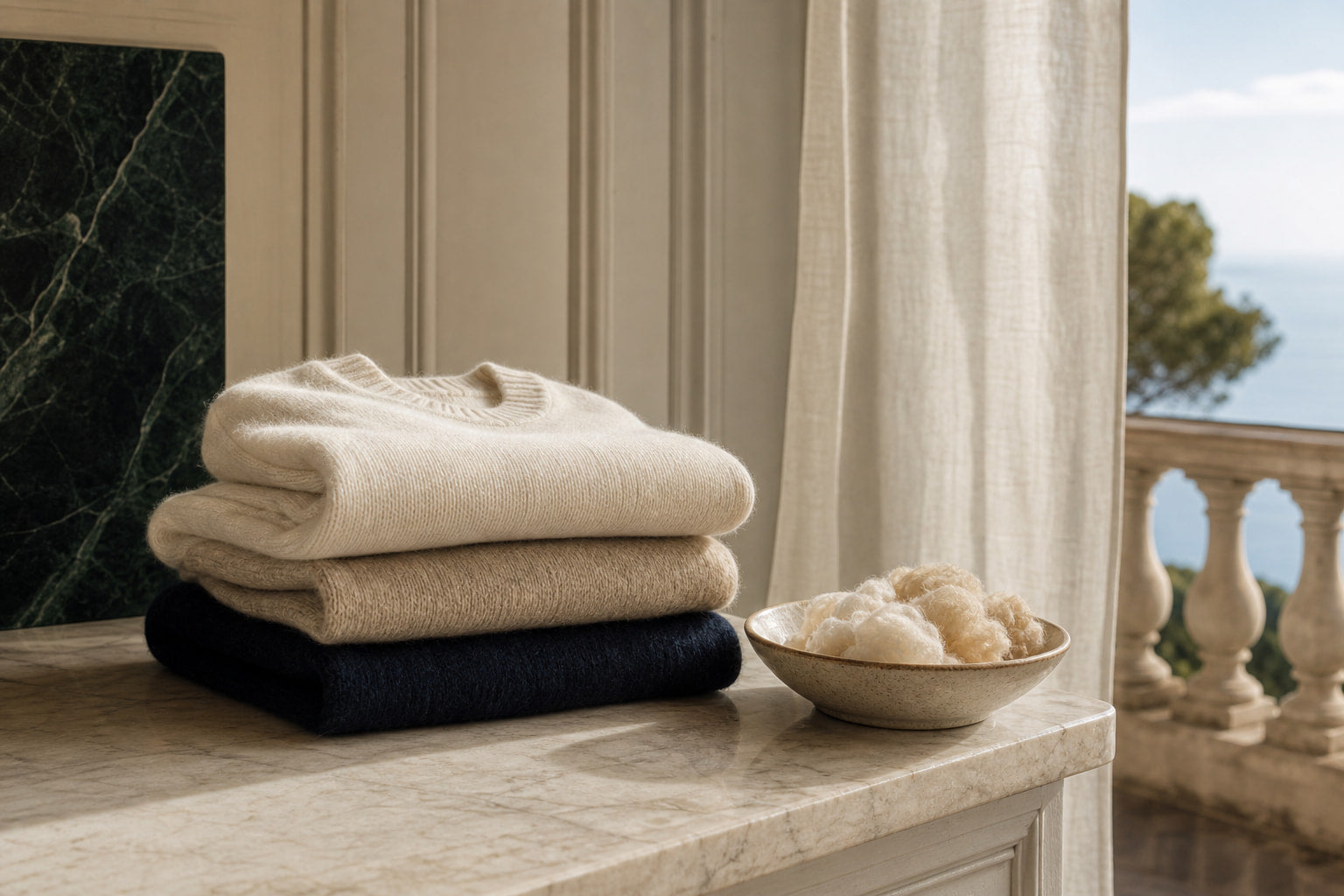
For cooler months or evenings, cashmere earns its cost. The Berlin Cashmere Sweater Zip at €215 sounds expensive next to a synthetic knit at €40. Over five years of regular wear, the cashmere costs less per wearing and still looks correct. The synthetic knit will have been replaced twice by then.
Footwear follows the same logic. A pair of Mediterranean suede slip-on loafers in genuine suede, resoled when necessary, will outlast three or four pairs of fashion-forward synthetic shoes. The resole cost is a fraction of replacement. Our full loafers collection is built around this principle: classic silhouettes in real materials that reward long ownership.
Expert insightCheck the fabric composition label before any purchase. If a piece is more than 30% synthetic and positioned as a wardrobe staple, it will not hold its shape or colour past the first year of regular wear.

The Psychology of Dressing: Confidence vs Novelty
There is a less-discussed cost to trend-chasing: the cognitive one. A wardrobe built around novelty requires constant re-learning. Every new season brings new silhouettes, new colour rules, new combinations to figure out. The result is a wardrobe that demands attention rather than freeing it.
A capsule wardrobe, by contrast, operates on familiarity. You know how every piece fits. You know which combinations work. Getting dressed becomes faster and more decisive. This is not a small thing. Studies in behavioural psychology consistently show that decision fatigue reduces performance across the day, and the wardrobe is one of the first decisions most people make.
The old money aesthetic is partly about this. The confidence of someone who has worn well-made clothes for years is visible. It is not about displaying newness. It is about wearing things that fit the body correctly, sit well in movement, and require no adjustment or self-consciousness.
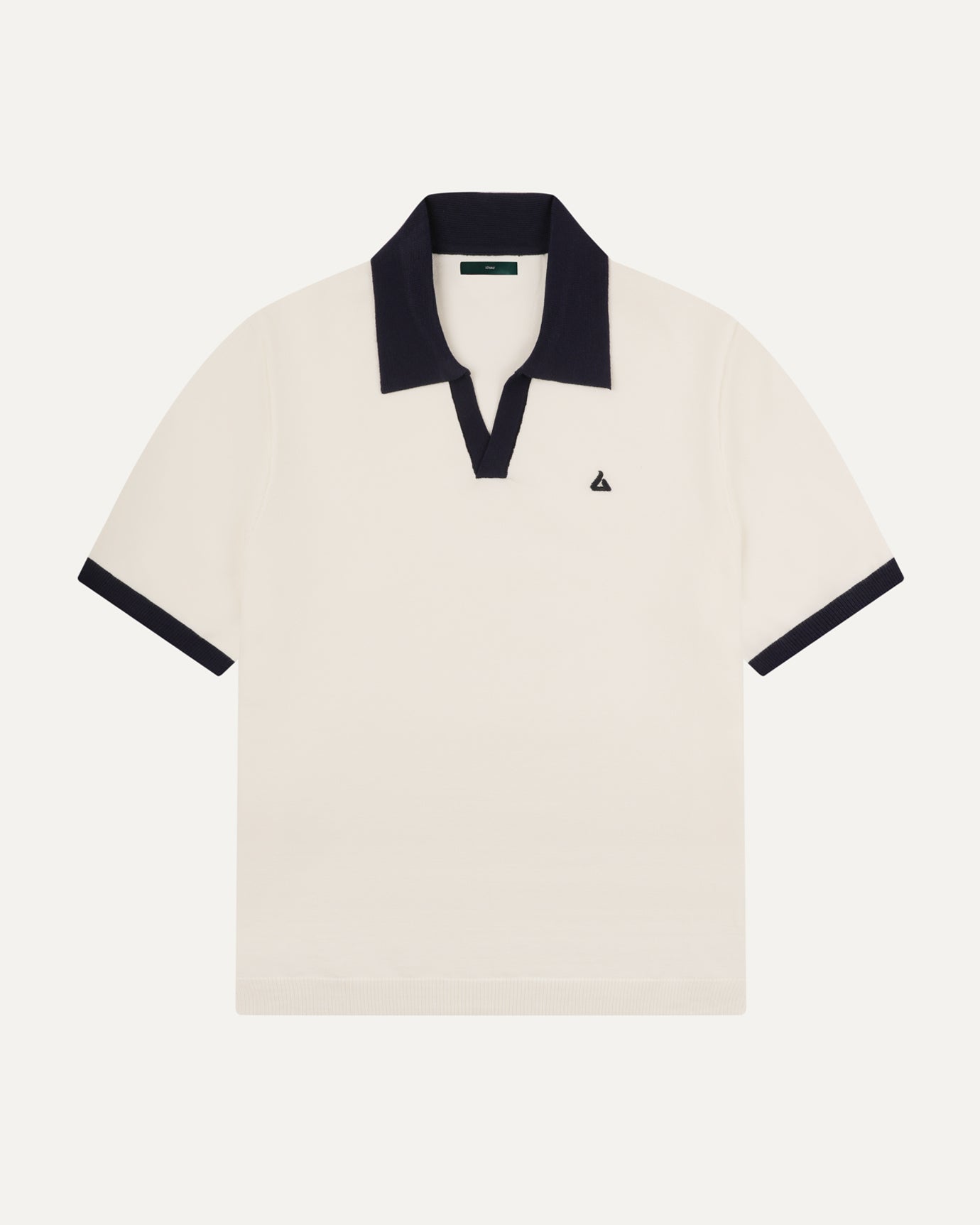
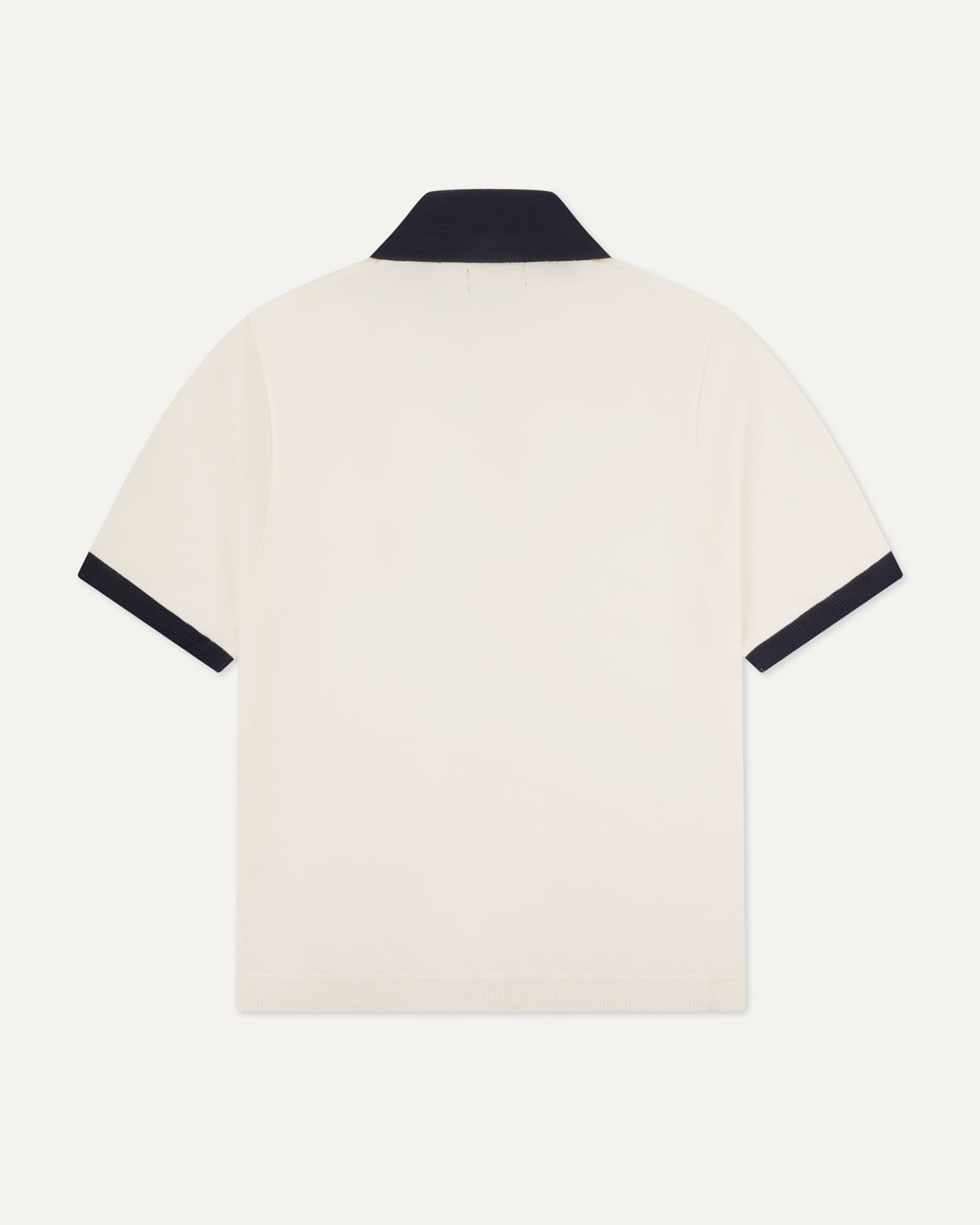
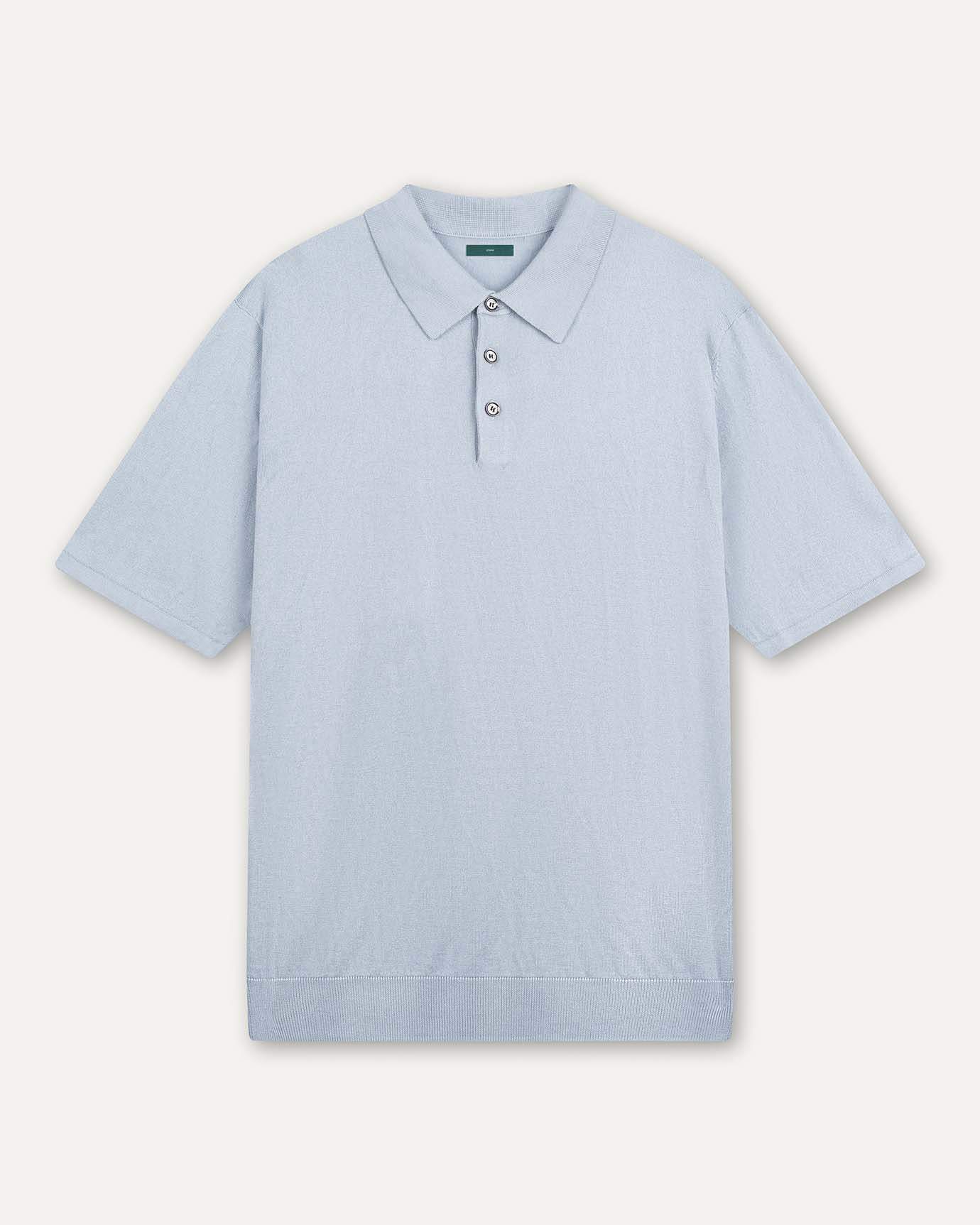
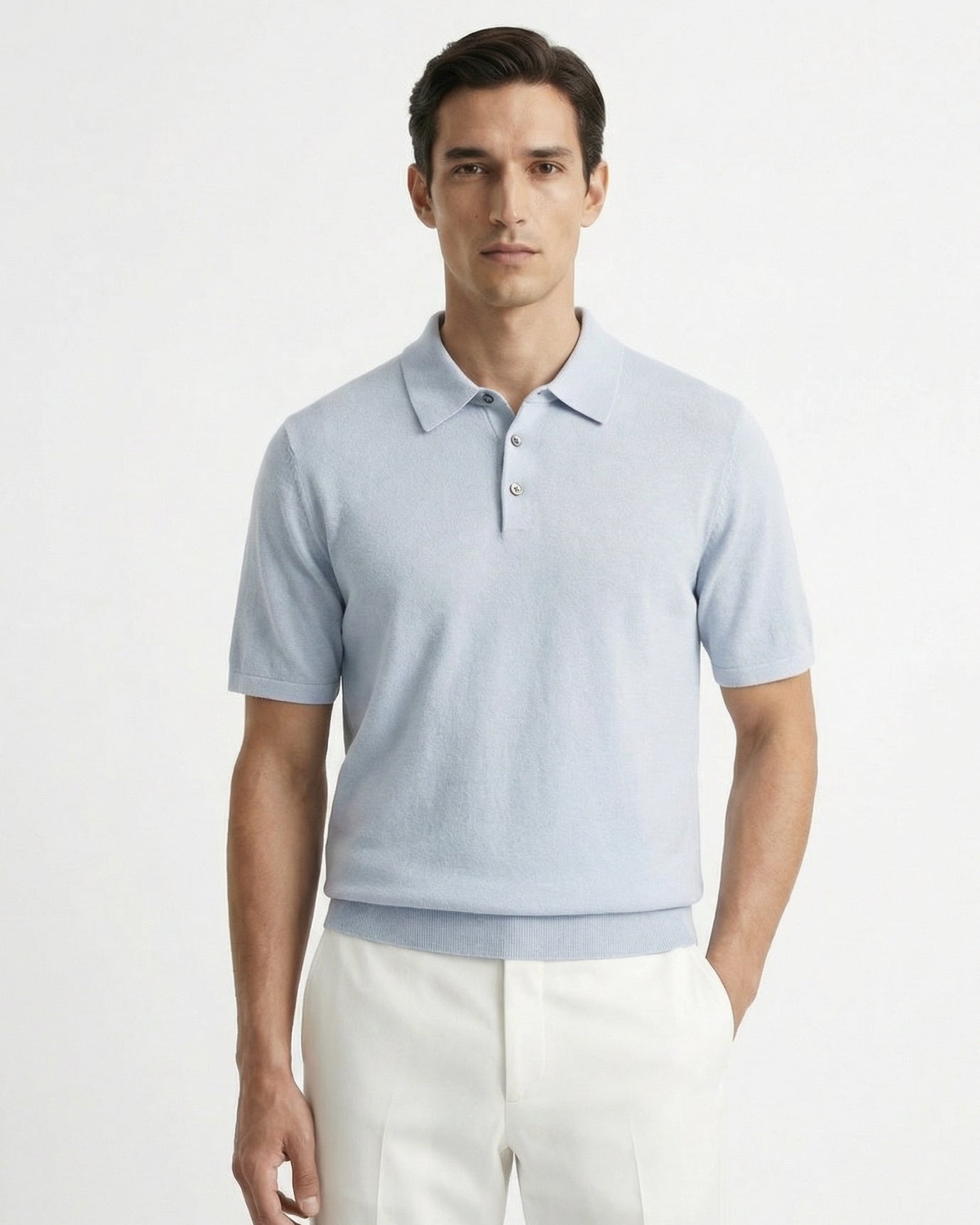
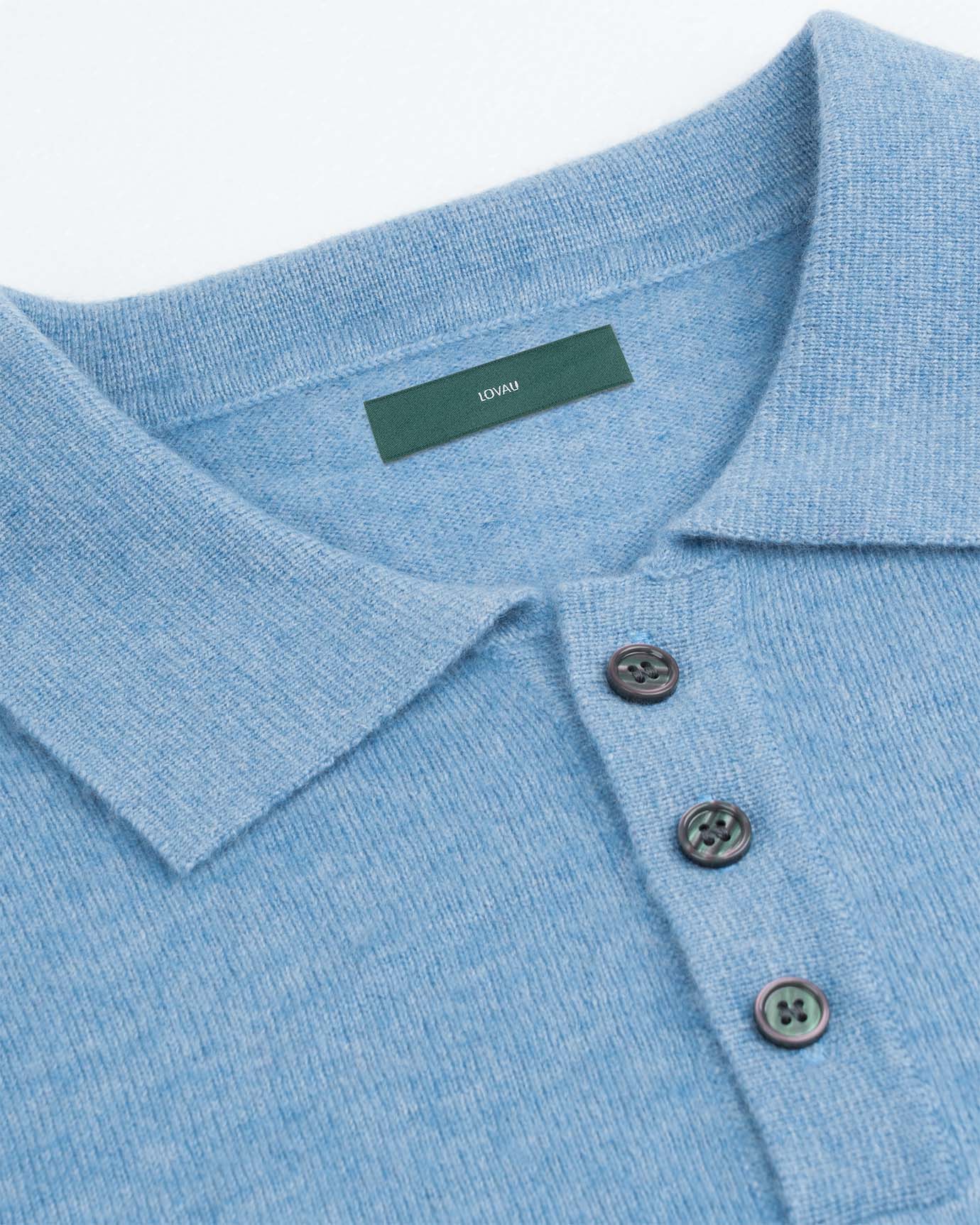
A Marbella Cooling Acetate Silk Polo in a clean, classic cut does not ask you to think about it. It simply works. That is the practical value of a capsule built around timeless silhouettes: the clothes stop being a daily problem to solve.
For anyone building a colour strategy into their capsule, the piece on navy vs black as a base colour is a practical starting point. Choosing the right neutral anchor colour multiplies how many combinations your existing pieces can form.

Building the Capsule: Specific Pieces That Anchor a Wardrobe
Abstract advice about capsule wardrobes is easy to find. Specific recommendations are harder. Here is a concrete starting point for a Mediterranean-inspired men's capsule that crosses warm weather and transitional seasons.
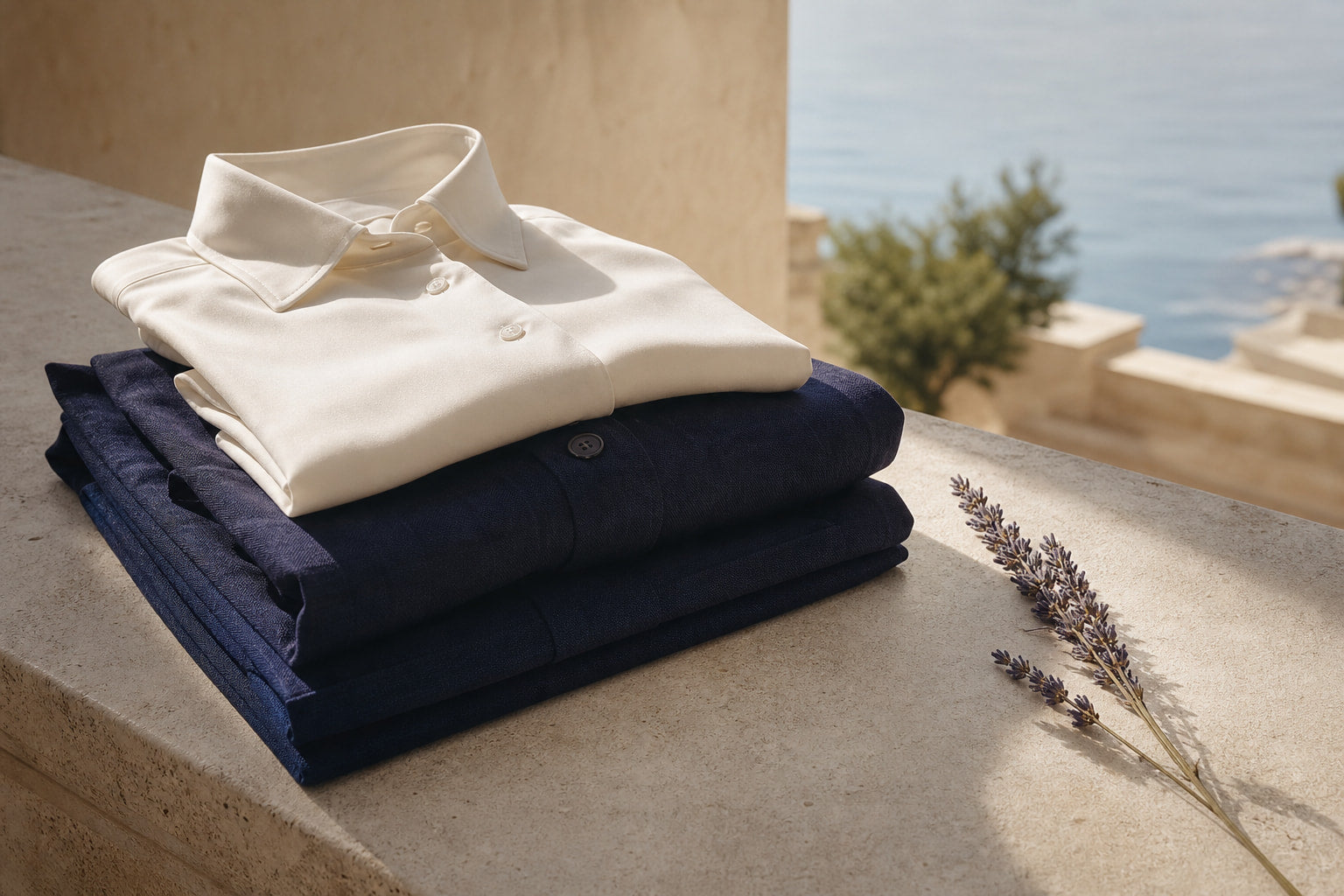
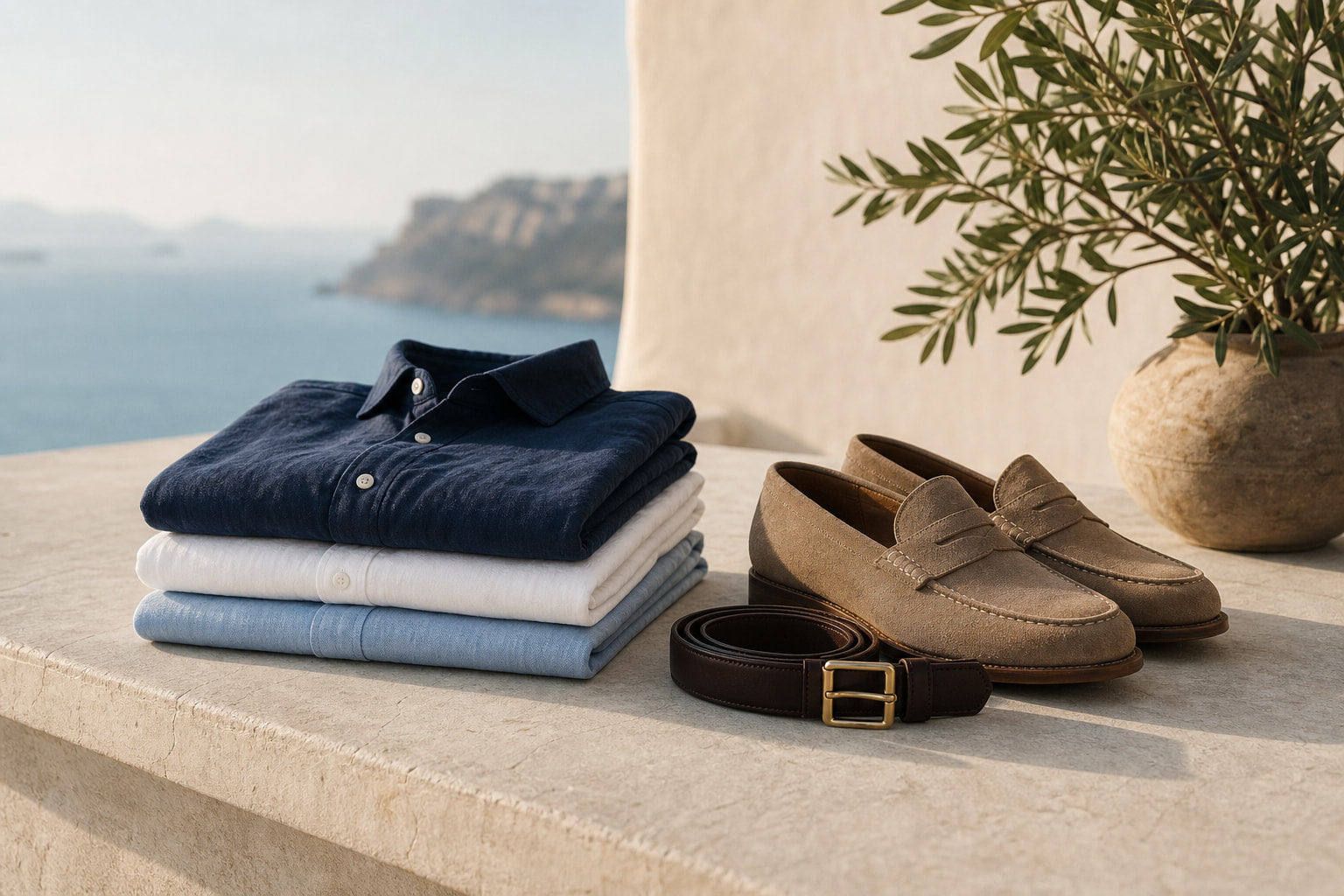
Shirts: Three linen shirts in complementary neutrals form the backbone. Navy, white, and a warm mid-tone like sage or black cover every occasion from beach to business. The high-count navy blue fine linen shirt pairs with both the linen trousers and the shorts below without any visual conflict.
Trousers and shorts: One pair of well-cut linen trousers and one pair of linen shorts cover the full warm-weather range. The Paris Linen Trousers in a straight, clean cut work from a coastal lunch to an evening restaurant. The Monaco Linen Shorts with Elastic Waist handle everything from sailing to a casual terrace without looking underdressed.
Footwear: Two pairs of shoes handle most situations. A leather loafer for dressed occasions and a leather sandal for genuine warm-weather casual. The Ibiza Leather Sandals are a proper leather construction, not a beach throwaway, which means they cross into casual dining without apology.
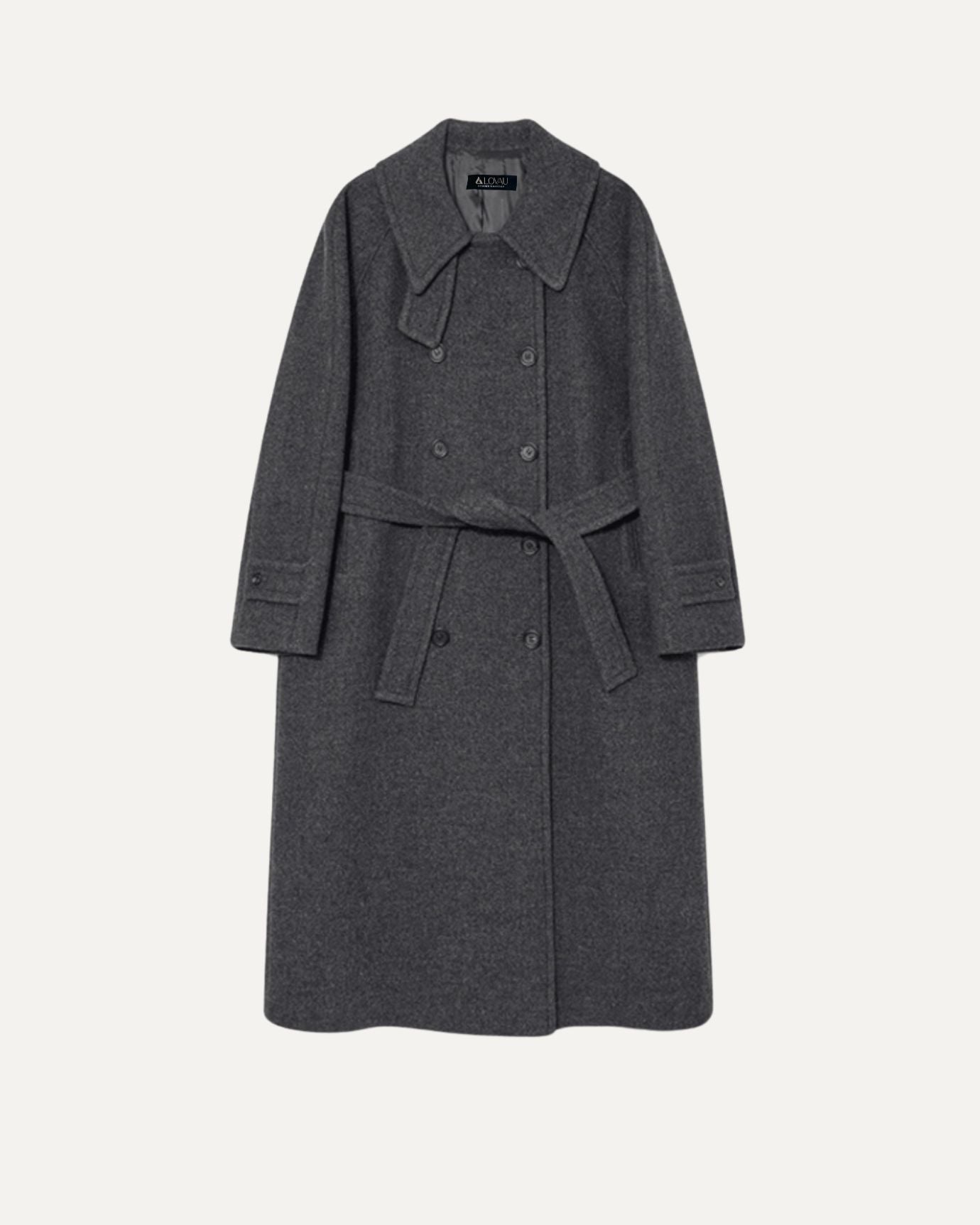
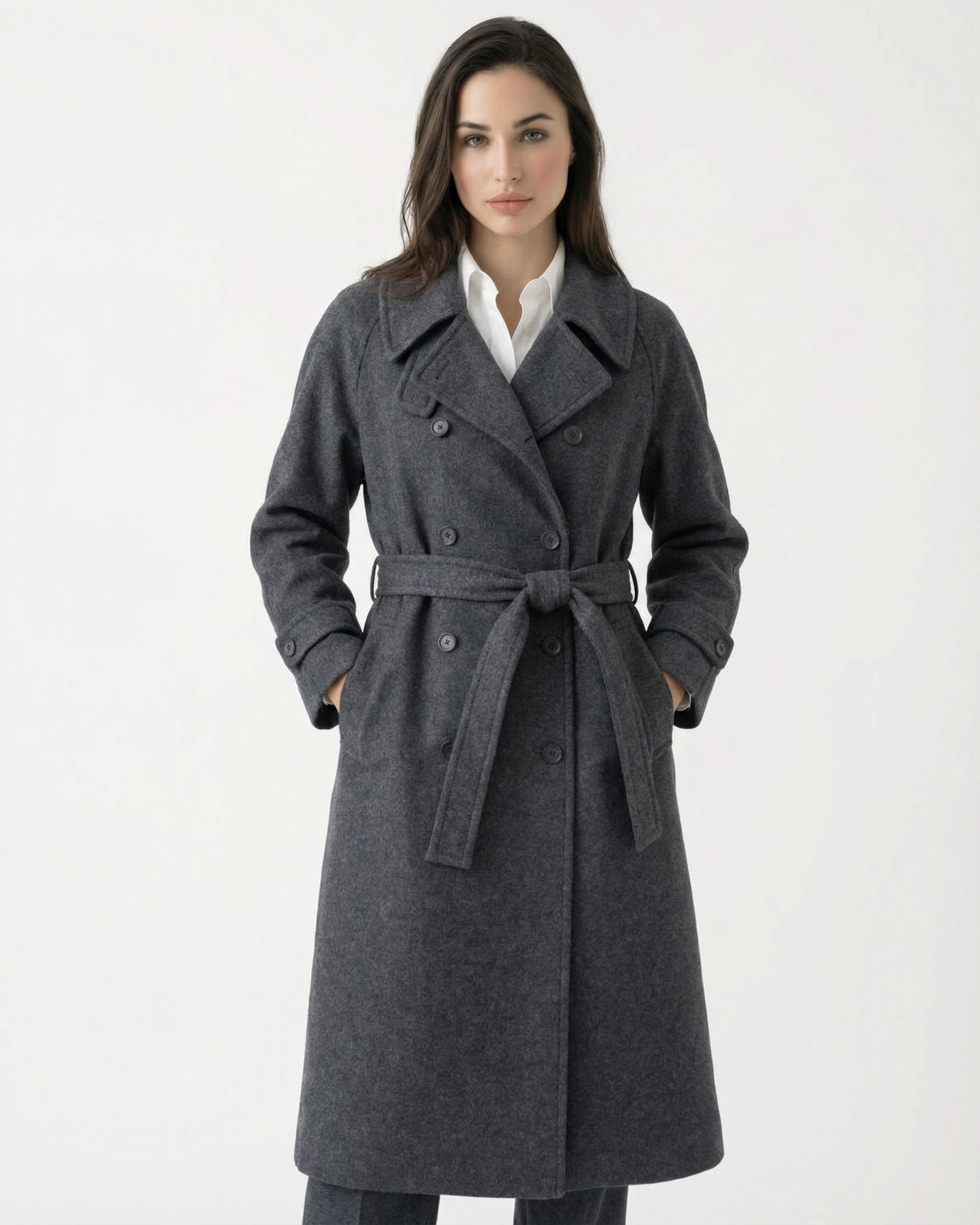
Outerwear and layering: One quality cashmere or wool layer bridges the seasons. The cashmere collection offers options that work as standalone pieces in mild weather and as a layer in cooler months.
For travel, these pieces pack compactly and require no complex care. The guide on packing a carry-on for a 7-day European trip shows exactly how a capsule wardrobe performs in a practical travel context, which trend wardrobes almost never do.

When Trends Are Worth Following (And When They Are Not)
This article is not an argument against all trends. It is an argument against building your wardrobe around them. There is a meaningful distinction.
Trends worth tracking are the ones that align with shapes and colours already present in your capsule. If a season brings a strong moment for deep olive green, and olive works within your existing neutral palette, adding one piece in that colour is a reasonable update, not a wardrobe overhaul. The piece extends what you already have rather than replacing it.
Trends to avoid are those requiring new shoes, new trousers, and new layering simultaneously to 'work'. These are the trends that benefit the retailer, not the buyer. A silhouette that only functions with a full head-to-toe seasonal look has no place in a wardrobe built for longevity.
Accessories are often the most practical way to acknowledge a trend without committing to it structurally. Sunglasses, in particular, carry trend relevance with low financial risk. The Anna Sand-Beige Brown Sunglasses for women sit at the intersection of current relevance and classic tortoiseshell proportion, a shape that has been correct for sixty years and will remain so.
Colour trends are worth monitoring at the level of a single shirt or polo, not a full wardrobe reset. Our piece on why cloud blue is the must-have colour for summer 2026 is a good example of how a colour trend can be adopted through one piece rather than a seasonal overhaul.

| Factor | Capsule Wardrobe | Trend-Chasing |
|---|---|---|
| Initial spend (Year 1) | €700 to €1,200 for complete foundation | €400 to €600 per season, €800 to €1,200/year |
| Year 2 spend | €0 to €200 (minor additions only) | €800 to €1,200 (full seasonal refresh) |
| Two-year total | €700 to €1,400 | €1,600 to €2,400 |
| Cost per wear (quality linen shirt, 30 wears/year) | Under €2.20 by Year 2 | €7 to €15 on a trend piece worn 4 to 8 times |
| Fabric quality | Natural fibres: linen, cashmere, suede, leather | Typically polyester, viscose, or low-grade cotton blends |
| Wardrobe lifespan | 5 to 8 years for core pieces | 1 to 2 seasons before replacement pressure |
Frequently asked questions
How many pieces does a capsule wardrobe actually need?
A functional capsule for a man or woman living between city and coast needs roughly 20 to 30 pieces total: shirts, trousers or skirts, one or two knits, two pairs of shoes, and a small number of accessories. Fewer than 20 can feel restrictive for varied social occasions. More than 35 and you start reintroducing the redundancy problem. The best-sellers collection is a practical place to identify which pieces carry the most versatility.
Is a capsule wardrobe only for minimalists or people with a very plain aesthetic?
No. A capsule wardrobe is a structural approach to buying, not an aesthetic prescription. You can build a capsule around bold Mediterranean colour, fine stripe patterns, or textured weaves. The requirement is that pieces work together, not that they be visually quiet. A striped linen shirt, for example, can be a capsule anchor if it pairs with your existing trousers and shoes. See the Striped V Neck Linen Shirt as an example of a pattern piece built for versatility.
Can I follow trends and still have a capsule wardrobe?
Yes, with discipline. The capsule is your foundation: the pieces that never need replacing. Trends are addressed at the margin, through accessories, one colour update per season, or a single statement piece that integrates with what you already own. The rule is that any new trend purchase must work with at least three existing pieces. If it does not, it is not a capsule addition, it is the start of a new wardrobe.
What is the single best first investment in a capsule wardrobe?
Footwear, almost always. Shoes determine the register of an entire outfit. One pair of genuine leather loafers in a neutral brown or tan crosses casual and smart-casual occasions and lasts years with basic care. From there, a quality linen shirt in a neutral colour is the next most versatile investment. Our men's footwear collection covers the core silhouettes worth investing in first.
The numbers are not ambiguous. Over two years, a well-built capsule wardrobe costs between €700 and €1,400 total. Two years of active trend-chasing costs between €1,600 and €2,400, and leaves you with a wardrobe of pieces that no longer work together. The capsule approach requires more thought upfront and a higher spend on individual pieces, but it rewards both your bank account and your daily confidence. If you are deciding where to start, the Lovau men's old money collection brings together the anchor pieces, natural fabrics, and classic silhouettes that form the foundation of a wardrobe built to last.