


Navy vs Black: Which is the Better Base Color
Reading time 12 min • 2454 words
The debate between navy and black is older than any trend cycle and more useful than most style conversations. Both are neutrals, both anchor a wardrobe, and both appear in the closets of men who dress with genuine intention. But they are not interchangeable, and treating them as such is how a wardrobe becomes flat and uninspiring.
Navy carries the weight of European tradition, the blazers of English tailoring, the linen shirts of the Italian coast, the confidence of a man who does not need to shout. Black carries its own authority, quieter in its formality, sharper in evening light, more demanding of the right fabric and the right occasion. Choosing between them is not a matter of preference alone. It is a matter of skin tone, climate, occasion, and the specific pieces you are building your wardrobe around.
This guide addresses both colors honestly, without declaring a universal winner. Instead, it gives you the framework to decide which should anchor your wardrobe and which should support it.
Key takeaways
- Navy reads warmer and more approachable than black, making it the stronger everyday base for most men.
- Black excels in formal, evening, and monochromatic dressing but can look harsh in daylight on warm or olive skin tones.
- Both colors anchor a capsule wardrobe, but navy pairs with a wider range of neutrals including tan, cream, white, and grey.
- Fabric choice matters as much as color: navy linen and black mercerized cotton each behave distinctly in summer heat.
- The most versatile wardrobe uses navy as the dominant base and black as the secondary accent, not the reverse.
In this guide
- What Each Color Actually Does to Your Appearance
- The Fabric Argument: Where Each Color Performs Best
- Versatility in Practice: What Each Color Pairs With
- Occasion Mapping: When Navy Wins and When Black Wins
- Building Your Base: Which Color Should Come First
- Accessories: Where the Color Choice Has the Largest Impact
- Frequently asked questions
What Each Color Actually Does to Your Appearance
Color is not neutral in the way we sometimes pretend. Navy and black create measurably different effects on the face and body, and understanding those effects is the first practical step.
Navy reflects a small amount of blue-toned light upward toward the face. This gives it a softening quality in daylight, particularly on warm, olive, and medium-brown skin tones where cool-leaning neutrals create a pleasant contrast. On very fair or cool-toned complexions, navy can appear slightly recessive, but it rarely looks wrong.
Black absorbs more light. In indoor or evening settings, this creates a clean, sharp silhouette. In direct Mediterranean sunlight, it can read as harsh, particularly against warm or olive skin, where the contrast becomes almost theatrical rather than refined. Black also shows lint, pet hair, and fabric pilling more visibly than navy, which has practical consequences for daily wear.
For men building a wardrobe around old money color principles, navy tends to sit more naturally within the broader palette of cream, sand, stone, and warm grey. Black works best when it is the deliberate focal point of an outfit rather than a background note.
Expert insightIf you are uncertain which base suits you, hold a navy piece and a black piece to your face in natural light. The one that makes your eyes appear more defined and your skin tone more even is your answer. Most men with Mediterranean or warm complexions will find navy wins this test.

The Fabric Argument: Where Each Color Performs Best
The relationship between color and fabric is often overlooked, but it is central to how polished a piece actually looks in practice.
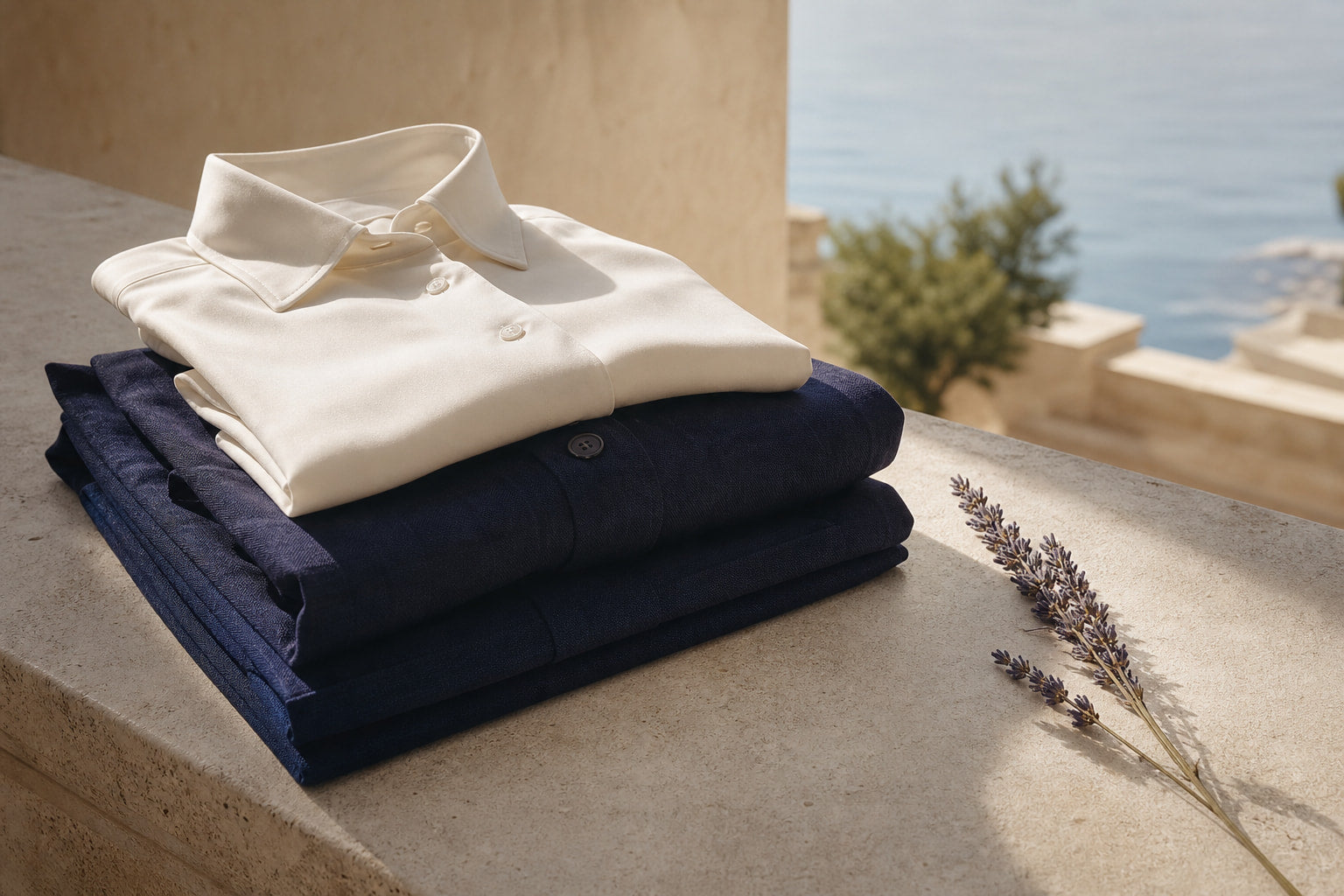
Linen is perhaps the strongest argument for navy over black. Linen's natural texture and slight sheen read beautifully in navy, which allows the weave and drape to carry visual interest. A navy blue fine linen shirt in high-count fabric has a depth and richness that black linen, for all its sharpness, rarely matches in warm daylight. Black linen can appear flat or dusty unless the count is very high. That said, a fine black linen shirt in summer heat is a strong, confident choice for evenings, particularly when the rest of the outfit stays minimal.
Mercerized cotton is where black reclaims significant ground. The mercerization process gives cotton a silk-like sheen and deepens color saturation. A black mercerized cotton T-shirt has a quiet luxury that a standard black tee cannot approach, and that sheen keeps the color from looking flat. The dark navy mercerized cotton equivalent is equally refined, but the navy reads slightly richer against most skin tones in daylight.
Worsted wool is traditionally where black belongs. The tight weave of Italian worsted wool trousers in black holds its crease, resists pilling, and suits formal occasions without question. Navy worsted wool is equally correct for business and smart-casual settings, and arguably more versatile across the week.
As a general principle: the more casual the fabric, the more navy gains over black. The more formal the fabric, the more black holds its own.
Expert insightWhen buying linen above 80-thread count, navy will always look more expensive than black in natural light. The fiber's texture diffuses light differently, and navy absorbs just enough to appear rich rather than heavy.

Versatility in Practice: What Each Color Pairs With
Versatility is not about wearing a color with everything. It is about how easily a base color integrates into a complete, coherent look without requiring special effort.
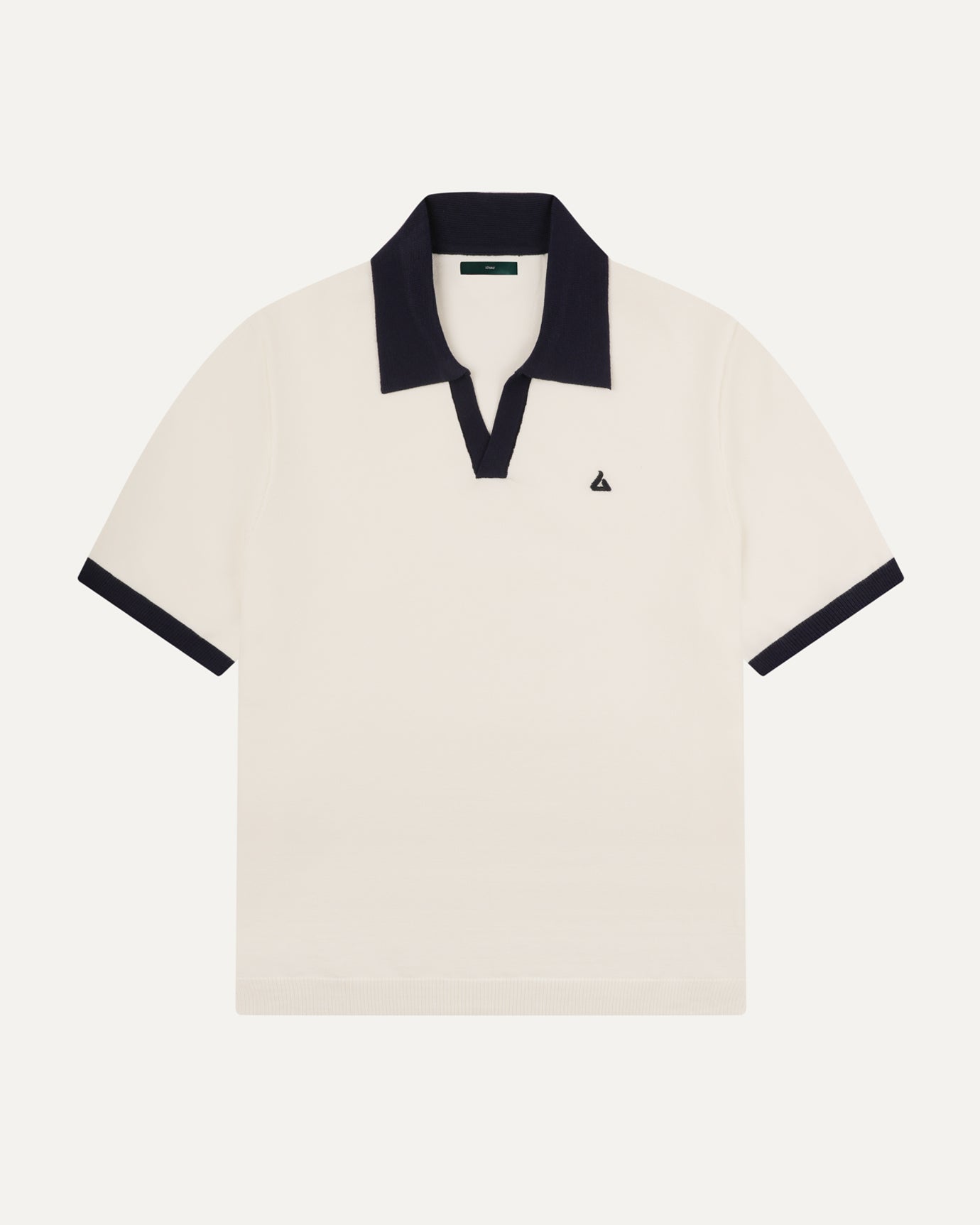
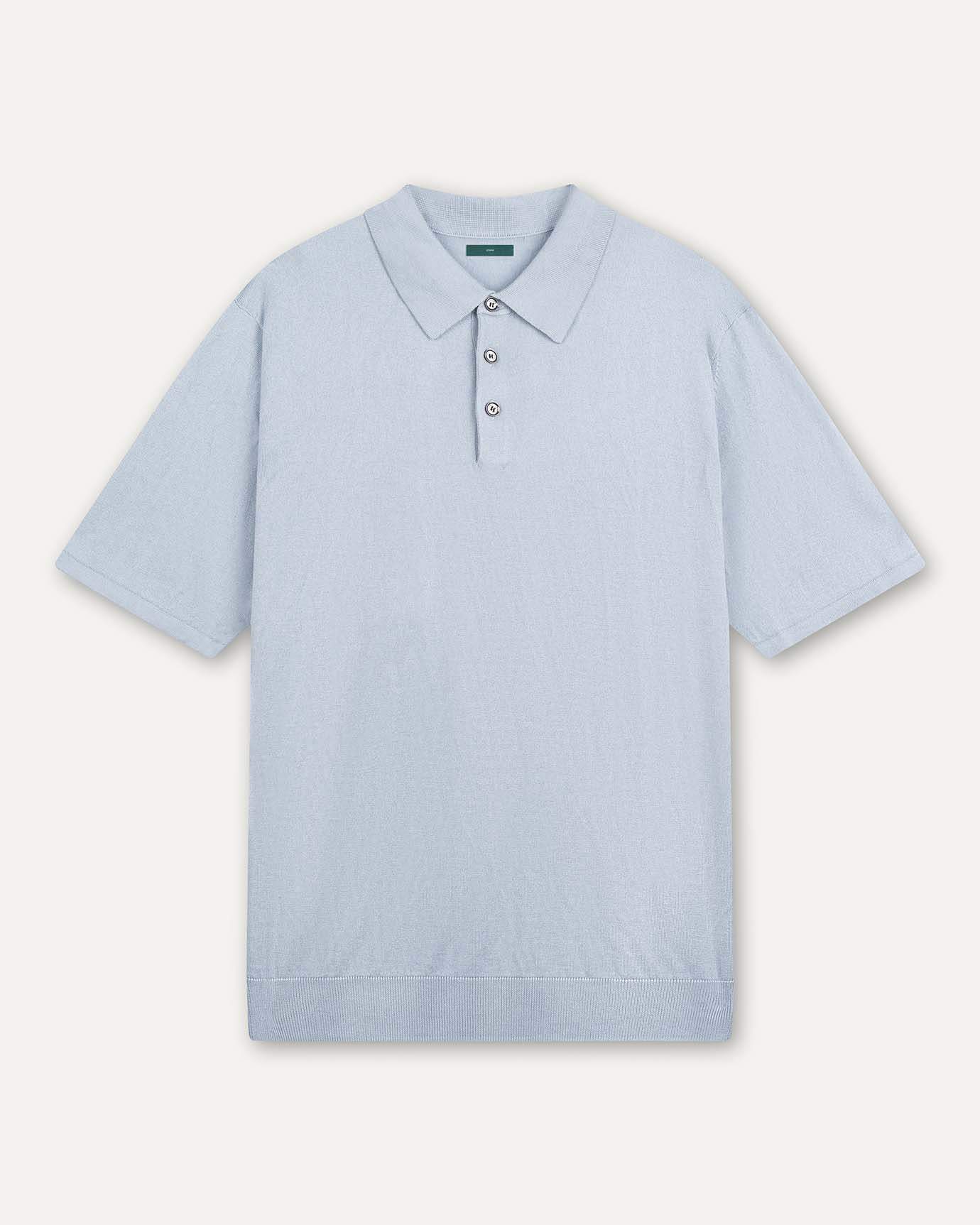
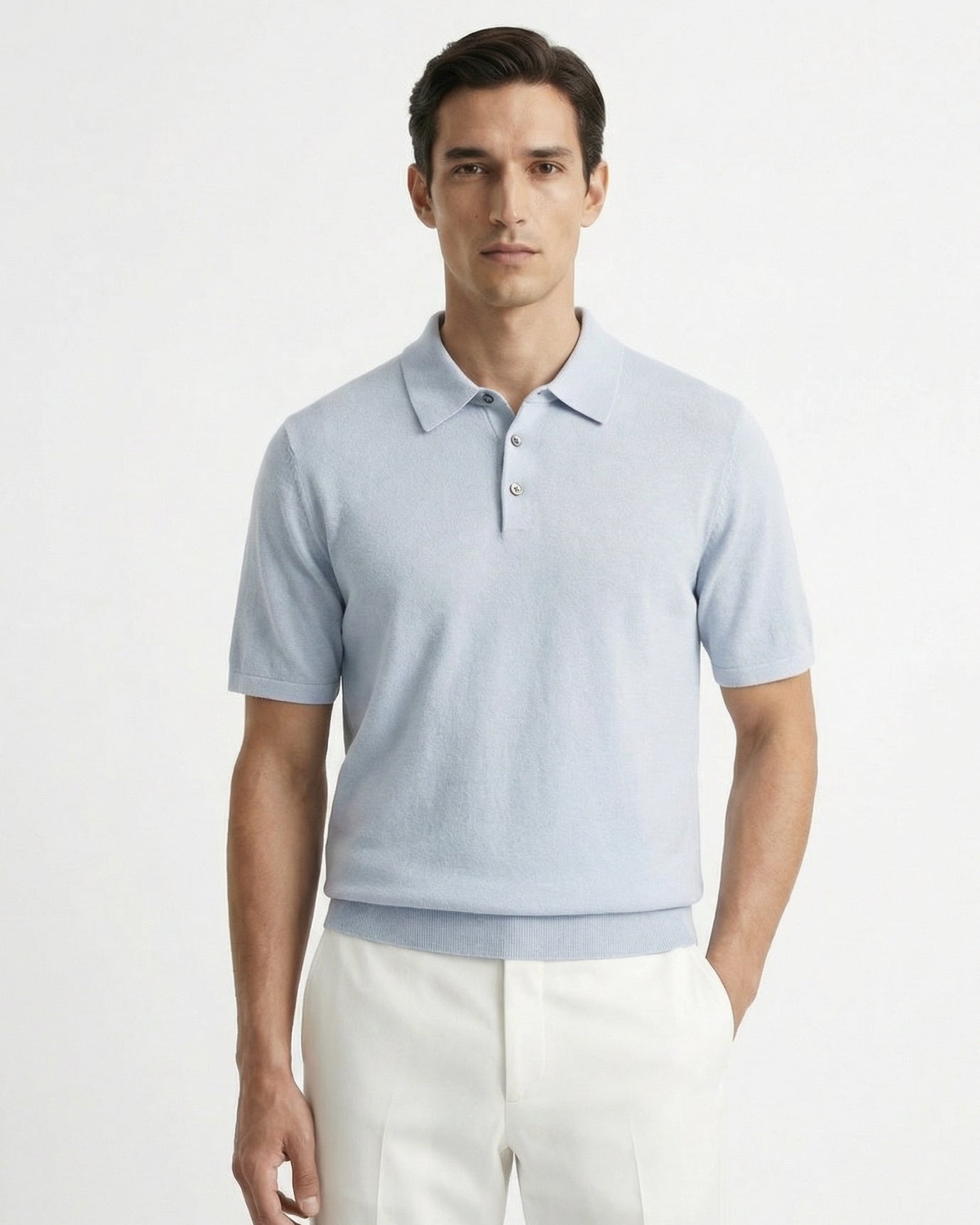
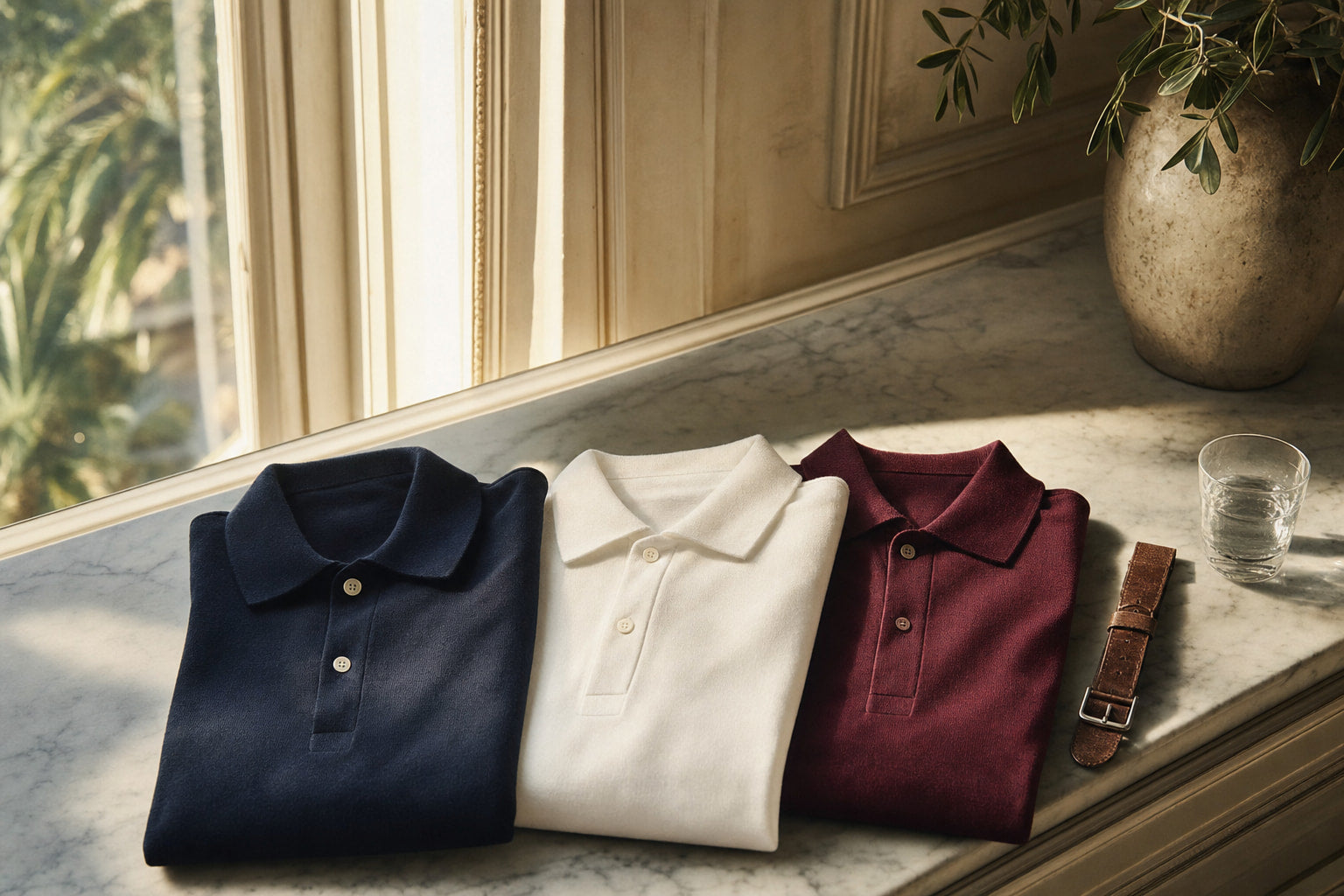
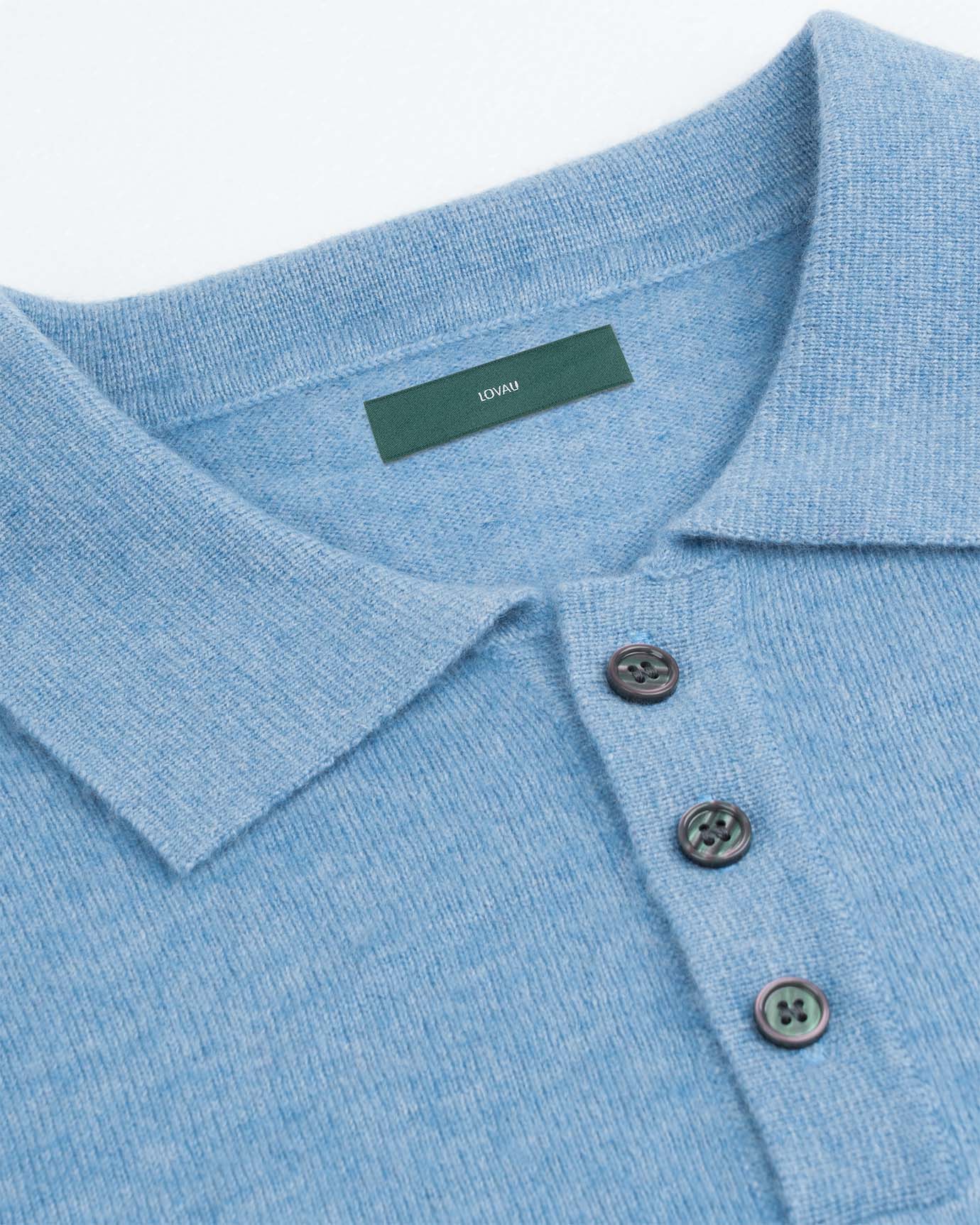
Navy pairs cleanly with: white, cream, ivory, sand, tan, camel, light grey, stone, burgundy, forest green, and warm terracotta. This is an unusually wide range of neutrals and accents. A navy blue polo shirt can sit over cream trousers, grey pleated trousers, or tan chinos without any of those combinations feeling forced. Navy also layers well under unstructured blazers in grey, camel, or ivory.
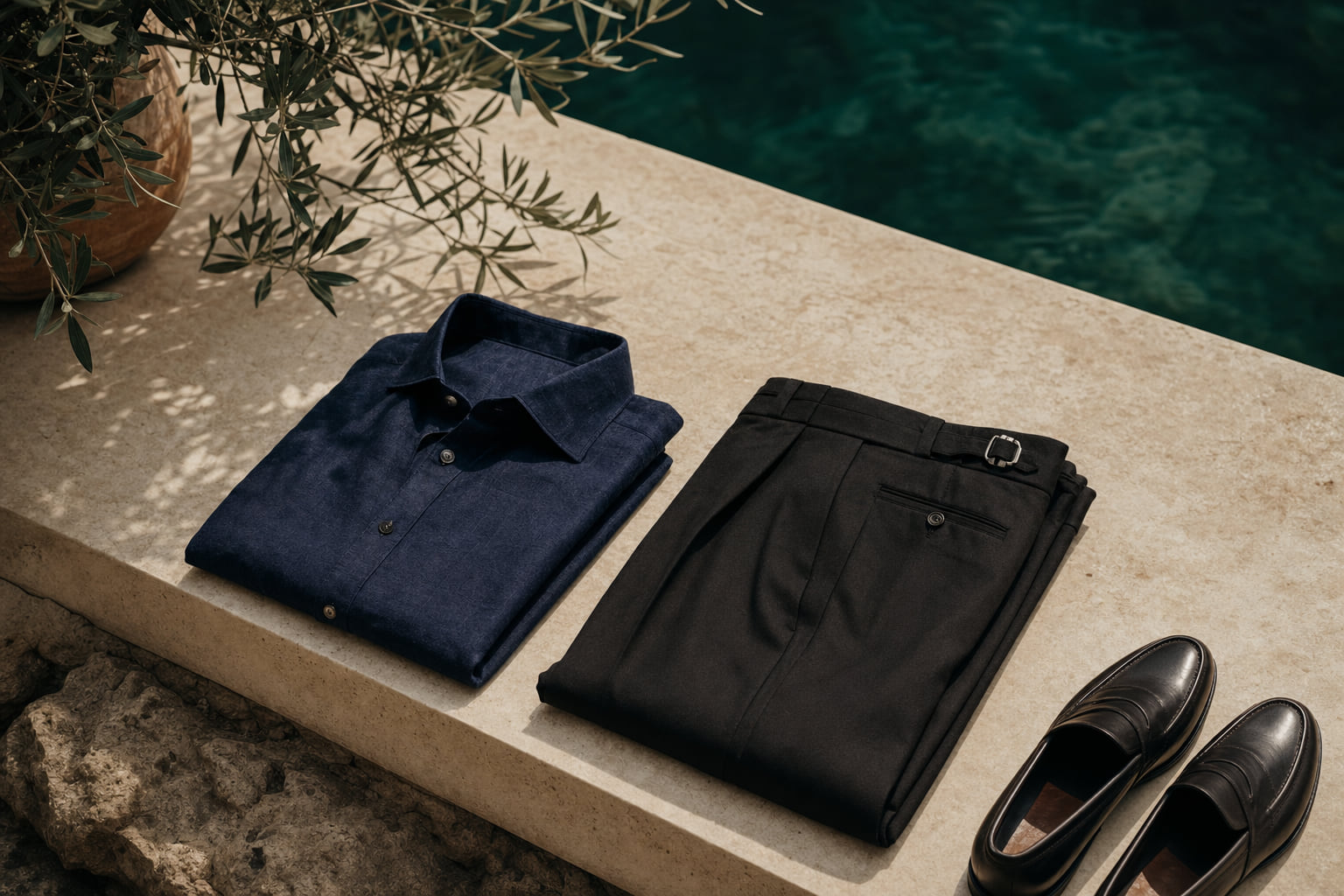
Black pairs cleanly with: white, cream, charcoal, grey, and with careful handling, burgundy or deep green. The range is narrower. Black resists warm earth tones, which means it limits the breadth of a capsule wardrobe unless you are committed to a deliberately cool, monochromatic direction. A black shirt with black trousers, such as pairing the Dolce Vita black shirt with the Dolce Vita black trousers, creates a strong head-to-toe look, but it requires confidence and the right occasion.
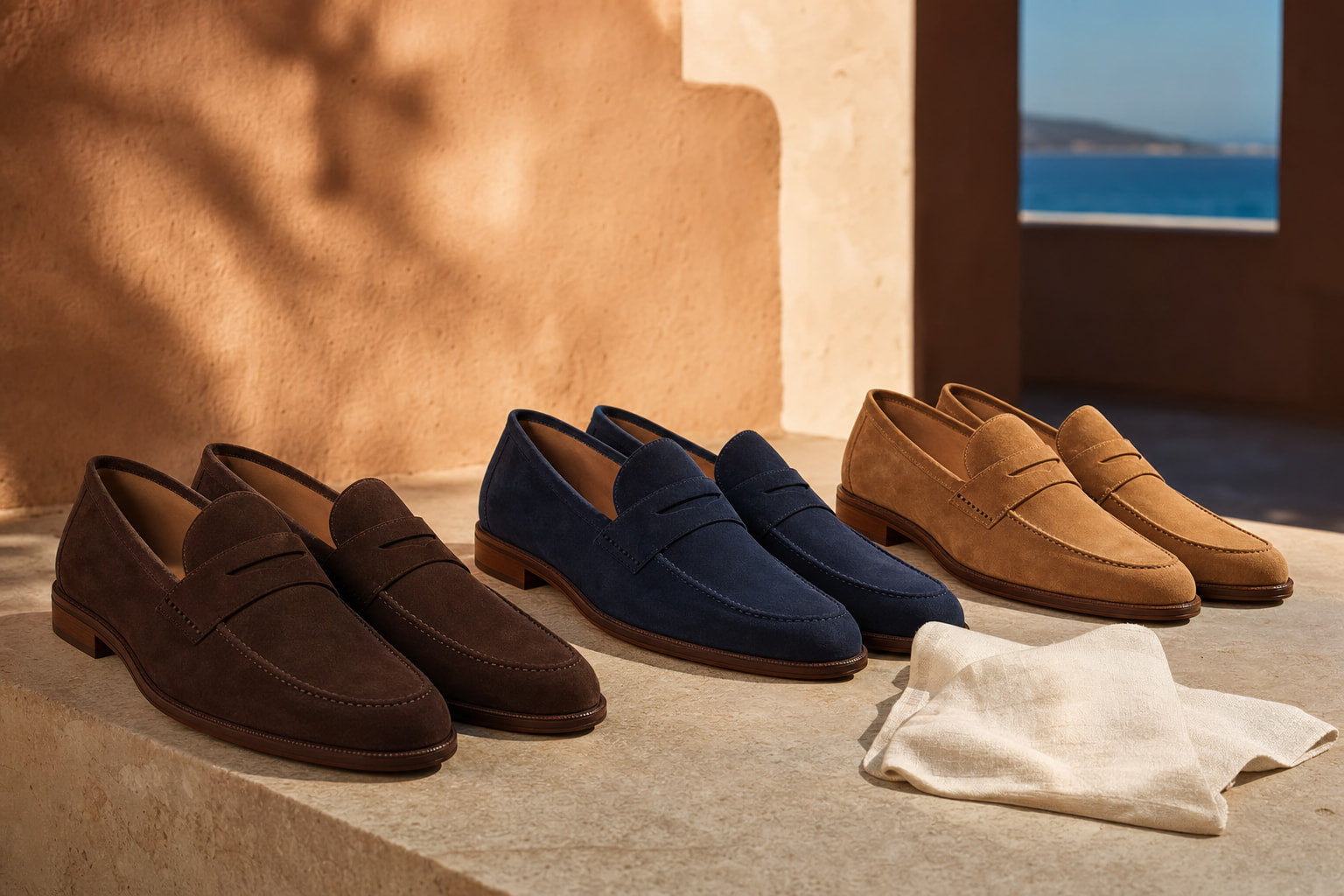
For footwear, navy blue suede loafers are a strong summer choice that reads coastal and relaxed. Black leather, whether the Florence black suede shoes or the Milano leather shoes, is more formal and more year-round. The loafers collection covers both directions well.
The conclusion here is straightforward. Navy gives you more daily combinations. Black gives you more formal precision.

Occasion Mapping: When Navy Wins and When Black Wins
Neither color dominates every context. Matching the right base to the right occasion is where the real distinction between navy and black becomes useful.
Navy wins in: daytime business meetings, smart-casual lunches, weekend social occasions, coastal or warm-weather settings, travel, and any situation where approachability matters alongside authority. The old money trends collection reflects this, with navy appearing consistently across shirts, polos, and trousers as the dominant base for versatile dressing.
Black wins in: evening dinners, formal events, gallery openings, urban nighttime settings, and any occasion where a sharper, more deliberate silhouette is appropriate. Black also performs well in monochromatic dressing, where a single color head-to-toe creates a strong visual statement. The old money shirts collection includes strong black options for exactly this purpose.
A useful way to frame it: navy is the color of the man who lunches at a terrace restaurant in the south of France. Black is the color of the man who attends an opening in Milan on a Thursday evening. Both are correct. Neither is superior. The question is which life you are dressing for most often.
For a deeper look at how navy has come to define a certain kind of restrained authority in European dress, the analysis at Permanent Style on navy in tailoring is worth reading.
Expert insightBlack's sharpness in evening settings comes partly from the way artificial light interacts with dark, tightly woven fabrics. In candlelight or warm indoor lighting, a black worsted trouser and a black shirt create a silhouette that navy cannot match.

Building Your Base: Which Color Should Come First
If you are starting a wardrobe from a clean foundation, the sequencing matters. Buying both colors at once without a strategy produces a wardrobe that feels fragmented rather than cohesive.
The argument for starting with navy is strong. Navy integrates more easily with the pieces most men already own. It works across more seasons, more fabrics, and more occasions. A navy linen shirt, a pair of navy trousers, and navy loafers cover an enormous range of situations without requiring much coordination effort. The article on building a capsule wardrobe around classic navy blue makes this case in practical detail.
The argument for starting with black is more specific. If your life is predominantly urban, your social calendar runs toward evenings and formal events, and you prefer a cooler, more graphic aesthetic, black as a primary base makes genuine sense. The Lovau men's old money collection includes enough black pieces to build a complete, coherent wardrobe without relying on navy at all.
For most men, the optimal approach is: navy as the dominant base, black as the secondary accent. This means navy trousers, navy shirts, and navy shoes carry the majority of your wardrobe weight, while black appears in footwear, evening shirts, and accessories. The old money color palette article outlines how these neutrals interact across a full wardrobe.
The why navy replaces black in elite fashion piece also addresses this shift from a broader cultural perspective, and it is worth reading alongside this guide.
For color theory context, the Wikipedia article on color in fashion provides useful background on how dark neutrals function within a dressed palette.

Accessories: Where the Color Choice Has the Largest Impact
Accessories amplify the base color choice more than any other category. A navy outfit with black accessories reads as a studied contrast. A black outfit with navy accessories reads as a near-miss. Getting this right is where a wardrobe moves from competent to genuinely polished.
Sunglasses are the most visible accessory in warm-weather dressing. Black frames are universal and work against both navy and black clothing without conflict. The man sunglasses collection has strong options in both directions. The black square sunglasses with gold accents add a warm metallic note that softens a full-black outfit and complements navy equally well. The Milano black square sunglasses with gray gradient tint are a cleaner, cooler choice that reads more minimal against both bases.
Footwear is where the navy versus black question becomes most consequential. Black leather shoes are correct against black trousers and acceptable against navy. Navy suede loafers are a strong summer choice against navy but look incongruous against black. When in doubt, black footwear is the safer cross-color option. The man footwear collection covers the full range.
Belts and leather goods should always match footwear in color, which in practice means a black leather belt works across both navy and black outfits, while a tan or cognac belt belongs with navy and cream, not with black.

| Criterion | Navy | Black | Verdict |
|---|---|---|---|
| Skin tone compatibility | Flattering on warm, olive, medium tones; works on most | Best on cool or neutral tones; can read harsh on warm skin in daylight | Navy |
| Fabric versatility | Excellent in linen, cotton, wool, cashmere | Best in mercerized cotton, worsted wool, silk blends | Navy (slight edge) |
| Pairing range | Cream, white, sand, tan, grey, burgundy, green | White, cream, grey, charcoal; limited with warm earth tones | Navy |
| Formal occasions | Smart-casual to business formal | Business formal to black-tie adjacent | Black |
| Daytime / warm weather | Strong, reads relaxed and refined simultaneously | Can appear heavy or harsh in direct sunlight | Navy |
| Monochromatic dressing | Tonal navy head-to-toe reads coastal and elegant | Head-to-toe black is sharp, urban, and deliberate | Equal, context-dependent |
| Maintenance visibility | Hides lint and minor wear well | Shows lint, pet hair, and pilling clearly | Navy |
Frequently asked questions
Can I mix navy and black in the same outfit?
Yes, but only when the contrast is deliberate and obvious. A black shirt with navy trousers works if the tones are clearly distinct. A near-match, such as dark navy next to faded black, reads as a mistake. If you are mixing them, separate the colors with a strong contrast piece in between, or keep one as a very minor accent such as a black belt with a navy outfit.
Which color is better for a first old money wardrobe?
Navy. It integrates with more fabrics, more occasions, and more existing wardrobe pieces than black does. Start with a navy linen shirt, a pair of navy or white trousers, and black leather shoes. That foundation covers an enormous range of situations before you add anything else.
Does black or navy look better in summer?
Navy is significantly stronger in summer. In linen and lightweight cotton, navy absorbs heat moderately while reflecting enough light to avoid looking heavy. Black in summer heat, particularly in direct Mediterranean sunlight, can read as oppressive and shows sweat more visibly. Reserve black for summer evenings rather than daytime wear.
Is navy considered more formal or less formal than black?
Generally less formal, but the gap is smaller than most men assume. A navy worsted wool suit is entirely appropriate for business formal and most social occasions. Black becomes the stronger choice specifically at evening events, formal dinners, and occasions where a deliberately sharp silhouette is expected. For everything below black-tie, navy and black are largely interchangeable in terms of formality, with navy often reading as more refined rather than less.
Navy and black are not rivals. They are two different instruments in the same wardrobe, each with a distinct register and a distinct set of occasions where it performs best. Navy is the more versatile, more flattering, and more forgiving of the two for most men in most situations. Black is the more precise, more formal, and more demanding. The man who understands both and uses each deliberately is the one whose wardrobe never looks assembled by accident. If you are ready to build that foundation, the old money men's collection covers both bases with the specific pieces worth owning.