


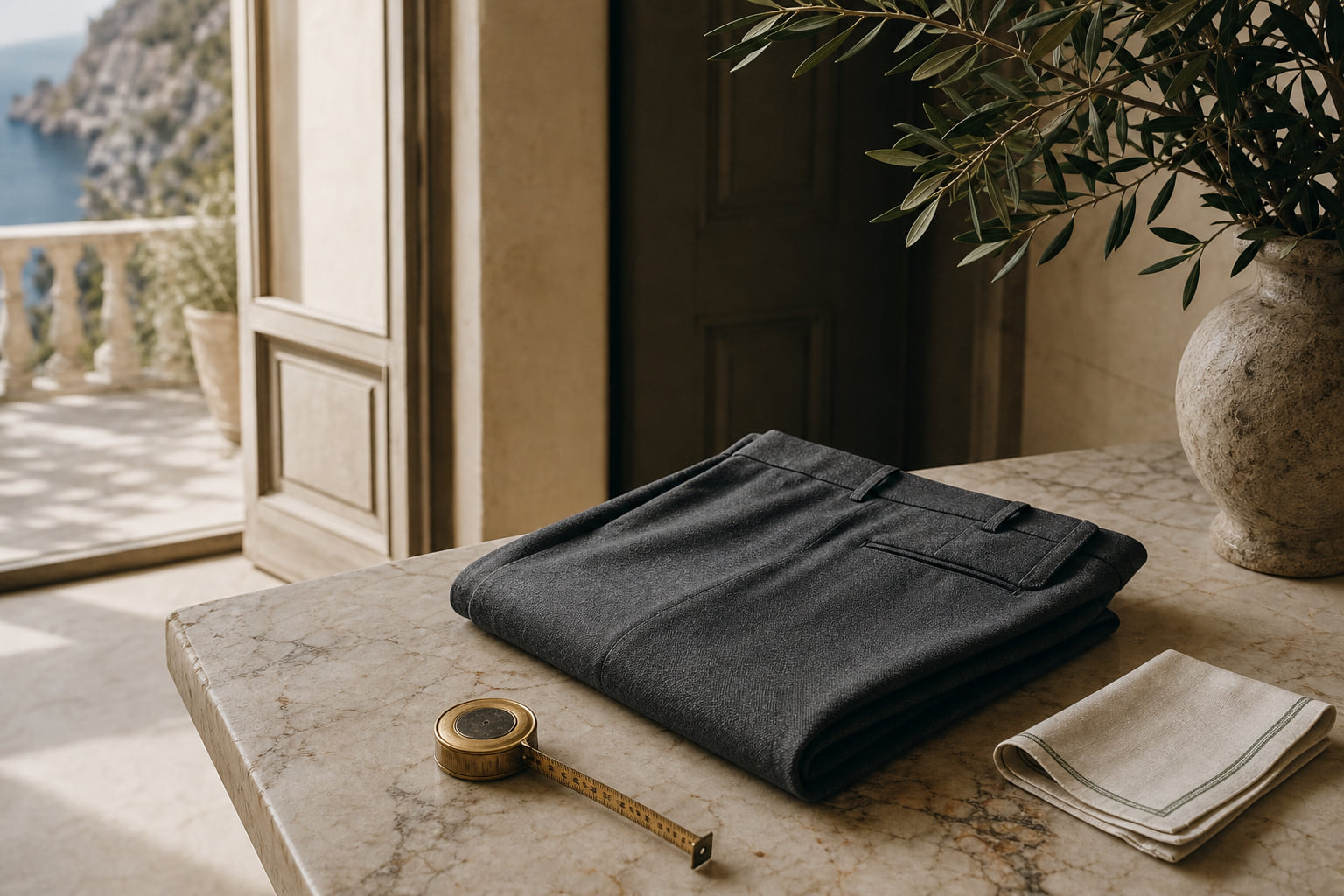
What to Do When Your Trousers Are Too Long: No-Sew Solutions
Reading time 14 min • 2835 words
Trousers that pool at the ankle are one of the most common fit problems men and women face after buying off the rack. The inseam measurements printed on labels are averages, and averages fit almost nobody precisely. You may have ordered a pair that looked perfect on screen, or inherited a well-made pair that simply runs a centimetre or two long.
A tailor is always the right long-term answer. But tailors require appointments, time, and sometimes a wait of several days. In the meantime, you still need to dress well. The good news is that several no-sew methods produce results that are genuinely tidy, and some, such as a clean trouser cuff, are actually considered more refined than a plain hemmed break in certain European dressing traditions.
This guide covers every practical no-sew option in plain terms, including which fabrics each method suits, how to execute each one properly, and how to use styling choices such as footwear and proportion to manage length visually. We will also flag which of our trousers are most forgiving to work with at home.
Key takeaways
- Iron-on hem tape gives a clean, near-permanent fix on most woven fabrics and costs under five euros at any haberdashery.
- A single-fold or double-fold trouser cuff is the most reversible solution and works especially well on wider, structured cuts.
- Fabric type matters: iron-on tape bonds poorly to very smooth synthetics and loosely woven linens, so test on a hidden seam first.
- Wearing the correct shoe heel height resolves a surprising number of minor length issues without touching the trouser at all.
- A well-chosen hat can shift visual proportion upward, making a slightly long trouser leg feel less conspicuous in photographs and real life.
In this guide
- Understanding Trouser Break: What Length Are You Actually Aiming For?
- Iron-On Hem Tape: The Cleanest Temporary Fix
- The Trouser Cuff: A Refined Alternative That Requires No Adhesive
- Styling Solutions: Using Shoes, Posture, and Proportion to Manage Length
- Fabric-by-Fabric Guide: Which No-Sew Method Works Best
- When to Stop and See a Tailor Instead
- Frequently asked questions
Understanding Trouser Break: What Length Are You Actually Aiming For?
Before you fix anything, you need to know what you are fixing toward. Trouser break refers to the fold or contact point that forms where the front of the trouser leg meets the top of the shoe. There are four recognised break levels, and choosing the right one changes how much length you actually need to remove.
No break means the trouser hem sits exactly at the ankle bone or just above it. This is the cleanest, most contemporary option and the most forgiving if your trousers are only marginally too long. It suits slim and tapered cuts well.
Quarter break leaves a very slight horizontal crease across the front of the leg. This is the standard for most tailored European dressing and is appropriate for both business and smart casual contexts.
Half break produces a more pronounced crease and a small fold of fabric. It reads as traditional and relaxed, and it works well on wider, pleated trousers where the extra fabric contributes to the silhouette.
Full break is the longest option, with the hem sitting low on the shoe and creating a significant fold. This is rarely the intended look today, and if your trousers are reaching this point, they are genuinely too long rather than simply long.
For most of our old money style trousers for men, a quarter break is the house standard. Measure your ideal length with the shoes you plan to wear most often with the pair, because heel height changes the calculation by up to two centimetres.
Expert insightAlways measure trouser length standing on a hard floor, not carpet. Carpet compresses underfoot and can cause you to underestimate how much fabric is sitting on the ground by a full centimetre.

Iron-On Hem Tape: The Cleanest Temporary Fix
Iron-on hem tape is a woven fusible strip, typically made from a heat-activated adhesive bonded to a lightweight interfacing. You fold the trouser leg to the desired length, press the tape between the folded layers, and apply heat and moisture with an iron. The result looks, from the outside, almost identical to a sewn hem.
What you need: fusible hem tape (sold at any fabric or haberdashery shop, often labelled as 'Wonderweb' or 'Heat n Bond'), a steam iron, a damp pressing cloth, and a hard flat surface.
How to do it properly: 1. Put on the shoes you intend to wear with the trousers. 2. Mark your desired hem length with chalk or a small pin while standing. 3. Turn the trouser inside out. Fold the excess fabric up to your marked line and press lightly to crease. 4. Trim excess fabric if it is more than 4 cm, leaving enough for the tape to grip. 5. Slip the hem tape between the folded fabric and the trouser leg, following the manufacturer's width instructions. 6. Press firmly with a hot, damp cloth for 10 to 15 seconds per section. Do not slide the iron. Lift and press. 7. Allow to cool fully before turning right-side out.
Fabric notes: This method works best on medium-weight woven fabrics such as cotton twill, worsted wool, and cotton-linen blends. The Italian worsted wool trousers respond particularly well because the tightly woven surface gives the adhesive a strong, even bond. Loosely woven linens and very slippery synthetic fabrics are less reliable. Always test on an interior seam allowance first.
Hem tape is not truly permanent, but it holds through normal wear and gentle washing if you follow the care instructions. It can be released with a hot iron and a damp cloth if you later want a tailor to do a proper job.
Expert insightOn wool trousers, place a pressing cloth between the iron and the fabric at all times. Direct iron contact on worsted wool can create a permanent shine on the surface that no amount of steaming will reverse.

The Trouser Cuff: A Refined Alternative That Requires No Adhesive
The trouser cuff, also called a turn-up in British tailoring, is not a compromise. On certain cuts, particularly wide-leg, pleated, and high-waisted styles, a cuff is the more correct finish. It adds visual weight at the hem, which helps the trouser leg drape with a clean, deliberate line rather than swinging freely.
Single cuff: Fold the trouser leg upward once to your desired depth, typically 3.5 to 5 cm. Press firmly along the fold with a steam iron and a pressing cloth. For wool and cotton, a sharp pressed crease will hold through a full day of wear without any adhesive.
Double cuff: Fold up once at twice your target depth, then fold upward again so the raw edge is hidden inside. This is cleaner on fabrics that fray easily and gives a slightly thicker cuff with more visual presence.
Pinned cuff: For a cuff that stays in place without pressing, use two or three flat-head pins on the interior of the fold. They are invisible from outside and easy to remove.
The wide-leg trousers in our loose fit range are particularly well suited to a cuffed finish because the wider leg opening has enough fabric to fold cleanly without pulling the side seams inward. The Naples striped high-waisted trousers also look excellent with a 4 cm single cuff, which echoes the striped pattern at the ankle and reads as intentional rather than improvised.
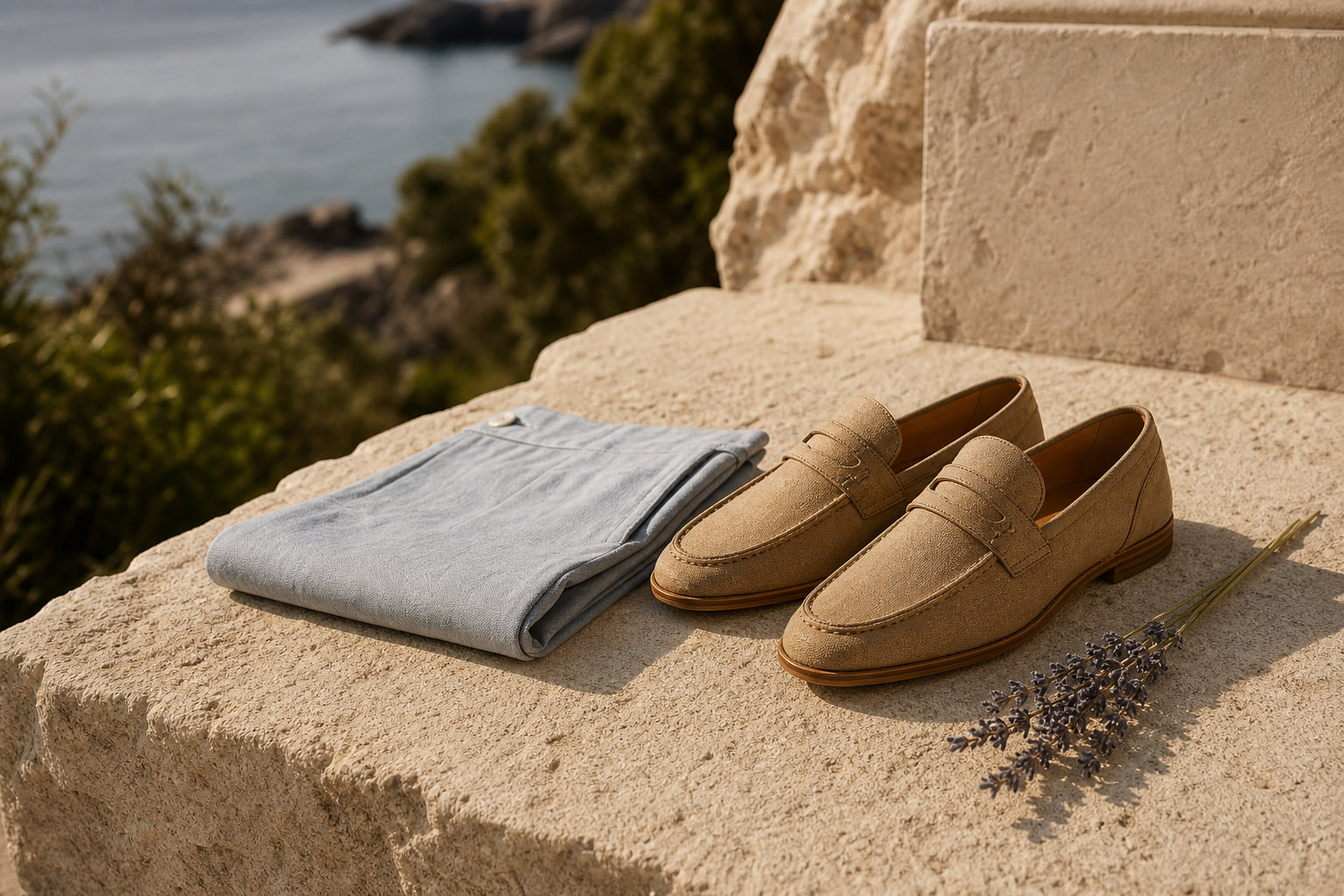
For women's trousers, the same logic applies. A clean single cuff on the Celina trousers or the blue flower trousers works well with a flat mule or loafer, and the cuff adds a relaxed, continental quality to the silhouette.
Expert insightOn striped trousers, align the cuff fold so that the stripe pattern continues visually around the hem rather than breaking mid-stripe. This takes an extra minute but looks considered rather than accidental.

Styling Solutions: Using Shoes, Posture, and Proportion to Manage Length
Sometimes the simplest answer to trousers that are slightly too long is not to alter the trouser at all, but to dress around the problem intelligently.
Heel height: A shoe with even a modest heel, 2 to 3 cm, raises the ankle and shortens the visible length of the trouser leg. The Chelsea boots in genuine leather from our collection have a standard block heel that lifts the trouser break by approximately 2 cm compared to a flat shoe. This can transform a full break into a half break without touching the fabric.
Shoe volume and colour: A chunky or visually heavy shoe draws the eye downward and makes a lower trouser break feel intentional. A very delicate flat shoe worn with a pooling trouser looks simply unfinished. Match the visual weight of the shoe to the weight of the trouser fabric.
Tucking in and waist placement: On high-waisted trousers, wearing the waistband at its intended position rather than letting it slip down changes the effective inseam length. A waistband sitting 3 cm lower than intended adds 3 cm of visible trouser leg. This sounds minor but is often the entire problem.
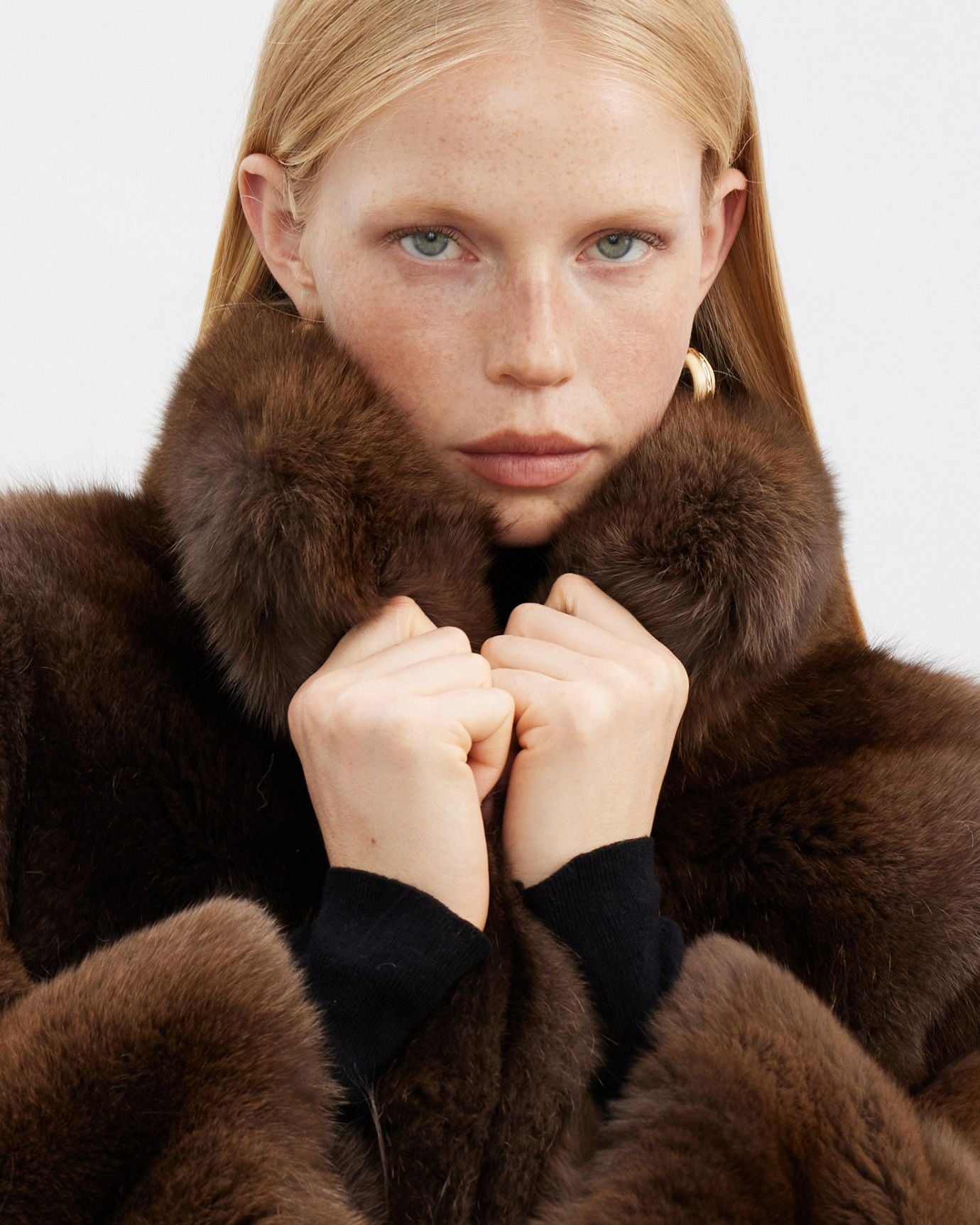
Using a hat to shift vertical proportion: This is a less obvious tool, but it is a real one. A well-chosen hat raises the visual centre of the outfit upward, drawing attention to the upper half of the silhouette and making the trouser leg feel less dominant. A cashmere soft knitted hat in winter or the Carina cashmere hat worn with a coat and wide trousers creates a top-heavy visual balance that makes the leg length read as a deliberate design choice rather than a fit error. This is a technique that portrait and fashion photographers use instinctively, and it translates directly into real dressing.

Fabric-by-Fabric Guide: Which No-Sew Method Works Best
Not every method suits every fabric. Using the wrong technique on the wrong material produces a result that looks worse than the original problem. Here is a direct breakdown.
Worsted wool: Responds excellently to both iron-on tape and a pressed cuff. The tight weave holds creases sharply and bonds well with adhesive. Press with a damp cloth and medium-high heat.
Cotton twill: Very cooperative. Iron-on tape bonds firmly, and pressed cuffs hold well through a day of wear. The business trousers in cotton-linen blend fall into this category and are among the easiest to work with at home.
Linen: The loosely woven structure of pure linen means iron-on tape can fail at the edges over time. A cuff is the better choice. Press firmly with steam. The Paris linen trousers have a clean drape that responds well to a simple single-fold cuff at 4 cm.
Herringbone wool: Similar to worsted but with a more textured surface. Hem tape works, though the herringbone weave can create small air pockets if you rush the pressing. Press slowly and in short sections. The business grey herringbone trousers are made from a medium-weight herringbone that handles both methods well.
Stretch fabrics and synthetics: Avoid iron-on tape unless the product specifically states it is compatible with stretch or synthetic fibres. The adhesive may not bond evenly, and the heat can damage the fabric. For these, a pinned cuff or simply wearing the correct footwear is the safer choice.
Lightweight cotton: Can work with hem tape, but the bond is weaker than on heavier fabrics. Use a narrower tape and reinforce with a second pass. For women's trousers in lightweight cotton, a single cuff is often the cleaner solution and can be pressed to look intentional.

When to Stop and See a Tailor Instead
No-sew solutions are practical and often very effective, but they have limits. Knowing when to stop and hand the work to a professional saves you from making a problem worse.
More than 5 cm to remove: If you need to shorten a trouser by more than 5 cm, the proportions of the leg may shift in ways that affect the taper, the knee position, and the overall silhouette. A tailor can rebalance these elements. A hem tape fix cannot.
Structured or canvassed trousers: Some higher-end trousers have a structured hem with a horsehair canvas or interfacing already built in. Folding or taping over this structure creates a bulky, uneven hem. These should always be professionally hemmed.
Visible fabric damage: If the trouser leg has a crease line from a previous hem or a worn area near the original hem, a no-sew fix will simply expose or emphasise the damage. A tailor can cut above the problem area and finish cleanly.
Special occasions: For a wedding, a formal dinner, or any event where you will be photographed extensively, take the trousers to a tailor. The cost is small relative to the permanence of the photographs. Our pleated old money style trousers and straight-leg old money trousers are both cut with enough hem allowance to allow a tailor to work with the fabric comfortably, so you are not losing material by waiting.
For day-to-day dressing, the methods above are entirely sufficient. For anything that matters in a lasting way, see a professional. That is not a failure of the no-sew approach. It is simply knowing which tool fits which job, which is the basis of dressing well in the first place. See how tailors approach trouser hemming for a more detailed look at the craft behind the finished hem.

| Method | Best Fabric Types | Permanence | Skill Required | Reversible? |
|---|---|---|---|---|
| Iron-on hem tape | Worsted wool, cotton twill, cotton-linen blend | Semi-permanent (holds through washing if applied correctly) | Low, but requires careful pressing | Yes, with hot iron and damp cloth |
| Pressed single cuff | All woven fabrics, especially linen and wool | Temporary (holds through one day of wear) | Very low | Yes, instantly |
| Pinned cuff | All fabrics including stretch and synthetics | Temporary (holds until pins are removed) | Very low | Yes, instantly |
| Double fold cuff | Fraying fabrics, medium-weight cotton, linen | Temporary to semi-permanent with pressing | Low | Yes, with re-pressing |
| Footwear adjustment (heel height) | No fabric contact, applies to all trousers | Permanent while wearing those shoes | None | Yes, by changing shoes |
| Hat and proportion styling | No fabric contact, applies to all trousers | Applies only while wearing the hat | None, purely visual | Yes, instantly |
Frequently asked questions
Can I use iron-on hem tape on linen trousers?
You can, but results are less reliable than on tightly woven fabrics. The open weave of linen means the adhesive may not bond evenly across the full width of the hem, and the bond can weaken after washing. A pressed or pinned cuff is the more dependable choice for linen. Our Paris linen trousers look very clean with a 4 cm single cuff pressed firmly with steam.
How long does iron-on hem tape last before it starts to come away?
On wool and cotton, a properly applied fusible hem tape bond typically lasts through 10 to 20 washes if the garment is washed gently and at the correct temperature. The bond weakens most quickly at the corners and at points of flexion, such as the back of the knee. Reinforce those areas with a second short strip of tape if you notice lifting.
Is a trouser cuff appropriate for formal occasions?
A trouser cuff, or turn-up, is a traditional tailoring detail with a long history in British and Italian formal dressing. It is entirely appropriate on a suit trouser or a smart business trouser, particularly on wider or pleated cuts. It is generally avoided on very formal eveningwear such as dinner trousers, where a clean plain hem is the convention.
My trousers are too long only when I wear flat shoes. Do I need to alter them?
Not necessarily. If the trousers sit correctly with a modest heel and only pool with completely flat footwear, the simplest answer is to wear them with a shoe that has a small heel, or to fold a single shallow cuff when wearing flats. Altering trousers specifically for flat shoes and then wearing them with heels will produce a trouser that is too short. Decide which shoe you wear most often with that particular pair and hem to suit that shoe.
Trousers that are too long are a solvable problem, and you do not need a sewing kit to solve it well. Iron-on hem tape, a pressed cuff, and intelligent footwear choices each produce results that are tidy, confident, and appropriate for daily wear. The key is matching the method to the fabric, taking the time to press properly, and knowing when the job genuinely requires a tailor's hands. For the moments in between, browse our full range of tailored trousers for men and women cut with enough hem allowance to give you flexibility from the moment they arrive.