



The Complete Guide to Old Money Menswear Fabrics
Reading time 15 min • 2971 words
Old money dressing is not about spending the most money. It is about knowing which materials last, which ones age with dignity, and which ones signal taste without announcing it. The men who perfected this aesthetic across the Côte d'Azur, the English countryside, and the private clubs of Rome understood one thing clearly: fabric is the foundation of every garment, and no amount of tailoring rescues a poor one.
This guide covers the core fabrics of old money menswear, from fine linen to worsted cashmere to silk blends, with specific detail on weave, weight, occasion, and care. Think of it as a working reference, not a mood board. Whether you are building a summer wardrobe for the Mediterranean or a transitional capsule for the city, the choices you make at the fabric level will determine everything else.
For a broader view of how these fabrics fit into a complete wardrobe, the timeless old money style guide for everyday wear is a strong companion read. But start here, with the materials themselves.
Key takeaways
- Thread count and yarn twist matter more than brand name when assessing fabric quality.
- High-count linen (above 60s count) drapes cleanly and resists creasing far better than standard linen.
- Worsted cashmere holds its shape across seasons and outlasts loosely spun alternatives by years.
- Silk blends, particularly acetate-silk and mulberry silk mixes, offer breathability and a refined surface without the fragility of pure silk.
- Building a fabric-first wardrobe means fewer pieces, longer wear, and a consistently polished result.
In this guide
- Fine Linen: The Cornerstone of Mediterranean Dressing
- Cashmere and Worsted Wool: The Cold-Weather Standard
- Silk and Silk Blends: Understated Refinement
- Cotton and Its Place in the Hierarchy
- Fabric Pairings and Seasonal Coordination
- How to Assess Fabric Quality Before You Buy
- Frequently asked questions
Fine Linen: The Cornerstone of Mediterranean Dressing
Linen is the oldest textile in continuous use, and for good reason. Made from the fibres of the flax plant, it is stronger than cotton, naturally temperature-regulating, and becomes softer with every wash without losing structural integrity. The key distinction within linen is yarn count. Standard linen sits around 30s to 40s count, which produces a coarser, more casual cloth. High-count linen, woven from 60s count yarn and above, produces a fabric that is finer, denser, and far more resistant to the uneven creasing that gives cheaper linen its rumpled reputation.
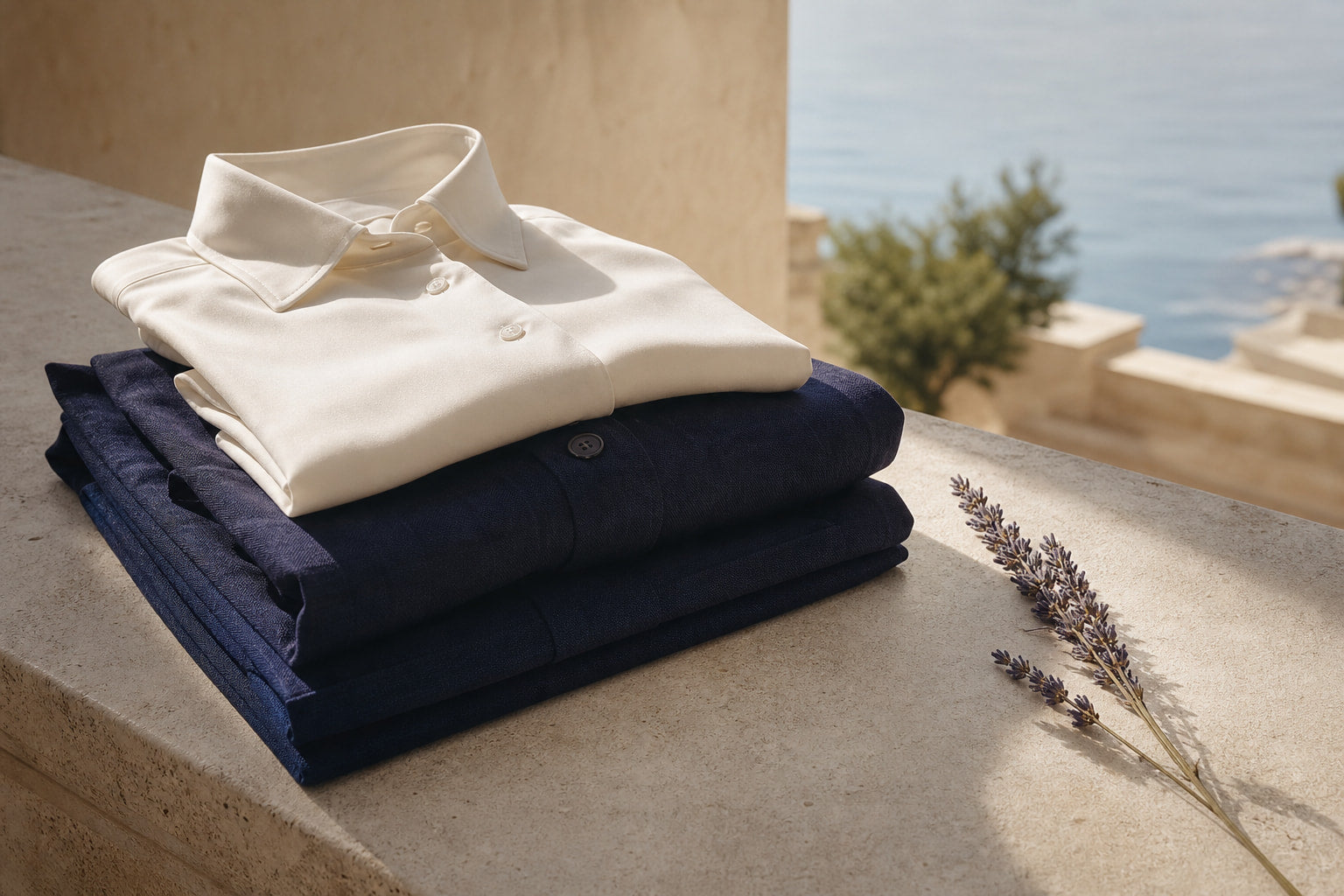
For shirts, high-count fine linen is the correct choice for old money dressing. The cloth falls cleanly from the collar, holds a pressed placket through an afternoon on a terrace, and breathes in heat that would make a cotton Oxford shirt unbearable. A fine white linen shirt in this weight works as a standalone piece for coastal lunches or tucked into tailored trousers for a more composed evening look. Navy and light blue read as slightly more formal, useful for business settings where you want the ease of linen without sacrificing authority.
For trousers, linen in a medium weight of roughly 180 to 200 grams per square metre strikes the right balance. Lighter than that and the cloth becomes transparent and loses its shape by midday. The Paris linen trousers sit in this range, with a cut that reads as tailored without requiring a jacket to complete the outfit. Pair them with a fine linen shirt in a complementary tone, not a matching one, for a result that is considered rather than costumed.
Linen shorts follow the same logic. A well-cut linen short in a neutral, such as the Monaco linen shorts, carries through from a morning walk to a harbour-side lunch with no adjustment needed. The elastic waist on a refined cut is a practical concession that does not compromise the silhouette.
Expert insightAlways pre-wash fine linen before wearing. The cloth relaxes slightly and the drape improves considerably. A cold machine wash and a low-heat press while still slightly damp is all it needs.

Cashmere and Worsted Wool: The Cold-Weather Standard
Cashmere has been central to European luxury dressing since the nineteenth century, when Kashmiri shawls reached Paris and London and were immediately adopted by those who could afford the best. The fibre comes from the undercoat of Cashmere goats, and its quality is determined by fibre diameter and length. The finest cashmere measures 14 to 15.5 microns in diameter, a standard associated with the best Scottish and Italian mills. Anything above 19 microns starts to feel coarser against skin and pills more readily.
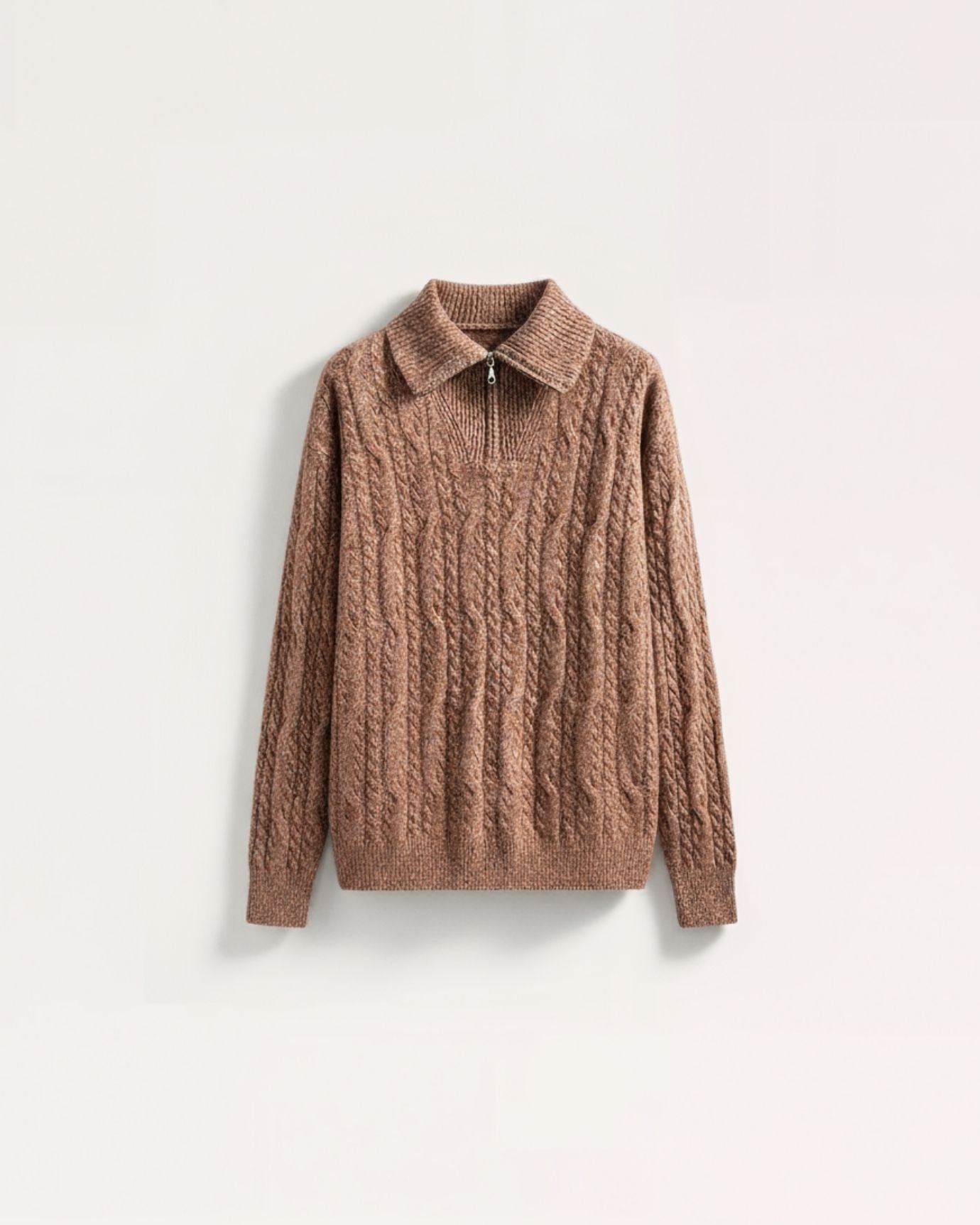
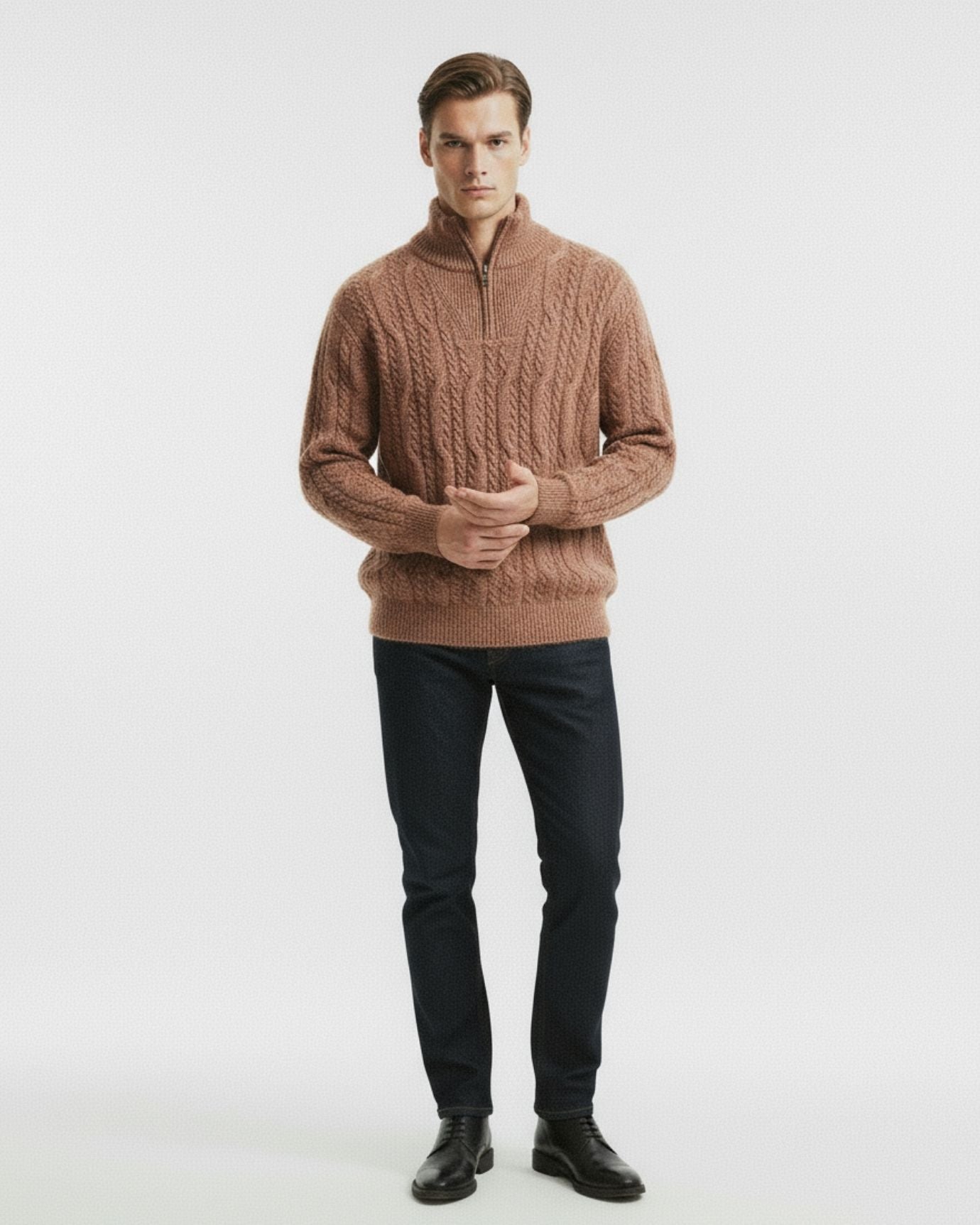
For old money dressing, the most useful cashmere garments are mid-weight knitwear and structured sets. A zip-neck cashmere piece, such as the Berlin cashmere zip sweater, sits over a dress shirt for country-house weekends or under a light overcoat in the city. The zip neck is a practical detail that the English aristocracy adopted decades ago precisely because it allows temperature adjustment without removing the garment entirely.
Worsted cashmere, which is combed and spun tightly to produce a smoother, denser yarn, is the superior choice for tailored sets and coordinates. It holds a crease, resists pilling better than loosely spun alternatives, and maintains its silhouette through a full day of wear. The mulberry silk and worsted cashmere set represents this approach: a fabric blend that combines the structure of worsted cashmere with the surface refinement of mulberry silk. The result is a set that reads as formal enough for a private dinner but relaxed enough for a long afternoon.
For a full view of what belongs in a refined cold-weather wardrobe, the luxury capsule wardrobe checklist for men covers cashmere layering in the context of a complete system. The cashmere collection at Lovau is also a useful reference for the range of weights and styles available.
Expert insightStore cashmere folded, never on a hanger. Hanging stretches the shoulder seam and distorts the shape permanently. Cedar blocks in the drawer are sufficient moth deterrent without the chemical smell of mothballs.

Silk and Silk Blends: Understated Refinement
Pure silk is a demanding fabric. It marks with water, fades in direct sunlight, and requires careful handling that most men are not willing to give a shirt or polo. This is why the most practical application of silk in old money menswear comes through blends, particularly acetate-silk and mulberry silk combinations, which retain the surface quality and temperature response of silk while adding durability and stability.
Mulberry silk, produced by silkworms fed exclusively on white mulberry leaves, is the finest grade commercially available. According to Britannica's entry on silk, mulberry silk accounts for the majority of the world's silk production and is distinguished by its uniform filament and high lustre. In a blended fabric, it contributes a smooth hand, a subtle sheen that reads as expensive rather than flashy, and a natural cooling effect that makes it genuinely useful in warm climates.
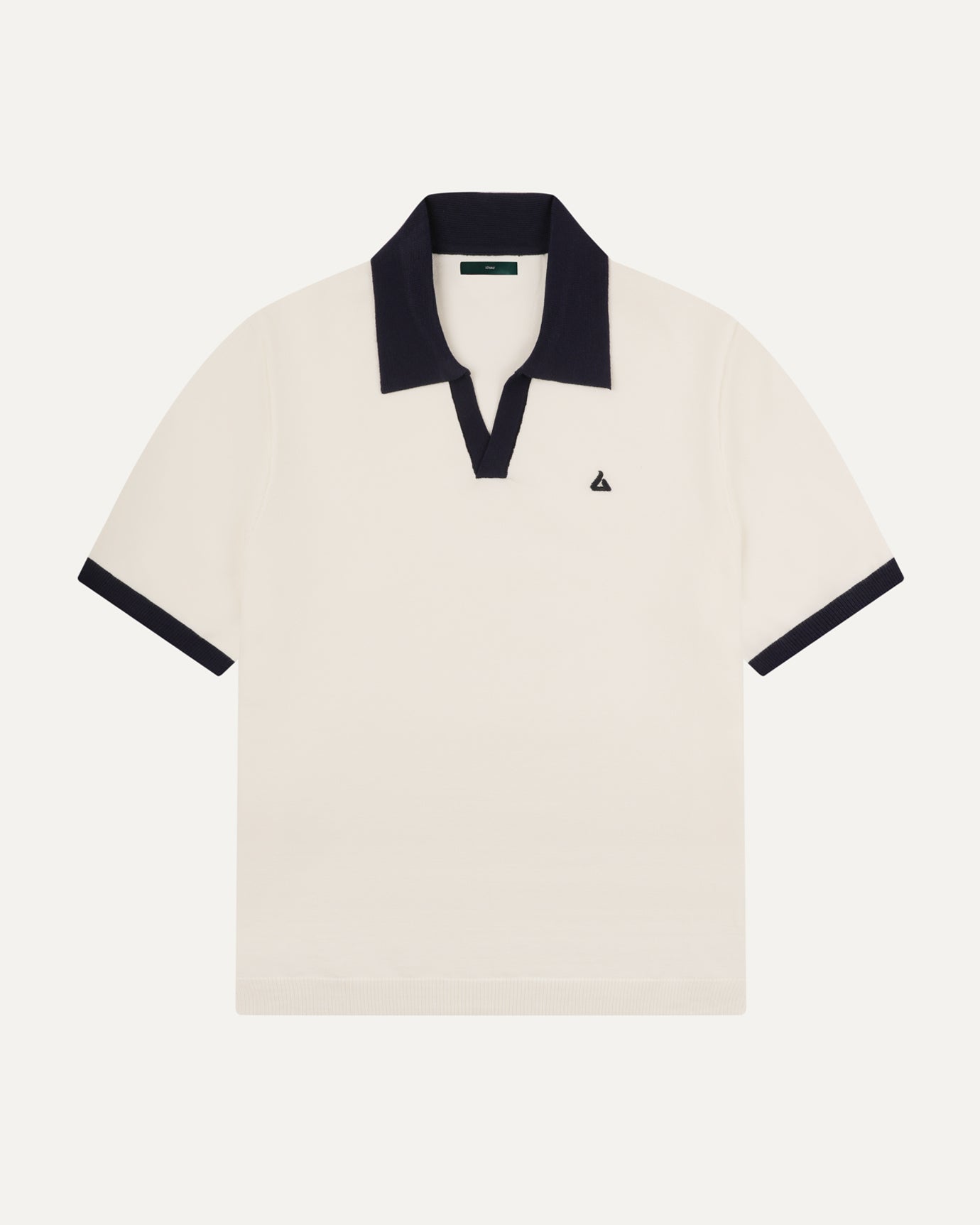
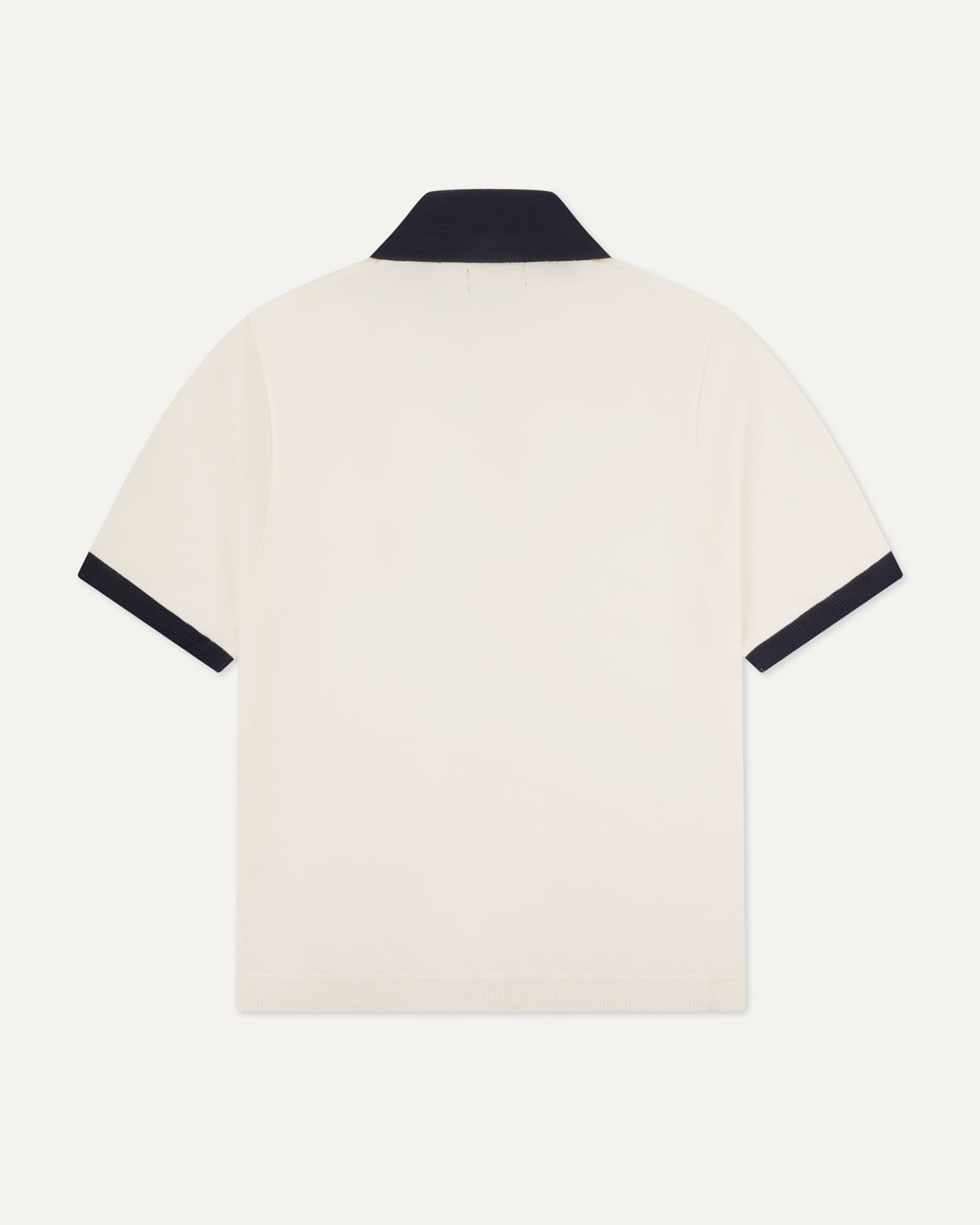
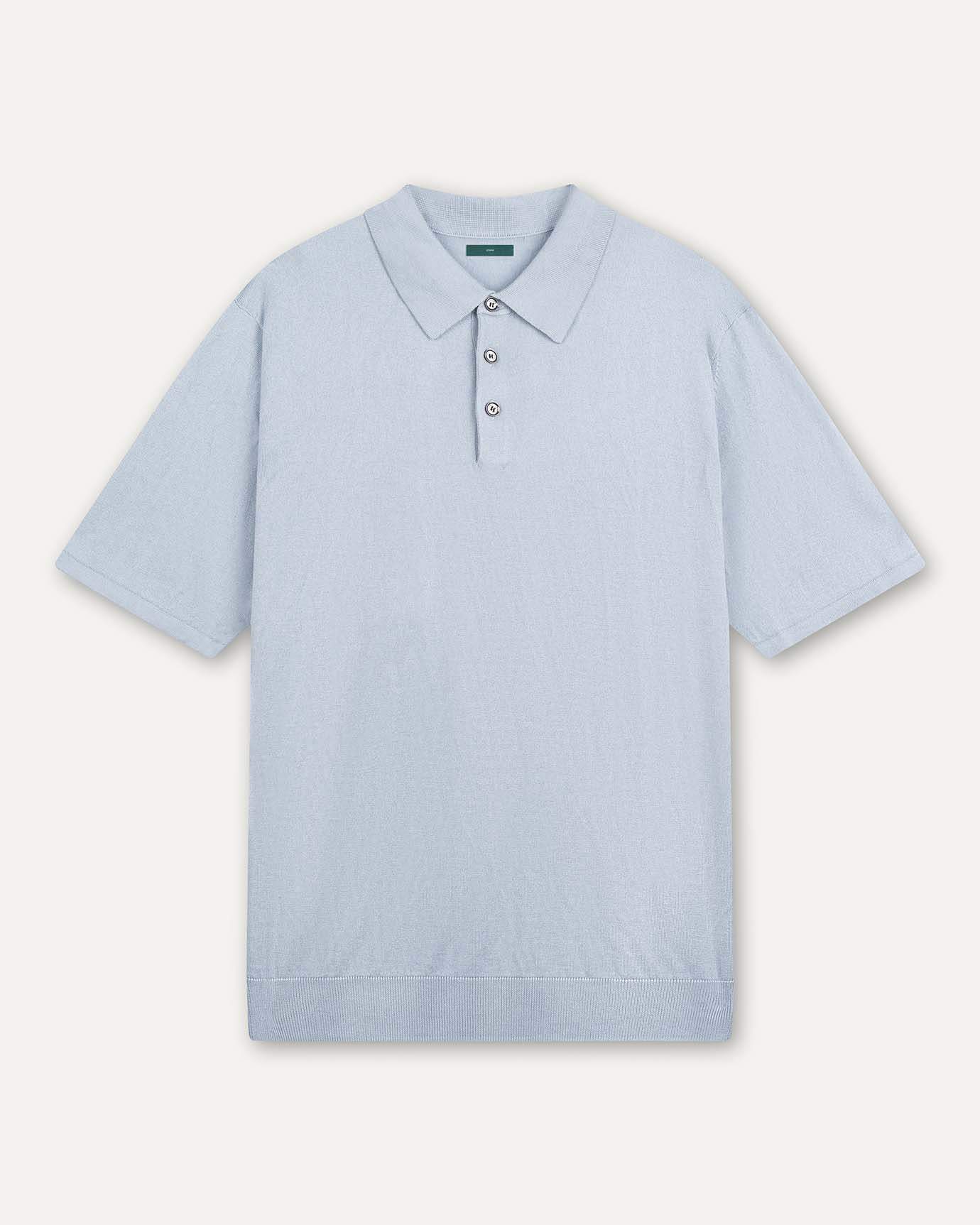
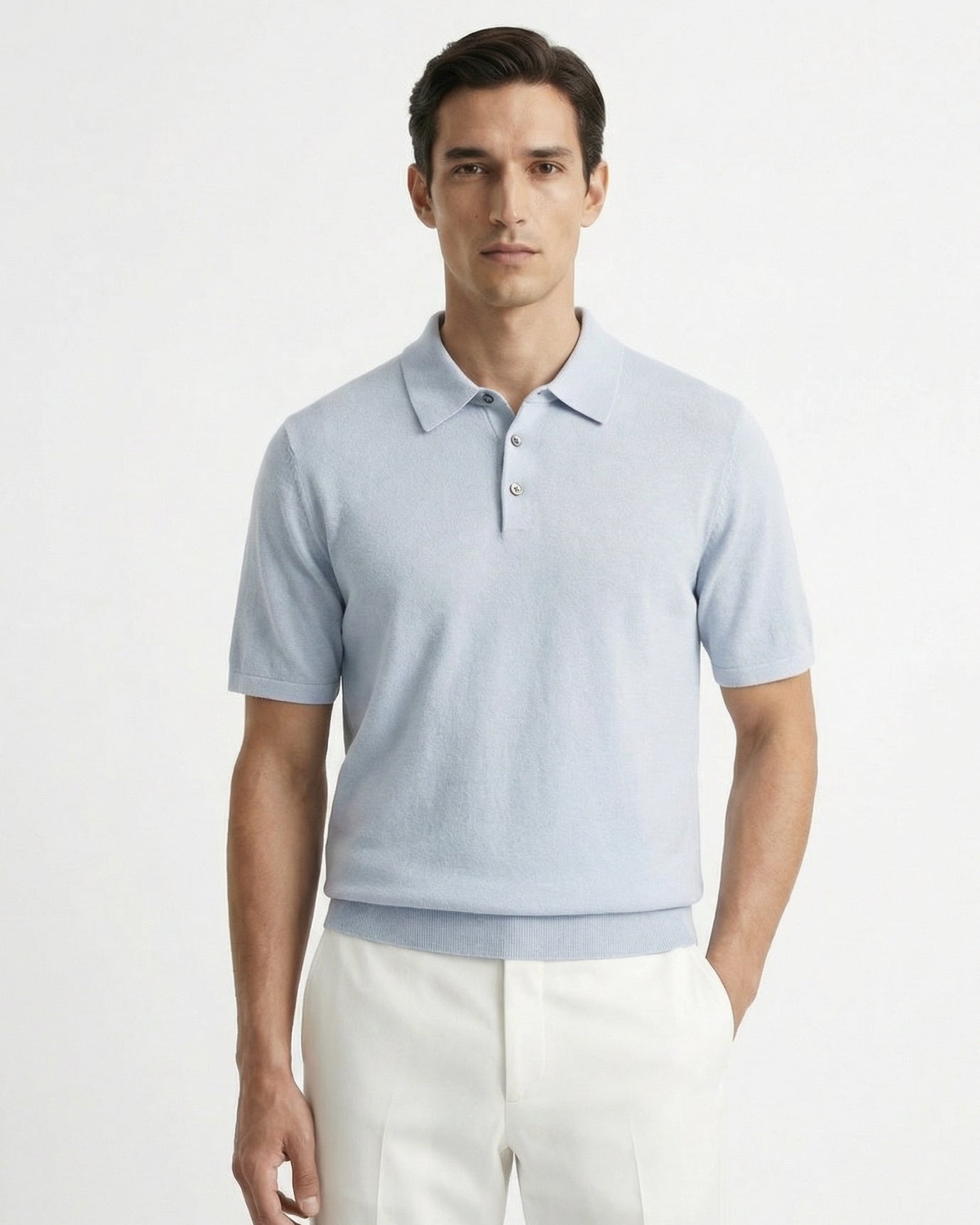
The acetate-silk blend used in the Marbella cooling polo is a practical example of this approach. Acetate is derived from cellulose and contributes drape and moisture-wicking properties, while the silk component provides the surface refinement. The result is a polo that performs in Mediterranean heat while maintaining the visual composure of a luxury fabric. Wear it with fine linen trousers or tailored shorts for a resort-appropriate look that does not require a second thought.
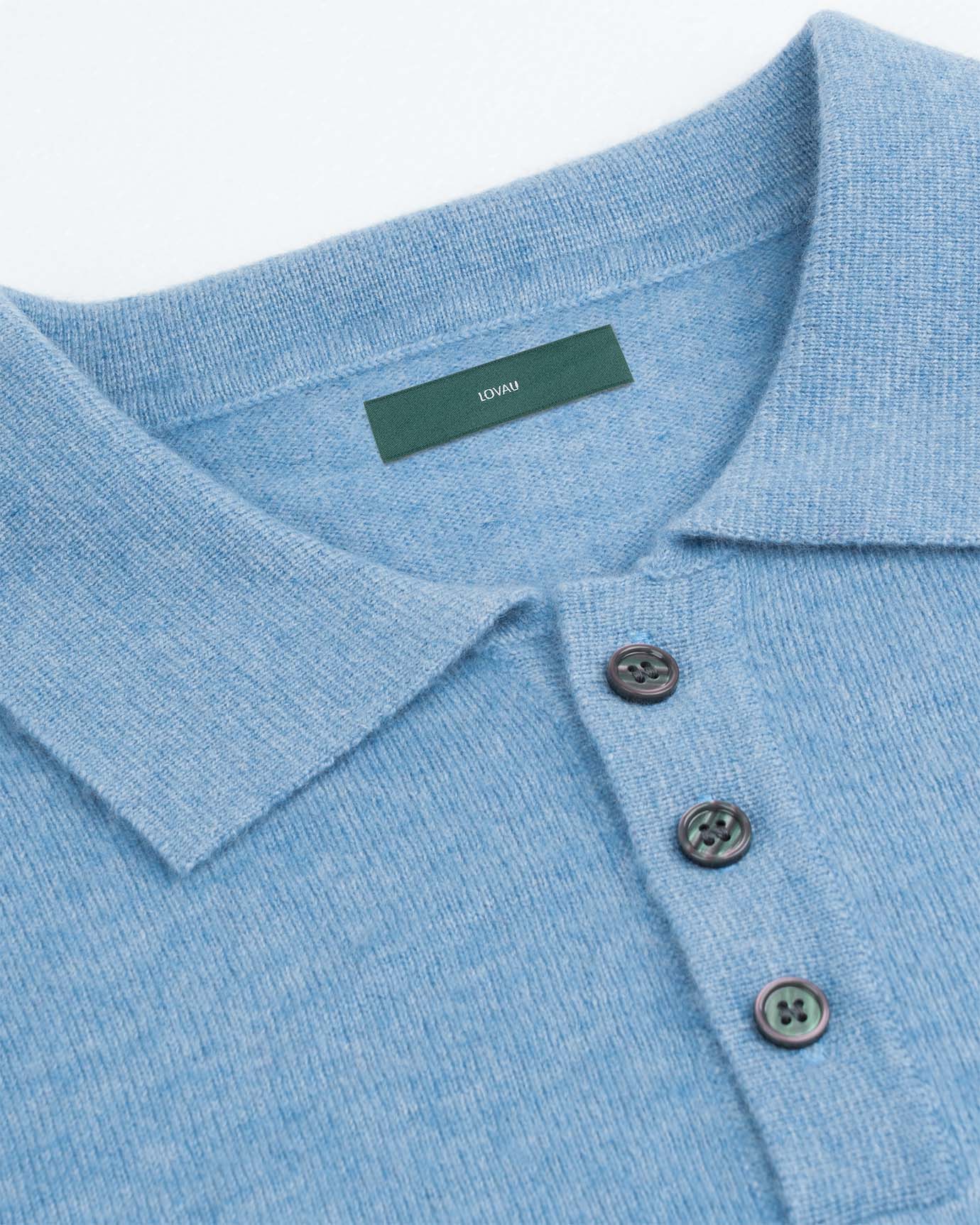
Knitted silk and silk-blend polos occupy a specific position in old money dressing: they are the correct choice when a linen shirt reads as too casual and a formal shirt reads as too stiff. The old money apricot knitted polo in a fine knit sits in this register, particularly in warm-weather neutral tones that complement a sun-tanned complexion and natural leather accessories.
Expert insightSilk blends should be hand-washed or machine-washed on a delicate cycle in cold water. Never wring. Roll the garment in a clean towel to remove excess moisture, then lay flat to dry away from direct sun.

Cotton and Its Place in the Hierarchy
Cotton is the most democratic fabric in menswear, which is precisely why its role in old money dressing is more specific than its role in everyday clothing. Not all cotton is equal. Sea Island cotton, Egyptian Giza cotton, and Supima cotton are the grades that matter here. These long-staple varieties produce a yarn that is finer, smoother, and considerably stronger than standard short-staple cotton, and the resulting fabric takes on a silky quality that is immediately apparent to the touch.
In the context of old money menswear, cotton earns its place primarily in formal shirts and structured knits. A fine two-ply poplin shirt in Egyptian cotton has a surface that photographs beautifully and presses to a crisp finish that linen, however fine, cannot replicate. For business settings and formal dinners, this is the correct choice. The classic quiet luxury wardrobe guide for work addresses this distinction in the context of professional dressing, where fabric choice communicates authority before a word is spoken.
For casual warm-weather cotton, the striped linen-cotton hybrid is worth noting. A striped V-neck linen shirt that blends linen with a small percentage of cotton achieves a softer hand than pure linen while retaining the breathability that makes linen essential in summer. The stripe is a classic old money pattern, associated with Breton sailors, Riviera clubs, and the kind of men who have been dressing well for so long that they no longer think about it.
Cotton also appears in the construction of many tailored garments as a lining or interlining fabric, where its stability and breathability support the outer cloth without adding weight. This is invisible to the eye but felt immediately in how a garment moves.
Expert insightWhen buying cotton shirts, look for two-ply construction: two fine yarns twisted together rather than one thick yarn. Two-ply fabric is stronger, smoother, and holds its colour longer through repeated washing.

Fabric Pairings and Seasonal Coordination
Understanding individual fabrics is the first step. Knowing how to combine them is what separates a considered wardrobe from a collection of individual pieces. Old money dressing has always operated on the principle of tonal coherence and textural contrast: the fabrics in an outfit should relate to each other in weight and formality, but vary enough in surface to create visual interest without effort.
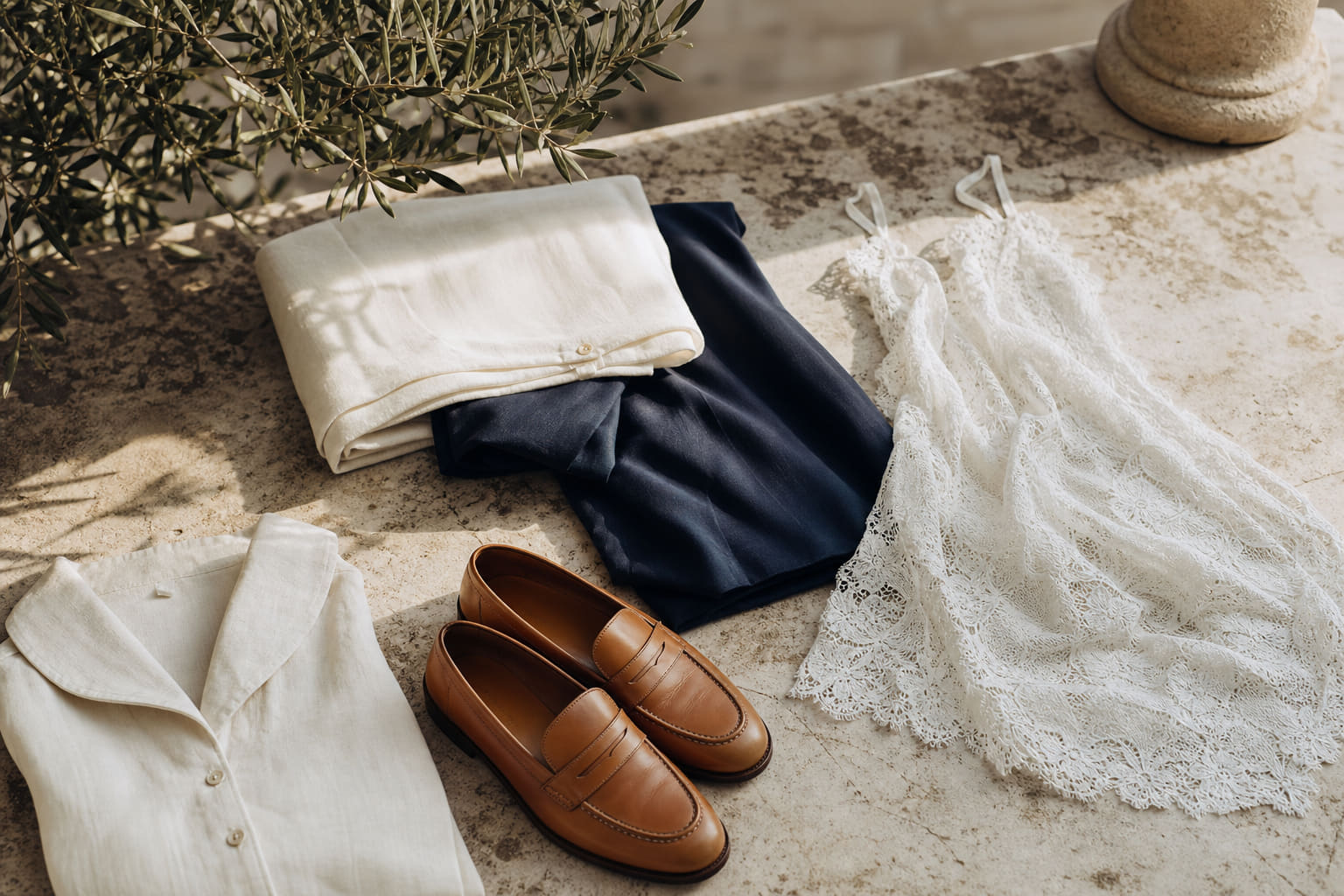
In summer, the classic pairing is fine linen on linen, shirt and trouser, in closely related tones. A high-count navy linen shirt with off-white linen trousers is the Mediterranean standard for good reason. The tonal contrast is sufficient to read as intentional, while the shared fabric weight creates a visual coherence that matching sets can sometimes miss. Add retro linen leather loafers in a cognac or natural tan and the outfit is complete without further thought.
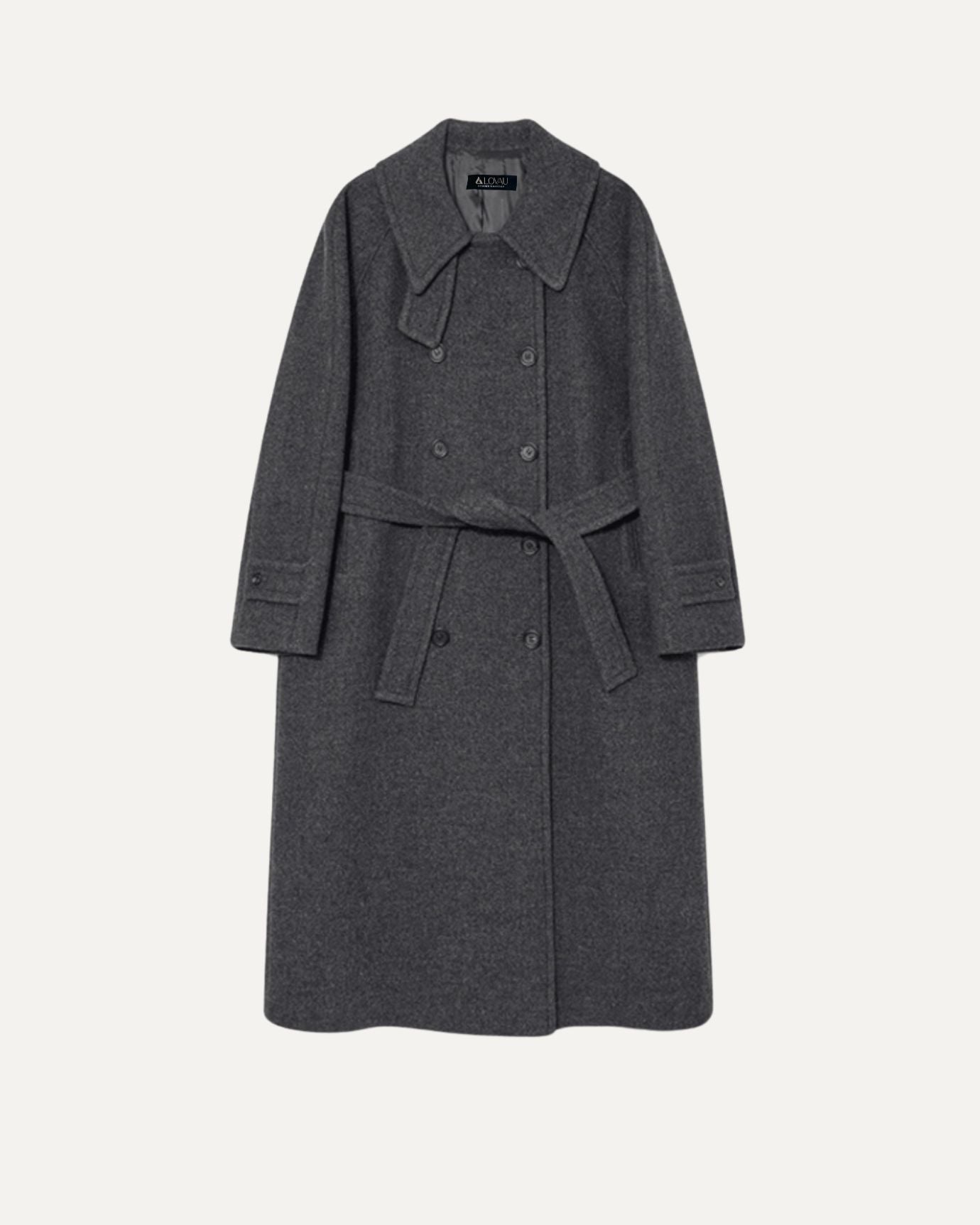
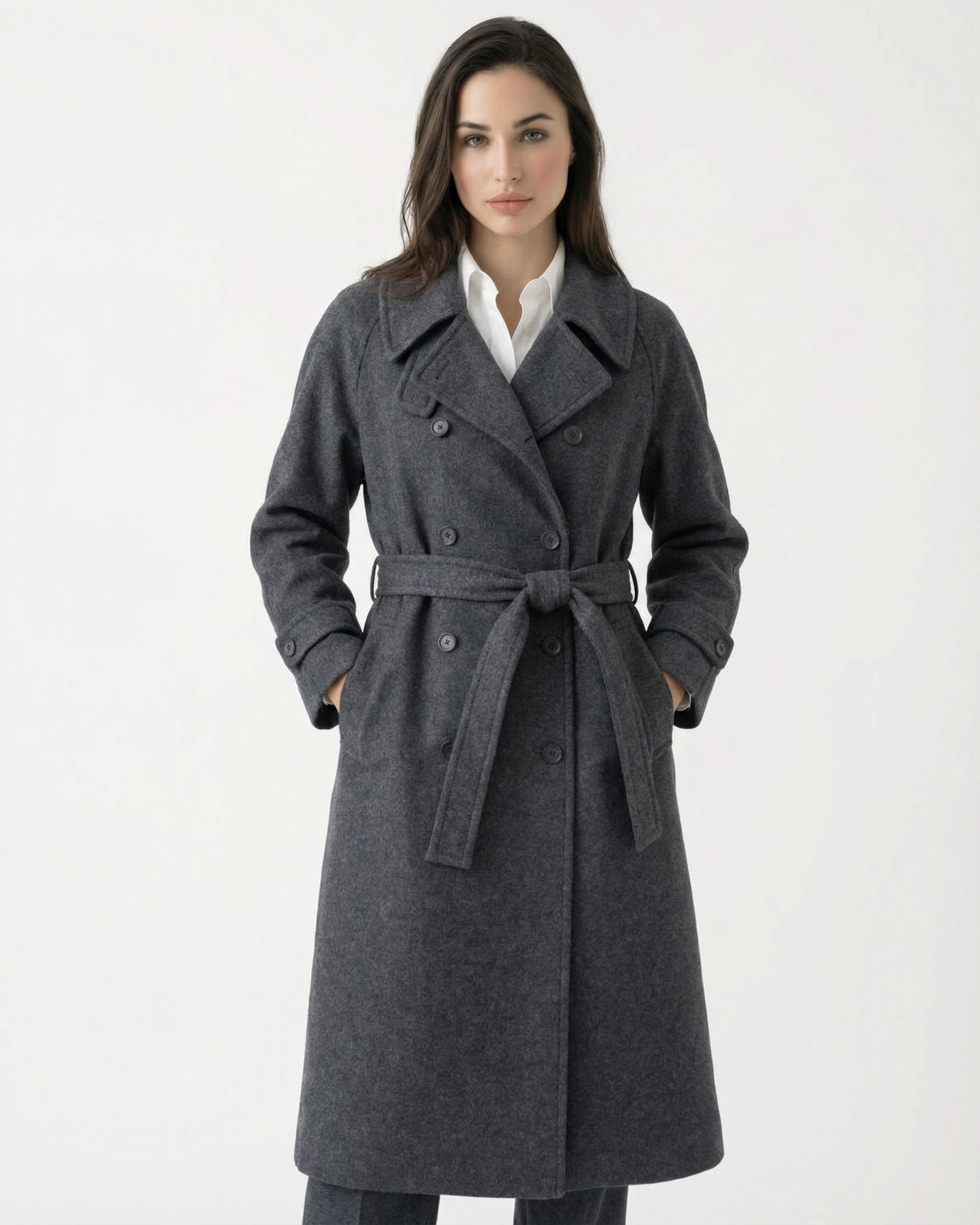
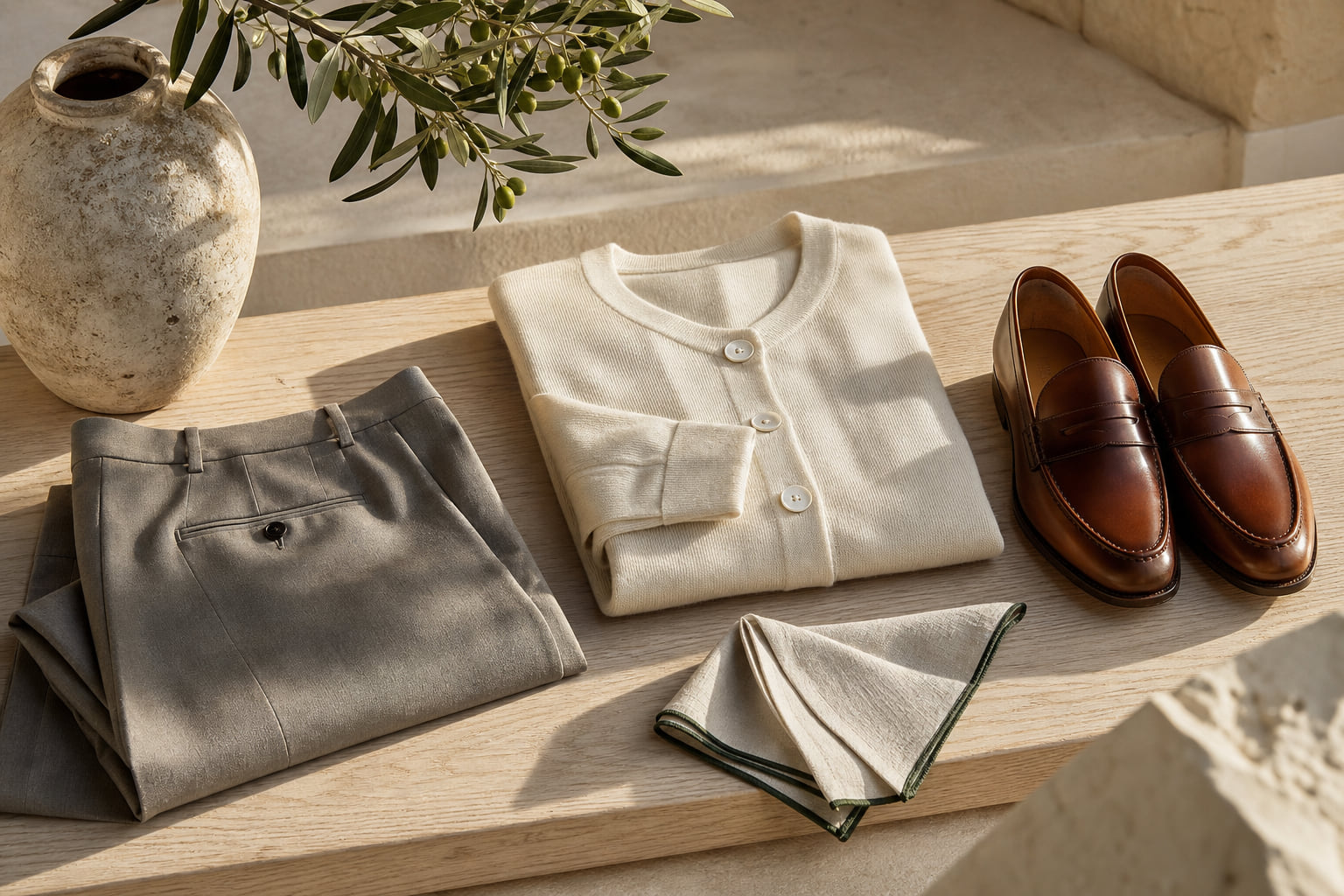
For transitional seasons, mix a fine linen shirt with a cashmere knit layer and wool-blend trousers. The linen provides breathability close to the body, the cashmere adds warmth without bulk, and the wool trouser grounds the outfit with structure. This is the formula that works from a September morning in Milan to a November afternoon in London with only the addition of an overcoat.
The old money retro set in shirt and trousers demonstrates how a matched set in a coordinated fabric can bypass the pairing question entirely. Sets in this tradition are a legitimate old money shortcut: they were worn by men who valued time and had enough taste to know that a well-designed set is never a compromise. For more pairing ideas across seasons, the modern old money style guide for everyday wear covers complete outfit construction in practical detail.
Footwear fabric also belongs in this conversation. The man footwear collection includes linen-leather constructions that match the weight and tone of summer fabrics in a way that leather-only shoes sometimes do not. Matching the formality level of your shoe material to your trouser fabric is a small detail that registers subconsciously to anyone who understands dressing.
Expert insightA reliable rule for fabric mixing: never combine more than two different fabric families in one outfit. Linen shirt with cashmere layer works. Linen shirt, cashmere layer, and silk scarf over wool trousers starts to read as confused rather than considered.

How to Assess Fabric Quality Before You Buy
The ability to assess fabric quality by hand and by eye is a skill that takes time to develop but pays dividends for decades. There are specific things to look for, and most of them require nothing more than attention.
For woven fabrics like linen, silk, and cotton, hold the cloth up to light. A tightly woven, high-quality fabric will show an even, consistent structure with no visible gaps or irregularities. A loosely woven or low-quality fabric will show uneven density and may pull easily when stretched gently along the bias. Thread count in linen and cotton is a useful but incomplete indicator: the twist of the yarn matters as much as the count. Tightly twisted yarn produces a stronger, smoother fabric that resists pilling and distortion.
For knits, including cashmere and silk blends, press the fabric between thumb and forefinger and release. A high-quality knit will spring back to its original shape immediately. A lower-quality one will remain slightly compressed or show a mark. Run your palm across the surface: fine cashmere and quality silk blends feel smooth and cool, not scratchy or warm. Any roughness in a garment described as cashmere is a sign of coarse fibre or a low-grade blend.
For the old money linen shirts at Lovau, the high-count construction is verifiable by touch: the fabric is noticeably denser and smoother than standard linen, with a drape that holds its line rather than collapsing under its own weight. This is what the difference in yarn count actually feels like in a finished garment.
Permanent Style's fabric guides, particularly their coverage of Italian and British mills, are a reliable external reference for anyone who wants to go deeper on mill-level quality assessment. Their article on fabric quality provides mill-specific context that complements the general principles here.
Finally, check construction details as a proxy for fabric quality. A manufacturer who uses high-quality fabric will almost always use high-quality construction: single-needle side seams, mother-of-pearl or corozo buttons, and clean internal finishing. These details cost more to produce, and they signal that the maker's standards extend through the entire garment, not just the shell fabric.
Expert insightWhen in doubt about a fabric's quality, smell it. Quality natural fibres, linen, cashmere, and silk, have a faint, clean, slightly earthy scent. Synthetic blends or heavily treated fabrics often have a faint chemical or plastic note that fades with washing but never entirely disappears.

| Fabric | Typical Weight (gsm) | Best Season | Formality Level | Care |
|---|---|---|---|---|
| High-Count Fine Linen | 130 to 200 | Spring, Summer | Smart casual to business casual | Machine wash cold, press damp |
| Worsted Cashmere | 280 to 380 | Autumn, Winter | Smart casual to formal | Hand wash cold, fold to store |
| Mulberry Silk Blend | 120 to 180 | Spring, Summer, Early Autumn | Smart casual to formal | Hand wash or delicate cycle, lay flat to dry |
| Long-Staple Cotton (Poplin) | 100 to 140 | Year-round | Business casual to formal | Machine wash warm, hot press |
| Wool Flannel | 300 to 400 | Autumn, Winter | Business casual to formal | Dry clean or hand wash cold |
| Linen-Cotton Blend | 150 to 220 | Spring, Summer | Casual to smart casual | Machine wash cold, low-heat press |
Frequently asked questions
What is the most important fabric for an old money wardrobe?
Fine linen is the single most versatile fabric in old money menswear, particularly for warm climates and Mediterranean-style dressing. High-count linen in neutral tones, worn as a shirt or trouser, covers the majority of casual and smart-casual occasions. For cooler months, worsted cashmere takes that position. If you are building from zero, start with fine linen shirts and add cashmere once the summer wardrobe is established.
How do I tell the difference between high-count and standard linen?
Hold the fabric up to light. High-count linen shows a tight, even weave with minimal visible gaps. Standard linen looks more open and irregular. By touch, high-count linen feels smoother and denser, more like a fine cotton than the rough texture most people associate with the material. It also creases less severely and recovers more quickly when worn.
Is cashmere appropriate for warm weather?
Lightweight cashmere, around 180 to 220 grams per square metre, works well in spring and early autumn as a layer. For genuine summer heat, silk blends are the more appropriate choice. The mulberry silk and worsted cashmere set is an example of a blend that extends cashmere into transitional seasons without the weight of a full winter knit.
Can I build a complete old money wardrobe on a limited budget?
Yes, with prioritisation. Spend the most on the garments that touch skin and are worn most frequently: shirts and trousers. A single high-quality fine linen shirt worn twice a week will outlast three cheap ones and always look better. The best sellers collection is a practical starting point for identifying the highest-impact pieces at accessible price points.
Fabric knowledge is not a specialist interest reserved for tailors and textile historians. It is the most practical skill a man can develop in relation to his wardrobe, because it determines every decision that follows: what to buy, how to care for it, how long it will last, and how it will read on the body over years rather than seasons. Start with fine linen and worsted cashmere, learn to assess quality by touch, and build outward from there. For a complete framework that puts these fabrics into a working wardrobe system, the luxury minimalist wardrobe checklist for modern style is the logical next step.