


How to Spot Fake Luxury Clothing in 2026
Reading time 16 min • 3115 words
The counterfeit clothing market passed $500 billion in estimated annual value before 2025, and the sophistication of fakes has risen sharply. A photograph on a resale platform or a product listing can no longer tell you what a garment actually is. The fabric weight, the stitching consistency, the way leather responds to pressure, these are things a camera cannot convey and a counterfeiter cannot fake cheaply.
This guide is written for anyone who buys clothing with real intention: people who want to invest in pieces that last, that age with dignity, and that feel as good in ten years as they do today. The tests and details here apply whether you are buying from a boutique, a resale site, or directly from a brand you have not bought from before.
At Lovau, we work with genuine materials because the alternative is simply not interesting to us. High-count linen, full-grain cowhide leather, suede with real nap depth: these materials have specific, learnable physical properties. Once you know them, a fake becomes obvious within thirty seconds of handling.
Key takeaways
- Rub the fabric between your fingers: genuine high-thread-count linen warms slowly and feels smooth, not scratchy or plasticky.
- Check stitching density: authentic luxury garments run 8 to 12 stitches per centimetre, evenly spaced, with no skipped threads.
- Press your thumbnail into leather: real full-grain leather shows a slight crease and returns slowly; bonded leather or PU wrinkles and stays.
- Smell the garment: genuine leather has a faint, earthy, slightly mineral scent; synthetic substitutes smell chemical or odourless.
- Inspect the lining and interior labels: counterfeiters cut corners inside the garment first, where buyers rarely look at the point of purchase.
In this guide
- Start with the Fabric: What Genuine Textiles Actually Feel Like
- Stitching and Construction: Where Fakes Always Cut Corners
- Leather and Suede: The Physical Tests That Cannot Be Faked Cheaply
- Hardware, Labels, and the Interior Details Counterfeiters Ignore
- Fit, Proportion, and the Geometry of a Well-Made Garment
- Where to Buy and What to Ask Before You Purchase
- Frequently asked questions
Start with the Fabric: What Genuine Textiles Actually Feel Like
The single fastest way to identify a counterfeit luxury garment is to handle the fabric before anything else. Genuine materials have physical properties that are expensive to replicate.
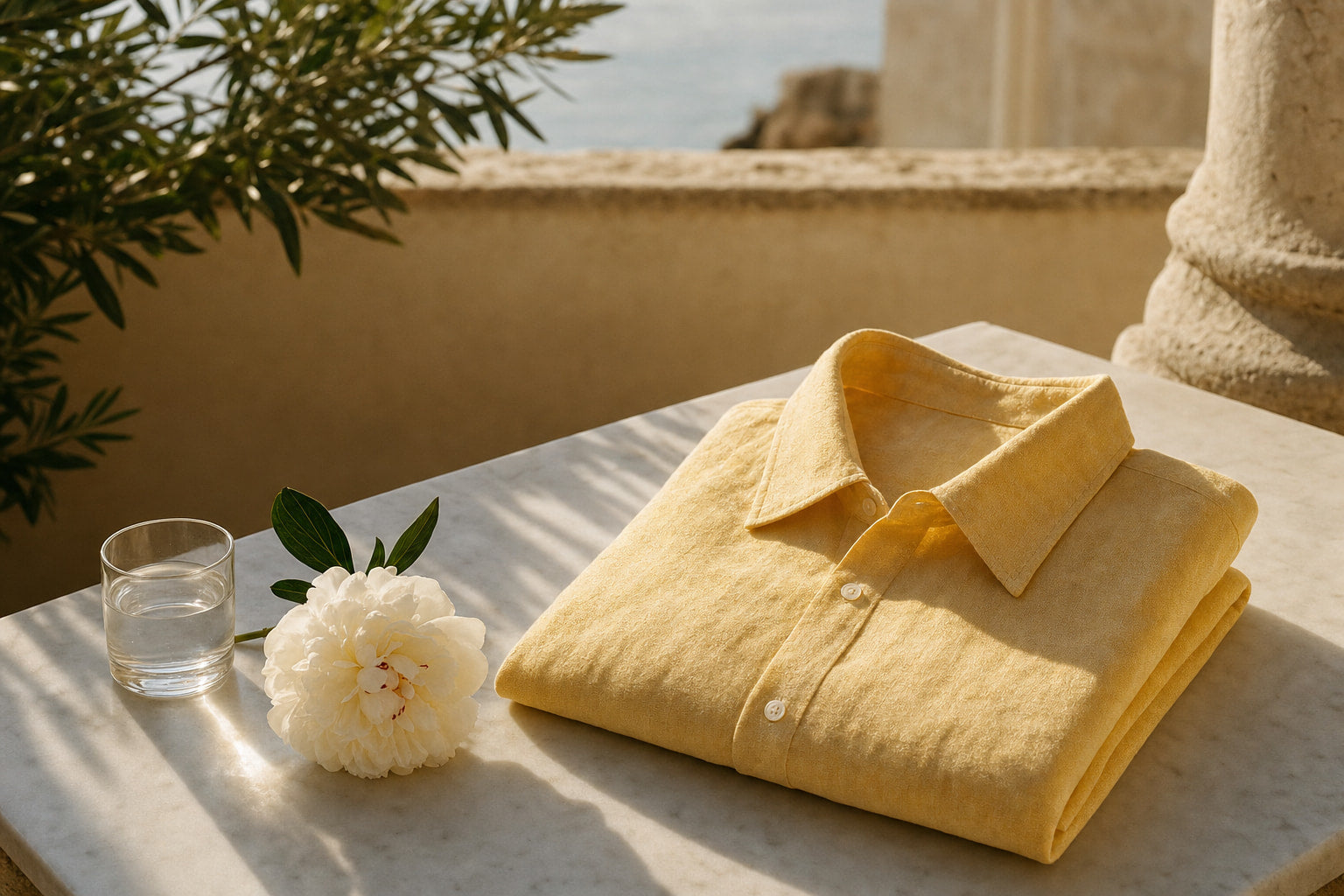
High-count linen is the clearest example. A real high-thread-count linen shirt, woven tightly from long-staple flax fibres, feels cool and smooth against the hand. It does not scratch. When you scrunch a section in your fist and release it, the creases are soft and shallow, not sharp and permanent. Cheap linen blends or linen-look polyester feel either stiff and papery or slippery, and they crease in hard, angular lines that do not relax.
Our high-count fine linen shirt in light blue is a useful reference point: 129 grams per square metre of tightly woven Irish-influenced linen construction, with a drape that holds its shape without stiffness. Hold it up to light. The weave should be consistent, with no thin patches or irregular gaps.
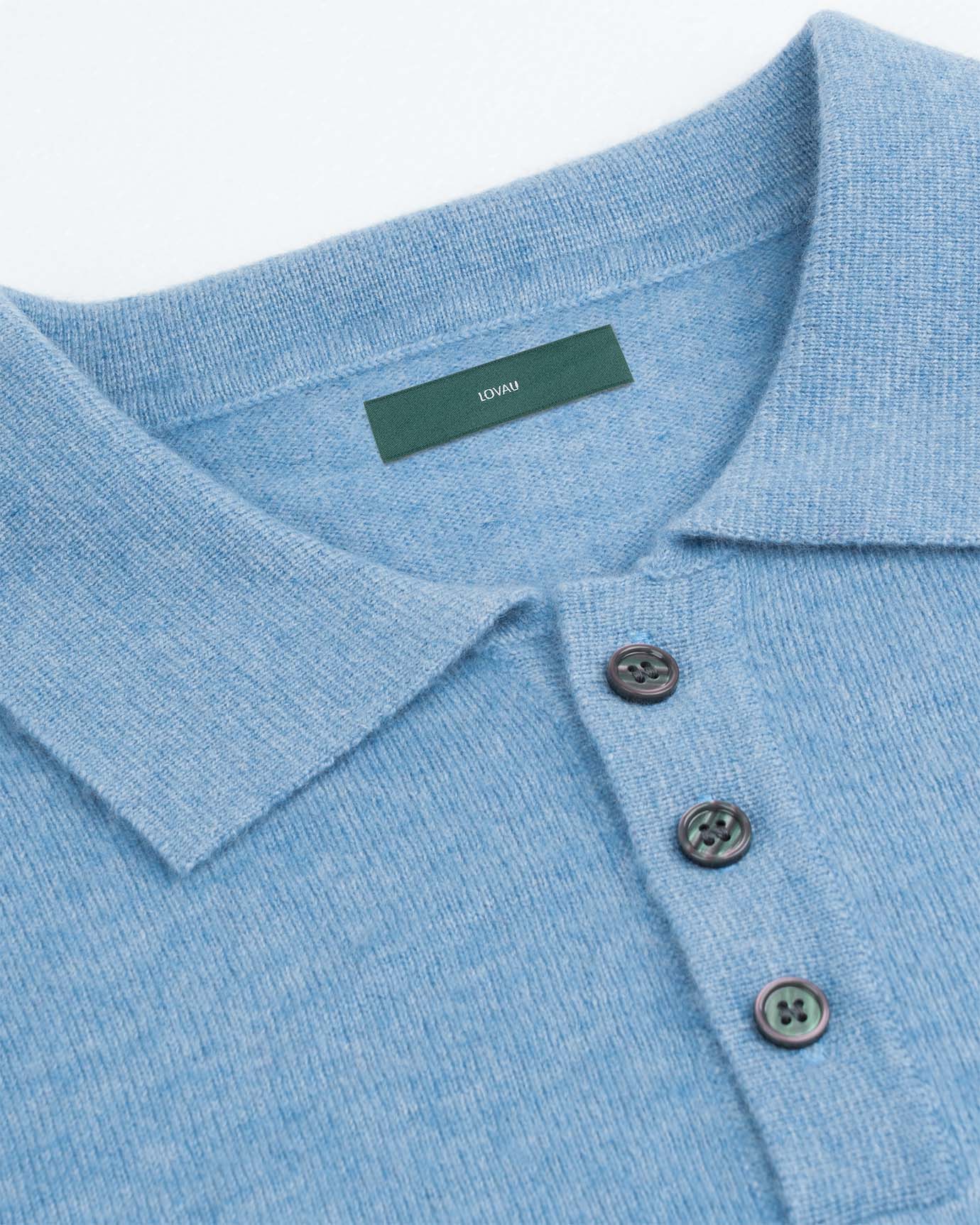
Wool and cashmere fakes are identified similarly. Genuine cashmere pills minimally and returns to shape after stretching. Acrylic labelled as cashmere pills immediately and stays deformed. Rub a small section vigorously between your palms for ten seconds. Acrylic generates static and small fibre balls within seconds. Real cashmere stays smooth.
Silk has a specific weight and a cool, slightly resistant hand. Polyester satin, the most common fake, feels lighter and warms to your body temperature almost instantly. The Wikipedia article on silk production explains the fibre structure that gives genuine silk its density and lustre, details that are useful context when assessing a garment.
For a broader reference on what to expect from genuine materials across a full wardrobe, the complete luxury clothing buying guide covers fabric grades in useful depth.
Expert insightA simple burn test works on small loose threads pulled from an interior seam: genuine linen and cotton burn cleanly and smell like paper; polyester melts, beads, and smells chemical. Never do this to the garment itself, only a pulled thread from a hidden seam allowance.

Stitching and Construction: Where Fakes Always Cut Corners
After fabric, construction is the most reliable indicator of authenticity. Luxury garments are sewn with precision that takes time and skilled labour, two things counterfeit operations minimise aggressively.
Stitch count is measurable. Count the stitches along one centimetre of a seam. Genuine luxury garments typically run 8 to 12 stitches per centimetre. Below 6 stitches per centimetre suggests budget manufacturing. The stitches should be even in length and tension, with no loops pulling loose on either side of the fabric.
Seam finishing tells you a great deal. Turn the garment inside out. On a genuine piece, interior seams are finished cleanly: French seams, flat-felled seams, or bound edges with consistent width. On a fake, you will often find raw edges that fray, uneven serging, or glued seams that feel stiff and crack when flexed.
Pattern matching is another reliable test. On a checked or striped garment, the pattern should align at every seam junction: the chest pocket should match the front panel, the sleeve should meet the shoulder seam cleanly. This requires cutting fabric with care and costs time. Most counterfeiters skip it entirely.
Buttons and buttonholes deserve close attention. On quality shirts, buttonholes are bar-tacked at both ends and cut cleanly, with no loose threads. Buttons on genuine garments are typically sewn with a shank thread that allows the button to sit away from the fabric slightly, so the buttonhole fabric is not strained when fastened. Press a button flat: if it sits flush with no thread shank, the construction is low-grade.
Our high-count fine white linen shirt uses mother-of-pearl buttons sewn with a proper thread shank, a detail visible immediately when you compare it to a synthetic shell button sewn flat. These are the kinds of construction specifics covered in our timeless luxury clothing buying guide.
Expert insightPull gently at a seam junction, where two or three seams meet. On a genuine garment, the junction holds firmly and the fabric around it does not pucker. On a fake, you will often feel the seam allowance giving way or see the fabric distort immediately.

Leather and Suede: The Physical Tests That Cannot Be Faked Cheaply
Genuine leather is one of the most counterfeited materials in fashion, and also one of the easiest to test if you know what to do.
The thumbnail test: press your thumbnail firmly into the leather for two seconds, then release. Full-grain leather shows a faint impression that fades within five to ten seconds as the fibres recover. Bonded leather, the most common substitute, either shows a permanent crease or the surface coating cracks visibly. PU synthetic shows no impression at all and feels slightly hollow when pressed.
The smell test: genuine leather has a distinctive earthy, slightly mineral scent that comes from the tanning process. It is not strong, but it is present and specific. Synthetic materials either smell of nothing or carry a faint plastic or solvent odour, especially when the shoe or garment is new.
The edge finish: look at the edges of a leather sole or a leather bag strap. Genuine leather edges are either burnished smooth, painted with edge coat, or left as a clean natural edge. Bonded leather edges look compressed and sometimes show layers, like cardboard, because that is essentially what the material is: leather scraps bonded with polyurethane and pressed.
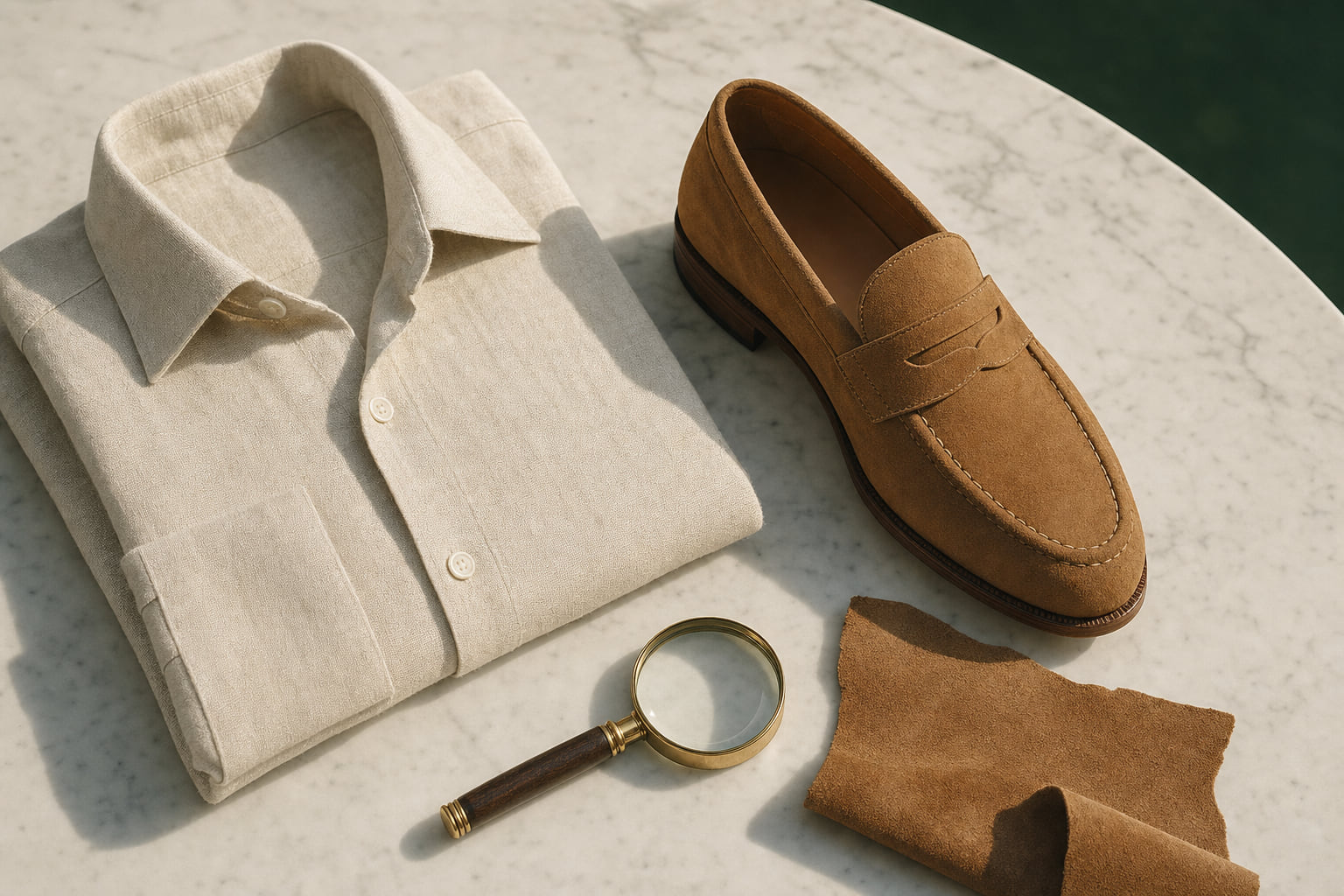
Suede depth: genuine suede has a nap that catches light differently depending on the direction you brush it. Run your finger across the surface: the colour should shift slightly, lighter when you brush against the nap, darker with it. Synthetic suede has a flat, consistent colour regardless of direction, and the fibres feel shorter and more uniform.
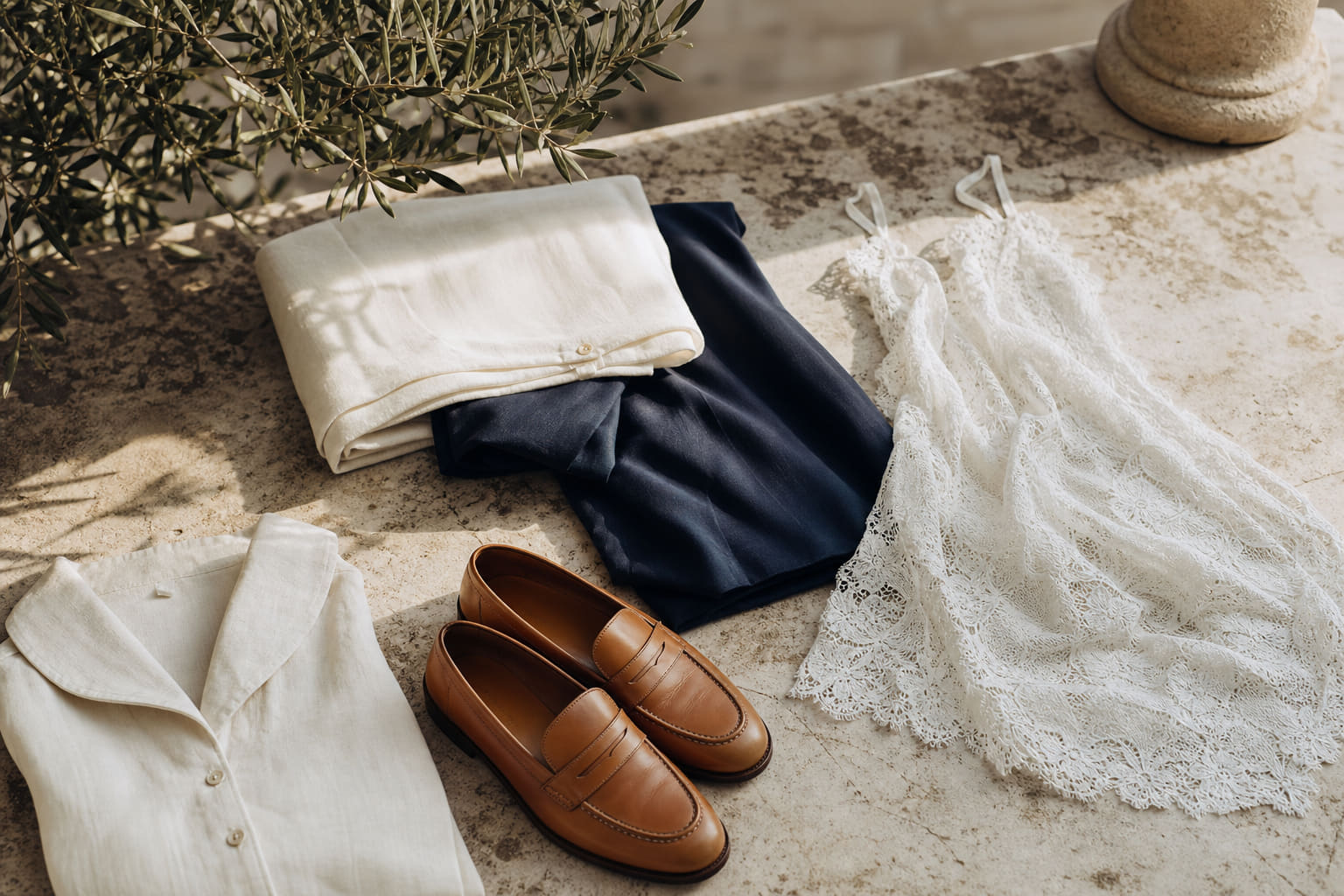
Our Florence light brown suede genuine leather cowhide shoes and the Mykonos camel slip-on suede loafers both use full cowhide construction, which you can verify immediately by the weight of the sole and the depth of the suede nap. For women, the Franziska old money genuine leather loafers offer the same material standard with a velvet lining that is another quick authenticity indicator: real velvet has a pile depth you can see and feel, not a printed pattern pretending to be pile.
For more on building a wardrobe around genuine materials at considered price points, see our affordable luxury clothing buying guide.
Expert insightWeight is a reliable proxy for material quality in leather shoes. Pick up the shoe: genuine leather soles and full-grain uppers add meaningful weight. A shoe that feels hollow or surprisingly light for its size almost always has synthetic construction, regardless of what the label says.

Hardware, Labels, and the Interior Details Counterfeiters Ignore
The interior of a garment is where authentication becomes straightforward, because counterfeiters consistently underinvest in details the buyer does not see at the point of purchase.
Hardware on bags, shoes, and outerwear should feel solid and have a specific weight. Genuine brass or zinc alloy hardware has a density that cheap pot metal does not. Press the zipper pull between your fingers: it should feel cool, dense, and smooth. Stamped logos on hardware should be crisp and even, not soft or slightly blurred at the edges.
Interior labels on genuine luxury garments carry specific information: fibre content by percentage, country of manufacture, care instructions that match the stated fabric, and often a lot number or production code. On counterfeits, labels are frequently misprinted, slightly off in font weight, or carry information that contradicts itself (a label claiming 100% cashmere on a fabric that clearly behaves like acrylic, for instance).
Lining quality is a fast tell. Genuine luxury garments use linings that breathe and move: cupro, silk, or high-count acetate. Cheap polyester lining generates static, clings to clothing underneath, and makes the garment uncomfortable to wear for more than an hour. Pull the lining away from the shell fabric and let it fall back. Good lining falls cleanly. Cheap lining sticks.
The care label language matters too. Authentic European luxury goods manufactured for international markets carry care instructions in multiple languages, consistently formatted. A label with only one language, or with instructions that do not correspond to the fabric (machine wash instructions on a garment claiming to be 100% silk, for example), is a flag worth taking seriously.
For a structured approach to evaluating pieces before purchase, our essential luxury clothing buying guide walks through the full decision framework.

Fit, Proportion, and the Geometry of a Well-Made Garment
Beyond material and construction, genuine luxury clothing is cut with an understanding of the body that cheap manufacturing does not bother to develop. Fit is not just comfort: it is evidence of investment in pattern-making.
Shoulder seams on a genuine shirt or jacket sit at the exact point where the shoulder ends and the arm begins. On a fake or budget piece, the seam typically falls 1 to 2 centimetres down the upper arm, because a single pattern is used across multiple sizes without proper grading. This makes the sleeve look dropped and the chest look wide regardless of the garment size.
Collar construction on a genuine linen shirt includes interlining that holds the collar shape without stiffness. The collar points should lie flat against the chest without curling. Fused interlinings, common in cheaper manufacturing, create a collar that feels stiff when new and bubbles away from the fabric after washing.
Trouser seat and rise are where cheap construction is most obvious. A genuine pair of trousers has a curved seat seam that follows the body's actual geometry. Budget and counterfeit trousers often use a straight seam, which creates pulling across the seat and a dropped crotch that cannot be corrected by tailoring.
Sleeve pitch is a detail most buyers never consciously notice but immediately feel. On a well-made jacket or shirt, the sleeve hangs slightly forward from the shoulder seam, matching the natural resting position of the arm. On a poorly made garment, the sleeve pulls backward, creating a diagonal tension line across the upper arm when the arm hangs naturally.
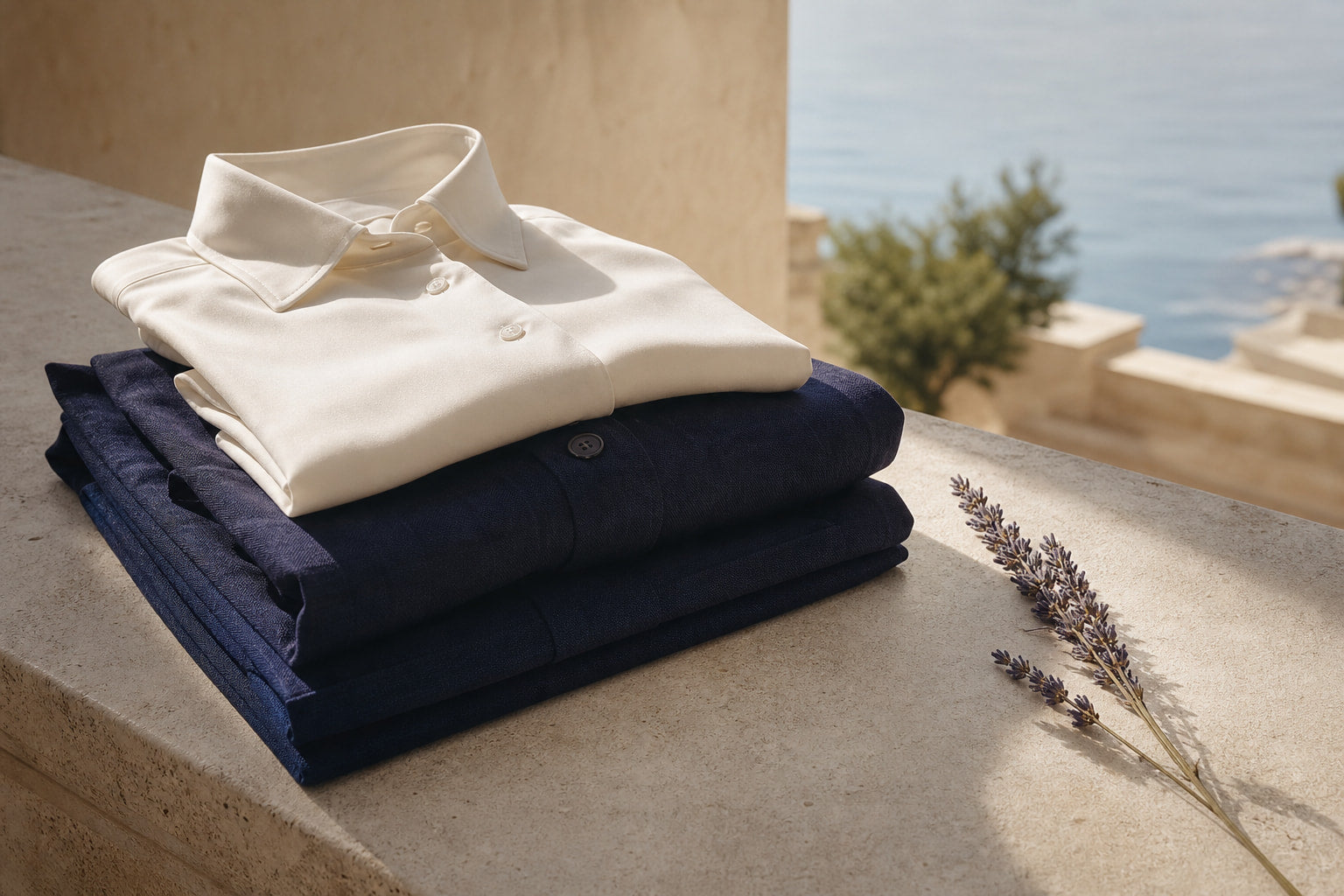
These proportional standards are part of what our old money style guides discuss in the context of building a wardrobe with genuine longevity. The high-count fine navy blue linen shirt is a practical example: the collar interlining, the sleeve pitch, and the placket width are all cut to proportions that hold across multiple wearings and washings without distortion.
Business of Fashion has documented how pattern-making investment separates genuine luxury from mass production, noting that the cost difference between a properly graded pattern and a single-size template can exceed the entire fabric budget of a fast-fashion garment.

Where to Buy and What to Ask Before You Purchase
Knowing how to evaluate a garment is most useful when you apply it before purchase, not after. A few practical habits make a significant difference.
Request fabric composition certificates from any seller who claims a specific material. Genuine luxury brands can provide these. A seller who cannot or will not provide fibre content documentation on a garment claiming to be 100% linen or 100% cashmere is a seller worth walking away from.
Buy from brands that manufacture transparently. This does not mean the cheapest option or the most expensive. It means brands that can tell you where the fabric was woven, where the garment was cut, and what construction method was used. Vague answers to specific questions are information in themselves.
Examine the price relative to the claimed materials. A shirt claiming to be 100% high-count linen for $29 is not a bargain. High-count linen fabric costs more than that per metre at wholesale. The arithmetic of genuine materials sets a floor below which authenticity is not possible, regardless of what the label says.
Use resale platforms with authentication services when buying secondhand. Several major platforms now offer physical inspection by trained authenticators. This is particularly valuable for leather goods and outerwear, where the investment is higher and the counterfeiting more sophisticated.
Trust your hands more than your eyes. Photography, even poor photography, can be colour-corrected and styled. The weight, temperature, texture, and smell of a genuine material cannot be faked in a photograph. If you cannot handle the garment before purchase, request a detailed video showing the fabric in motion, the interior seams, and the hardware up close.
Our mercerized clothing collection and our full range of genuine leather shoes, including the Milano brown loafers in genuine leather and the Positano cream white loafers, come with full material documentation and construction details available on request. That transparency is not a marketing position. It is simply what buying genuine materials requires.

| Material | Genuine Version | Common Fake | Touch Test | Durability Tell |
|---|---|---|---|---|
| Linen | Long-staple flax, tightly woven, smooth hand | Polyester-linen blend or 100% polyester | Warms slowly, soft creases, breathes | Fake wrinkles sharply and retains creases permanently |
| Leather (full-grain) | Full cowhide, natural grain pattern, earthy scent | Bonded leather or PU synthetic | Thumbnail impression fades in 5-10 seconds | Fake cracks or peels at flex points within months |
| Suede | Split cowhide or lambskin, directional nap | Microfibre synthetic suede | Nap shifts colour with brush direction | Fake nap mats flat permanently after light moisture |
| Cashmere | Two-ply or higher, soft, minimal pilling initially | Acrylic or cashmere-acrylic blend | Warms slowly, returns to shape after stretch | Fake pills heavily after first wear and stays deformed |
| Silk | Mulberry silk, cool and slightly weighty | Polyester satin | Stays cool against skin, slight resistance | Fake warms to body temperature instantly, clings |
| Hardware (brass) | Dense, cool, crisp stamped logo | Pot metal or zinc alloy with plating | Heavy for size, smooth under pressure | Fake plating wears through at contact points within weeks |
Frequently asked questions
Can I identify fake luxury clothing from photographs alone?
Rarely with confidence. Photography can be styled and colour-corrected to hide material flaws. You can sometimes spot misaligned patterns, blurred logo stitching, or inconsistent hardware finish in high-resolution images, but the most reliable tests require physical handling. If buying online, request a detailed video showing interior seams, the care label, and the fabric in motion.
What is the most reliable single test for genuine leather?
The thumbnail press test combined with the smell test gives you a clear answer within thirty seconds. Press your thumbnail into the leather firmly for two seconds and release: genuine full-grain leather shows a faint impression that fades as the fibres recover. Then smell the surface: real leather has a faint earthy, mineral scent from tanning. If you want to build a reference point, our Florence suede genuine leather cowhide shoes are a reliable baseline for what authentic cowhide construction feels and smells like.
Are higher price tags a reliable indicator of genuine materials?
No, but material costs set a logical floor. Genuine high-count linen, full-grain leather, and real cashmere have wholesale costs that make very low retail prices arithmetically impossible if the materials are real. A claimed cashmere sweater at $40 retail cannot contain genuine cashmere. Above a certain price point, however, price alone proves nothing: some expensive garments use inferior materials with large margins, and some counterfeits are priced deliberately high to seem credible.
How do I check if a linen shirt is genuinely high-count linen?
Hold the fabric up to natural light and examine the weave. Genuine high-count linen has a consistent, tight weave with no thin patches or visible gaps. Scrunch a section in your fist and release it: real high-count linen creases softly and the creases relax. Then rub the fabric between your fingers: it should feel smooth and cool, not scratchy or plasticky. Our high-count fine black linen shirt is a practical example of what this construction looks and feels like in person.
Spotting fake luxury clothing in 2026 is not about brand knowledge or price intuition. It is about knowing what genuine materials do physically: how they feel under pressure, how they crease, how they smell, how they are sewn. These are learnable, testable, concrete skills. Build your reference points by handling genuine pieces, read the construction details on garments you already own, and apply those standards consistently before you buy. For a structured approach to building a wardrobe on these principles, our stylish luxury clothing buying guide covers the full decision framework from fabric selection through to long-term care.