


Best Handbags for a Quiet Luxury Look in 2026
Reading time 13 min • 2626 words
There is a particular kind of bag that never announces itself. It sits on the table at lunch and nobody can quite place it, but everyone notices it. That is the point. Quiet luxury in handbags is not about spending less or more, it is about redirecting all that money and attention away from a logo and into the object itself: the weight of the leather, the precision of the gusset, the way the strap lies flat against the shoulder.
In 2026, the appetite for logo-free bags has moved well past trend territory. It reflects a genuine shift in how women want to present themselves, choosing to be read through comportment and taste rather than brand signalling. The houses and independent ateliers responding to this are producing some of the most considered bag design in decades.
This guide covers the silhouettes, materials, and specific styles worth investing in this year, alongside honest advice on how to wear them. If you are building a wardrobe around a timeless, considered aesthetic, the bag is rarely where to compromise.
Key takeaways
- Prioritise construction and leather quality over brand recognition: full-grain calf leather and tight stitching are the real signals of quality.
- The structured tote, the half-moon shoulder bag, and the box clutch are the three silhouettes with the longest style longevity.
- Neutral tones, camel, ivory, chocolate, and navy, carry across seasons and require no wardrobe rethinking each year.
- Hardware finish matters: brushed gold or aged brass reads quieter and more expensive than high-polish silver.
- A quiet luxury bag should work for both a morning meeting and an evening terrace dinner without changing the bag.
In this guide
- What Actually Defines a Quiet Luxury Handbag
- The Four Silhouettes Worth Owning in 2026
- The Colour Palette That Reads Expensive Without Trying
- How to Wear a Quiet Luxury Bag: Outfit Pairings That Work
- Price Tiers and Where to Invest: What the Market Looks Like in 2026
- Care and Longevity: Making a Quiet Luxury Bag Last a Decade
- Frequently asked questions
What Actually Defines a Quiet Luxury Handbag
The term gets used loosely, so it is worth being precise. A quiet luxury handbag has no external logo embossing, no monogram canvas, and no hardware branded with a house name. What it does have is structural integrity: a defined silhouette that holds its shape over years, not seasons, leather that develops a patina rather than peeling, and lining finished as carefully as the exterior.
Full-grain calf leather is the material benchmark. It is the outermost layer of the hide, left intact, and it shows natural grain variation, which is a sign of quality rather than inconsistency. Anything described as 'genuine leather' or 'bonded leather' is a composite and will not age the same way. Saffiano leather, the cross-hatched finish associated with understated Italian luxury, is a practical alternative: scratch-resistant, structured, and available across a wide price range.
Hardware is where many bags fail the quiet luxury test even when the leather is right. Polished gold-tone hardware with a brand name stamped into the clasp undermines the whole project. Look instead for brushed gold, aged brass, or oxidised silver with clean geometric closures: turn-locks, press-studs, or simple magnetic clasps with no engraving.
The lining should be suede or a tightly woven fabric, not printed polyester. It is a detail most people never see, but it tells you everything about how the bag was made.
Expert insightRun your thumb along the seam where the strap meets the body of the bag. On a well-made piece, the stitching is tight, even, and recessed slightly into the leather. If it sits proud or the thread count is uneven, the bag will fail at that joint within two years of regular use.
The Four Silhouettes Worth Owning in 2026
Silhouette is the first decision, and it determines how a bag reads from across a room before anyone notices the material.
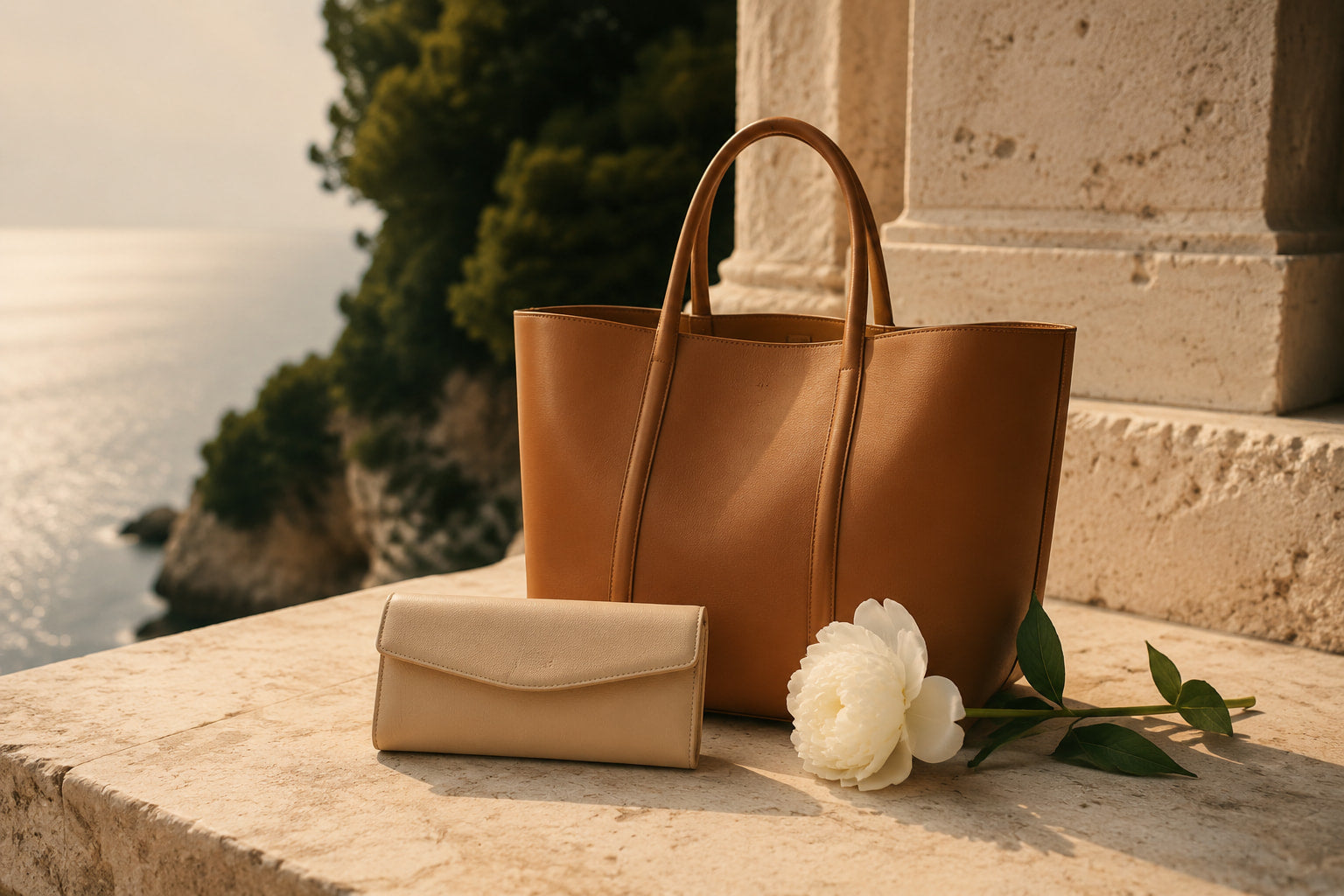
The structured tote remains the most versatile format. A tote with a rigid base, two flat handles, and a single interior zip pocket carries a laptop, a change of shoes, and a small wallet without looking like a work bag. The key is proportion: a tote that hits just below the hip when carried by hand is the right scale for most frames. Oversized totes that graze the knee tip into casual territory.
The half-moon shoulder bag is having a particularly strong moment in 2026. The curved lower edge softens an otherwise architectural bag, and the single shoulder strap keeps the silhouette close to the body. It works exceptionally well with a relaxed day dress or a clean trouser set.
The box clutch is the evening solution. A rigid frame, a wrist strap, and interior space for a phone, card, and lipstick. Nothing more is needed. In ivory calf leather or brushed satin, it reads as genuinely dressed without effort.
The saddle bag and the crescent bag are worth noting as updated classics this year. Both reference equestrian heritage, which is deeply embedded in European luxury, and both carry the slightly worn-in ease that makes quiet luxury feel lived rather than performative. Pair either with a well-constructed lace dress for a complete look that balances structure and softness.
What is notably absent from this list: the micro bag. Bags smaller than a standard passport are a fashion-cycle piece, not a wardrobe investment.
Expert insightA half-moon bag in a warm tan or cognac leather will photograph as neutral but read as richer in person than a standard beige. It is the single colour upgrade worth making if you are building a minimal bag collection.

The Colour Palette That Reads Expensive Without Trying
Colour choice in quiet luxury is not about playing it safe, it is about choosing tones that have no expiry date. The palette that consistently reads expensive and European is narrow but not boring.
Camel and tan are the backbone. They read as warm neutrals in winter and as considered summer tones equally well. A tan leather tote in 2026 will still read correctly in 2034.
Ivory and off-white work for structured pieces, particularly clutches and smaller shoulder bags. Pure white is harder to maintain and reads more casual; ivory or cream has more depth and ages more gracefully.
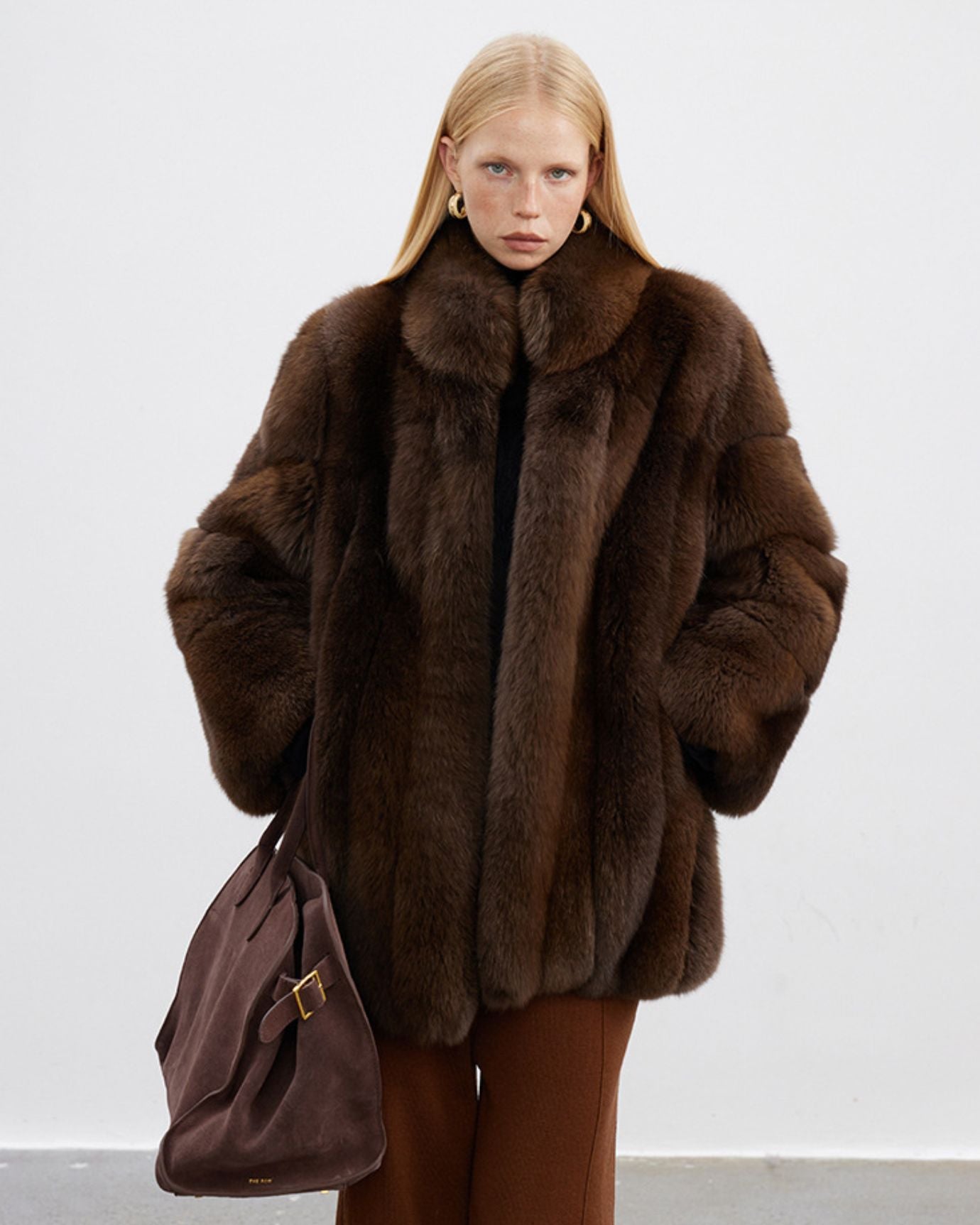
Chocolate brown and burgundy are the alternatives for women who find camel too expected. Both are deeply rooted in European leather traditions and pair naturally with the kind of classic style wardrobe built around quality basics.
Navy is underused in bags and worth exploring. A structured navy leather tote reads as an intelligent neutral that works with cream, white, pale grey, and most warm tones without the visual noise of black.
Black is the default and always correct, but it is worth knowing that a well-chosen camel or chocolate bag will be more distinctive and equally versatile. The women's bags collection at Lovau reflects this palette across its range.
Avoid: anything with colour-blocked panels, metallic leathers as a primary finish, or seasonal pastels. These are trend pieces in the language of quiet dressing.
Expert insightIf you carry only one bag for most of the year, make it tan rather than black. Tan reads as more intentional, works with white and navy in summer, and with camel coats and burgundy in winter.

How to Wear a Quiet Luxury Bag: Outfit Pairings That Work
A structured bag makes its clearest statement when the rest of the outfit is equally resolved. The pairing logic for quiet luxury dressing is about matching register, not matching colour.
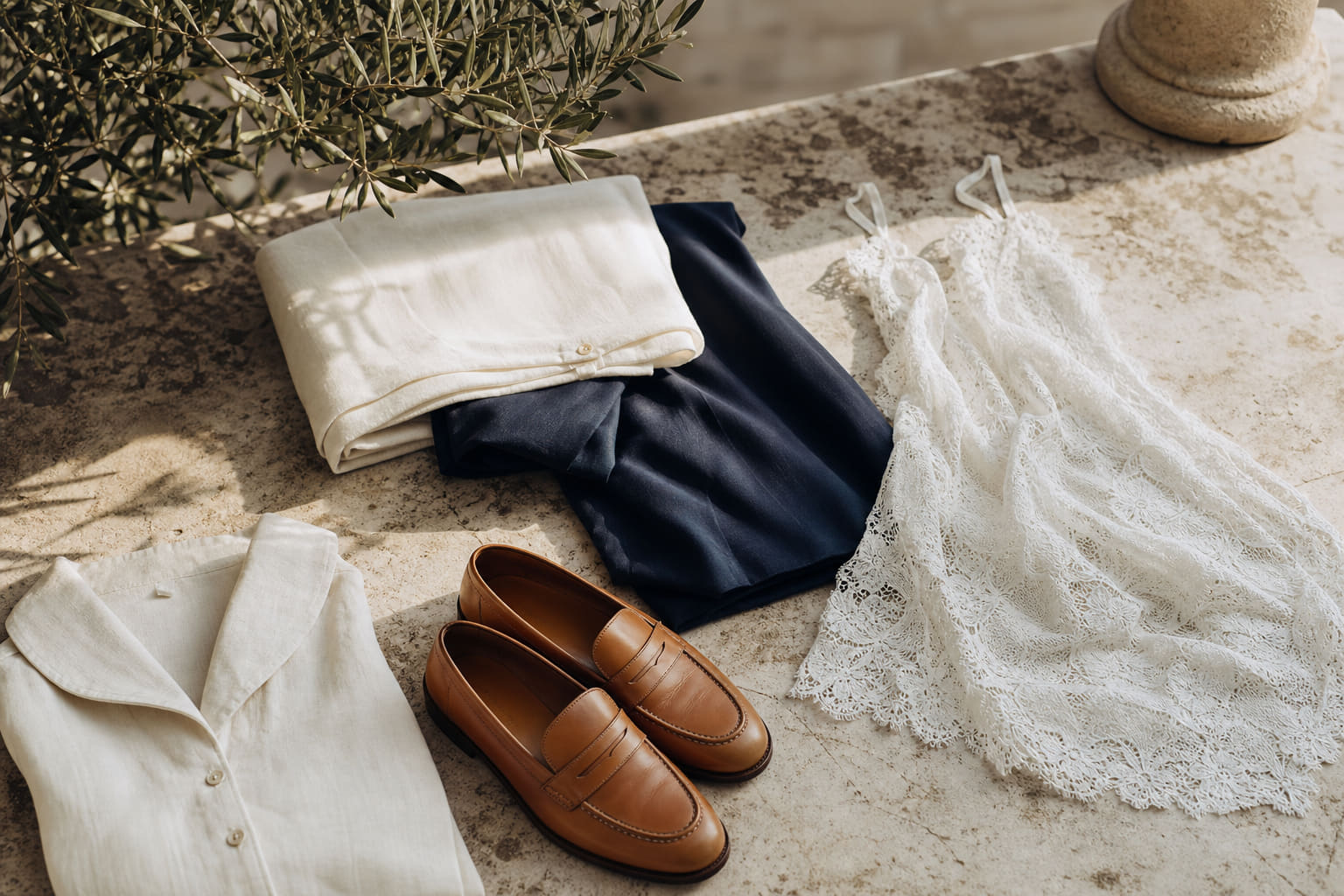
For daytime, a half-moon shoulder bag in cognac leather pairs precisely with a French-inspired white dress and simple leather sandals. The bag provides structure while the dress provides softness. The colour contrast between the warm leather and the white fabric is one of the most reliably elegant combinations in European dressing.
For a more formal afternoon or a garden event, a structured tote in ivory or cream alongside a white lace dress creates a tonal look that reads as dressed without being overdressed. The key is keeping accessories minimal: no statement jewellery competing with the bag.
For evening, a box clutch in a dark tone, deep navy, black, or oxblood, complements an evening dress without overshadowing it. The bag should be small enough that it reads as an accessory rather than a carrier.
A practical note on strap length: most structured bags come with both a short top handle and a longer removable strap. Carrying by the top handle reads as more formal and European. The shoulder strap reads as more casual. Knowing which register you are in and adjusting accordingly is the kind of detail that separates considered dressing from simply wearing nice things.
For a full framework on building outfits around these principles, the old money women's style guide at Lovau covers the wardrobe logic in detail.

Price Tiers and Where to Invest: What the Market Looks Like in 2026
The quiet luxury bag market in 2026 spans a wider price range than most people expect, and the correlation between price and quality is not as linear as the major houses would have you believe.
At the entry investment level (roughly 200 to 500 euros), Italian and Spanish ateliers producing small-run structured bags in full-grain leather offer exceptional value. These are not fashion-week brands, they are craft-led workshops selling direct, and the construction quality at this tier now rivals bags at three times the price from heritage houses.
At the mid-tier (500 to 1,500 euros), the Celine Triomphe in box leather, the Polène Number One, and the A.P.C. Demi-Lune are the reference points for 2026. All are logo-free or nearly so, all use genuine full-grain leather, and all have demonstrated staying power across multiple seasons. The Harper's Bazaar guide to quiet luxury bags is worth reading for an editorial perspective on which houses are sustaining this direction versus chasing the trend.
At the heritage level (above 1,500 euros), the Bottega Veneta Arco tote and the Loro Piana Bale bag represent the apex of the no-logo ethos. Both are identifiable to those who know and invisible to those who do not, which is precisely the intention.
Wherever you invest, the question to ask is: does this bag have a clear construction logic, leather that will patina rather than peel, and a silhouette that references something older than last season? If yes, it qualifies regardless of price tier. Pair your investment piece with affordable old money style basics to complete the look without overspending across the whole wardrobe.

Care and Longevity: Making a Quiet Luxury Bag Last a Decade
The quiet luxury ethos is inseparable from longevity. A bag that needs replacing every three years is not a quiet luxury bag, it is an expensive fashion item. The difference is almost entirely in maintenance.
Leather conditioning is the single most important habit. Full-grain calf leather should be conditioned every three to four months with a colourless, wax-based conditioner. This prevents the leather from drying and cracking at stress points, particularly the corners and the strap attachments. Avoid silicone-based sprays, which sit on the surface and prevent the leather from breathing.
Storage matters more than most people act on. A bag stored on a shelf without support will lose its shape within a year. Store structured bags stuffed lightly with acid-free tissue or a soft cotton insert, in a dust bag, standing upright. Never store leather bags in plastic, which traps moisture.
Rain and water are the primary threat. A light application of a leather water-repellent spray before the autumn and winter months provides meaningful protection without altering the finish. If a bag gets wet, let it dry naturally at room temperature, away from direct heat, stuffed to maintain its shape.
Hardware care is simple: a dry microfibre cloth after use removes skin oils that will eventually oxidise the finish. Do not use metal polish on brushed hardware; it removes the intentional matte finish.
A bag maintained this way will develop a rich, individual patina over years. That patina, the slightly deepened tone at the corners, the softened strap, is not wear. It is the visual record of a well-chosen object living its proper life. It is, in the most literal sense, what quiet luxury looks like over time.
| Silhouette | Best Occasion | Ideal Size | Carry Style | Longevity Rating |
|---|---|---|---|---|
| Structured Tote | Work, travel, day-to-evening | Medium to large (30, 40 cm wide) | Top handle or shoulder | Decade+ |
| Half-Moon Shoulder Bag | Lunch, gallery, afternoon event | Small to medium (22, 28 cm wide) | Single shoulder strap | Decade+ |
| Box Clutch | Evening, formal dinner, event | Small (18, 22 cm wide) | Wrist strap or hand carry | Lifetime if stored correctly |
| Saddle / Crescent Bag | Weekend, casual-smart, travel | Medium (24, 30 cm wide) | Shoulder or crossbody | 8, 10 years |
| Mini Structured Bag | Evening or fashion-forward day look | Extra small (under 20 cm) | Top handle or wrist | Trend-dependent, 3, 5 years |
Frequently asked questions
What makes a handbag qualify as quiet luxury rather than just minimalist?
Minimalism is about reduction of form. Quiet luxury is about the quality of what remains. A quiet luxury bag may have subtle texture, interesting stitching, or a distinctive closure, none of which are minimalist in the strict sense. The defining rule is the absence of external branding and the presence of genuinely high-grade materials and construction. A bag can be richly detailed and still qualify as quiet luxury if those details are craft-based rather than logo-based.
Are there quiet luxury handbags that work for both day and evening?
Yes, and this versatility is one of the hallmarks of a well-chosen bag. A structured half-moon shoulder bag in ivory or tan calf leather transitions from a daytime meeting to an evening dinner without any adjustment. The key is keeping the size restrained, small enough to read as intentional at dinner, but large enough to carry what you actually need during the day. Pair it with a classic evening dress for a complete look that requires no second bag.
How do I spot a genuinely well-made bag at a mid-range price point?
Check four things: the corner reinforcement (should be stitched, not just folded), the strap attachment hardware (riveted or stitched through the body, not glued), the lining quality (suede or tight fabric, not printed polyester), and the edge finishing on the leather (painted edges or folded-and-stitched, never raw). A bag that passes all four checks at 300 euros will outlast a poorly constructed bag at 1,000 euros.
What colours should I avoid if I want my bag to read as timeless rather than seasonal?
Avoid anything that reads as a direct response to a runway colour story: dusty lilac, cobalt blue, hot coral, or any metallic used as the primary finish rather than as hardware. These colours date a bag to a specific season and are difficult to style once that season passes. Stick to the core palette of camel, tan, ivory, chocolate, navy, and black. Within that palette, the specific tone matters: a warm camel reads more European and considered than a cool beige.
The best handbag for a quiet luxury look in 2026 is not the one with the most recognisable name. It is the one that will still be sitting on your shelf in ten years, slightly deeper in tone at the corners, with a strap that has shaped itself to your shoulder. Choose your silhouette deliberately, invest in full-grain leather, and maintain it properly. The rest follows. For the wardrobe to build around it, the women's old money style collection at Lovau is a practical starting point.