


The Return of the Pleated Wide-Leg Trouser for Women
Reading time 14 min • 2747 words
There is a particular kind of trouser that has always belonged to a certain type of woman. Not a trend-chaser, not a minimalist by default, but someone who understands that volume, when cut correctly, is its own form of precision. The pleated wide-leg trouser is that garment, and after several seasons of narrow silhouettes dominating every high street, it has returned to the collections and to the wardrobes of women who dress with intention.
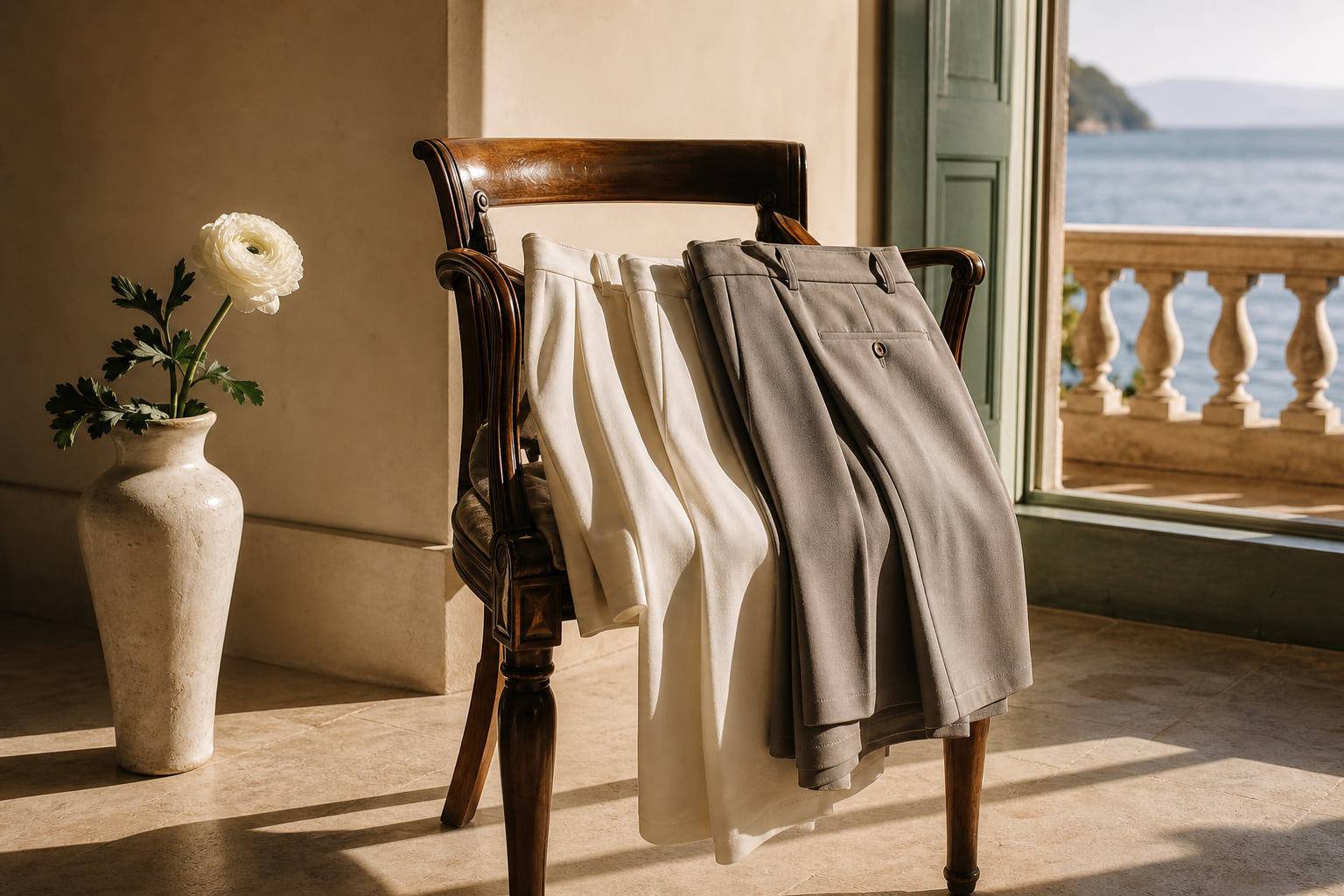
The revival is not arbitrary. It follows a broader cultural appetite for clothes that recall the craftsmanship and ease of European dressing in the 1970s and early 1990s, decades when a woman in wide tailored trousers commanded a room without trying. The pleat is the structural detail that makes the wide leg work: it releases fabric at the hip, creates movement through the thigh, and allows the leg to fall in a clean, uninterrupted line to the floor.
This guide covers what you actually need to know. The right fabrics, the right proportions, how to pair them for different occasions, and where the common mistakes happen. No vague inspiration, just specific, usable advice.
Key takeaways
- Choose a fabric with natural drape, such as wool crepe, viscose, or linen, to let the pleats fall correctly and hold their shape.
- The waistband should sit at your natural waist, not your hip, for the silhouette to read as intentional and proportioned.
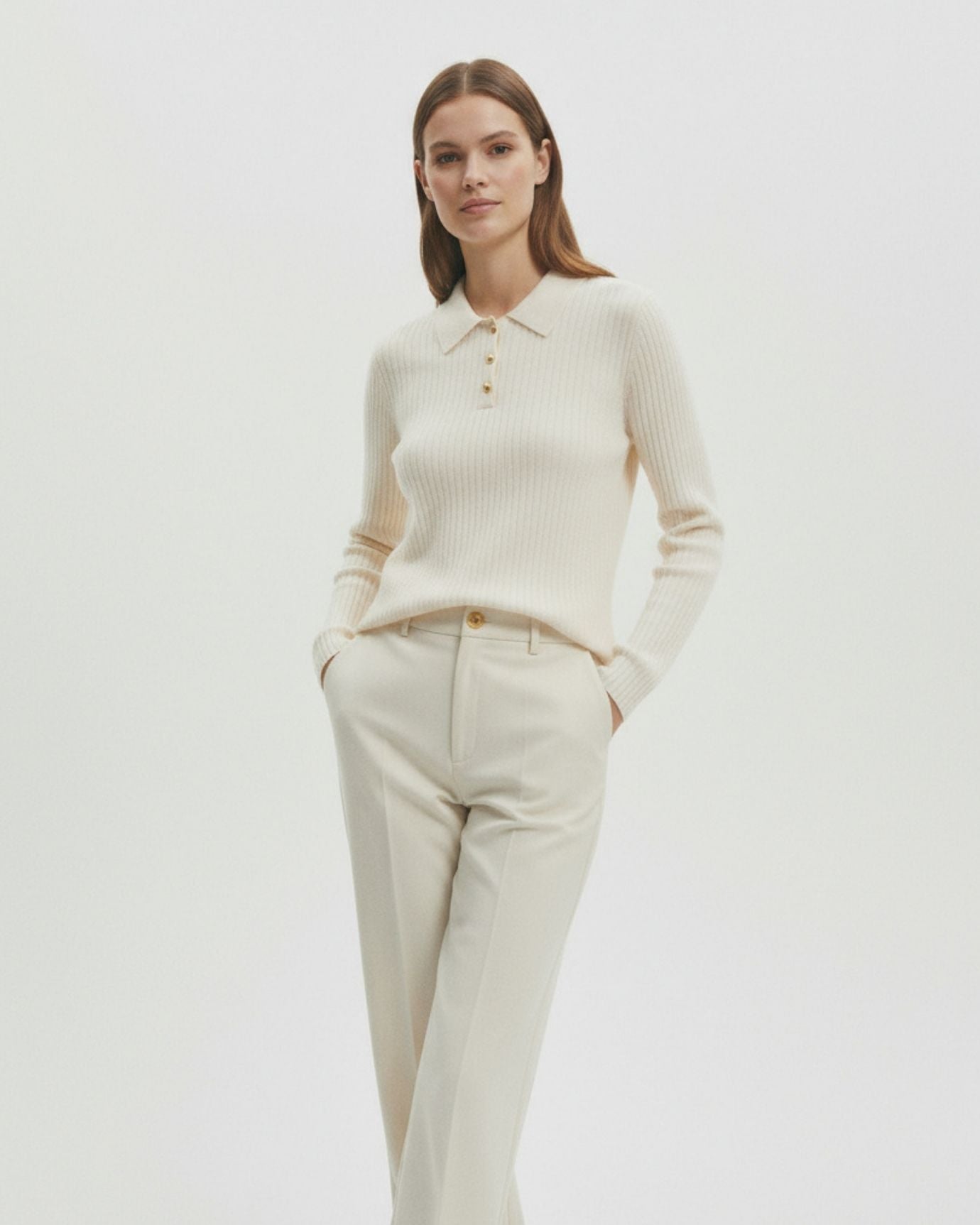
- A fitted or tucked-in top is the most reliable way to balance the volume of a wide leg without losing the waist.
- Kitten heels or low-block-heeled loafers work better with a wide leg than flat sneakers, which can shorten the visual line.
- If your trousers are too long, read a proper guide on no-sew hemming before cutting anything irreversible.
In this guide
- Why the Pleat Matters: Structure, Not Decoration
- The Fabrics That Work and the Ones That Do Not
- Getting the Fit Right: Waist, Hip, and Length
- How to Style the Pleated Wide Leg for Different Occasions
- The Old Money Approach to Colour and Pattern
- Care and Maintenance: Keeping Pleats Sharp
- Frequently asked questions
Why the Pleat Matters: Structure, Not Decoration
A pleat is not an ornament. It is a functional construction technique that adds controlled volume at the front of a trouser without breaking the clean line of the waistband. Most pleated wide-leg trousers feature either a single forward pleat or a double pleat on each side of the centre front. The double pleat, historically associated with Italian and French tailoring, gives more room through the thigh and is the version most flatteringly suited to a genuine wide-leg cut.
Forward pleats fold toward the fly and create a smooth front when standing. Reverse pleats fold away from the fly and suit a slightly slimmer, more structured silhouette. For the wide-leg shape specifically, forward pleats are almost always the better choice: they lie flat when you are still and open naturally when you walk, which is exactly the kind of movement that makes a wide-leg trouser look graceful rather than voluminous.
Understanding the history of the trouser pleat helps explain why this detail has endured across a century of fashion cycles. It is a solution to a real fit problem, not a stylistic whim, which is precisely why it keeps returning whenever dressing becomes more considered.
For a broader look at how this silhouette fits into the current moment, our guide on how to style wide-leg trousers elegantly in 2026 covers the full picture of proportions and pairings.
Expert insightWhen pressing pleats at home, always press from the inside of the fold with a damp cloth between the iron and the fabric. Pressing directly on the outside of a pleat will flatten and distort it permanently.
The Fabrics That Work and the Ones That Do Not
The pleated wide-leg trouser lives or dies by its fabric. The wrong material will cause the pleats to gape open at the front, the leg to cling at the thigh, or the whole silhouette to collapse into shapelessness by mid-afternoon. The right fabric will hold the pleat, allow the leg to swing freely, and maintain its drape through a full day of wear.
Wool crepe is the gold standard. It has enough weight to anchor the pleat and enough surface texture to prevent any clinging. It breathes reasonably well across three seasons and presses beautifully. Viscose and viscose-linen blends are the warmer-weather alternatives: they drape with a natural fluidity that suits the wide-leg shape, though they wrinkle more readily than wool and benefit from a lining through the upper trouser.
Linen is excellent in a heavier weight (above 180gsm) but requires acceptance of its characteristic creasing. For summer occasions with a relaxed register, this is entirely appropriate. For anything more formal, a linen-viscose blend gives the breathability without the aggressive wrinkling.
Fabrics to avoid: polyester satin (clings and reflects light in unflattering ways), thin cotton poplin (lacks the weight to hold a pleat open), and any fabric with significant stretch. Elastane in a wide-leg trouser defeats the purpose of the cut entirely. The structure comes from the fabric and the construction, not from the body of the wearer.
If you are also considering pleated skirts as part of a tailored wardrobe, the same fabric principles apply: weight and drape over lightness and stretch.
Expert insightHold a fabric swatch by one corner and let it hang. If it falls in a smooth, continuous line, it will drape well in a wide-leg cut. If it stiffens or spreads sideways, it will fight the silhouette.

Getting the Fit Right: Waist, Hip, and Length
Fit is where most women lose the thread with wide-leg trousers. The temptation is to size up for comfort through the hip, which then creates excess fabric at the waist and a shapeless result. The correct approach is to fit the trouser at the natural waist first, then assess the hip and thigh.
The waistband should sit at your true natural waist, the narrowest point of your torso, typically two to three centimetres above the navel. This is non-negotiable for the proportions to work. A wide-leg trouser that sits on the hip reads as a low-rise trouser, which is an entirely different silhouette with different styling requirements.
Through the hip and thigh, the fit should be generous but not shapeless. There should be no pulling across the seat and no diagonal drag lines running from the hip to the knee. These drag lines indicate that the trouser is too narrow through the hip for your body, and no amount of styling will compensate for them.
Length is critical. A pleated wide-leg trouser should graze the top of the foot or break very slightly on the shoe. Too short and the wide leg reads as cropped, which is a different garment with different rules. If you find yourself with a pair that is slightly too long, read our practical guide on no-sew trouser length solutions before reaching for scissors. And if you are ready to commit to a permanent alteration, our tailoring guide for small garment changes will walk you through what to ask a seamstress.
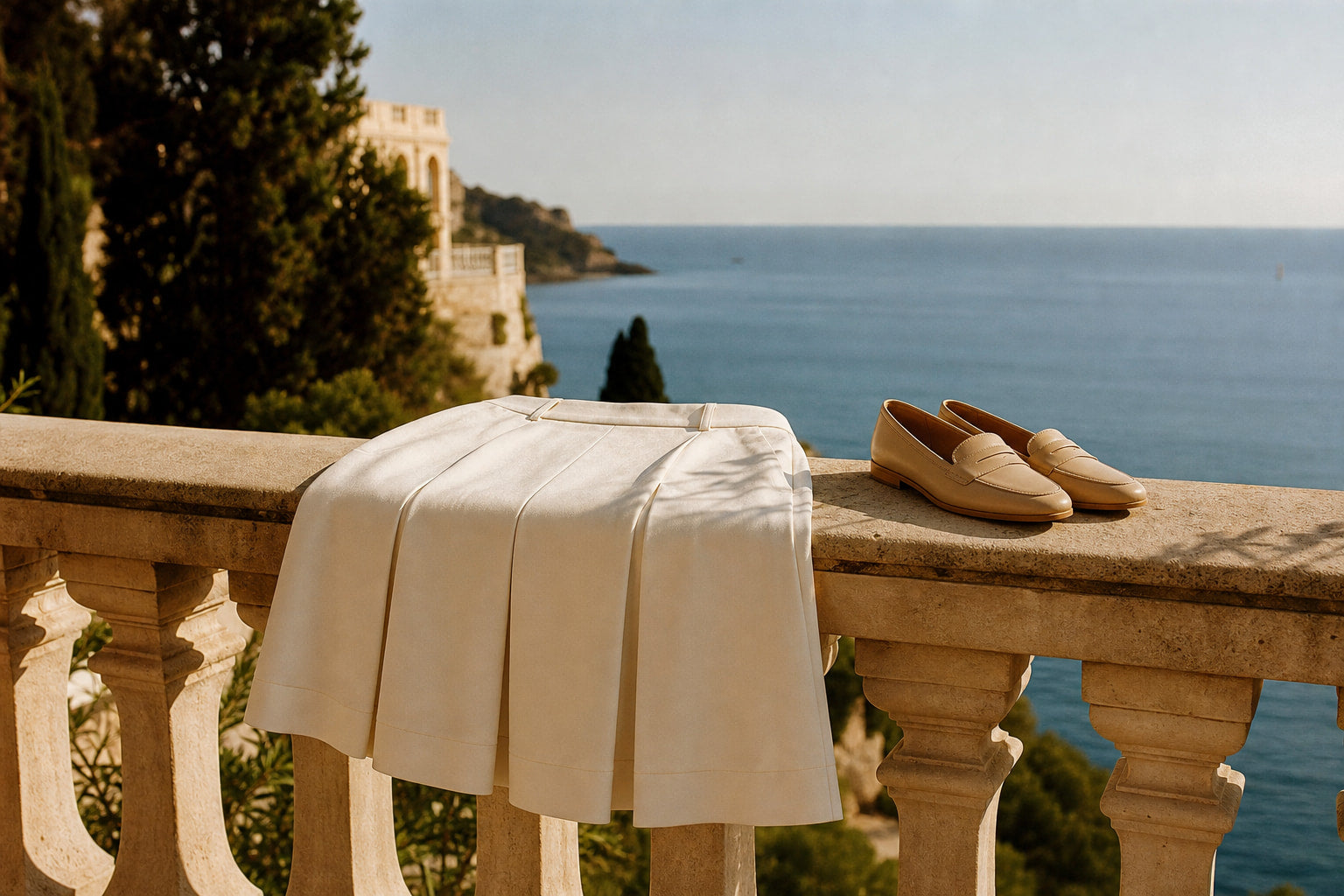
Pairing shoes correctly also affects how the length reads. Our old money leather loafers in genuine leather sit at the right heel height to let a wide-leg trouser fall cleanly without bunching, and the rounded toe does not compete with the volume of the leg.
Expert insightIf a trouser fits your waist but gaps at the back waistband, a tailor can add a simple elastic insert or take in the back seam in under thirty minutes. This single alteration transforms the fit entirely.

How to Style the Pleated Wide Leg for Different Occasions
The pleated wide-leg trouser is genuinely versatile, but it requires deliberate pairing. Its volume demands that the rest of the outfit be edited.
For the office or a formal lunch: Tuck a structured blouse or a fitted knit into the waistband. The tuck defines the waist and creates the hourglass proportion that makes the wide leg read as intentional tailoring rather than casual comfort dressing. A blazer worn open over this combination is clean and confident. The Divina kitten heel boots are a particularly good choice here: the low heel adds just enough height to elongate the leg without the formality of a stiletto.
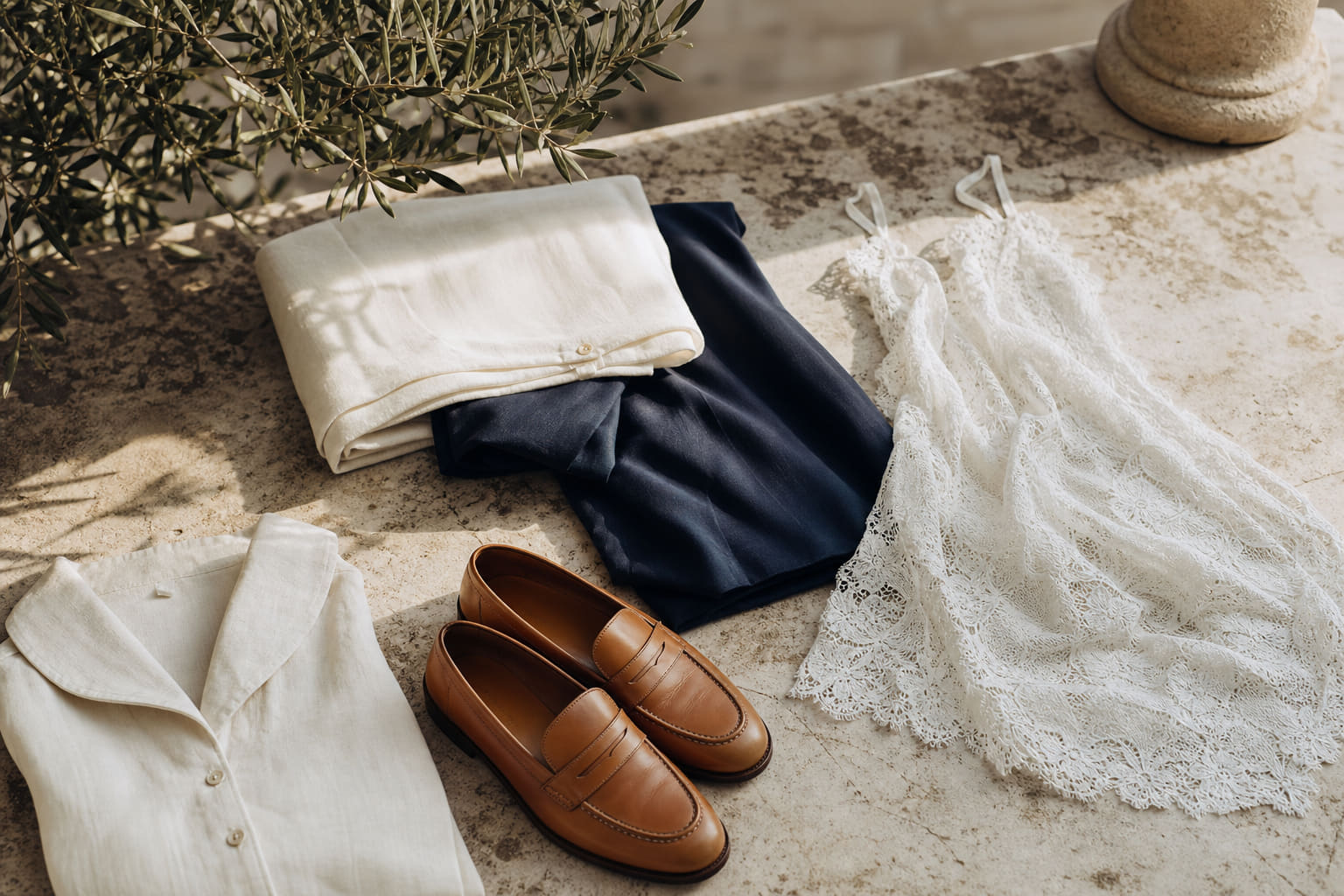
For weekend and leisure: A relaxed-fit linen shirt, half-tucked, works well. The half-tuck is specific: tuck in the front panel only, leaving the back loose. This gives volume at the top without the rigidity of a full tuck. Flat leather loafers are appropriate at this register. Avoid trainers unless the trouser is a casual cotton or linen weight.
For an evening occasion: A silk or satin camisole tucked in, a structured jacket, and a low heel or pointed flat. The Elegant Santorini strapless dress from our evening collection shows how the same Mediterranean silhouette sensibility translates to eveningwear, and the approach to proportion is identical: defined waist, fluid lower half.
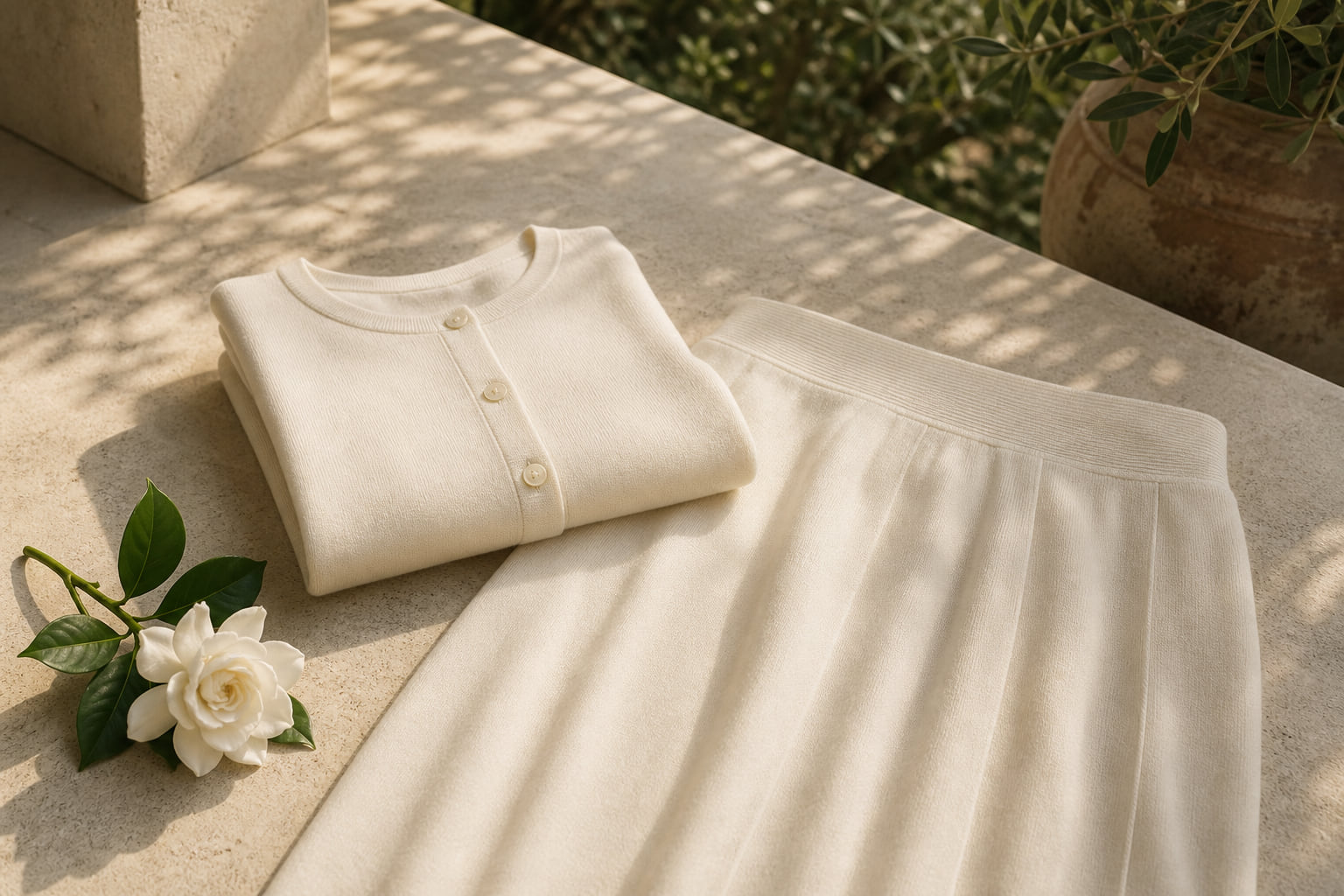
For a set: Wearing a matching jacket and trouser in the same fabric is the most polished interpretation of this silhouette. Our suit set with pleated high-waisted skirt demonstrates the Lovau approach to coordinated tailoring, and the same logic applies when the lower piece is a trouser: the matching fabric reads as intentional dressing rather than an assembled outfit.
For more specific guidance on how sets and trouser combinations work in practice, our article on styling a linen waistcoat and trouser set is a useful companion read.

The Old Money Approach to Colour and Pattern
The pleated wide-leg trouser in its most refined form is almost always a solid. Ivory, stone, camel, navy, charcoal, and chalk white are the colours that have appeared in European tailoring houses for decades because they do not compete with the silhouette. The cut is the statement. The colour is the backdrop.
That said, there are patterns that work. A fine chalk stripe in navy or charcoal is perhaps the most classic: it emphasises the vertical line of the leg and gives the trouser a Milanese tailoring reference that reads as very deliberate. A subtle houndstooth in a small scale is another option, particularly in autumn and winter weights.
What to avoid: large floral prints, horizontal stripes, and bold graphic patterns. These fight the width of the leg and create visual noise where the silhouette should speak clearly.
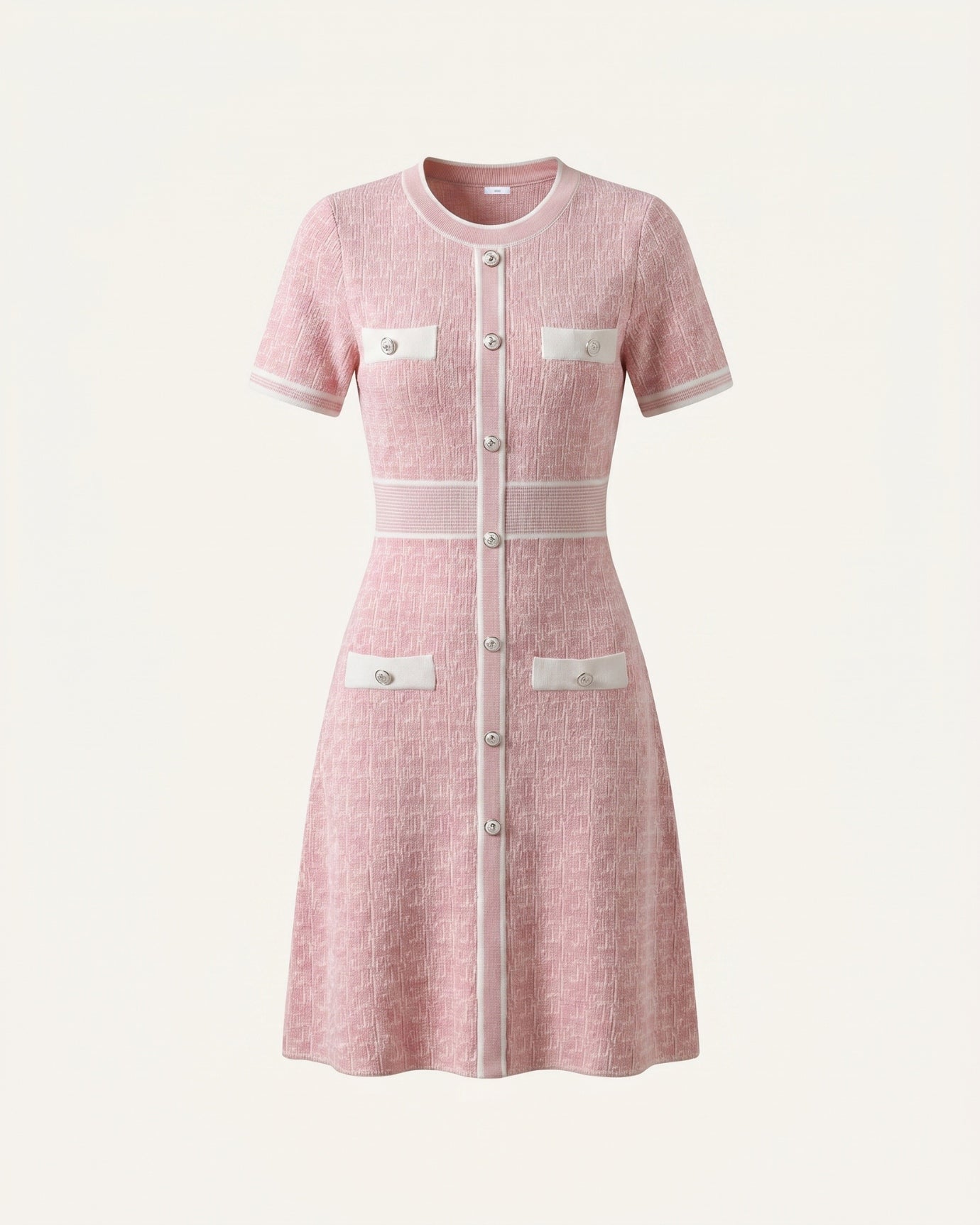
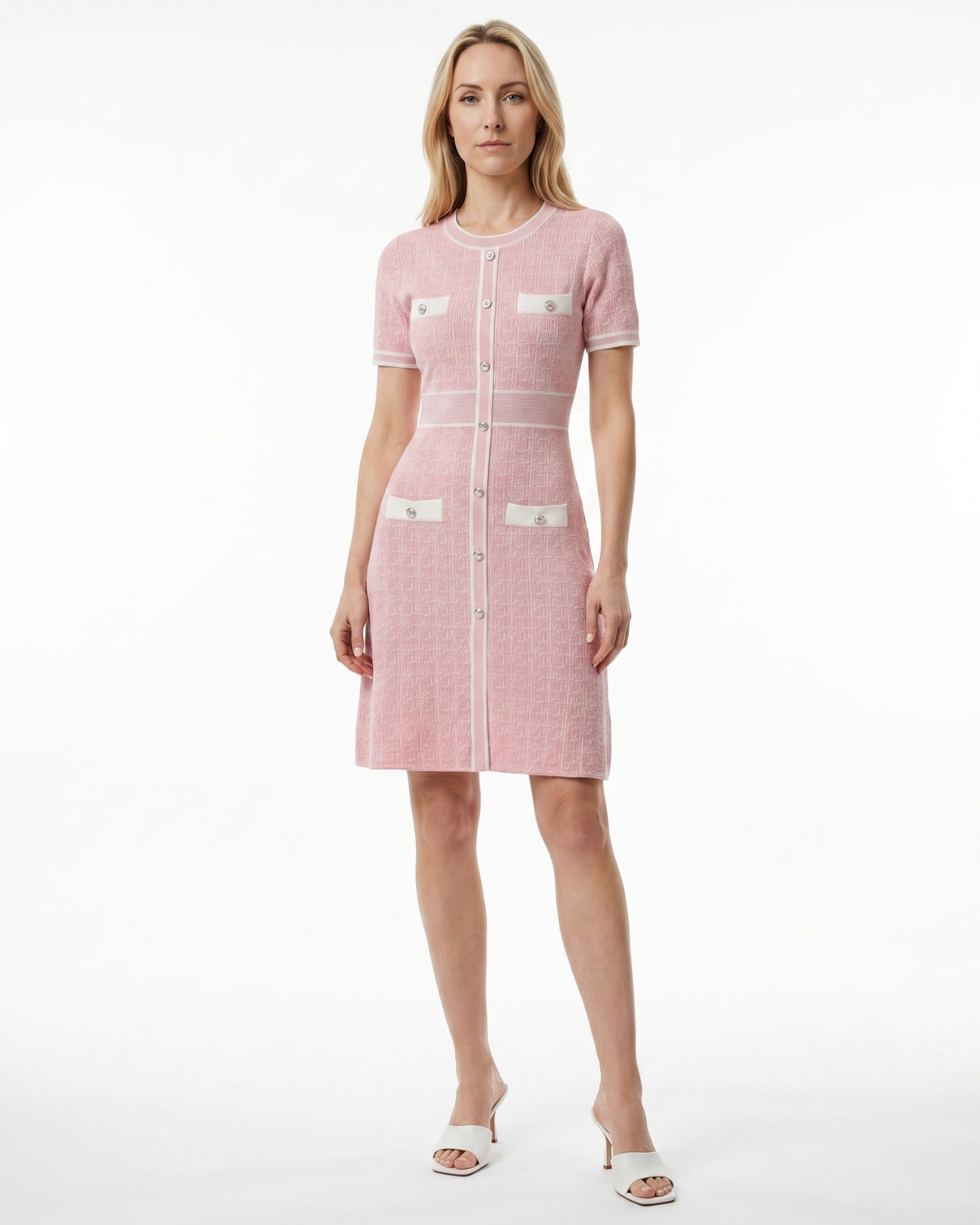
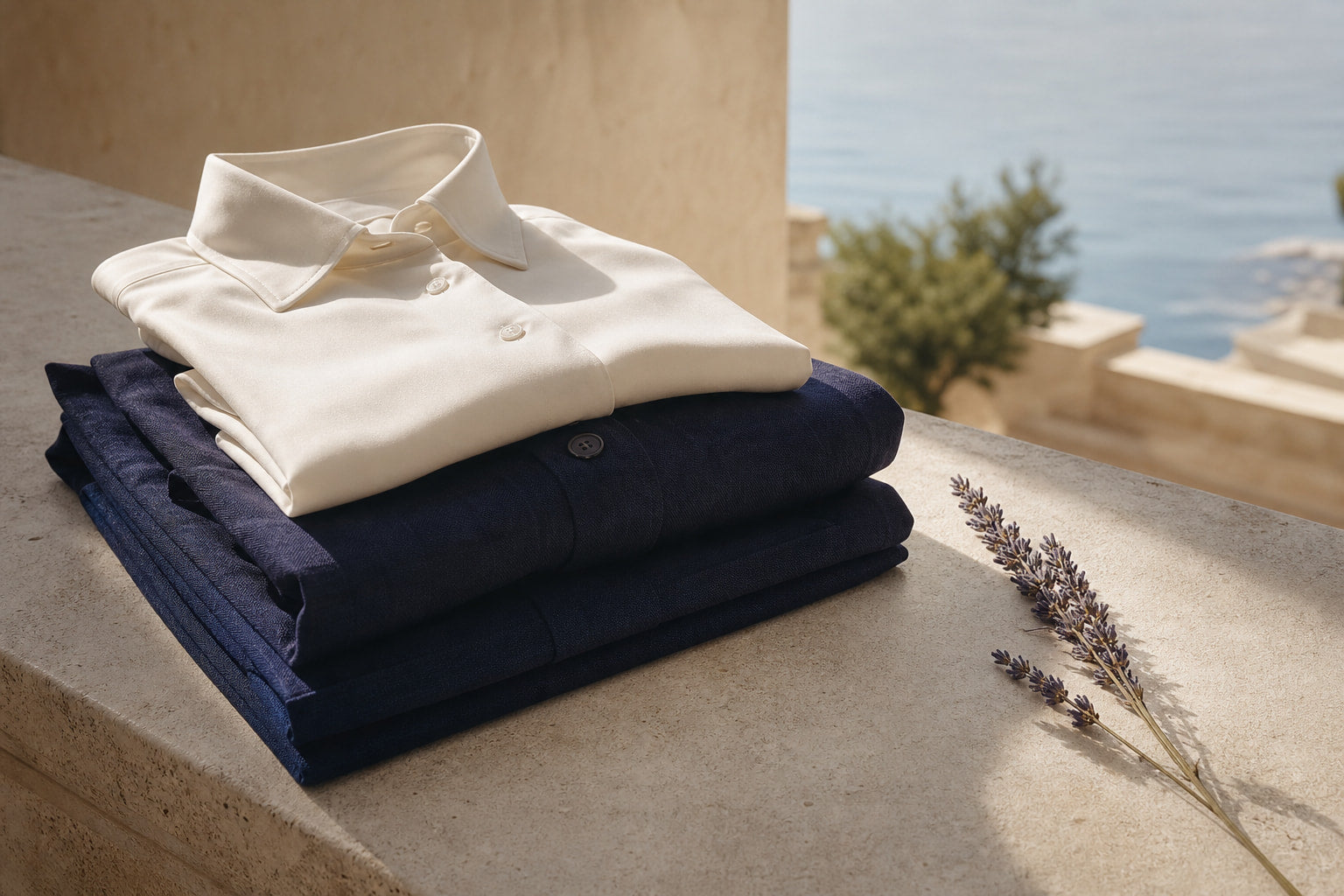
The Contrast Collar Pleated Dress in Navy and White from our collection illustrates how the navy and white palette works in a pleated garment at a broader level: the contrast is precise, the shapes are clean, and the result is immediately legible as considered dressing. Apply the same colour restraint to your trouser choices.
For those building an old money wardrobe from the ground up, our full women's old money collection gives a clear picture of how these pieces sit together. The colour palette is consistent throughout: neutrals, European tones, nothing that requires explanation.

Care and Maintenance: Keeping Pleats Sharp
A pleated wide-leg trouser is only as good as its maintenance. The pleat is a pressed fold, and without regular attention, it will soften, spread, and lose the clean front line that defines the silhouette.
Pressing: Press pleated trousers inside out where possible, using a pressing cloth between the iron and the fabric. For wool, use steam and allow the fabric to dry completely before hanging. Press along the full length of the pleat from waistband to hem, not just at the top where the fold begins.
Hanging: Always hang trousers from the waistband, not folded over a hanger. A waistband clip hanger allows the weight of the fabric to pull the leg straight and helps the pleat relax back into its correct position between wears.
Washing: Most pleated trousers in wool or wool-blend fabrics should be dry-cleaned or hand-washed in cold water with a gentle detergent. Never wring or twist. Roll in a clean towel to remove excess water, then hang immediately. Machine washing, even on a delicate cycle, can permanently distort the pleat structure.
Between wears: A light steam from a handheld steamer, held 10 to 15 centimetres from the fabric, will refresh the trouser and re-energise the pleat without the risk of direct heat damage. This is particularly useful for viscose and linen blends, which respond well to steam.
For related care questions around pleated garments, our article on stopping static cling in pleated skirts addresses a common problem that also affects pleated trousers in silk and satin-finish fabrics. The solutions are largely the same: anti-static spray, a light steam, and correct fabric choice from the outset.
For a complete picture of how to build shoe choices around this silhouette, our dress shoes collection includes options at the heel heights and toe shapes that complement the wide-leg line without shortening it. Vogue's coverage of the wide-leg trouser revival also confirms that the styling consensus across European collections points firmly toward low heels and loafers as the preferred footwear pairing.
| Fabric | Best Season | Drape Quality | Care Level | Best Occasion |
|---|---|---|---|---|
| Wool Crepe | Autumn, Winter, Spring | Excellent, structured | Dry clean or hand wash | Office, formal lunch, evening |
| Viscose | Spring, Summer | Excellent, fluid | Hand wash cold | Daywear, casual dining, travel |
| Linen (heavy weight) | Summer | Good, relaxed | Hand wash or machine delicate | Weekend, coastal, relaxed daywear |
| Linen-Viscose Blend | Spring, Summer | Very good, soft | Hand wash cold | Day to evening, warm-weather smart casual |
| Polyester Crepe | Year-round | Moderate, can cling | Machine wash delicate | Budget daywear only |
| Cotton Poplin | Spring, Summer | Poor, too stiff | Machine wash | Not recommended for wide-leg pleats |
Frequently asked questions
Are pleated wide-leg trousers flattering for all body types?
Yes, with the correct fit at the natural waist. The pleat releases fabric at the hip, which reduces any pulling or tightness through the thigh regardless of shape. The key is ensuring the waistband sits at the true natural waist, not the hip, so the volume of the leg reads as deliberate and proportioned. A fitted or tucked-in top always helps define the waist above the trouser.
What shoes work best with pleated wide-leg trousers?
Low block heels, kitten heels, and leather loafers are the most reliable choices. They add a small amount of height to elongate the leg without the formality of a stiletto. Our genuine leather loafers in the old money style sit at the right heel height and have a toe shape that does not compete with the width of the leg. Flat sandals work in summer with linen or viscose trousers at a casual register.
How do I stop the pleats from gaping open at the front?
Gaping pleats almost always indicate one of two problems: the trouser is too tight through the hip and thigh, forcing the pleat open, or the fabric is too light and lacks the weight to hold the fold. First check the fit: there should be no pulling across the seat or thigh. If the fit is correct, try a pressing cloth and a firm steam press along the pleat fold. If the fabric is simply too lightweight, this is a construction limitation that cannot be fully corrected.
Can I wear a pleated wide-leg trouser in a warm climate?
Absolutely. Choose a linen or linen-viscose blend in a heavier weight and a pale colour: ivory, chalk, or stone. These fabrics breathe well and the wide leg allows air circulation. The Mediterranean approach to summer dressing has always included wide tailored trousers precisely because the cut does not trap heat the way a fitted trouser does. Pair with a simple tucked linen blouse and flat leather sandals.
The pleated wide-leg trouser is not a trend in the disposable sense. It is a silhouette with a long and specific history in European dressing, one that rewards investment in fabric, attention to fit, and restraint in styling. Get those three things right and this is a garment that will work across seasons and occasions for years without requiring reinvention. For a complete picture of how to build outfits around this silhouette, our guide on how to style wide-leg trousers elegantly in 2026 covers every occasion from morning meetings to summer evenings.