


The Most Flattering Dress Silhouettes Based on Your Body Shape
Reading time 13 min • 2678 words
Few wardrobe decisions have as much impact as choosing the right dress silhouette. The difference between a dress that feels exactly right and one that feels slightly off is almost never about size; it is almost always about proportion and cut.
Body shape guides have existed in fashion for decades, and while no two bodies are identical, certain silhouette principles hold consistently true. Understanding them is not about dressing to hide anything. It is about using line, fabric, and structure the way a tailor would: to frame the figure deliberately and with confidence.
This guide covers the five most common body shapes and the dress silhouettes that work best for each, with specific detail on fabric, fit, and occasion. Browse the full woman dress collection to explore styles referenced throughout.
Key takeaways
- A-line skirts are universally flattering because they skim the hips without clinging, working across almost every body shape.
- Waist definition, whether from a belt, tie, or seaming, is the single most powerful tool for creating an hourglass impression.
- Fabric weight matters as much as silhouette: fluid fabrics drape and soften, structured fabrics hold shape and add volume where needed.
- Petite frames benefit from shorter hemlines or vertical detailing that draws the eye upward rather than cutting the body horizontally.
- Broad shoulders are balanced by V-necks and off-shoulder cuts that redirect attention downward; see our dedicated guide for more detail.
In this guide
Hourglass Figure: Honour the Waist
The hourglass shape, defined by shoulders and hips that are roughly equal in width with a clearly narrower waist, is the figure most dress patterns are drafted around. The goal here is straightforward: follow the body's natural line rather than obscuring it.
Fitted wrap and belted styles are the most reliable choices. A dress with a defined waist seam, or one that ties at the natural waist, mirrors the figure's proportions without forcing them. The in Paris style long-sleeved dress with belt does exactly this: the belt cinches cleanly at the waist, and the longer hem keeps the look grounded rather than overtly body-conscious.
Fabrics to choose: Medium-weight crepe, ponte, or fine wool jersey. These fabrics have enough structure to hold the silhouette without pulling across the hips or gaping at the waist. Avoid stiff brocades or very heavy canvas, which add bulk without following the curve.
Hemline: Midi and maxi lengths work well for formal occasions; a knee-length or slightly above works for daywear. What matters more than hemline is that the dress does not flare dramatically below the hip, which can make the lower body appear wider than it is.
Neckline: The hourglass figure carries almost any neckline well. V-necks and square necks add visual interest at the collarbone without needing to compensate for any particular proportion.
Expert insightIf a fitted dress gaps at the waist or pulls across the hips, the issue is almost always the waist-to-hip ratio in the pattern, not the size. A single dart alteration by a tailor can correct this in under an hour. See our piece on small alterations that transform an outfit for practical next steps.

Pear Shape: Balance the Hip Line
A pear-shaped figure carries more volume in the hips and thighs than in the shoulders and bust. The most effective dress strategy here is to add visual weight to the upper body while allowing the lower half to sit quietly beneath structured or softly draped fabric.
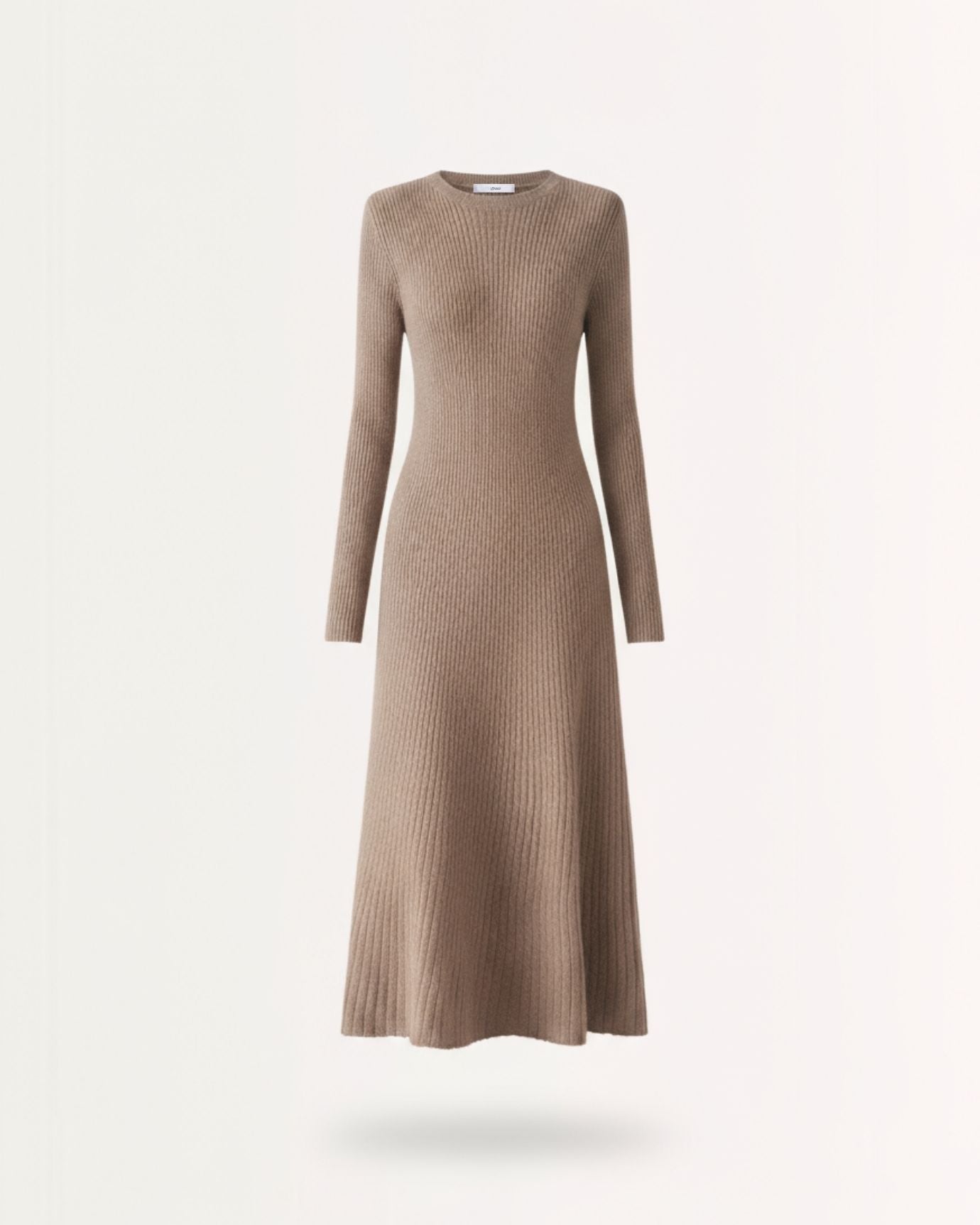
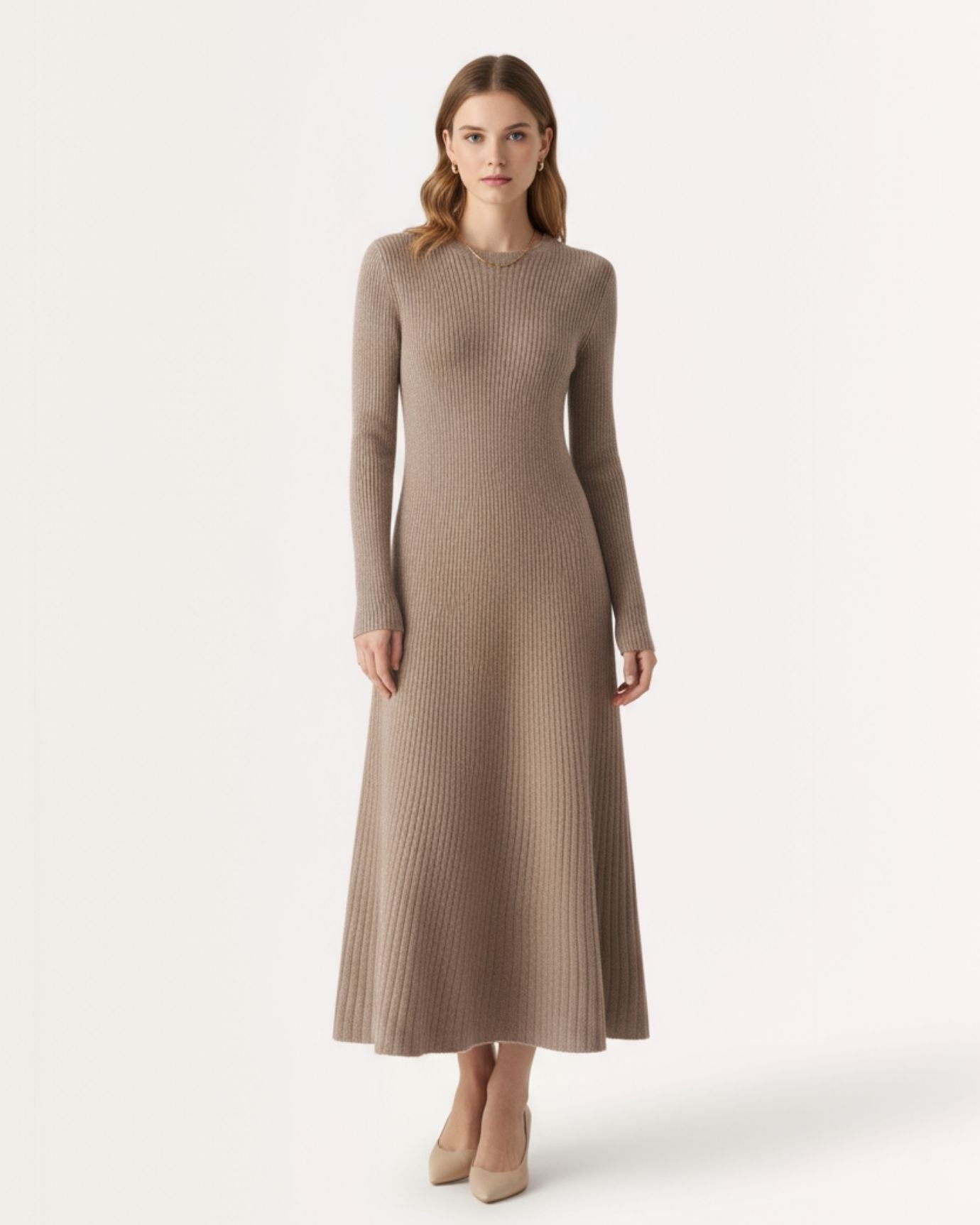
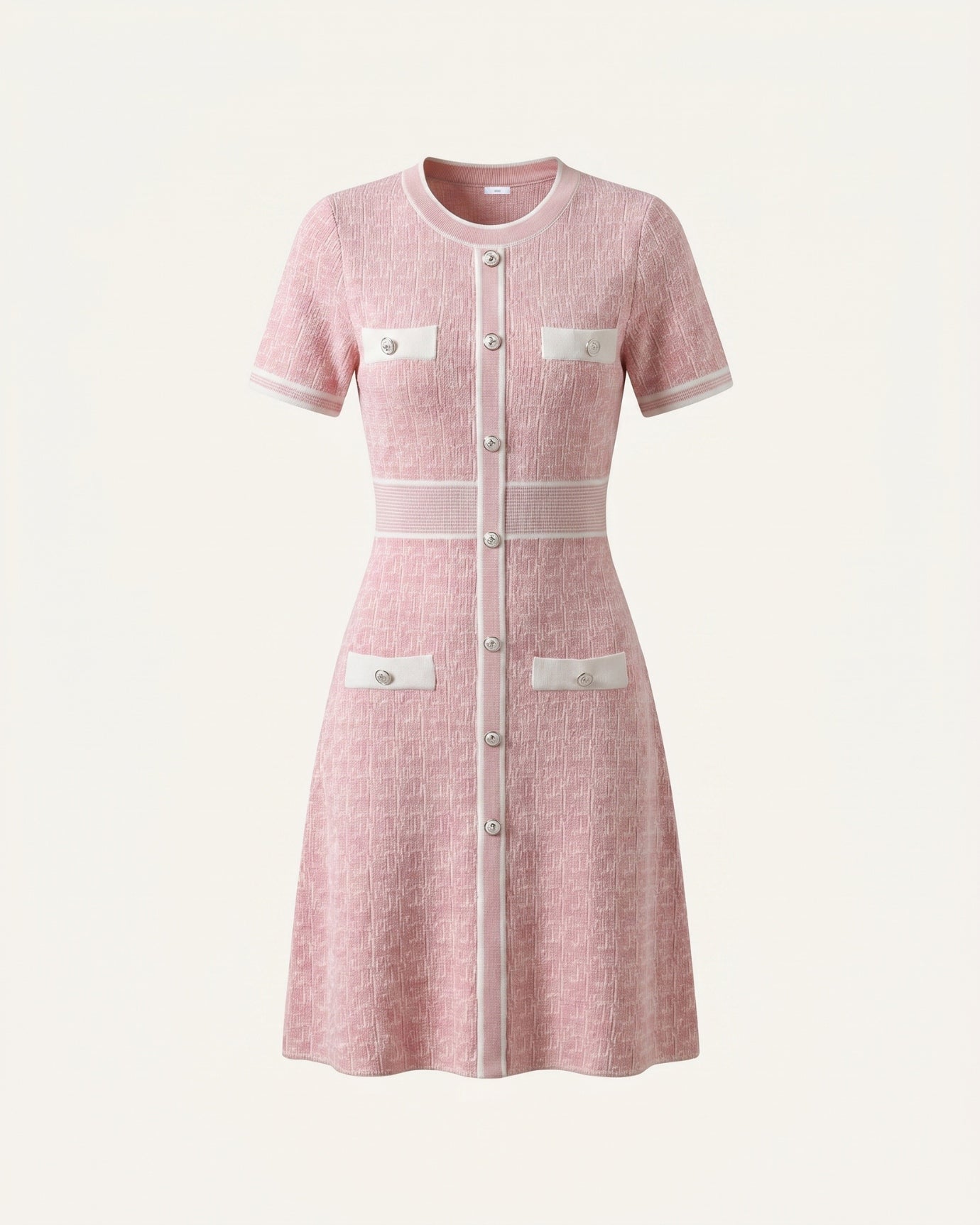
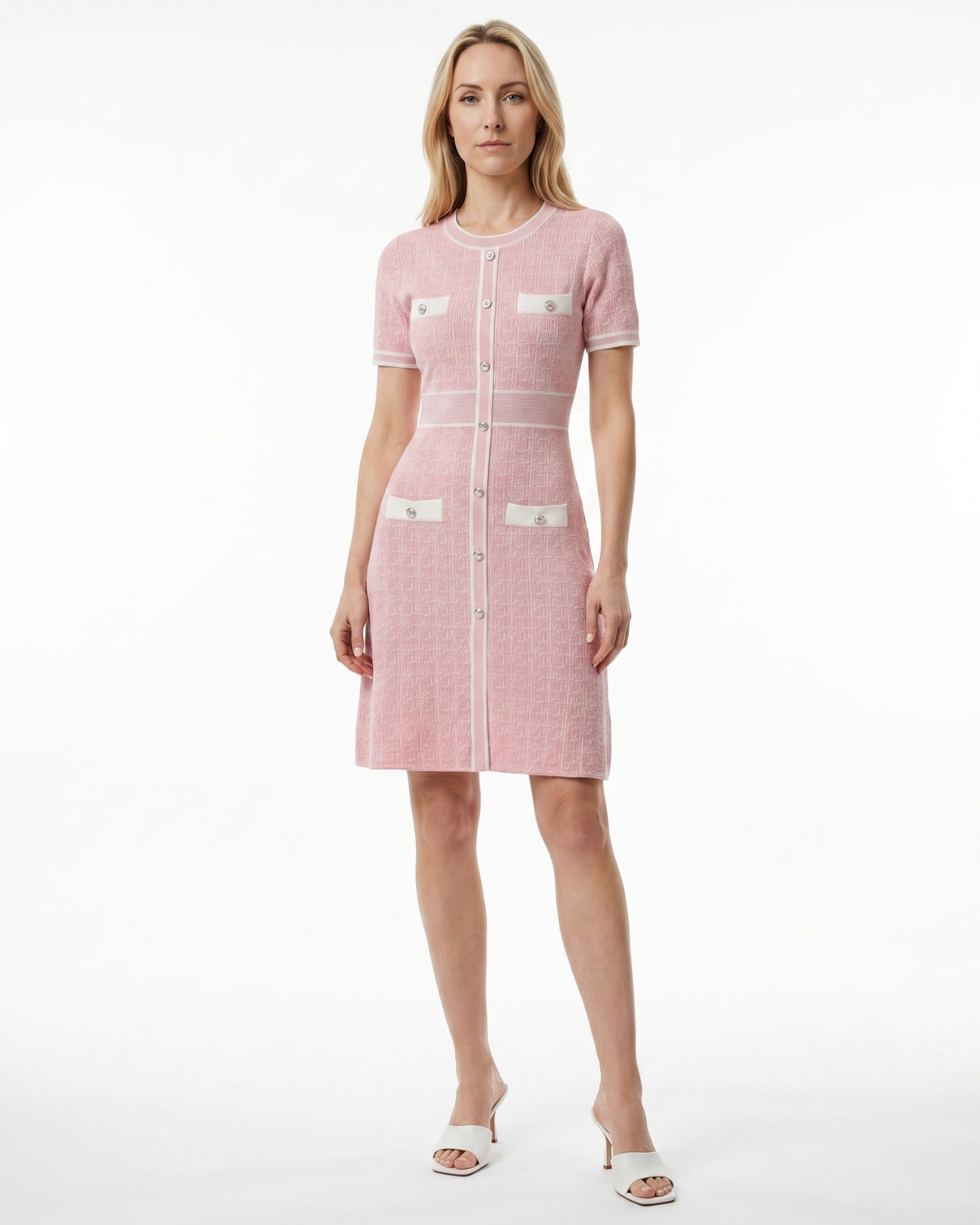
A-line silhouettes are the single most dependable choice. The A-line skims over the hips and falls away from the body below the waist, so there is no fabric pulling or clinging across the widest point. The Lovau style A-line knitted dress is a strong example: the knit fabric has enough body to hold the A-line shape without adding stiffness, and the silhouette works from morning through to evening.
Fit-and-flare styles achieve a similar effect and suit more formal occasions. A close fit through the bodice and a gentle flare from the hip creates a clear waist and draws the eye upward.
Details that help: Puff sleeves, boat necklines, and structured shoulders all add width to the upper body, which visually balances broader hips. Avoid strong horizontal seaming or pattern placement directly across the hip line.
Fabrics to choose: Fluid crepe or chiffon for the skirt portion allows the fabric to fall away from the hip naturally. Avoid jersey or stretch fabrics in the hip area unless the dress has significant structure built into the bodice.
Hemline: Just below or just above the knee is most flattering. A hemline that ends at the widest point of the calf can visually shorten the leg; aim to land above or below that point.
Expert insightChoosing a dress with a slightly darker or more muted lower half and a more detailed or lighter upper half achieves the same balancing effect as silhouette alone. Pattern placement matters as much as cut.

Apple and Column Shapes: Create Definition Where None Exists
An apple-shaped figure carries volume through the midsection with slimmer legs and a less defined waist. A column or rectangle figure has shoulders, waist, and hips in close alignment, with minimal natural waist definition. Both shapes benefit from the same core technique: introducing the suggestion of a waist.
Empire waist dresses work particularly well for the apple shape. The seam sits just below the bust, at the body's narrowest point, and the skirt falls away from there. This creates the impression of a defined waist without any fabric sitting across the midsection. The contrast collar pleated dress in navy and white uses a two-piece construction and pleated skirt that achieves a similar visual result: the eye reads structure at the waist without any tight fit across the stomach.
For column figures, fit-and-flare and wrap-style dresses introduce curve. A wrap dress creates a V-neckline that draws the eye to the bust, and the diagonal tie at the waist signals a waistline even where the body is relatively straight. Belted styles like the in Paris style long-sleeved dress with belt are equally effective.
Fabrics to choose: Structured wovens, ponte, and heavier knits hold their shape and do not cling to the midsection. Avoid very fluid silks or lightweight jersey, which can drape in ways that emphasise the midsection for the apple shape.
Details to avoid: Strong horizontal seaming at the natural waist can draw attention to the midsection rather than away from it. Opt instead for vertical seaming, which creates a lengthening line through the body.
Expert insightRuching at the side seams of a dress is one of the most practical tools for the apple shape: it gathers fabric away from the midsection and creates a subtle waist without any tightness.

Petite Frames: Length, Line, and Proportion
Petite figures, generally understood as under 5'4", face a specific challenge with dress proportions: standard patterns are drafted for a taller body, which means hemlines fall too long, waist seams sit too low, and details that should land at the collarbone instead land mid-chest.
The most important principle for petite dressing is vertical line. Anything that draws the eye from top to bottom without interruption creates the impression of height. V-necklines, column silhouettes, and dresses with vertical seaming or button placards all achieve this.
Mini and above-the-knee hemlines expose more leg, which creates a longer visual line from hem to floor. The diamond button mini dress French style is well-suited here: the button detail runs vertically down the front, the hem sits above the knee, and the overall silhouette is clean and unbroken.
A-line styles also work well for petite frames, provided the hem does not fall below the knee. A midi A-line on a petite figure can overwhelm the proportions entirely. If a longer length is preferred for a formal occasion, choose a column or sheath style rather than a voluminous skirt.
What to avoid: Wide-brimmed belts or strong horizontal seaming at the waist can cut the body in half visually. Empire waist styles can work, but only if the skirt falls in a relatively narrow A-line rather than a full gather.
Fabrics: Lightweight wovens and fine knits drape close to the body without adding bulk. Heavy fabrics like thick boucle or stiff taffeta add visual weight that a petite frame can struggle to carry.
For a full day dresses selection suited to proportional dressing, the Lovau collection offers several styles worth considering.

Broad Shoulders: Redirect and Rebalance
Broad or square shoulders are a strong structural feature, and many women find them an asset rather than a problem. The question is one of balance: ensuring the upper body does not appear disproportionately wide relative to the hip and waist.
V-necklines and deep scoop necks are the most effective tools. By drawing the eye inward and downward toward the sternum, these necklines create a narrowing effect at the shoulder. The blue striped dress uses a combination of vertical stripe and a clean neckline that works well for this purpose: the stripes run top to bottom, reinforcing the vertical line, and the proportions avoid any horizontal emphasis at the shoulder.
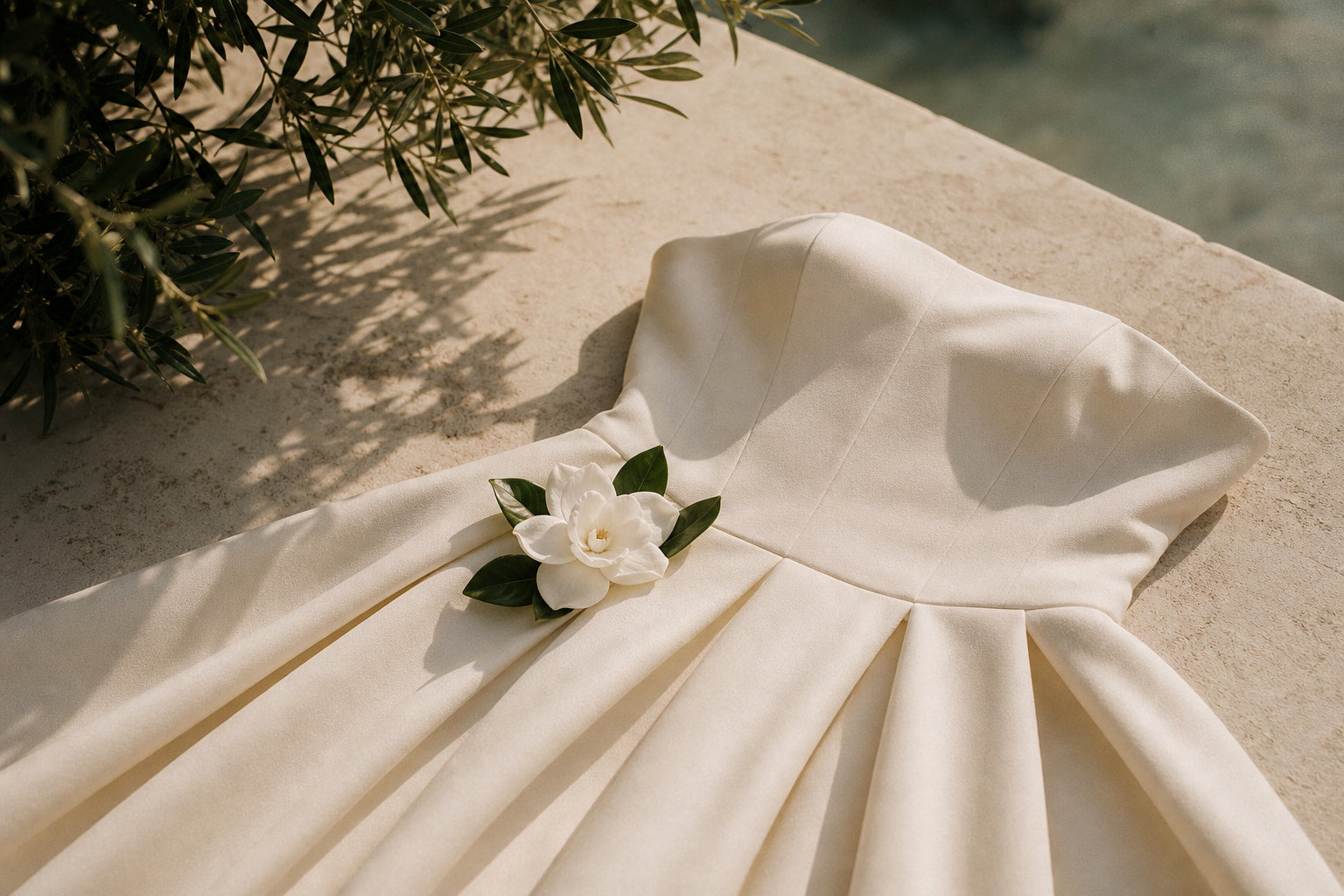
Off-shoulder and one-shoulder styles are also worth considering. By exposing the shoulder entirely, these cuts reframe it as a deliberate design feature rather than something to minimise. The elegant Santorini strapless dress achieves exactly this: the strapless construction draws the eye to the collarbone and décolletage rather than to the shoulder width.
What to avoid: Puff sleeves, cap sleeves, and strong horizontal shoulder seaming all add visual width. Boatneck necklines, which run parallel to the shoulder line, amplify width rather than reduce it.
For a more detailed breakdown with specific style examples, our article on the best dresses for broad shoulders and what to avoid covers this in full.
Hemline: A slightly fuller skirt, whether A-line or fit-and-flare, adds volume to the lower body and balances the width of the shoulder. Column and sheath dresses can work beautifully, but only if the shoulder detail is deliberately minimal.
Understanding how silhouette interacts with body proportion is well-documented in fashion history. The concept of dress silhouette as a structural design tool dates to the mid-twentieth century and remains the foundation of how pattern makers approach fit today.

Fabric and Occasion: Completing the Picture
Silhouette is only half the equation. The fabric a dress is made from determines whether that silhouette actually holds its intended shape on the body, and the occasion determines how much structure is appropriate.
For eveningwear: A structured knit or velvet holds its silhouette beautifully under low light. The velvet designer old money style dress is cut to sit close to the body without clinging, and the weight of the velvet keeps the hem from shifting. Velvet also absorbs light rather than reflecting it, which softens the outline of any figure. Browse the full evening dresses selection for further options.
For daywear: Lighter fabrics like cotton voile, linen, and fine jersey allow more movement and are more forgiving in warm weather. The dreamy retro gentle floral dress uses a soft floral print on a fluid fabric that works across several body shapes because the pattern breaks up the outline of the body rather than defining it.
For transitional and cooler months: Wool and heavier knits offer the most structure. A wool dress holds its shape through a full day of wear without stretching or pulling at the seams. If you are considering a wool style, our guide to buying a wool dress that doesn't itch covers what to look for in fibre content and construction.
A note on print and pattern: Vertical stripes and small-scale prints work across most body shapes. Large-scale florals and bold horizontal patterns are best used with intention: a large print on the upper body adds visual volume there, which suits pear shapes; the same print across the hip line does the opposite of what most women want.
Harper's Bazaar has noted that the relationship between print scale and perceived body proportion is one of the most underestimated tools in personal styling, and it applies as much to dress fabric choice as to any other garment.

| Body Shape | Best Silhouette | Neckline to Prioritise | Fabric Choice | Avoid |
|---|---|---|---|---|
| Hourglass | Wrap, belted, fitted sheath | V-neck, square neck, sweetheart | Crepe, ponte, fine wool jersey | Boxy or oversized cuts that hide the waist |
| Pear | A-line, fit-and-flare | Boat neck, off-shoulder, wide scoop | Fluid crepe skirt, structured bodice | Horizontal seaming at hip, clingy jersey below waist |
| Apple | Empire waist, wrap, pleated | V-neck, wrap collar | Ponte, structured wovens, heavier knit | Tight fit across midsection, horizontal waist seaming |
| Column / Rectangle | Fit-and-flare, wrap, belted styles | V-neck, wrap collar, plunge | Jersey, crepe, lightweight wool | Shapeless shift dresses with no waist definition |
| Petite | A-line (above knee), column, mini | V-neck, deep scoop | Lightweight wovens, fine knit | Midi A-line, wide belts, strong horizontal seaming |
| Broad Shoulders | A-line, fit-and-flare, strapless | V-neck, deep scoop, off-shoulder | Fabric with drape at shoulder, velvet, crepe | Puff sleeves, cap sleeves, boatneck |
Frequently asked questions
What is the most universally flattering dress silhouette?
The A-line is the closest thing to a universal silhouette. It fits close through the bodice, defines the waist, and then flares gently from the hip, which suits almost every body shape. The Lovau style A-line knitted dress is a practical example of how this silhouette translates into a wearable, polished everyday dress.
How do I know if a dress fits correctly at the waist?
A well-fitted dress should sit at your natural waist, which is the narrowest point of your torso, typically an inch or two above the navel. If the waist seam sits lower than this, it will shorten the torso and widen the hip visually. If it sits higher, it creates an empire-line effect. Neither is wrong, but both are deliberate design choices rather than neutral ones. Our article on small alterations that transform an outfit explains how a tailor can reposition a waist seam if needed.
Can petite women wear maxi dresses?
Yes, but with specific conditions. A maxi dress on a petite frame works best in a column or sheath silhouette rather than a full gathered skirt. The fabric should be lightweight so it does not overwhelm the frame. A high slit or a hemline that shows the ankle and foot also helps maintain the impression of length. Avoid styles where the waist seam falls below the natural waist, as this shortens the torso further.
What kind of dress works best for a formal evening occasion regardless of body shape?
A well-cut midi or maxi dress in a structured fabric, whether velvet, heavier crepe, or a quality knit, reads as formal across almost every silhouette. The key is that the fabric holds its shape through the evening without stretching or wrinkling. The slim-fit beaded knit long-sleeve dress is a strong choice here: the beaded detail adds visual interest without relying on a bold silhouette, and the knit construction holds its shape well under movement.
Dressing well for your body shape is not a set of rules to follow reluctantly. It is a practical understanding of proportion that, once internalised, makes getting dressed considerably more straightforward. The silhouette principles outlined here are consistent enough to rely on, and flexible enough to adapt to your own preferences. Start with one or two shapes that address your specific proportions, invest in quality fabric, and consider a tailor for anything that fits well everywhere except one small detail. Explore the full range of flattering women's dresses at Lovau to find styles built around exactly these principles.