


Preventing Sweat Stains on Premium Cotton Polos
Reading time 13 min • 2575 words
A well-chosen polo is one of the hardest-working pieces in a man's wardrobe. Worn through warm evenings on a terrace, long days at the office, or weekends on the coast, it takes a quiet kind of punishment. The problem is that premium cotton, for all its breathability and hand-feel, is not forgiving when perspiration is left to settle into the weave.
Sweat stains are not simply a laundering failure. They are the result of a chain of small decisions: the antiperspirant you use, the moment you wash, the temperature you choose, and, critically, the fabric itself. Getting any one of those decisions wrong can permanently alter the collar or underarm of a shirt that deserved better.
This guide addresses the problem at every stage, from choosing the right fabric construction to the specific steps that protect a polo between wearings. The advice applies to any premium cotton polo in your wardrobe, and where certain fabrics or finishes offer a genuine structural advantage, those are named directly.
Key takeaways
- Apply antiperspirant the night before and let it dry fully before dressing to reduce aluminium transfer onto fabric.
- Mercerized cotton resists staining better than standard cotton because its denser fibre structure absorbs less perspiration.
- Rinse the underarm area with cold water immediately after wearing, before any stain has time to oxidise.
- Avoid high-heat tumble drying, which permanently sets protein-based sweat stains into cotton fibres.
- Rotate your polos across at least four or five pieces so no single garment absorbs daily wear pressure.
In this guide
- Why Cotton Polos Are Particularly Vulnerable to Sweat Stains
- Choosing the Right Fabric to Reduce Staining Risk
- Daily Habits That Prevent Stains Before They Form
- Immediate After-Wear Care: The Step Most Men Skip
- Washing and Drying: Where Premium Polos Are Most Commonly Damaged
- When to Invest in Stain-Resistant Fabric Constructions
- Frequently asked questions
Why Cotton Polos Are Particularly Vulnerable to Sweat Stains
Cotton is a natural, cellulosic fibre. It absorbs moisture readily, which is precisely why it feels comfortable against skin in warm weather. But that same absorbency means perspiration, along with the proteins, salts, and urea it carries, soaks directly into the fibre rather than sitting on the surface.
The yellow or grey discolouration associated with underarm stains is not caused by sweat alone. It is the reaction between aluminium compounds in antiperspirant and the proteins in perspiration, combined with oxidation over time. Aluminium-based antiperspirant compounds bond with the keratin in sweat and, when left in contact with cotton fibres at warm temperatures, create a stain that standard washing cannot fully reverse.
Standard cotton has an open fibre structure that draws this mixture deep into the yarn. Mercerized cotton, by contrast, has been treated under tension with a sodium hydroxide solution, which swells the fibre, flattens the cuticle, and creates a smoother, denser surface. That denser surface is measurably less absorbent at the fibre level, which means staining agents sit closer to the surface and are easier to remove in the wash.
If you want to understand why the fabric finish matters so much, the article on mercerized cotton versus regular cotton covers the structural differences in practical detail. The short version: not all cotton polos carry the same risk.
Expert insightStains set faster in heat. If you have been active in a polo, hang it in a cool, ventilated spot for thirty minutes before placing it in a laundry bag. That single step slows the oxidation process considerably.

Choosing the Right Fabric to Reduce Staining Risk
Prevention starts at the point of purchase. The construction and finish of a polo's fabric determines how much perspiration it retains and how easily that perspiration releases in the wash.
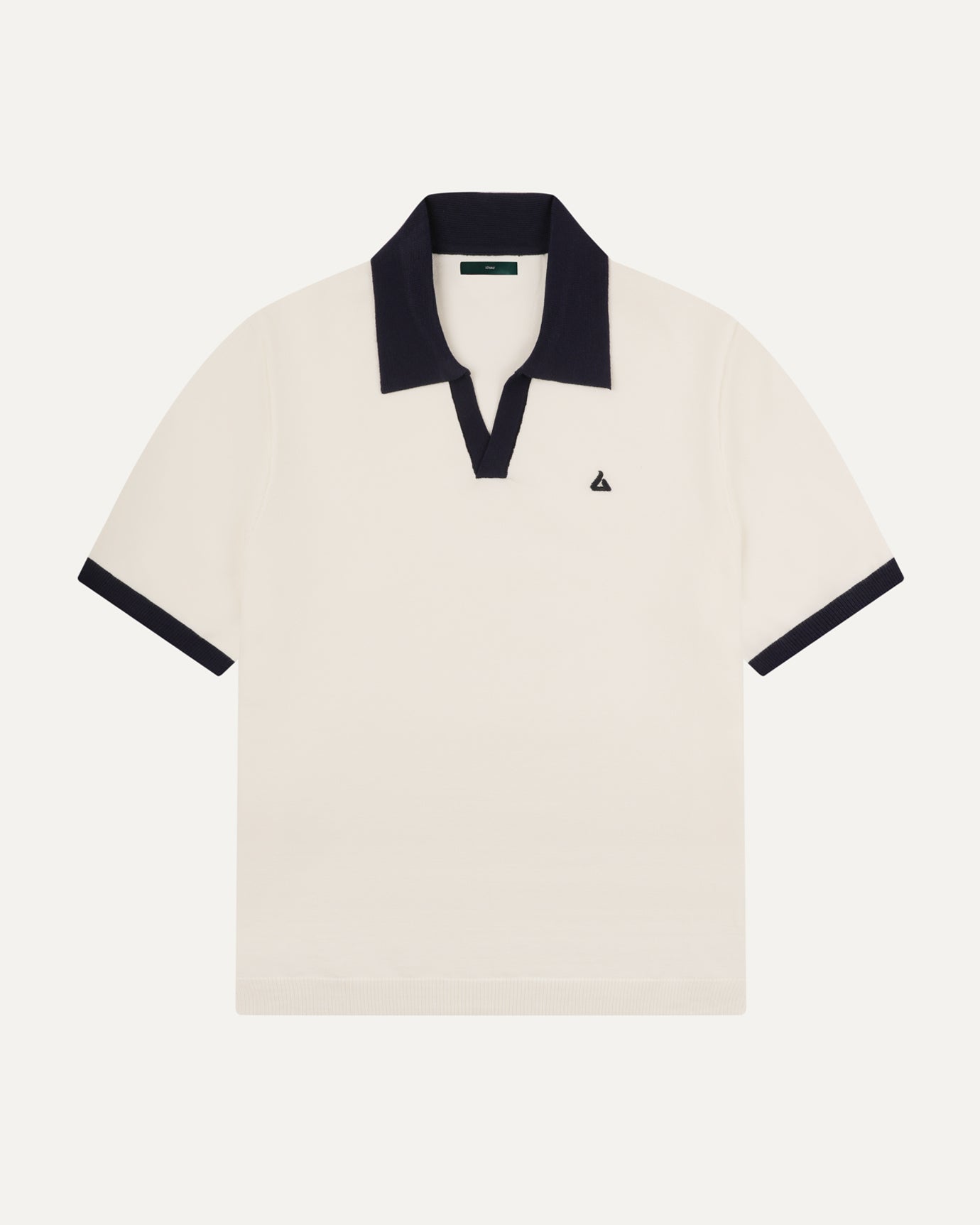
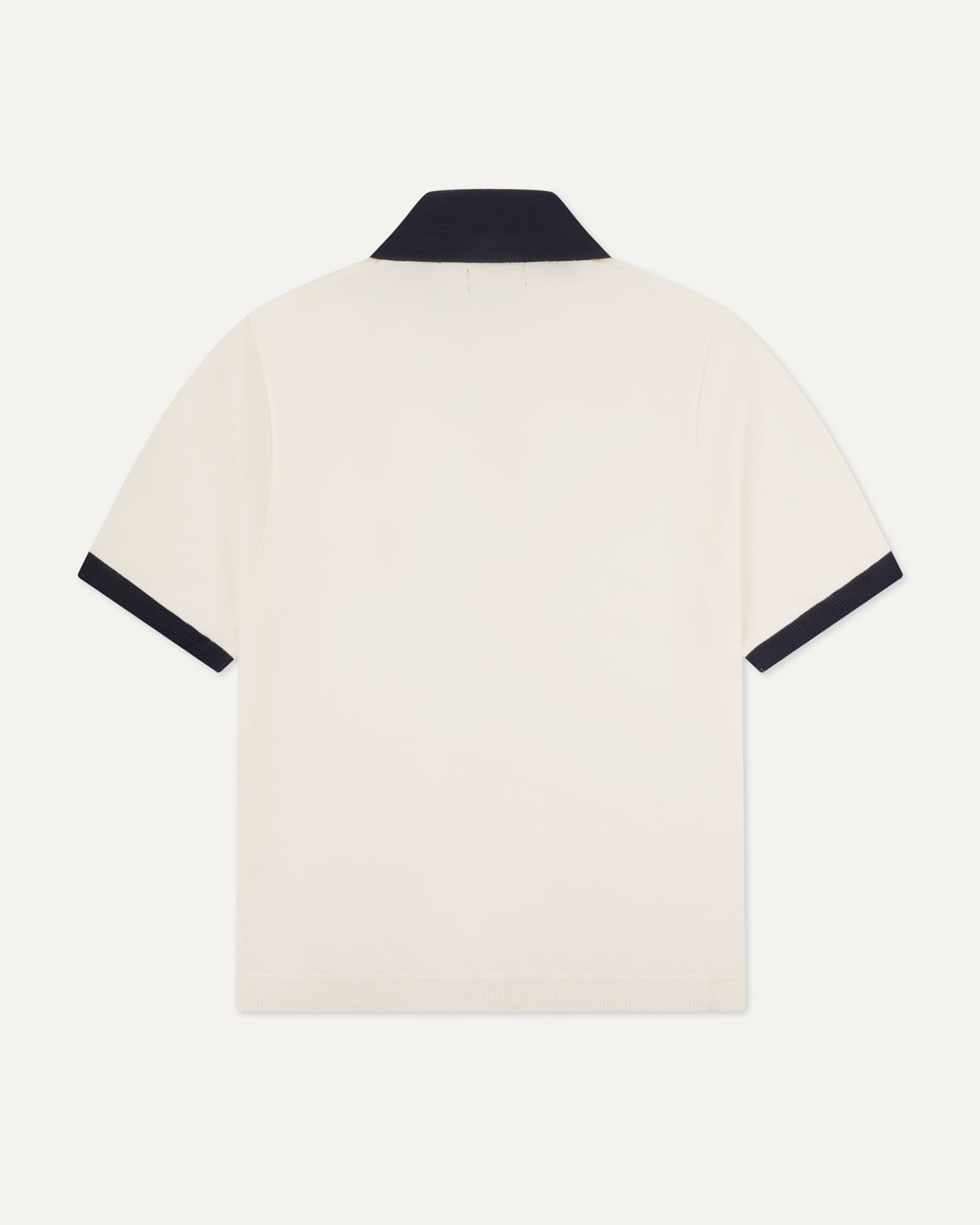
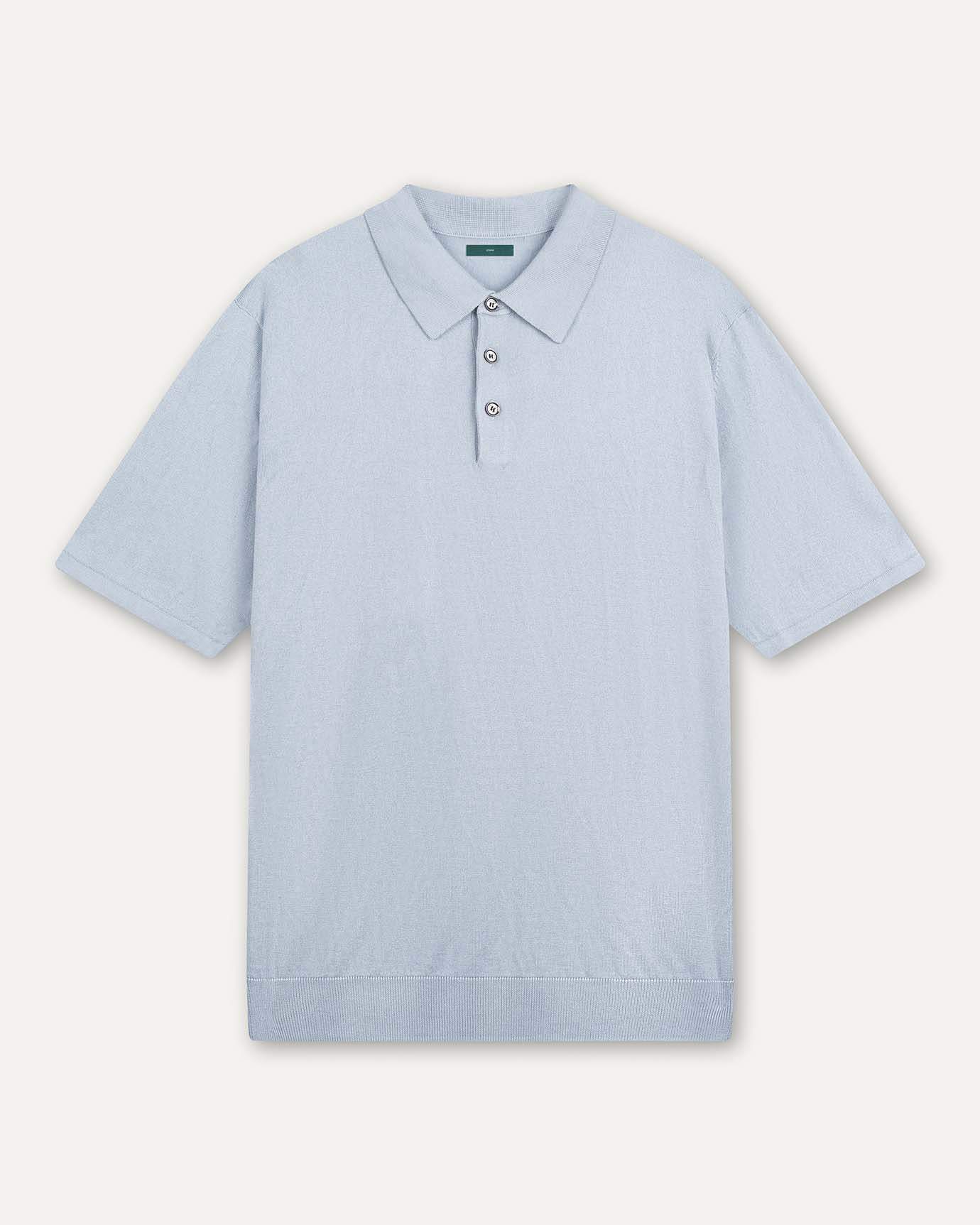
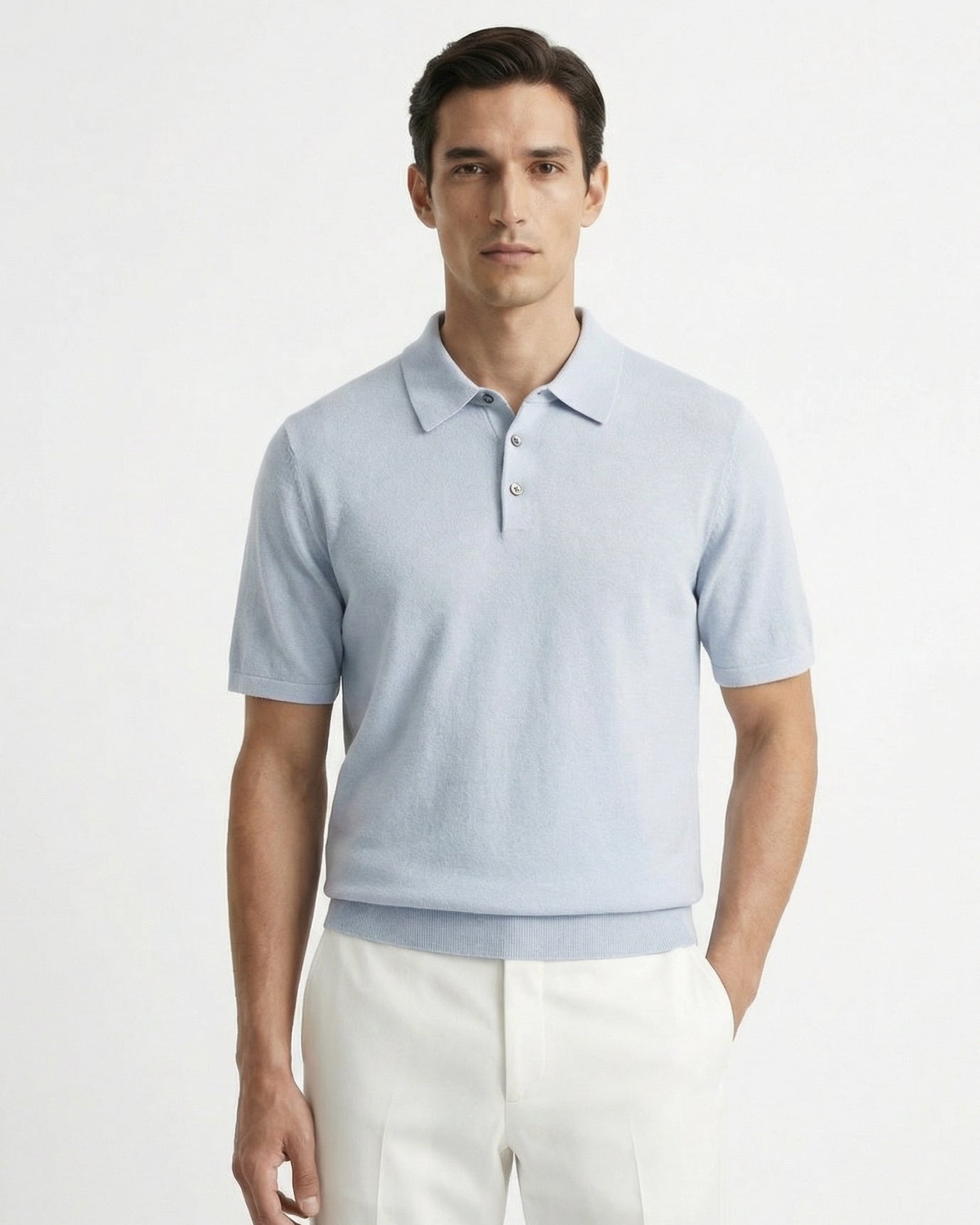
Mercerized cotton is the most practical choice for men who wear polos regularly in warm conditions. The mercerization process tightens the fibre structure, adds a subtle lustre, and reduces the surface area available for stain compounds to penetrate. The mercerized blended cotton polo is built on exactly this principle: a tight, treated weave that holds its colour and resists the kind of grey underarm dulling that plagues cheaper shirts after a season.
For occasions where heat and exertion are unavoidable, double mercerized cotton takes the process one step further. The high-end double mercerized cotton silk long-sleeve polo combines that tighter fibre finish with a silk component that is naturally less absorbent than cotton, giving the fabric a genuine structural advantage against moisture retention.
Linen blends are another practical option for summer. Linen fibres are hollow, which allows air to circulate and moisture to wick away from the body rather than pooling at the underarm. The linen blend knitted polo handles warm-weather wearing with less moisture retention than a pure cotton equivalent, and its looser knit structure dries faster between wears.
Silk blends, including acetate and mulberry silk compositions, are the least absorbent of the premium options. If you are concerned about staining and want a polo that can move from a business lunch to an outdoor setting without visible moisture stress, a silk-blend construction is worth considering. The broader case for these fabrics is made well in the piece on why silk-blend knits are worth the investment.
For the full range of options across constructions and price points, the men's short sleeve polo shirts collection covers the breadth of what is available.
Expert insightA polo with a tighter knit or woven structure, rather than a loose jersey weave, gives perspiration less physical space to penetrate. When buying, hold the fabric up to light: fewer visible gaps between yarns generally means better stain resistance.

Daily Habits That Prevent Stains Before They Form
The most effective stain prevention happens before you put the shirt on. These are not complicated steps, but they require consistency.
Apply antiperspirant the night before. This is the single most impactful change most men can make. When antiperspirant is applied to dry skin and given six to eight hours to absorb, the aluminium compounds bind fully with the sweat ducts before any fabric contact occurs. Applied in the morning and dressed over immediately, those same compounds transfer directly onto the cotton while still wet.
Let antiperspirant dry completely. If morning application is the only option, wait a minimum of five minutes, ideally ten, before putting on your polo. Visible residue on fabric is a reliable indicator that transfer is occurring.
Consider switching to an aluminium-free deodorant. Aluminium-free formulas do not prevent perspiration in the same way, but they eliminate the chemical reaction responsible for the yellow staining that no amount of washing can reverse. For men who run warm, the trade-off is worth evaluating.
Wear an undershirt in high-exertion contexts. A fitted cotton or modal crew-neck worn beneath a polo acts as a barrier layer. It absorbs the bulk of perspiration before it reaches the outer garment. This is particularly relevant if you are wearing a finer polo, such as the fine cotton Italian jacquard polo, in a setting where movement or warmth is unavoidable. The undershirt should be lightweight enough that it adds no visible bulk at the collar.
Rotate your polos. Wearing the same shirt two days in succession, even if it appears clean, concentrates perspiration residue in the same fibres repeatedly. A rotation of four or five polos gives each garment time to air fully between wearings, which dramatically slows the cumulative build-up of staining compounds.

Immediate After-Wear Care: The Step Most Men Skip
The window between taking a polo off and placing it in the laundry is where most permanent staining is decided. Perspiration compounds begin oxidising within hours of exposure to air. Once oxidation is complete, the stain is chemically bonded to the fibre and standard detergents cannot break it down fully.
Rinse the underarm area under cold water immediately after wearing. Cold water is essential here. Hot water sets protein-based stains. A thirty-second cold rinse at the underarm, followed by a gentle press with a clean towel, removes the majority of fresh perspiration before any oxidation begins.
Do not hang a damp polo in a closed wardrobe. Warmth and low airflow accelerate oxidation and can encourage mildew on natural fibres. Hang it in a ventilated space until fully dry before storing.
For persistent residue, use a diluted white vinegar solution. One part white vinegar to three parts cold water, applied directly to the affected area and left for fifteen minutes before rinsing, neutralises the alkaline residue left by many antiperspirants. This is safe on mercerized cotton and most premium knits. Avoid on silk-blend compositions without testing a hidden area first.
If you own white or pale polos specifically, the detailed care routine in the best ways to keep white polos looking brand new covers the full sequence for maintaining colour integrity over time.
Expert insightNever apply stain remover to a dry stain without dampening the area first. Dry application of concentrated enzyme cleaners can create a bleach-like ring on premium cotton that is harder to remove than the original stain.

Washing and Drying: Where Premium Polos Are Most Commonly Damaged
The wash cycle is where most men inadvertently set the stains they were trying to remove.
Wash in cold or cool water, 30°C maximum. Heat is the enemy of protein-based stains. A 40°C or 60°C cycle will lock staining compounds into the fibre permanently. Most premium cotton polos, including those in the long sleeve polos collection, are best washed at 30°C on a gentle cycle.
Turn the polo inside out before washing. This protects the outer surface from friction against other garments and concentrates the mechanical action of the wash on the inner surface, where perspiration residue is highest.
Use a liquid detergent, not a powder. Powder detergents can leave residue in the weave of tightly constructed fabrics, particularly mercerized cotton. Liquid formulas dissolve fully and rinse clean. An enzyme-based liquid is most effective at breaking down the protein components of sweat.
Avoid fabric softener on cotton polos. Softener coats the fibre surface with a waxy film that reduces absorbency in the short term but traps residue over time and accelerates yellowing at the underarm.
Air dry, always. Tumble drying, even on a low setting, applies heat to fibres that may still carry trace staining compounds. That heat sets whatever remains. Lay the polo flat on a clean surface or hang it on a padded hanger away from direct sunlight, which can bleach colour unevenly on dyed fabrics.
For men building a wardrobe of pieces worth caring for properly, the old money polo shirt navy blue and the old money polo shirt bordeaux are two well-constructed examples of mid-weight cotton polos that respond well to the care routine described above.

When to Invest in Stain-Resistant Fabric Constructions
There is a point at which prevention through habit reaches its practical limit, particularly for men who travel frequently, work in warm offices, or wear polos through active summer days. At that point, the fabric construction itself becomes the primary defence.
The marbella cooling acetate silk polo is built around a fibre composition that is inherently less absorbent than cotton. Acetate and silk both carry moisture away from the skin rather than absorbing it into the yarn, which means the conditions for stain formation are structurally reduced. The fabric also dries faster, which shortens the window in which oxidation can occur.
For cooler months, when a heavier knit is appropriate, a wool or cashmere blend offers similar advantages. Wool fibres have a natural lanolin coating that resists moisture absorption at the surface level. The old money wool blend polo brings this property to a classic polo silhouette, making it a practical choice for transitional weather when perspiration is still a factor but lighter fabrics feel insufficient.
The broader guide to best polo shirts for men in 2026 covers fabric options across the full range of constructions available, including how different fibres perform across seasons and settings. If you are building a wardrobe with longevity in mind, understanding the material composition of each piece is as important as the cut.
For men whose wardrobe extends beyond polos into full old money menswear, the same principles of fabric selection and immediate after-care apply across shirts, knitwear, and tailored pieces.

| Fabric Type | Stain Resistance | Dries Quickly | Safe Wash Temp | Best For |
|---|---|---|---|---|
| Standard cotton jersey | Low | No | 30°C cold wash | Casual, low-exertion wear |
| Mercerized cotton | Medium-High | Moderate | 30°C gentle cycle | Daily wear, office, travel |
| Double mercerized cotton/silk blend | High | Yes | 30°C delicate cycle | Warm weather, frequent wearing |
| Linen blend knit | Medium | Yes | 30°C gentle cycle | Summer, outdoor settings |
| Acetate/mulberry silk blend | Very High | Yes | 20°C hand wash or delicate | Occasions, warm climates |
| Wool/cashmere blend | High | Moderate | 20°C wool cycle | Cooler months, transitional seasons |
Frequently asked questions
Can sweat stains be fully removed from a premium cotton polo once they have set?
It depends on how long the stain has been present. Fresh stains, addressed within twenty-four hours using cold water and an enzyme detergent, can usually be removed completely. Oxidised yellow stains that have been through a hot wash cycle are significantly harder to reverse. An oxygen-based bleach soak in cold water is the most effective treatment at that stage, but results are not guaranteed on heavily set stains. Prevention is always more reliable than removal.
Does mercerized cotton actually resist sweat stains better than regular cotton?
Yes, structurally. The mercerization process compresses and smooths the cotton fibre, reducing its surface absorbency. Perspiration and antiperspirant compounds penetrate less deeply into the yarn, which means they release more readily in the wash. The article on why mercerized cotton is worth the money explains the process and its practical benefits in detail.
Is it safe to use white vinegar on a coloured polo shirt?
Diluted white vinegar at a one-to-three ratio with cold water is generally safe on most cotton and linen blend polos, including coloured ones. It is an acid, so it neutralises the alkaline residue from antiperspirants without bleaching. Always test on an inside seam or hidden area first, and avoid using it on silk or acetate blends without checking the care label, as acidity can affect delicate protein-based fibres.
How often should a premium polo be washed to prevent stain build-up?
After every wearing in warm conditions. Allowing perspiration residue to accumulate across multiple wears before washing significantly increases the chance of permanent staining, even if the shirt appears visually clean. In cooler conditions where minimal perspiration occurred, airing the polo thoroughly and spot-treating any contact areas is sufficient for one additional wear before a full wash.
Sweat stains on a premium polo are almost entirely preventable with the right combination of fabric choice, daily habits, and care discipline. Apply antiperspirant the night before, rinse the underarm area immediately after wearing, wash cold, and air dry. Choose a construction, whether mercerized cotton, a linen blend, or a silk composite, that gives perspiration less structural purchase in the fibre. A polo bought at this level of quality should last years without visible degradation. For a complete view of the constructions worth considering, the best polo shirts for men guide covers the full range with the same attention to material detail.