


How to Tailor a Shirt to Hide a Dad Bod
Reading time 13 min • 2695 words
The term 'dad bod' describes a physique that is fuller through the midsection, broader at the waist than the chest, and entirely common among men in their thirties, forties, and beyond. It is not a problem to solve. It is a body to dress well.
The mistake most men make is reaching for a size larger to gain room, which only adds fabric where it is not needed and creates a shapeless result. The correct approach is a shirt cut in the right proportions, adjusted at the right points, in a fabric that cooperates with the body underneath it.
This guide covers the specific alterations, cuts, and cloth choices that produce a clean, composed silhouette. No oversized camouflage. No complicated layering tricks. Just well-considered tailoring.
Key takeaways
- Choose a shirt with a straight or very slightly tapered cut, not a slim or athletic fit that pulls across the midsection.
- Fabric weight matters: medium-weight linen and fine cotton drape over the body without clinging or adding visual bulk.
- The shirt length should cover the waistband fully when untucked, but never hang past the seat pocket.
- Vertical details, including plackets, fine stripes, and button lines, draw the eye down and lengthen the torso.
- A single targeted alteration at the side seams by a tailor costs very little and changes the entire silhouette.
In this guide
- Understanding Why Standard Shirt Fits Fail the Fuller Midsection
- The Specific Alterations That Change Everything
- Fabric Choices That Work With a Fuller Body
- Cut Details and Visual Tricks That Slim the Torso
- How to Wear a Tailored Shirt: Tuck, Untuck, and Pair
- Finding a Tailor and What to Expect
- Frequently asked questions
Understanding Why Standard Shirt Fits Fail the Fuller Midsection
Most mass-market shirts are drafted for one of two body types: slim or athletic. Both assume a waist that is noticeably narrower than the chest. For a man whose waist and chest are closer in measurement, a slim-fit shirt pulls horizontally across the stomach, popping buttons and creating a horizontal stress line that is the opposite of flattering. An athletic fit is marginally better but still tapers aggressively below the chest.
Going up a size to solve this creates a different problem. The collar gaps, the shoulders overhang, and the shirt billows at the chest and arms. The body is swimming in fabric intended for a different shape.
The correct solution is a classic or regular fit shirt, taken in at the side seams by a tailor. This gives you the chest and collar of your actual size, the stomach room you need, and still removes the excess fabric at the back and flanks. According to Permanent Style's guide to shirt fit, the side seam is the single most impactful alteration on a shirt and one of the least expensive. A good tailor can do it in under thirty minutes.
Before any alteration, the shirt must fit correctly at the shoulders. The seam should sit exactly at the shoulder point. If it does not, no other adjustment will look right. Shoulders cannot be moved without significant cost and structural disruption.
Expert insightWhen trying on a shirt before tailoring, button it fully and raise both arms above your head. If the hem lifts past your waistband or the buttons pull, you need either a longer shirt or a size up in the body before the tailor touches it.
The Specific Alterations That Change Everything
Side seam suppression is the foundational alteration. A tailor takes in the shirt along both side seams from the armhole down to the hem, creating a gentle outward curve that follows the body rather than hanging straight. For a man with a broader waist, this curve is less pronounced than on a slim figure, but it still removes the balloon of excess fabric at the back and flanks.
Sleeve pitch adjustment is less commonly discussed but relevant for men who carry weight in the upper arms. If the sleeve twists forward or backward when the arm hangs naturally, the pitch is off. A tailor can rotate the sleeve head to correct this, which also affects how the shirt sits across the upper back.
Shirt length is critical for men who prefer to wear their shirt untucked, which is often the cleaner choice with a fuller midsection. The hem should fall to the point where the trouser pocket begins, or roughly mid-seat. Longer than this and the shirt reads as a smock. Shorter and it rides up with movement. If a shirt is too long, a tailor can shorten the hem and re-curve it. This is a straightforward alteration.
Collar and cuff alterations are rarely necessary for fit reasons, but if the collar is too tight due to a broader neck, a tailor can let out the collar band or add a small extension. Never wear a collar that forces you to leave the top button undone for comfort. It reads as discomfort rather than intention.
For a starting point in the right proportions, the high count fine linen shirt in light blue is cut with enough chest room to accommodate a fuller torso without excess fabric at the shoulders, making it an efficient base for side seam work.
Expert insightAsk your tailor to leave at least 1.5cm of seam allowance when taking in the side seams. This preserves the option to let the shirt out again if your measurements change.

Fabric Choices That Work With a Fuller Body
Fabric is not a secondary consideration. It is structural. The wrong cloth will undermine a perfect alteration; the right cloth will do half the work on its own.
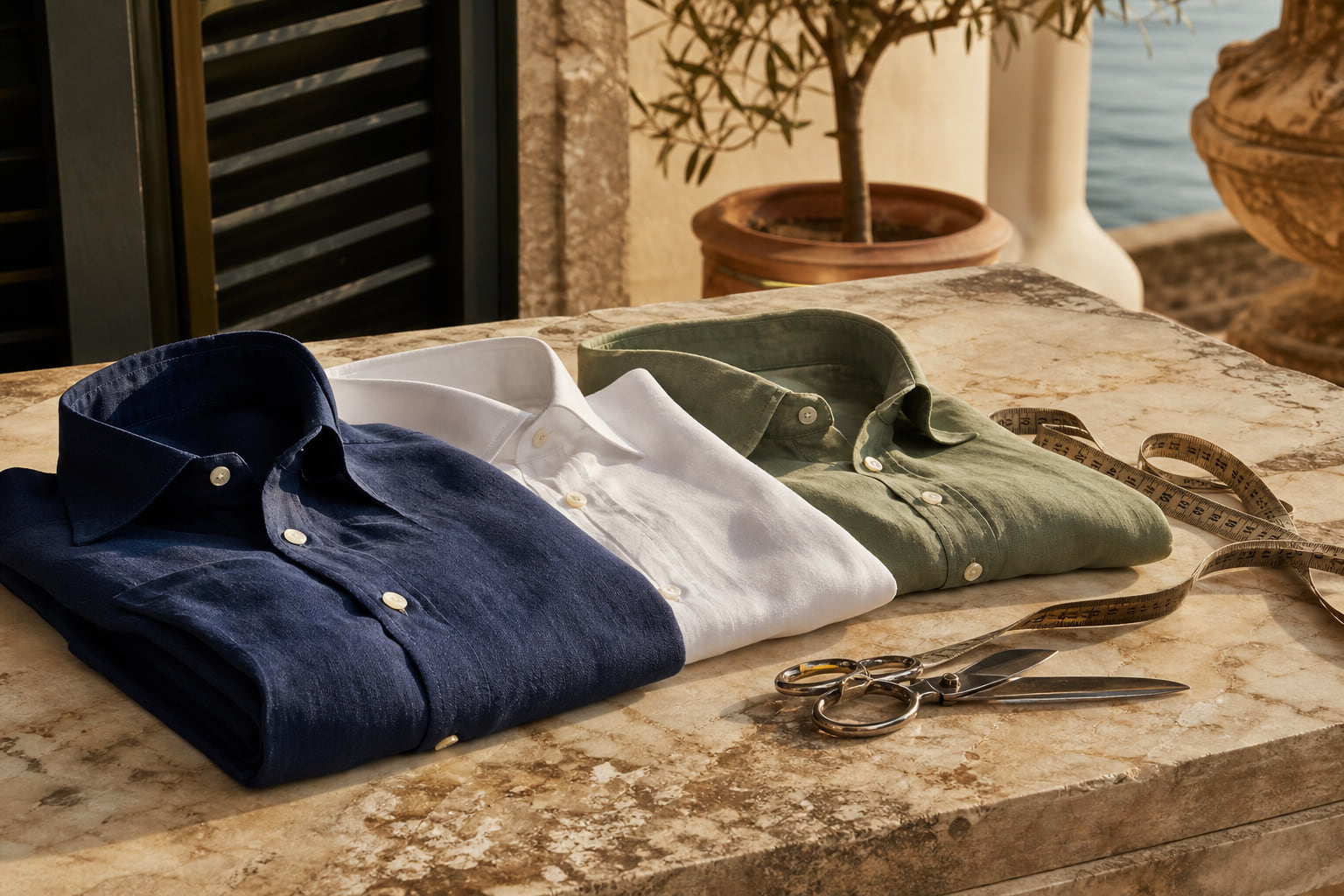
Medium-weight linen is the most forgiving fabric for a fuller midsection. It has a natural drape that skims the body without clinging, breathes well so it does not press against the stomach when warm, and holds its shape across the day. A high thread count linen, sometimes called fine linen, sits closer to the texture of cotton but retains the drape. The high count fine white linen shirt is a good example of this category: the fabric is substantial enough to hang cleanly but refined enough for a dressed occasion.
Lyocell-linen blends are worth understanding. Lyocell adds a slight fluidity and reduces wrinkling while keeping the drape properties of linen. The retro vintage lyocell linen shirt uses this combination and sits particularly well when worn untucked, as the blend resists the stiffening that can make a pure linen shirt bunch at the waist.
Avoid fabrics with horizontal stretch. Jersey and ponte knits cling to the midsection and create a visual map of everything underneath. Similarly, thin poplin in bright white can be semi-transparent under strong light, which draws attention rather than deflecting it.
Also avoid very heavy fabrics in warm months. A thick oxford cloth shirt worn in summer heat will be pulled and distorted by perspiration, and the stiffness adds visual bulk. In cooler months, a brushed cotton or fine flannel is acceptable, but keep the weight moderate.
For versatility across seasons, the contemporary navy blue linen shirt in a structured linen weave sits cleanly over the body and takes tailoring well due to its consistent fabric density.
Expert insightHold a shirt up to a window before buying. If you can see your hand clearly through the fabric, it will be unforgiving in wear. A fabric with visible body is always the safer choice.

Cut Details and Visual Tricks That Slim the Torso
Tailoring is not only about what a tailor does with scissors and thread. The design details of a shirt itself create visual lines that the eye follows. Used correctly, these details draw attention vertically, which lengthens the torso and reduces the perceived width of the midsection.
Vertical elements include the button placket, fine stripes, and front darts. A shirt with a clean central placket and closely spaced buttons creates a strong vertical axis. The striped v neck linen shirt uses vertical stripe patterning to extend this effect across the full chest, which is one of the most effective visual tools available in shirting.
Collar shape affects how broad the chest and shoulders read. A spread collar or a moderate point collar opens the neckline and draws the eye upward and outward, which shifts focus away from the midsection. A very small or button-down collar can make the chest read narrower, which is not what a dad bod benefits from.
Pocket placement is a minor but real consideration. A chest pocket placed high on the shirt draws the eye upward. Avoid shirts with patch pockets at the hip, which sit exactly at the widest point of a fuller midsection and add visual mass there.
Colour and pattern: solid mid-tones and deep tones are the most straightforward choice. A high count fine black linen shirt in a refined fabric reads as slim and composed regardless of the body underneath it. Avoid large horizontal patterns and wide checks, which expand the perceived width of whatever they cover. Subtle textures and tone-on-tone patterns are a better choice if you want visual interest.
Browse the full men's shirts collection to compare cut and collar options across the range.

How to Wear a Tailored Shirt: Tuck, Untuck, and Pair
The decision to tuck or untuck has real consequences for how a tailored shirt reads on a fuller figure.
Untucked is often the stronger choice. A shirt worn untucked with a clean, curved hem creates a continuous vertical line from collar to hem that covers the waistband and the top of the trouser. This is only effective if the shirt length is correct, as discussed above. Paired with classy high-end wide-leg trousers, an untucked linen shirt in a matching or tonal palette produces a relaxed but composed silhouette that does not call attention to the midsection.
Tucked works well at more formal occasions, but requires that the shirt has been altered properly. A tucked shirt that pulls at the stomach is worse than an untucked one. If you choose to tuck, use a military tuck at the sides: pull the shirt taut at the side seams, fold the excess fabric backward toward the centre back, and tuck the whole panel in. This removes the lateral bulk without requiring a tailor.
Layering: an open overshirt or an unstructured jacket worn open over a fitted shirt adds a vertical frame to the body. The jacket lapels and open front create two vertical lines that run the full length of the torso. This is one of the oldest tricks in European dressing and it works because it is based on proportion, not concealment.
Footwear matters more than most men realise. A shoe or boot with a slight heel and a clean profile, such as the British style Chelsea boots in genuine leather, adds a few centimetres of height and extends the leg line, which improves the overall proportion of the silhouette. A flat, wide shoe shortens the leg and makes the midsection read as proportionally larger.
For a complete starting point in old money proportions, the Lovau men's old money collection covers shirts, trousers, and outerwear that work together as a system rather than individual pieces.

Finding a Tailor and What to Expect
A good local tailor is worth more than an expensive wardrobe. For shirt alterations, you do not need a bespoke house. Any competent alterations tailor, the kind found near dry cleaners or in independent men's shops, can handle side seam suppression, hem shortening, and sleeve pitch adjustment.
Bring the shirt on a hanger, not folded. Wear the trousers you intend to pair it with, so the tailor can judge the hem length in context. Be specific about what bothers you: 'the back billows when I tuck it in' or 'the shirt pulls across the stomach when I button it fully.' Specific observations lead to specific solutions.
What to budget: side seam suppression on both sides typically costs between fifteen and thirty euros or pounds, depending on the city. Hem shortening is similar. A full set of shirt alterations, including side seams, hem, and sleeve length, should not exceed fifty to sixty euros at a competent alterations shop. This is a small investment relative to the cost of a quality shirt.
For shirts worth tailoring, focus on those made from quality fabrics that will hold their shape after the alteration stitching. The san marino limited edition linen shirt and the contemporary light pink linen shirt are both cut in structured linen that responds well to side seam work without puckering at the alteration line.
The Gentleman's Gazette's comprehensive guide to shirt fit provides a thorough reference for understanding which measurements matter most before you sit down with a tailor, and it is worth reading once before your first fitting.

| Fabric | Drape | Cling Risk | Breathability | Takes Tailoring Well |
|---|---|---|---|---|
| Fine / High Count Linen | Excellent, structured drape | Very low | Very high | Yes, holds seam cleanly |
| Lyocell-Linen Blend | Fluid, skims the body | Low | High | Yes, minimal puckering |
| Cotton Poplin (thin) | Minimal drape, falls straight | Moderate, especially when damp | Moderate | Yes, but can pucker at side seams |
| Cotton Oxford | Moderate, holds shape | Low | Moderate | Yes, robust enough for alterations |
| Jersey / Stretch Knit | Clings to body contours | High | High | No, does not hold alteration stitching well |
| Heavy Flannel / Brushed Cotton | Stiff, adds visual bulk | Low | Low | Yes, but adds weight to the silhouette |
Frequently asked questions
Should I size up in a shirt to hide my stomach?
No. Sizing up creates excess fabric at the shoulders, chest, and arms that looks shapeless and draws more attention to the midsection, not less. Buy your correct chest size in a classic or regular fit, then have a tailor take in the side seams to remove the extra fabric through the waist and back. The result is a shirt that fits the body you have rather than one drafted for a different shape.
What is the best shirt length for wearing untucked over a fuller midsection?
The hem should fall to approximately the point where the trouser pocket begins, or mid-seat at the back. This covers the waistband entirely without creating a smock effect. If your shirt is longer than this, a tailor can shorten and re-curve the hem. A classy linen shirt cut with a straight, clean hem is a good starting point before any length adjustment.
Are vertical stripes actually useful or is that a myth?
They are genuinely useful, but the mechanism is proportion rather than optical illusion. A vertical stripe, including the button placket line, draws the eye along the length of the torso rather than across its width. Fine vertical stripes work better than wide ones, which can have the opposite effect. The key is that the stripe should be subtle enough to read as texture from a normal conversational distance.
Can I tailor a linen shirt without it puckering at the seams?
Yes, provided the tailor uses the correct needle gauge for linen and presses the seam flat after stitching. A high thread count linen, such as those found in the high count fine green linen shirt, is particularly well-suited to alteration because the tight weave holds the stitching without distortion. Always wash the shirt once before taking it to a tailor so the fabric has already gone through its initial shrinkage.
Dressing a fuller midsection well is a matter of proportion, fabric, and one or two targeted alterations. It does not require hiding anything. A shirt in the right cut, taken in at the side seams by a competent tailor, in a fabric that drapes rather than clings, will produce a silhouette that is clean, composed, and genuinely comfortable. Start with the fit, then address the details. To explore shirts built on the right proportions from the outset, the full old money shirts collection is the practical place to begin.