


How to Disguise a Midsection Without Wearing Baggy Clothes
Reading time 13 min • 2529 words
The instinct, when a man wants to conceal his midsection, is to reach for something larger. A roomier shirt, a longer jacket, a looser trouser. It is an understandable instinct and almost always the wrong one. Excess fabric does not disguise volume, it broadcasts it. Shapeless clothing reads as shapeless, not as a man who simply does not care about such things.
The real solution is proportion. A garment that fits the shoulders perfectly, skims the chest without pulling, and breaks cleanly at the hip does more for a man's silhouette than any amount of extra fabric draped over it. This is the principle that has governed tailoring in Naples, Milan, and London for generations, and it applies just as well to a man buying ready-to-wear today.
This guide addresses the specific problem practically, covering cut, fabric, colour, pattern, trouser construction, and the role a good bag plays in redirecting the eye. No oversizing required.
Key takeaways
- Structured, well-fitted clothing creates a cleaner silhouette than oversized pieces, which add visual bulk rather than hiding it.
- Vertical lines, high waistbands, and pleated trousers all draw the eye up and down rather than across the midsection.
- Fabric weight and drape matter as much as cut: linen, lyocell, and fine worsted wool skim the body without clinging.
- A well-chosen bag worn correctly shifts visual attention away from the torso entirely.
- Tucking a shirt in, even partially, creates a defined waist line that a loose untucked shirt destroys.
In this guide
- Why Oversized Clothing Makes the Problem Worse
- The Power of Vertical Lines and Strategic Pattern Placement
- Trouser Construction: High Waists, Pleats, and the Right Rise
- Shirt Fit, Fabric Weight, and the Tuck Question
- How a Well-Chosen Bag Redirects the Eye
- Putting It Together: A Practical Outfit Framework
- Frequently asked questions
Why Oversized Clothing Makes the Problem Worse
Before discussing solutions, it is worth understanding why the instinct toward larger clothing fails. When a shirt is too large, it creates a tent-like shape from shoulder to hip. The fabric does not follow the body's actual contours, so the eye reads the entire silhouette as wide. The midsection is not hidden inside that shape, it defines the shape.
A well-fitted garment, by contrast, follows the body from the shoulder down and releases cleanly at the hip. The eye reads the shoulder width, the chest, and the leg, rather than fixating on the widest point in between. This is the fundamental principle behind classic tailoring: structure and fit create the impression of a leaner frame, not concealment.
The shoulder seam is the single most important fit point. If it sits correctly on the shoulder bone, the rest of the garment tends to fall into place. A shirt with a shoulder seam hanging down the arm reads as borrowed clothing, and borrowed clothing reads as a man hiding something.
The practical rule: buy for your shoulders and chest, and have a tailor take in the body if needed. This applies to shirts, jackets, and even knitwear.
Expert insightA tailor's adjustment to take in the side seams of a shirt costs very little and transforms how it reads on the body. If you are buying ready-to-wear, factor in that cost from the start.
The Power of Vertical Lines and Strategic Pattern Placement
Vertical lines are the oldest trick in the tailor's vocabulary, and they work because the eye follows lines. A vertical stripe draws the gaze from shoulder to foot, compressing the apparent width of the torso in the process.
For shirting, a fine vertical stripe in a quality fabric is one of the most flattering choices a man with a fuller midsection can make. The Black Yellow Striped Linen Shirt is a good example of how a bold stripe, when executed in a refined fabric, creates strong vertical movement without reading as a costume. The same logic applies to the Naples Striped High Waisted Trousers, where the stripe runs the full length of the leg, making the lower half of the body look long and lean.
What to avoid: horizontal stripes across the midsection are the obvious trap, but wide checks and large-scale prints at the waist level do the same damage. If you enjoy pattern, keep it fine-scaled, or place it at the shoulder and chest where it reads as detail rather than width.
Solid colours in medium to dark tones are the safest foundation. Navy, olive, stone, and charcoal all recede visually. Bright colours and stark white at the torso catch the eye and draw attention to exactly the area you want to de-emphasise.
Expert insightA fine vertical stripe in linen or worsted wool is one of the few patterns that flatters almost every body type. The key is keeping the stripe narrow, under half a centimetre, so it reads as texture rather than graphic.

Trouser Construction: High Waists, Pleats, and the Right Rise
The trouser is where most men lose the battle before it starts. Low-rise trousers sit below the natural waist, which means the midsection has nowhere to go but out over the waistband. The result is a silhouette that looks wider and shorter than it needs to.
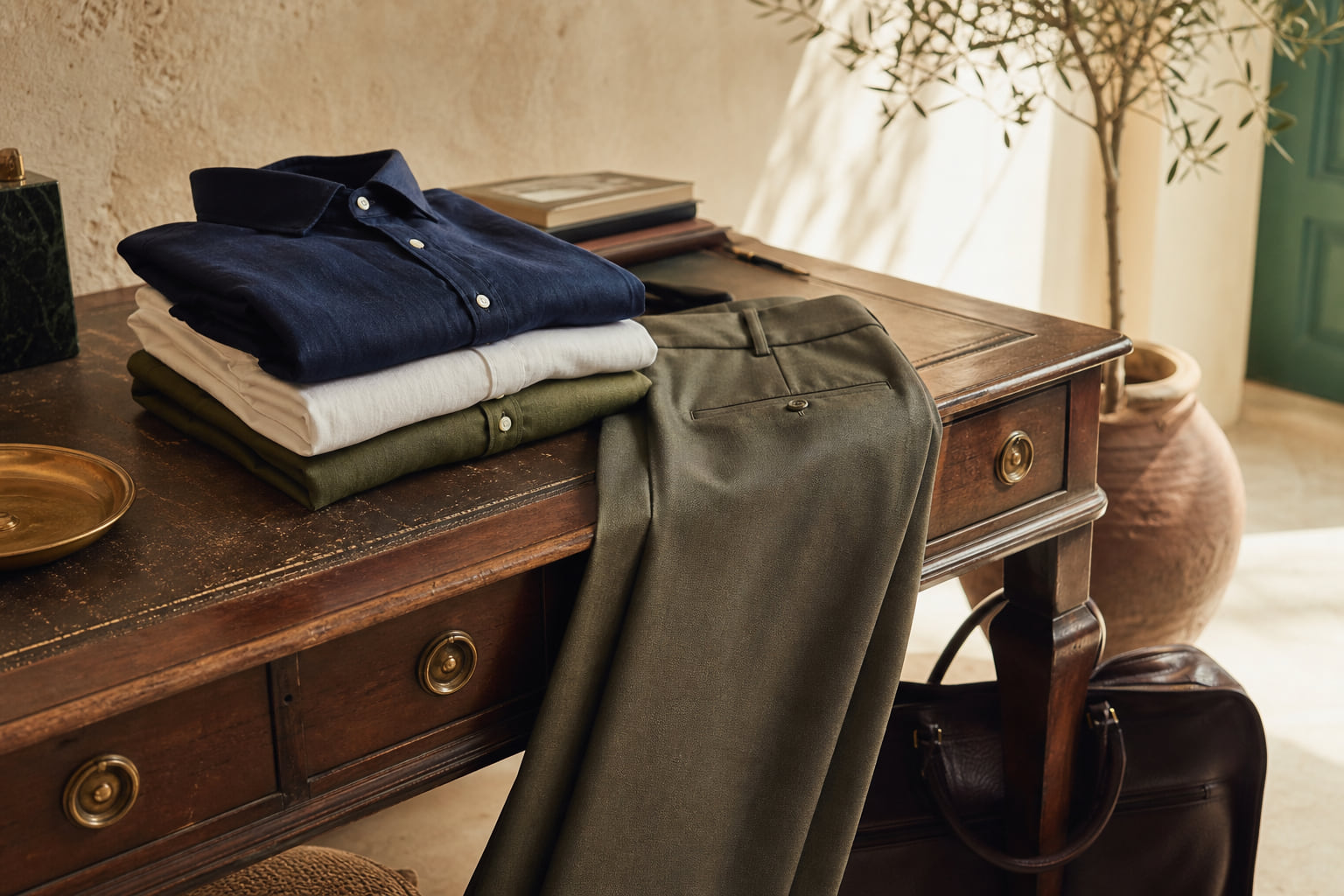
A higher-rise trouser, one that sits at or just below the natural waist, contains the midsection, creates a longer leg line, and gives the torso a defined structure. The Lovau Old Money Style Pleated Trousers are cut with precisely this in mind: the three-dimensional tailoring at the front creates room through the hip and thigh without the trouser looking baggy, while the waistband sits at a height that anchors the whole silhouette.
Pleats are often misunderstood. A forward pleat does not add bulk, it releases it where needed, through the seat and thigh, while allowing the trouser to taper cleanly below the knee. A flat-front trouser on a fuller figure pulls across the front and creates a far less flattering line. The Italian Trousers Old Money Style Worsted Wool in fine worsted wool drape with the kind of clean fall that only a properly weighted fabric can achieve.
For a relaxed but still composed option, the Old Money Style Trousers Loose Straight-Leg Pants offer a straight leg that flows from hip to ankle without clinging, which is the definition of fitting well without fitting tightly. Pair with a tucked linen shirt and the proportion reads as deliberate rather than casual.
Also worth reading: how to style linen shirts without looking wrinkled, because a well-pressed shirt tucked into a high-waisted trouser is one of the cleanest silhouettes in a man's wardrobe.
Expert insightForward pleats were standard on every well-dressed man's trousers until the 1990s. Their return is not a trend, it is a correction. They work because they follow the body's actual geometry.

Shirt Fit, Fabric Weight, and the Tuck Question
The shirt is the garment closest to the midsection, which makes it the most consequential choice. There are two failure modes: the shirt that is too tight, which pulls across the stomach and creates horizontal stress lines that point directly at the problem, and the shirt that is too loose, which creates the tent silhouette described earlier.
The correct fit skims the torso. There should be no pulling at the buttons, no fabric bunching at the sides, and the shirt should not balloon when the arms are raised. In fabric terms, linen, lyocell, and fine cotton all have a natural drape that falls away from the body slightly, which is exactly what you want. A shirt in a stiff or structured fabric will hold its shape away from the body in an unflattering way; a shirt in a clingy synthetic will reveal every contour.
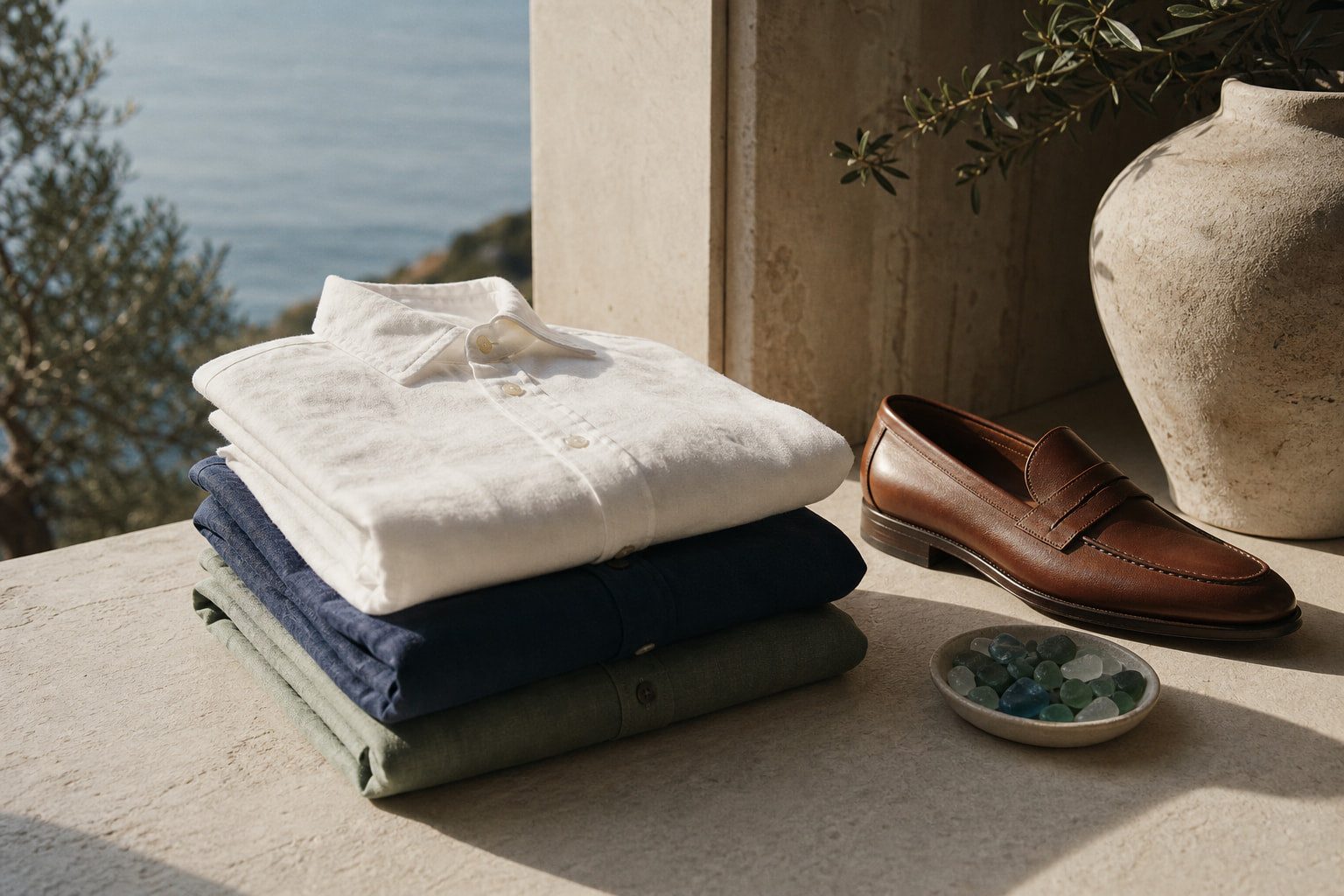
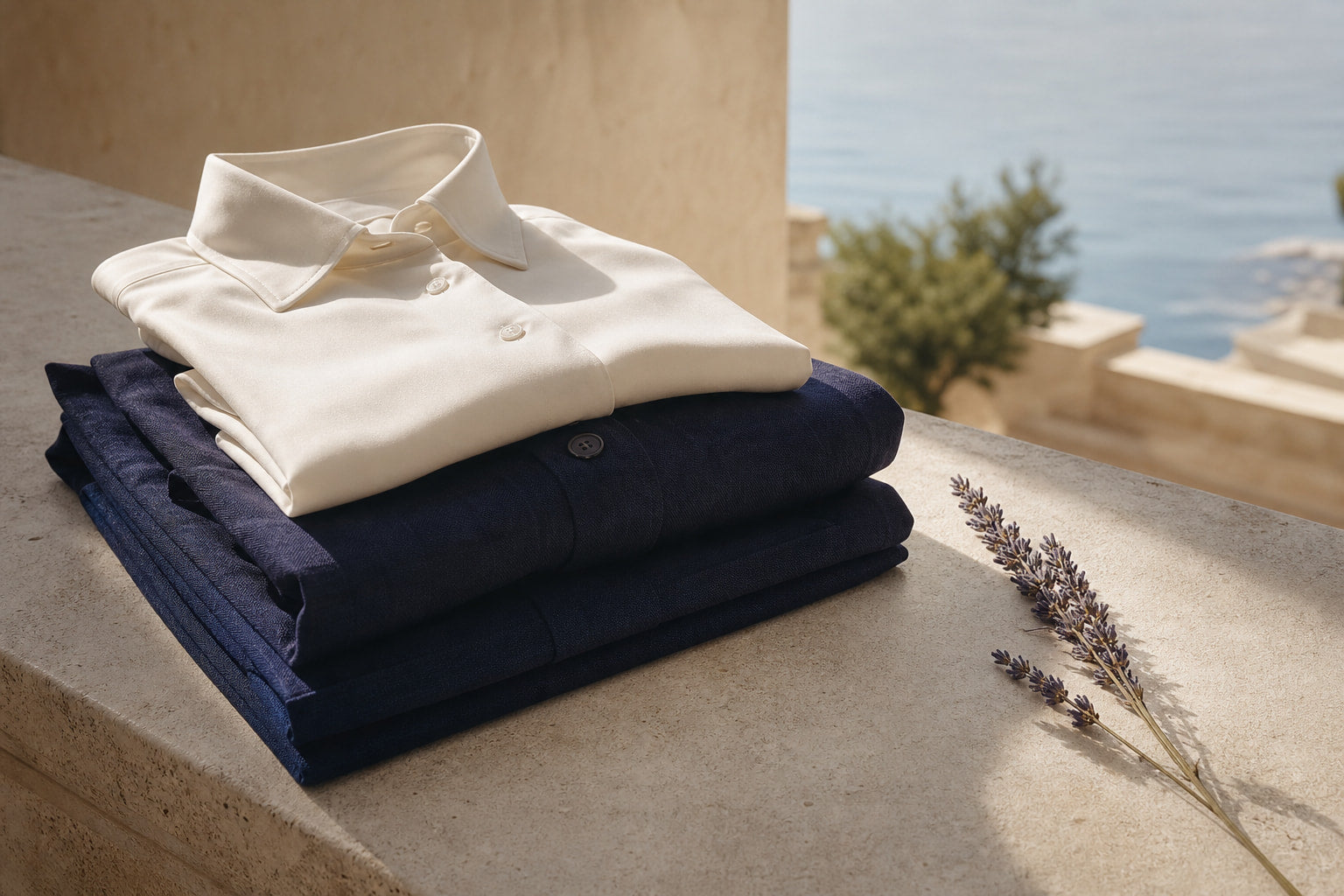
The Retro Vintage Lyocell Linen Shirt combines lyocell with linen for a fabric that drapes beautifully, breathes well, and holds its colour. The High Count Fine Navy Blue Fine Linen Shirt is worth noting specifically because high-count linen, with a finer weave than standard linen, drapes more smoothly against the body, creating a cleaner silhouette without the texture reading as casual.
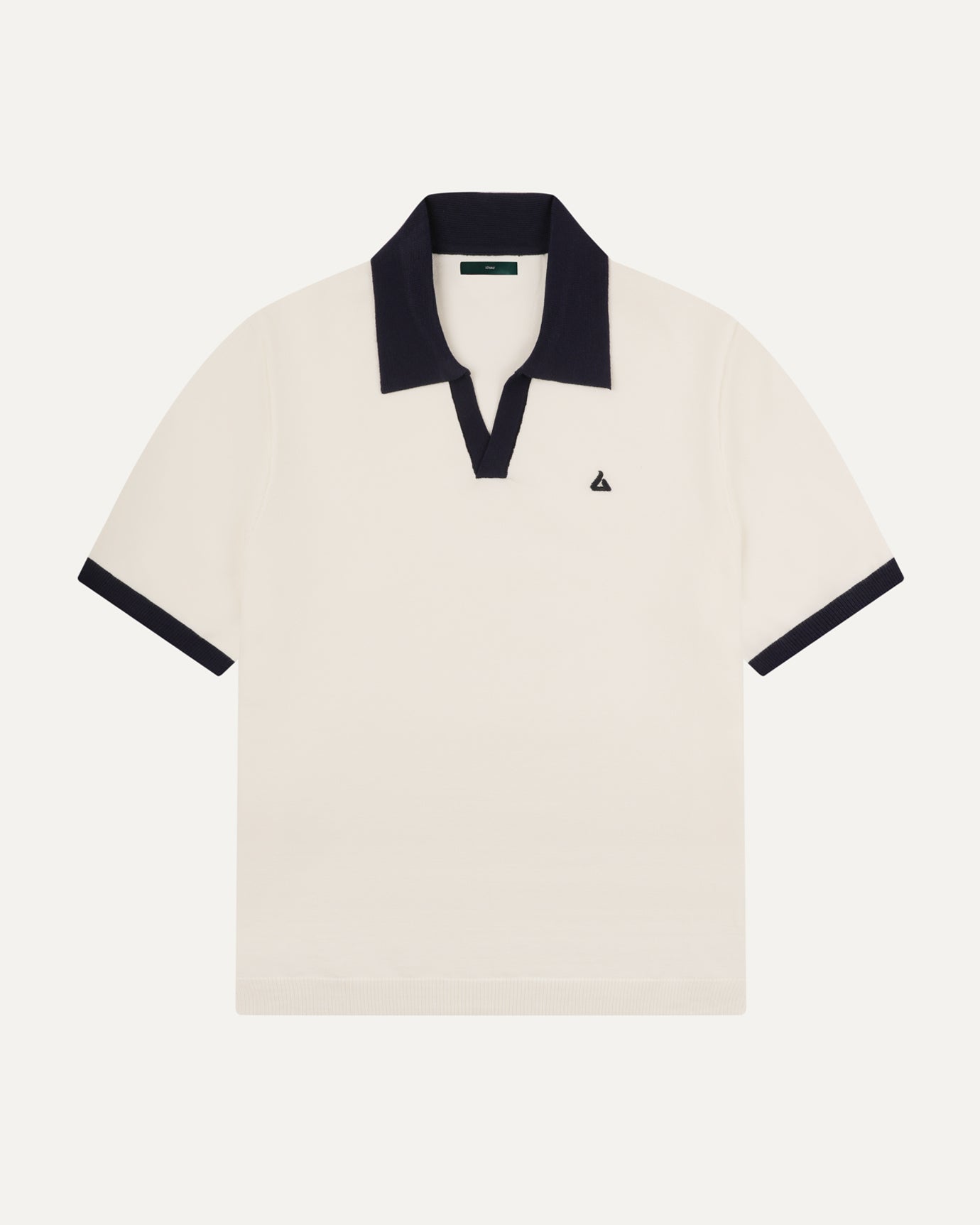
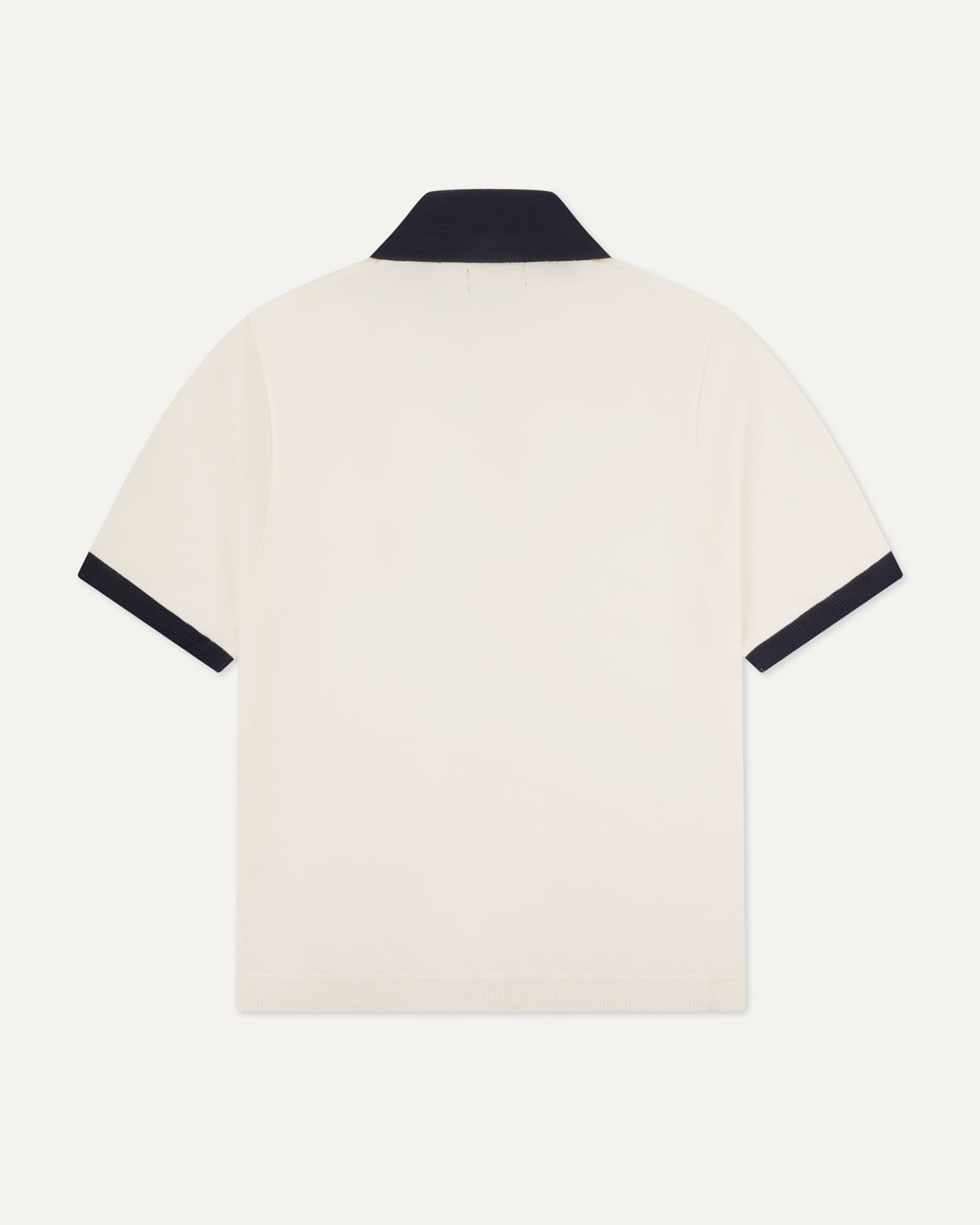
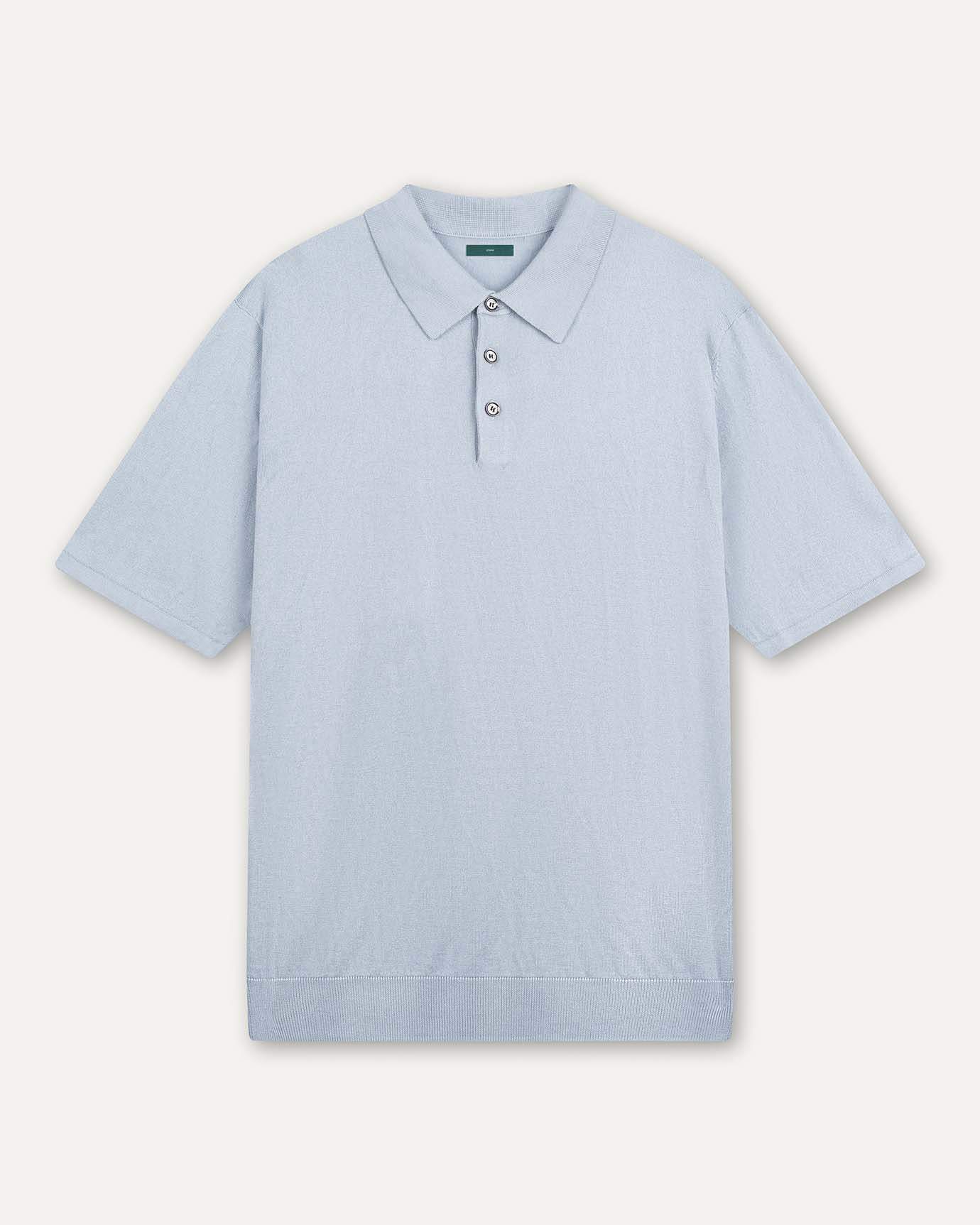
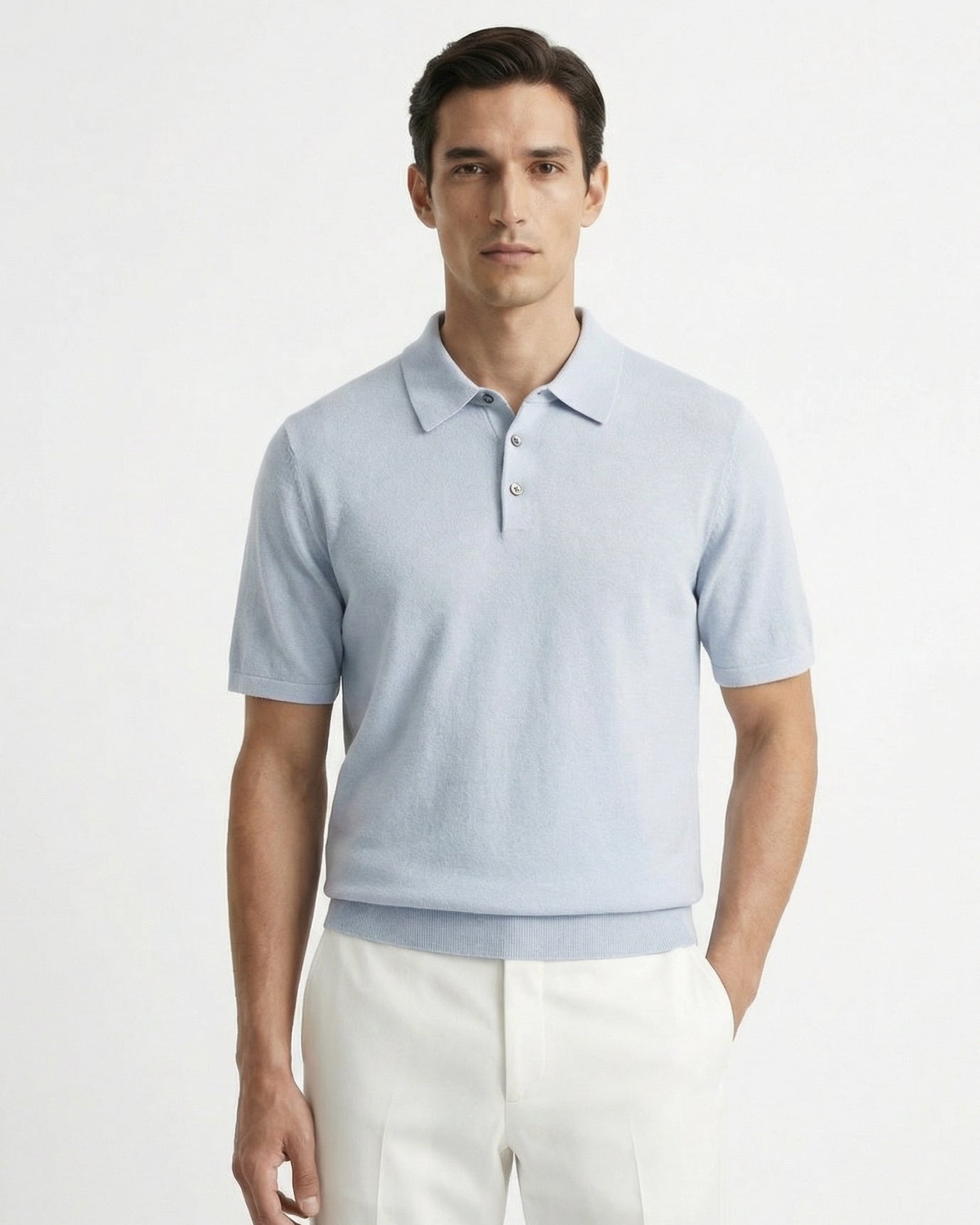
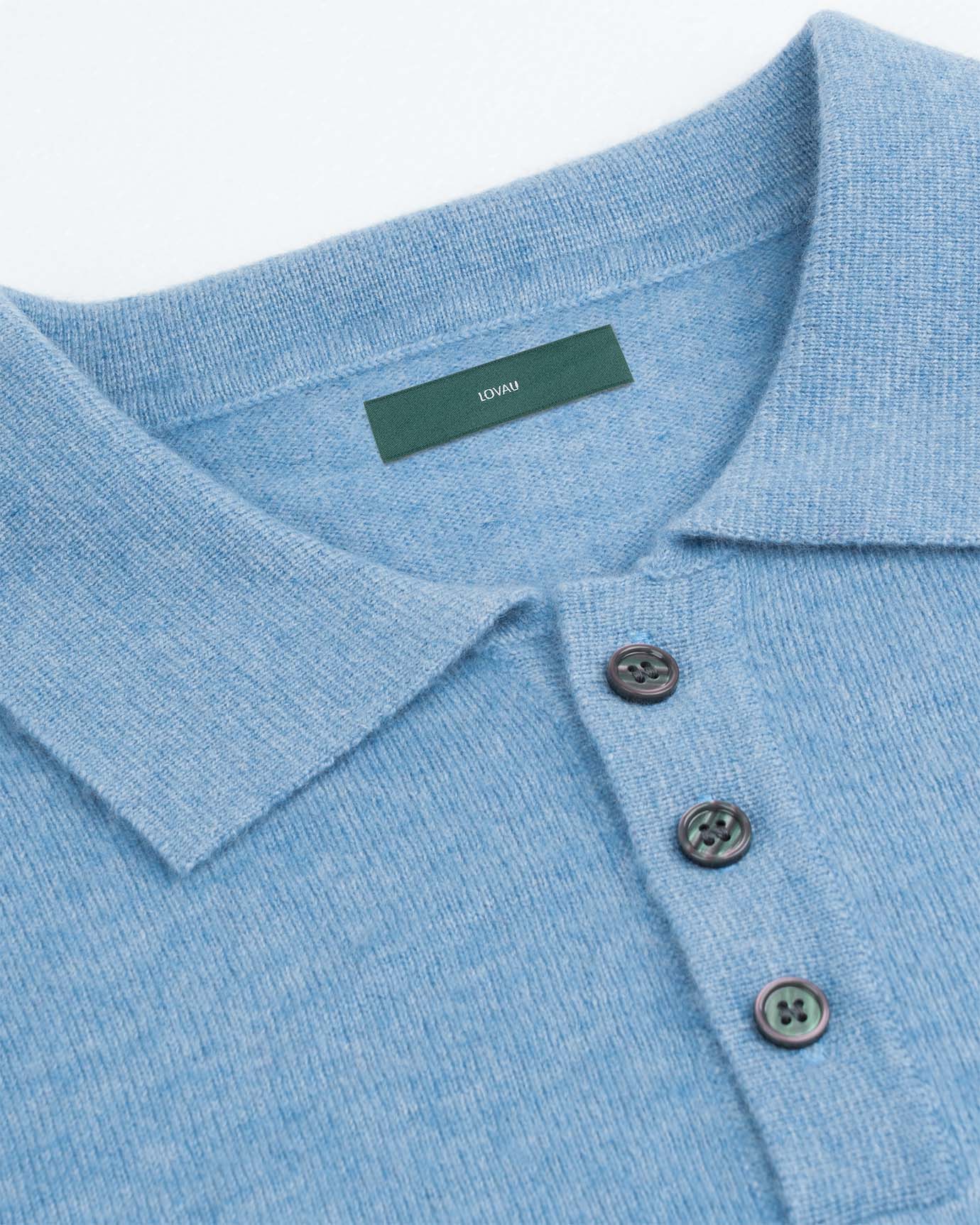
On tucking: an untucked shirt below the hip creates a horizontal line across the widest part of the midsection. Tucking the shirt in, even just at the front in a half-tuck, creates a defined waistline and makes the leg appear longer. If you are wearing a linen blend knitted polo, the hem is typically finished to wear untucked, but the shorter length is key. A polo that ends at the hip rather than below it keeps the proportions correct.
For those interested in fabric science and how drape affects silhouette, the relationship between fibre structure and fabric hand is well documented in textile studies.

How a Well-Chosen Bag Redirects the Eye
This is the technique that most style guides overlook. Accessories do not merely complete an outfit, they direct attention. A bag carried at the right height and in the right proportion creates a focal point that draws the eye away from the midsection entirely.
A structured leather bag worn on the shoulder or carried in the hand creates a strong vertical line down the side of the body. It gives the eye something specific and elegant to land on. A compact tote or a refined leather carryall, worn at hip height on one side, visually bisects the torso and creates an asymmetry that reads as dynamic rather than wide.
The how to choose a leather tote bag that complements any outfit guide covers proportion in detail, but the core principle for midsection management is straightforward: choose a bag with clean lines and a medium size. An oversized bag worn across a wide torso compounds the problem; a compact, well-structured piece in dark leather or natural canvas reads as a deliberate style choice and pulls focus.
For travel and days that require more carrying, the sophisticated approach to luxury travel bags and weekenders is worth consulting. A well-made weekender held at the side creates a strong vertical accent that balances the silhouette from shoulder to foot.
Footwear also plays a role. A clean, substantial shoe grounds the silhouette and gives the eye a second focal point at the base. The Mediterranean Suede Slip-On Loafers in a rich suede draw the eye downward, which is exactly the direction you want. Pair with how to wear loafers without socks the right way for the full effect.

Putting It Together: A Practical Outfit Framework
The principles above combine into a repeatable framework that works across occasions, from a business lunch to a weekend in a coastal town.
Foundation: A high-waisted or mid-rise trouser with a forward pleat, in a fabric that drapes cleanly. Worsted wool for cooler months, linen or lyocell for summer. The Paris Linen Trousers are a practical warm-weather choice, with enough structure to hold a clean line through the day.
Top: A shirt or polo that fits the shoulders precisely and skims the torso without pulling. Tucked in. A vertical stripe or a solid dark to medium tone. Avoid anything that pulls at the second button.
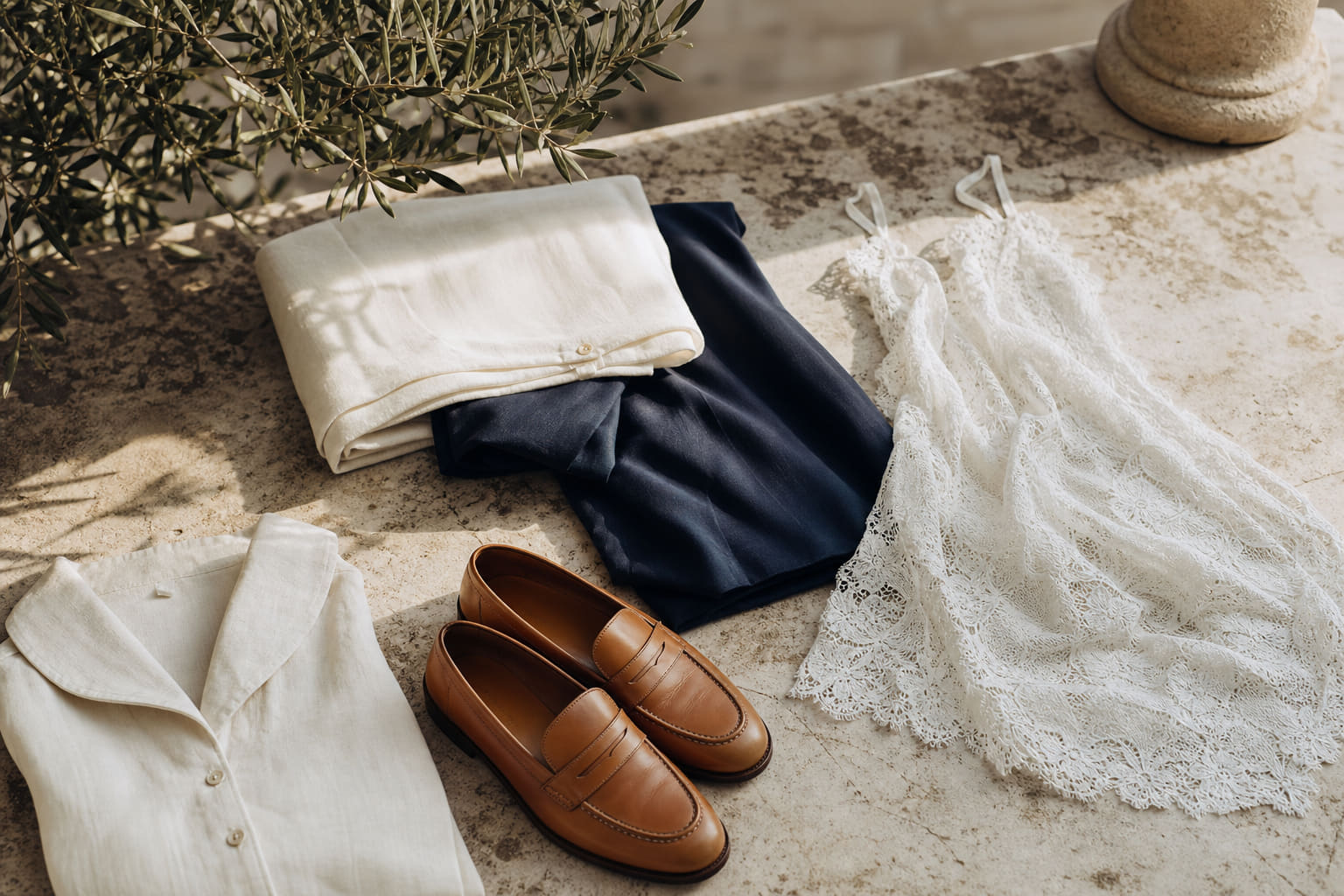
Shoes: A loafer or clean leather shoe that grounds the look. The Ibiza Linen Leather Loafers work well here, offering a refined material mix that feels intentional without being formal.
Bag: A structured piece in leather or quality canvas, carried at the side. Dark tones for formal contexts, natural or tan for casual.
The framework is not about hiding. It is about dressing with precision, which is what the best-dressed men have always done. Proportion, drape, and deliberate detail are the tools. Baggy clothing is not one of them.
For a complete overview of the Lovau approach to refined men's dressing, the old money menswear collection covers the full range of pieces built on these principles.

| Garment Type | Fit Approach | Best Fabric | Silhouette Effect | Occasion |
|---|---|---|---|---|
| Pleated high-rise trousers | Full through hip, tapered below knee | Worsted wool, linen | Lengthens leg, contains midsection | Business, smart casual |
| Straight-leg linen trousers | Relaxed but not oversized | Linen, lyocell blend | Clean vertical line, no pulling | Casual, weekend, coastal |
| Fine linen shirt, tucked | Skims torso, correct shoulder seam | High-count linen | Defines waist, elongates torso | Most occasions |
| Knitted linen polo, short hem | Slim but not tight, ends at hip | Linen-cotton blend | Avoids horizontal cut across midsection | Smart casual, summer |
| Oversized shirt, untucked | Excess fabric at torso and hem | Any | Adds visual bulk, reads as shapeless | Avoid for this purpose |
| Low-rise flat-front trousers | Tight across front, no pleat release | Any | Midsection spills over waistband | Avoid for this purpose |
Frequently asked questions
Should I always tuck my shirt in to look slimmer?
Tucking in creates a defined waistline, which generally reads as leaner. However, the more important factor is shirt length. An untucked shirt that ends at the hip, like a well-cut polo, can work. An untucked shirt that falls below the hip creates a horizontal line across the widest part of the torso and should be avoided. The Linen Blend Knitted Polo Classy Style is cut to the correct length to wear untucked without that problem.
Do pleated trousers actually add bulk or reduce it?
Forward pleats release fabric through the hip and thigh, which means the trouser does not pull tight across the front. A flat-front trouser that is too tight across the stomach pulls the fabric into horizontal stress lines that are far more unflattering than any pleat. Pleats, when the trouser is the correct size and rises to the natural waist, create a cleaner front line than a strained flat front.
What colours work best for minimising the appearance of a midsection?
Medium to dark solids, navy, charcoal, olive, stone, and deep burgundy, recede visually and create a uniform surface for the eye to read. Bright colours and stark white at the torso catch light and draw attention. Fine vertical stripes are the main exception: they create directional movement that compresses apparent width. Avoid large horizontal patterns or wide checks placed at the waistline.
Can a bag really make a difference to how the midsection looks?
Yes, because it redirects attention. A structured bag carried at the hip on one side creates a strong focal point and a vertical line down the body. The eye follows the object rather than scanning the full width of the torso. This is a technique used in editorial styling and it translates directly to everyday dressing. Keep the bag proportionate, compact to medium size, and in a dark or neutral tone.
Dressing well around a fuller midsection is not a compromise. It is a discipline that the best-dressed men have practised for generations, using fit, proportion, fabric drape, and deliberate detail to construct a silhouette that reads as composed rather than concealed. The tools are all available in ready-to-wear if you know what to look for. Start with the trouser rise and the shoulder seam, and everything else follows. For a full range of pieces built on these proportions, the old money menswear collection is the logical place to begin.