


Light Blue vs White T-Shirts: Which Looks More Expensive?
Reading time 13 min • 2505 words
Two t-shirts hang in your wardrobe. One is white. One is light blue. Both are clean, both are well-cut, and you are standing in front of them for longer than you should be. This is not a trivial decision. Color is the first thing another person registers, before fit, before fabric, before anything else you have thought carefully about.
The question of which looks more expensive is not purely subjective. There are real reasons, grounded in color theory, cultural context, and how light interacts with fabric, why one shade reads as more refined than the other in a given situation. This guide works through those reasons concretely, so you can make the choice with clarity rather than habit.
Both colors belong in a serious wardrobe. The goal here is not to declare a winner but to give you a precise understanding of where each one performs at its best, and which fabric construction makes the difference between looking dressed and looking expensive.
Key takeaways
- White reads crisper and more formal in structured, tailored contexts; light blue reads quieter and more composed in relaxed or warm-weather settings.
- Fabric quality matters more than color: a mercerized cotton t-shirt in either shade will always read more expensive than a standard jersey version.
- Light blue has a natural tonal advantage in summer, harmonizing with tanned skin, linen trousers, and Mediterranean palettes without effort.
- White demands more maintenance to stay sharp; a single wash stain or yellowing detail will undermine the entire look.
- For an old money wardrobe, owning one quality piece in each color is more useful than debating which is superior.
In this guide
- Why Fabric Quality Decides the Question Before Color Does
- What White Does Well, and Where It Falls Short
- What Light Blue Does That White Cannot
- Occasion Mapping: When to Reach for Which
- The Off-White Variable: A Third Answer Worth Considering
- Putting It Together: The Specific Combinations That Work
- Frequently asked questions
Why Fabric Quality Decides the Question Before Color Does
Before comparing white and light blue, you need to address the variable that overrides both: fabric. A poorly constructed t-shirt in either color will look cheap. A well-constructed one in either color will look expensive. Color is the second conversation.
The construction that changes everything in a t-shirt is mercerization. Mercerized cotton has been treated under tension with a sodium hydroxide solution, which permanently swells the fiber, rounds its cross-section, and increases its ability to reflect light. The result is a surface with a subtle, natural sheen, similar to the quiet luster of a fine poplin shirt, but in jersey form. It does not look shiny. It looks refined.
You can read more about the chemistry and history of this process via the mercerization entry on Wikipedia, but the practical effect is what matters for dressing: a mercerized cotton t-shirt drapes better, holds its shape through washing, and photographs with a depth that standard ring-spun cotton simply cannot match.
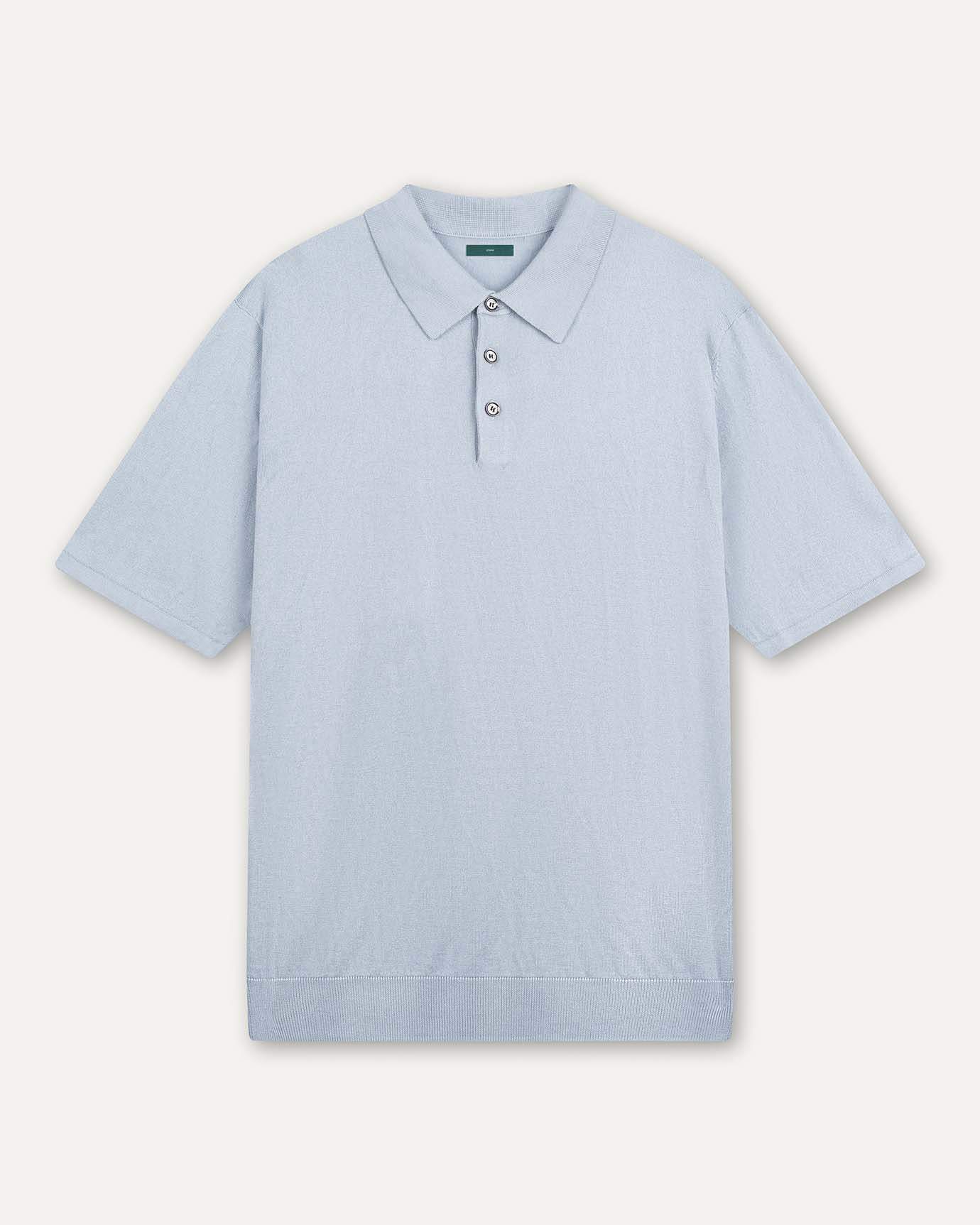
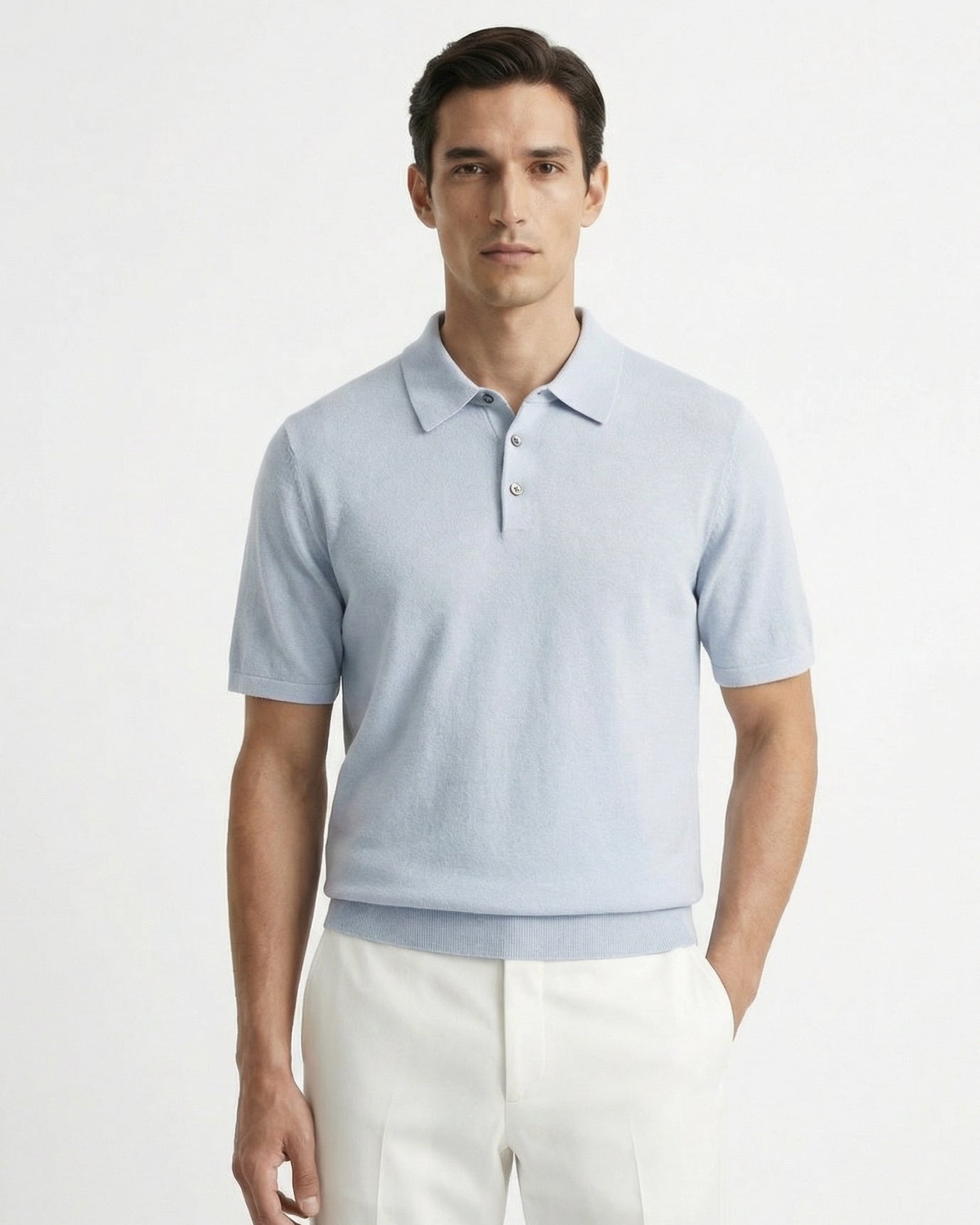
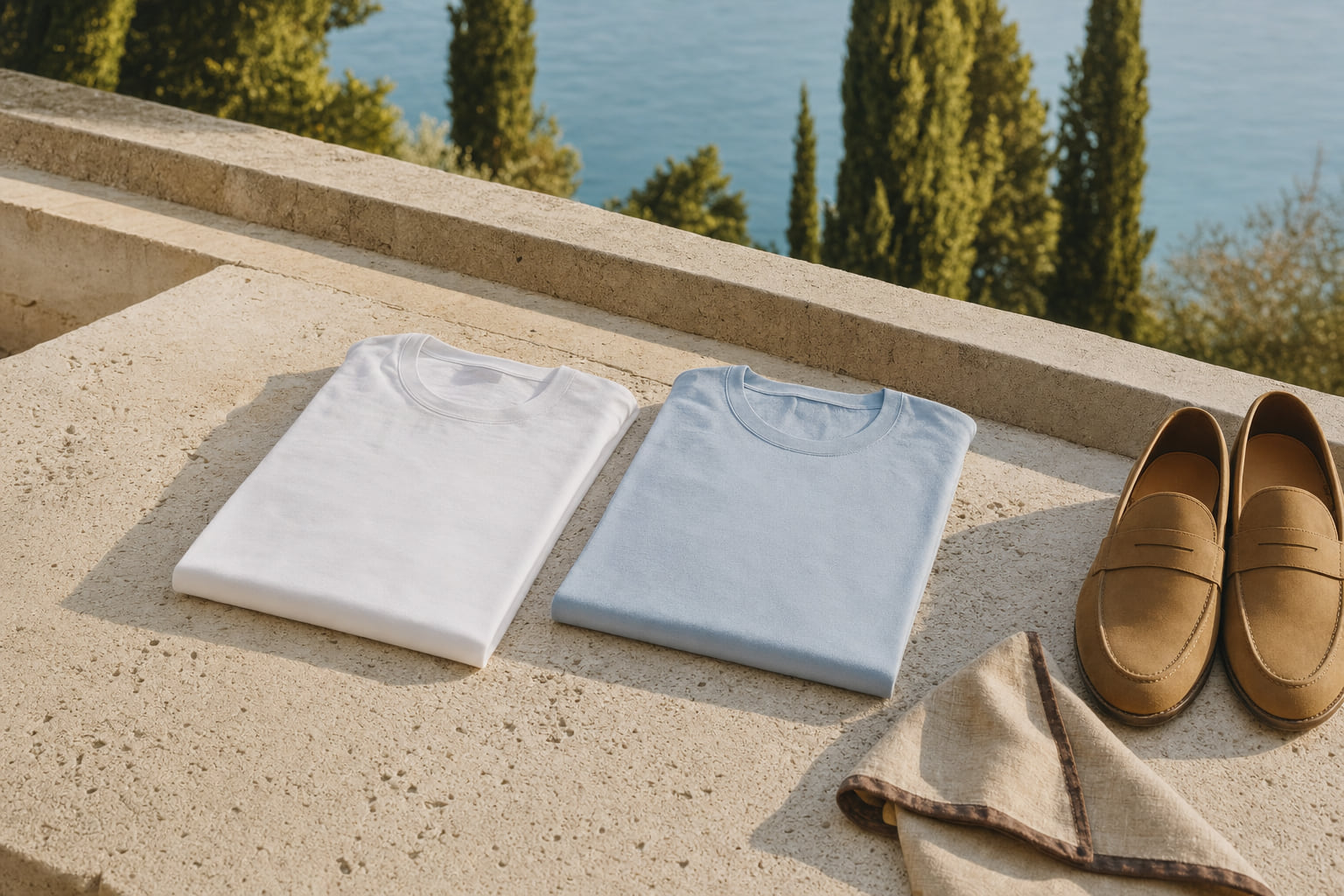
The High-Count Light Blue Mercerized Cotton Round Neck Breathable T-Shirt and its white counterpart, the High-Count White Mercerized Cotton Round Neck Breathable T-Shirt, are the reference point for this entire discussion. Both are built from high-count mercerized cotton, which means more threads per centimeter, a smoother hand, and a surface that reads as intentional rather than casual. When comparing light blue versus white, you should be comparing them at this level of construction, not at the level of a supermarket basic.
Expert insightRun your hand across a mercerized cotton t-shirt and then across a standard jersey. The difference in surface smoothness is immediate. That tactile quality is also visible from across a room, which is exactly why it reads as more expensive.

What White Does Well, and Where It Falls Short
White is the more architecturally demanding color. It has no tonal softness to hide behind. When the fabric is excellent, the cut is precise, and the garment is clean, white t-shirts communicate a kind of quiet authority that is hard to match. The contrast against tanned skin in summer is sharp. Against a navy blazer, white is classic to the point of being canonical.
The problem with white is maintenance. A white t-shirt at 90 percent condition looks worse than a light blue t-shirt at 90 percent condition. White shows every shadow of wear, every slight yellowing at the collar, every faint mark that survived the wash. This is not an argument against white. It is an argument for buying fewer, better white t-shirts and caring for them properly.
The Belle Montecarlo T-Shirt White and the Marbella Club T-shirt White both demonstrate how a considered graphic or embroidered detail can give a white tee a distinct identity, reducing its dependence on stark cleanliness alone. The Old Money Cotton T-shirt White takes the opposite approach: no detail, pure form, which works precisely because the construction is strong enough to carry the absence of decoration.
For styling, white pairs cleanly with ecru linen trousers, stone chinos, navy tailoring, and light grey flannel. It is the color that makes structured combinations feel intentional. If you are building a look around tailored separates, white is the more precise choice. For context on how white fits into a broader neutral wardrobe strategy, the article on the old money color palette and neutrals is worth reading alongside this one.
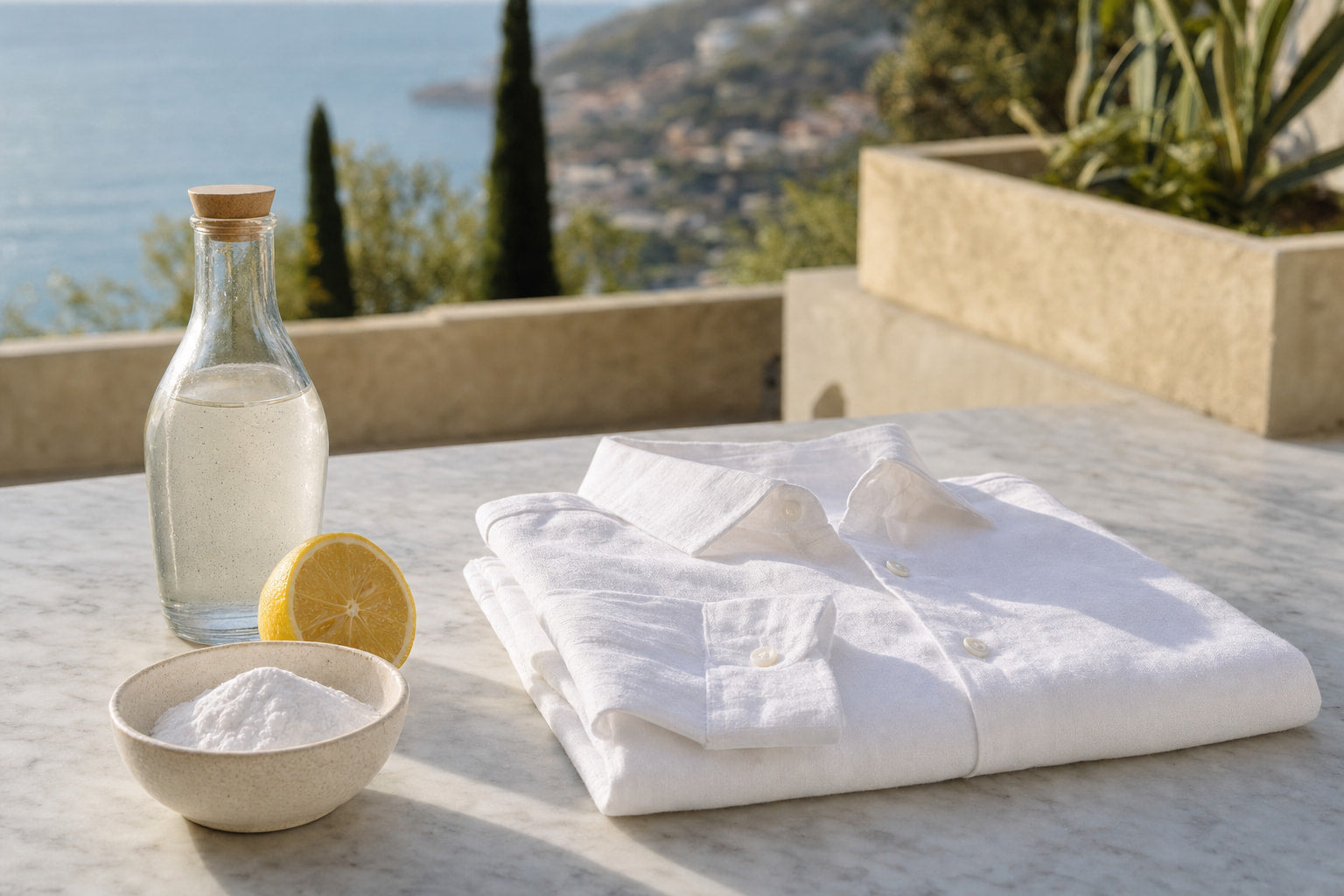
Expert insightIf you own white t-shirts, wash them inside out in cold water, never with grey or colored items, and fold them immediately after drying. The collar is the first thing to go, and it goes fast if you are careless.

What Light Blue Does That White Cannot
Light blue occupies a specific tonal register that white does not have access to. It is not neutral in the strict sense, but it behaves like one in most contexts. It reads as calm, composed, and considered. In Mediterranean light, particularly in summer, it is almost impossible to wear badly.
The deeper reason light blue often reads as more expensive than white in casual or warm-weather contexts is tonal harmony. Light blue sits comfortably next to off-white, cream, sand, stone, navy, and tan without creating contrast that needs to be managed. White, by contrast, creates hard edges in a composition. Those edges can look sharp and intentional, or they can look harsh and unresolved, depending on what surrounds them.
Light blue also has a natural relationship with the Mediterranean color palette, which is built on sky, sea, and sun-bleached stone. A light blue mercerized tee worn with Light Blue Stripped Trousers High-Waisted or Linen Blend Light Blue Trousers Herringbone Double Pleated creates a tonal, monochromatic register that is one of the quieter and more confident moves in warm-weather dressing.
For graphic and printed tees, light blue and off-white share a similar advantage: the base color gives the artwork a slightly aged, considered quality that a stark white base cannot replicate. The French Riviera Mediterranean T-Shirt Off-White and the Monaco Bay T-Shirt Off-White both use this principle, placing Mediterranean-referenced graphics on a base that feels like it has history rather than just brightness.
Expert insightA tonal light blue outfit, t-shirt, trousers, and canvas shoes all within the same blue-to-neutral range, is one of the most underused moves in men's warm-weather dressing. It reads as deliberate without announcing itself.

Occasion Mapping: When to Reach for Which
The practical answer to which color looks more expensive depends almost entirely on context. Neither color is universally superior. Here is how to think about it by occasion.
Formal-adjacent settings: White wins. A white mercerized tee worn under an unstructured linen blazer, or tucked into high-waisted tailored trousers, reads as precise and deliberate. The sharpness of white works with the structure around it. Light blue in the same setting reads softer, which can feel slightly underdressed depending on the company.
Coastal and resort settings: Light blue wins. Against the light and color of a Mediterranean or Atlantic coast environment, light blue integrates rather than contrasts. It does not compete with the sky or the water. It belongs. White at the coast is also appropriate, but it requires more confidence in the cleanliness and fit of the garment.
City dressing in warm weather: This is where the decision gets genuinely close. A white tee with well-cut chinos and leather loafers is a classic for good reason. But a light blue tee in the same combination has a slightly more relaxed, European quality that can read as more considered in contexts where stark contrast feels aggressive.
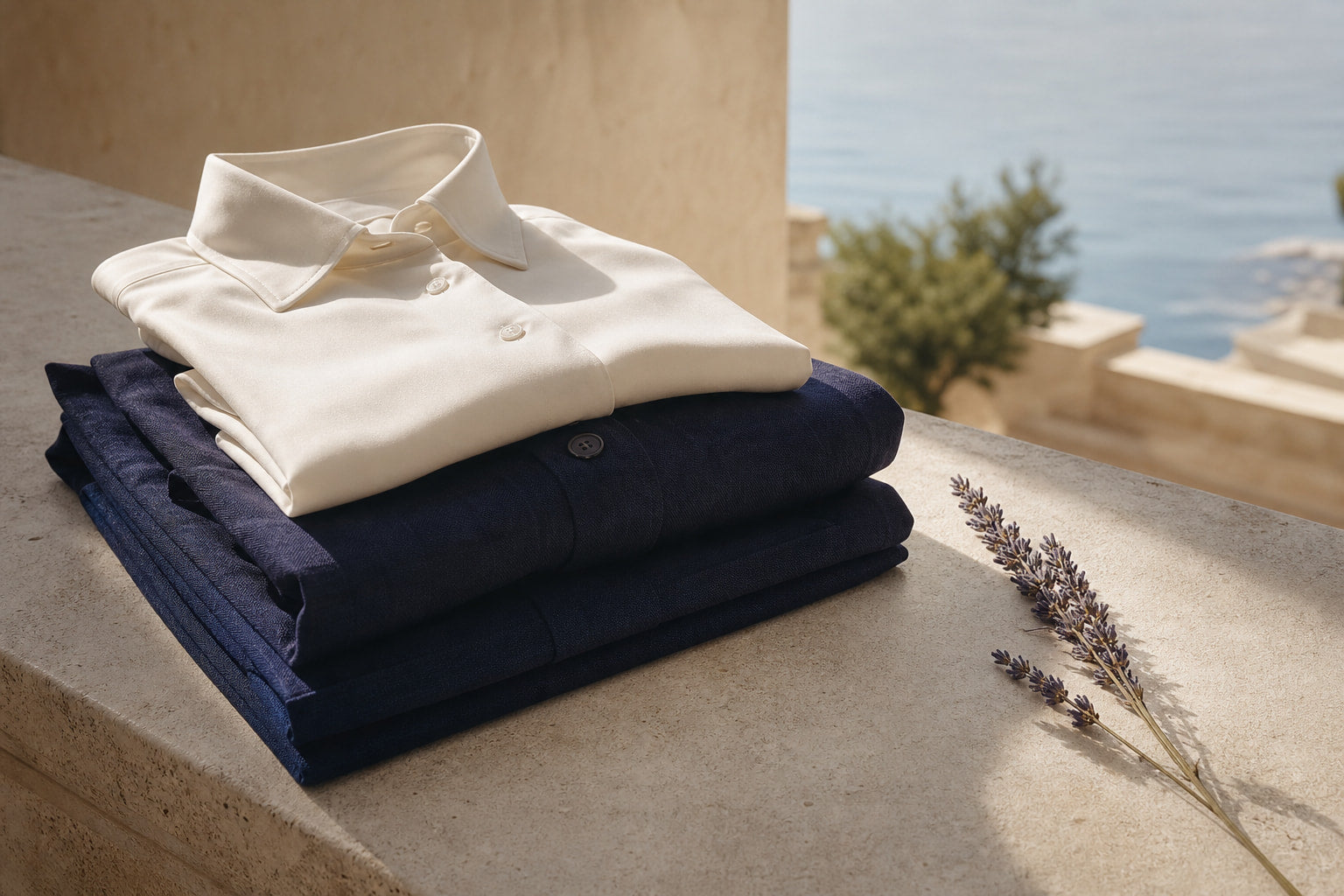
With tailoring: White. Always. A light blue tee under a navy blazer creates a monochromatic compression that can look heavy. White opens the combination up.
For broader summer color context, the best colors for summer outfits 2026 guide maps out how both shades fit into a full warm-weather wardrobe, and the old money summer looks for men piece shows how these choices function in complete outfits.

The Off-White Variable: A Third Answer Worth Considering
Any honest comparison of white and light blue has to acknowledge that off-white frequently outperforms both in terms of appearing expensive. Off-white, sometimes called ecru, bone, or cream, has a warmth that stark white lacks and a neutrality that light blue cannot fully claim. It photographs beautifully, ages gracefully, and sits against most skin tones with more ease than either pure white or a saturated light blue.
Several of the strongest pieces in the Lovau range use off-white as the base rather than white. The Belle Montecarlo T-Shirt Off-White and the Marbella Club T-shirt Off-White demonstrate how a slightly warmed white base gives a t-shirt a more considered, less clinical quality. The Ayrton Senna Donington Park T-shirt Off-White uses the same logic on a heritage-referenced graphic piece.
If you are building a men's summer wardrobe around a limited number of high-quality t-shirts, the practical recommendation is this: one white mercerized tee for structured, formal-adjacent occasions; one light blue mercerized tee for coastal and tonal dressing; and one off-white tee for everything in between. Together, those three cover almost every warm-weather situation a well-dressed man encounters.
For a complete overview of the white options available, the best white t-shirts for men in 2026 article provides a ranked breakdown of construction quality and styling versatility across the range. The High End Mercerized Cotton Silky White T-Shirt also belongs in this conversation, particularly for men who want a slightly softer hand feel than the high-count round neck construction provides.

Putting It Together: The Specific Combinations That Work
Theory is useful. Specific combinations are more useful. Here are the pairings that consistently produce the most expensive-looking results with each color.
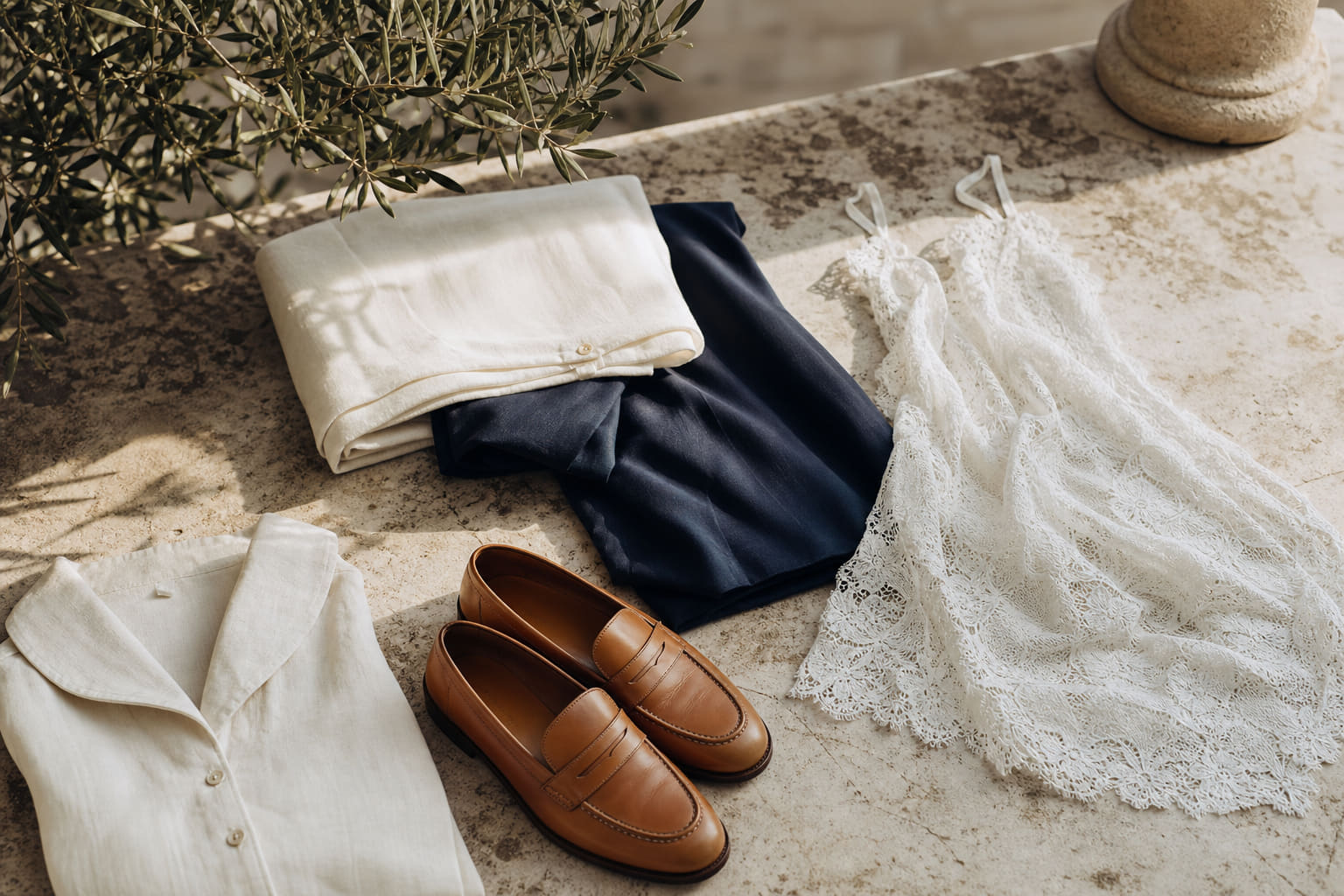
White mercerized tee: - White tee, navy high-waisted trousers, tan leather loafers, no accessories. Clean, European, done. - White tee, cream linen blazer, stone chinos, white canvas shoes. Resort-appropriate without being casual. - White tee tucked into tailored dark grey trousers with a leather belt. The tuck signals intention.
Light blue mercerized tee: - Light blue tee, linen blend light blue herringbone trousers, suede loafers. Tonal, composed, Mediterranean. - Light blue tee, white linen trousers, no shoes. Coastal dressing at its most relaxed and still refined. - Light blue tee under a lightweight unstructured beige blazer. The blue reads through the open front of the jacket without competing with it.
In all of these combinations, the quality of the t-shirt itself is what determines whether the look reads as expensive or merely put-together. A high-count mercerized cotton tee drapes differently from the shoulder, holds its shape differently through the torso, and catches light differently at the chest. Those differences are visible. They are the reason a $97 mercerized tee looks better than a $25 standard jersey, not because of the price, but because of what the construction does to the silhouette and surface.

| Criterion | White | Light Blue | Off-White |
|---|---|---|---|
| Formal-adjacent styling | Excellent | Good | Good |
| Coastal / resort settings | Good | Excellent | Excellent |
| Tonal monochromatic looks | Poor | Excellent | Good |
| Maintenance demand | High | Low | Low |
| Contrast with tailoring | Excellent | Moderate | Good |
| Versatility across seasons | Excellent | Good | Excellent |
Frequently asked questions
Does a light blue t-shirt actually look more expensive than a white one?
In most casual and warm-weather contexts, yes, light blue tends to read as more composed and intentional than white, because it requires less maintenance to stay sharp and harmonizes more naturally with Mediterranean and coastal color palettes. In formal-adjacent or tailored contexts, white regains the advantage. The fabric construction matters more than the color in either case: a mercerized cotton t-shirt in light blue will always read better than a standard jersey in white.
What fabric makes a t-shirt look expensive regardless of color?
Mercerized cotton is the most reliable answer for a t-shirt specifically. The mercerization process gives the cotton fiber a natural luster, improved drape, and better shape retention through washing. A high-count mercerized tee has a surface smoothness and quiet sheen that standard ring-spun cotton cannot produce. Pima and Supima cotton are also worth considering, but mercerized high-count construction is the most visible upgrade in terms of how the garment reads at a distance.
Can you wear a light blue t-shirt with navy trousers?
Yes, but carefully. Light blue and navy are tonally close enough that the combination can compress into a flat, monochromatic block if both pieces are similarly weighted. The safest version is a light blue tee with lighter navy or mid-blue trousers, separated by a visible tonal difference. If your navy trousers are dark, a white or off-white tee will create a cleaner, more structured contrast.
How do I keep a white t-shirt looking new?
Wash white t-shirts inside out in cold water, separately from any grey or colored items. Avoid tumble drying on high heat, which accelerates yellowing at the collar and cuffs. For stubborn collar yellowing, a pre-soak in diluted white vinegar before washing is more effective than bleach, which weakens cotton fibers over time. The best ways to keep white polos looking brand new article covers this in more detail, and the principles apply equally to t-shirts.
There is no universal winner between light blue and white. White is the more architecturally demanding color and rewards precision in fit, construction, and care. Light blue is the more forgiving color and rewards context, particularly warm-weather and coastal settings where tonal harmony matters more than sharp contrast. What they share is this: neither looks expensive in a poor fabric. The decision that matters most is not the color you choose but the construction you invest in. Start with a high-count mercerized cotton t-shirt in whichever color suits your wardrobe first, and the question of which looks more expensive will answer itself the moment you put it on.