


How to Style Milk White vs Ivory White: Spotting the Difference
Reading time 13 min • 2646 words
Two garments hang side by side in your wardrobe. Both are white. One makes your complexion look sharp and deliberate; the other makes it look slightly washed out, or worse, as though you grabbed the wrong shirt in dim light. The difference is not imaginary. Milk white and ivory white are distinct shades, each with its own undertone, its own fabric affinities, and its own set of colours it sits beside naturally.
The confusion is understandable. Retailers label both simply as white, photographers sometimes flatten the difference in product imagery, and under artificial store lighting the two shades can appear nearly identical. Outside, in the kind of honest Mediterranean afternoon light that Lovau dresses for, the gap becomes obvious.
This guide is a practical colour reference. We will show you exactly how to identify each shade, which fabrics carry them, how to build outfits around each one, and why mixing them carelessly undermines the quiet confidence that refined dressing depends on.
Key takeaways
- Milk white has a cool, bluish-neutral base; ivory white has a warm, yellow-cream base. Hold them next to each other in natural light and the difference is immediate.
- Milk white pairs cleanly with navy, grey, and charcoal. Ivory white reads richer alongside camel, tan, warm brown, and sand.
- Mixing milk white and ivory white in a single outfit creates unintentional contrast that reads as a laundry mistake, not a style choice.
- Skin tone matters: cooler complexions carry milk white well; warmer or olive complexions are often flattered more by ivory.
- Fabric affects how white reads. Mercerized cotton holds a bright, cool white; linen and raw silk naturally pull warm and sit closer to ivory.
In this guide
What Separates Milk White from Ivory White
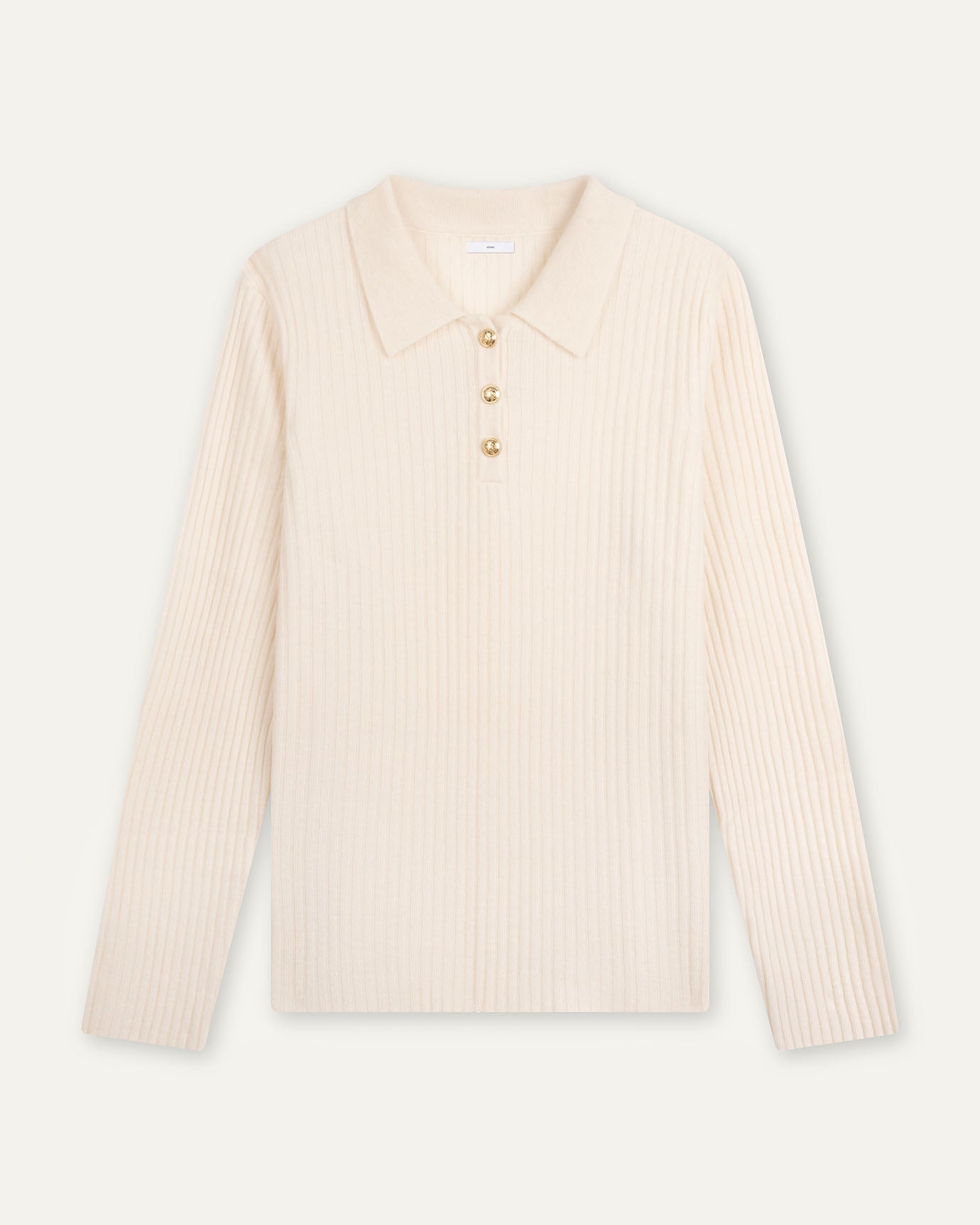
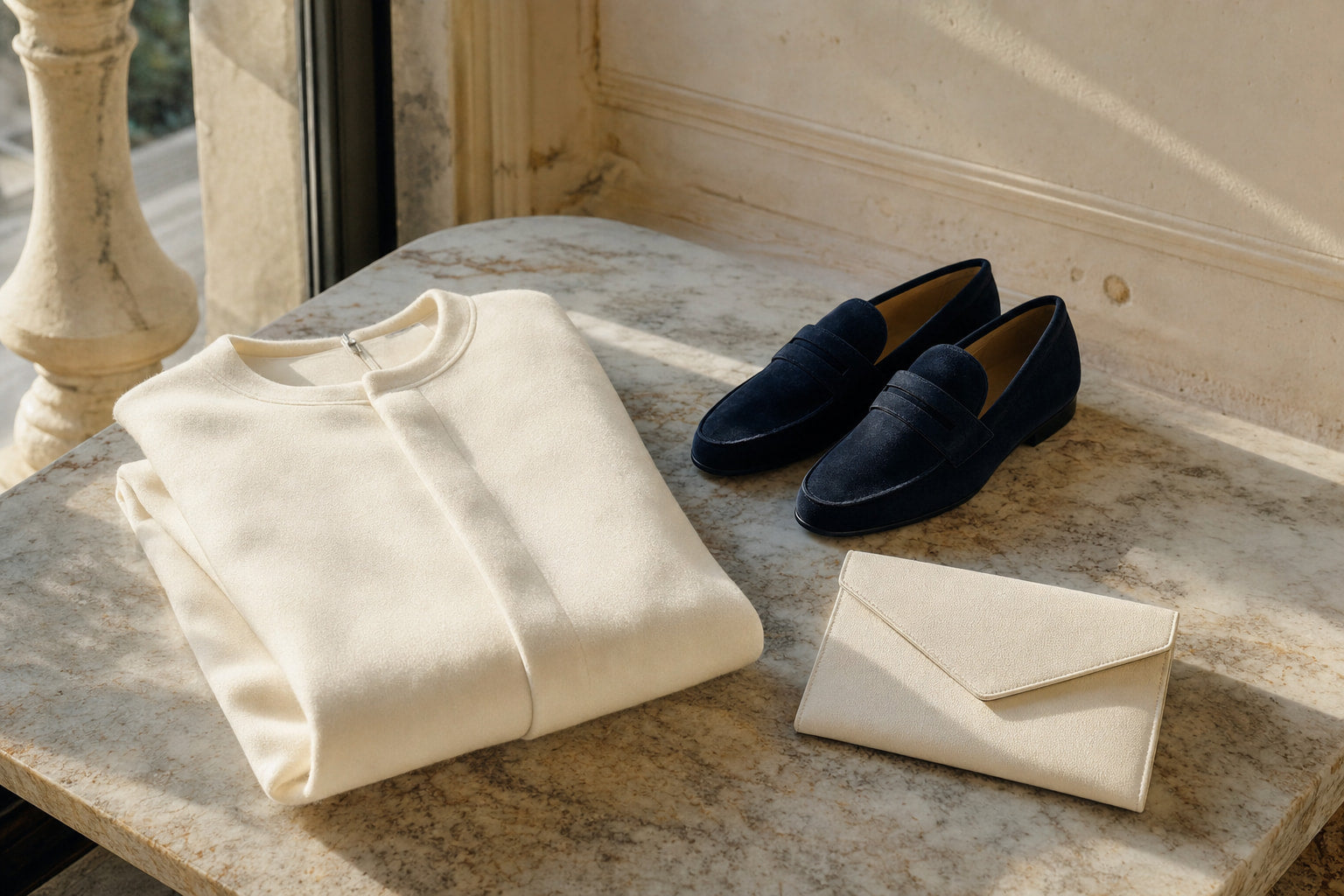
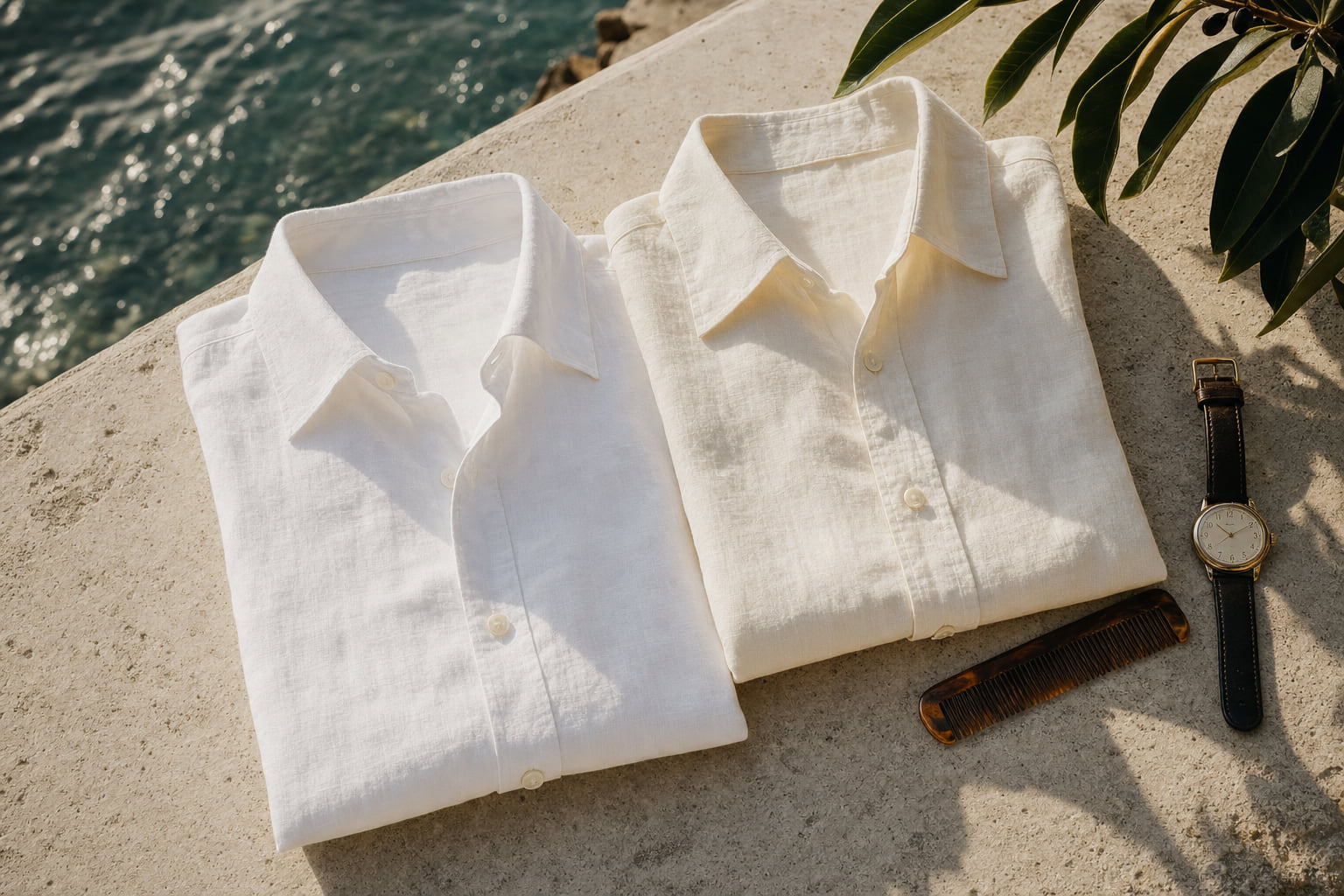
Milk white sits at the cooler end of the white spectrum. It is a near-pure white with a faint blue or neutral grey undertone, the kind of white you associate with a freshly laundered Oxford shirt or a glazed ceramic. It reads clean, precise, and modern without being stark.
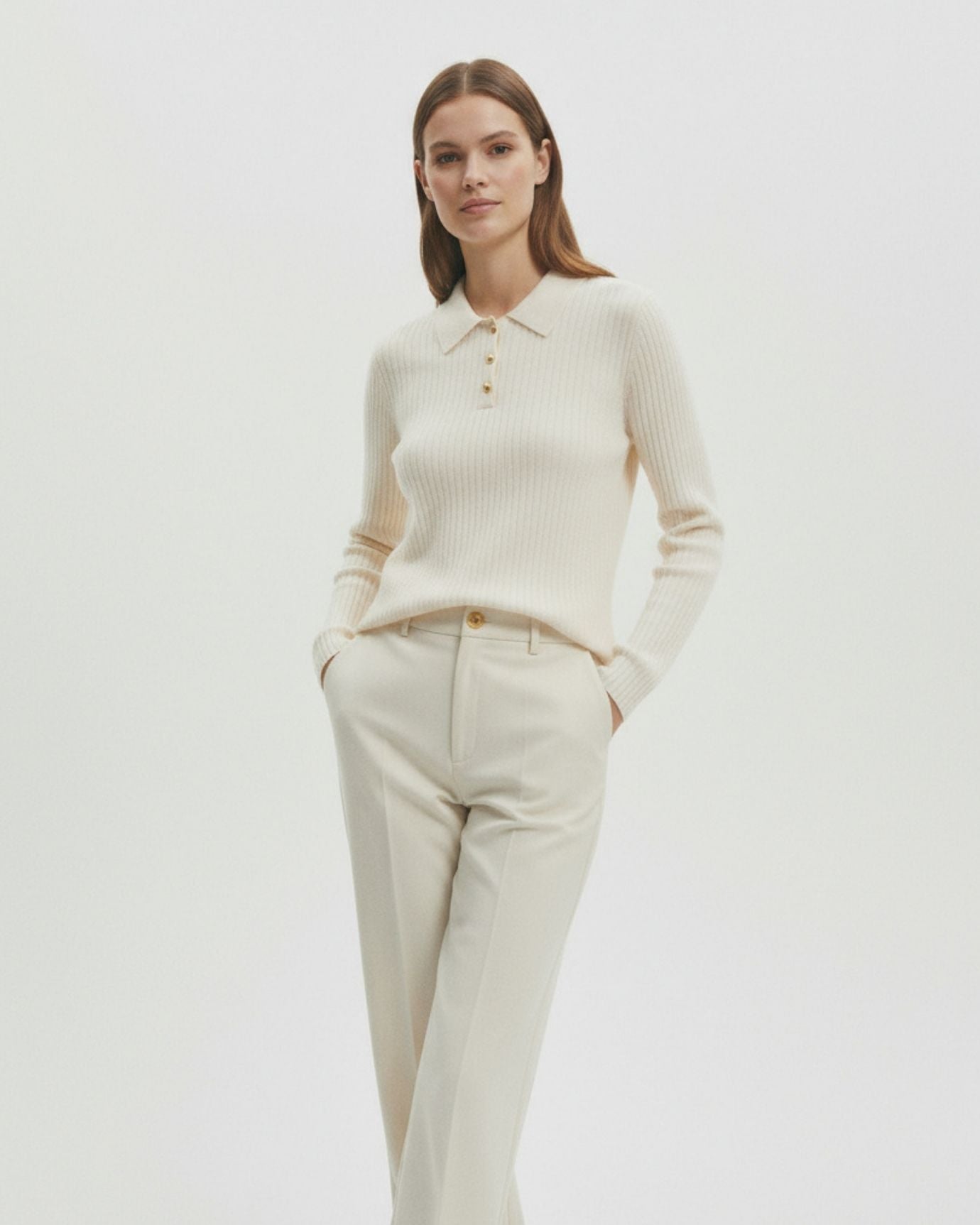
Ivory white is warmer. Its base pulls toward yellow, cream, or very pale gold, which is why it reads as softer, more antique, and more closely related to natural fibres in their undyed state. Think of unbleached linen, raw silk, or aged parchment. Ivory is not a dirty white; it is a warm white with genuine character.
The clearest way to test a garment is to hold it against a sheet of plain white printer paper in natural daylight. If the garment looks slightly yellow or cream beside the paper, it is ivory. If it looks nearly identical or slightly blue-toned, it is milk white. This single test resolves most wardrobe confusion before it reaches the dressing room.
For a broader look at how undertones function across the neutral palette, our guide to the best neutral colors that never go out of style covers the full spectrum in useful detail. The colour science of white and its variants is also documented concisely by color theory sources that explain how undertones shift perception at a physiological level.
Expert insightWhen buying online, filter product images by looking at the shadow areas of a garment, not the highlights. Warm ivory shows a distinctly golden cast in shadows; milk white stays grey or neutral there.

How Fabric Determines Which White You Actually Have
The fibre content of a garment is one of the most reliable predictors of which shade of white it will hold. Understanding this saves you from building a tonal outfit around pieces that will visibly clash once worn together.
Mercerized cotton is treated under tension with sodium hydroxide, which compresses the fibres and increases their reflectivity. The result is a bright, cool-toned white that reads squarely as milk white. A high-count mercerized cotton T-shirt will sit closer to pure white than almost any other fabric at the same price point.
Linen is the opposite. Even when bleached, linen fibres retain a slight warmth from their natural cellulose structure. A fine white linen shirt will almost always read as ivory or warm white, not milk white. This is not a flaw; it is the fabric being honest about its origin.
Silk and silk blends follow linen's logic. Raw and natural silk sits in ivory territory. Heavily processed or synthetic-blended silk can be pulled toward milk white, but it rarely holds the same luminosity.
Polyester and synthetic whites are almost always milk white or cooler, because the fibres are engineered rather than grown. They hold dye and bleach uniformly.
This matters practically: if you are building a tonal white summer outfit, you need to either commit to all-linen pieces in ivory territory or pair your crisp cotton pieces with other cotton pieces. Combining a linen trouser with a mercerized cotton shirt in the same outfit is precisely the kind of subtle discord that erodes the impression of considered dressing. Our linen shirts collection is a useful reference for seeing how warm-white linen reads as a category.
Expert insightIf you are buying a linen shirt and a linen trouser separately, photograph them together in outdoor daylight before wearing. Even two ivory-toned linens from different sources can vary enough to read as mismatched.

Building Outfits Around Milk White
Milk white is a precise, cool shade. It works best when paired with colours that share its clarity and temperature: navy, slate grey, charcoal, black, and cool stone tones. These combinations have a graphic quality, a sharpness that reads as intentional and modern without being loud.
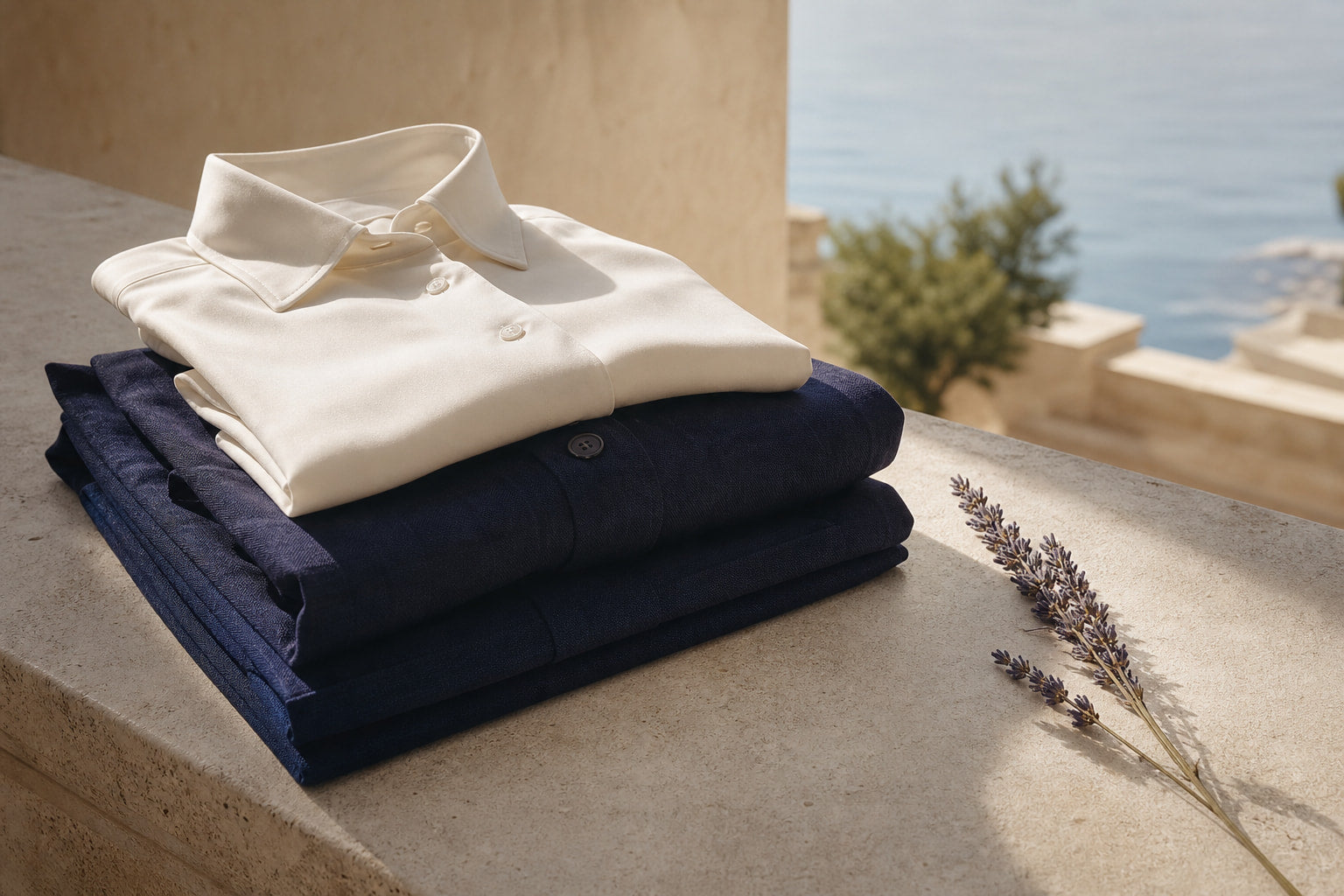
For men, a contemporary white linen shirt in a bright, cool-toned weave reads correctly beside navy or charcoal trousers. The combination is the backbone of European summer dressing. The Ibiza Vice white linen trousers in a clean, bright weave pair naturally with a navy knit or a grey linen jacket for exactly this reason.
For women, the Old Money Polo Dress in White sits in milk white territory and carries the cool, structured quality the shade demands. It pairs well with navy accessories, a dark leather belt, and shoes in black or dark tan.
Footwear in milk white needs the same deliberateness. The Marbella white genuine leather sneakers hold a cool, bright white that matches the temperature of a milk white outfit without pulling it warm.
One rule to keep: do not soften milk white with warm accessories. A warm camel bag or tan leather belt beside a milk white garment will make the garment look slightly grey by contrast. Stay within the cool palette or use a strong contrast, such as dark navy or black, rather than a warm neutral.

Building Outfits Around Ivory White
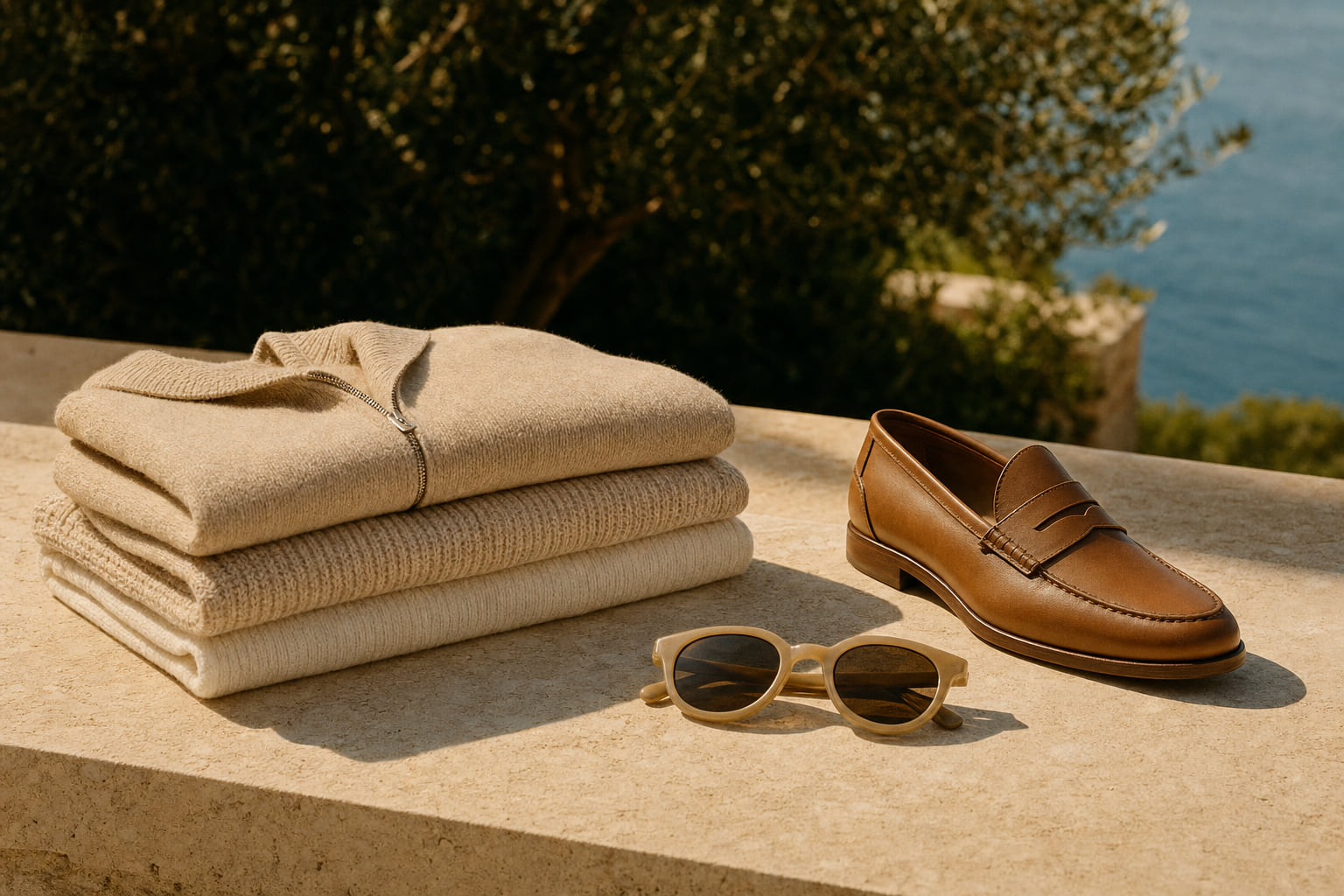
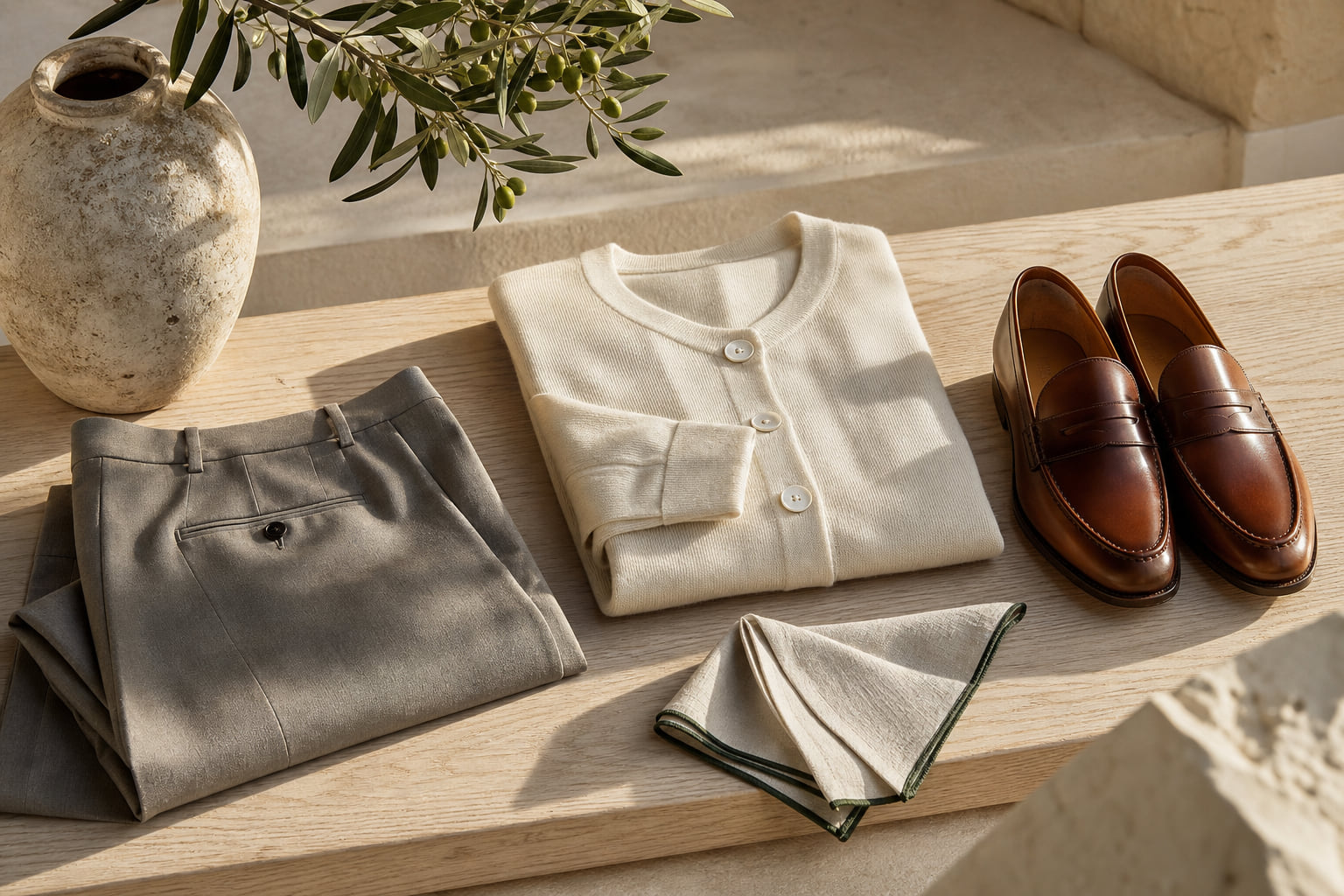
Ivory white has a warmth that rewards warm companions. Its natural partners are camel, sand, warm taupe, tan leather, raw linen, cream, and soft terracotta. These combinations create the tonal, layered look that old money dressing does better than any other aesthetic, because each piece reinforces the warmth of the next without competing.
For men, the Rome Italian linen trousers in white read in ivory territory due to the natural warmth of Italian linen. Worn with a tan leather belt, cream-toned Positano loafers, and a sand-coloured linen shirt, the result is a fully tonal warm-white outfit that has real depth and visual coherence.
For women, the In Paris Style long-sleeved dress with belt in ivory territory pairs beautifully with a caramel leather belt cinched at the waist and old money women's leather loafers in tan or cognac. The warmth of each piece reinforces the others.
Ivory also photographs exceptionally well in golden-hour light, which is part of why it dominates resort and Mediterranean summer dressing. If you are dressing for outdoor events, garden parties, or coastal settings, ivory white is the more forgiving and photogenic choice. Our article on the power of ivory over white in rich dressing goes deeper into why ivory reads as more expensive in most natural light conditions.
The one pairing to avoid with ivory: stark black. Black pulls the warm tone out of ivory and makes it read as cream against a contrast it was not designed for. Dark navy or deep forest green are far more sympathetic dark partners for an ivory outfit.
Expert insightIvory tones are particularly flattering on warm and olive skin tones because they echo the natural warmth of the complexion rather than fighting it. Cooler or very fair complexions may find ivory slightly draining unless the garment is placed away from the face.

Mixing Whites: When It Works and When It Does Not
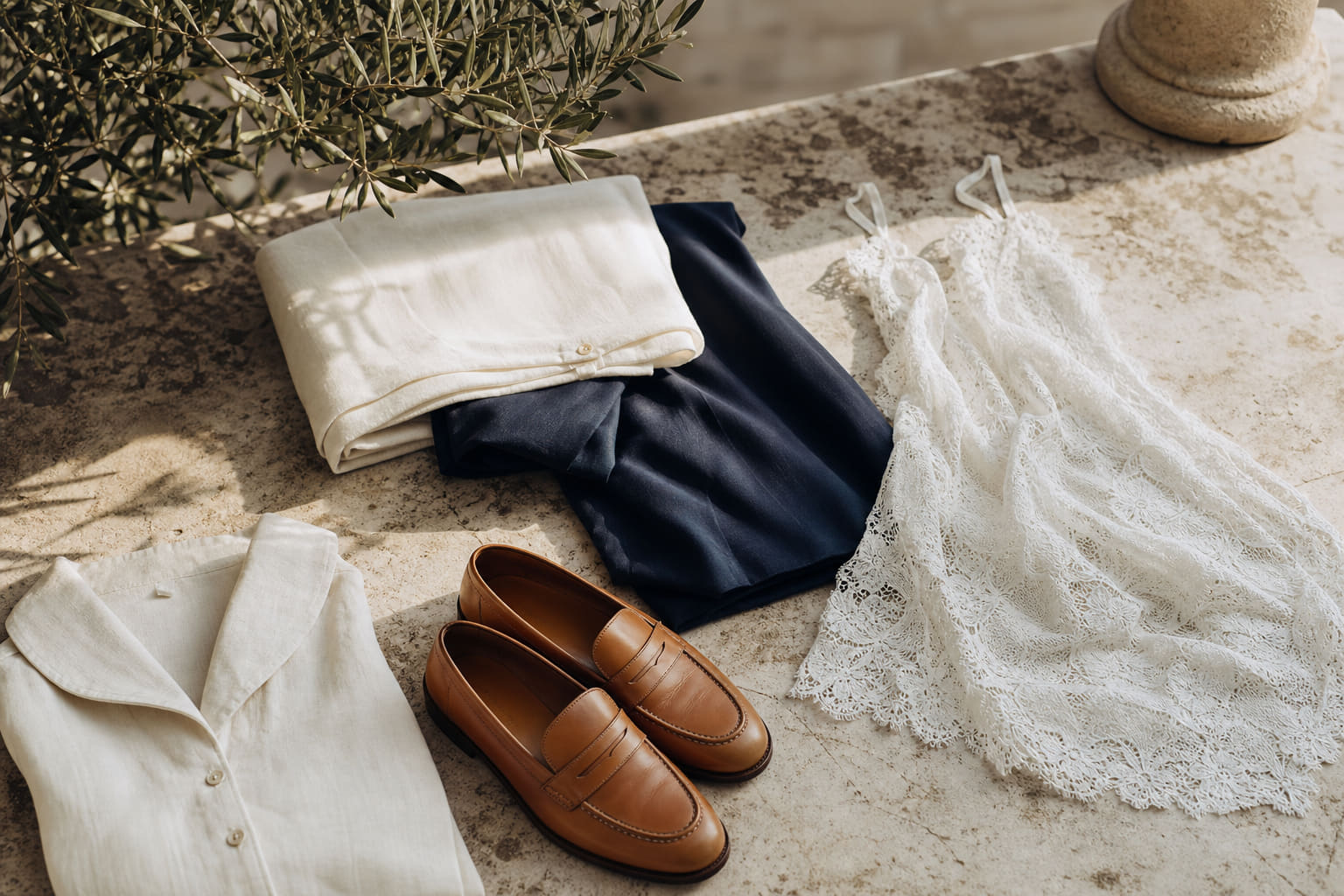
The general rule is simple: do not mix milk white and ivory white in the same outfit unless the contrast is so extreme and deliberate that it reads as a design choice rather than an accident. In practice, almost no one can make an accidental white-on-white contrast look intentional, so the safest position is to keep your whites consistent within a single outfit.
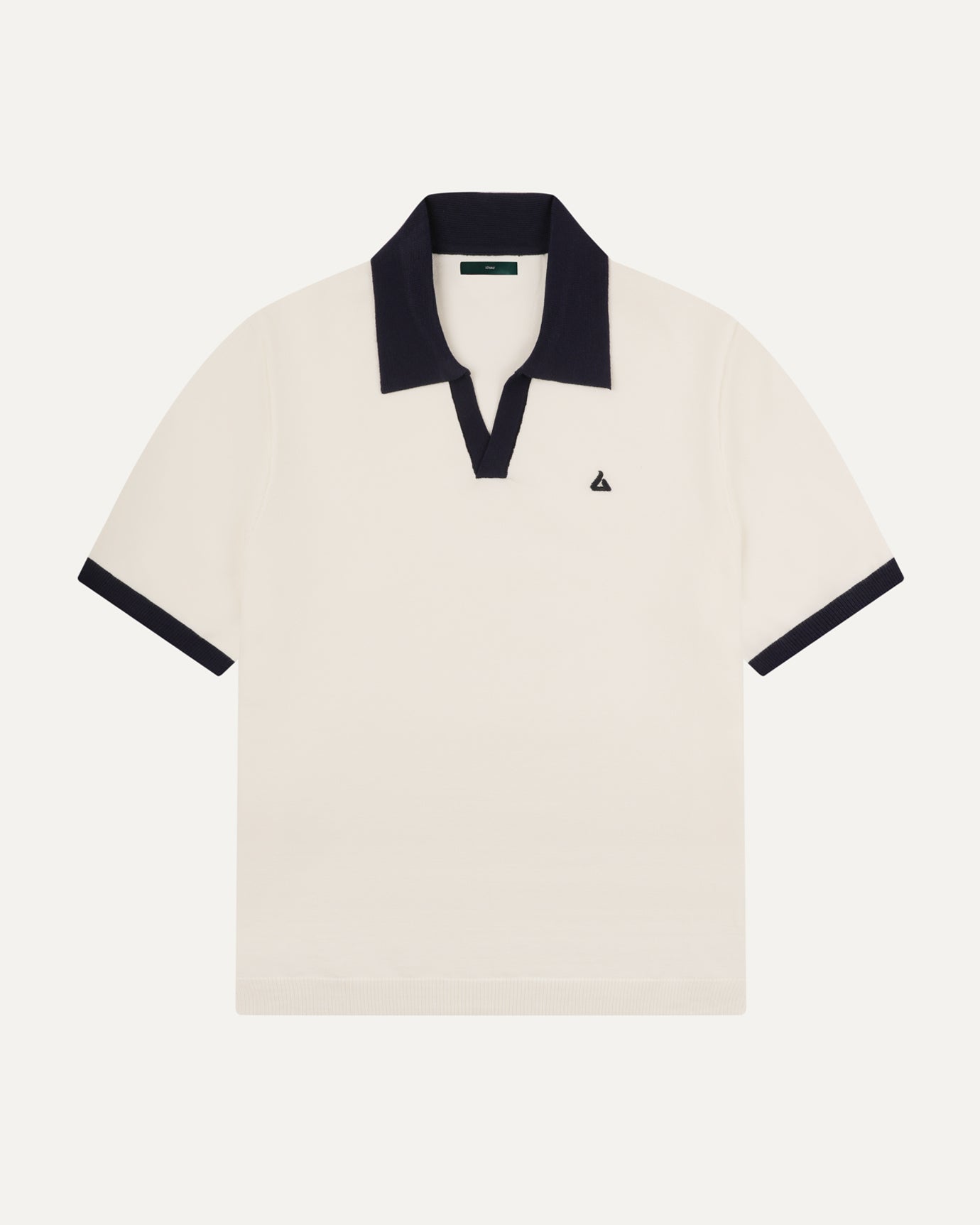
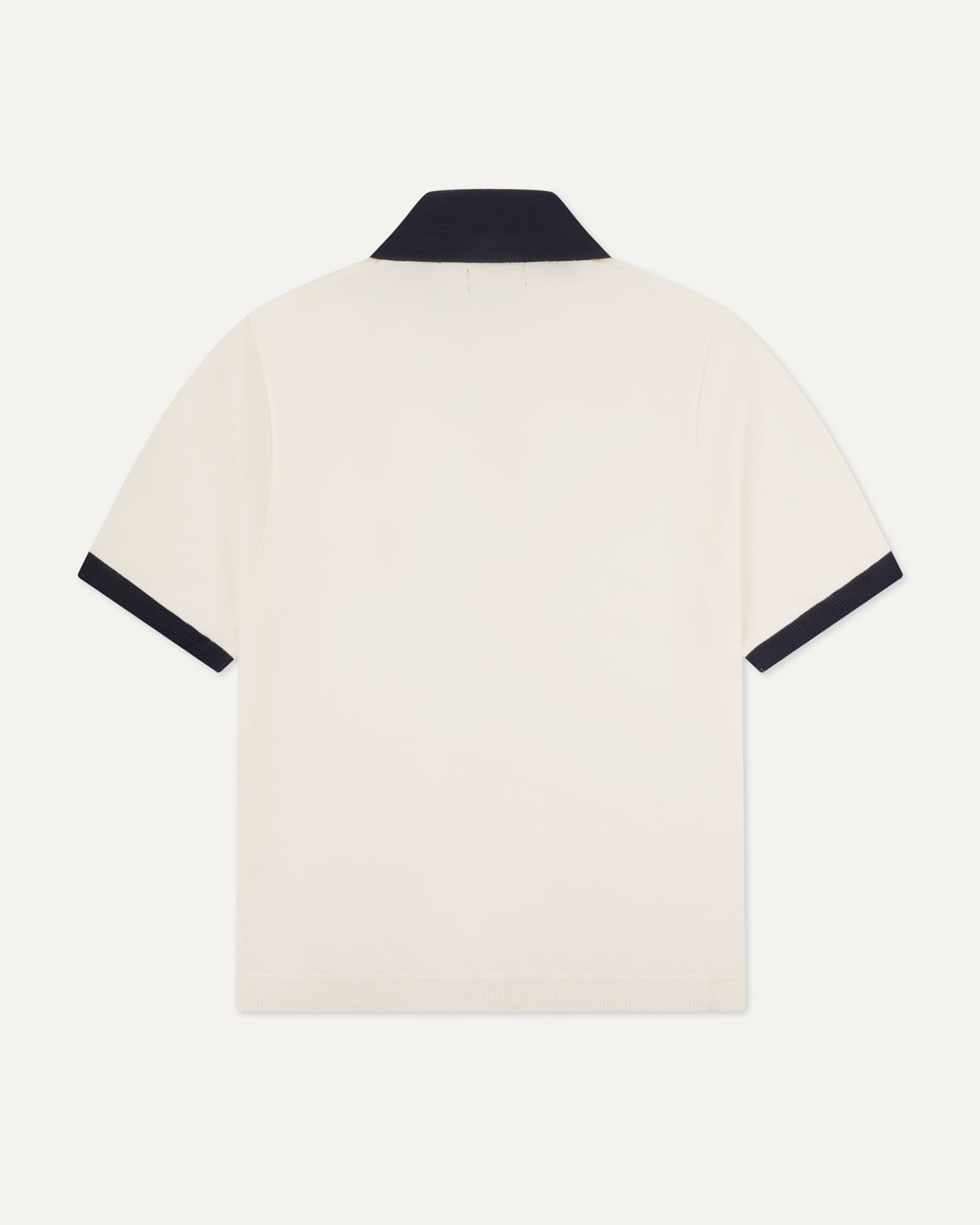
There is one legitimate exception. Tonal contrast dressing uses the difference between a warm ivory base garment and a cooler white accessory, or vice versa, as a subtle textural and chromatic layer. This works when the contrast is visible enough to be read as a choice: for example, a crisp milk white linen shirt worn over ivory wide-leg trousers, where the shirt is clearly a different shade and the gap is wide enough to look considered. The contrast collar pleated dress in navy and white demonstrates how deliberate tonal contrast between whites and near-whites can be built into a single garment as a design feature.
For accessories, the rules relax slightly. A milk white outfit can carry an ivory hat or ivory canvas bag because accessories are understood as separate objects rather than part of a unified tonal palette. The cotton baseball cap in off-white and brown sits in ivory territory and can complement a milk white shirt precisely because the cap reads as an accessory, not as an extension of the base outfit.
For more guidance on how white interacts with the broader summer palette, our article on best colors for summer outfits 2026 covers seasonal combinations in concrete detail.

Care and Maintenance: Keeping Each Shade True
One of the fastest ways to ruin a white wardrobe is to wash milk white and ivory white garments together repeatedly. Over time, the cooler pieces pick up warmth from the ivory ones, and the ivory pieces can develop an uneven patina. Keep them separated in the wash.
Milk white garments should be washed in cool to lukewarm water with a detergent formulated for whites. Optical brighteners in standard white detergents are designed for cool-toned whites and will maintain the crisp, clean quality of mercerized cotton and fine poplin. Avoid high heat, which yellows cotton fibres over time and pushes them toward ivory territory unintentionally.
Ivory white garments, particularly linen and natural cotton, should be washed gently in cool water without optical brighteners. Brightening agents will work against the warm tone, pulling the garment toward a flat, slightly grey-white that satisfies neither shade. A mild, fragrance-free detergent preserves the natural warmth of the fibre.
For linen specifically, line drying in indirect sunlight rather than tumble drying preserves both the texture and the warm tone. Direct intense sunlight can bleach linen toward a cooler white over multiple washes, gradually shifting it out of its original ivory register.
Storage matters too. Ivory garments stored in plastic bags can develop a yellowish cast from trapped humidity. Use breathable cotton garment bags and store them away from direct light. The same applies to milk white pieces: UV exposure over time pushes white cotton toward yellow, which is the opposite of what you want.
For a broader understanding of how colour choices interact with care and longevity in a refined wardrobe, our piece on earth tones in fashion addresses how warm neutrals age and are maintained across seasons.

| Attribute | Milk White | Ivory White |
|---|---|---|
| Undertone | Cool, blue-neutral or grey | Warm, yellow-cream or golden |
| Typical fabrics | Mercerized cotton, bleached poplin, synthetic blends | Linen, raw cotton, silk, unbleached natural fibres |
| Best colour partners | Navy, charcoal, slate grey, black, cool stone | Camel, tan, sand, warm taupe, cognac leather |
| Skin tone affinity | Cooler and fair complexions | Warm, olive, and medium complexions |
| Occasion feel | Crisp, modern, structured | Relaxed, warm, resort, tonal |
| Care note | Optical brighteners safe; avoid high heat | Avoid optical brighteners; line dry in indirect light |
Frequently asked questions
Can I wear ivory white and milk white in the same outfit?
Generally, no. The two shades have opposing undertones and placed directly beside each other they create a contrast that reads as mismatched rather than intentional. The one exception is when the contrast is wide enough and the pieces are distinct enough in category, such as a crisp milk white shirt over ivory linen trousers, that the gap reads as a deliberate design layer rather than a mistake. When in doubt, keep your whites consistent within a single outfit.
Which white is more versatile for a capsule wardrobe?
Ivory white tends to be more versatile across a refined, neutral-based wardrobe because it partners naturally with the warm neutrals, camel, tan, sand, and warm grey, that form the backbone of old money dressing. Milk white is more specific: it works beautifully with navy and cool darks but can look cold or stark beside warm earth tones. If you are building from scratch, start with ivory-toned white linen trousers and warm-white shirts before adding cooler pieces.
Why does my white shirt look yellow after washing?
Yellowing after washing is almost always caused by one of three things: high heat during washing or drying, which oxidises cotton fibres; residue from fabric softener or conditioner building up in the weave; or exposure to chlorine bleach on a fabric that was not designed for it. For ivory linen and natural cotton, avoid bleach entirely and wash in cool water. For milk white mercerized cotton, a detergent with optical brighteners used in cool water will maintain the crisp tone without the yellowing risk.
Does skin tone really affect how white reads on a person?
Yes, in a practical and visible way. Cool undertone complexions, those with pink, blue, or neutral base tones, are typically flattered by the clarity of milk white because the cool tone of the fabric does not compete with the skin. Warm and olive complexions often look more natural and richer beside ivory white, because the warmth of the fabric echoes the warmth of the skin rather than contrasting it. This is not a rigid rule, but it is a useful starting point when deciding which shade to invest in most heavily.
Milk white and ivory white are not interchangeable, and treating them as though they are is one of the small errors that separates a considered wardrobe from a merely full one. Get the identification right, pair each shade with its natural colour partners, and maintain them separately, and both shades will serve you across every season. For a deeper study of how warm and cool neutrals interact across a complete wardrobe, our guide to building a capsule wardrobe around classic navy blue shows how a strong anchor colour makes decisions like this one considerably easier.