


The Return of the Silk Scarf and How to Tie It Classily
Reading time 15 min • 2921 words
Few accessories have the longevity of the silk scarf. It arrived in European wardrobes in the early twentieth century, became the signature of certain aristocratic households, disappeared into the background for a decade or so, and has now returned with quiet confidence to the shoulders, necks, and wrist cuffs of people who dress with intention. This is not a trend in the fast-fashion sense of the word. It is a correction, a return to an accessory that earns its place.
What is driving the renewed interest is partly the broader appetite for old money dressing and partly something more practical: a silk scarf solves several problems at once. It adds warmth without bulk, colour without committing to a printed shirt, and structure to an otherwise simple outfit. It is the kind of object that rewards knowledge, because how you tie it communicates more than most people realise.
This guide covers the silk scarf from fabric selection through to the specific knots and folds that look genuinely polished, not costume-like. Whether you are buying your first or adding to a collection, the details below will help you wear it correctly.
Key takeaways
- A 90 cm square mulberry silk scarf is the most versatile size for both classic knots and neck draping.
- The Parisian knot, the loose neck loop, and the neckerchief fold are the three ties that photograph best and hold their shape all day.
- Silk scarves work on men equally well as on women, worn at the open collar or knotted into a breast pocket.
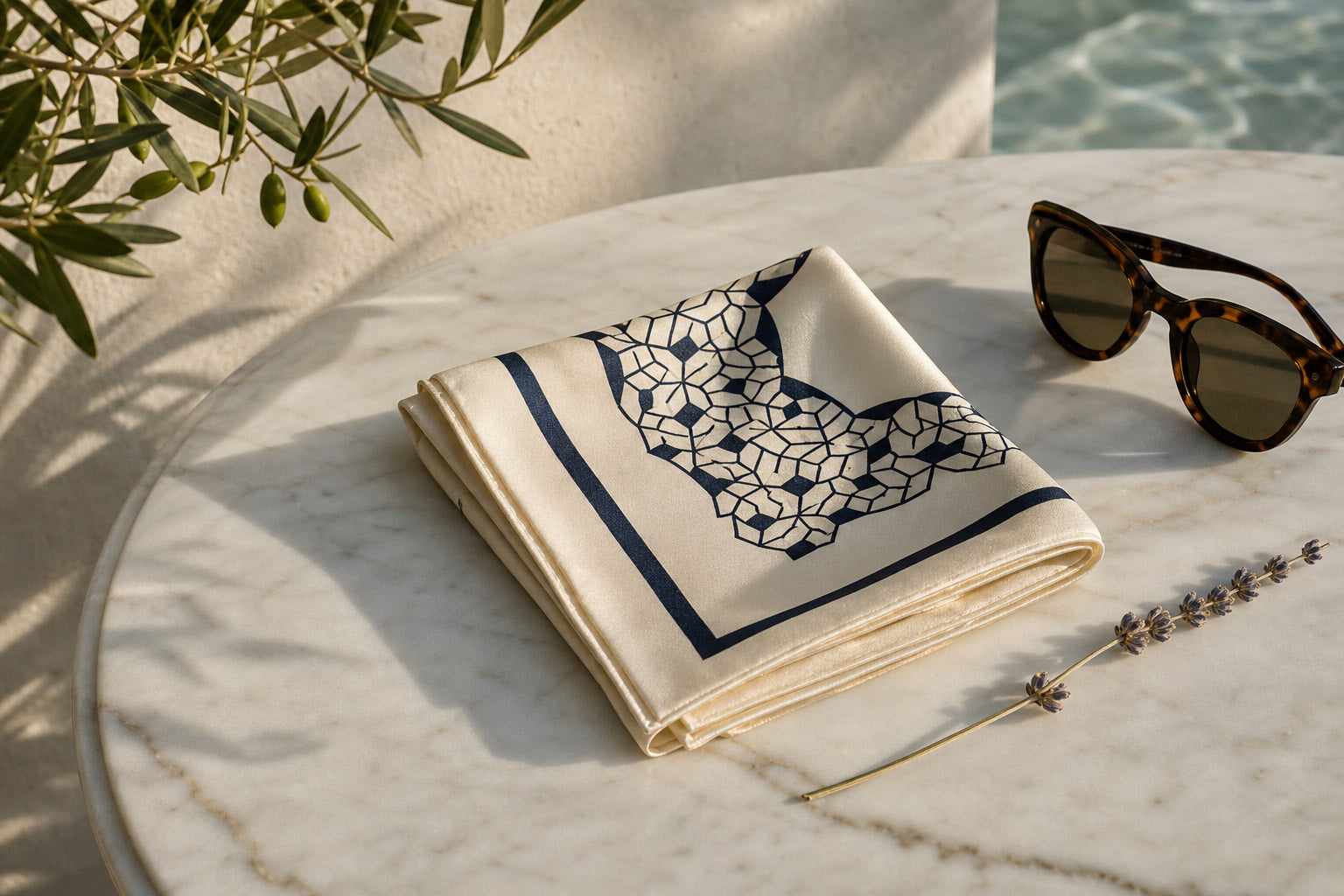
- Print scale matters: a bold equestrian or geometric print reads best on a 90 cm square; small repeating motifs suit the 45 cm neckerchief format.
- Store a silk scarf rolled, not folded, to prevent permanent crease lines along the hem.
In this guide
- Why the Silk Scarf Belongs in the Old Money Wardrobe
- Choosing the Right Silk Scarf: Size, Weight, and Print
- How to Tie a Silk Scarf: Five Knots Worth Knowing
- Styling the Silk Scarf for Women: Outfit Pairings That Work
- Styling the Silk Scarf for Men: Where It Works and Where It Does Not
- Caring for a Silk Scarf So It Lasts Decades
- Frequently asked questions
Why the Silk Scarf Belongs in the Old Money Wardrobe
The silk scarf's association with quiet luxury is not accidental. Hermès began producing their iconic silk carrés in 1937, and the format, a 90 cm hand-rolled square of printed twill, became the template that the rest of the industry has referenced ever since. For a full background on the history of the silk scarf as a fashion object, the history of the silk scarf is well documented on Wikipedia.
What makes silk the correct fabric for a scarf rather than a cheaper substitute comes down to three properties: drape, print clarity, and temperature regulation. Silk drapes without stiffness, which means a knot falls into a natural shape rather than fighting you. Prints on silk have a depth and saturation that polyester cannot replicate because the fibre's triangular cross-section refracts light. And silk regulates temperature in both directions, making it useful in spring and autumn equally.
Mulberry silk is the grade to look for. It comes from silkworms fed exclusively on white mulberry leaves, producing longer, more uniform filaments than wild or tussah silk. If you want to understand why that distinction matters to the hand feel and durability of a piece, our guide to mulberry silk and why it feels so different explains the production process in detail.
For women who want to extend the silk aesthetic beyond accessories, the Collar Mulberry Silk Shirt from Lovau shows how the same fabric translates into a full garment with the same drape and luminosity.
Expert insightAlways check the hem of a silk scarf before buying. A hand-rolled hem, where the edge is folded and stitched by hand in tiny diagonal stitches, is the mark of a quality piece. Machine-rolled hems are flatter and less durable.

Choosing the Right Silk Scarf: Size, Weight, and Print
Before you can tie a silk scarf well, you need the right one. The market offers several formats and not all of them are equally versatile.
Square formats: - 45 cm (neckerchief): The smallest useful square. Best folded into a triangle and tied at the throat, or worn flat at the collar. Works well on women with finer bone structure; on men it reads as a pocket square when folded into a point. - 70 cm: The middle ground. Enough fabric for a loose neck wrap but slightly awkward for a full Parisian knot on broader shoulders. - 90 cm (carré): The standard. Enough fabric to tie every classic knot, drape over a shoulder, or wear as a head covering. This is the format to prioritise.
Oblong formats: - The 180 cm by 35 cm oblong is better suited to belt loops and bag handles than to neck tying. It has its uses but is not the starting point.
Weight and weave: A twill weave silk at 65 to 90 grams per square metre holds a knot without slipping. Lighter chiffon silk scarves are beautiful but require a pin or brooch to stay in place. For autumn and winter, a silk and wool blend or a silk and cashmere blend adds warmth while keeping the drape. Our piece on why silk-blend knits are worth the investment goes into the specific fibre combinations that perform best across seasons.
Print scale: Match print scale to the format. Large equestrian, botanical, or geometric prints belong on a 90 cm square where they can be read in full. Small repeating motifs or solid colours work at every size. Avoid novelty prints unless you are committed to wearing them as a conversation piece rather than a wardrobe foundation.
Expert insightA silk and cashmere combination, like the fabric used in the Lovau mulberry silk and cashmere set, gives you the temperature range of both fibres. In accessories, that blend is particularly valuable in shoulder wraps and oversized scarves worn through transitional months.

How to Tie a Silk Scarf: Five Knots Worth Knowing
The reason most people tie a silk scarf badly is that they approach it like a cotton scarf, pulling it tight and looping it without considering the fabric's weight and drape. Silk needs space. Every knot below is built on that principle.
1. The Parisian Knot (for 90 cm squares) Fold the square diagonally into a triangle. Fold the triangle in half lengthwise once more to create a thick band. Wrap it around your neck so both ends hang at the front, one slightly longer than the other. Take the longer end, loop it once around the shorter, and tuck it under and through, as you would start a standard knot. Do not pull tight. Leave a soft, open loop at the throat. This is the knot that reads as genuinely French rather than theatrical.
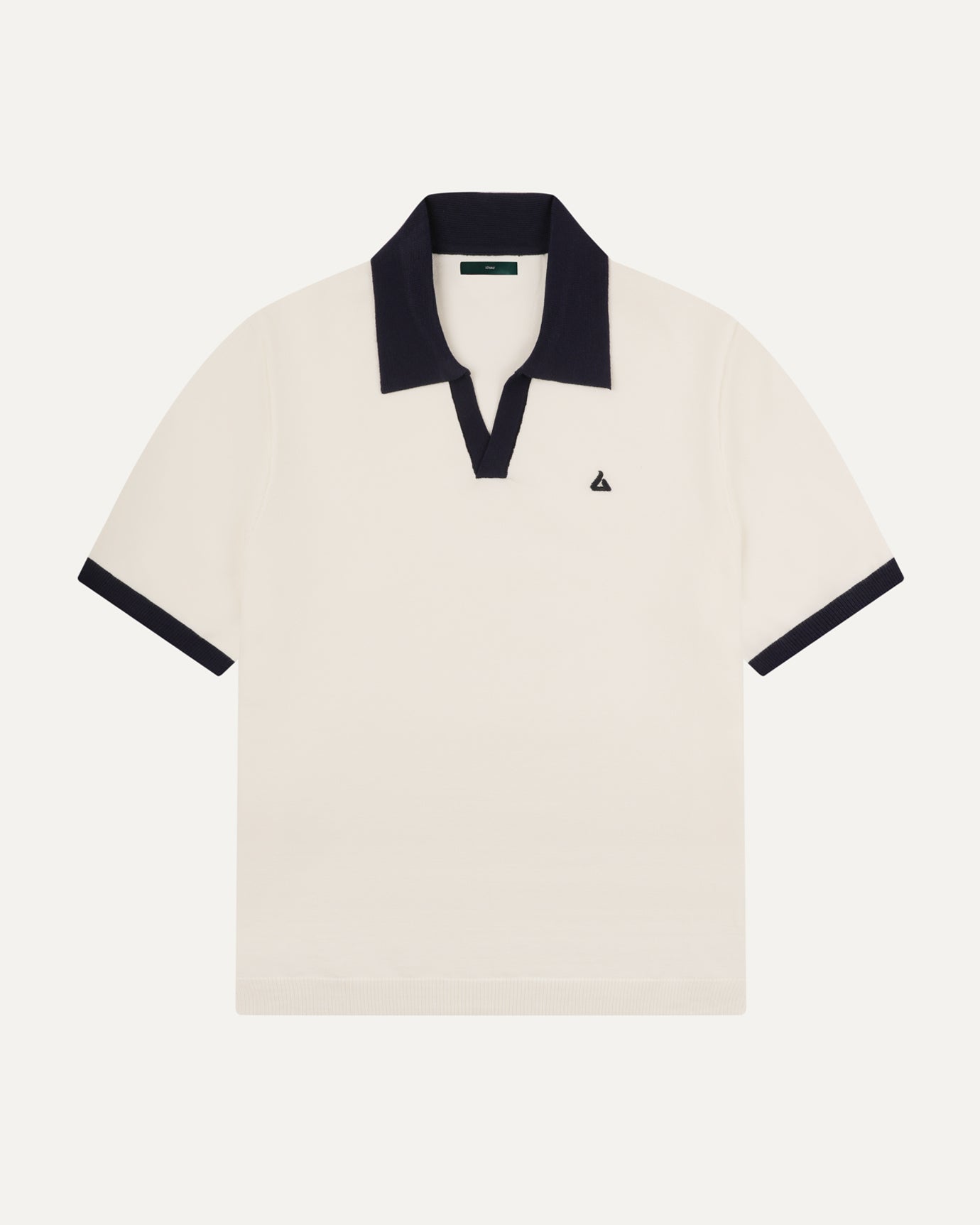
2. The Loose Neck Loop (for 90 cm and 70 cm squares) Fold into a triangle, then roll from the point toward the long edge until you have a loose rope of fabric. Drape around the neck and tie a single loose overhand knot at the front, off-centre. Let one end hang slightly longer. This works best under an open shirt collar and pairs well with a silk polo shirt for men, or a simple linen dress for women.
3. The Neckerchief Fold (for 45 cm and 70 cm squares) Fold diagonally into a triangle. Place the long edge at the back of the neck with the point facing forward. Bring both ends to the front, cross them once, and tie a flat knot. The point should fall at the base of the throat. Keep the knot loose. This is the cleanest version for women wearing a V-neck or open collar.
4. The Head Wrap (for 90 cm squares) Fold into a triangle. Place the flat edge across the forehead, pull both ends to the back of the head, cross them, bring them forward, and tie at the front above the forehead. The point hangs at the nape. Worn with a simple dress, this is among the most photographed old money summer looks.
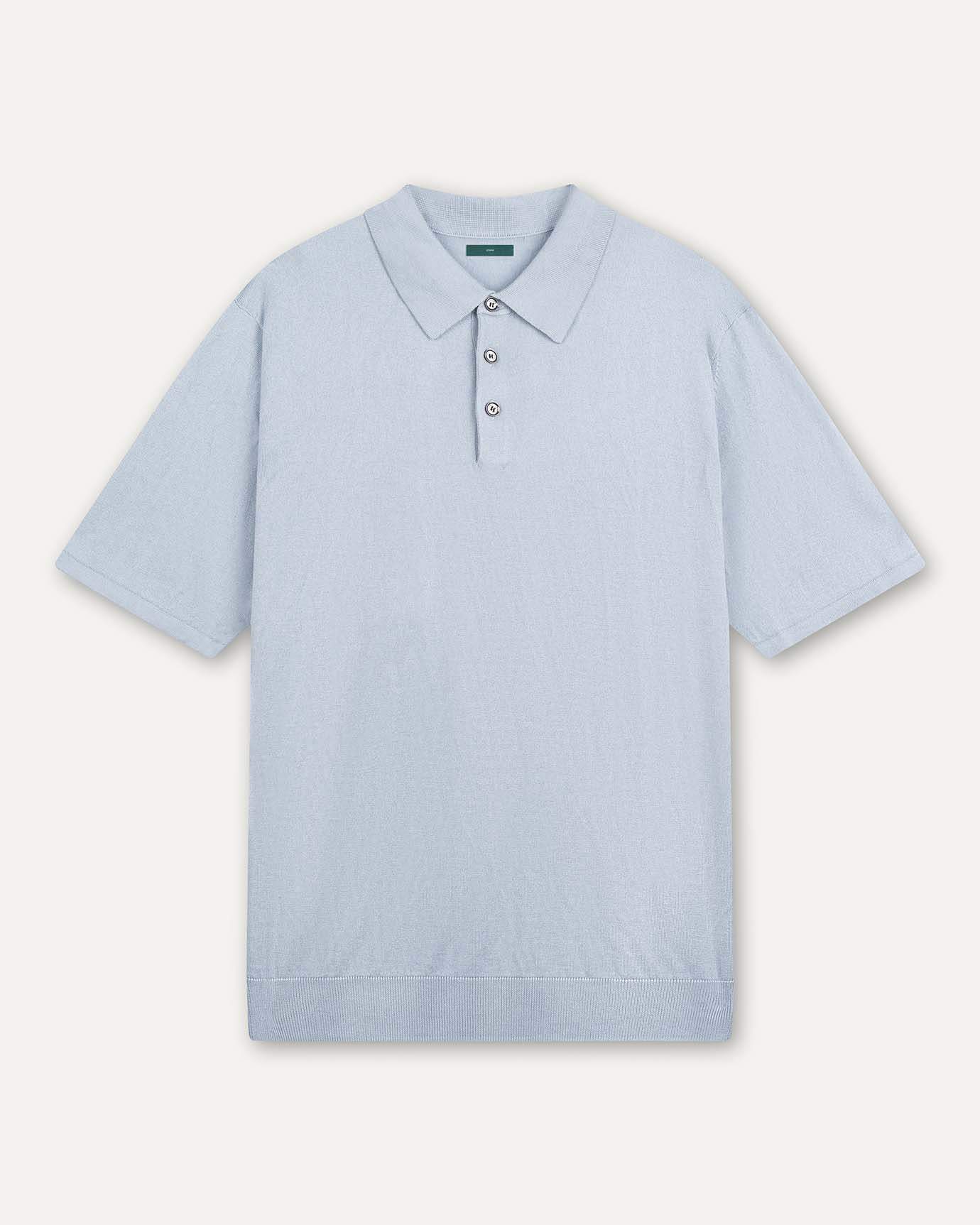
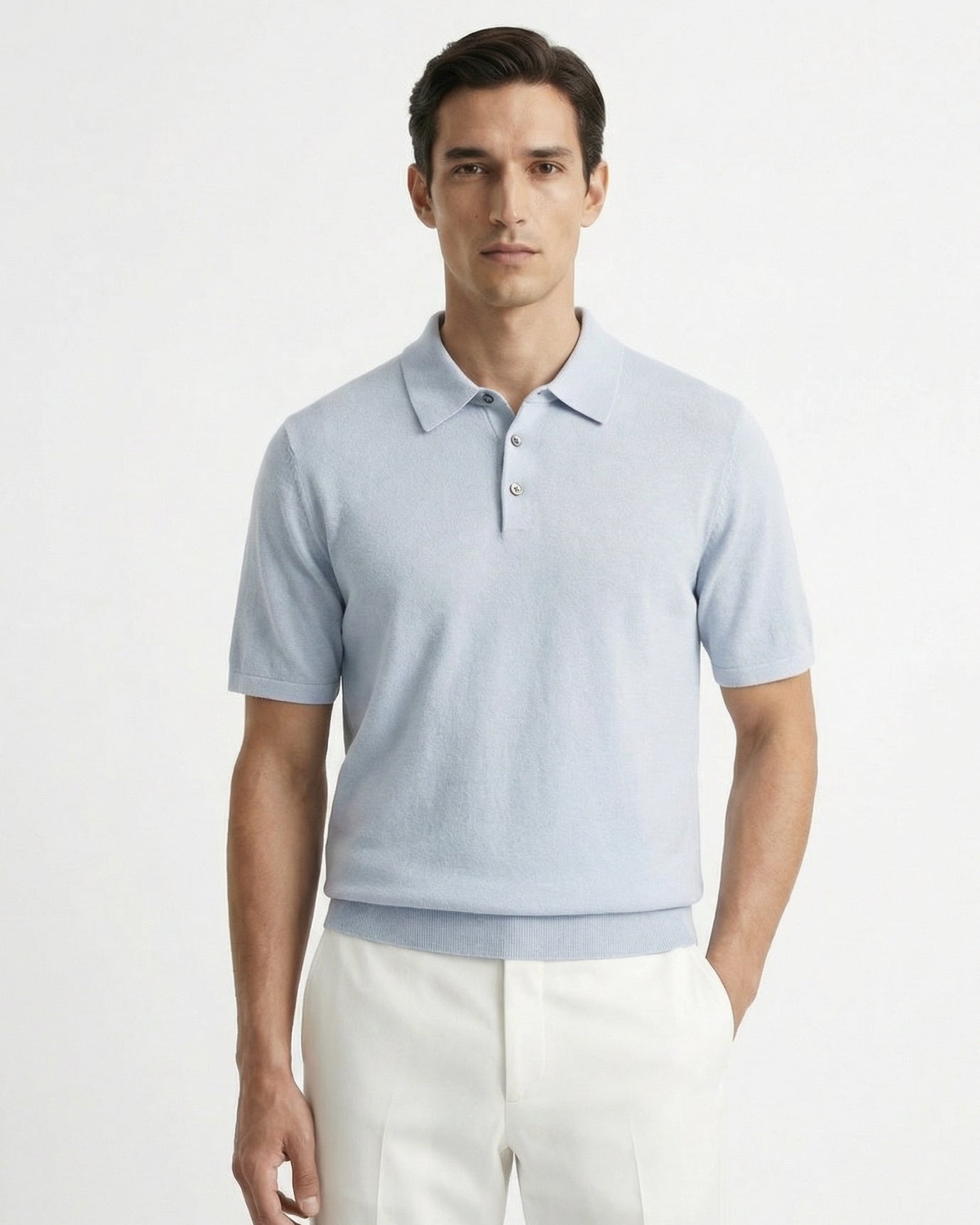
5. The Pocket Square Fold (for men, 45 cm squares) Fold the square in half, then in half again to form a small square. Fold one corner up slightly above the fold line. Insert into the breast pocket with the coloured corner visible. This is a lower-commitment entry point for men who want to incorporate silk into their wardrobe without committing to a neck knot. Pair it with the High End Acetate Mulberry Silk Blend Polo for a consistent fabric story across the outfit.
For more specific variations and visual references, our detailed piece on eight different ways to style a silk scarf covers less common methods including the bag handle wrap and the belt loop tie.
Expert insightWhen tying any silk scarf at the neck, begin with the scarf slightly off-centre so the finished knot sits naturally at the hollow of the throat rather than dead centre, which can look forced.

Styling the Silk Scarf for Women: Outfit Pairings That Work
The silk scarf is at its most elegant when it contrasts in texture with the rest of the outfit. Smooth silk against a textured fabric, matte cotton, or structured tailoring creates the kind of considered layering that defines old money dressing.
With a simple dress: A Parisian knot at the throat over a solid-colour dress is one of the clearest expressions of the aesthetic. The French Niche Style White Dress in white gives a neutral base that allows almost any scarf print to read clearly. A navy and gold equestrian print over white is a particularly clean combination.
With a striped dress: A solid-colour scarf in one of the stripe colours, tied loosely, creates cohesion without matching too literally. The Blue Striped Dress Lovau Style offers exactly this opportunity, where a cream or ivory silk neckerchief would balance the horizontal lines of the print.
With a lace or textured dress: Here the contrast works in reverse. A smooth, solid-colour silk scarf against lace creates a deliberate tension between refinement and softness. Pair with the Sweet Lace Tie-Waist Slim-Fit Mini Dress and a loosely draped 90 cm silk over one shoulder rather than tied at the neck.
With trousers and a shirt: The neckerchief fold tucked into an open collar over high-waisted old money trousers and a tucked blouse is a complete look without needing jewellery. The scarf does the decorative work.
For women building a full silk wardrobe, the principles that apply to scarves carry through to all silk pieces. Our article on the art of the silk slip dress in quiet luxury styling extends these ideas into full outfit construction.

Styling the Silk Scarf for Men: Where It Works and Where It Does Not
Men wearing silk scarves is not a new idea, though it has been treated as one in recent years. The British and Italian traditions of neckwear both include the cravat and the open-collar neckerchief as standard components of warm-weather or country dressing. The history of men's neckwear shows how these conventions evolved from purely functional origins into deliberate style choices.
For men, the key is restraint in the knot and confidence in the pairing. The two most wearable approaches:
At the open collar: A 70 or 90 cm square folded into a band and tied as a loose Parisian knot inside the open collar of a shirt or polo. The knot should not be visible above the collar, just the slight fullness at the throat. This works with the Double Mercerized Ice Silk Shirt, where the shirt's own silk content creates a fabric harmony with the scarf.
As a pocket square: As described above, a 45 cm silk square folded to show a single point in the breast pocket of a blazer. This is the most conservative entry and the least likely to attract comment, which is, in old money terms, a feature rather than a limitation.
What to avoid: Tied too tightly, a silk scarf at a man's neck reads as a costume. Tied too loosely on a large 90 cm square without folding it down to a manageable width, it reads as an accident. The fold is everything. Always reduce the fabric to a band of 6 to 8 cm width before tying.
Colour guidance for men: Navy, burgundy, forest green, and camel are the most wearable ground colours for a first scarf. Prints should be geometric or abstract rather than figurative for a more contemporary read.

Caring for a Silk Scarf So It Lasts Decades
A quality silk scarf, properly maintained, outlasts most garments in a wardrobe. The fibre is strong along the grain but vulnerable to abrasion, heat, and alkaline detergents. These are the practices that matter.
Washing: Hand wash in cool water, 20 to 30 degrees Celsius, with a pH-neutral or specifically silk-formulated detergent. Never wring. Press the scarf gently against the side of the basin to remove water, then roll it in a clean cotton towel to absorb the remainder.
Drying: Lay flat on a dry towel or hang over a smooth wooden rail away from direct sunlight. Sunlight degrades silk's dye and weakens the fibre over time. Never tumble dry.
Ironing: Iron on the reverse side while still slightly damp, on the silk or lowest heat setting, with no steam. Steam can cause water spots on printed silk that are difficult to remove. A pressing cloth between the iron and the fabric adds an extra layer of protection.
Storage: Roll, do not fold. Permanent crease lines form along fold edges and are difficult to press out without professional finishing. Store rolled in acid-free tissue or a cotton bag, never in plastic, which traps humidity and encourages mildew.
Stains: Act immediately. Blot, do not rub. Cold water on water-based stains. For oil-based stains, a small amount of talcum powder left to absorb the oil before brushing away is the safest first step. Take anything persistent to a specialist dry cleaner with silk experience.
For related fabric care questions, our article on how to stop silk shirts from sticking in humid climates addresses another common maintenance issue that applies to silk accessories as well.
| Format | Size | Best Knot or Fold | Best Occasion | Notes |
|---|---|---|---|---|
| Neckerchief square | 45 cm | Neckerchief fold, pocket square | Casual, daytime, summer | Easiest to control; best entry point for men |
| Medium square | 70 cm | Loose neck loop, Parisian knot | Smart casual, travel | Versatile but slightly awkward on broader frames |
| Carré square | 90 cm | Parisian knot, head wrap, shoulder drape | All occasions, formal to casual | The standard; most knots designed for this size |
| Oblong | 180 x 35 cm | Belt loop, bag handle, loose neck wrap | Accessory styling, not primary neckwear | Limited for neck tying; strong decorative use |
| Oversized shawl | 140 x 140 cm+ | Shoulder wrap, loose drape | Evening, travel, transitional seasons | Functions as a light layer; not for knotting |
Frequently asked questions
What is the best size of silk scarf for a beginner?
The 90 cm square is the most practical starting size. It has enough fabric to tie every classic knot without being unwieldy, and the proportions work on most body types for both men and women. If you want to start smaller, a 45 cm neckerchief is lower commitment and easier to control.
Can men wear silk scarves without looking overdressed?
Yes, provided the knot is loose and the scarf is worn inside an open collar rather than over a buttoned shirt. The loose neck loop tied inside a silk polo collar is the most casual, wearable version for men. The pocket square fold in a blazer breast pocket is even more understated.
How do I stop a silk scarf from slipping out of a knot?
Use a twill weave silk rather than satin or chiffon. Twill has a slightly textured surface that grips itself. If slipping persists, a small silk-covered brooch or a simple kilt pin placed through the knot holds everything in place without damaging the fabric.
Is there a difference between a mulberry silk scarf and a regular silk scarf?
Yes, a meaningful one. Mulberry silk uses longer, more uniform filaments from silkworms raised on a controlled diet, producing a smoother, stronger, more lustrous fabric than wild or mixed-grade silk. The print quality is higher, the drape is better, and the scarf will hold its colour and structure for significantly longer with proper care. Our article on mulberry silk and what makes it different covers this in full detail.
The silk scarf rewards the people who learn to use it correctly. It is not a complicated accessory, but it does have a logic, in fabric weight, in knot choice, in how it relates to the rest of what you are wearing. Master two or three of the knots above, invest in one quality 90 cm mulberry silk square in a print you genuinely like, and it will become one of the most consistently useful pieces in your wardrobe. For a broader view of how accessories like this fit into a complete seasonal wardrobe, our guide to top luxury outfit formulas for the year ahead offers a structured starting point.