


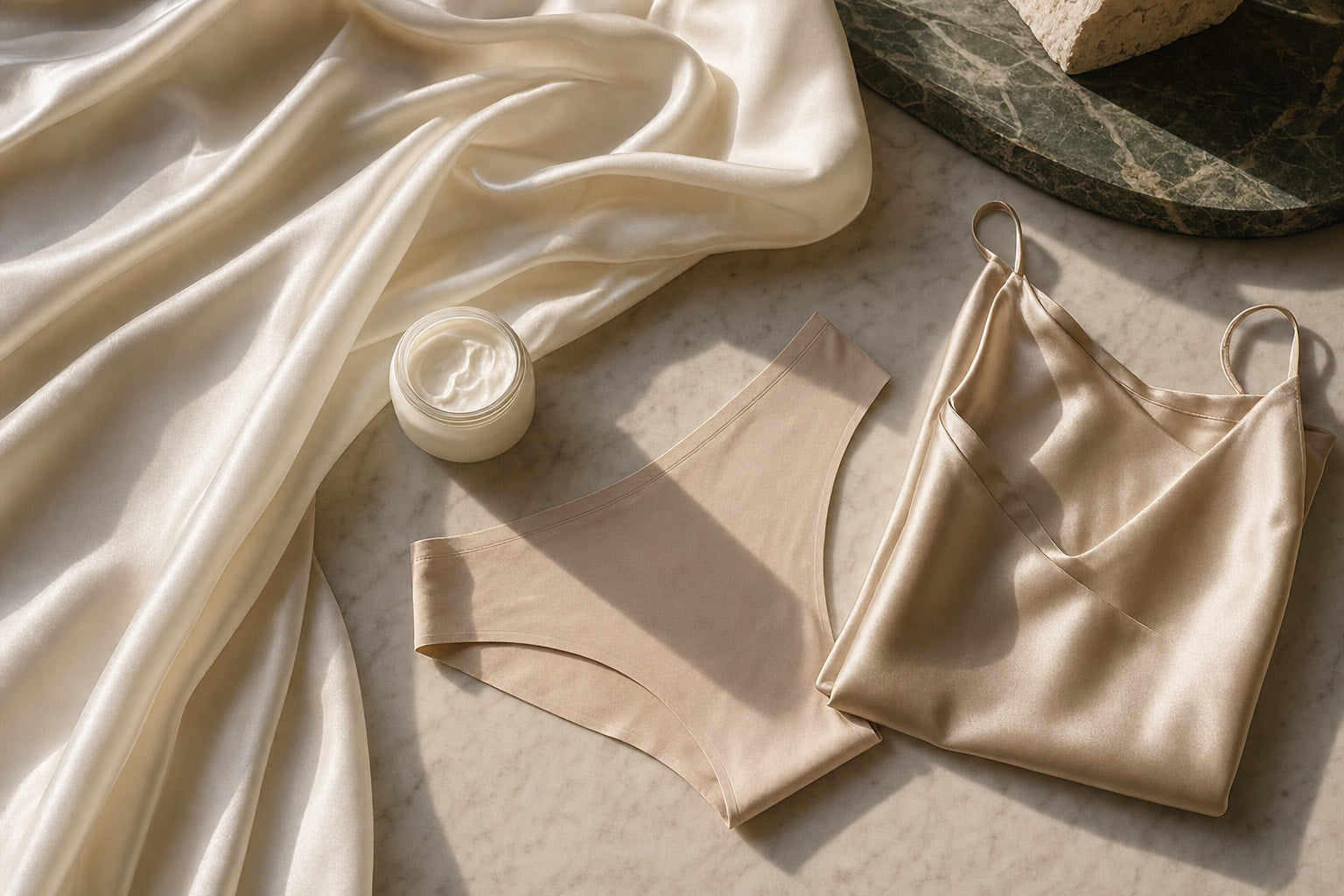
The Best Undergarments for Clingy Silk and Satin Dresses
Reading time 13 min • 2645 words
A silk or satin dress is one of the most demanding things a woman can wear, not because it is difficult to style, but because the fabric tells the truth. Every seam, every edge, every wrong choice underneath will show. That is precisely why women who wear these fabrics well spend as much thought on what goes under the dress as on the dress itself.
The question of the best undergarments for clingy silk and satin dresses comes down to three things: fabric, silhouette, and colour. Get those three right and the dress does exactly what it is supposed to do, fall cleanly, catch the light, and move without interruption. Get them wrong and you spend the evening tugging at the hem.
This guide covers every scenario, from a bias-cut satin event dress to a structured ice silk knit, with specific recommendations on what to buy, what to skip, and why the details matter.
Key takeaways
- Choose laser-cut or bonded-edge microfibre briefs in a shade that matches your skin tone, not the dress colour.
- A well-fitted satin or silk slip adds a second layer that breaks static and smooths the silhouette without adding bulk.
- Avoid lace-edged underwear under bias-cut satin: the texture telegraphs through even heavy fabric.
- Body moisturiser applied to the thighs before dressing reduces static cling on silk and ice silk knits.
- For low-back or halter-neck satin styles, a low-back adhesive bra or stick-on cups is usually the cleanest solution.
In this guide
- Why Silk and Satin Cling in the First Place
- The Right Brief: Cut, Fabric, and Colour
- Slips and Liners: The Underrated Layer
- Bras for Satin and Silk: Low-Back, Strapless, and Adhesive Options
- Shapewear Under Satin: When It Helps and When It Doesn't
- Skin Preparation and Anti-Static Habits That Actually Work
- Frequently asked questions
Why Silk and Satin Cling in the First Place
Before choosing undergarments, it helps to understand the physics. Silk is a natural protein fibre with a smooth surface that generates static electricity when it rubs against synthetic fabrics, dry skin, or certain underwear materials. Satin, which is a weave structure rather than a fibre and can be made from silk, polyester, or acetate, shares the same smooth surface and the same tendency to cling wherever there is friction or an electrostatic charge.
Ice silk, the lightweight knitted fabric used in many of Lovau's summer styles, behaves similarly. It is cool to the touch, drapes close to the body, and will outline anything worn beneath it with complete honesty.
The three main culprits behind cling: - Underwear with thick seams or lace borders that create raised lines under smooth fabric - Synthetic underwear in a different charge than the dress fabric, creating static - Dry skin that grips the fabric from the inside rather than letting it fall freely
Address all three and you have solved most of the problem before you have even chosen a specific undergarment.
Expert insightA light spray of anti-static fabric spray on the inside hem of a satin dress before you put it on is one of the simplest and most effective tricks. Hold the garment inside out, spray lightly, and let it dry for thirty seconds before dressing.

The Right Brief: Cut, Fabric, and Colour
The foundation of any smooth silhouette under a satin event dress or a silk slip is the brief itself. The wrong brief is almost always the wrong fabric and the wrong edge.
Fabric: Microfibre is the gold standard for underwear under clingy dresses. It is thin, smooth on both sides, and generates almost no static against satin or silk. Cotton, while breathable, has a slightly textured surface that grips fabric from the inside and tends to bunch. Lace, however beautiful on its own, has raised edges that print through even a moderately heavy satin.
Cut: Laser-cut or bonded-edge briefs have no sewn seam at the leg opening, which eliminates the single most visible underwear line under a fitted dress. A mid-rise brief in this style, covering the hip smoothly without digging in at the waist or thigh, is the most versatile option. High-leg cuts work well under shorter styles; full-coverage briefs work better under floor-length or midi-length satin.
Colour: This is where many women make the mistake of matching underwear to the dress. Under white or pale satin, white underwear is actually more visible than nude. The correct approach is to match your underwear to your skin tone, not to the garment. A nude or warm beige microfibre brief disappears under any colour because it matches the surface light reflects off your body.
If you are wearing a halter neck satin dress, look for a brief with a lower waistband and no visible back elastic, as the back of the dress often sits very low.
Expert insightBuy two or three shades of nude microfibre briefs across the warm and cool undertone range. The brief that disappears under a cream satin may not disappear under a slate grey silk, because your skin's contrast with each dress colour differs.

Slips and Liners: The Underrated Layer
A slip is not an outdated garment. For women who wear silk and satin regularly, it is the most useful undergarment in the wardrobe. A well-chosen slip does several things at once: it creates a second smooth surface so the dress slides rather than grips, it adds a very slight weight that helps the outer layer fall correctly, and it gives coverage without shapewear compression.
For a long satin evening dress, a full-length slip in a matte jersey or fine modal fabric is ideal. The matte surface does not compete with the sheen of the outer satin, and the slight weight difference keeps the outer dress hanging away from the body rather than clinging to it.
For shorter styles, a half-slip that ends at mid-thigh gives the same anti-cling benefit without adding length. Pair this with a smooth microfibre brief underneath the slip for complete coverage.
What to look for in a slip: - Fabric: fine modal, matte jersey, or silk charmeuse (silk on silk creates no static) - Colour: again, skin-tone nude rather than white or black unless the dress is fully opaque - Length: two to three centimetres shorter than the outer dress at the hem - Neckline: lower than the dress neckline on all sides so it never shows
Women who wear styles like the Cira Long Satin Dress Skirt Set often find that a half-slip under the skirt portion is enough, since the set's top layer adds structure at the bodice.
Expert insightIf you cannot find a slip in the right length, a fitted modal camisole tucked into the waistband of your brief, worn under the dress, gives the same friction-reducing effect from the waist down without adding bulk at the hip.

Bras for Satin and Silk: Low-Back, Strapless, and Adhesive Options
The bra question under a satin dress depends almost entirely on the dress's neckline and back. There is no single correct answer, but there are clear choices for each silhouette.
Strapless dresses: A well-fitted strapless bra in a smooth microfibre or powernet fabric with no lace detailing is the standard choice. The key word is well-fitted: a strapless bra that is too loose will migrate downward and create bulk at the waist, which shows through satin immediately. If the dress has a structured bodice, as many elegant evening dresses do, built-in boning may make a bra unnecessary entirely.
Low-back dresses: This is where adhesive bras or stick-on silicone cups become genuinely useful. They provide lift and shape without any visible band or strap at the back. Choose a skin-tone option and apply to clean, dry skin at least fifteen minutes before dressing so the adhesive sets properly.
Halter necks: The Lina Halter Neck Satin Dress and similar styles work well with a plunge bra whose straps can be converted to halter configuration, or with adhesive cups if you prefer no hardware at all. Avoid convertible bras with visible plastic hardware at the neck: it reads as careless under a refined halter silhouette.
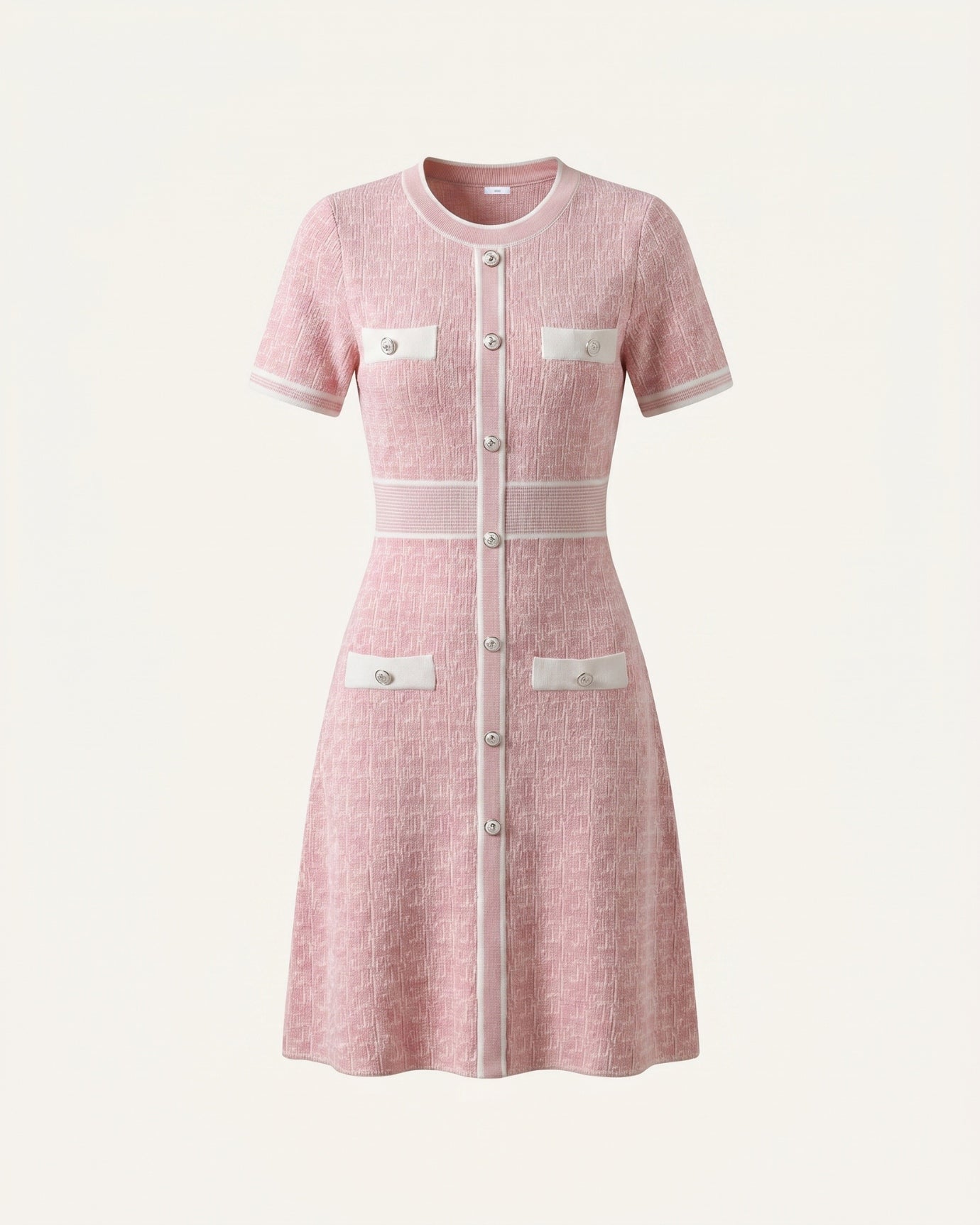
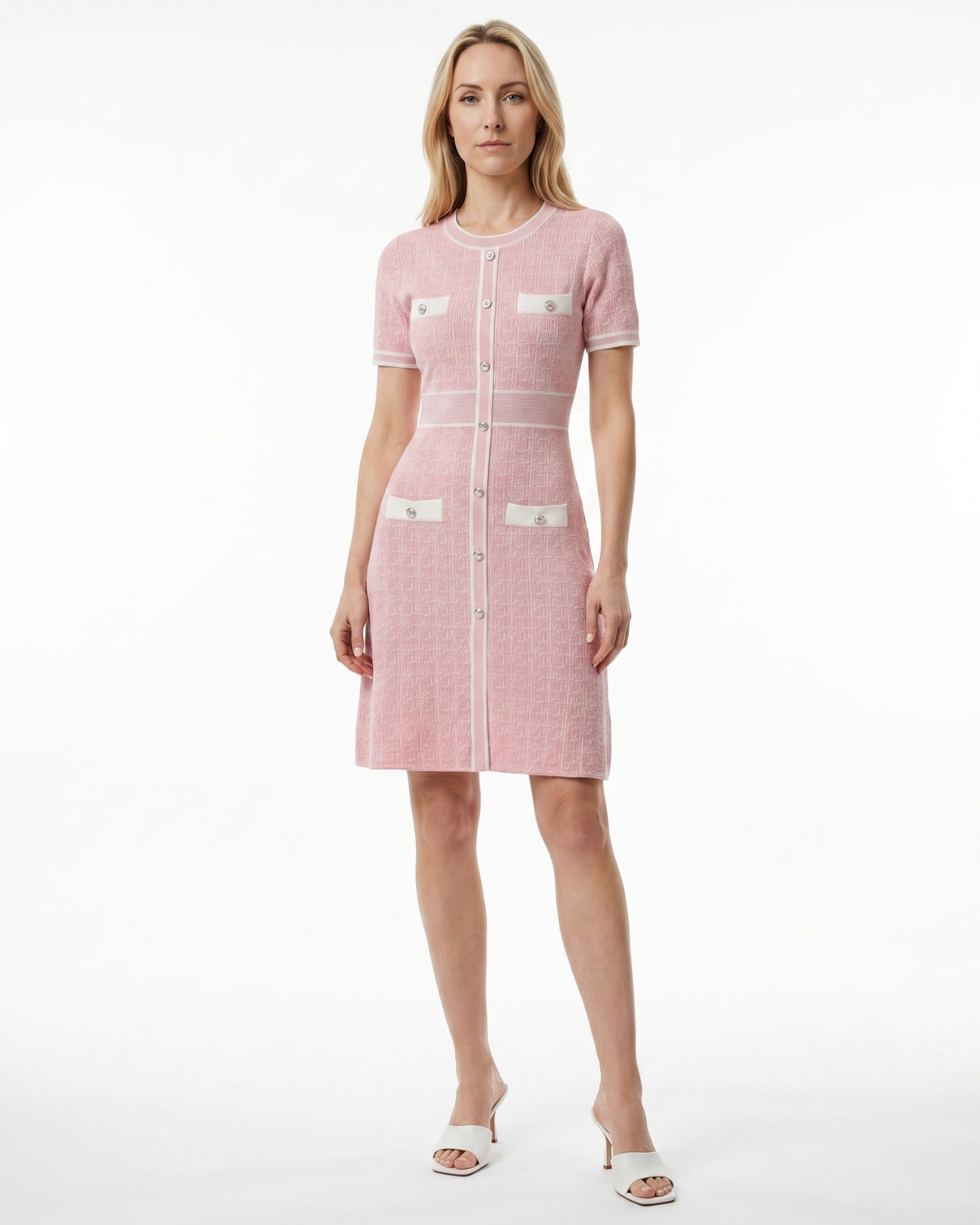
High necklines and structured bodices: Many of Lovau's silk knit styles, including the Old Money Ice Silk Dress Short Sleeve, have enough structure in the knit that a smooth, lightly lined bralette in microfibre or a thin foam-cup style is sufficient. The goal is to add shape without adding texture.
For further reading on styling silk slip silhouettes from the inside out, our editorial piece on the art of the silk slip dress in quiet luxury styling covers the full picture.

Shapewear Under Satin: When It Helps and When It Doesn't
Shapewear under a satin dress is one of those choices that sounds straightforward but requires precision. The wrong shapewear creates more problems than it solves: visible compression lines, a raised edge at the thigh or waist that shows through the fabric, or a silhouette that looks smoothed in one place and bunched in another.
When shapewear genuinely helps: Under a bias-cut satin maxi dress, a full-length smoothing slip or a light-compression midi short in microfibre can help the dress fall cleanly over the hips and thighs. This is different from heavy-compression shapewear, which adds bulk and creates a visible transition line where it ends.
When to skip it: Under a structured satin cocktail dress with boning or a fitted bodice, shapewear is usually unnecessary and adds a layer of heat and discomfort without improving the silhouette. The structure of the dress does the work.
The key rule: Whatever shapewear you choose, it must end at least five centimetres above or below the hem of the dress. A shapewear edge that sits at the same level as the dress hem will show as a horizontal line across the thigh. This is the most common shapewear mistake under satin.
For styles like the Polkadot Ice Silk Dress or the Eve Ice Silk Knitted Red White Dress, which are lighter and less structured, a smoothing midi short in microfibre is usually the right call over heavy shapewear. It reduces friction, prevents thigh chafing in warm weather, and keeps the ice silk falling smoothly.
If you are building a wardrobe of silk and satin pieces, our guide to midi dresses and the most elegant length for 2026 is worth reading alongside this one.

Skin Preparation and Anti-Static Habits That Actually Work
Undergarments are only part of the equation. The surface of your skin affects how silk and satin behave just as much as the fabric you wear beneath them.
Moisturise before dressing: Dry skin is the primary cause of static cling from the inside. Apply a lightweight, fast-absorbing body lotion or body oil to your legs, hips, and torso before putting on a satin or silk dress. Let it absorb for five minutes. The result is a slightly slicker surface that the fabric glides over rather than gripping. Avoid heavy creams that leave a residue, as these can transfer to delicate fabrics.
Anti-static sprays: A light spray of anti-static spray on the inside of the dress hem is effective for polyester satin in particular. For genuine silk, check the spray is safe for delicate fabrics before using.
Avoid over-drying: If you tumble-dry synthetic satin or put it through a hot wash, the fabric builds up a static charge that persists. Caring for silk and satin correctly, which usually means cool hand washing or a delicate machine cycle and air drying flat, preserves the drape and reduces static long-term.
Metal hanger trick: Rubbing a wire hanger along the inside of a satin skirt before dressing discharges static buildup quickly. It sounds old-fashioned because it is, and it works.
For women building a wardrobe around silk and satin pieces, from a long-sleeve satin dress to a summer silk day dress, these habits compound. The dress you care for properly will drape better, cling less, and last far longer than one treated carelessly.

| Undergarment Type | Best Fabric | Best Dress Style | Cling Reduction | Avoid If |
|---|---|---|---|---|
| Laser-cut microfibre brief | Microfibre | All satin and silk styles | High | You need full coverage shapewear |
| Full-length slip | Modal or silk charmeuse | Maxi and midi satin dresses | Very high | Dress is above the knee |
| Half-slip | Matte jersey or modal | Midi and mini satin skirts | High | Slip is longer than outer dress |
| Smoothing midi short | Microfibre or light powernet | Bias-cut and ice silk dresses | High | It ends at the same level as the hem |
| Adhesive bra / stick-on cups | Silicone | Low-back and halter-neck satin | N/A (coverage only) | Skin is oily or not fully dry |
| Heavy compression shapewear | Nylon/spandex blend | Structured cocktail or column satin | Medium | Dress is bias-cut or very lightweight |
Frequently asked questions
What colour underwear should I wear under a white satin dress?
Match your underwear to your skin tone, not to the dress. Under white or ivory satin, white underwear actually creates more contrast and shows more readily than a nude or warm beige microfibre brief. Choose the shade closest to your own skin and it will disappear under the fabric. This principle applies to every colour of satin, including pale blush, champagne, and light grey.
How do I stop a satin dress from riding up and clinging to my tights or stockings?
The friction between satin and nylon hosiery is one of the most common causes of a dress riding up. The fix is to wear a half-slip between the dress and your hosiery. The slip creates a smooth surface that slides against both layers rather than gripping either one. Alternatively, applying a light mist of anti-static spray to the inside of the dress hem before dressing will reduce the charge that causes the fabric to stick. If you wear a satin event dress regularly, keeping a travel anti-static spray in your bag is a practical habit.
Can I wear a regular cotton brief under a silk dress?
Cotton briefs are breathable and comfortable, but they are not the best choice under silk or satin. The slightly textured surface of cotton grips silk from the inside rather than letting it fall freely, which contributes to clinging and bunching. Cotton also tends to absorb body moisture and then press against the skin, creating a slightly raised surface that can show through very fine silk. A smooth microfibre brief in a skin-tone shade is a more practical choice for delicate fabrics.
Do I need a bra under a structured satin dress with a built-in bodice?
Often, no. Many satin dresses with boned or structured bodices, including styles with internal corsetry, are designed to provide support without a separate bra. Adding a bra on top of a structured bodice can create unwanted bulk and visible lines. If you feel you need additional support, adhesive cups placed directly on the skin before you put on the dress are the cleanest option. For guidance on specific silhouettes, our article on the best dresses for broad shoulders and what to avoid covers how structure and support interact across different dress cuts.
Getting dressed in silk or satin well is a discipline of small decisions made correctly. The brief with no visible edge, the slip that matches your skin rather than the dress, the moisturised skin that lets the fabric fall as it should. None of these require expensive solutions, only considered ones. If you are building a wardrobe around these fabrics, start with the undergarment drawer and the rest becomes considerably simpler. Browse Lovau's collection of satin and silk dresses and dress with the confidence that comes from knowing exactly what is underneath.