


Mercerized Cotton: The Secret Behind Premium Basics
Reading time 14 min • 2851 words
Pick up a basic cotton t-shirt from a fast-fashion rack and then pick up a properly made mercerized cotton tee. The weight feels similar. The fibre content on the label reads the same. Yet one looks flat and a little tired the moment you put it on, and the other has a quiet, almost silky presence that reads as expensive without announcing itself. The difference is not branding. It is chemistry applied to the fibre itself.
Mercerized cotton has been used by European tailors and quality shirtmakers since the mid-nineteenth century precisely because it solves the two main problems with raw cotton: dullness and structural weakness. The process is not complicated to understand, and once you know what it does, you will never look at a fabric label the same way again.
This guide explains the science in plain terms, tells you what to look for when buying, and shows you how mercerized cotton basics fit into a wardrobe built on quiet confidence rather than trend cycles.
Key takeaways
- Mercerization is a chemical process that permanently swells cotton fibres, creating a silk-like lustre and tighter, stronger structure.
- Mercerized cotton absorbs dye more deeply than untreated cotton, so colours stay richer and truer after repeated washing.
- High thread-count mercerized fabric drapes closer to the body and resists pilling, making it the correct choice for a refined everyday t-shirt or polo.
- Look for 'double mercerized' or 'high-count mercerized' on the label as a reliable signal of premium construction.
- A well-made mercerized cotton tee pairs equally with tailored trousers for a smart-casual setting or under a linen blazer for a polished Mediterranean look.
In this guide
- What Mercerization Actually Does to the Fibre
- Thread Count and Yarn Quality: What the Numbers Mean
- How Mercerized Cotton Compares to Other Luxury Basics Fabrics
- The Mercerized Cotton Polo: A Specific Case Worth Making
- Building a Wardrobe Foundation with Mercerized Cotton Tees
- Care, Longevity, and Getting the Most from Mercerized Cotton
- Frequently asked questions
What Mercerization Actually Does to the Fibre
Cotton in its natural state is a hollow, twisted fibre with an irregular, ribbon-like cross-section. Light hitting that irregular surface scatters in every direction, which is why untreated cotton looks matte and a little rough. Mercerization changes the geometry of the fibre permanently.
The process, named after English textile chemist John Mercer who developed it in 1844, involves immersing cotton yarn or fabric in a concentrated sodium hydroxide solution under tension. The alkali causes each fibre to swell, untwist, and round out into a smoother, more cylindrical shape. The tension applied during the bath prevents the fabric from shrinking and locks the new structure in place. The result is a fibre that is stronger by roughly 20 percent, more dimensionally stable, and far more receptive to dye.
The practical consequences are immediate and visible. A mercerized surface reflects light more evenly, producing a subtle, pearl-like sheen that reads as refinement without looking shiny or synthetic. Dye molecules bond more completely to the altered fibre, so colours appear saturated and accurate rather than washed out. And because the fibre is now round rather than flat, yarns pack together more tightly, which reduces pilling and surface fuzz over time.
For a more detailed technical account of the chemistry involved, the mercerization process is well documented and worth reading if you want the full picture.
For everyday dressing purposes, the takeaway is simple: mercerization is not a coating or a finish that wears off. It is a permanent structural change to the cotton itself, which is why quality mercerized garments hold their appearance through years of washing in a way that untreated cotton cannot.
Expert insightThe finest mercerized cotton garments are often described as 'double mercerized,' meaning the yarn is treated before weaving and the finished fabric is treated a second time. This compounds the lustre and dye absorption without adding weight.

Thread Count and Yarn Quality: What the Numbers Mean
Mercerization improves cotton at the fibre level, but it works best when the base material is already good. This is where thread count and yarn count become relevant, and where the difference between a $15 t-shirt and a $90 one starts to make sense.
Yarn count (expressed as Ne, or English count) describes how fine the spun yarn is. A higher number means a finer, longer-staple yarn. Most standard cotton t-shirts use yarn in the Ne 20 to 30 range. Premium mercerized basics typically start at Ne 40 and often reach Ne 60 or above. At that fineness, the woven or knitted fabric is noticeably smoother against skin, drapes with more fluidity, and loses almost none of its hand-feel after washing.
Long-staple cotton varieties, particularly Egyptian and Pima cotton, respond best to mercerization because their longer fibres create fewer protruding fibre ends. Fewer ends means less pilling and a cleaner surface before the mercerization process even begins. When you combine long-staple fibre, a high yarn count, and proper mercerization, the resulting fabric is what manufacturers sometimes describe as 'ice silk' cotton, a term that refers to the cool, smooth, faintly luminous hand-feel that distinguishes it from anything in the mass-market category.
Our high-count mercerized cotton round neck t-shirts are made specifically with this specification in mind. The High-Count Light Blue Mercerized Cotton Round Neck Breathable T-Shirt is a good example of what that construction feels like in a wearable, versatile colour. The fabric breathes well in warm weather while maintaining its shape through a full day of wear.
One practical note: 'breathable' on a mercerized label is not marketing language. The tighter, rounder fibre structure actually improves moisture wicking compared to loose-weave standard cotton, which is why mercerized cotton performs well in Mediterranean climates and warm interiors.
Expert insightWhen comparing two mercerized garments, hold them up to light. A higher-count fabric will show a finer, more even texture with no visible loose loops. Loose loops are a sign of lower yarn count, regardless of what the label claims.

How Mercerized Cotton Compares to Other Luxury Basics Fabrics
Choosing a fabric for a high-quality basic is not simply about picking the most expensive option. Each material has a specific set of properties that make it right or wrong for a given use. Mercerized cotton sits in a particular position in that landscape.
Against standard cotton, the comparison is straightforward. Mercerized cotton is stronger, more lustrous, holds dye better, and pills less. The only trade-off is a slightly higher price, which the longevity of the garment more than compensates for over time.
Against linen, mercerized cotton is softer and drapes more smoothly against the body. Linen has a more textural, relaxed character that suits certain aesthetics, and our Striped V Neck Linen Shirt is a case where linen's natural structure is exactly the right choice. But for a fitted t-shirt or polo where a clean, smooth surface matters, mercerized cotton is the more precise material.
Against modal and lyocell, mercerized cotton is more structured and holds its shape better in a knit. Modal is very soft but can grow and distort with wear. Our High-End Double Mercerized Lyocell Cotton Long Sleeve T-Shirt blends lyocell with mercerized cotton to capture the softness of the former and the structural integrity of the latter, which is a sensible middle ground for cooler months.
Against silk, mercerized cotton is easier to care for, more durable in daily use, and far less expensive. The lustre of a well-made mercerized cotton piece can approximate the visual quality of silk in casual and smart-casual contexts, which is precisely why it earns its place in a considered wardrobe.
The comparison table below summarises the key distinctions across fabrics most commonly used for premium basics.

The Mercerized Cotton Polo: A Specific Case Worth Making
The polo shirt is one of the most versatile garments in a well-considered wardrobe, and also one of the most frequently ruined by poor fabric choice. A polo made from pique cotton with an open, textured knit can read as sportswear or workwear depending on the context. A polo made from fine mercerized cotton reads as something else entirely.
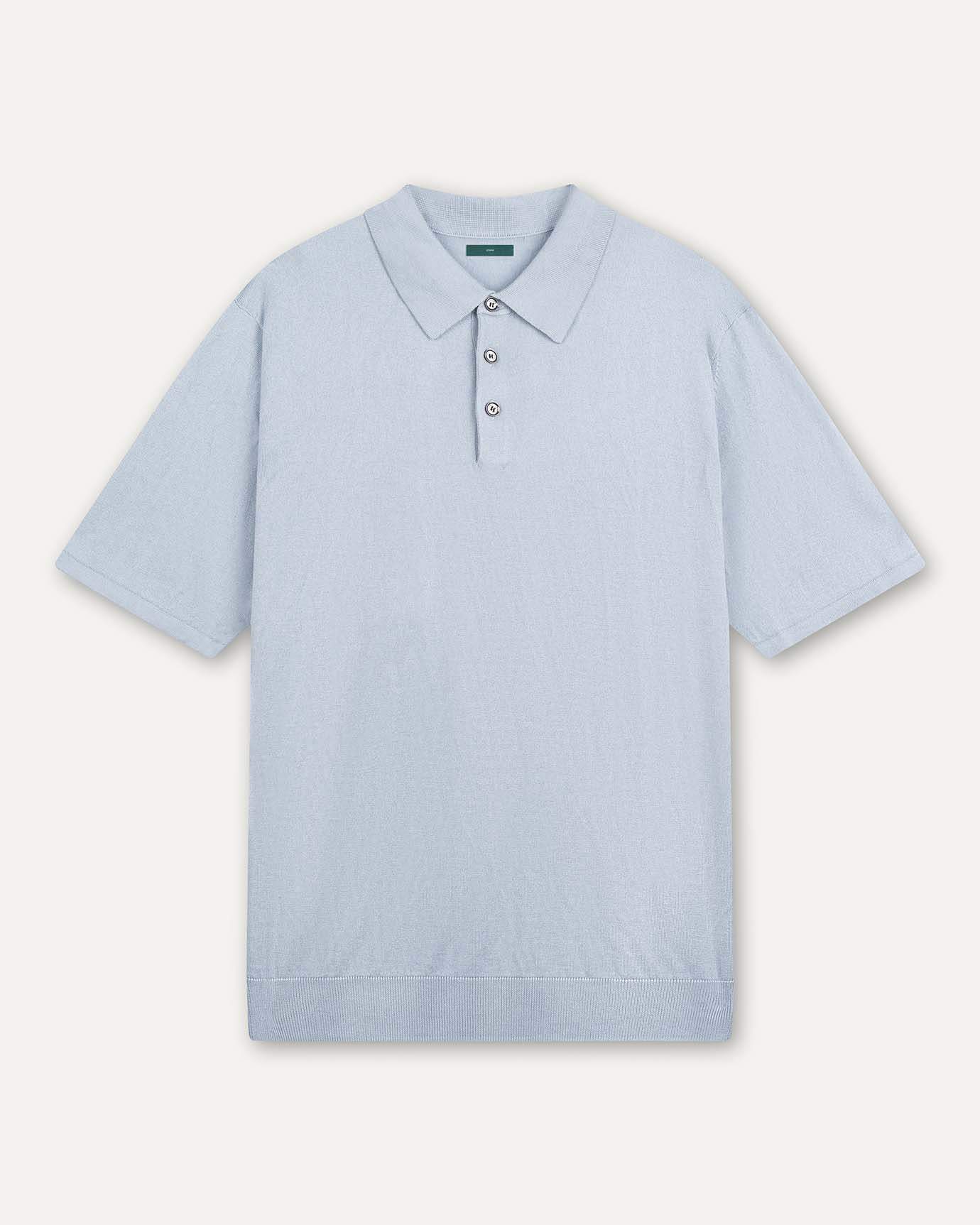
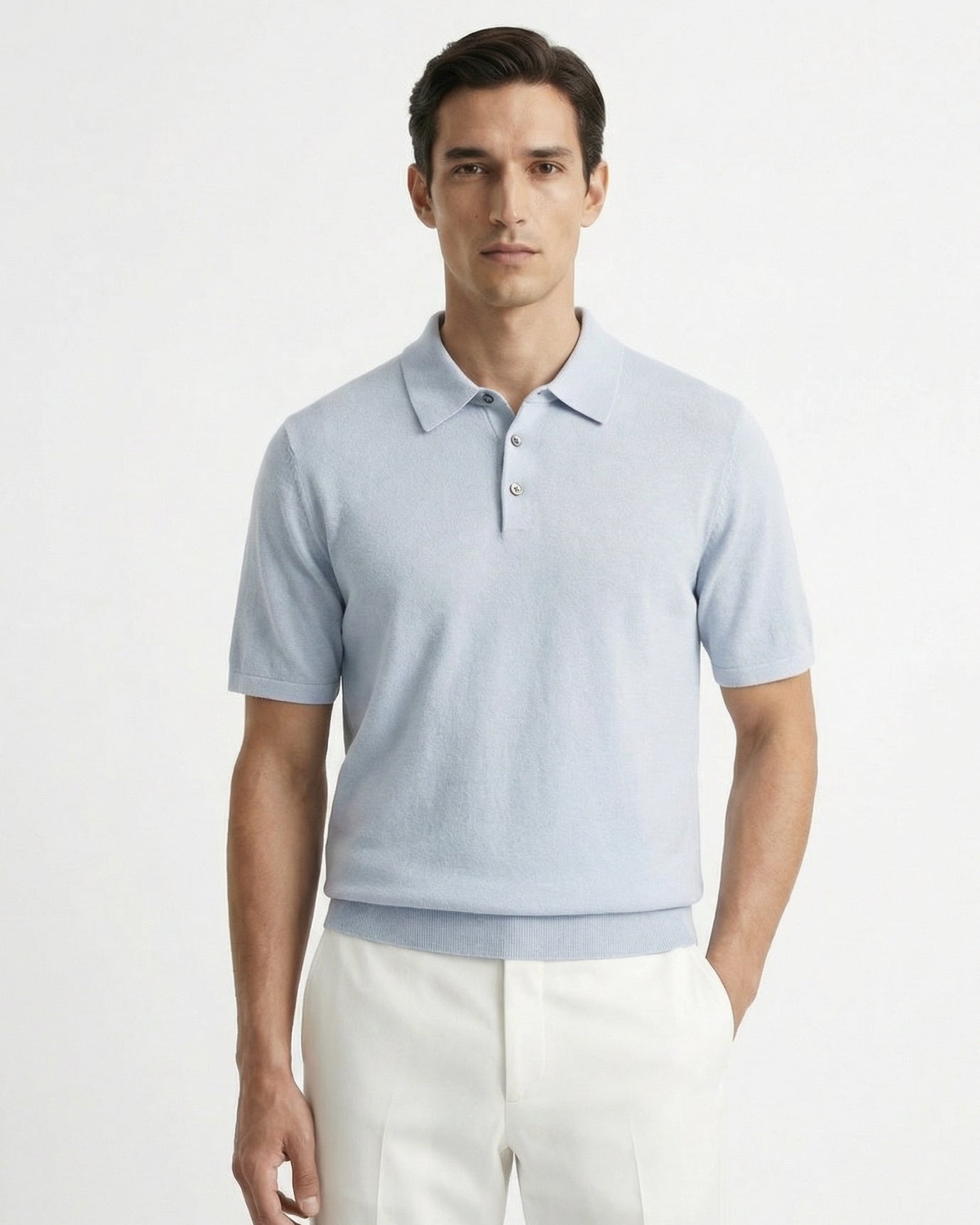
The smoother surface of mercerized cotton gives a polo shirt a more refined silhouette. It lies flat against the chest and shoulders without bulk, and the fabric's natural lustre means it reads as intentional rather than casual. Worn with tailored chinos and leather loafers, a well-cut mercerized cotton polo is a complete smart-casual outfit that requires no additional layering to look considered.
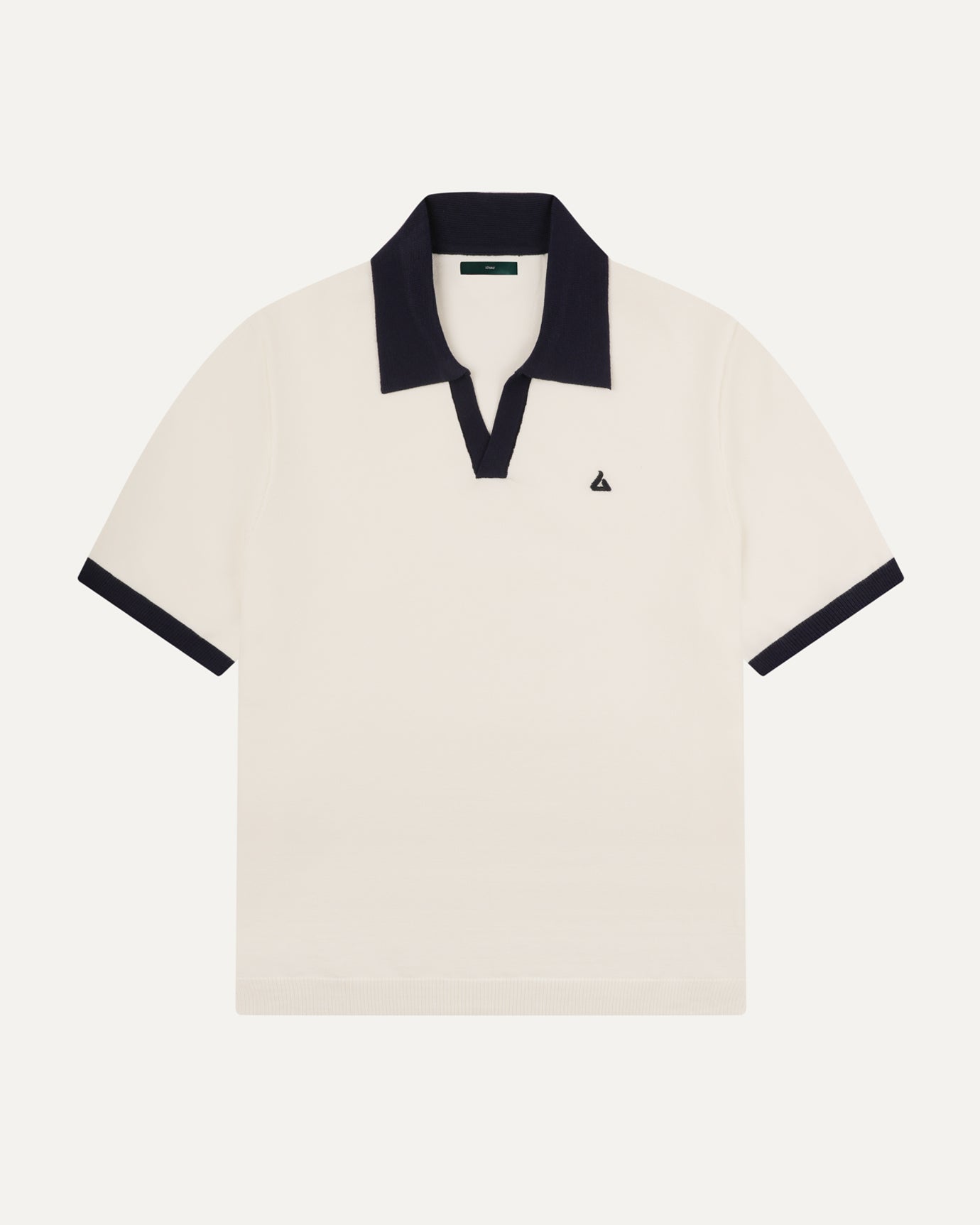
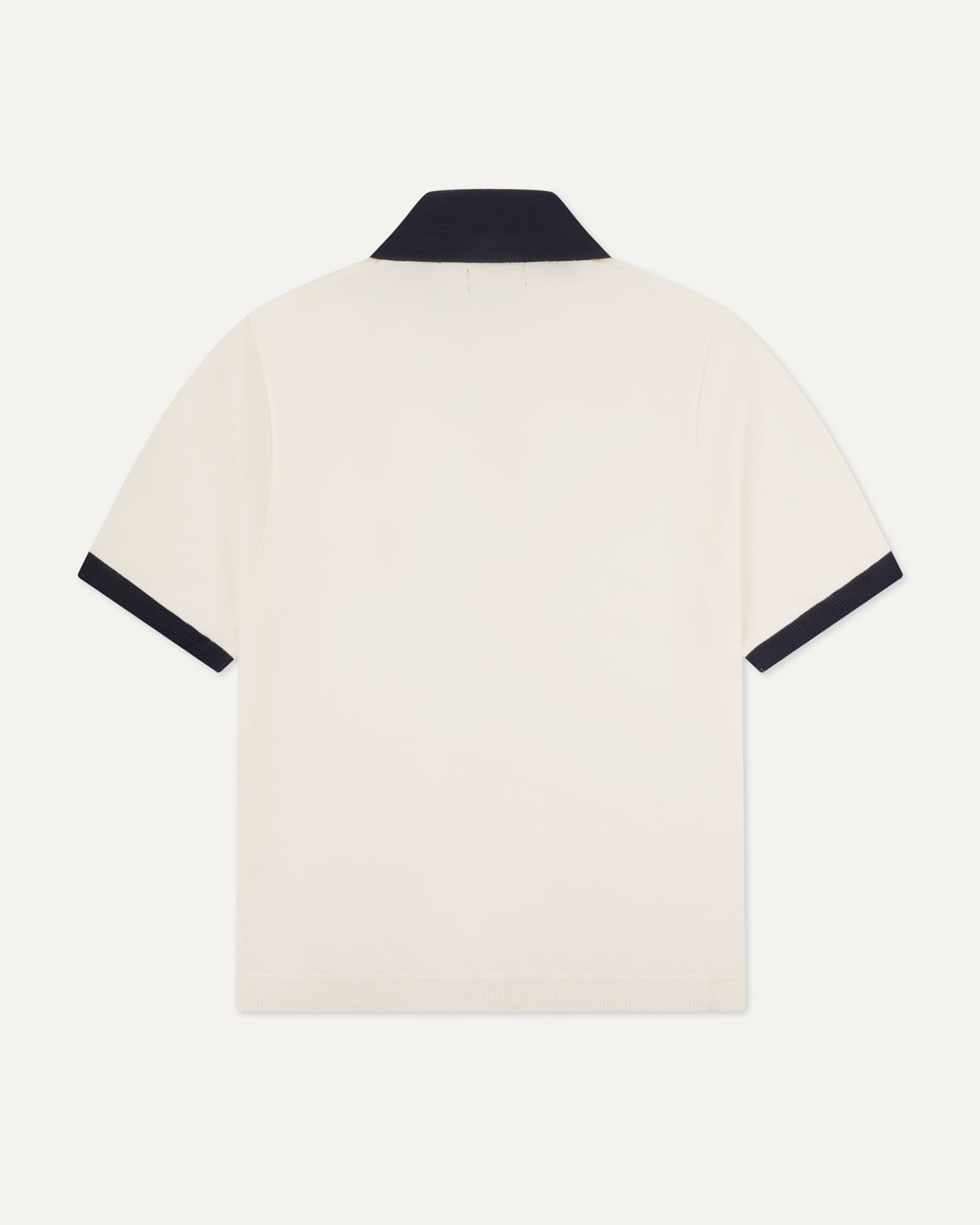
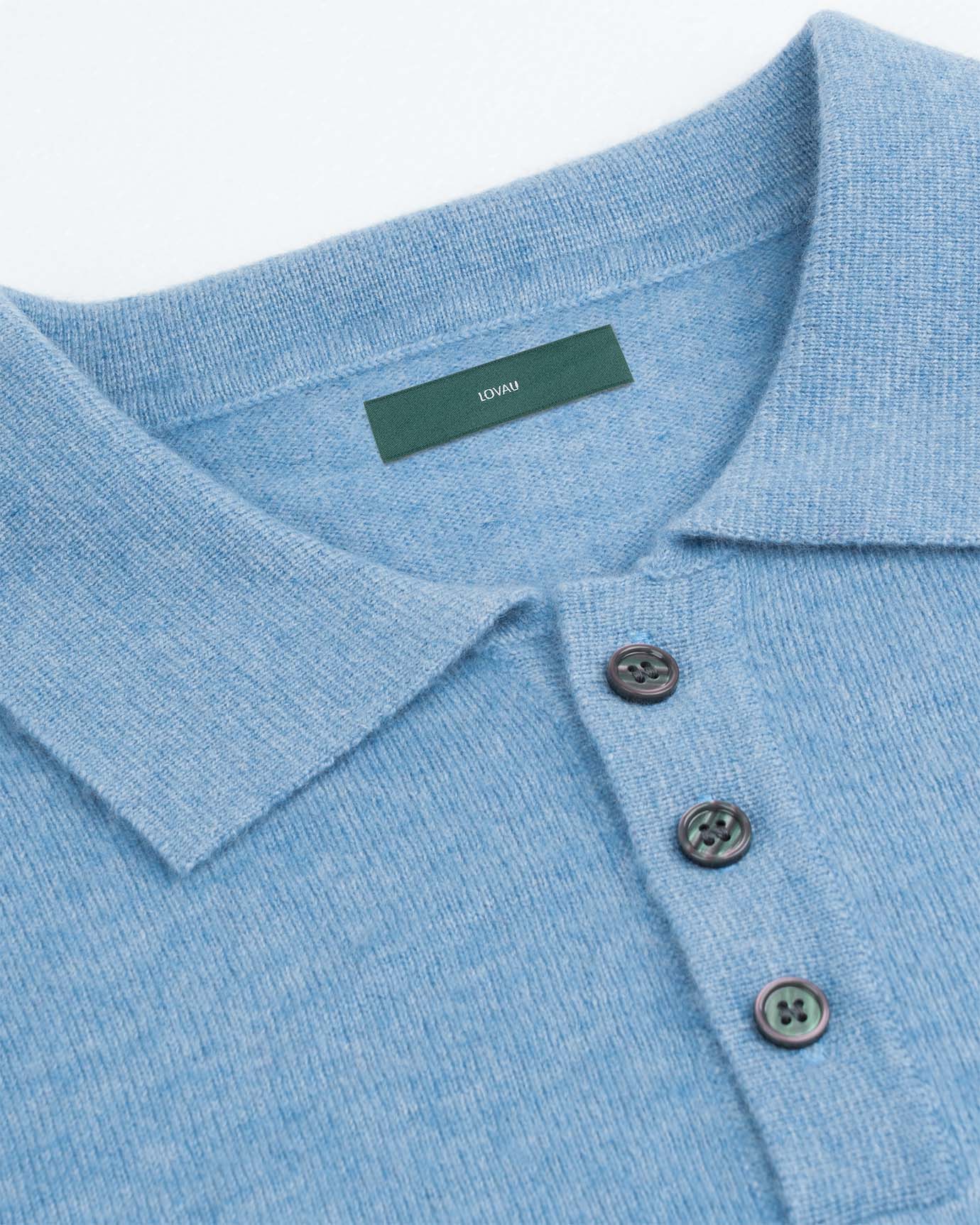
Our Mercerized Blended Cotton Polo is built on exactly this principle: a fabric with enough structure to hold a clean collar line, soft enough to wear against the skin all day, and a surface quality that photographs and reads in person as genuinely premium. The blend adds a small amount of synthetic fibre for dimensional stability, which prevents the slight stretching at the collar that affects pure cotton polos after repeated washing.
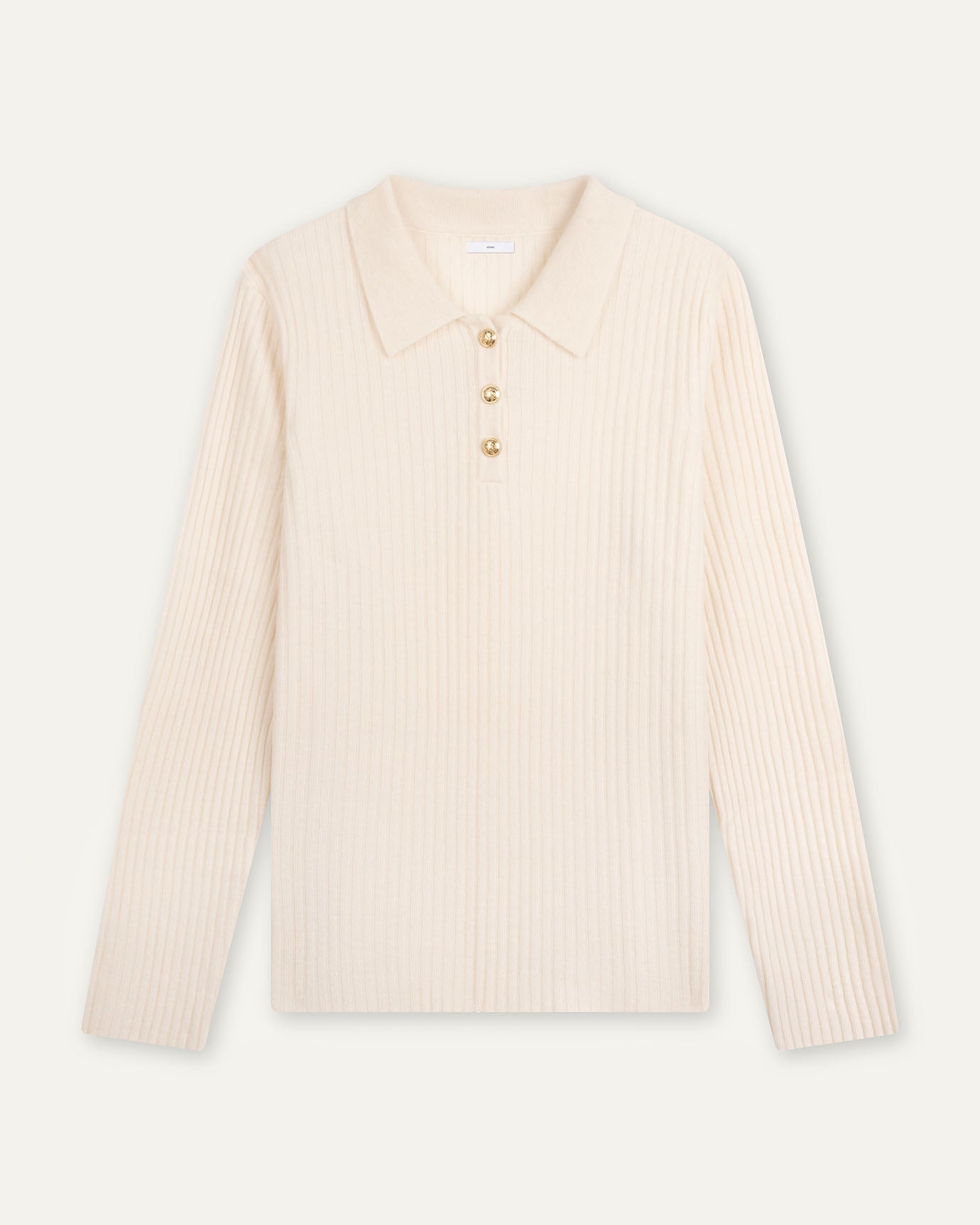
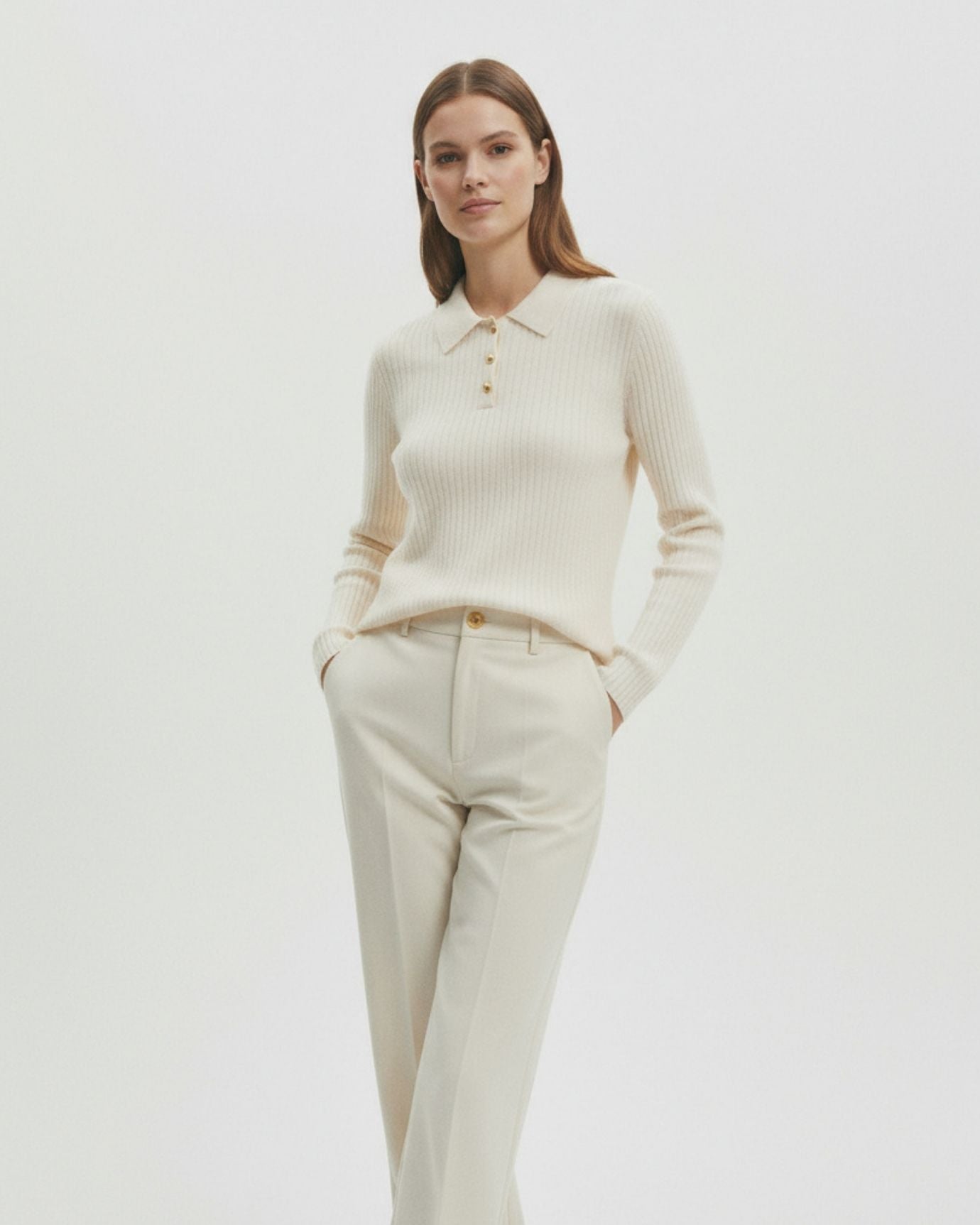
For a longer-sleeve option that transitions well from September through spring, the High-End Double Mercerized Cotton Silk Long-Sleeve Polo Shirt uses a double mercerization process on a silk-blended yarn. The result is a polo that sits closer to a dress shirt in formality while remaining comfortable enough for a full day of movement. It works well tucked into pressed trousers or left untucked with dark denim.
For those building a polo wardrobe from a longer-sleeve perspective, the full Long Sleeve Polos collection is worth reviewing as a set rather than individual pieces.
Expert insightA mercerized cotton polo should be washed inside out in cool water and hung to dry rather than tumble dried. Heat is the main enemy of the mercerized finish at the garment level, even though the fibre treatment itself is permanent.

Building a Wardrobe Foundation with Mercerized Cotton Tees
A t-shirt is the most democratic garment in a wardrobe. It is also the one most people buy carelessly and replace constantly, which is the opposite of how a considered wardrobe functions. The case for investing in a small number of genuinely good mercerized cotton t-shirts rather than a large number of cheap ones is both practical and aesthetic.
Practically, a high-count mercerized tee washed correctly will maintain its shape, colour, and surface quality for three to five years of regular wear. The same investment in a standard cotton tee produces a garment that looks tired within a season. The cost-per-wear calculation is not close.
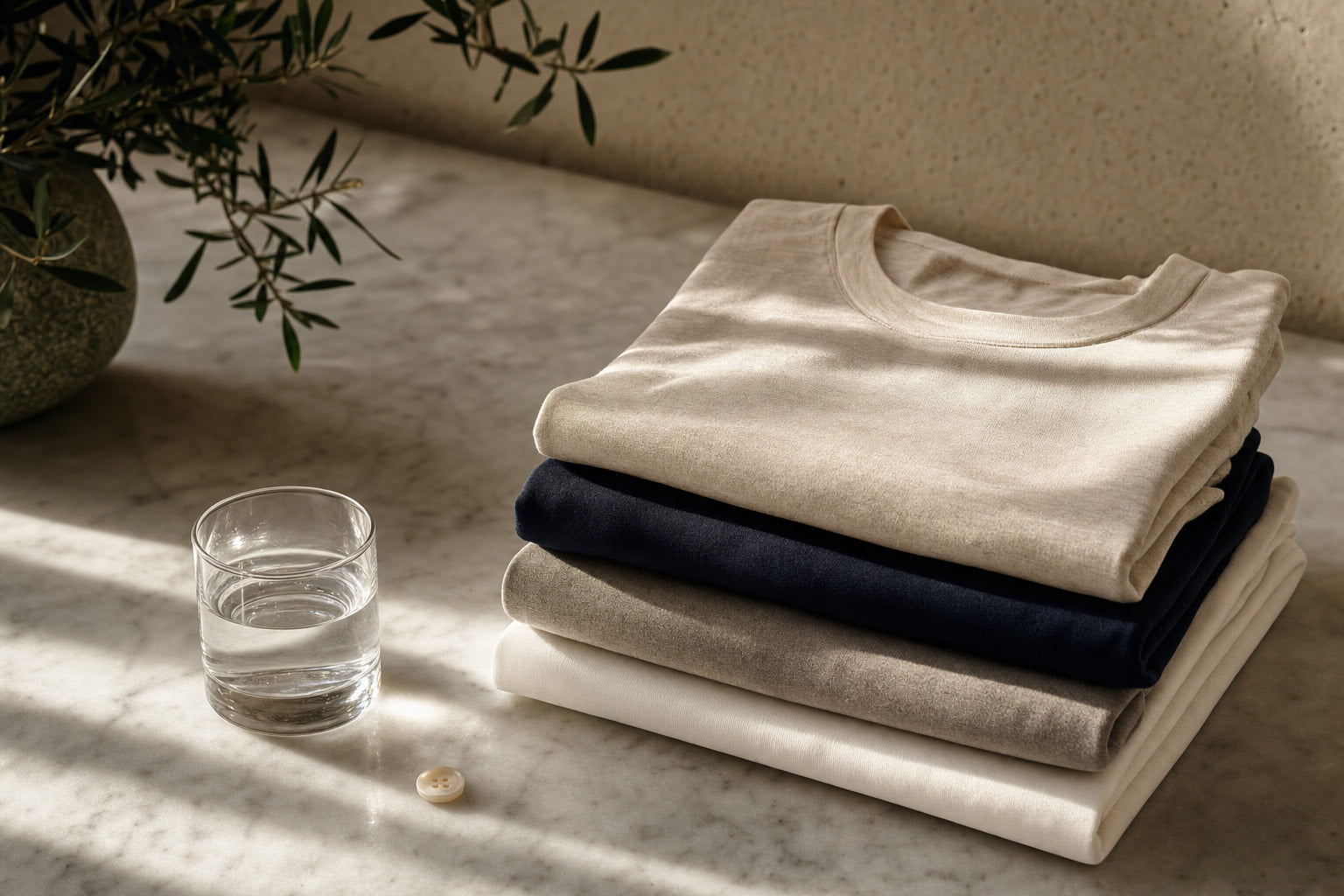
Aesthetically, the difference is visible. A High End Mercerized Cotton Silky White T-Shirt worn under a navy blazer reads as a deliberate, refined choice. The same outfit with a standard cotton tee reads as an afterthought. The fabric's subtle sheen and precise drape are doing quiet work that most observers cannot name but everyone registers.
For colour selection, the old money approach is to anchor the collection in neutrals first. A High End Mercerized Cotton Silky Black T-Shirt and a white or stone equivalent cover the majority of pairing situations. From there, a mid-tone like the High End Mercerized Cotton Silky Dark Gray T-Shirt or a warm caramel extends the range without introducing anything that requires specific occasion planning.
The High-Count Oatmeal Mercerized Cotton Round Neck Breathable T-Shirt is a particular recommendation for Mediterranean summer dressing. Oatmeal reads as a warm neutral that works with cream linen trousers, stone chinos, or even light denim, and the breathable high-count fabric keeps the garment comfortable in heat without losing its structure.
For a broader overview of what is available in this category, the full Mercerized Clothing collection is organised by construction type and colour family.

Care, Longevity, and Getting the Most from Mercerized Cotton
The structural changes mercerization creates at the fibre level are permanent, but how you care for a garment determines how long the surface quality remains visible. A few specific habits protect the investment.
Washing temperature is the most important variable. Cool or lukewarm water, 30 degrees Celsius maximum, preserves both the colour depth and the fibre geometry. Hot water does not undo mercerization, but it accelerates colour fade and can cause the knit structure to relax unevenly over time.
Detergent choice matters more than most people assume. Harsh detergents with bleaching agents, even oxygen-based ones, gradually strip the dye molecules that mercerized cotton holds so well. A gentle, pH-neutral detergent preserves colour saturation through dozens of washes. This is particularly relevant for darker tones like black, dark navy, or forest green, where colour depth is a significant part of the garment's visual quality.
Drying method is where most people make their biggest mistake. A tumble dryer at high heat is the fastest way to age a premium cotton garment. Lay mercerized pieces flat or hang them on a wide hanger and allow them to dry at room temperature. The fabric will recover its shape naturally without the mechanical stress of tumbling.
Storage is simple: fold rather than hang for knits. Hanging a jersey knit over time stretches the shoulder and collar, changing the silhouette permanently. Folded and stored in a cool, dry drawer, a well-made mercerized cotton tee holds its form indefinitely.
For guidance on fabric care standards more broadly, the textile care labelling guide from a recognised standards body provides a reliable reference for understanding care symbols on international garment labels.
The reward for these habits is a garment that looks as considered in its third year of wear as it did on the first day. That is, ultimately, what separates a wardrobe built on quality from one that requires constant replacement.

| Fabric | Surface Quality | Durability | Breathability | Care Ease | Best Use |
|---|---|---|---|---|---|
| Mercerized Cotton | Silky lustre, smooth hand | High, resists pilling | Very good, moisture-wicking | Easy, machine wash cool | T-shirts, polos, smart-casual basics |
| Standard Cotton | Matte, slightly rough | Moderate, pills with wear | Good but can feel heavy | Easy, machine wash | Casual basics, workwear |
| Linen | Natural texture, crisp | High, softens with age | Excellent in heat | Moderate, prone to creasing | Summer shirts, relaxed tailoring |
| Modal / Lyocell | Very soft, fluid drape | Moderate, can distort | Good, cool against skin | Gentle wash required | Loungewear, layering pieces |
| Silk | High sheen, luxurious | Delicate, snags easily | Good in mild conditions | Dry clean or hand wash only | Formal shirts, special occasion |
| Pique Cotton | Textured, structured | Good, holds shape well | Good, open knit structure | Easy, machine wash | Sport polos, casual shirts |
Frequently asked questions
Is mercerized cotton better than regular cotton for everyday wear?
Yes, in most respects relevant to a premium basic. Mercerized cotton is stronger, holds colour more deeply, resists pilling, and has a smoother surface that drapes better against the body. The only difference is price, which the garment's longevity compensates for over time. A high-count mercerized cotton t-shirt worn correctly will outlast several cycles of cheaper alternatives.
How can I tell if a cotton garment has actually been mercerized?
The most reliable indicators are surface quality and label information. Mercerized cotton has a subtle, even sheen that is visible in natural light, not a gloss, but a quiet luminosity that standard cotton does not have. Labels on quality garments will state 'mercerized cotton' or 'double mercerized.' If neither appears and the fabric looks flat and dull, it is almost certainly untreated cotton.
Can mercerized cotton be worn in warm weather without feeling hot?
Yes. The rounded fibre structure created by mercerization actually improves the fabric's moisture management compared to standard cotton. High-count mercerized cotton in particular, where the yarn is finer and the weave tighter, wicks moisture away from the skin efficiently. This is why the fabric is sometimes described as 'breathable' on garment labels, a description that reflects the fibre structure rather than marketing language.
What is the difference between mercerized cotton and 'ice silk' cotton?
'Ice silk' is a descriptive term used by manufacturers to communicate the cool, smooth, faintly luminous hand-feel of high-count mercerized cotton fabric, particularly when the yarn is very fine, Ne 50 or above. It is not a separate fibre or a blend with silk. The term refers to the tactile and visual qualities that result from combining long-staple cotton, a high yarn count, and thorough mercerization. All of our ice silk t-shirts, including the High End Mercerized Cotton Ice Silk Coffee T-Shirt, are made from this specification.
Mercerized cotton is not a trend or a marketing claim. It is a well-documented textile process that produces a measurably better fabric, one that looks more refined, holds its colour longer, and wears more gracefully over time. Understanding what it is and what to look for on a label is the kind of specific knowledge that makes a wardrobe more intentional rather than simply more expensive. If you are building from a foundation of considered basics, the full Mercerized Clothing collection is the right place to begin.