


How to Wear a Slip Dress Over a T-Shirt: The Grown-Up Way
Reading time 15 min • 3087 words
The slip dress layered over a t-shirt arrived in the 1990s as a deliberately undone gesture, a reaction against the formality of the decade before it. What has lasted is not that original grunge spirit but something quieter and more considered: the practical elegance of wearing a delicate dress in real weather, at a real temperature, without sacrificing the line of the garment.
The grown-up version of this look is not about looking undressed on purpose. It is about understanding proportion, fabric compatibility, and colour logic well enough that the t-shirt beneath the slip reads as a deliberate choice rather than a necessity. The difference between those two readings is entirely in the details.
This guide covers exactly those details: which t-shirts work and which do not, how to choose the right slip dress for layering, what colours and fabrics to pair, and how to take the combination from a morning errand to an evening table without changing.
Key takeaways
- Match fabric weights: a lightweight slip over a fine cotton or modal tee keeps the silhouette clean rather than bulky.
- The t-shirt neckline should sit at least one centimetre below the slip's neckline or straps, never fighting for the same visual space.
- Colour discipline matters: a white, ivory, or perfectly matched tee reads intentional; a mismatched colour peeking out reads accidental.
- Tuck or half-tuck the t-shirt only if the slip has a defined waistline or flares from the hip, otherwise leave it untucked and rely on the dress's hem length to dictate proportion.
- The slip dress itself should be cut with enough structure, a bias cut, a defined strap, or a fitted bodice, to hold the look together over the extra layer.
In this guide
- Why the T-Shirt You Choose Matters More Than the Dress
- Choosing the Right Slip Dress for Layering
- The Colour Logic: When to Match and When to Contrast
- Proportions, Hemlines, and What to Do with the Tuck
- Occasion Dressing: Taking the Look from Day to Evening
- The Shirt Alternative: When a Fitted Shirt Works Better Than a Tee
- Frequently asked questions
Why the T-Shirt You Choose Matters More Than the Dress
Most women approach this combination by starting with the dress and treating the t-shirt as an afterthought, a warmth layer, a modesty solution. That is the wrong order of thinking. The t-shirt is the foundation of the look, and its fabric, fit, and neckline will determine whether the final result looks composed or chaotic.
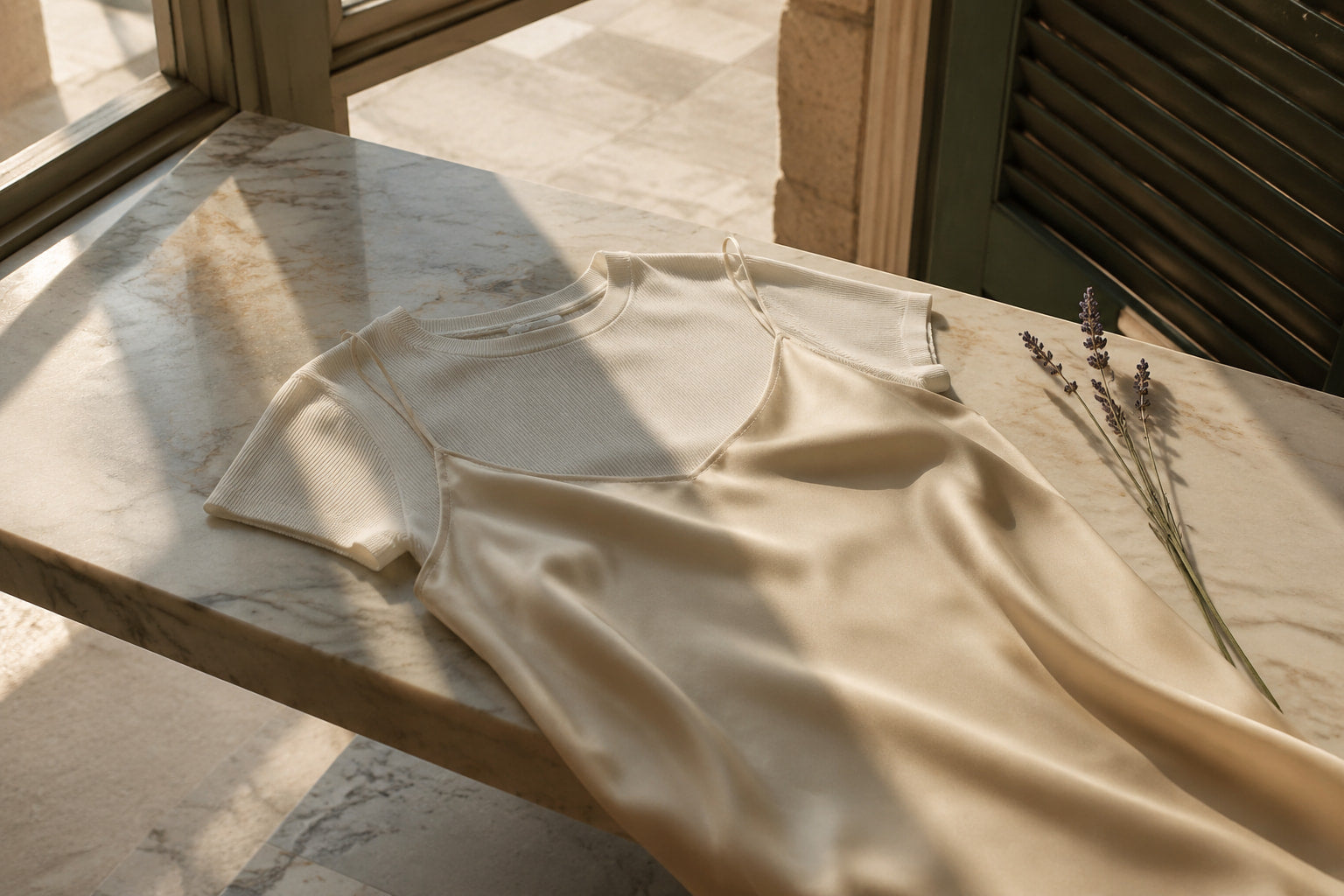
Fabric is the first filter. A heavyweight jersey cotton, the kind used in gym wear or oversized casual tees, adds too much bulk under even the most generously cut slip. What you want is a fine-gauge cotton, a modal blend, or a lightweight ribbed knit. These fabrics lie close to the body without clinging aggressively, and they do not create a ridge where the slip's hem or strap sits against them.
Fit is the second filter. A boxy or oversized tee will push the slip outward at the hem and create an unintended layered silhouette that reads as accidental. A fitted but not tight t-shirt, one that follows your torso without gripping it, gives the slip dress something smooth to rest against. Think of it as the slip's lining, not its companion.
Neckline is the third and most visible filter. The t-shirt's neckline must be fully hidden by the slip, or it must sit so deliberately lower that it reads as a styling choice. A crew neck peeking above a spaghetti-strap slip looks like a mistake. A deep V-neck sitting well below the slip's bodice looks intentional. A scoop neck sitting precisely at the same level as the slip's neckline creates visual noise. Explore the woman t-shirt collection with this neckline logic in mind before you reach for whatever is folded in the drawer.
Expert insightPress your t-shirt before layering it. A wrinkled underlayer telegraphs through even a fluid slip dress, particularly in silk or satin, and undermines the whole composition. A few seconds with a steamer changes the result entirely.
Choosing the Right Slip Dress for Layering
Not every slip dress layers well over a t-shirt. The ones that do share a few structural qualities: enough ease in the bodice to accommodate the extra layer without distorting, a neckline that either fully covers a standard t-shirt or sits far enough below it that the contrast is readable as a choice, and a hem length that is not so short that the t-shirt hem is visible underneath.
Bias-cut and A-line silhouettes are the most forgiving. A bias cut skims the body rather than hugging it, so the added volume of a tee underneath does not create an unflattering tightness across the torso. An A-line dress flares gently from the hip, which means any slight bulk at the waist from the layered fabric is naturally concealed.
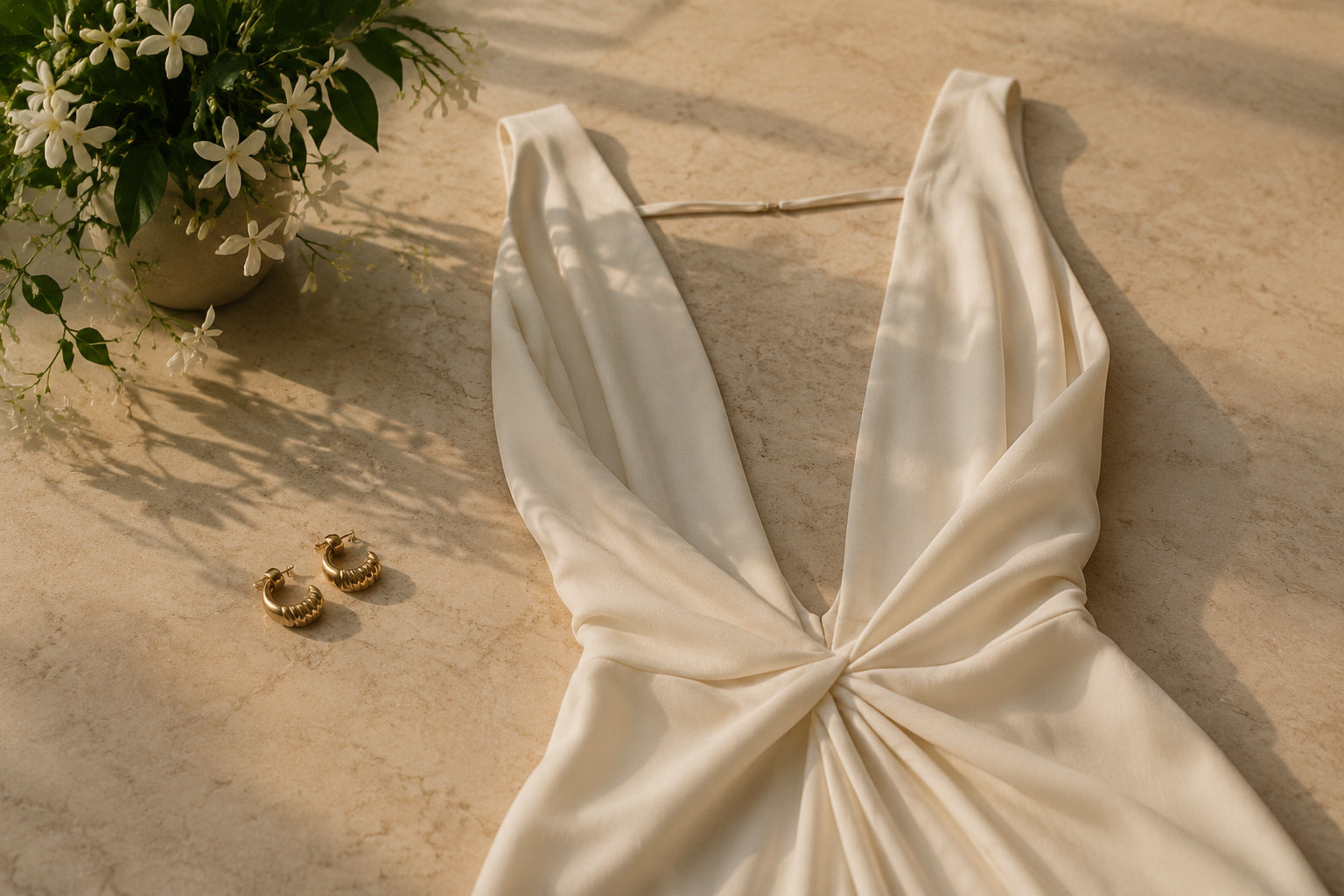
Fabric of the slip also affects how the layer reads. A satin or silk slip will show every seam and edge of the garment beneath it. This is not necessarily a problem, but it demands precision. A matte crepe, a cotton-blend, or a lightly textured fabric is more forgiving of underlayer edges. The French Niche Style White Dress in its clean cotton construction is an example of a slip-adjacent dress that layers with a fine white tee without any of the transparency challenges that come with true silk.
Strap width is another practical consideration. Wide straps and square necklines give you the most flexibility with the t-shirt neckline beneath. Spaghetti straps are beautiful but demand a very deep-cut or entirely invisible tee. If the slip has adjustable straps, lengthen them slightly when layering over a tee, this keeps the bodice from pulling too tight across the added fabric layer.
For a look that genuinely holds together across occasions, the Kira Suspender Mini Dress offers exactly the kind of structured strap and fitted bodice that makes the t-shirt layer read as deliberate rather than improvised. Pair it with a fine ribbed white tee cut to a deep scoop and the combination works from afternoon to early evening.
Expert insightIf the slip's fabric is semi-sheer, the t-shirt beneath serves a double purpose: it provides opacity and eliminates the need for shapewear or a specific undergarment. This is one of the genuinely practical arguments for the combination, not just a stylistic one.

The Colour Logic: When to Match and When to Contrast
Colour is where this look most often goes wrong, and where it can most easily be corrected. There are three approaches that work, and one that almost never does.
Exact match or tonal match is the most polished approach. A white slip over a white tee, an ivory dress over a cream tee, a navy slip over a navy tee. The t-shirt becomes structurally invisible while still providing warmth and coverage. This is the approach to use for more formal occasions or when the slip itself is the statement piece. The Blue Striped Dress Lovau Style worn over a plain navy or white fine-knit tee is a clean example of tonal matching that keeps the stripe pattern reading clearly.
Deliberate contrast is the second approach, and it requires more confidence but rewards it. A white tee under a black slip, a grey tee under a pale floral dress, a camel-coloured tee under a rust or terracotta slip. The contrast must be strong and clean for this to read as intentional. Muddy middle-ground differences, an off-white tee under a warm ivory slip, a light grey tee under a navy dress, read as colour-matching failures rather than stylistic choices.
Textural contrast without colour contrast is the most sophisticated approach and the one that signals genuine familiarity with the technique. A fine white ribbed tee under a white matte crepe slip. A smooth ivory modal tee under an ivory lace dress. The colour is unified but the surface quality of the two fabrics creates a layered visual interest that is subtle enough to work in almost any setting. This is the approach referenced in the art of the silk slip dress in quiet luxury styling.
The approach that almost never works: a brightly coloured or printed tee under a slip in a different colour family. The eye does not know where to settle, and the overall impression is unresolved rather than considered.

Proportions, Hemlines, and What to Do with the Tuck
Once fabric and colour are resolved, the remaining question is proportion. Specifically: does the t-shirt tuck in, stay out, or half-tuck?
The answer depends almost entirely on the slip dress's construction. If the dress has a defined waistline, a seamed waist, a belt, or a gathered waist, a half-tuck or full tuck of the tee into the dress's interior (if it has a lining or inner layer) creates a cleaner silhouette at the hip. If the dress falls straight from a fitted bodice without a defined waist, the tee should remain untucked and the length of the slip's hem is what defines the proportion.
Hem length deserves careful thought when layering. A mini slip dress over a tee works best when the tee is fitted enough that its hem is not visible below the dress. A midi or maxi slip is more forgiving because the t-shirt hem is never in question. The Amy Pink Dress Suspender is a midi-length option where a fine white or blush tee underneath disappears completely into the silhouette.
Sleeve length is the final proportion note. Short-sleeve tees are the standard choice and create the cleanest line. A three-quarter sleeve tee under a sleeveless slip can work in transitional weather but requires that the sleeve length be intentional, not just whatever was available. A long-sleeve tee under a slip dress is a different look entirely and moves the combination closer to a layered winter outfit than a warm-weather one. For that colder-weather version, the thinking shifts significantly, and the principles discussed in how to wear a tailored blazer over a silk maxi dress offer useful parallel logic about layering structured pieces over fluid ones.
For summer occasions, the simple summer outfit ideas framework applies here too: keep the underlayer as lightweight as possible and let the slip dress carry the visual weight of the look.
Expert insightIf you are layering a fitted tee under a slip with thin straps, use fashion tape at the shoulder seams of the tee to prevent it from shifting during movement. It is a small step that keeps the composition intact throughout the day.

Occasion Dressing: Taking the Look from Day to Evening
One of the genuine advantages of the slip-over-tee combination is its range. The same core outfit can read differently depending on what surrounds it, and a small number of adjustments can move it across a wide span of occasions.
Daytime and casual: Keep the shoes flat or low-heeled. A pair of clean leather loafers or simple mules reads as deliberate. A tote or structured shoulder bag. No additional jewellery required, the layering itself provides enough visual interest. The Kimberly Waist-Slimming Strap Dress over a white fine-knit tee with leather sandals is a complete daytime look that requires nothing more.
Work and smart-casual: Add a structured layer over the top, a blazer, a longline cardigan in a fine gauge knit, or a fitted shirt worn open as a jacket. The slip-over-tee becomes the base of a three-layer outfit. Shoes move to a block heel or a pointed-toe flat. A smaller, more structured bag. The woman dress collection offers several slip-adjacent styles that translate well into this register.
Evening: Remove the outer layer if you added one for the day. Switch to a heel. Change the bag to something smaller. Add one considered piece of jewellery, a long chain, a simple cuff. The slip dress does the work; the tee is now invisible in the low light and the overall silhouette reads as a dressed slip, not a layered casual outfit. A velvet old money style dress is not a traditional slip but operates on the same principle of quiet, surface-rich fabric that rewards this kind of occasion-shifting approach.
The key across all three registers is that the t-shirt never announces itself. It is structural support, not a feature. As Vogue has noted in its coverage of the slip dress's long cultural life, the garment's power lies in its apparent simplicity, and anything that complicates that simplicity should be invisible or deliberate, never accidental.
For footwear direction that matches this kind of quiet elegance, the dress shoes collection offers options that complement the slip's fluid silhouette without competing with it.

The Shirt Alternative: When a Fitted Shirt Works Better Than a Tee
The t-shirt is not the only option for layering under a slip dress, and for certain slip styles and occasions, a fitted shirt is actually the cleaner choice. Understanding when to make that switch is part of what separates a considered wardrobe from a formulaic one.
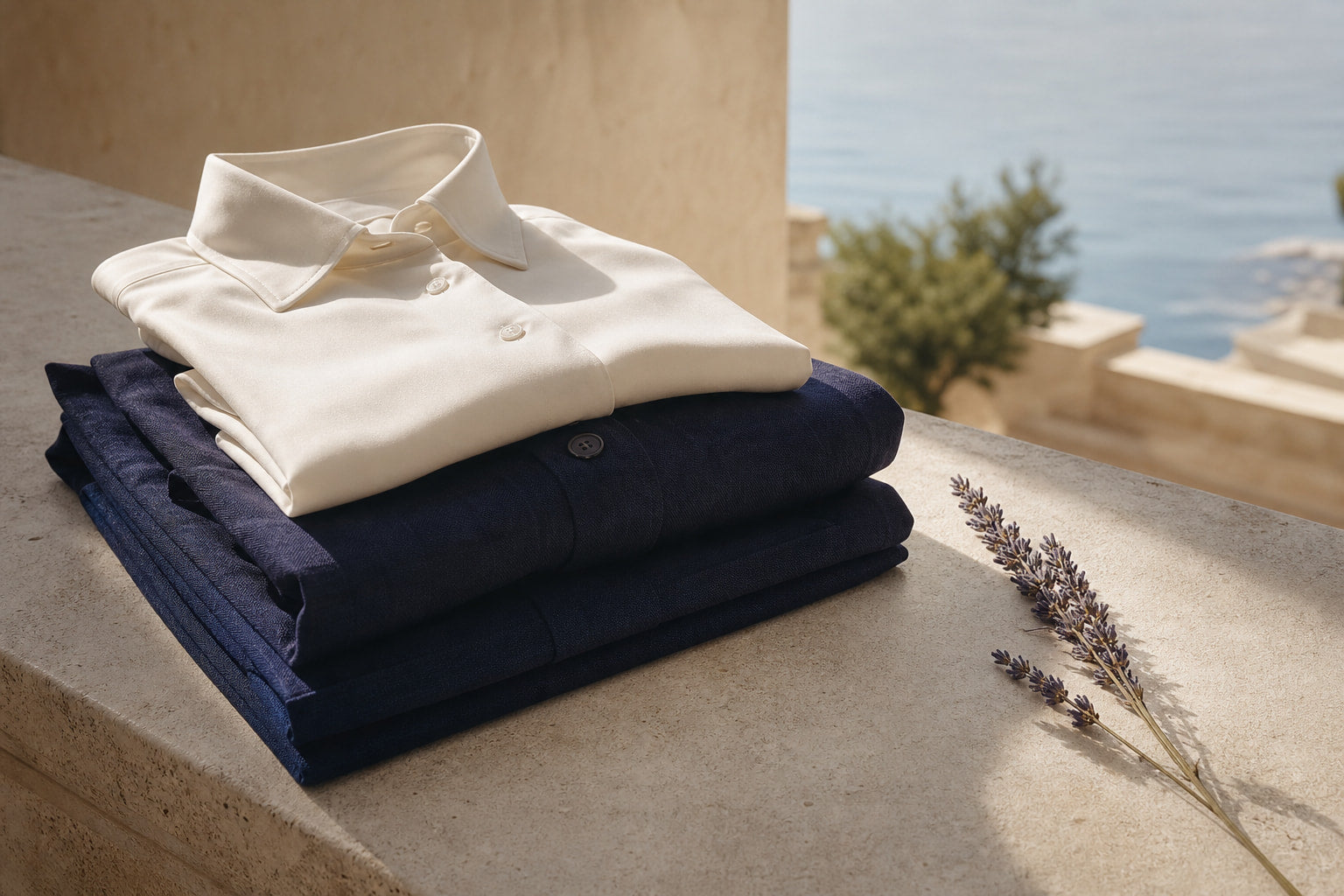
A fitted shirt, particularly one in a fine cotton poplin or a lightweight silk-cotton blend, works best under a slip dress that has a V-neckline or a wider square neck. The shirt collar sits above the slip's neckline and becomes a visible design element rather than something to hide. This is a different logic from the t-shirt approach: instead of making the underlayer disappear, you are making it participate in the look.
For this to work, the shirt must be properly fitted across the shoulders and torso. A shirt that bunches or gaps will push through the slip in all the wrong places. Explore the woman shirt collection for fine-cotton fitted options that are cut to lie flat under other garments. The bodycon cotton shirt dress is worth noting here not as an underlayer but as a reference point for how a well-cut cotton garment can read as polished rather than casual, which is the standard to hold any underlayer to.
The shirt-under-slip combination reads more formal than the tee-under-slip version. It is better suited to office environments, smart lunches, or occasions where the tee would feel too relaxed. The collar adds a structural note that the t-shirt cannot replicate. Think of it as borrowing the logic described in how to wear a polo shirt the old money way: a fitted knit collar under a looser garment adds definition and intention to the overall silhouette.
The slip dress as a category has always operated at the intersection of undergarment and outerwear, and the question of what to wear beneath it is as old as the garment itself. The contemporary answer is simply: whatever makes the whole composition look as though it was planned.

| Underlayer | Best Slip Style | Fabric to Choose | Occasion Fit | Visual Effect |
|---|---|---|---|---|
| Fine cotton crew-neck tee | Spaghetti strap or wide square neck | Modal, fine-gauge cotton | Weekend, casual day | Underlayer invisible, slip reads as the outfit |
| Deep V-neck tee | V-neck slip or open neckline slip | Ribbed cotton, modal blend | Casual to smart-casual | Deliberate contrast at neckline, modern feel |
| Fitted poplin shirt | Wide V-neck or square neck slip | Fine cotton poplin, silk-cotton blend | Work, smart lunch, semi-formal | Collar visible above slip, structured and polished |
| Long-sleeve fine knit tee | Midi or maxi slip dress | Merino wool, fine cotton jersey | Autumn, transitional weather | Warmth layer visible at arms, works as full layered look |
| Sleeveless fitted top | Any slip with defined bodice | Silk, modal, fine cotton | Warm weather, evening | Full coverage without sleeve bulk, near-invisible layer |
Frequently asked questions
What colour t-shirt works best under a slip dress?
The safest and most polished choice is white or ivory, which disappears under light-coloured slips and creates a clean intentional contrast under dark ones. If you want to experiment with colour, choose a tee that is either an exact match to the slip or a strong enough contrast that the difference reads as a deliberate choice. Mid-range differences, an off-white tee under a warm ivory slip, almost always look like a colour-matching error rather than a style decision. Browse the woman t-shirt collection for fine-gauge options in neutrals that work across multiple slip colours.
Can you wear a long-sleeve t-shirt under a slip dress?
Yes, but the combination shifts the look from warm-weather styling into transitional or cool-weather territory. For this to work well, the long-sleeve tee must be very fitted and in a fine fabric such as a lightweight merino or fine cotton jersey. The sleeve should extend past the slip's hem at the arm in a clean, unbroken line. It is worth reading the approach in how to incorporate velvet dresses into your winter rotation for related logic on making delicate dress fabrics work through colder months.
Should the t-shirt be tucked in or left out when wearing it under a slip dress?
Leave it untucked in almost every case. The slip dress sits over the tee and defines the outer silhouette, so the tee's hem position is irrelevant provided it does not extend below the slip's hem. The only exception is if you are wearing the tee under a slip that has a defined waistline or internal structure, in which case tucking the tee into any inner layer or waistband of the slip can smooth the silhouette across the hip.
Which slip dress styles are easiest to layer over a t-shirt?
Bias-cut and A-line slip dresses with wide straps or square necklines are the most forgiving. They accommodate the added fabric of a tee without distorting at the bodice, and their necklines give you the most flexibility with the underlayer's neckline. The Kira Suspender Mini Dress and the French Niche Style White Dress are both well-suited to this kind of layering because of their defined straps and clean bodice construction.
Wearing a slip dress over a t-shirt is not a casual shortcut. Approached with the same attention to fabric, fit, and colour that you would bring to any other combination in your wardrobe, it is one of the more versatile and quietly modern looks available. The t-shirt disappears; the slip does the work; the overall impression is of someone who has dressed with intention rather than effort. Start with the right tee, choose a slip dress from the Lovau woman dress collection that has enough structure to hold the look, and let the colour logic do the rest.