


Finding the Perfect Hem Length for Midi Dresses Based on Height
Reading time 15 min • 3087 words
The midi dress occupies a precise territory in a woman's wardrobe. It is longer than a mini, shorter than a maxi, and its power lies entirely in proportion. Get the hem right and the silhouette is clean, confident, and timelessly European. Get it wrong by even two inches and the same dress can make legs look cut off at an unflattering point or the whole look feel accidental.
The problem is that the word "midi" covers a wide range. Technically, a midi hem falls anywhere from just below the knee to just above the ankle, a span of roughly 10 to 14 inches depending on the source. Midi dress definitions vary between fashion houses and even between countries, which is why a dress labeled "midi" in one brand fits like a maxi on a petite woman and reads as barely-below-the-knee on someone tall.
This guide works through the math and the visual logic of midi hem lengths across three height brackets: petite (under 5'4"), average (5'4" to 5'7"), and tall (5'8" and above). The advice is specific, the numbers are real, and every recommendation is grounded in how fabric, silhouette, and footwear interact with your actual body.
Key takeaways
- For petite frames under 5'4", aim for a hem that falls just below the knee, between 2 and 4 inches below the kneecap, to avoid visually shortening the leg.
- For average heights between 5'4" and 5'7", the classic midi falls mid-calf and works without adjustment on most ready-to-wear cuts.
- For tall frames above 5'8", a hem grazing the lower calf or sitting closer to the ankle reads as intentional and proportionate rather than too short.
- Fabric weight affects how a hem sits: lighter fabrics like chiffon and viscose drop slightly on the body, so size the hem 1 to 2 inches shorter than you think you need.
- Heel height shifts the effective hem point by up to 3 inches, so always try a midi dress with the shoes you plan to wear.
In this guide
- Understanding the Midi Length Range: What the Numbers Actually Mean
- Midi Dress Hem Length for Petite Women (Under 5'4")
- Midi Dress Hem Length for Average Heights (5'4" to 5'7")
- Midi Dress Hem Length for Tall Women (5'8" and Above)
- How Fabric and Silhouette Change the Effective Hem
- Practical Alterations: When to Hem and by How Much
- Frequently asked questions
Understanding the Midi Length Range: What the Numbers Actually Mean
Before applying any height-based rule, it helps to know the precise measurement range you are working with. A midi hem is generally understood to sit between 2 inches below the knee and 3 inches above the ankle. On a woman of average height (5'5"), that translates to a skirt length of roughly 34 to 44 inches measured from the natural waist.
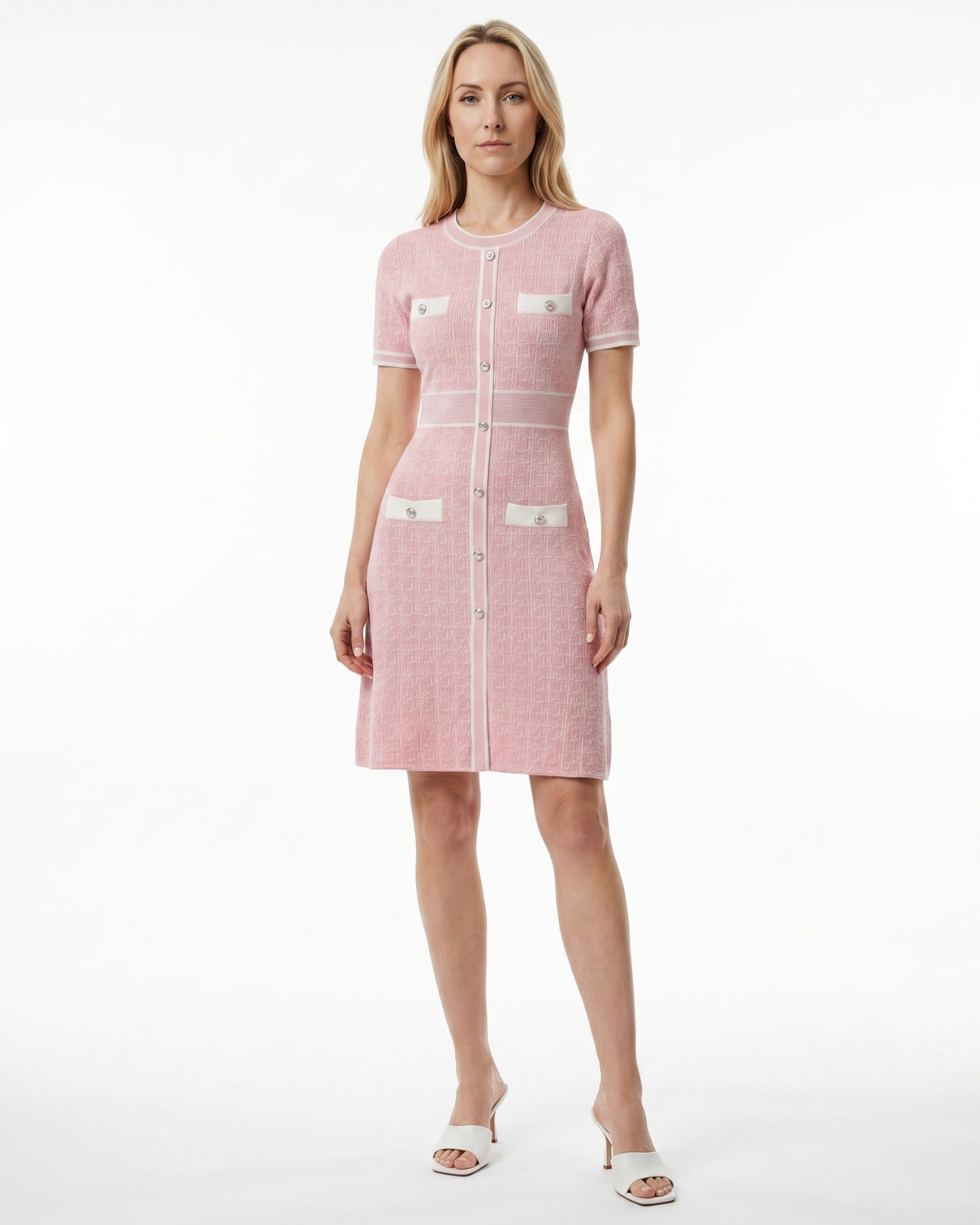
The below-the-knee zone (2 to 6 inches below the kneecap) is the most commonly flattering range for most body types. It does not interrupt the leg at the widest part of the calf and keeps the ankle visible, which maintains a sense of lightness in the silhouette.
The mid-calf zone (roughly 7 to 11 inches below the knee) is classic midi territory. This is where most ready-to-wear midi dresses from European houses are cut, designed for the statistical average of approximately 5'5" to 5'6". At this length the hem grazes the narrowest part of the lower leg, which is visually clean.
The lower-calf to ankle zone reads as a long midi or a relaxed maxi depending on the fabric. In structured fabrics like wool crepe or heavy cotton, it looks deliberate and sophisticated. In fluid fabrics it can read as maxi. If you are exploring that boundary, our guide on midi versus maxi dresses and which is more flattering covers the distinction in detail.
One important technical note: hem length is measured from the natural waist, not the hip. Because waist-to-floor measurements vary between women of the same overall height (depending on torso-to-leg ratio), two women standing at 5'5" can have the same total height but a 2-inch difference in where a hem actually falls. This is why trying a dress on standing upright, in the shoes you plan to wear, is non-negotiable.
Expert insightWhen shopping online, request the "skirt length from waist" measurement rather than the total dress length. A high-waisted cut can add 2 to 3 inches to the effective hem position, changing the visual entirely.
Midi Dress Hem Length for Petite Women (Under 5'4")
Petite frames have shorter legs in absolute terms, which means the same ready-to-wear midi hem that grazes mid-calf on a 5'6" woman will land much closer to the ankle on a 5'2" woman, sometimes even dragging. The priority for petite dressing is keeping the leg line as long and uninterrupted as possible.
The ideal hem zone for petite women is 2 to 5 inches below the knee. This keeps the ankle fully visible, avoids cutting the leg at the widest part of the calf, and reads as a true midi rather than a near-maxi. On a 5'2" frame, this typically corresponds to a skirt length (from natural waist) of 28 to 32 inches.
A few specific strategies help:
- Choose a defined waist. A waist tie or fitted bodice raises the visual centre of the body, making legs appear longer. The Olivia Classic Square Neck Waist-Tie Mid-Length Dress is cut precisely for this: the tie sits at the natural waist and the hem falls at a proportionate below-the-knee length.
- Avoid very full skirts in heavy fabrics. Volume at the hem adds visual weight that shortens the leg. Opt for A-line or fitted silhouettes in lighter fabrics.
- Wear a heel. Even a 2-inch block heel effectively lifts the hem point and lengthens the silhouette. A 3-inch heel can transform a mid-calf hem into a perfectly placed below-the-knee length.
- Vertical elements help. A centre-front seam, a button placket, or a wrap opening draws the eye up and down rather than across.
For petite women, our full midi dresses collection includes several styles cut with a shorter skirt length that avoids the proportion problem entirely. When in doubt, look for styles specifically noted as hitting 34 to 36 inches from natural waist.
Expert insightA midi dress with a slight slit at the hem, even just 4 to 5 inches, does more for petite proportions than any heel. It breaks the solid block of fabric and reveals the ankle without shortening the overall hem.

Midi Dress Hem Length for Average Heights (5'4" to 5'7")
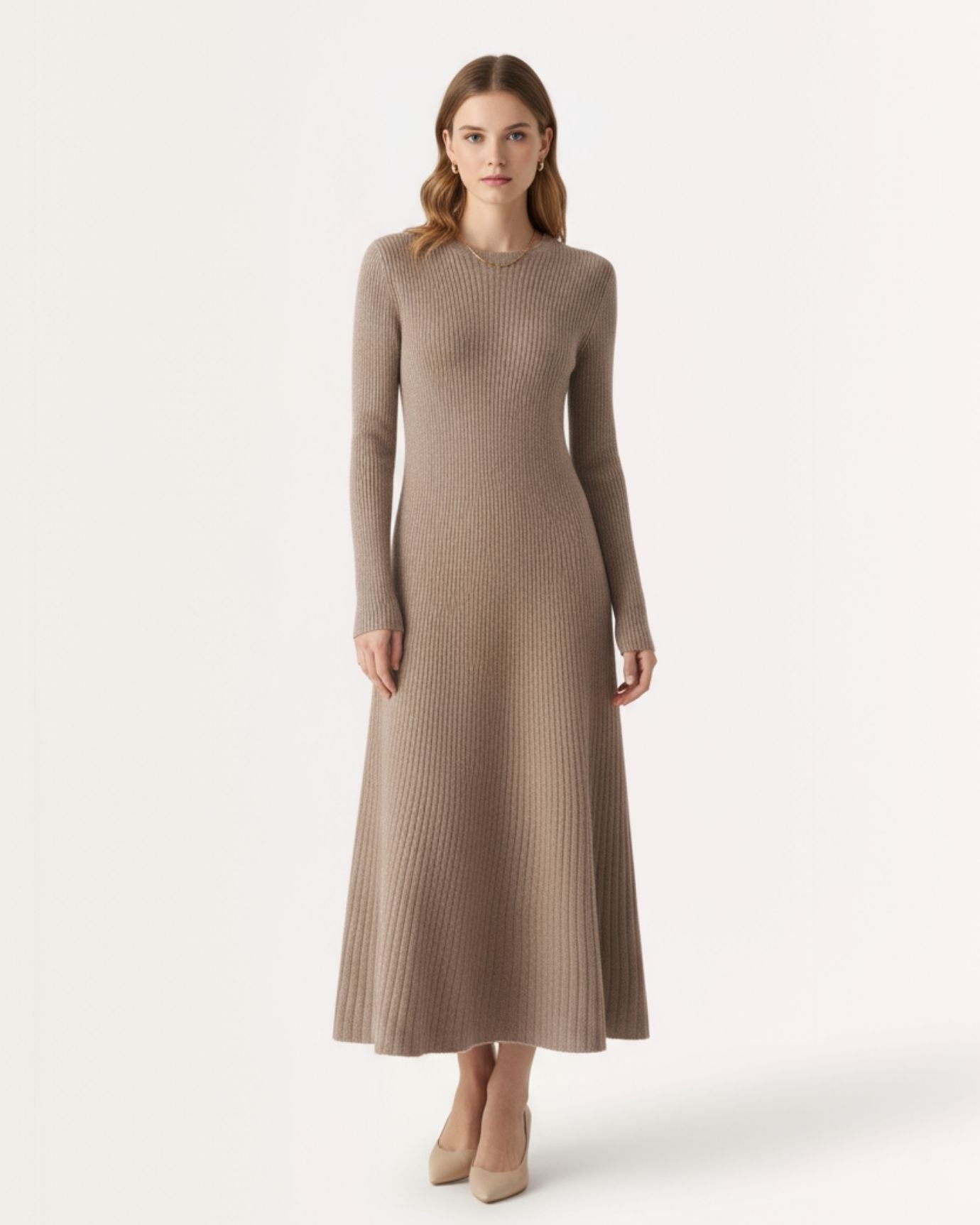
This height range is the design sweet spot for most European ready-to-wear. A midi dress cut for a 5'5" sample size will fall close to mid-calf, which is a flattering, balanced position: enough leg is covered to feel refined, enough ankle is visible to keep the look light.
For this height range, a hem falling 6 to 10 inches below the knee is the classic midi. That places the hem at or just below the widest point of the calf, which works well in fitted or A-line silhouettes. In straight-cut or slightly flared styles, even a hem at the lower calf (10 to 12 inches below the knee) stays proportionate.
Women in this range have the most flexibility with midi styling, but a few hem-specific details still matter:
- Fabric drop: Lightweight fabrics like viscose and chiffon lengthen on the body after a few hours of wear. If a hem sits perfectly in the morning, it may be half an inch lower by afternoon. A lined dress in a structured weave, such as the Giulia Midi Navy Blue Dress in its ponte-style fabric, maintains its hem position throughout the day.
- Waist placement affects perceived hem length: An empire waist or a dropped waist changes where the skirt begins, which shifts the hem position even on the same total dress length. A high-waisted cut on a 5'6" woman can push a hem close to the ankle.
- Occasion calibrates hem preference: For formal events, a lower midi (closer to ankle) reads as more dressed. For day dresses and casual occasions, a below-the-knee hem is more practical and equally elegant.
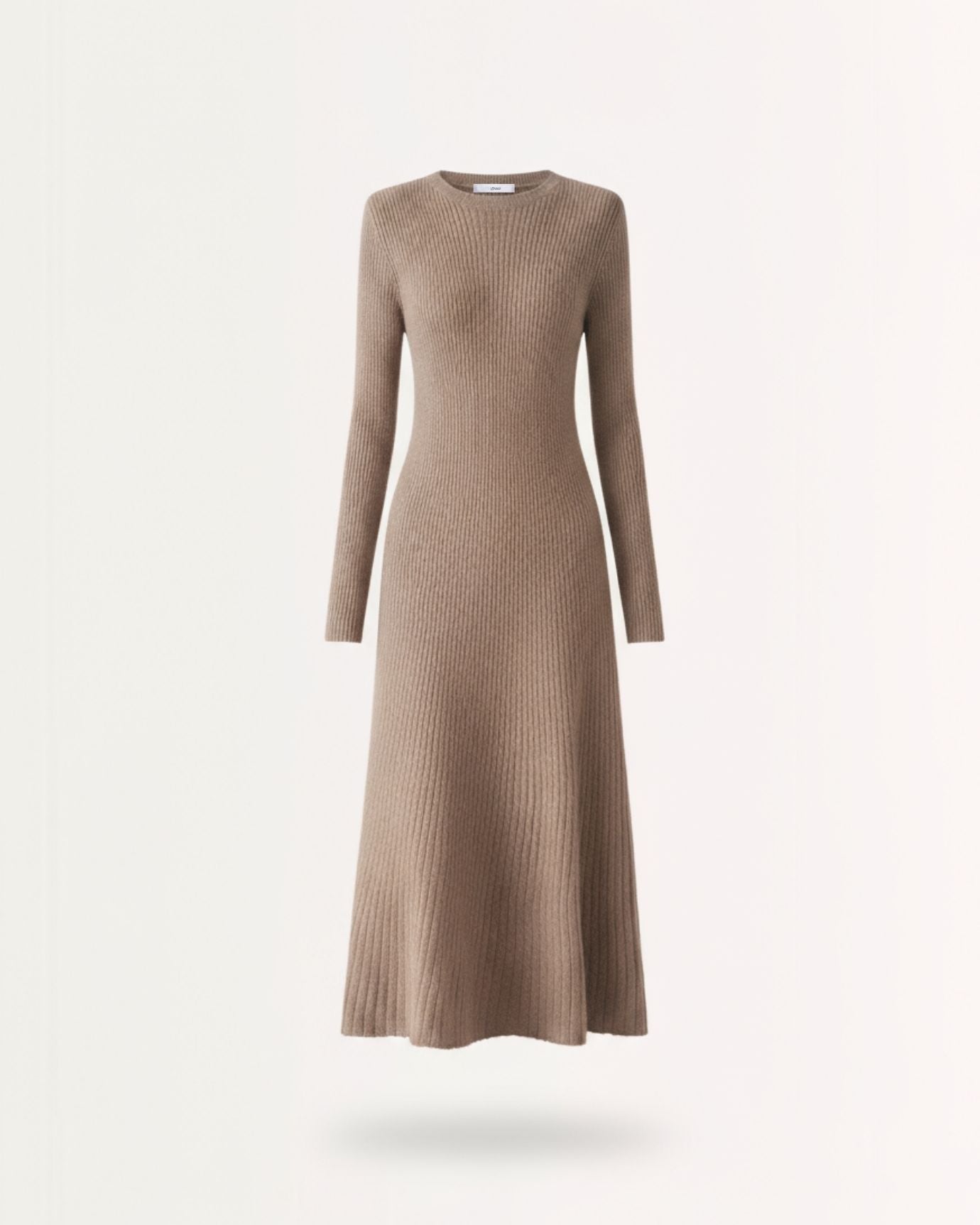
The Giulia Midi Black Dress and its variants are designed at a true mid-calf length, sitting well on frames between 5'4" and 5'7" without alteration. The structured knit fabric holds its shape and the hem stays consistent regardless of how long it is worn.

Midi Dress Hem Length for Tall Women (5'8" and Above)
Tall women often find that standard midi dresses land too high, sitting at or just below the knee and reading more as a below-the-knee dress than a true midi. The solution is not to avoid the midi length but to seek styles cut with a longer skirt measurement, or to lean into the slightly-above-classic-midi position as a deliberate style choice.
For tall frames, a hem falling 10 to 14 inches below the knee is proportionate and reads as a genuine midi. On a 5'9" woman, that typically corresponds to a skirt length (from natural waist) of 38 to 44 inches. A hem at this length grazes the lower calf, which is a beautiful position: the ankle is visible, the leg line is uninterrupted, and the silhouette has substance without feeling heavy.
Specific guidance for tall women:
- Seek styles with longer skirt measurements. Many brands cut to a 5'5" sample, which means a midi on the label may be a below-knee dress in practice. Look for skirt lengths noted as 38 inches or longer from the natural waist.
- Floor-length and maxi proportions work well too. If a midi consistently falls short, the maxi dresses collection offers the same covered-up elegance with guaranteed length.
- Flat shoes are not a problem. Tall women often avoid flats in midi dresses for fear the hem will look low. In fact, a lower hem on a tall frame is simply correct proportion. A pointed-toe flat with a lower-calf hem is one of the most elegant combinations in European dressing.
- Bold prints and horizontal elements read differently on a longer skirt. A polka dot or stripe that repeats across 40 inches of fabric creates a different visual rhythm than the same print on 30 inches. The Polka Dot Midi Dress and the Blue Striped Dress Lovau Style both fall at a length that suits taller frames particularly well because the pattern has room to develop fully.
For tall women who love the midi but find standard lengths consistently short, the In Paris Style Long-Sleeved Dress with Belt is cut with a longer skirt and a belted waist that keeps proportion clean regardless of leg length.
Expert insightA belt at the natural waist on a longer skirt is the single most useful tool for tall women wearing midi dresses. It establishes a clear proportion break and prevents the dress from reading as shapeless even when the hem sits at the lower calf.

How Fabric and Silhouette Change the Effective Hem
Two dresses with identical skirt measurements can look dramatically different in hem position depending on fabric weight and silhouette. Understanding this relationship lets you choose more accurately when shopping online.
Lightweight fabrics (chiffon, viscose, silk) drape close to the body and follow its curves, which means the hem follows the leg's slope. On the back of the body, where the curve of the buttocks pushes fabric outward, the hem can appear 1 to 2 inches shorter at the back than the front. This is normal and expected, but it means you should measure hem length at the front of the dress.
Structured fabrics (ponte, wool crepe, heavy cotton) hold their shape independent of the body. The hem stays level, the skirt maintains its intended silhouette, and the length you see on the hanger is very close to the length you experience wearing it. The Giulia Midi White Dress uses this principle: its firm knit fabric means the hem sits consistently at mid-calf regardless of movement.
Flared and A-line skirts appear shorter than straight skirts at the same measurement because the fabric moves away from the leg as it drops. A 38-inch A-line skirt will look shorter than a 38-inch pencil skirt because the eye reads the diagonal line of the flare rather than the straight vertical drop.
Pleated skirts add volume that can raise the visual hem line slightly. The Contrast Collar Pleated Dress Sleeveless Two-Piece Style in Navy and White uses knife pleats that fall cleanly without adding bulk, which keeps the hem reading at its true length.
For an expanded look at how different midi dress styles translate across body types and occasions, our editorial on midi dresses as the most elegant length for 2026 covers silhouette choices in detail. And once your hem is sorted, pairing shoes correctly is the next decision: our guide to the best shoe pairings for midi dresses covers that precisely.

Practical Alterations: When to Hem and by How Much
A beautiful midi dress in the wrong hem position is worth altering. Hemming a dress is one of the least expensive and most impactful tailoring interventions available, typically costing between 20 and 50 euros at a skilled seamstress depending on the fabric and construction.
How much can you safely remove? Most midi dresses have a hem allowance of 1.5 to 2.5 inches. This is the amount you can take up without any additional fabric. If you need to take up more, a seamstress can sometimes use a facing to extend the allowance. Taking up more than 4 inches on a structured dress may require re-cutting the hem curve, which adds cost but is still worth it on a quality piece.
What about lengthening? Letting a hem down is possible only if the original hem allowance was generous (2 inches or more) and the fabric has not been pressed with a permanent crease. On lightweight fabrics, the original fold line often remains visible even after pressing, which limits this option.
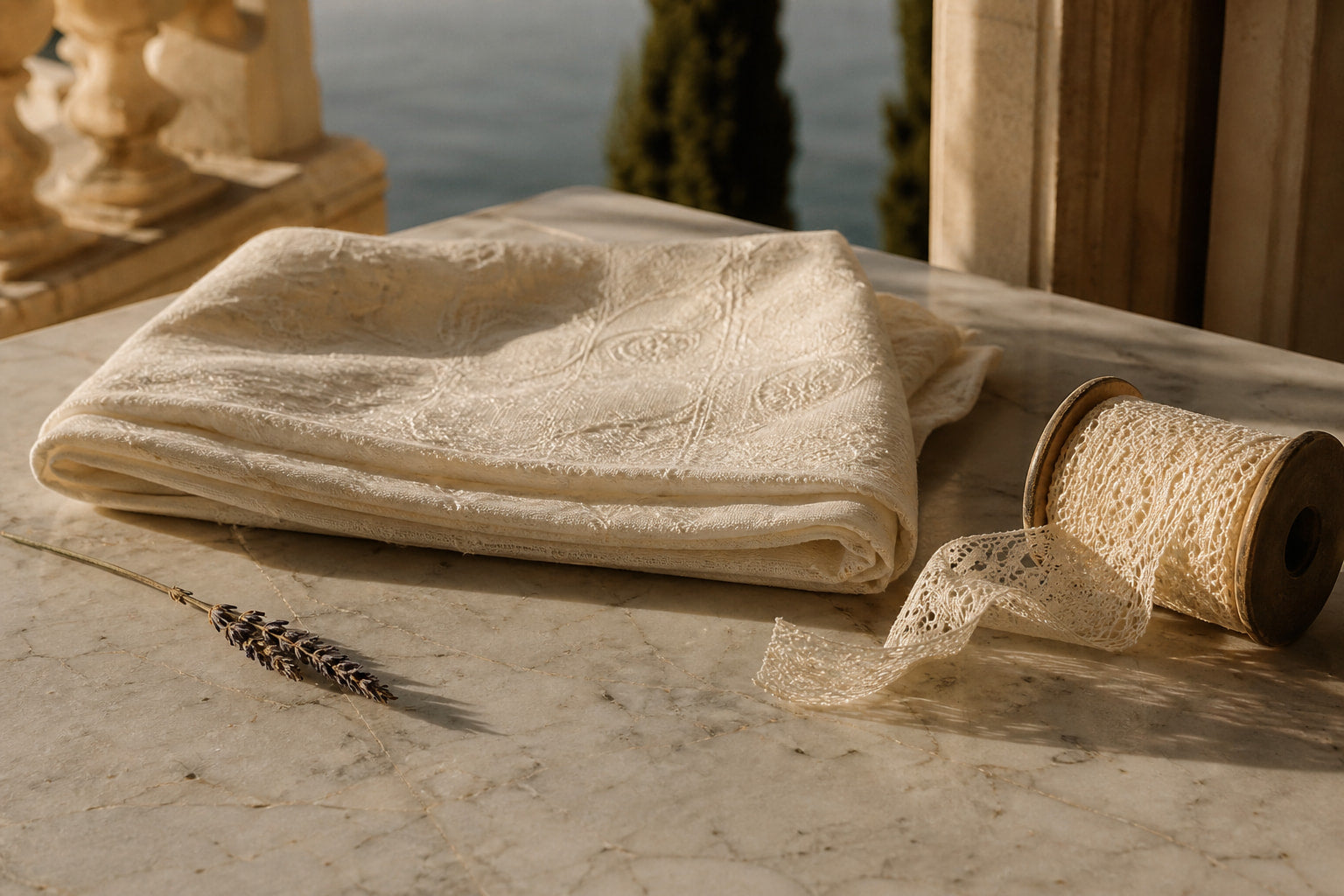
Lace hems require specialist handling. The Kira Midi Lace Dress features a lace hem that cannot simply be cut and re-hemmed without disrupting the pattern repeat. For lace-edged dresses, the alteration must be made at the waist seam or at a seam within the bodice, not at the hem itself. Always flag this to your seamstress before she cuts.
For women who want to avoid alterations entirely, the most reliable approach is to buy from brands that publish the skirt length in centimetres or inches from the natural waist (not from the shoulder or total dress length) and to cross-reference that measurement against your own waist-to-preferred-hem measurement taken at home with a soft tape.

| Height | Waist-to-Hem (inches) | Hem Falls At | Best Silhouette | Shoe Recommendation |
|---|---|---|---|---|
| Under 5'2" | 28 to 32" | 2 to 4" below knee | Fitted or A-line, defined waist | Block heel or pointed kitten heel |
| 5'2" to 5'4" | 30 to 34" | 4 to 6" below knee | A-line, wrap, or empire waist | Any heel; even a 2" heel adds meaningful length |
| 5'4" to 5'7" | 34 to 38" | 6 to 10" below knee (mid-calf) | Most silhouettes work; structured fabrics ideal | Flat or low heel; avoid very high heels with lower-calf hems |
| 5'7" to 5'9" | 36 to 42" | 8 to 12" below knee | Straight or flared; longer skirt measurements needed | Pointed-toe flat or low block heel |
| 5'9" and above | 40 to 46" | 10 to 14" below knee (lower calf) | Straight, pleated, or maxi-adjacent midi | Flat shoe; the length is the statement |
Frequently asked questions
What is the exact length of a midi dress in inches?
A midi dress typically falls between 34 and 46 inches measured from the natural waist, depending on the brand and the wearer's height. The hem sits somewhere between 2 inches below the knee and 3 inches above the ankle. Because this range is wide, always check the skirt length measurement in the product details rather than relying on the label alone. Our midi dresses collection includes skirt length measurements for each style.
Can petite women wear midi dresses without looking overwhelmed by fabric?
Yes, with two conditions: the hem should fall no lower than 5 to 6 inches below the knee, and the waist should be defined. A waist tie, a fitted bodice, or a wrap silhouette keeps the proportion clear. Avoid voluminous skirts in heavy fabrics, which add visual weight. A below-the-knee midi in a fluid, lightweight fabric with a heel is one of the most flattering combinations for petite frames.
How does heel height affect midi dress length?
Every inch of heel height raises the effective hem position by roughly one inch relative to the ground. A 3-inch heel on a dress that currently sits at mid-calf will make the hem appear to fall just below the knee. This means petite women can wear a standard-cut midi dress and correct the hem position with footwear alone. Always try a midi dress with the shoes you intend to wear before deciding whether to alter the hem.
Is it worth hemming a midi dress, or should I just buy a different length?
Hemming is almost always worth it on a quality dress. A basic straight-hem alteration costs 20 to 50 euros and takes less than a week at most tailors. The exception is a lace hem or a dress with significant embellishment at the hem, where the alteration must be done at a seam higher up in the garment. If you love the fabric, the colour, and the cut of a dress but the hem is 2 to 4 inches too long, altering it is the right call.
Midi dress hem length is not a matter of personal preference alone: it is a proportion problem with real, measurable solutions. Once you know your waist-to-floor measurement and understand where your ideal hem zone sits for your height, shopping becomes far more precise and returns far fewer disappointments. The length you choose will interact with your fabric, your shoes, and your silhouette, but the foundation is always the same: a hem that lands at a flattering point on the leg and reads as intentional. For a considered starting point across a range of lengths and silhouettes, the Lovau midi dresses collection is a reliable place to find cuts designed with European proportion in mind.