


Choosing Between Single-Pleat and Double-Pleat Men's Trousers
Reading time 14 min • 2740 words
The pleat debate has occupied tailors and their clients for the better part of a century, and it shows no sign of being settled. That is because both sides are correct, depending on what you are actually asking the trouser to do. A single pleat and a double pleat are not competing answers to the same question; they are answers to different questions about fit, occasion, and the kind of man you want to look like on a given day.
At Lovau, we approach trousers the way the Neapolitan and Roman tailors we admire approach them: as the foundation of the outfit, not an afterthought. The shirt, the jacket, the shoe all follow the trouser's lead. Getting the pleat count right is therefore not a minor stylistic preference. It shapes the silhouette from the hip to the hem and changes how a man carries himself through a room.
This guide is direct and practical. We will explain what each construction actually does, which fabrics and body types it serves, when to choose one over the other, and how to wear both correctly.
Key takeaways
- Single-pleat trousers suit trimmer builds and dressier, more streamlined occasions; double-pleat trousers offer superior comfort and a more relaxed, Continental silhouette.
- Double-pleat trousers work best cut high at the waist, which anchors the volume and keeps the proportion clean rather than sloppy.
- Fabric matters as much as pleat count: heavy worsted wool and linen reward double pleats, while lighter cotton and fine twill often suit a single pleat.
- Both styles pair naturally with loafers, but the double-pleat demands more length, ideally a full break or a clean single break at the shoe.
- Do not size down in pleated trousers. The pleat is designed to open with movement; a tight waistband collapses it and defeats the purpose entirely.
In this guide
- What the Pleat Actually Does: Construction and Purpose
- Single-Pleat Trousers: When Streamlined Is the Right Call
- Double-Pleat Trousers: The Continental Standard
- Fabric, Waist Height, and Leg Width: How the Variables Interact
- Pairing Pleated Trousers: Shoes, Shirts, and Outerwear
- Building a Wardrobe Around Both Styles
- Frequently asked questions
What the Pleat Actually Does: Construction and Purpose
A pleat is a controlled fold of fabric at the waistband that releases into the thigh, creating extra room through the seat and upper leg without adding permanent width to the trouser. Understanding that basic function dissolves most of the confusion around the style debate.
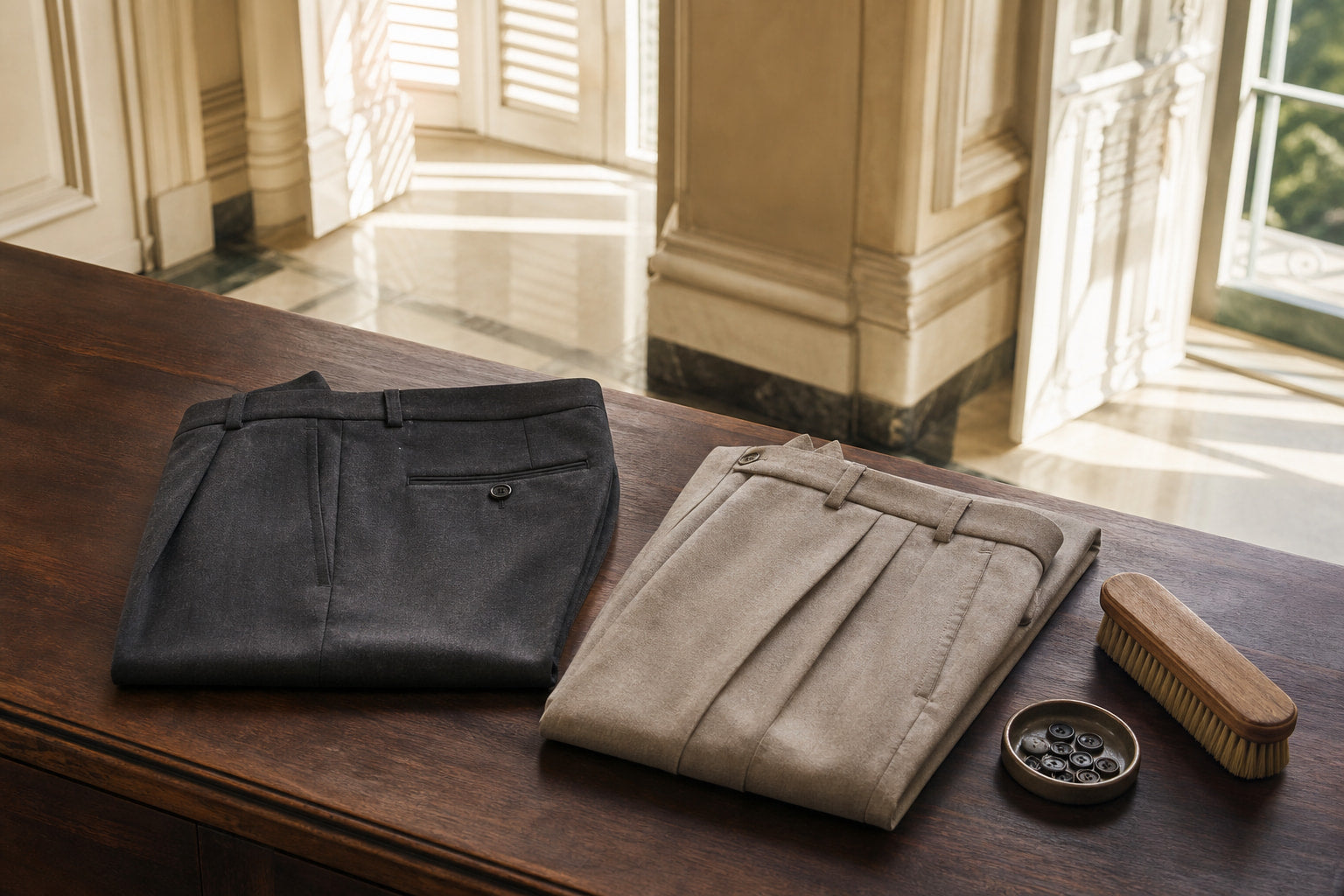
A single pleat is one fold, typically a forward-facing pleat that sits between the fly and the side seam. It adds a modest amount of volume, enough to allow natural movement while keeping the front of the trouser relatively flat when standing. The result is a trouser that reads as tailored and restrained, closer to the body without being slim-cut in the modern sense.
A double pleat adds a second fold beside the first. The additional fabric release is significant: the thigh can move freely, the seat has genuine room, and the trouser drapes rather than clings. This is the construction favoured by Neapolitan and Roman tailors for most of the twentieth century, and it remains the default in the finest Italian houses today. The old money trousers we produce at Lovau lean heavily on this tradition.
One common misconception is that double pleats are simply "for larger men." That is inaccurate. The double pleat is a design choice rooted in comfort, drape, and a specific aesthetic of relaxed authority. It suits any build when cut correctly, which means high at the waist and with enough length to break properly at the shoe.
Expert insightThe direction of the pleat matters. A forward pleat (folding toward the fly) is the most common and the most flattering in motion; it closes neatly when you stand and opens cleanly when you sit or stride. A reverse pleat folds outward and tends to pull open at the front when standing, which is why it fell out of favour with serious tailors.

Single-Pleat Trousers: When Streamlined Is the Right Call
The single pleat is the more versatile construction for a man who wants one trouser to move between business and smart casual without drawing attention to itself. Its front profile is clean, the silhouette is controlled, and it photographs well, which is partly why it dominated menswear in the 1980s and 1990s and still anchors a large part of the contemporary tailored wardrobe.
Best fabrics for single-pleat trousers: Fine wool worsted, cotton twill, and mid-weight linen. These fabrics have enough structure to hold the front flat without the second pleat's additional drape. Our worsted wool Italian trousers are a strong example: the fabric's tight weave and natural resilience support a single pleat beautifully, keeping the front face sharp through a full working day.
Fit guidance: A single-pleat trouser should sit at the natural waist or just below it. Too low, and the pleat buckles rather than drapes. The thigh should have two to three centimetres of ease, enough to move without pulling the pleat open at rest. The leg can taper gently toward the hem; a mild taper from the knee down is entirely appropriate here.
Occasions: Board meetings, formal lunches, weddings where a lounge suit is specified, and any context where a sharp, composed silhouette is the goal. Pair with a structured blazer and a fine shirt. The business grey trousers in herringbone show this construction working at its most useful: a pattern that adds visual interest, a cut that stays precise.
Expert insightIf your single-pleat trouser is pulling open across the thigh when you sit, the trouser is too small at the seat, not too large. Sizing up at the waist and having the waistband taken in by a tailor is almost always the correct solution.

Double-Pleat Trousers: The Continental Standard
The double pleat is, in the context of European tailoring history, the more classical choice. It was standard on bespoke trousers made in Naples, Milan, and London from the 1930s through the 1970s, and it never actually disappeared from the wardrobes of men who continued to dress with real intention during the years when fashion briefly dismissed it.
The aesthetic is one of generous, unhurried elegance. The trouser has volume through the thigh, drapes in a long clean line to the shoe, and moves with the body rather than against it. Worn with a high waist, a proper belt or braces, and a full-length break, the double-pleat trouser communicates a specific kind of confidence: the kind that does not need to be slim to be sharp.
Our Marbella double-pleat trousers in Naples fabric are built on this principle. The cut is high-waisted, the pleats are forward-facing, and the leg is wide enough to drape without billowing. For warmer months, the linen herringbone double-pleated trousers carry the same construction in a fabric that rewards the extra volume: linen's natural weight and texture benefit from the additional drape the double pleat creates.
Fit guidance: Wear double-pleat trousers at the natural waist, full stop. A low-slung double-pleat trouser collapses at the front and loses all its structure. The seat should have real room. The break at the shoe should be a single clean break or a full break; a cropped double-pleat trouser is a contradiction in terms.
Occasions: Country weekends, relaxed business environments, summer lunches, cultural events, travel. Also, increasingly, formal occasions where a man wants to signal that he knows his tailoring history. Pair with a simple long-sleeve polo in mercerized cotton for a weekend register, or a linen shirt for summer.
Expert insightBraces (suspenders) were designed for high-waisted, full-cut trousers. If you are wearing double-pleat trousers and you own a pair of braces, use them. The trouser will hang better, the front will stay flat, and the whole silhouette will read as intentional rather than accidental.

Fabric, Waist Height, and Leg Width: How the Variables Interact
Pleat count does not exist in isolation. The trouser's fabric weight, waist height, and leg width all interact with the pleat to produce the final silhouette. Changing one variable while ignoring the others is the most common reason a pleated trouser fails to look right.
Fabric weight: Heavier fabrics, worsted wool, linen, corduroy, benefit from double pleats because the weight of the fabric helps the pleat fall correctly. Lighter fabrics, fine cotton, silk blends, tend to suit single pleats because they lack the mass to anchor a double pleat properly. Our cotton corduroy trousers are a mid-weight case: the fabric's ribbed texture adds enough body to support either construction, though we cut them with a single pleat to keep the profile tidy.
Waist height: Both single and double-pleat trousers perform better at the natural waist than at the hip. The natural waist is the narrowest point of the torso, which means the trouser is anchored at the right point and the pleat can open and close as designed. The high-waisted striped trousers demonstrate how a high waist changes the entire proportion of the leg, making it appear longer and the silhouette more composed.
Leg width: A double pleat demands a wider leg. The fabric released by two pleats has to go somewhere; if the leg is too narrow below the knee, the trouser will look bunched and confused. A single pleat can work with a range of leg widths, from a gentle taper to a straight cut. The loose straight-leg old money trousers show how a straight, generous leg works with the pleat to create a coherent silhouette rather than a conflicted one.
For men exploring the wider, more relaxed end of the spectrum, the linen trousers collection offers several options built around the principle that volume and elegance are not opposites.

Pairing Pleated Trousers: Shoes, Shirts, and Outerwear
The pairing logic for pleated trousers is simpler than it might appear. The trouser has volume and structure, so the pieces above and below it should complement without competing.
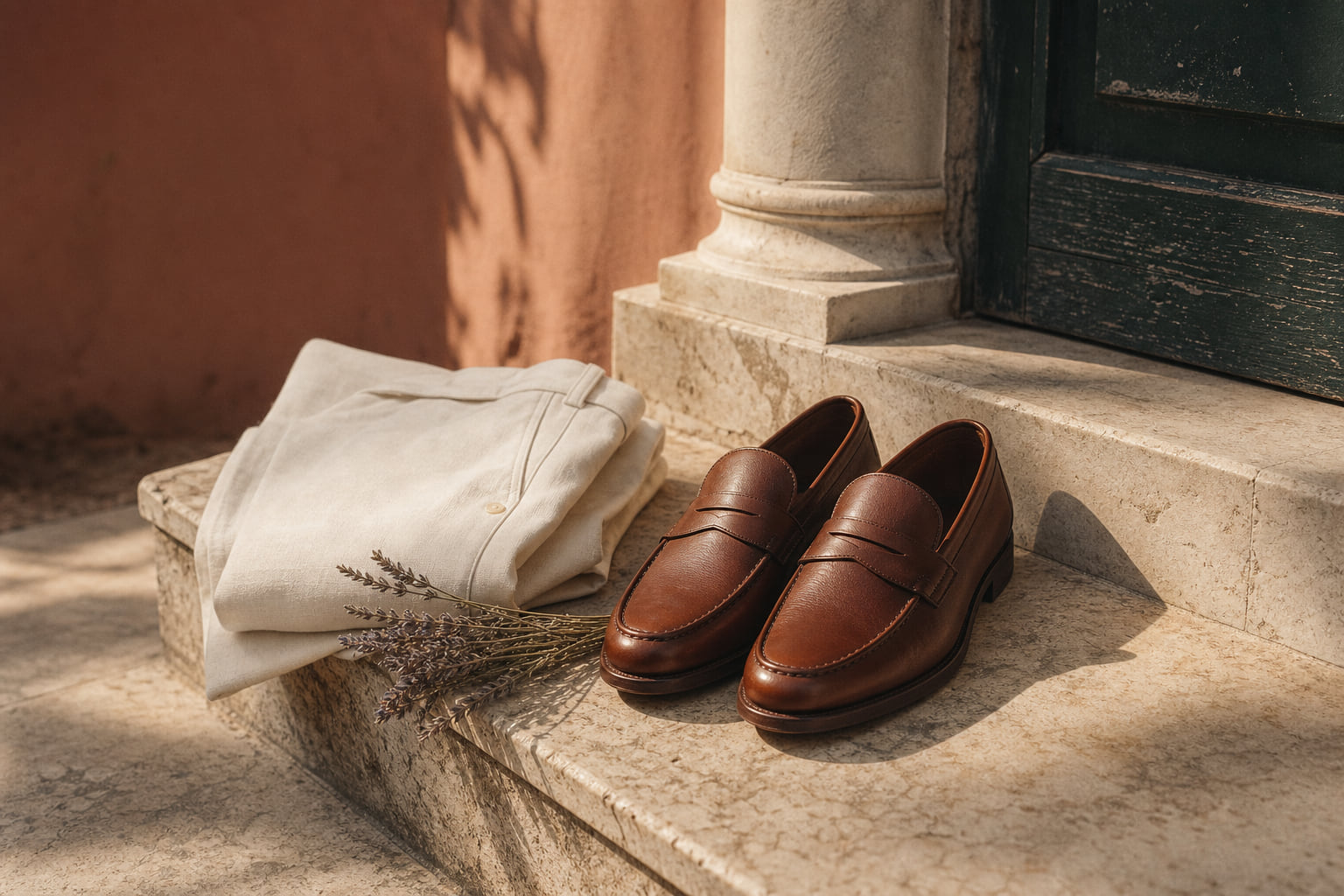
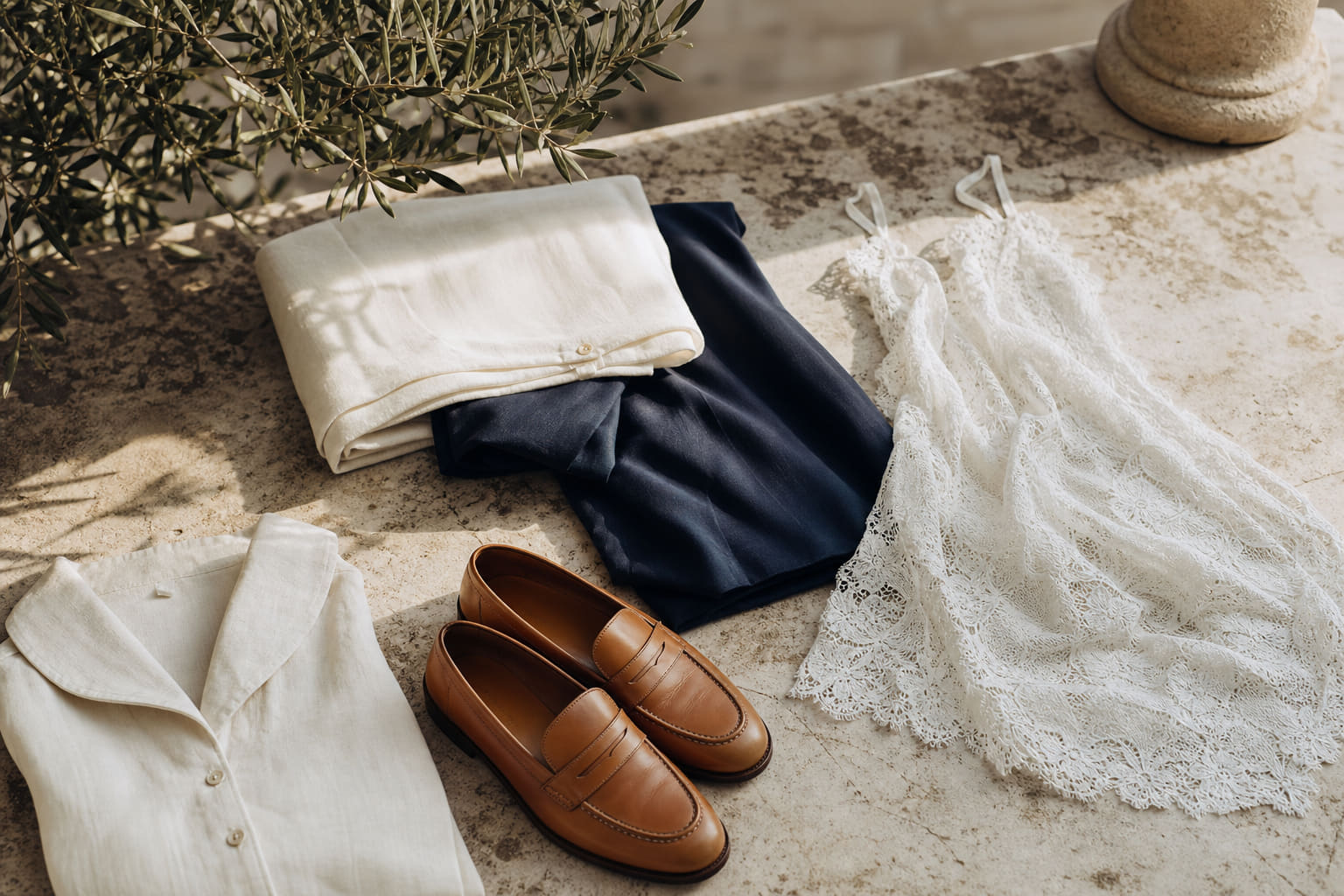
Footwear: Loafers are the natural companion to pleated trousers of either type. The slip-on silhouette does not interrupt the trouser's line the way a lace-up with a thick tongue can. A penny loafer or a horsebit loafer in leather or suede works across almost every context. Browse the loafers in old money style for options that sit correctly under a full-break trouser. Oxford shoes work for single-pleat trousers in formal contexts; they can feel heavy under a double-pleat unless the trouser is genuinely formal in fabric and occasion.
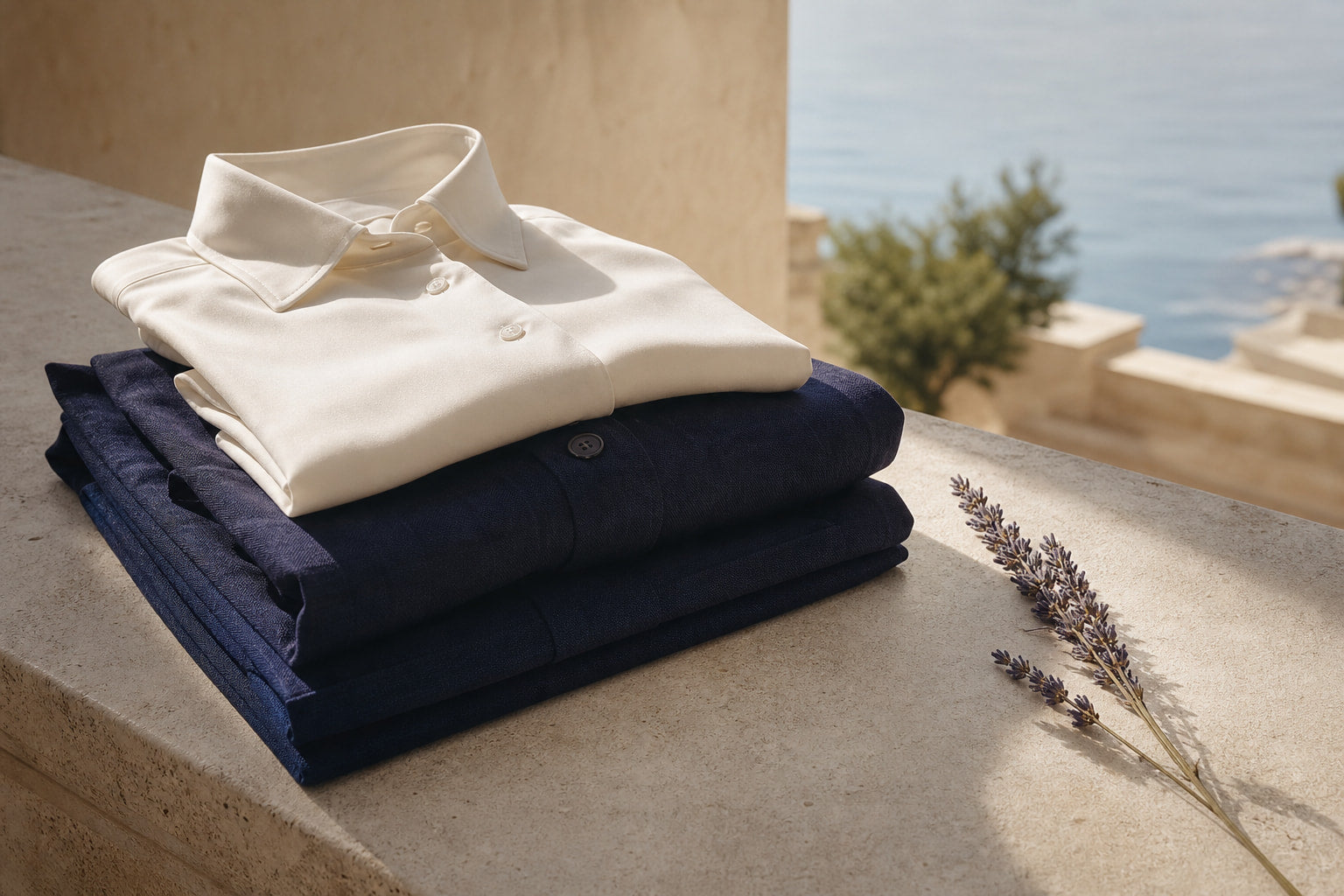
Shirts: Keep the shirt slim through the body so it tucks cleanly. A billowing shirt tucked into a double-pleat trouser adds bulk where you do not want it. The ice silk double mercerized shirt tucks neatly and has enough drape to stay smooth through the day without pulling out at the back.
Outerwear: An unstructured linen or cotton jacket sits well over both pleat styles in warm weather. A structured blazer or sport coat in wool is the right choice for single-pleat trousers in a business or formal register. Double-pleat trousers in heavy wool pair naturally with a full overcoat in winter, where the extra volume at the thigh actually improves comfort under the coat's hem. The full men's collection covers the outerwear options that work with both trouser constructions.
Belt or braces: As noted above, braces are the correct choice for high-waisted double-pleat trousers. A belt works for single-pleat trousers and for double-pleat trousers worn in a more casual register. Avoid very wide belts on pleated trousers; a 3 to 3.5 centimetre belt in plain leather is the appropriate width.

Building a Wardrobe Around Both Styles
A well-considered trouser wardrobe does not force a choice between single and double pleats. It uses both, each assigned to the contexts it serves best.
A practical starting point for a man building from scratch: one pair of single-pleat trousers in a neutral wool, charcoal or mid-grey, for business and formal occasions. One pair of double-pleat trousers in linen or a linen blend for warm weather and relaxed contexts. From there, the wardrobe can expand in whichever direction suits the life being lived.
For the worsted wool foundation piece, the Neapolitan wool old money trousers are built precisely for this role: a fabric with enough weight to hold a sharp crease, a cut that works under a jacket or on its own, and a colour that connects to almost everything else in a wardrobe. For the linen warm-weather piece, the Paris linen trousers offer a clean, straight-cut option that sits between the single and double-pleat constructions in its silhouette, useful for men who want the comfort of linen without committing to the full double-pleat volume.
The broader men's old money trouser collection maps the full range of what is available, from high-waisted Neapolitan cuts to relaxed straight-leg options, so the decision can be made with real options in front of you rather than in the abstract. According to Permanent Style, the resurgence of interest in pleated trousers among younger dressers reflects a broader return to considered, intentional tailoring rather than trend-driven minimalism, a shift that rewards investment in quality construction over fast-fashion approximations.

| Feature | Single Pleat | Double Pleat |
|---|---|---|
| Volume through thigh | Moderate, controlled | Generous, relaxed |
| Best waist height | Natural waist or slightly below | Natural waist, ideally high-waisted |
| Best leg width | Straight to mild taper | Straight to wide, never tapered |
| Ideal fabric weight | Light to mid-weight (cotton, fine wool) | Mid to heavy (worsted wool, linen, corduroy) |
| Primary occasion | Business, formal, smart casual | Relaxed, country, summer, Continental formal |
| Historical reference | Anglo-American 20th century tailoring | Neapolitan and Roman bespoke tradition |
Frequently asked questions
Are double-pleat trousers only for larger or older men?
No. That perception comes from a period when double-pleat trousers were cut poorly and worn too low, which did add bulk in the wrong places. When cut high at the waist with the correct leg width, double-pleat trousers suit any build. The key is proportion: the waist height and leg width must work together. Our Marbella double-pleat trousers are a good example of this balance done correctly.
Can I wear pleated trousers without a jacket?
Yes, and this is one of the most underused combinations in a man's wardrobe. A single-pleat trouser in fine wool or cotton with a tucked shirt and loafers is a complete, composed outfit for a smart casual context. A double-pleat trouser works equally well without a jacket in summer, particularly in linen, paired with a simple polo or a lightweight shirt with the sleeves rolled once.
How should pleated trousers be hemmed?
Single-pleat trousers can be hemmed with a slight break, one half-inch of fabric resting on the shoe, or with no break at all if the trouser has a tapered leg. Double-pleat trousers almost always look better with a full break or a single clean break. Cropping a double-pleat trouser above the ankle disrupts the silhouette the cut was designed to create. When in doubt, err toward more length rather than less.
What is the difference between a forward pleat and a reverse pleat?
A forward pleat folds toward the fly, closing the pleat neatly when you stand still and opening naturally when you move. A reverse pleat folds outward toward the side seam, which tends to pull open at the front when standing and creates a less tidy front face. Forward pleats are the standard in Italian and most British tailoring, and they are what you will find on the tailored pleated trousers in the Lovau range.
The choice between single-pleat and double-pleat trousers is not a question of which is better. It is a question of what you need the trouser to do. The single pleat gives you precision and a clean front profile, useful for formal and business contexts where a controlled silhouette matters. The double pleat gives you drape, comfort, and a Continental ease that no slim-cut trouser can replicate. A wardrobe with both is more complete than one that has committed to either. Start with the construction that fits your daily life most closely, then expand. The full range of men's tailored trousers at Lovau is built around exactly this kind of intentional, occasion-aware dressing.