


Women's Loafers: The Chic Alternative to Heels
Reading time 13 min • 2581 words
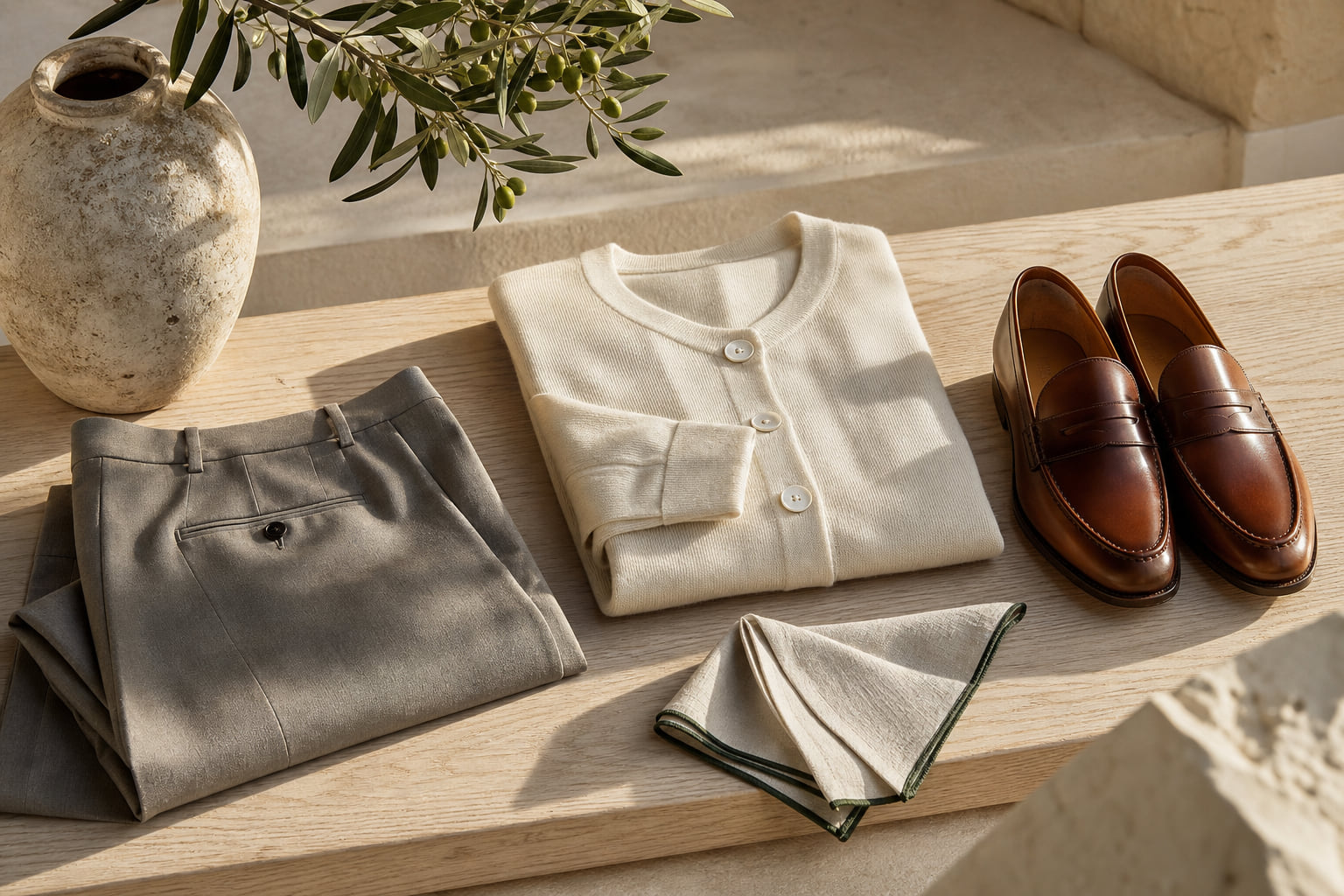
There is a particular kind of confidence that comes from knowing your shoes will not betray you halfway through the afternoon. Heels have their place, but the calculus of elegance has shifted. More women are reaching for loafers not as a compromise but as a deliberate first choice, and the results are consistently more polished than the alternative.
The loafer has a long European pedigree. Originally adopted by Scandinavian farmers and later refined by Italian shoemakers in the mid-twentieth century, it arrived in the wardrobes of well-dressed women as a symbol of relaxed authority rather than studied formality. That heritage is exactly what gives it staying power today.
At Lovau, we think about shoes the way we think about every other piece: the material must be honest, the construction must be considered, and the silhouette must be able to carry itself across decades without looking dated. Women's loafers, chosen well, do all three.
Key takeaways
- Genuine leather loafers hold their shape and develop a patina that synthetic materials never achieve, making them a long-term investment.
- A loafer with a slight heel or a structured sole reads just as formal as a block-heeled pump in most professional and social settings.
- Velvet-lined interiors reduce friction and keep the foot comfortable through a full day, which is the practical detail most shoppers overlook.
- Loafers pair equally well with midi dresses, tailored sets and slim trousers, so one pair genuinely covers multiple occasions.
- Fit at the heel counter is the single most important measurement: the shoe should grip without pinching and show no gap when you walk.
In this guide
- Why Loafers Have Replaced Heels in the Refined Wardrobe
- What to Look for in a Quality Women's Loafer
- How to Style Women's Loafers Across Different Occasions
- The Colour Logic: Which Leather Tones to Prioritise
- Loafers and the Quiet Luxury Dress Code
- Caring for Your Loafers So They Last a Decade
- Frequently asked questions
Why Loafers Have Replaced Heels in the Refined Wardrobe
The shift is not about abandoning formality. It is about redefining it. A well-made loafer in polished leather signals the same attention to dress as a kitten heel, often more so, because it suggests that the wearer is confident enough not to rely on added height for authority.
Practically, the case is straightforward. A loafer distributes weight evenly across the foot, reduces fatigue over long days, and moves with the foot rather than against it. For women who walk cobblestone streets, attend long gallery openings, or move between meetings and dinners without a wardrobe change, that matters enormously.
The loafers old money style aesthetic that has gained so much attention in recent years is built precisely on this logic: that restraint and quality speak louder than spectacle. A clean leather loafer in a neutral tone, worn with intention, is one of the clearest expressions of that philosophy.
If you are building a wardrobe around timeless fashion pieces for women, the loafer belongs at the foundation, not as an afterthought.
Expert insightWhen you try on a new pair of leather loafers, walk on a hard floor, not carpet. The heel counter should grip firmly with no slipping. If the heel lifts even slightly on the first wear, the shoe will never feel secure.

What to Look for in a Quality Women's Loafer
Not all loafers are equal, and the differences that matter most are invisible at first glance. Here is what to examine before you buy.
Leather quality. Full-grain leather is the benchmark. It has not been sanded or corrected, so it shows the natural character of the hide and develops a genuine patina with wear. Corrected-grain leather looks uniform but ages poorly. Bonded leather, which is essentially leather dust pressed onto a backing, should be avoided entirely.
The lining. This is where most shoes cut corners. A bare leather lining is adequate, but a velvet-lined loafer is noticeably more comfortable across a full day. The velvet reduces friction, wicks moisture slightly, and feels immediately different the moment you slip the shoe on.
Sole construction. A leather sole is traditional and breathable but requires resoling eventually. A rubber-injected leather sole, or a crepe sole, adds grip without sacrificing the refined profile. Avoid thick rubber soles that make the shoe look athletic.
The toe shape. A rounded or slightly squared toe is the most versatile and the most classically European. A very pointed toe narrows the silhouette but can read as more trend-dependent. For a shoe you intend to wear for years, rounded is the safer choice.
Block height. A flat loafer is the purest form, but a modest heel of one to two centimetres adds a subtle lift that reads well with trousers and midi skirts alike. It is enough to lengthen the leg without changing your gait.
You can browse the full range of considered women's dress shoes to compare silhouettes before committing.
Expert insightGenuine leather shoes need forty-eight hours between wears to allow the material to breathe and return to its shape. Rotating between two pairs extends both significantly.

How to Style Women's Loafers Across Different Occasions
The loafer's versatility is its greatest practical strength. Below are the pairings that work consistently, with specific notes on proportion and fabric.
With a midi dress. The proportion here is key. A midi hem that falls between the knee and the ankle creates a clean vertical line when paired with a flat or low-heeled loafer. A romantic floral midi dress in a lightweight fabric sits beautifully over a cognac leather loafer, the warmth of the leather pulling out the earthy tones in most floral prints. The look reads as intentional without appearing overdressed.
With a co-ordinated set. A jacquard lace set or a structured apricot jacquard top and short skirt paired with a loafer in a complementary neutral is a complete outfit that requires nothing else. The loafer anchors the look without competing with the texture of the set.
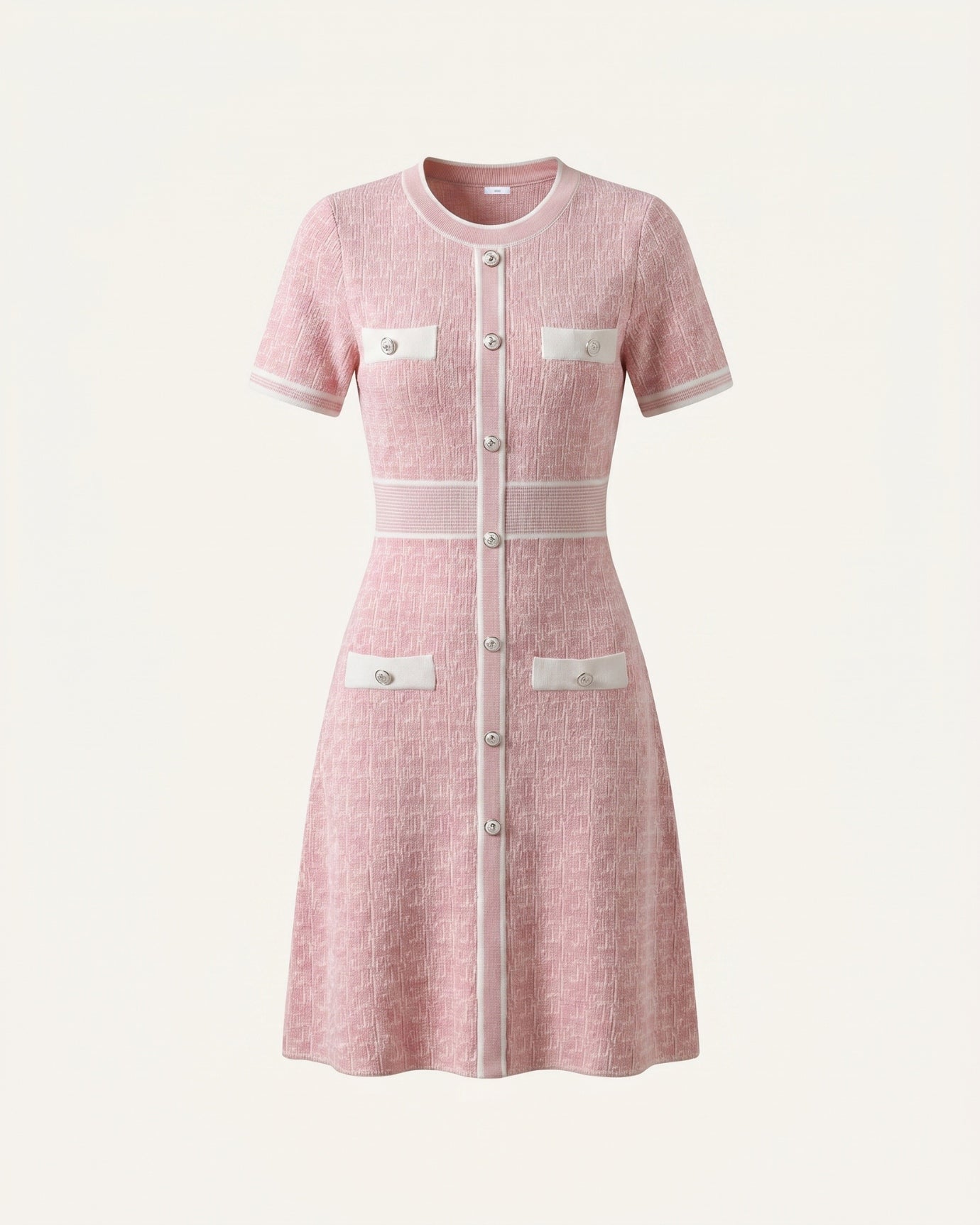
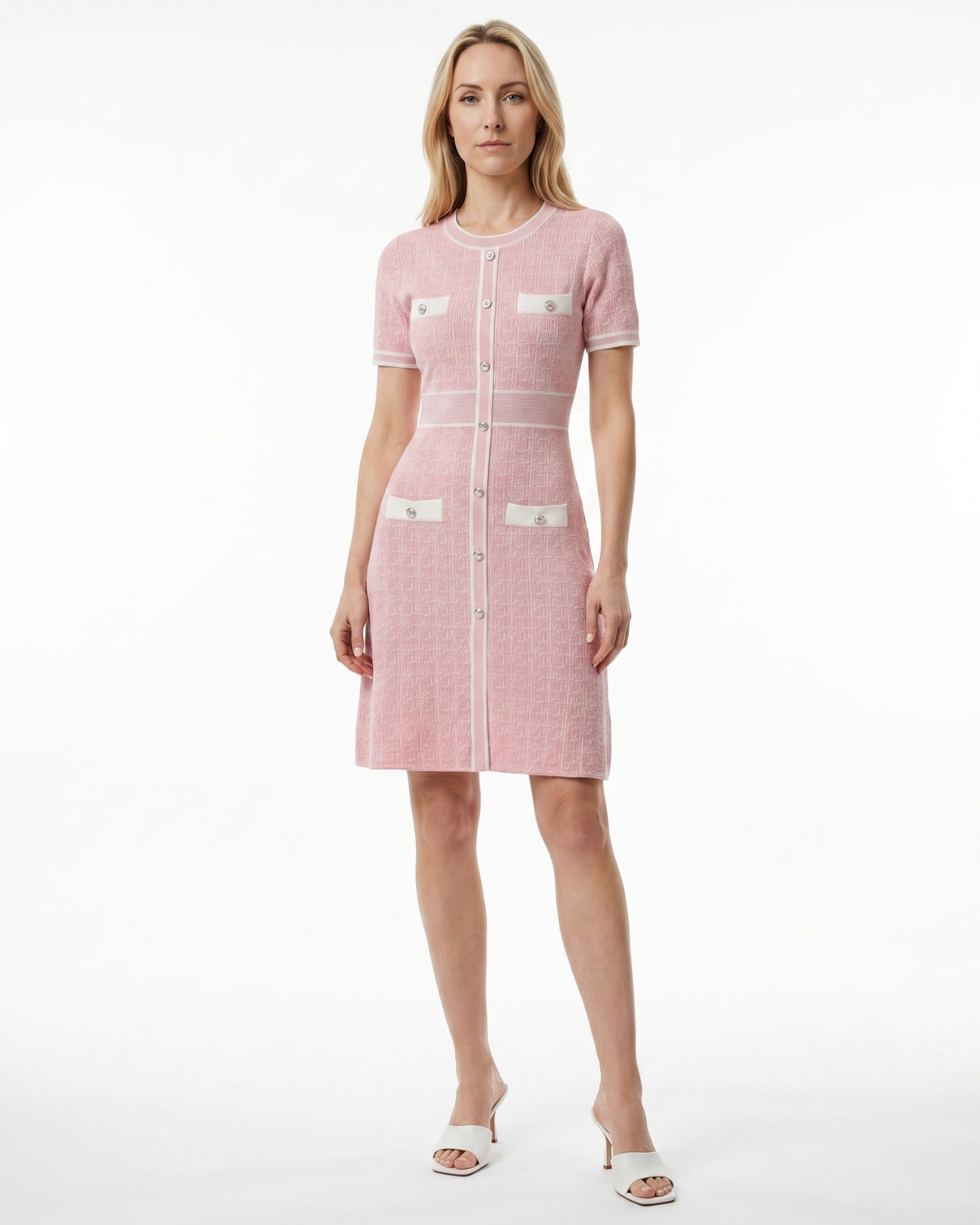
With a day dress. For a relaxed but polished daytime appearance, a French niche style white dress worn with a clean white or bone-coloured leather loafer is as close to a formula as refined dressing gets. The monochrome quality of the pairing is quietly striking.
With tailored trousers. This is the classic Continental pairing. Straight-leg or wide-leg trousers that graze the top of the foot are the correct length for a loafer. Too short and the ankle looks exposed; too long and the shoe disappears entirely.
For evening. A loafer in a darker leather, or one with a subtle embellishment such as a metal snaffle bit, transitions into evening without difficulty. Pair it with one of the evening dresses in a clean silhouette and the contrast between the formal dress and the grounded shoe creates exactly the kind of considered tension that defines modern European dressing.
For more complete outfit ideas built around the same principles, the old money summer style guide for women offers detailed seasonal pairings.
Expert insightAvoid ankle socks with a loafer unless the trouser is cropped and the sock is fine-gauge cotton or silk. A no-show liner is the cleaner choice with dresses and skirts.

The Colour Logic: Which Leather Tones to Prioritise
Colour selection in a loafer is a long-term decision. The shoe you choose will appear in dozens of outfits over several years, so it needs to work across your existing wardrobe rather than with a single outfit.
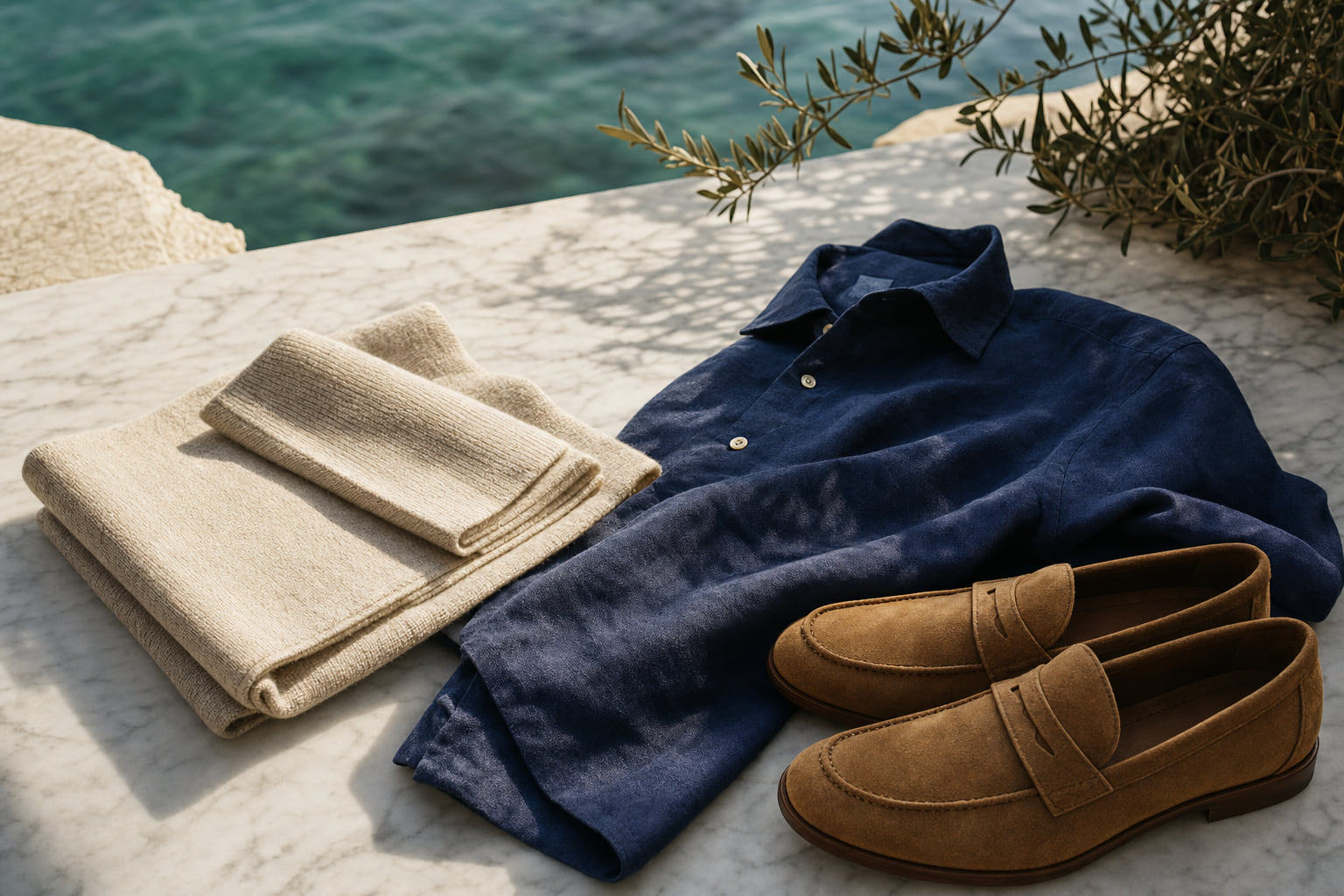
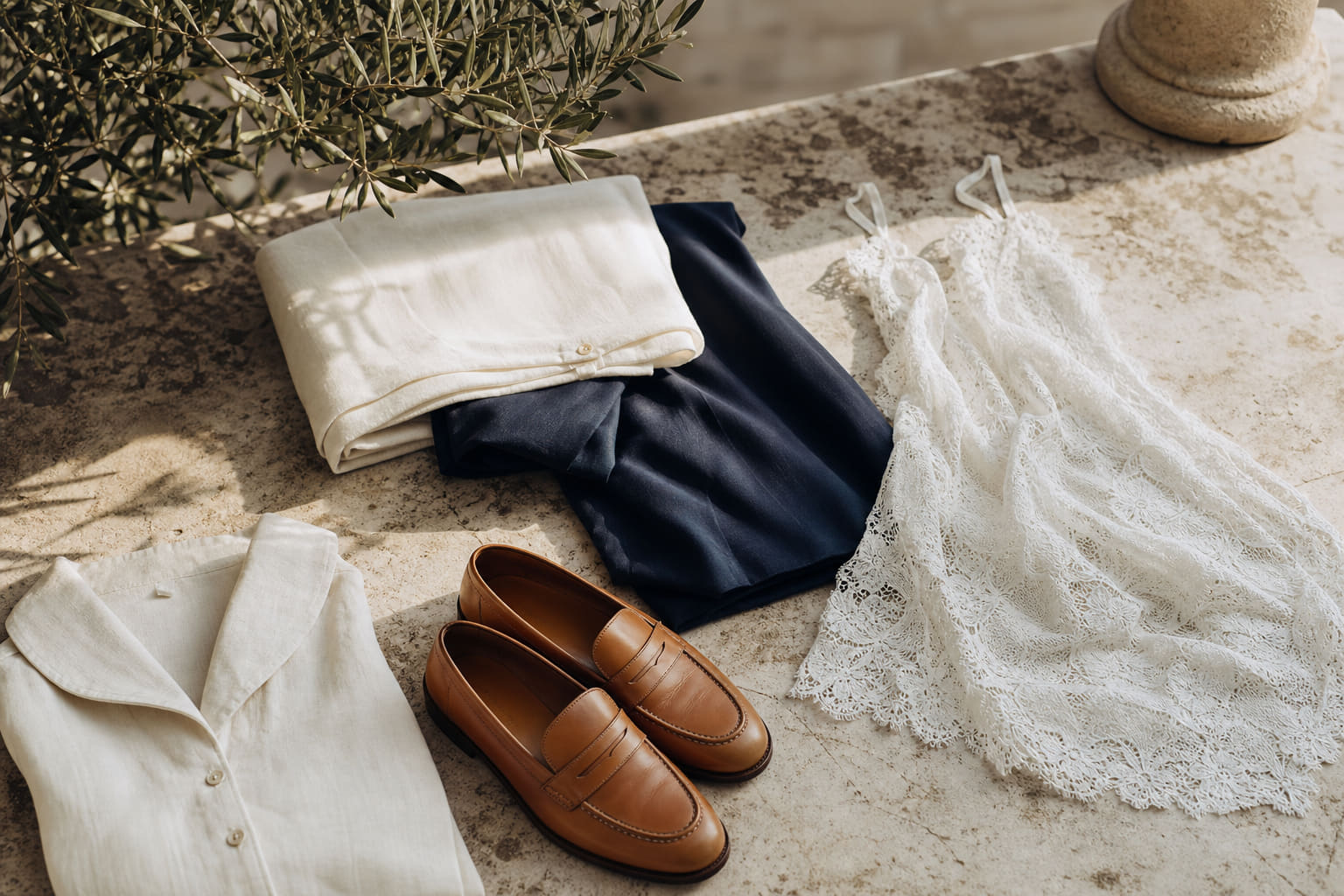
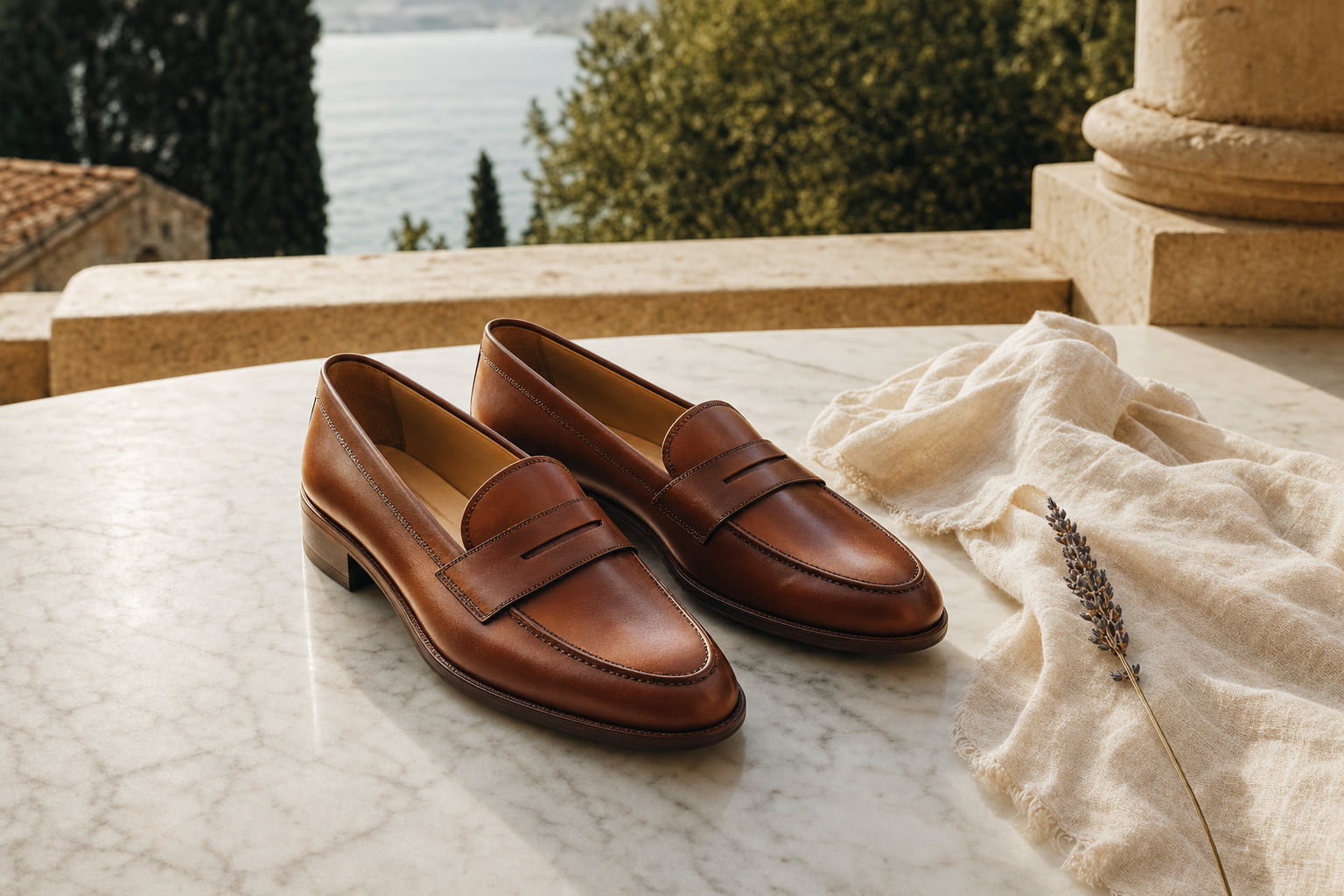
Cognac and tan. These are the most versatile warm neutrals. They work with cream, ivory, navy, camel, and most earth tones. They also develop the richest patina over time, darkening slightly at the toe and heel in a way that looks distinguished rather than worn.
Black. The most formal option and the easiest to pair with dark trousers, navy, charcoal, and any monochrome outfit. Black leather loafers are the correct choice for professional environments where a heel would normally be expected.
Burgundy and oxblood. A more considered choice that rewards a wardrobe built around deeper tones. Burgundy loafers pair exceptionally well with camel coats, dark denim, and forest green, all colours that appear regularly in old money women's fashion.
White and bone. A cleaner, more summery option that works best in warm months with light dresses and linen separates. More demanding to maintain but visually striking when kept clean.
The loafer collection covers the primary tones worth considering. As a general rule, own the cognac or tan first, then build from there based on what your wardrobe actually needs rather than what looks appealing in isolation.
According to Wikipedia's overview of the loafer's history, the modern slip-on shoe gained mainstream acceptance through its association with Ivy League dress codes in the United States before crossing back to Europe, where Italian manufacturers refined it into the sleek, leather-soled form we recognise today.
Loafers and the Quiet Luxury Dress Code
The quiet luxury aesthetic is often described in terms of what it avoids: visible logos, trend-driven silhouettes, anything that announces itself before the wearer does. The loafer fits this framework precisely because it communicates through material and proportion rather than decoration.
The genuine leather women's loafer is the shoe equivalent of a well-cut trouser or a properly fitted blazer. Its quality is legible to anyone who knows what to look for, and invisible to anyone who does not, which is exactly the point.
For women building a wardrobe around this sensibility, the loafer resolves a persistent tension: how to dress with genuine authority without resorting to the visual shortcuts that heels have historically provided. The answer is that authority comes from fit, fabric, and proportion, not from height. A loafer worn with a beautifully cut day dress and a structured bag makes a more considered impression than the same dress worn with a heel that dominates the silhouette.
Harper's Bazaar has noted the resurgence of the loafer as a serious fashion statement across European and American markets, pointing specifically to the way the shoe bridges the gap between formal and casual dressing in a way that neither the trainer nor the heel can manage.
For a broader look at how this philosophy applies across the wardrobe, the guide on how to dress like old money provides the foundational principles that make individual choices like this one coherent rather than isolated.
The day dresses for easy everyday elegance article also shows how the right footwear, specifically a grounded flat or low shoe, changes the entire register of a dress outfit.

Caring for Your Loafers So They Last a Decade
A good leather loafer, properly maintained, should outlast any trend by a significant margin. The care routine is simple but non-negotiable.
Clean before you condition. Use a soft damp cloth to remove surface dust and dirt before applying any product. Conditioning over dirt traps particles in the leather grain.
Condition regularly. A leather conditioner, not a polish, every four to six weeks keeps the leather supple and prevents cracking at the toe box and heel counter, the two points of highest flex.
Polish for colour and protection. A wax polish in a matching or neutral tone adds a protective layer and deepens the shine. Apply in thin coats, allow each to dry, then buff with a horsehair brush.
Use cedar shoe trees. Cedar absorbs moisture and holds the shoe's shape between wears. This is especially important in the first six months while the leather is still moulding to your foot.
Resole before the welt is damaged. A good cobbler can resole a leather loafer multiple times. The upper, if cared for, will outlast several soles. Watch for wear at the heel tip first, as this is the earliest indicator that resoling is needed.
- Store in a dust bag or on an open shelf, never in a sealed box that traps humidity.
- Avoid wearing the same pair on consecutive days.
- Keep away from direct heat sources, which dry the leather rapidly.
The investment in a pair from the loafers old money style collection is returned many times over when the shoe is maintained correctly. This is the logic of buying well rather than buying often.
| Shoe Type | Formality Level | Comfort Over 8+ Hours | Versatility (Dress to Casual) | Longevity with Care | Best Occasion |
|---|---|---|---|---|---|
| Genuine Leather Loafer | High | Excellent | Very High | 10+ years | Office, dinner, day dressing |
| Ballet Flat | Medium | Good | High | 3 to 5 years | Casual and semi-formal |
| Block Heel Pump | High | Moderate | Medium | 5 to 7 years | Formal events, office |
| Stiletto Heel | Very High | Poor | Low | 3 to 5 years | Evening, formal occasions only |
| Mule (flat) | Medium | Good | Medium | 4 to 6 years | Warm weather, casual outings |
| Espadrille Wedge | Low to Medium | Good | Low to Medium | 2 to 3 years | Summer casual |
Frequently asked questions
Are women's loafers appropriate for formal occasions?
Yes, provided the leather is polished and the silhouette is clean. A black or dark burgundy leather loafer in a slim, unembellished profile reads as formal in most professional and social settings. Pair it with a structured dress or tailored trousers and the overall impression is composed rather than casual. The velvet-lined leather loafer with a modest heel is particularly well-suited to occasions that would previously have called for a kitten heel.
How should women's loafers fit at the toe and heel?
The toe box should allow your toes to lie flat without curling, with roughly a centimetre of space at the front. The heel counter is more critical: it must grip the back of your foot firmly. Any gap between your heel and the shoe when you walk means the fit is too large, and no amount of insoles will correct that entirely. Leather stretches slightly with wear, so a new pair should feel snug but not tight across the widest part of the foot.
Can loafers be worn with dresses and skirts, or only with trousers?
Loafers work very well with dresses and skirts, particularly midi and mini lengths. The key is proportion: a flat or low-heeled loafer pairs best with a hem that either grazes the knee or falls to mid-calf. For outfit inspiration built around this pairing, the day dresses for easy everyday elegance guide shows how footwear choice changes the entire register of a dress look.
What is the difference between a penny loafer and a horsebit loafer?
A penny loafer has a strap across the vamp with a small diamond-shaped cut-out, traditionally used to hold a coin. It is the more casual and collegiate of the two. A horsebit loafer, associated with Gucci's 1953 design, features a metal hardware detail across the vamp in the shape of a horse's snaffle bit. The horsebit reads as more formal and more Italian in character, making it the better choice for dressed-up occasions within the old money style wardrobe.
The case for women's loafers is not a case against heels. It is a case for choosing deliberately rather than by default. A well-made leather loafer in the right colour carries you through a full day with the same authority as any heel, without the physical cost, and often with more visible attention to quality. If you are ready to make the shift, the genuine leather loafers in our old money style collection are the most honest starting point we can offer.