


Why the Shirt-Jacket Shacket is the Ultimate Transitional Piece
Reading time 14 min • 2829 words
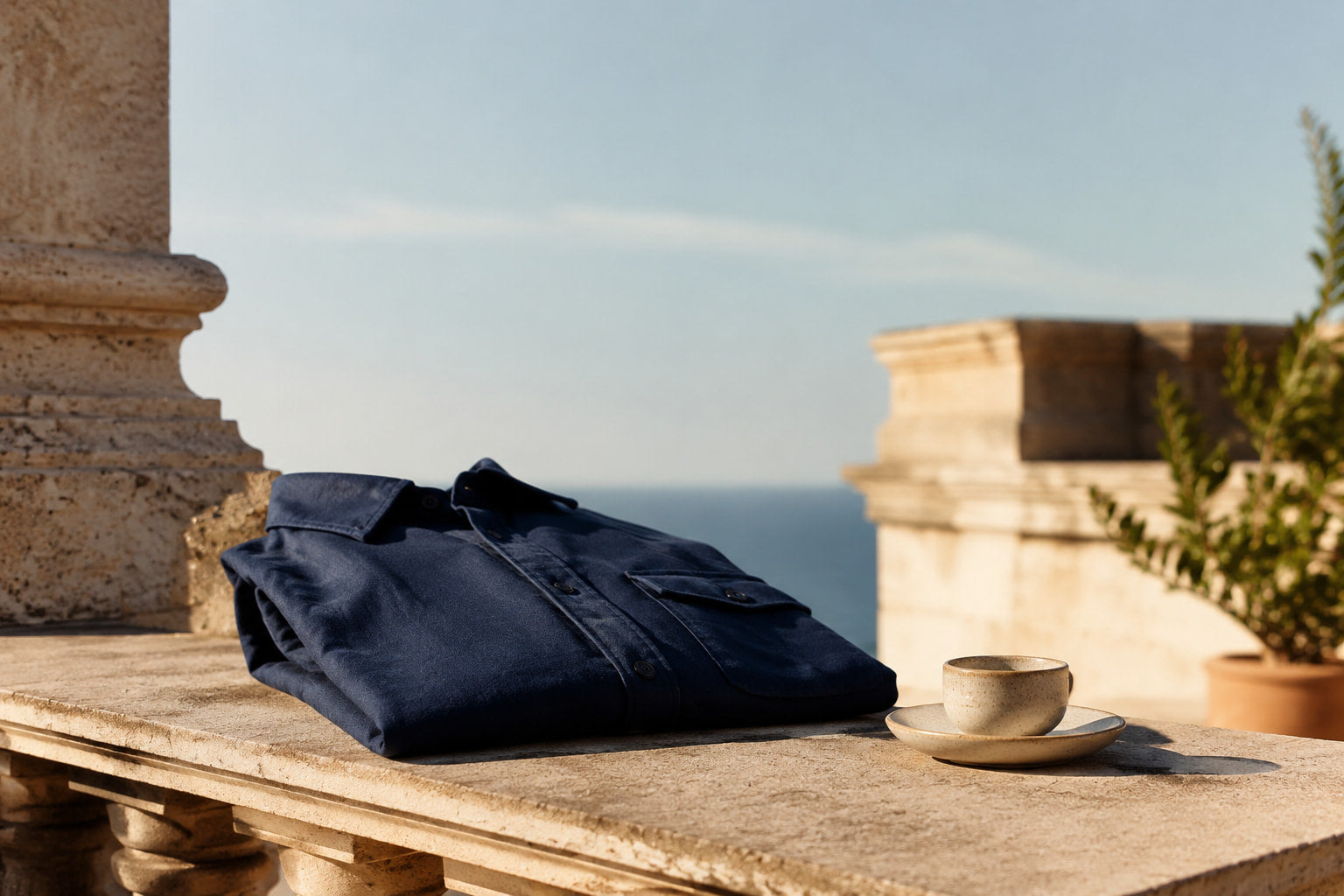
There is a particular problem that arises every spring and every autumn: the morning requires a jacket, the afternoon does not, and a full overcoat is simply too much. The shirt-jacket, widely referred to now as the shacket, was built to answer exactly that problem. It is not a new idea. Overshirts in heavy cotton and wool flannel have existed in working and sporting wardrobes for well over a century, worn by men who needed something they could throw on or tie around their waist without ceremony.
What has changed is the fabric range and the refinement of the cut. Today a well-made shacket can be constructed in high-count linen, lyocell blends, or cotton corduroy, materials that behave beautifully in the kind of mild, variable weather that defines Mediterranean springs and Northern European autumns alike. The result is a garment that sits convincingly between a casual shirt and a structured jacket, useful in both registers.
At Lovau, we think about transitional dressing in concrete terms: what does a man actually need to be comfortable and composed from a cool morning to a warm evening? The shirt-jacket answers that question more directly than almost anything else in the wardrobe. What follows is a precise guide to why it works, how to wear it, and what to look for when choosing one.
Key takeaways
- A shacket works best in natural fabrics, linen, lyocell, or cotton corduroy, because they breathe when warm and insulate lightly when cool.
- Fit is the defining factor: the shirt-jacket should sit slightly wider than a tailored shirt but never boxy, with the shoulder seam landing exactly at the shoulder point.
- Worn open over a fine knit or a quality linen shirt, a shacket replaces the need for a jacket in temperatures between 12 and 20 degrees Celsius.
- Colour discipline matters: keep the shacket in a neutral or classic tone and let the shirt underneath carry any pattern or contrast.
- A structured collar, button placket, and chest pockets are the details that separate a shacket with real longevity from a fashion-season novelty.
In this guide
- What Makes a Shacket Different From an Ordinary Overshirt
- The Fabric Hierarchy: Linen, Corduroy, and Denim
- How to Wear a Shacket: Three Concrete Outfit Formulas
- Fit: The Single Variable That Determines Whether It Works
- Colour and Pattern: Old Money Restraint in Practice
- Care and Longevity: Making a Shacket Last
- Frequently asked questions
What Makes a Shacket Different From an Ordinary Overshirt
The word shacket is a contraction, shirt plus jacket, and the contraction is accurate. An overshirt is simply a shirt worn over another shirt. A shacket has structural ambitions: a more substantial fabric weight, often a lined or interlined front placket, chest pockets with real depth, and a collar that holds its shape when worn open. These details are what allow it to function as outerwear rather than just another layer.
Fabric weight is the most important variable. A shacket intended for transitional use should sit between 180 and 280 grams per square metre. Lighter than that and it reads as a shirt; heavier and it becomes a jacket in all but name. Linen and lyocell blends at the higher end of that range are particularly well suited because they have natural drape and a slight body that holds structure without stiffness.
The Retro Vintage Lyocell Linen Shirt is a good illustration of this principle. The lyocell content adds a subtle sheen and softness that pure linen lacks, while the linen gives it the weight and breathability needed to function as a standalone outer layer on a mild day. Worn open over a white crew-neck or a fine jersey, it reads as considered outerwear, not merely a shirt left unbuttoned.
For context on how overshirt and shirt-jacket silhouettes have developed within broader menswear history, the trajectory runs from military field shirts through Ivy League campus dressing and into the contemporary wardrobe, always serving the same core function: a structured layer that does not commit to formality.
Expert insightCheck the collar construction before buying. A shacket collar that collapses when worn open is a shirt. One that holds a clean roll or a flat spread when unbuttoned is genuinely outerwear.

The Fabric Hierarchy: Linen, Corduroy, and Denim
Three fabrics dominate the shirt-jacket category at the quality end of the market, and each has a distinct seasonal window and aesthetic register.
Linen is the most versatile of the three. It is breathable enough to wear in genuine warmth, substantial enough to layer over a lighter shirt, and it develops a character with wear that synthetics never do. For spring and early summer, a high count fine linen shirt worn as an overshirt, left open over a plain white or ecru base, is one of the cleanest expressions of Mediterranean transitional dressing. The key is thread count: high-count linen is smoother and less prone to aggressive wrinkling than coarser weaves, which matters when the garment is functioning as your outermost layer. Our guide on how to style linen shirts without looking wrinkled covers the practical side of managing linen in daily wear.
Cotton corduroy is the autumn answer. The British Retro Jacket Cotton Corduroy sits precisely at the shirt-jacket intersection: it has the cut and front closure of a casual jacket but the relaxed, unfussy character of a shirt. Corduroy's ribbed pile provides mild insulation and a tactile richness that reads as old-money casual without any effort at signalling. Worn over a navy rollneck or a fine merino shirt, it covers the entire September to November window.
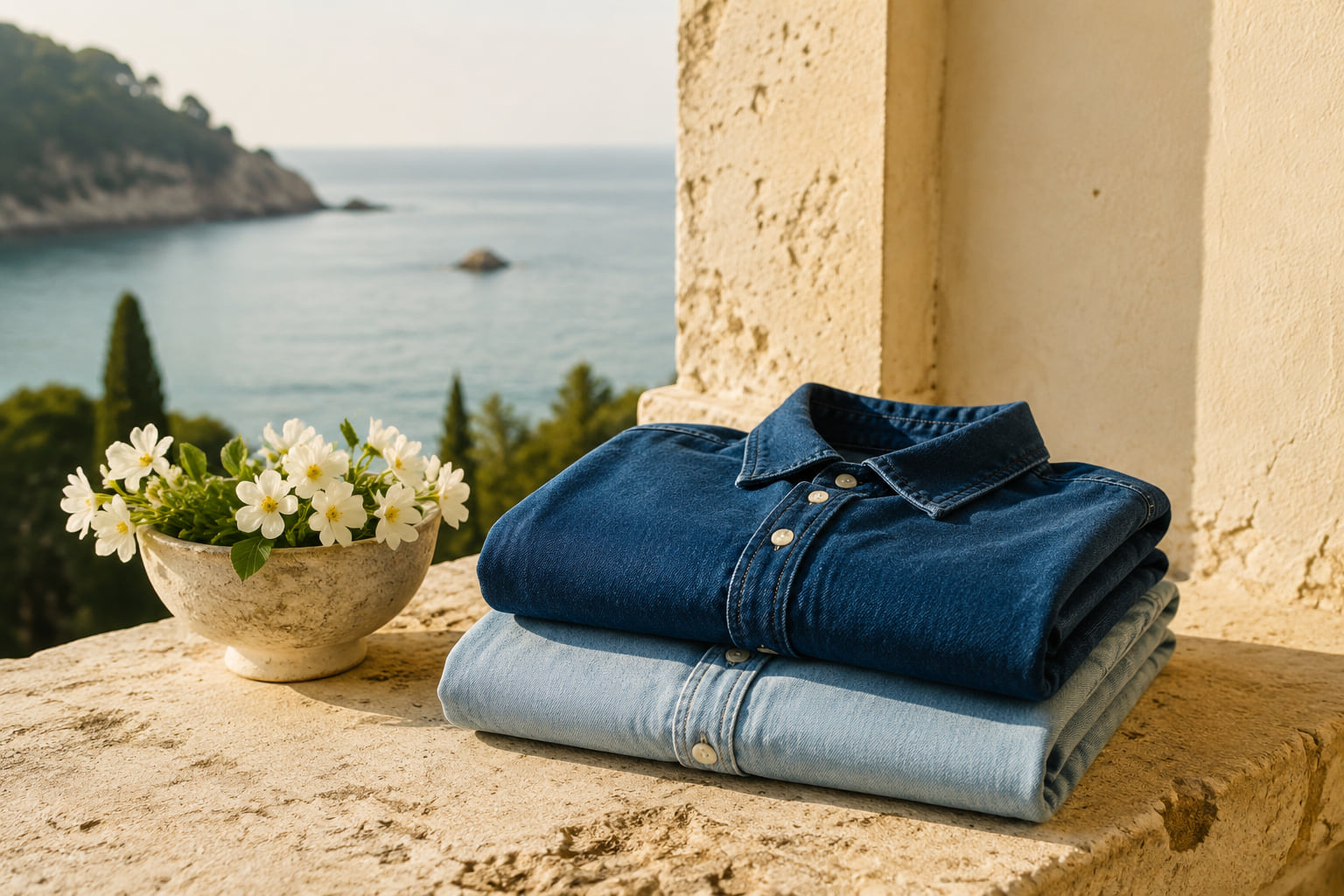
Denim at a medium weight, around 8 to 10 ounce, is the most democratic of the three. The Denim Blue Jacket American Style demonstrates how well a structured denim overshirt works when the cut is clean and the wash is restrained. Avoid heavily distressed or stonewashed versions; the quieter the denim, the more range it has across occasion and pairing.
- Linen: spring to early summer, 15 to 25 degrees Celsius
- Corduroy: autumn, 8 to 16 degrees Celsius
- Denim: year-round in mild climates, best from March to May and September to October
Expert insightWhen buying a linen shacket, hold it up to light. High-count linen has a fine, even weave you can almost see through. Coarse linen shows irregular slubs and will wrinkle into chaos by midday.

How to Wear a Shacket: Three Concrete Outfit Formulas
The shacket's usefulness depends entirely on what goes beneath it. Three formulas cover the majority of occasions where a man reaches for this garment.
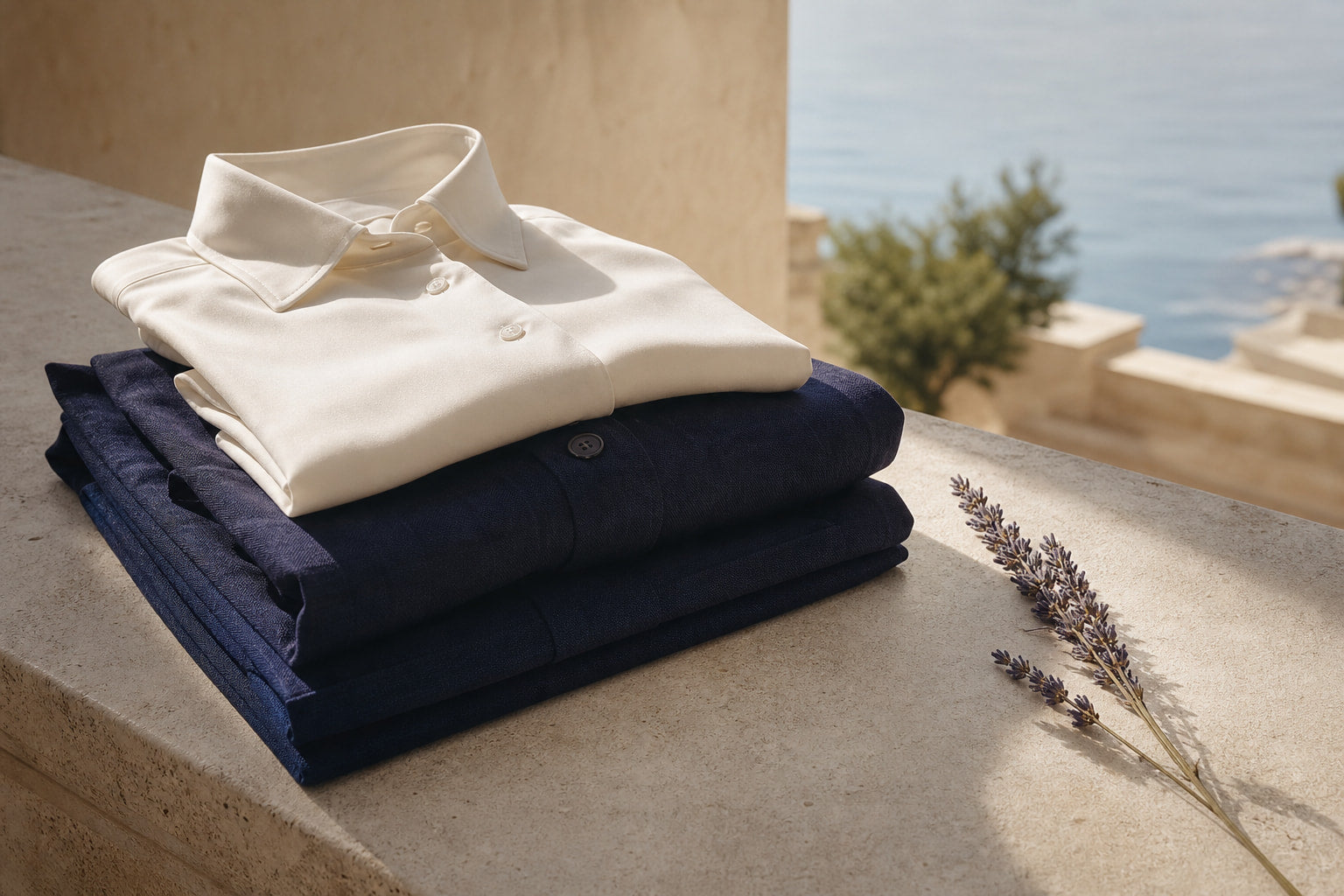
Formula One: Shacket over a fine linen shirt, with tailored trousers. This is the most refined reading. Choose a shacket in a solid neutral, stone, navy, or olive, and wear it open over a high count navy blue fine linen shirt in a complementary tone. Pair with flat-front chinos or slim tailored trousers in cream or tan. The linen shirt underneath adds a second layer of texture without adding bulk. This combination works for a long lunch, a gallery visit, or a business-casual meeting in warm weather.
Formula Two: Shacket over a plain T-shirt, with dark jeans or chinos. The simplest formula and the most worn. The shacket does the work; the T-shirt is purely functional. Keep the T-shirt in white, ecru, or a very pale grey. Dark slim jeans or olive chinos complete the picture. For texture and detail at the shirt level, the Old Money Retro Style Shirt worn as the base layer adds visual interest without competing with the shacket's silhouette.
Formula Three: Shacket as the outermost layer over a lightweight knit. For cooler days, replace the T-shirt with a fine-gauge merino or cotton knit in a crew or mock-neck. The shacket sits over it the way a sport coat would, but with considerably less formality. This is the formula that gets the most use in March and October. For more on layering a fine knit correctly, our piece on how to layer a fine-gauge cashmere sweater over a polo translates directly to this context.
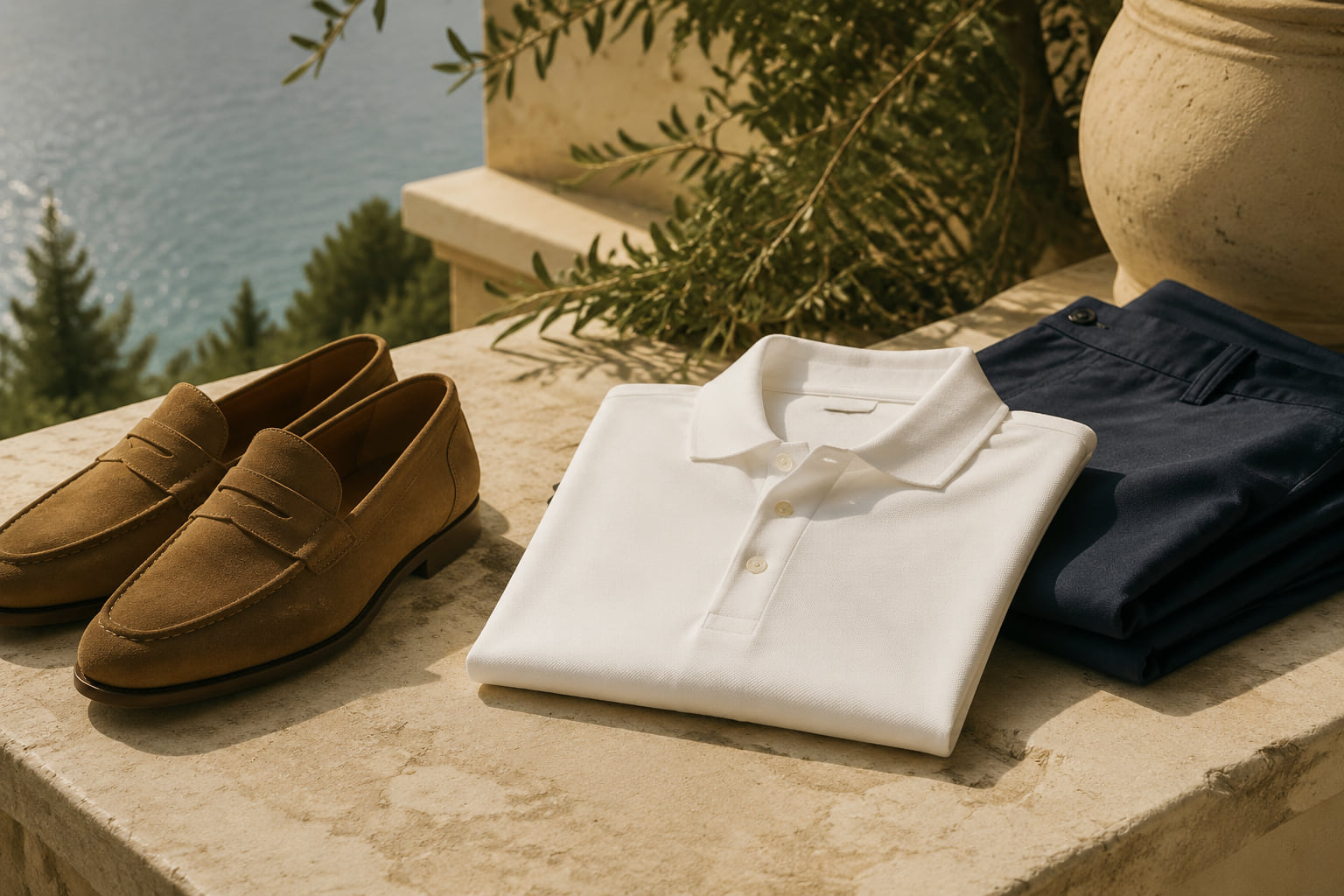
In all three formulas, shoes are the detail that determines the register. Chelsea boots push the shacket toward smart-casual. White leather trainers keep it relaxed. Loafers, particularly in suede, are the most versatile choice across all three formulas. Browse the Loafers Old Money Style collection for options that work across each.
Expert insightDo not button a shacket all the way to the collar when worn as an overshirt. Leave the top two buttons open. A fully buttoned shacket looks like a shirt that is unsure of itself.

Fit: The Single Variable That Determines Whether It Works
A shacket is a forgiving garment in terms of occasion but an unforgiving one in terms of fit. Get the proportions wrong and it reads either as a shirt you bought too large or a jacket you cannot close properly.
Shoulder seam position is the starting point. It should land exactly at the shoulder point, not hanging off it. Because shackets are worn over other layers, many men size up unnecessarily and end up with a garment that looks shapeless. If you normally wear a medium shirt, a medium shacket in a well-graded pattern will accommodate a light layer underneath without requiring a size increase.
Body length matters for the overall silhouette. A shacket that ends at the hip bone, covering the trouser waistband by two to three centimetres, has the right proportional relationship to the trousers below. Too short and it reads as a blouson; too long and it loses its structural clarity.
Sleeve length should reach the wrist bone when the arm is relaxed, allowing a centimetre or two of the underlayer to show when the arm is raised. This layering reveal, a flash of a contrasting fabric at the cuff, is one of the small pleasures of wearing a shacket well.
The Marbella Square Collar Linen Shirt is a useful reference point for collar construction. Its square collar holds its shape whether the garment is buttoned or worn open, which is exactly what a shacket collar needs to do. A collar that collapses or curls when the top buttons are open undermines the entire effect.
For a broader view of how the old money shirts category approaches proportion and fit across different shirt constructions, the collection provides a useful frame of reference.

Colour and Pattern: Old Money Restraint in Practice
The old money approach to colour in a shacket is straightforward: the outer layer carries the tone, the inner layer carries the detail. This means the shacket itself should almost always be a solid colour or a very subdued pattern. Stripes, checks, and prints belong on the shirt worn beneath it, not on the shacket itself.
Navy is the most versatile shacket colour in the Mediterranean wardrobe. It works over white, pale blue, ecru, and even a soft olive green. A high count fine black linen shirt worn beneath a stone or khaki shacket creates a clean tonal contrast that reads as intentional rather than accidental.
Olive and stone are the next tier. Both read as neutral in the way that navy does, but they carry a slightly more relaxed, coastal character that suits warm-weather dressing particularly well.
Pattern within the shacket is not impossible, but it requires discipline. A very fine windowpane or a washed stripe in two close tones can work if the underlayer is strictly plain. The Black Yellow Striped Linen Shirt is an example of a boldly patterned shirt that functions better as a base layer beneath a solid shacket than as a standalone piece in a layered look.
For the man building a considered transitional wardrobe, the Man Spring Summer Old Money 25 collection offers a coherent palette of shirts and layering pieces that work together without requiring extensive thought about coordination. The tones have been chosen to sit alongside each other, which is precisely what a transitional wardrobe requires.
GQ's coverage of transitional dressing for men consistently returns to the same principle: the fewer decisions a layered outfit requires in the morning, the more reliably it works in practice.

Care and Longevity: Making a Shacket Last
A well-made linen or lyocell shacket, cared for correctly, should last a decade or more. The enemies of longevity are heat, over-washing, and incorrect storage.
Washing frequency is the first discipline. A shacket worn as an outer layer over a base shirt does not absorb body perspiration directly. It needs washing far less frequently than a shirt worn next to the skin. Spot clean when possible; wash the full garment when genuinely necessary. For linen, a cool machine wash at 30 degrees Celsius on a gentle cycle is sufficient. Lyocell blends are even more sensitive and benefit from a hand wash or a very gentle machine cycle.
Drying should always be flat or on a wide hanger, never on a narrow wire hanger that will distort the shoulders. Linen dries with a natural crispness that softens immediately on wearing; this is not a flaw. For more on managing the texture of natural-fibre shirts in daily wear, our piece on how to style linen shirts without looking wrinkled covers the relevant techniques.
Storage between seasons should be on a cedar hanger in a breathable cotton garment bag. Plastic bags trap moisture and create the conditions for mildew in natural fibres. If the shacket is in corduroy, store it with the pile facing away from other garments to prevent crushing.
Ironing a linen shacket is a matter of personal preference. A light press with a warm iron while the fabric is still slightly damp produces a clean result. Worn without pressing, linen develops a natural relaxed texture that suits the character of the garment. Neither approach is wrong; the key is consistency within an outfit. A pressed shacket over an unironed shirt looks careless. Both pressed or both relaxed looks deliberate.
For those building a complete transitional wardrobe beyond the shacket alone, the LOVAU MEN OLD MONEY collection provides a structured starting point across categories.

| Fabric | Best Season | Weight (gsm) | Occasion Range | Care Level |
|---|---|---|---|---|
| High-count linen | Spring / Early Summer | 190 to 240 | Casual to smart-casual | Low: cool machine wash |
| Lyocell-linen blend | Spring / Autumn | 180 to 220 | Casual to business-casual | Low to medium: gentle cycle |
| Cotton corduroy | Autumn / Winter | 250 to 300 | Casual to smart-casual | Medium: cold wash, flat dry |
| Medium-weight denim | Spring / Autumn | 220 to 280 | Casual | Low: machine wash cold |
| Cotton twill | Autumn / Winter | 240 to 290 | Smart-casual to business-casual | Medium: press while damp |
Frequently asked questions
What is the difference between a shacket and an overshirt?
An overshirt is any shirt worn as an outer layer. A shacket specifically refers to a garment designed with jacket-like structure: a heavier fabric, structured collar, deeper pockets, and a cut that functions as outerwear rather than simply a second shirt. The distinction is in the construction, not just the wearing.
Can a shacket be worn in a business-casual environment?
Yes, in the right fabric and colour. A shacket in high-count linen or cotton twill, worn in navy, stone, or olive over a high count fine white linen shirt and tailored trousers, sits comfortably within most business-casual dress codes. Denim and corduroy versions are better reserved for creative or relaxed office environments.
How do I stop a linen shacket from looking too casual?
Two details make the difference: the garment underneath and the shoes. A plain fine-knit or a quality linen shirt beneath the shacket immediately raises the register. Swap trainers for leather loafers or Chelsea boots and the same shacket reads as smart-casual rather than weekend wear. Colour discipline, keeping the shacket in a solid neutral, also removes any ambiguity about the intent of the outfit.
What temperature range is a linen shacket actually useful for?
A linen shacket in the 190 to 240 gsm range is most useful between 13 and 22 degrees Celsius. Below that, you need a heavier layer. Above that, the shacket comes off and the underlayer carries the outfit on its own. This is precisely the temperature window that defines spring mornings and autumn afternoons in most of Southern and Western Europe.
The shirt-jacket earns its place in a considered wardrobe not through novelty but through genuine utility. It solves a real problem, the variable-temperature day, without requiring a man to choose between comfort and composure. Choose the right fabric for the season, get the fit correct at the shoulder, keep the colour disciplined, and the shacket will carry more of your wardrobe's workload than almost any other single garment. Start with the Man Spring Summer Old Money 25 collection to find the linen and lyocell options that anchor this approach through the warmer months.