


The Ultimate Guide to Packing a Carry-On for a 7-Day European Trip
Reading time 13 min • 2589 words
A seven-day European trip is not the moment to check a bag. Train connections in Milan, overnight arrivals in Lisbon, and the particular indignity of watching a suitcase orbit a carousel for twenty minutes while your taxi meter runs: these are all avoidable. A well-chosen carry-on, packed with intention, is enough.
The challenge is not volume. It is selection. Most overpacking happens because people bring clothes for imagined occasions rather than real ones. Europe in the warmer months asks for clothes that breathe, move, and look composed after hours on cobblestones. Europe in the cooler months asks for the same, with the addition of one layer that does real work. Neither scenario requires twelve outfits.
This guide is written for people who want to travel looking genuinely well-dressed, not just comfortable. We will cover which fabrics survive a carry-on without embarrassing you at dinner, how to build a wardrobe formula that generates real variety from few pieces, and which specific items earn their place in a 40-litre bag.
Key takeaways
- Choose linen, fine wool, and acetate-silk blends: they pack flat, breathe well, and release creases quickly after hanging.
- Build your wardrobe around three bottoms and five tops, all in a single tonal palette, so every combination works.
- One pair of leather loafers handles cobblestones, restaurant dinners, and museum afternoons equally well.
- Roll soft knits, fold structured trousers flat along their crease, and use shoe bags to protect suede from oil transfer.
- A belted dress or a tailored trouser paired with a linen shirt covers every occasion from a morning market to an al fresco dinner.
In this guide
- Fabric First: What Travels and What Does Not
- The Packing Formula: Three Bottoms, Five Tops, One Shoe
- Shoes That Earn Their Space in the Bag
- Dressing for the Real Occasions of a European Trip
- How to Actually Pack the Bag: Technique Matters
- The Complete Carry-On List by Gender
- Frequently asked questions
Fabric First: What Travels and What Does Not
Before you think about outfits, think about fibre. The single biggest mistake travellers make is packing clothes in fabrics that punish compression. Polyester blends look pressed in a store and destroyed in a suitcase. Cotton poplin is beautiful but creases sharply and stays creased. Denim is heavy, slow to dry, and takes up a disproportionate share of bag space.
The fabrics that genuinely travel well are a short list: linen, fine worsted wool, acetate-silk blends, and high-grade cotton jersey. Each has a different mechanism for recovery. Linen creases freely but those creases are characterful rather than dishevelled, and a light steam or a few minutes hanging in a humid bathroom restores it substantially. Worsted wool holds its structure because of how the fibres are twisted; a well-cut wool trouser can go three days without pressing and still look intentional.
For men, a high-quality linen shirt is the single most useful travel garment in existence. It layers under a jacket, stands alone at lunch, and rolls into a compact cylinder without permanent damage. For women, a dress in a fluid fabric, whether fine wool or a lined woven, does the work of two separate pieces and takes up the space of one.
What to avoid: heavy canvas, unlined cotton blazers (they bag at the elbows immediately), and any garment with significant internal structure that cannot be folded flat. Structured suit jackets require specific packing technique; if you are bringing one, our guide on avoiding wrinkles in suit jackets when travelling covers the method in detail.
Expert insightHang linen and fine wool garments in the bathroom while you shower on your first night. The steam releases most travel creases within fifteen minutes, no iron required.

The Packing Formula: Three Bottoms, Five Tops, One Shoe
The most reliable carry-on formula for seven days is built on arithmetic, not inspiration. Three bottoms multiplied by five tops gives you fifteen combinations. Add one dress or one complete set and you have covered every realistic occasion on a European trip without redundancy.
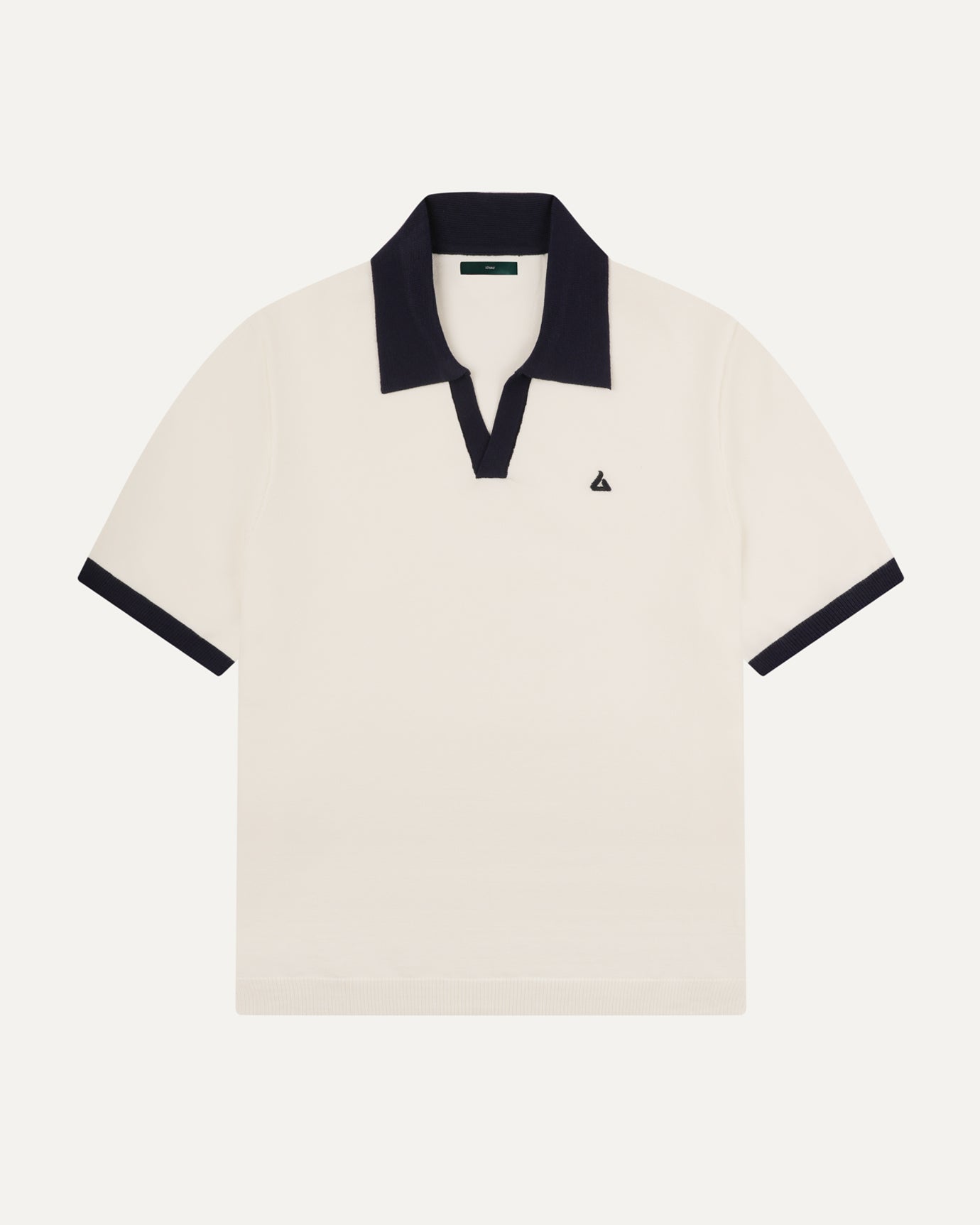
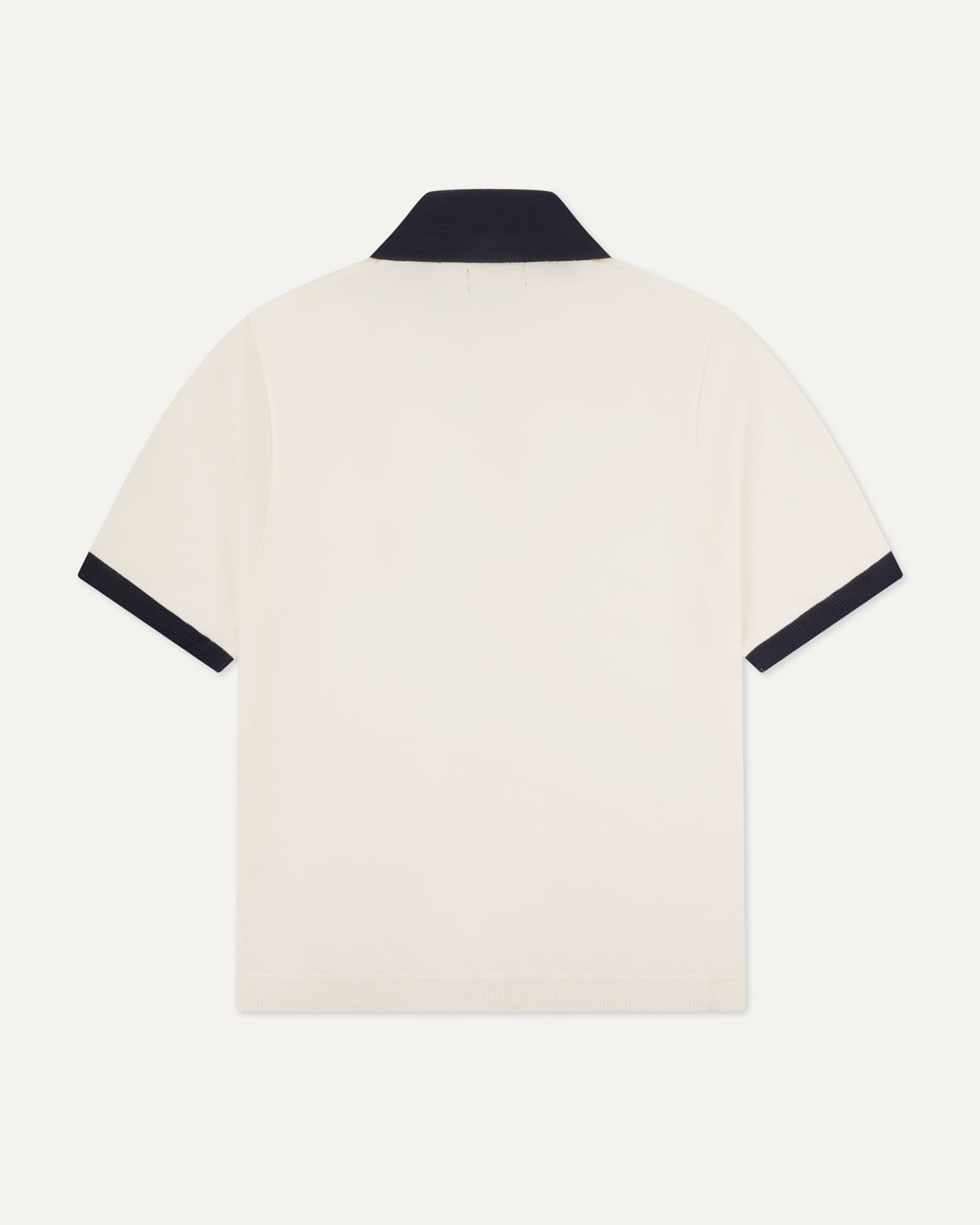
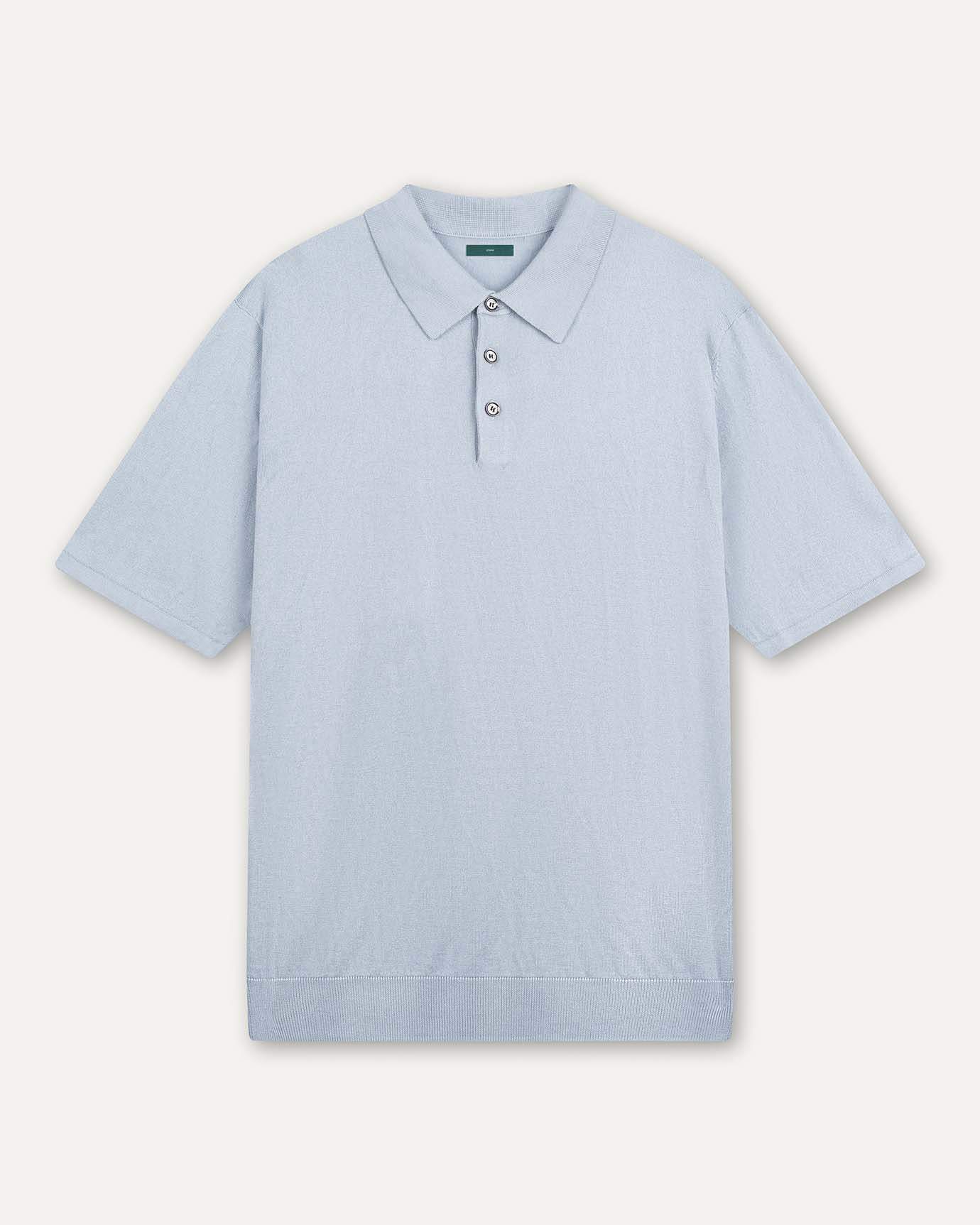
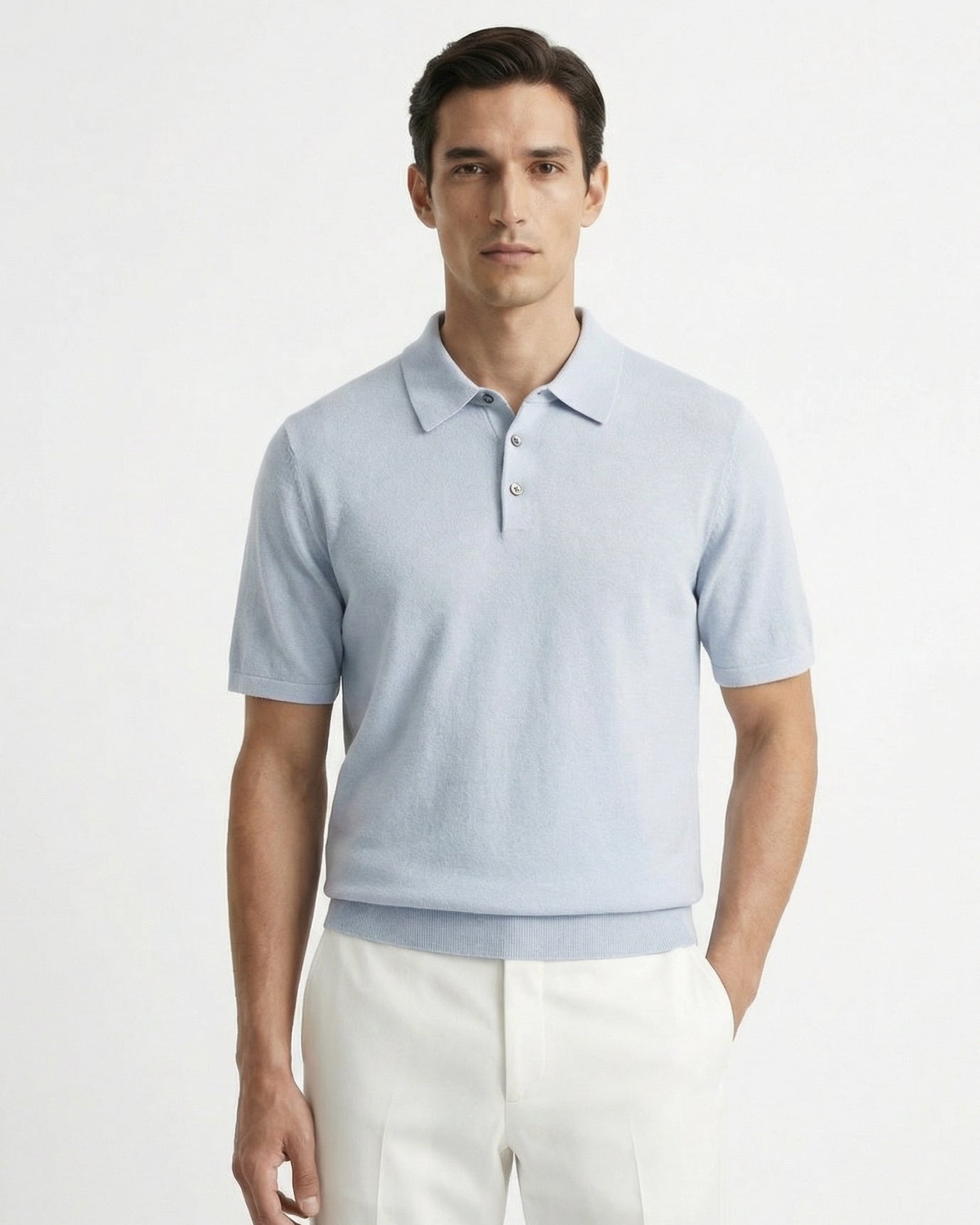
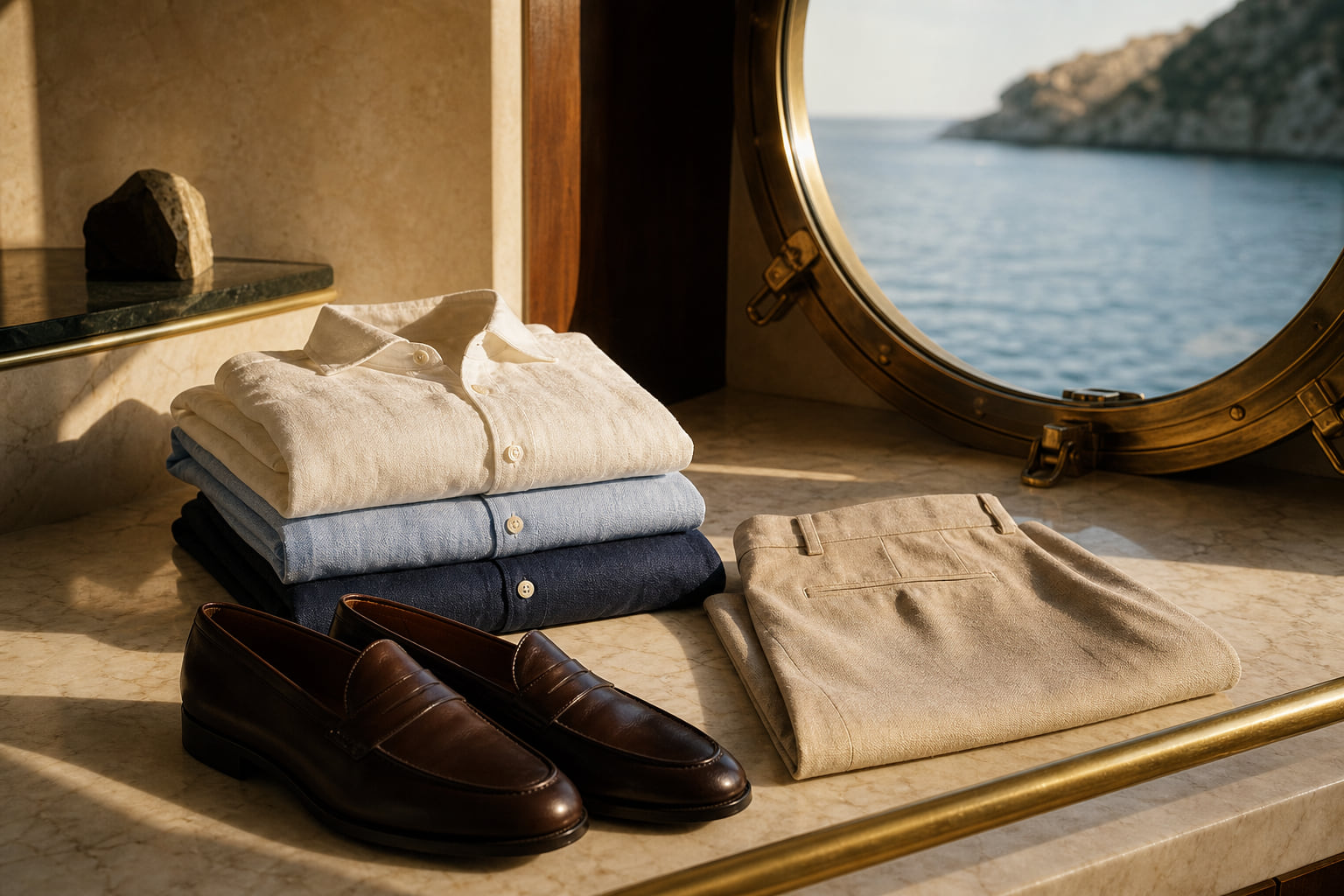
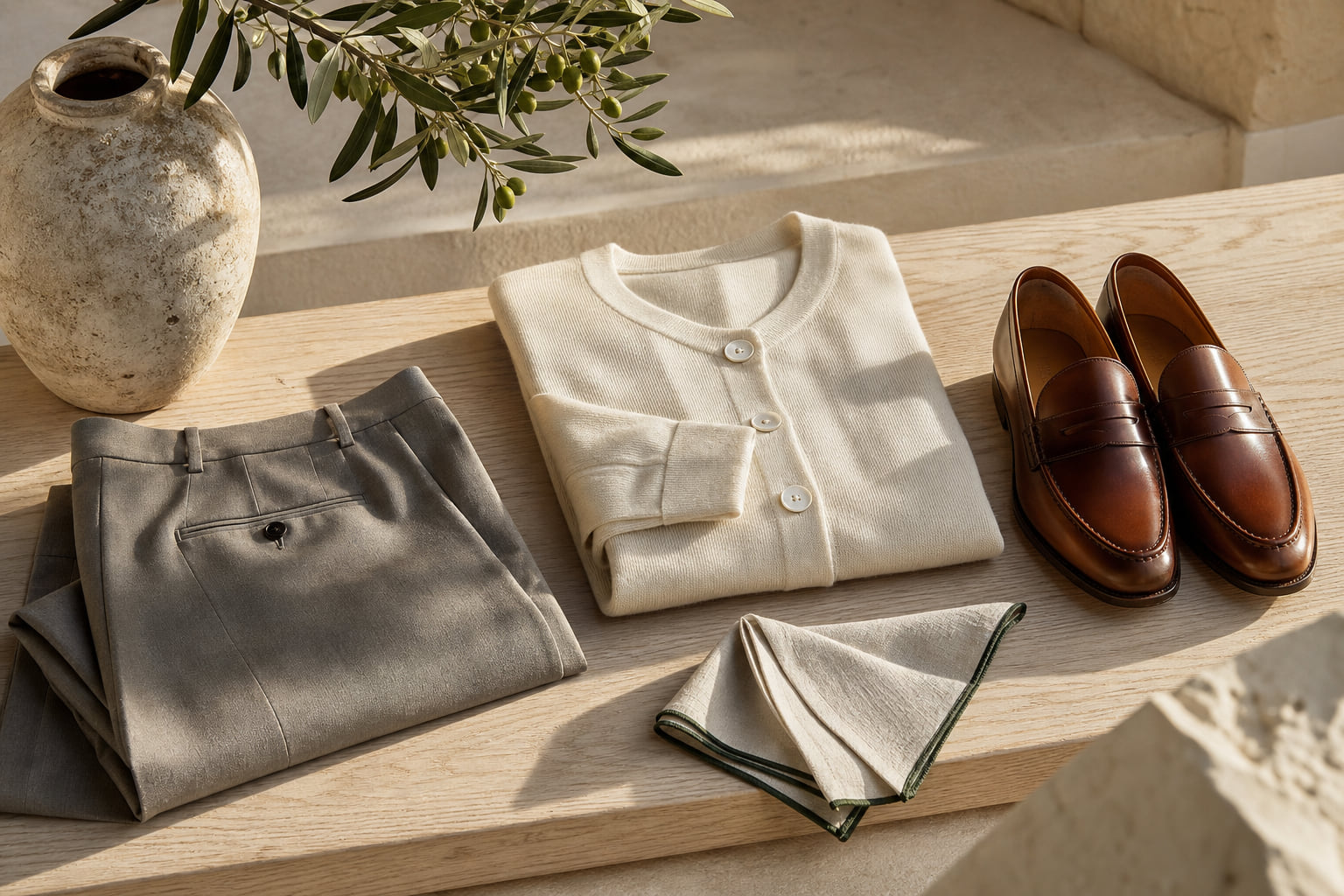
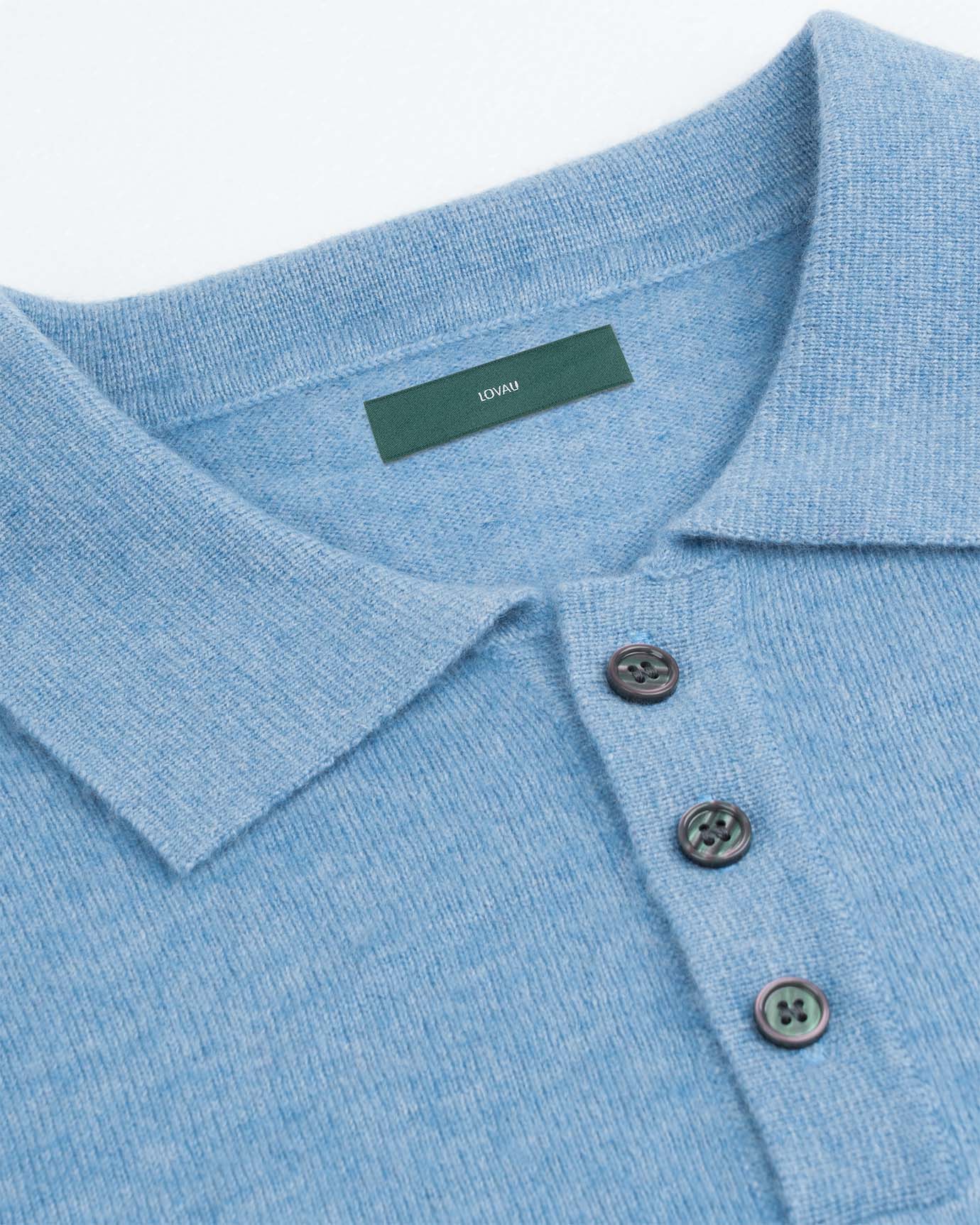
For men: Two trousers and one pair of shorts, or two trousers and one linen short depending on season. The Paris linen trousers in a neutral stone or off-white work for everything from a boat deck to a gallery opening. Pair them with the Italian worsted wool trousers in navy or charcoal for evenings and cooler days. Your five tops should be three linen shirts in tonal colours, one polo, and one lightweight knit or shirt in a slightly dressier fabric. The Marbella Cooling Acetate Silk Polo qualifies as both casual and smart enough for dinner, which is exactly what a travel wardrobe needs.
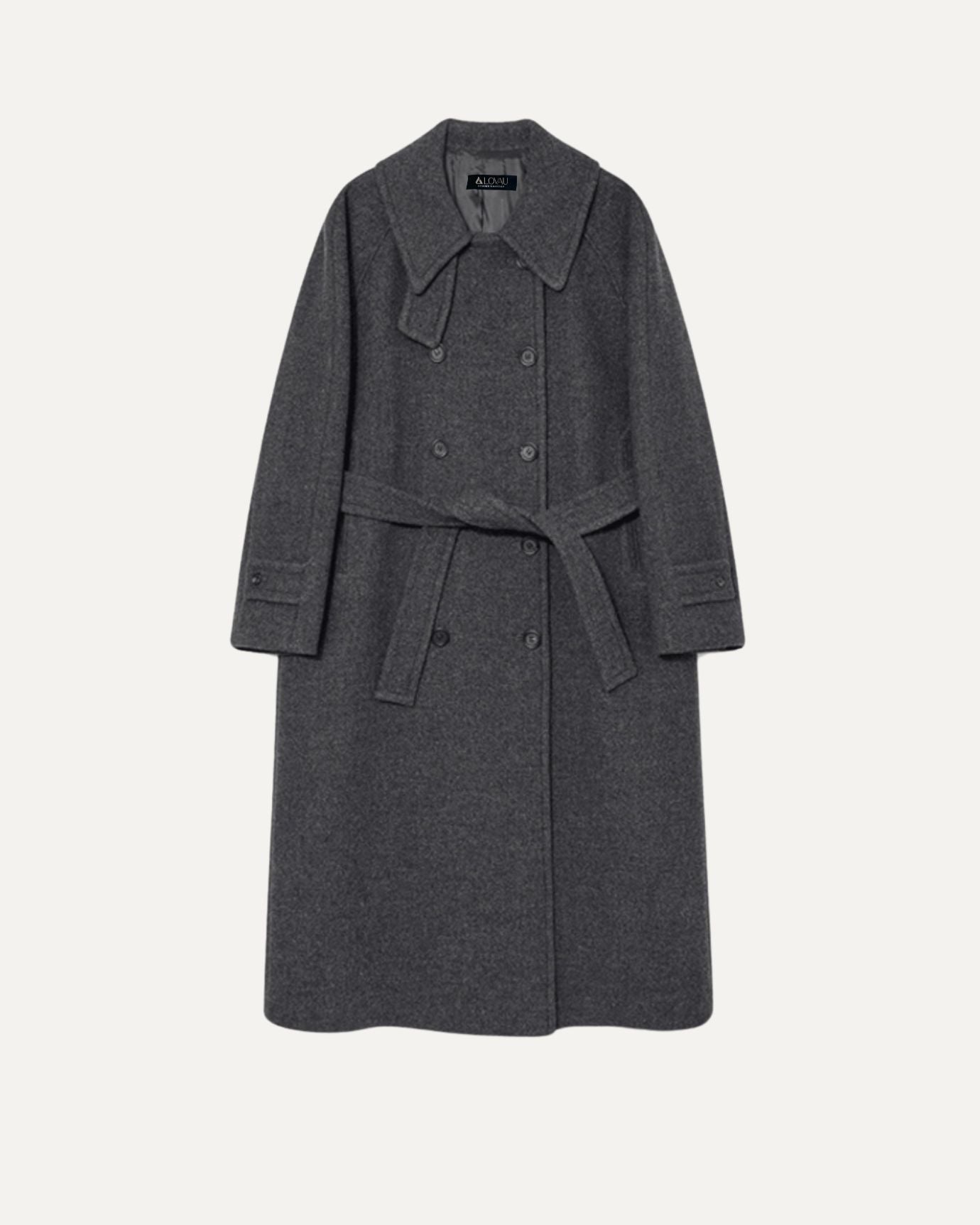
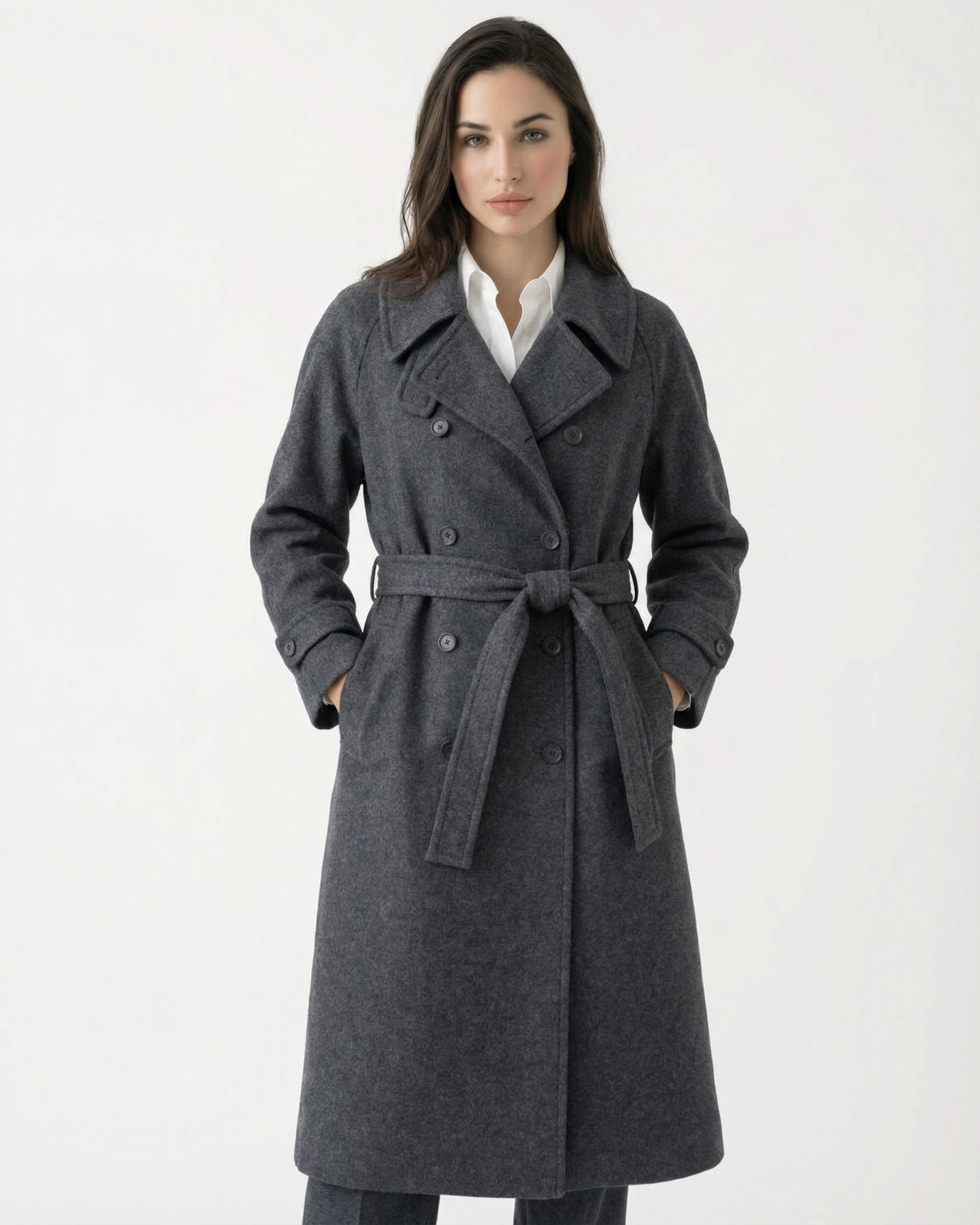
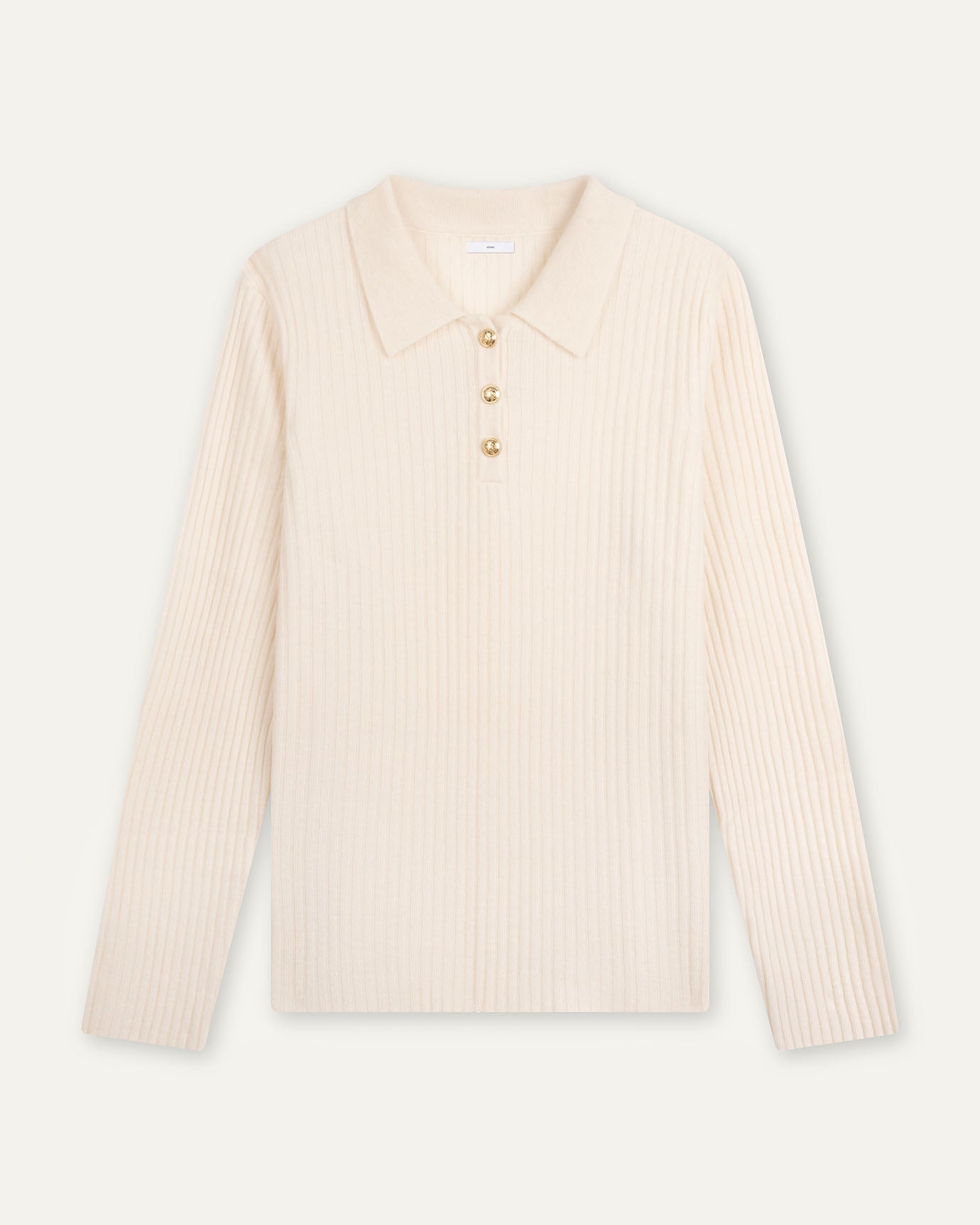
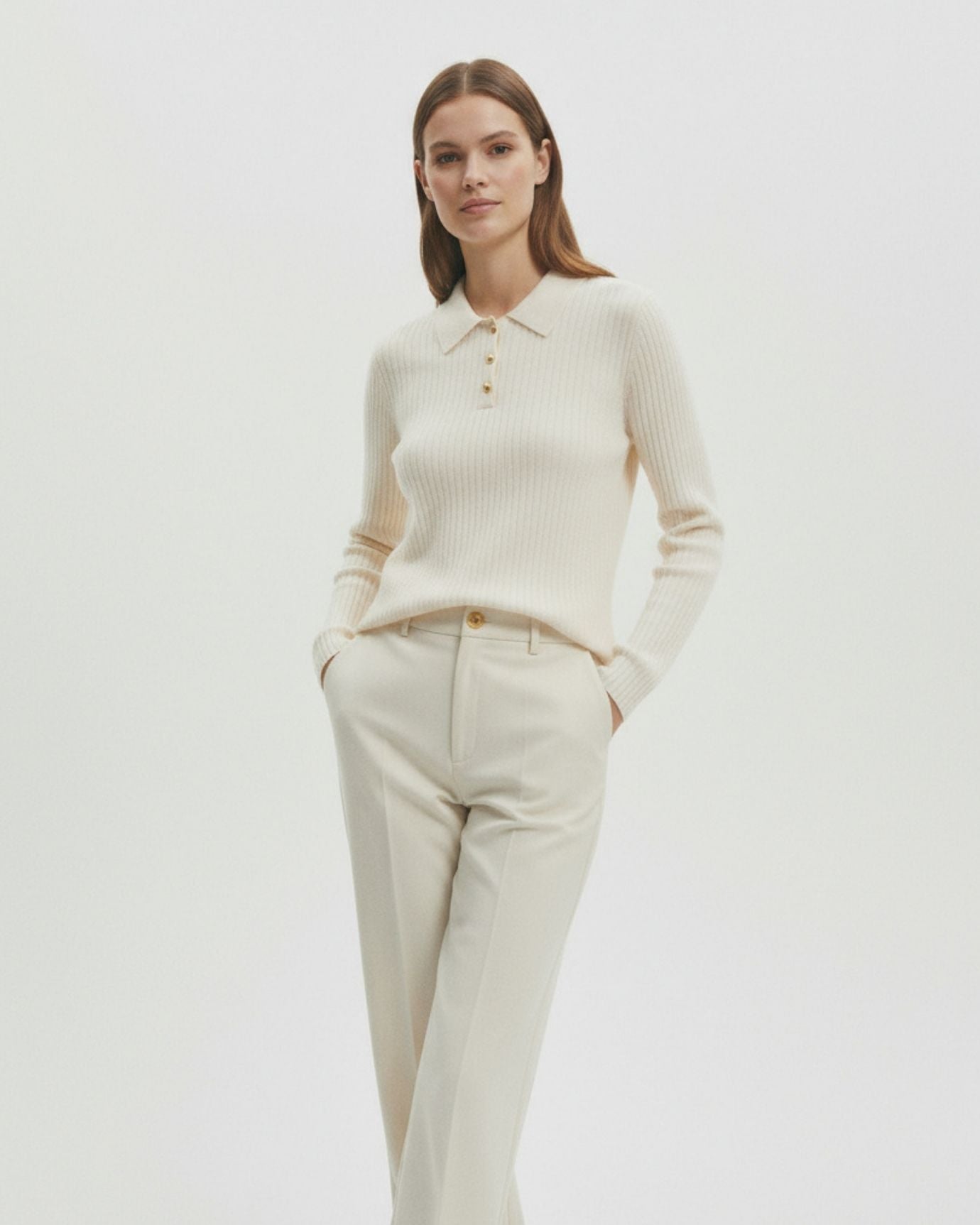
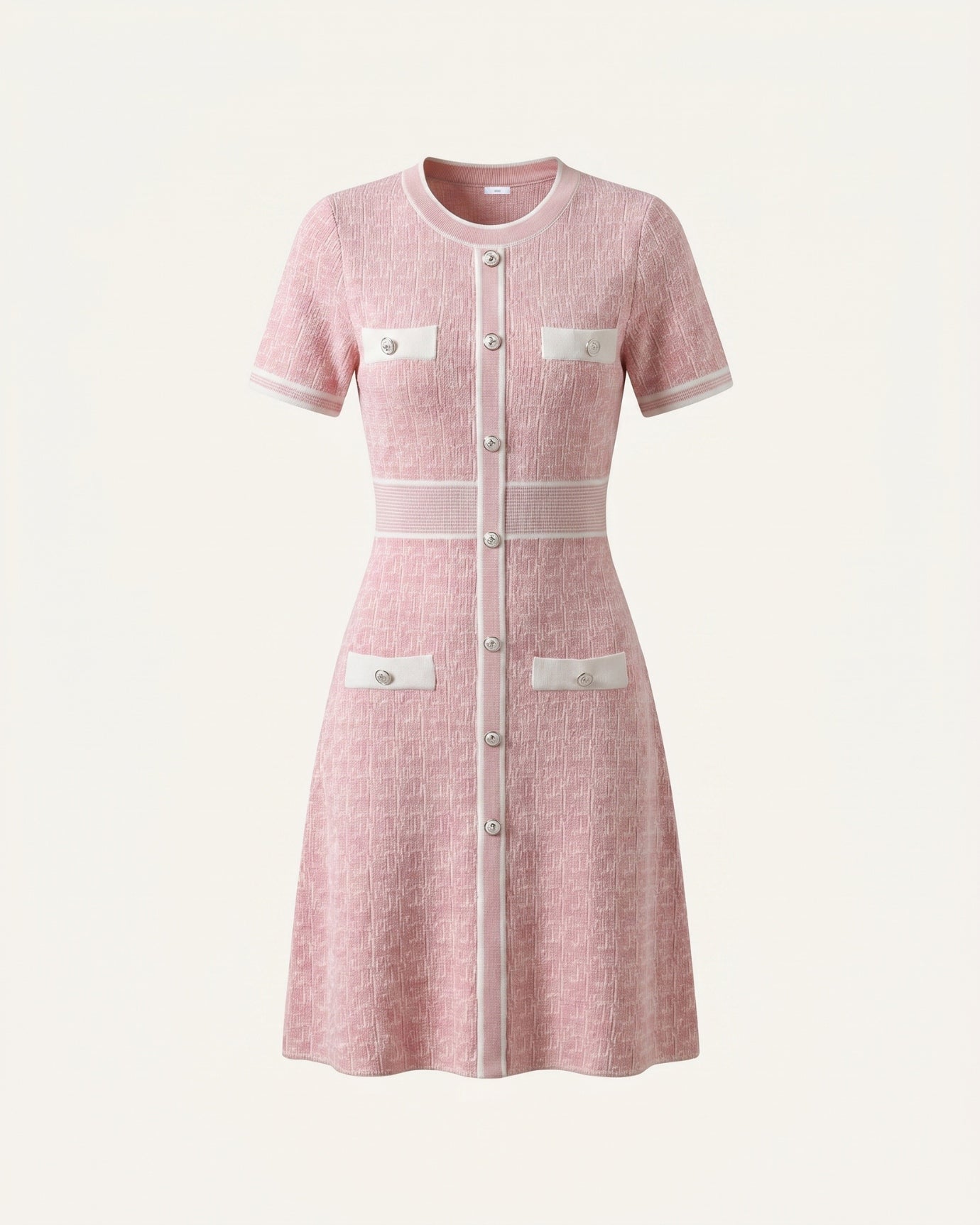
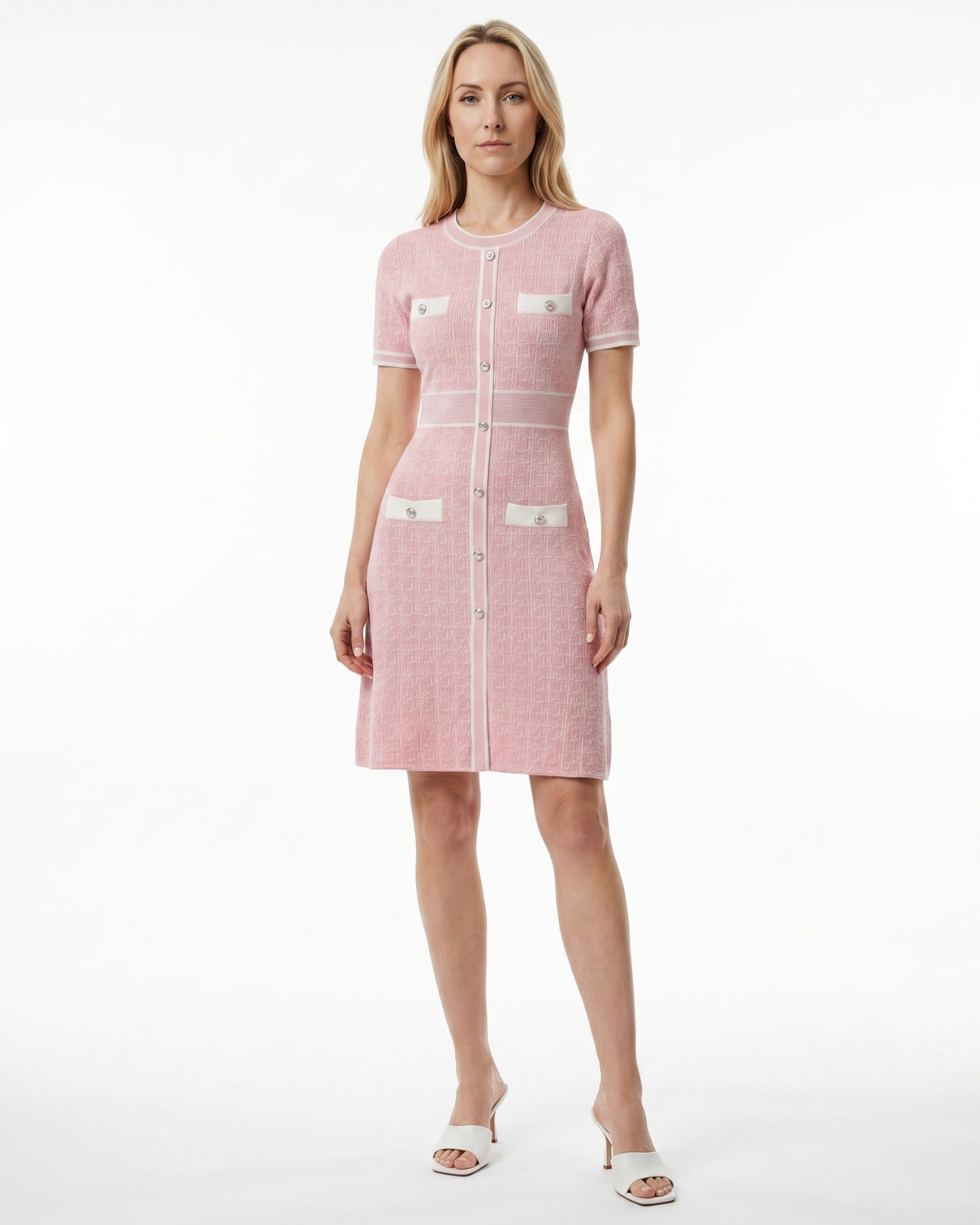
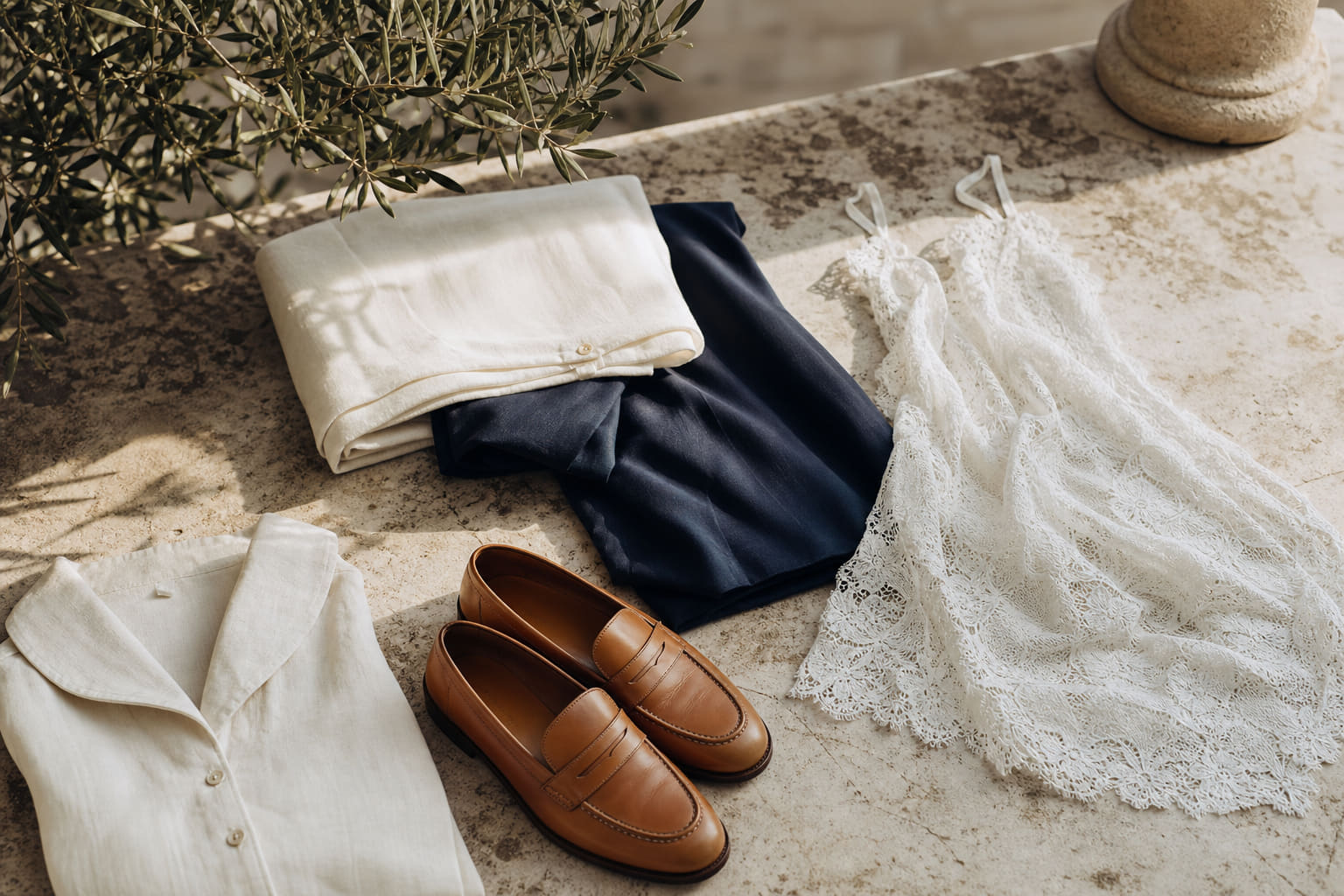
For women: Two trousers or one trouser and one skirt, plus one dress that works across occasions. The high-waisted corduroy trousers in a warm neutral pair with almost everything. For the dress, something belted and structured, like the In Paris Style Long-Sleeved Dress with Belt, provides shape without requiring additional layering to look finished. Your five tops should include two linen or silk blouses, one fine knit, and two pieces that can be worn tucked or untucked.
The one-shoe rule: It is not absolute, but it is close. One pair of leather loafers handles the majority of European occasions. A second pair should be a flat or a low-profile sandal for beach days or long walking mornings. Two pairs of shoes maximum in a carry-on is a firm ceiling if you want room for anything else.
Expert insightPack your shoes on the outer edges of the bag, soles facing out, stuffed with rolled socks. This protects the shoe structure and uses dead space efficiently.

Shoes That Earn Their Space in the Bag
Shoes are the heaviest and most spatially expensive items in any bag. Every pair must justify its presence with genuine versatility. For a seven-day European trip, the calculus is straightforward: you need one pair that walks well on uneven stone surfaces, looks appropriate at a restaurant, and does not require special care to maintain.
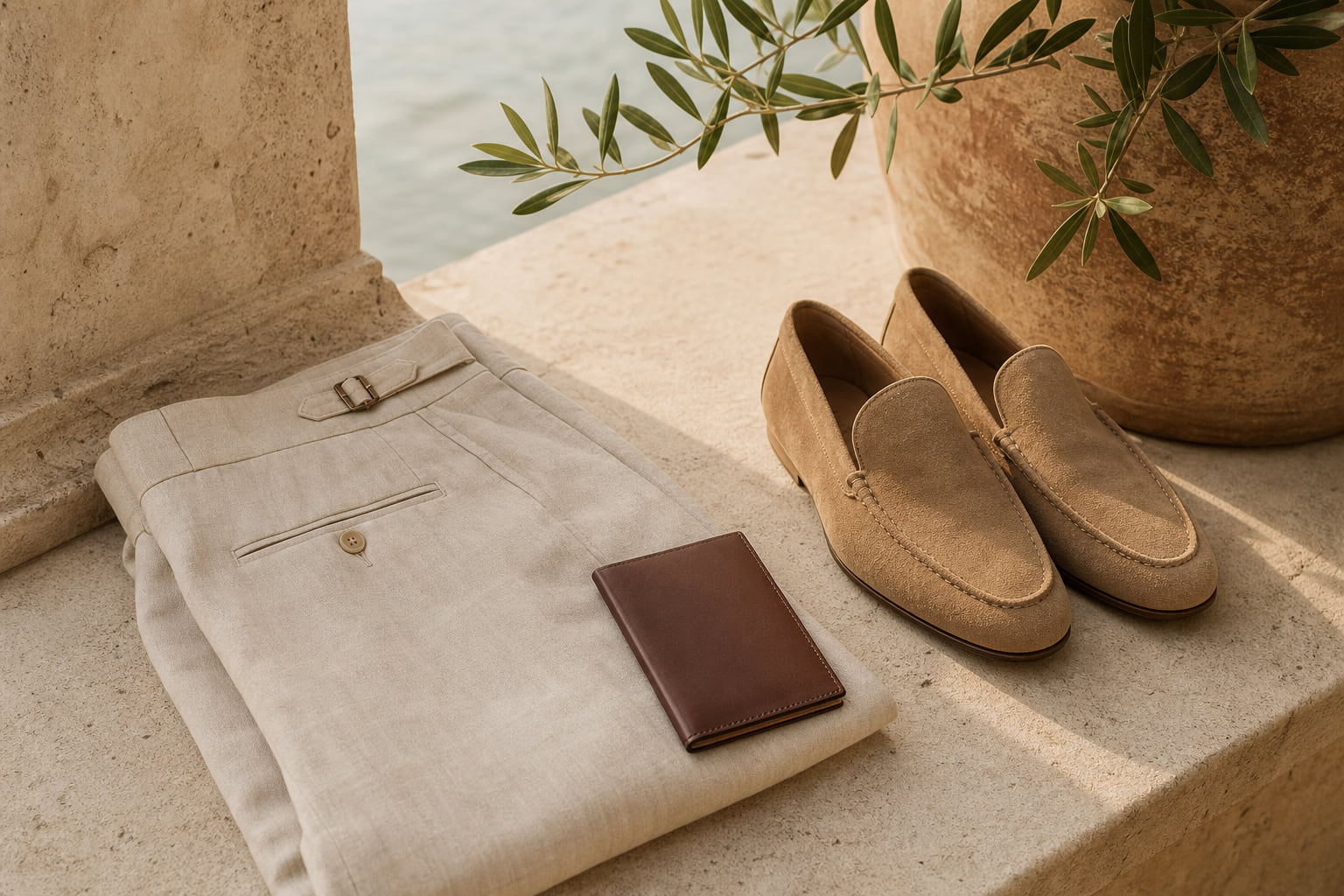
Leather loafers are the correct answer for both men and women. Mediterranean Suede Slip-On Loafers in a warm tan or tobacco work across casual and dressy contexts for men. Suede is more forgiving on the foot than stiff leather for long walking days, but requires a light brush and a suede protector spray applied before the trip. For women, the Diana Old Money Style Loafers in a classic silhouette pair with trousers, midi skirts, and dresses without any visible effort.
If your itinerary includes a coast or a pool, a second pair of flat sandals or high-quality slip-ons is warranted. These should be thin-soled and packable, not bulky resort sandals. Wrap both pairs in separate cloth bags or shower caps to prevent sole rubber from transferring to your clothes.
According to Permanent Style, the penny loafer and its close relatives have been the defining footwear of understated European dressing since the mid-twentieth century, precisely because they require no matching or contextual justification. That historical durability is reason enough to build your travel shoe selection around them.
Expert insightWear your bulkiest shoes on travel days, not in the bag. Board the plane in your loafers and your feet arrive rested while your bag stays lighter.

Dressing for the Real Occasions of a European Trip
A seven-day European itinerary typically contains the same five or six recurring occasions: a morning market or neighbourhood walk, a museum or gallery, a long lunch, an al fresco dinner, possibly a boat day or beach afternoon, and one evening that is slightly more formal than the rest. Your wardrobe needs to address all of these without a dedicated outfit for each.
Morning and daytime: Linen trousers and a linen shirt for men. For women, the contrast collar pleated dress in navy and white is the kind of piece that reads as dressed without requiring any accessorising. It photographs well in natural light, which matters on travel days more than people admit.
Al fresco dinners: This is where a slightly dressier top or a second trouser earns its place. A striped V-neck linen shirt tucked into tailored trousers reads as intentionally dressed for an outdoor dinner in the South of France or along the Amalfi Coast. For women, our guide on dressing for high-end al fresco dinners in summer covers this occasion in specific detail.
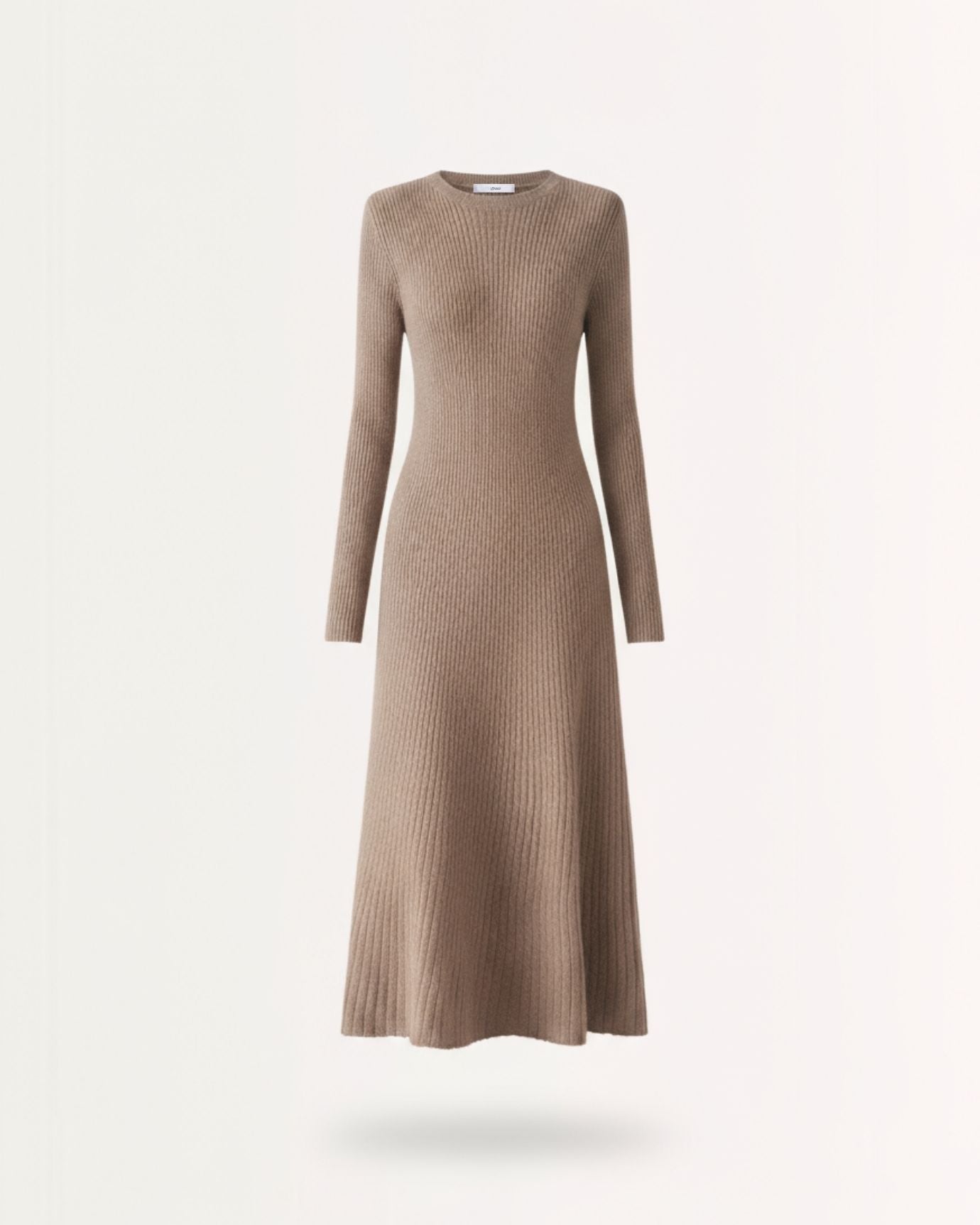
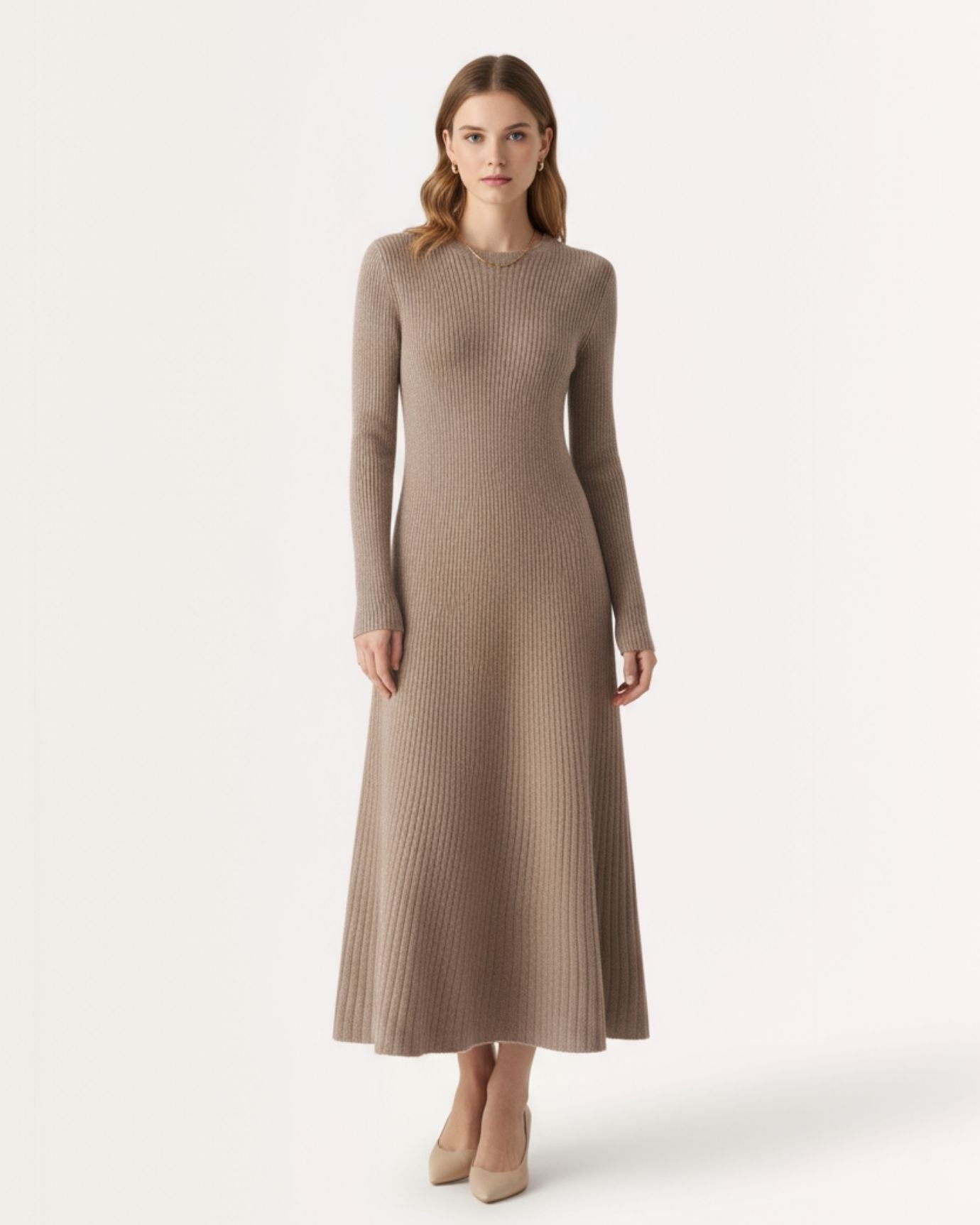
One formal evening: If your trip includes a fine dining reservation or a cultural event, one piece needs to carry that weight. For men, the pleated tailored trousers in a dark neutral paired with a fine linen or silk shirt is sufficient for most European restaurant dress codes. For women, the Woman Wool Dress in a dark tone handles an evening occasion without requiring heels or additional accessories to look complete.
Accessories as multipliers: A pair of amber geometric sunglasses changes the register of a simple linen outfit from casual to composed. A leather belt in a warm cognac ties trousers and shirts together across multiple combinations. These small items weigh almost nothing and do significant work.

How to Actually Pack the Bag: Technique Matters
A 40 to 45-litre carry-on is the practical ceiling for most European airline overhead compartments. Within that volume, organisation determines whether you arrive with wearable clothes or a compressed bundle.
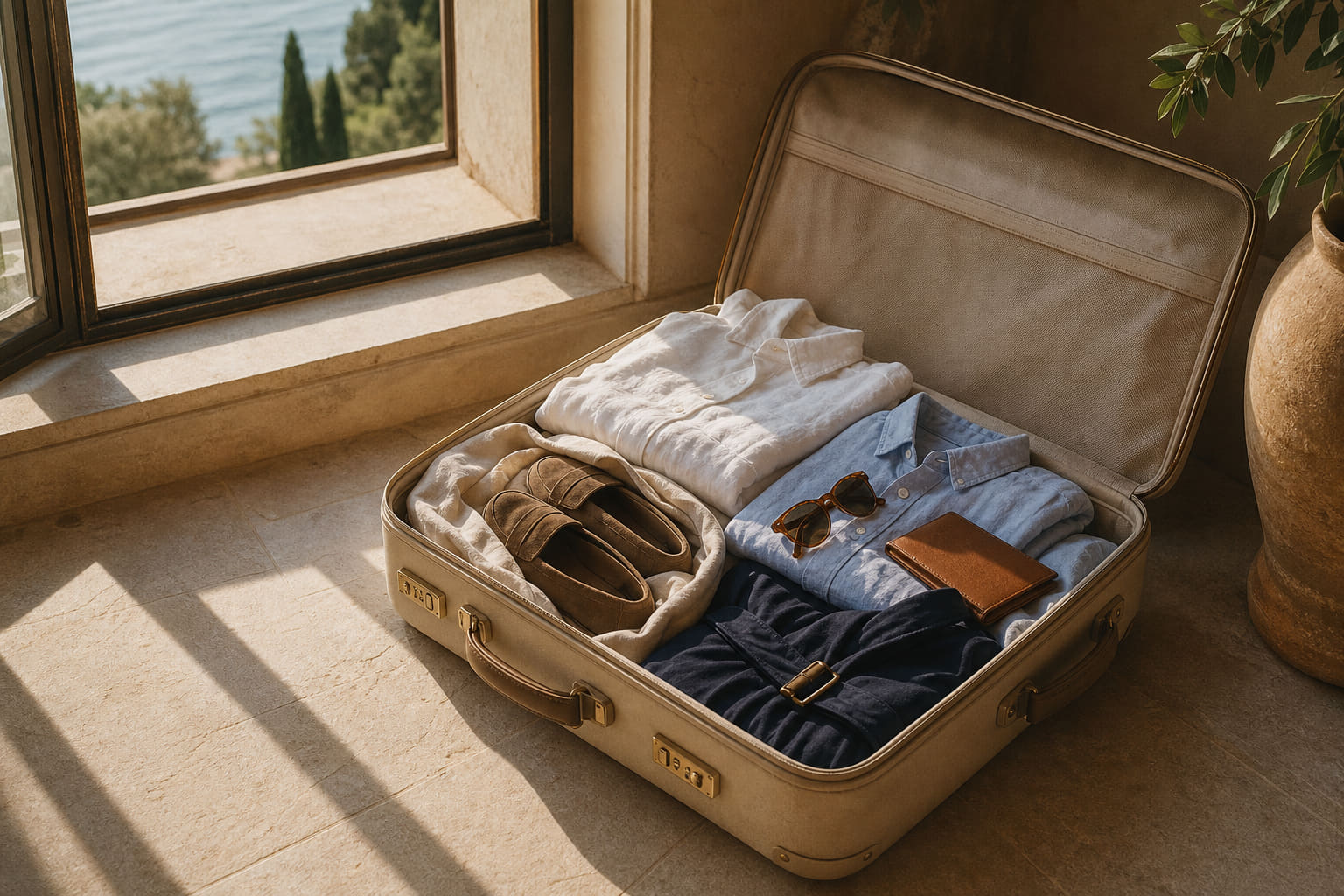
The layering method: Place shoes in cloth bags along the outer frame of the bag. Fill shoes with rolled socks or small accessories. Lay trousers flat across the full width of the bag, folded along their existing crease, with the excess fabric hanging over the edge. Add your folded shirts and dresses on top, then fold the trouser legs back over everything. This bundles the garments together and reduces individual crease points.
Rolling versus folding: Roll soft items, specifically knitwear, t-shirts, and jersey fabrics. Fold structured items, specifically trousers, linen shirts, and dresses with internal lining. The distinction matters because rolling structured garments with a defined weave can set creases at unintended angles.
Liquids and toiletries: The 100ml rule for European flights is strict and enforced. Decant everything into a single transparent litre bag. Solid formats for shampoo, conditioner, and sunscreen save significant space and remove the anxiety of leakage onto your clothes.
The top layer: Keep one complete outfit, including shoes if possible, accessible at the top of the bag. Overnight trains, unexpected delays, and early arrivals all benefit from not having to unpack the entire bag to find a clean shirt.
For the specific challenge of travelling with a jacket, the technique differs from everything above. The full method is covered in our article on how to avoid wrinkles in suit jackets when travelling, and it is worth reading before you leave.

The Complete Carry-On List by Gender
Below is a concrete, specific packing list built on the principles above. These are not aspirational suggestions; they are a tested formula for seven days across mixed European occasions.
Men, 7 days: - 2 linen trousers (one light neutral, one darker tone) - 1 pair Monaco Linen Shorts for warm days or coastal stops - 3 linen shirts in tonal colours: white, light blue, and a deeper green or navy - 1 polo in acetate-silk or fine cotton - 1 lightweight overshirt or unstructured jacket for evenings - 1 pair leather loafers - 1 pair thin sandals or slip-ons - 5 to 6 pairs underwear, 5 to 6 pairs socks - 1 belt, 1 pair sunglasses, 1 watch
Women, 7 days: - 1 pair tailored trousers in a warm neutral - 1 midi skirt (browse the old money skirts collection for options) - 2 blouses or fine shirts, one tucked-in style and one relaxed - 1 fine knit or lightweight layer - 1 day dress - 1 evening dress or smarter dress for one formal occasion - 1 pair leather loafers, referencing the full loafers old money style range for the right silhouette - 1 pair flat sandals - 5 to 6 pairs underwear - 1 pair sunglasses, 1 small crossbody bag or structured clutch
The key in both lists is that nothing is redundant and nothing is purely decorative. Every piece combines with at least three others. As Vogue has noted, the most enduring travel wardrobes are built on restraint and compatibility, not on bringing options for every possible scenario.

| Fabric | Crease Resistance | Breathability | Dries Quickly | Packs Flat | Best For |
|---|---|---|---|---|---|
| High-count linen | Medium (characterful crease) | Excellent | Yes | Yes | Shirts, trousers, dresses |
| Worsted wool | High | Good | No | Yes (if flat-folded) | Trousers, evening pieces |
| Acetate-silk blend | High | Good | Yes | Yes | Polos, evening shirts |
| Cotton poplin | Low (sharp creases) | Good | Yes | Difficult | Avoid for carry-on travel |
| Cotton jersey | High | Medium | Yes | Excellent (roll) | Casual tops, underwear |
| Polyester blend | Very high | Poor | Very fast | Yes | Not recommended for refined dressing |
Frequently asked questions
Can I really wear linen to a European restaurant dinner?
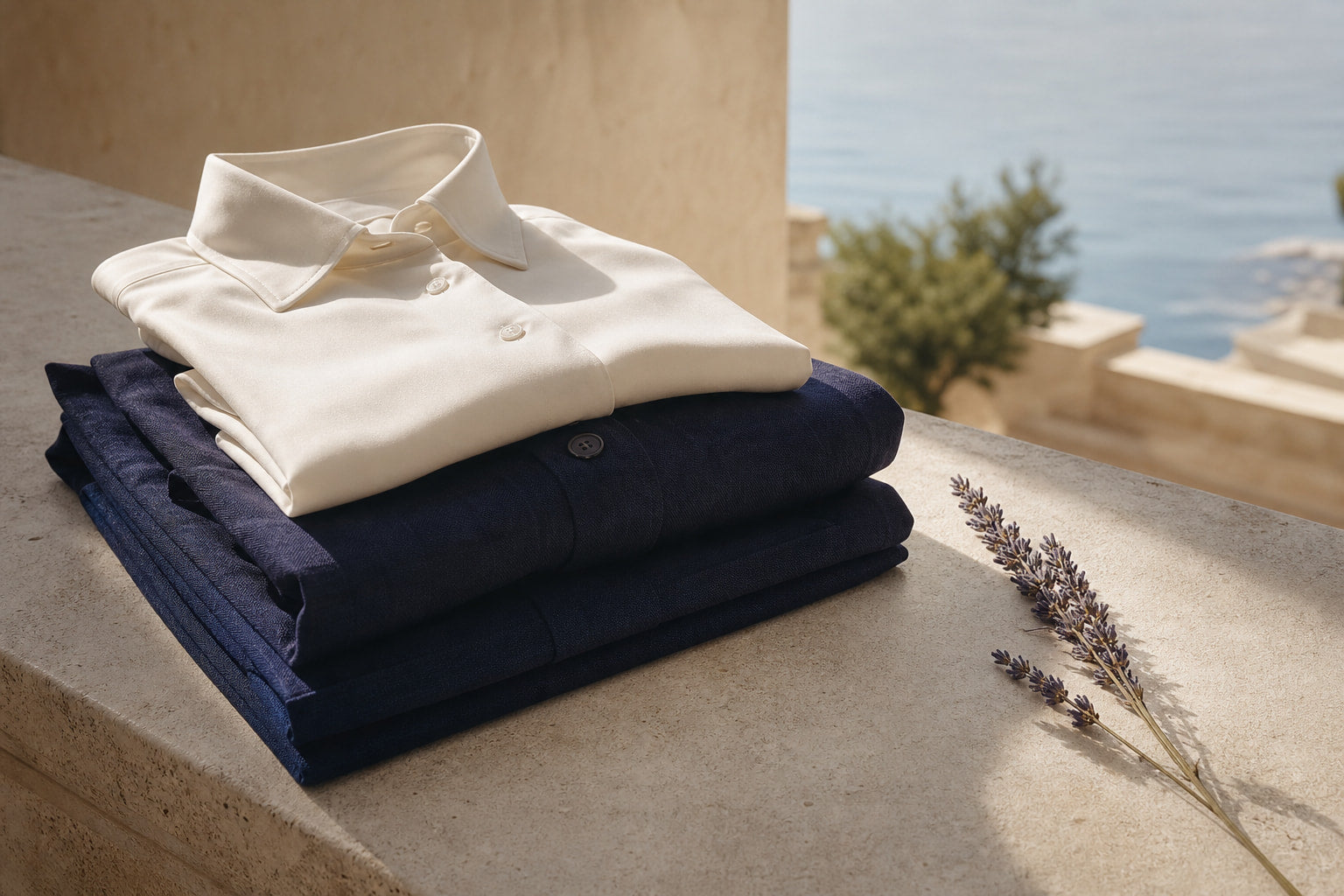
Yes, provided the linen is high-count and well-cut. A coarse, loosely woven linen reads as casual. A fine, tightly woven linen shirt, particularly in a dark or mid-tone colour, reads as intentionally dressed. The High Count Fine Navy Blue Linen Shirt is a reliable example: the fabric weight and construction are close enough to a dress shirt that it works at almost any European restaurant that does not enforce black tie.
What is the maximum carry-on size for European flights?
Most European carriers, including Ryanair, easyJet, and Lufthansa, enforce a maximum of 55 x 40 x 20 centimetres for cabin bags. Some budget airlines restrict this further. A 40-litre structured bag in those dimensions is the practical sweet spot. Always check your specific carrier before packing, as enforcement has become stricter on short-haul routes.
How do I keep leather loafers in good condition during a trip?
Pack them in separate cloth bags or soft shoe bags to prevent scuffs and to stop the sole rubber from marking your clothes. Wipe them with a dry cloth each evening to remove salt, dust, and moisture. Suede loafers specifically should be brushed with a suede brush every two to three days. Do not pack them damp; let them dry fully before placing them in the bag.
Is one carry-on genuinely enough for seven days in Europe, including formal occasions?
Yes, with the right selection. The key is choosing pieces where the same trouser or dress works across at least three different occasions by changing the top or accessories. A pair of tailored linen or worsted wool trousers, a fine linen shirt, and leather loafers cover morning sightseeing, a long lunch, and a restaurant dinner without any change of trousers. The formula in this guide generates fourteen to eighteen distinct combinations from eleven to thirteen garments.
Packing a carry-on for seven days in Europe is an exercise in knowing what you actually need, as opposed to what you might need. The answer is almost always fewer pieces in better fabrics, chosen for genuine versatility rather than occasion-specific use. Start with the fabric, build the formula, and let the pieces earn their place. If you are building your travel wardrobe from the ground up, the best sellers old money collection is a practical starting point for finding pieces that meet the standard this kind of trip demands.