


The Magic of A-Line Skirts: Why They Never Go Out of Style
Reading time 14 min • 2838 words
The A-line skirt is named for what it does: it traces the letter A from a fitted waist to a hem that flares outward in a clean, unbroken line. That geometry is not accidental. It distributes fabric away from the hip and thigh, creates visual length through the leg, and holds its shape without the need for complex construction. It is, in the most literal sense, good design.
Since Christian Dior first articulated the silhouette formally in his 1955 collection, the A-line has outlasted nearly every trend that tried to replace it. The A-line skirt's origins in mid-century couture are well documented, but its longevity is not about nostalgia. It is about geometry that happens to be correct.
At Lovau, we return to A-line cuts season after season because they reward restraint. A well-cut A-line skirt in the right fabric asks very little of the wearer and gives back proportion, confidence, and genuine versatility. This guide explains exactly why, and how to build around it.
Key takeaways
- The A-line silhouette flatters by skimming the hips and flaring gently, making it universally wearable regardless of proportions.
- Fabric choice determines occasion: linen and cotton for daytime, jacquard and satin for evening.
- Midi and mini lengths each carry distinct dressing codes, so match length to context deliberately.
- A-line skirts in neutral or classic print work as the anchor of a capsule wardrobe, not as a trend piece.
- Proper care, especially for linen and knitted versions, preserves the clean flare and prevents distortion of the hem line.
In this guide
- What Makes the A-Line Cut Structurally Different
- The Fabrics That Make or Break an A-Line Skirt
- Length and Occasion: Matching the Hem to the Context
- How to Build Outfits Around an A-Line Skirt
- Prints, Colors, and Why Neutral A-Lines Outlast Trend Pieces
- Caring for Your A-Line Skirts to Preserve the Silhouette
- Frequently asked questions
What Makes the A-Line Cut Structurally Different
Most skirt silhouettes make a compromise. Pencil skirts restrict movement. Full circle skirts demand volume. Straight-cut skirts sit flat and can feel shapeless unless the fabric has significant body. The A-line avoids all three problems by starting fitted at the natural waist or hip, then releasing into a controlled outward flare.
The angle of that flare is everything. A true A-line opens at roughly 15 to 30 degrees from the vertical, which is enough to clear the hips and thighs comfortably without creating the theatrical volume of a ball skirt. This means the skirt moves with the body rather than against it, and it photographs cleanly from every angle.
The waistband placement matters too. A-line skirts cut at the natural waist (the narrowest point of the torso, typically two to three inches above the navel) create the most flattering proportion because they establish the widest visual point of the body as the starting point, making the flare read as deliberate rather than compensatory. High-waisted versions in structured fabric, like the apricot linen blend short skirt, demonstrate this principle clearly: the clean waistband anchors the silhouette before the fabric begins its outward movement.
The seaming also plays a role. A-line skirts are typically cut from panels, often four or six, which allows the fabric to flare evenly rather than pulling to one side. In knitted versions, the shaping is achieved through increases rather than seams, which gives a softer, more fluid version of the same line.
Expert insightWhen trying on an A-line, check the side seams: they should hang perfectly vertical from hip to hem. If they pull forward or backward, the waist sizing is off, and no amount of styling will correct the drape.

The Fabrics That Make or Break an A-Line Skirt
The silhouette relies on fabric that holds a shape without being stiff. Too fluid and the flare collapses into a drape; too rigid and the skirt looks constructed rather than worn. The best A-line fabrics sit in the middle: they have enough body to maintain the line through movement but enough drape to soften at the hem.
Linen is the summer standard for a reason. It has natural stiffness when woven tightly, which supports the flare at the hem, and it softens with wear without losing structure entirely. A linen A-line in an apricot or stone tone is one of the most reliable pieces in a warm-weather wardrobe.
Jacquard weaves, which build pattern directly into the fabric structure rather than printing it on top, add texture and weight simultaneously. This makes them excellent for A-lines that need to read as evening or occasion pieces. The jacquard lace white red set uses this to precise effect: the woven texture gives the skirt its body, and the pattern removes any need for additional embellishment.
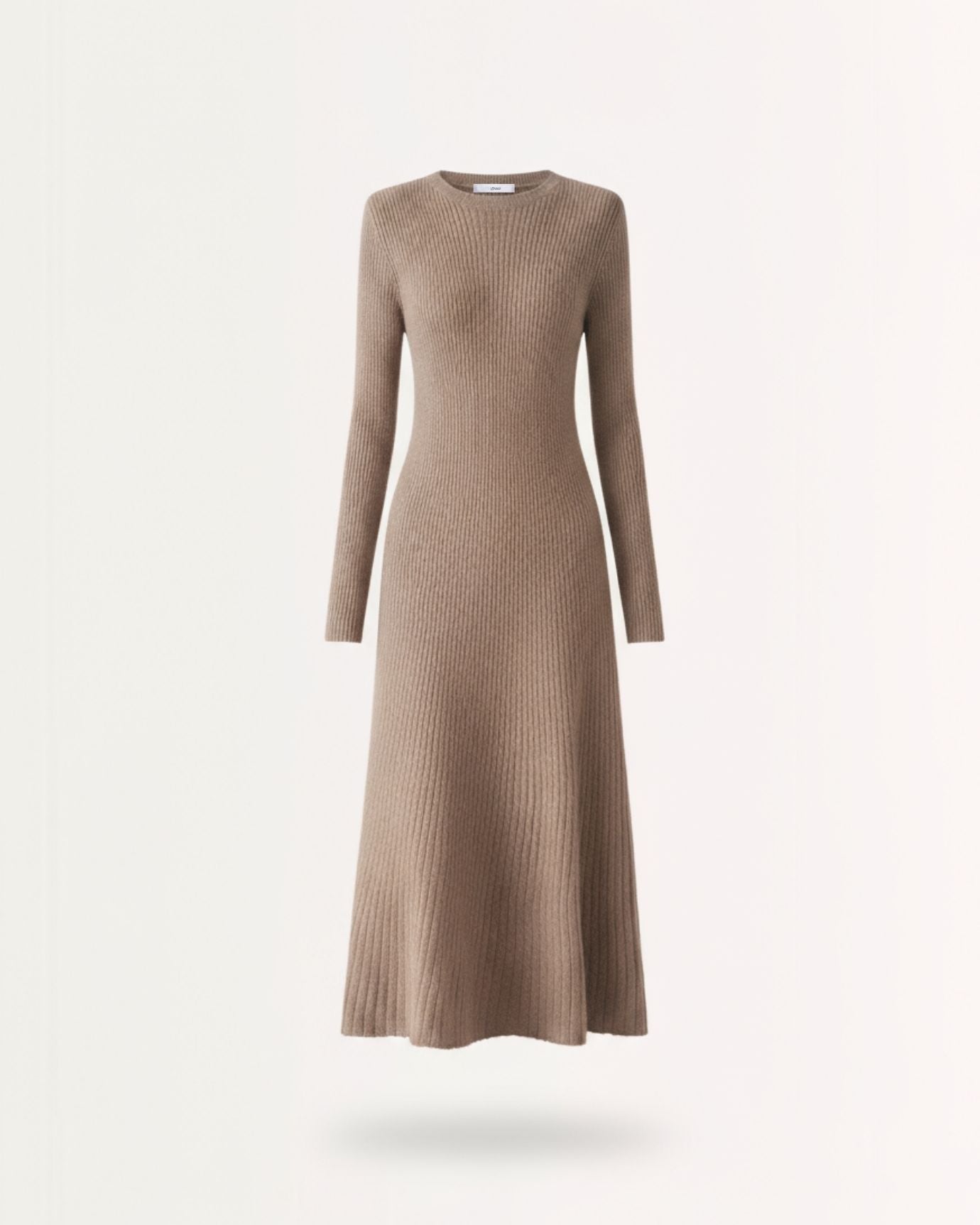
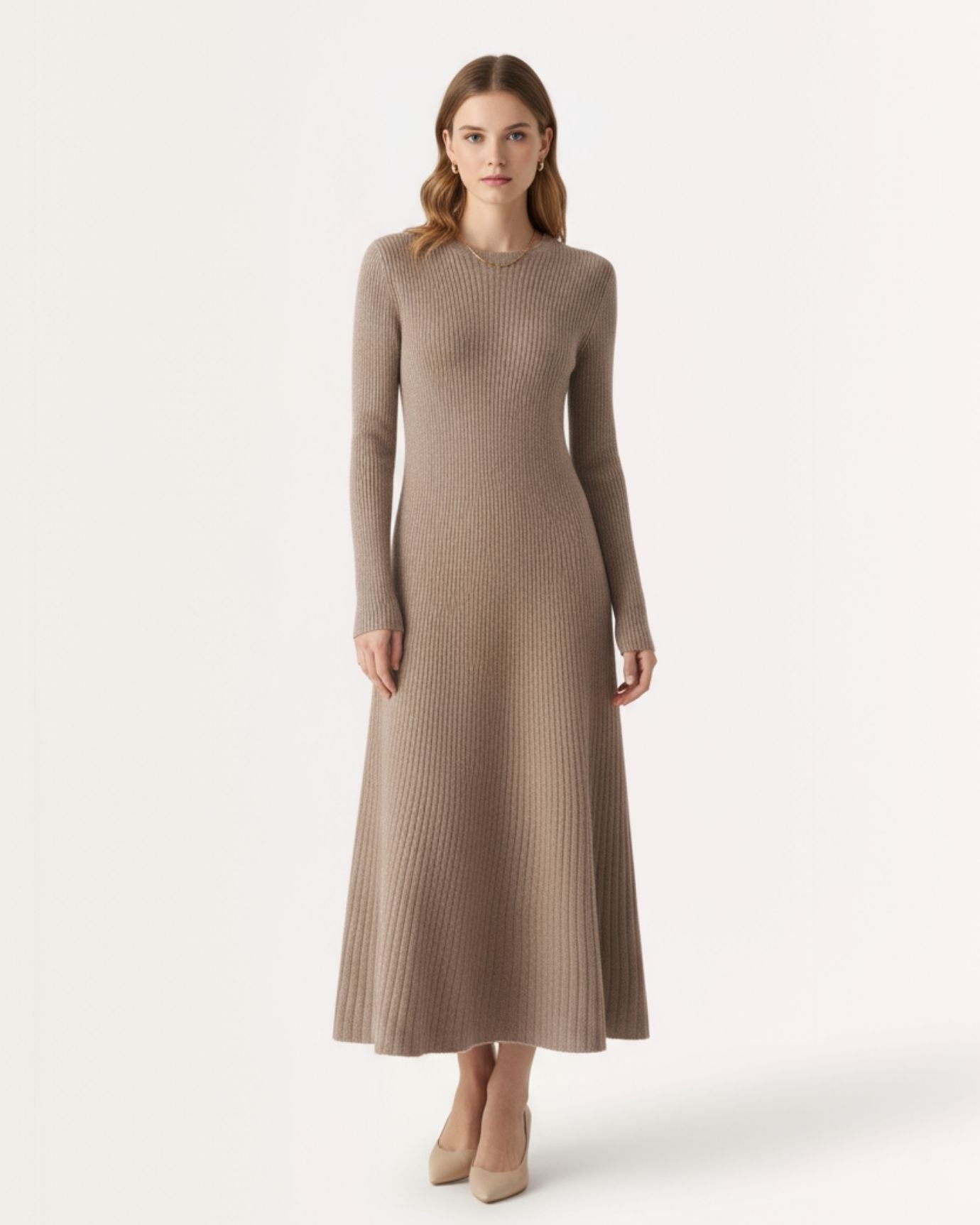
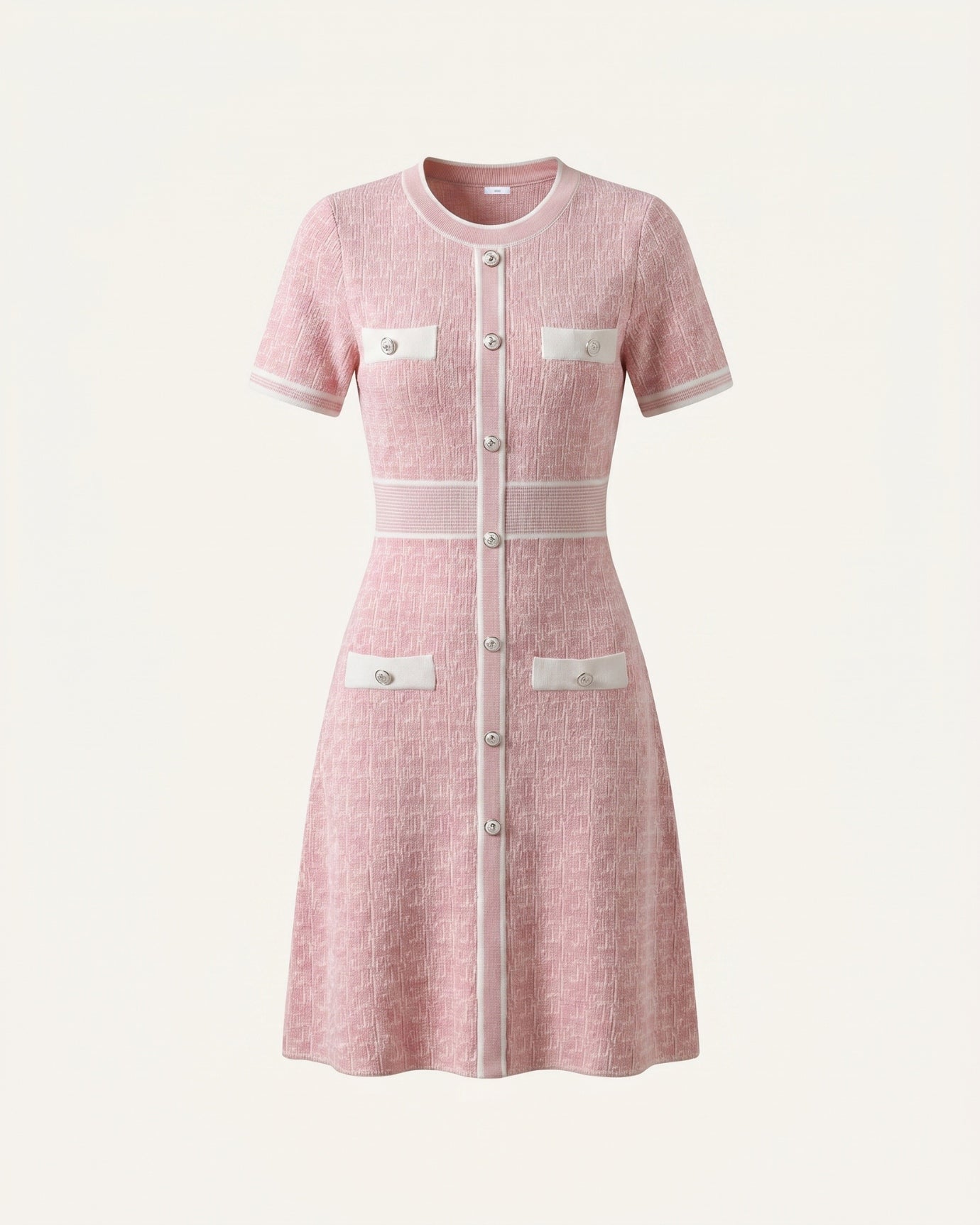
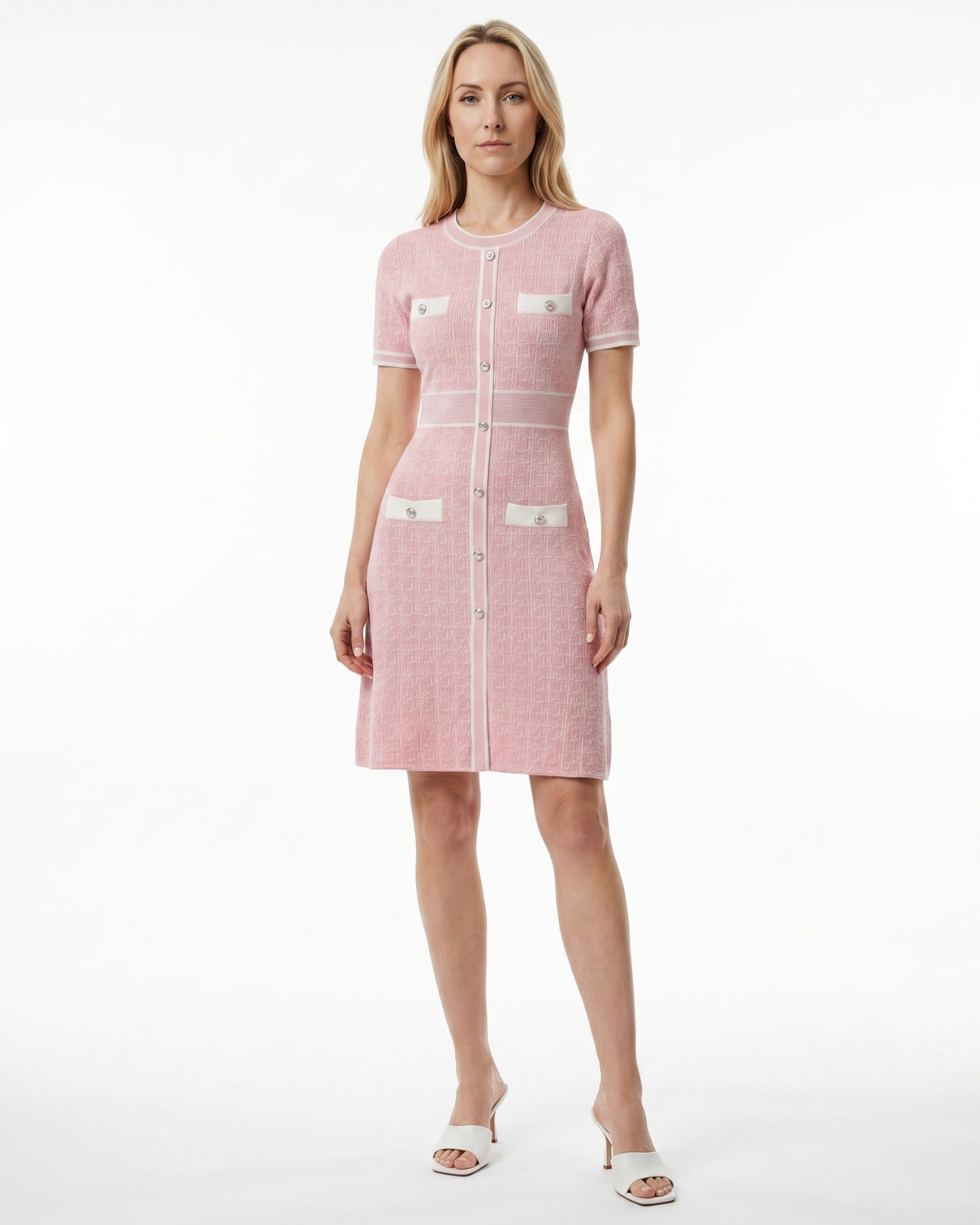
Knitted fabrics produce a softer A-line with more give, appropriate for transitional dressing. The Lovau style A-line knitted dress shows how a ribbed or structured knit can hold the silhouette without sacrificing comfort, particularly useful for cooler months when linen is impractical.
Cotton poplin and cotton blends occupy the everyday tier. They wash well, press easily, and hold a clean line at the hem. For sets pairing a skirt with a structured top, cotton is often the most practical choice because it photographs crisply and does not stretch out of shape across a long day.
For practical care advice on structured skirt fabrics, our guide on refining a simple skirt outfit with premium textures covers how different weaves respond to movement and layering.
Expert insightLinen A-line skirts benefit from light starching at the hem only, not the full length. This preserves the flare without making the waist and hip area feel board-stiff.

Length and Occasion: Matching the Hem to the Context
The A-line works at every length, but each length carries a different social register. Understanding this prevents the common mistake of wearing a beautifully cut skirt in the wrong context.
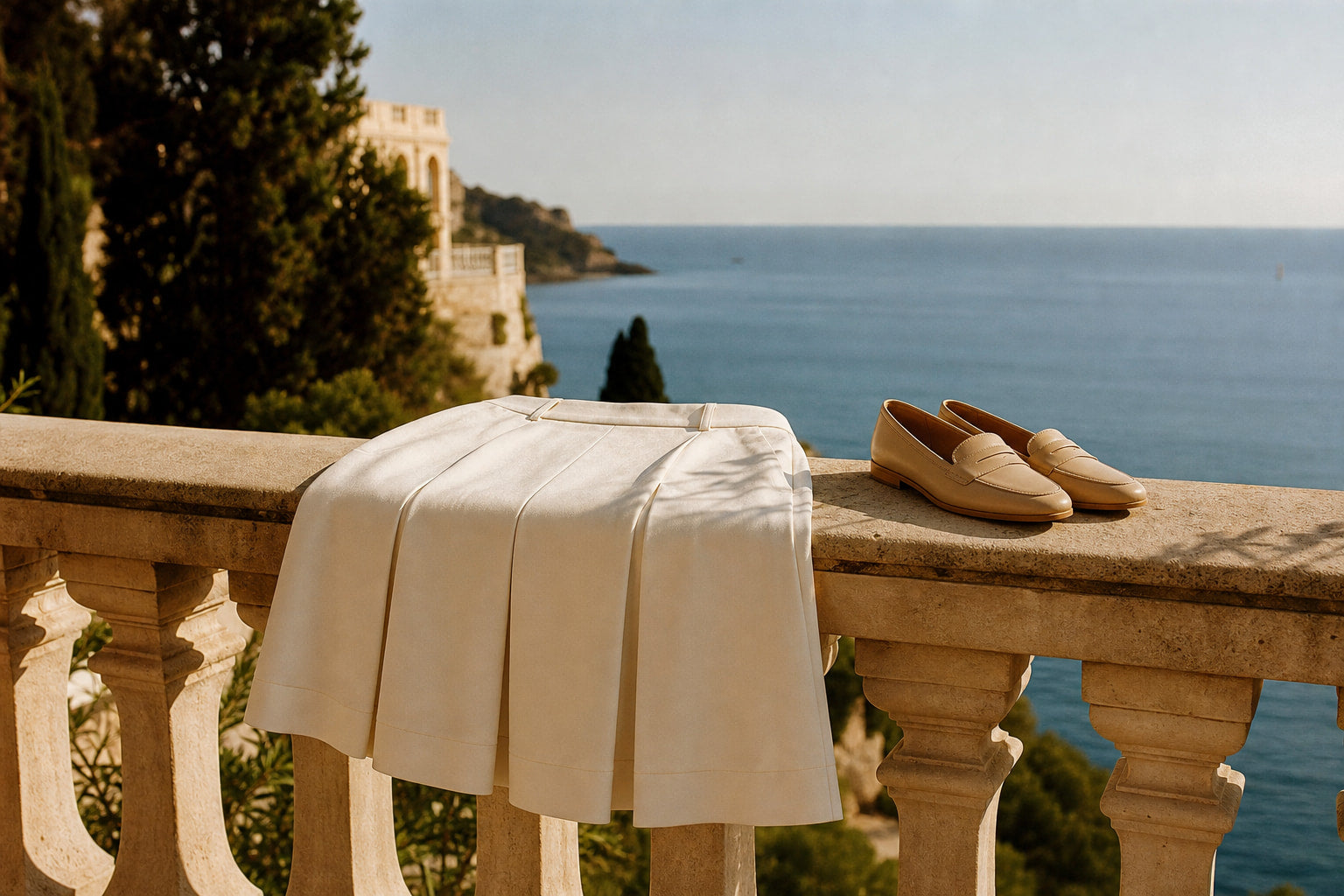
Mini A-line (above the knee, typically 14 to 17 inches): The mini A-line is the most casual and the most youthful of the lengths. It works best in structured fabrics that keep the flare visible rather than letting it fall flat. The Sicily mini white dress A-line skirt is a good example of how a mini A-line in a clean white reads as polished rather than casual when the construction is precise. Pair with low-heeled loafers or flat sandals for daytime; a block heel for early evening.
Knee-length A-line (at or just below the knee, 20 to 23 inches): This is the most versatile length and the one most associated with classic European dressing. It sits in a neutral zone between casual and formal, which means it can move between a lunch in the city and an early dinner without a change of clothes. The Cannes light blue skirt at this length demonstrates the point: the hem sits at a position that elongates the lower leg without requiring heels.
Midi A-line (mid-calf, 28 to 34 inches): The midi requires more confidence to wear well because it interrupts the leg at its widest visual point. The solution is always heel height: even a modest two-inch heel shifts the visual cut-off and restores the proportion. The Candie knit dress with embroidered lapel and ruffled skirt uses the midi length with a ruffled hem that adds movement, preventing the length from reading as heavy.
For a detailed breakdown of how length interacts with body proportion and occasion, our article on best skirt lengths for an elegant look in 2026 goes into precise measurements and styling guidance.
Our full skirts collection covers all three lengths if you want to compare them side by side.
Expert insightThe midi A-line works best when the top is tucked fully in. A half-tuck or untucked blouse at midi length creates a visual block that shortens the torso and makes the length feel heavy rather than graceful.

How to Build Outfits Around an A-Line Skirt
The A-line skirt is a strong silhouette, which means the pieces around it should not compete. The most successful outfits built on an A-line share one characteristic: the top half is clean and fitted.
The set approach is the simplest and most reliable. When the skirt and top are designed together, the proportion is already solved. The blue lace short top and skirt set pairs a fitted short top with an A-line skirt in matching fabric, creating a coordinated look that requires no further decision-making beyond footwear. Sets also photograph better than mixed pieces because the eye reads them as intentional.
The tucked blouse or fitted knit is the second approach. A fine-knit fitted top or a cotton poplin shirt tucked fully into the waistband keeps the emphasis on the skirt's silhouette. The tuck defines the waist and lets the flare do its work unobstructed. This is the approach for a more individual, assembled look.
Footwear shifts the register significantly. Loafers in leather or suede read as smart casual and work for most daytime contexts. From our loafers collection, a classic penny loafer in tan or burgundy pairs with nearly any A-line in a neutral or print. Block-heeled mules move the same outfit toward evening. Flat sandals with ankle straps work for summer, particularly with linen or cotton versions.
Layering over the A-line requires attention to length. A jacket or blazer that ends at the hip works well because it does not interrupt the flare. A longer cardigan that reaches mid-thigh, like the cashmere set cardigan with knitted skirt, creates a different proportion: the cardigan and skirt read as a single vertical line, which is elegant but requires that the cardigan and skirt share a tonal relationship.
For those building a longer-term wardrobe strategy, our article on how to build a wardrobe that never goes out of style addresses how anchor pieces like the A-line skirt function across seasons.

Prints, Colors, and Why Neutral A-Lines Outlast Trend Pieces
The A-line skirt's staying power is partly structural and partly chromatic. The silhouette is neutral in the sense that it does not belong to a specific decade or subculture. But the colors and prints applied to it determine whether a specific skirt lasts five years or five seasons.
Solid neutrals are the longest-lived. Ivory, navy, stone, black, and dusty rose do not date because they do not reference a specific cultural moment. A black A-line skirt in a clean fabric is as correct now as it was in 1965. The short-sleeved A-line skirt black dress polo uses black with a polo collar, a combination that reads as quietly authoritative across decades.
Classic prints occupy the next tier: polka dots, fine stripes, and small florals. These prints have been in continuous production since the early twentieth century, which means they carry no expiry date. The black polkadot dress set with skirt and top demonstrates how a polka dot in a high-contrast black and white reads as sophisticated rather than retro when the scale of the dot is small and the construction is clean.
Trend-driven colors and oversized prints are the category to approach with caution. A bright lime green A-line or a skirt in an oversized abstract print may be beautiful, but it is anchored to the season in which it was designed. If you are building a wardrobe for the long term, as our guide on best neutral colors that never go out of style argues, the investment belongs in the neutral and classic print tier.
The woman skirt collection shows the range of tones and prints currently available, which is useful for comparing how different colors read against each other before committing.

Caring for Your A-Line Skirts to Preserve the Silhouette
The A-line's signature flare depends on the fabric maintaining its original structure. Poor care is the most common reason a good skirt loses its shape, and the fixes are specific to each fabric type.
Linen A-lines should be washed in cool water and hung to dry on a shaped hanger, not a flat surface. Linen relaxes when wet and will dry in whatever shape it is left in. If the hem loses its flare after washing, steam it back into position while the fabric is still slightly damp. Do not tumble dry linen A-line skirts; the heat causes uneven shrinkage that distorts the flare permanently.
Knitted A-line skirts require flat drying rather than hanging, because the weight of wet knit will stretch the fabric vertically and narrow the flare. Lay the skirt flat on a clean towel, reshape the hem to its original circumference, and allow it to dry completely before storing.
Jacquard and structured woven skirts generally benefit from dry cleaning for the first few washes to preserve the weave structure. If hand washing at home, use a gentle detergent and do not wring the fabric. Roll it in a towel to remove excess water, then hang on a padded hanger.
Storage matters as much as washing. A-line skirts should be hung rather than folded to prevent permanent crease lines forming across the flare. If storage space requires folding, fold along the panel seams rather than across them.
For skirts with satin or silk components, static cling can distort the hang of the fabric. Our article on how to stop static cling in silk and satin pleated skirts covers this specific problem in detail.
The French style white set with lace top and skirt includes a lace-trimmed A-line skirt that benefits particularly from the cool-wash and shaped-hang approach, since lace trims can distort if exposed to high heat or aggressive spinning.

| Fabric | Structure Level | Best Length | Occasion | Care |
|---|---|---|---|---|
| Linen | Medium-high | Mini to knee | Daytime, summer, casual smart | Cool wash, hang dry, steam hem |
| Cotton poplin | Medium | Knee to midi | Daytime, office, weekend | Machine wash cool, press while damp |
| Jacquard weave | High | Knee to midi | Evening, occasion, smart lunch | Dry clean or gentle hand wash |
| Fine knit | Low-medium | Knee to midi | Transitional, smart casual | Hand wash, flat dry only |
| Satin / satin-blend | Low | Midi | Evening, formal | Dry clean, store hanging on padded hanger |
| Lace-trimmed cotton | Medium | Mini to knee | Summer occasion, daytime smart | Cool hand wash, reshape while damp |
Frequently asked questions
What body types does an A-line skirt suit?
The A-line works across a wide range of proportions because it fits at the narrowest point of the torso and releases from there. For straight figures, it creates the impression of a hip curve. For pear-shaped figures, it skims over the hip without clinging. For fuller figures, it distributes volume evenly from waist to hem. The key variable is waist placement: the skirt must sit at the true natural waist, not the hip, to read correctly. If you are exploring different lengths and proportions, our guide on best skirt lengths for an elegant look covers this in detail.
Can an A-line skirt work for a formal or evening occasion?
Yes, with the right fabric and length. A midi A-line in jacquard, satin, or a structured lace fabric reads as formal when paired with a fitted top and a heel. The silhouette itself is not casual; it is the fabric and styling that determine occasion. A polished example is a knee-length A-line in a jacquard weave worn with a tucked silk blouse and leather pumps, which is entirely appropriate for an evening event.
How do I keep an A-line skirt from losing its flare after washing?
The flare is preserved by how the skirt dries, not just how it is washed. For woven fabrics, hang immediately after washing on a shaped hanger and allow the hem to fall freely. For knitted versions, dry flat and reshape the hem circumference by hand before the fabric sets. Avoid tumble drying any A-line skirt, as heat causes uneven shrinkage that permanently distorts the panels.
What shoes work best with an A-line skirt?
The answer depends on length. Mini and knee-length A-lines work with loafers, block heels, or ankle-strap flats. Midi A-lines require at least a modest heel to prevent the hem from cutting the leg at an unflattering point. Avoid very pointed stilettos with casual fabric A-lines; the contrast between delicate footwear and relaxed fabric creates a visual inconsistency. A classic leather loafer in a neutral tone is the most reliable choice across all lengths and fabrics.
The A-line skirt has earned its permanence not through reinvention but through consistency. It solves a real problem of fit and proportion with geometry that does not require updating. Buy it in the right fabric, the right length for your context, and a color or print that sits outside trend cycles, and it will perform for years without asking anything more of you. For those ready to invest in pieces that genuinely last, the woman skirt collection is the place to start.