


The Comeback of the Pleated Mini Skirt in Adult Fashion
Reading time 14 min • 2834 words
There is a particular kind of fashion cycle that does not announce itself loudly. The pleated mini skirt has re-entered adult wardrobes in exactly that way, not through streetwear or celebrity spectacle, but through the quiet observation that structure, movement, and proportion are permanently appealing. What changed is the context: this time, the skirt appears in heavier fabrics, paired with tailoring, and worn by women who dress for themselves.
For a long time, the mini skirt carried an unspoken age limit in the popular imagination. That idea is dissolving, and not because fashion declared it so, but because women in their thirties, forties, and beyond have simply started wearing what suits them. The pleated version, specifically, earns its place in a considered wardrobe because the pleats do real structural work. They add volume without bulk, allow natural movement, and create a silhouette that is feminine without being fragile.
At Lovau, we have watched this shift with interest. The pieces in our collection that consistently attract attention are the ones that treat the mini skirt as a tailoring question rather than a trend question. The right fabric, the right pleat depth, the right pairing: that is the whole conversation.
Key takeaways
- Pleated mini skirts read as elegant when made in structured fabrics like ponte, wool crepe, or jacquard rather than flimsy synthetics.
- The key to adult proportion is pairing a short hem with something that adds visual weight above or below, such as a fitted blazer or low-heeled loafer.
- Suit-style sets that pair a waistcoat or tailored jacket with a pleated mini are among the most polished ways to wear the silhouette.
- Fabric choice determines whether a pleated mini skirt looks considered or careless: heavier weaves hold the pleats and the shape through the day.
- Accessory restraint matters: one strong piece, a brooch, a structured bag, or a belt, keeps the look intentional rather than busy.
In this guide
- Why the Pleated Mini Skirt Works for Adult Women Now
- Fabric Is Everything: What to Look for in a Pleated Mini
- The Suit Set Approach: Mini Skirts and Tailoring Together
- Proportion, Length, and the Hem Question
- Occasion Dressing: Where the Pleated Mini Actually Belongs
- Care and Longevity: Keeping Pleats Crisp Over Time
- Frequently asked questions
Why the Pleated Mini Skirt Works for Adult Women Now
The pleated skirt has a long and genuinely varied history in women's dress, moving between school uniform associations, 1960s mod energy, and 1990s grunge layering. What makes the current return different is the fabrication and the styling context. Designers and independent fashion houses are producing pleated minis in structured materials, wool blends, jacquard, and ponte, that hold their shape and communicate intention rather than casualness.
For adult women, the silhouette works because it is honest about proportion. A well-cut pleated mini with a defined waistband sits on the body with confidence. It does not cling, it does not collapse, and when the fabric has enough weight, the pleats fall correctly with each step. That movement is part of the appeal: it is dynamic without being revealing.
The styling shift is equally important. Pairing a short hem with something structured above, a fitted jacket, a waistcoat, a tailored top, changes the register entirely. The result reads as intentional dressing rather than youth dressing, which is precisely the distinction that matters to women who want elegance without sacrificing modernity.
For a deeper look at how to approach the styling decisions, our guide on how to style a pleated skirt the old money way covers the specific combinations that work across occasions.
Expert insightWhen assessing whether a pleated mini skirt will hold its shape through the day, press one pleat flat between your fingers and release it. In a quality fabric, it springs back immediately. If it stays crushed, the fabric is too light for the style.

Fabric Is Everything: What to Look for in a Pleated Mini
The single most important decision in a pleated mini skirt is fabric weight. A pleat is a structural element: it requires material with enough body to stand away from itself when released. Lightweight polyester or thin cotton will flatten within an hour of wearing. The fabrics that consistently perform are wool crepe, ponte knit, jacquard, and heavier woven cottons.
Wool crepe is the gold standard for a pleated skirt worn in cooler months. It has a natural recovery, meaning it resists wrinkling and returns to shape after sitting. It also photographs beautifully because the matte surface reads as refined rather than shiny.
Ponte knit is the practical choice for everyday wear. It has enough stretch to be comfortable through movement while maintaining a smooth surface that keeps the pleats visible. It is also forgiving in fit, which matters when a skirt sits at the natural waist.
Jacquard brings texture and visual interest without requiring pattern. The woven structure of jacquard gives the fabric its own presence, so the skirt does not need embellishment to look considered. Our Limited Edition Blue Crystal Button Jacket and Color-Block Pleated Skirt Set uses this logic: the texture of the skirt does its own work.
Linen blends are the warm-weather answer, though they require a slightly looser pleat to accommodate the fabric's natural movement. A pure linen pleat will crease heavily; a linen-cotton or linen-viscose blend manages the drape better. For more on working with linen in warm months without sacrificing polish, our piece on how to style linen shirts without looking wrinkled addresses the same fabric principles.
One fabric to approach carefully in a mini skirt context is satin or silk-faced material. The shine amplifies every movement and can shift the look toward eveningwear territory. If you want that surface, reserve it for a styled occasion rather than a daytime outfit.
Expert insightA pleat depth of 2 to 3 centimetres is the practical range for a mini skirt. Deeper pleats on a short hem add bulk at the hip; shallower pleats lose their visual effect. Check the pleat depth before purchasing, not just the overall silhouette.

The Suit Set Approach: Mini Skirts and Tailoring Together
The strongest argument for the pleated mini in adult fashion is the suit set format. Pairing a structured jacket or waistcoat with a pleated mini skirt creates a silhouette that borrows its authority from tailoring while keeping the femininity of the short hem. The two elements balance each other: the jacket adds formality, the skirt adds movement.
This is not a new idea, but the current execution is cleaner than previous iterations. The key is that the jacket and skirt share a visual language: matching fabric, complementary colour, or a consistent design detail like a button treatment or collar shape.
Our High-end Suit Set with Jacket and Pleated High-Waisted Skirt demonstrates the proportion clearly. The high waist placement of the skirt lengthens the leg line while the structured jacket defines the shoulder, creating a balanced silhouette from top to hem.
For women who prefer a waistcoat over a full jacket, the Suit Waistcoat Pleated Mini Skirt Dress Set offers the same tailored logic with a slightly more relaxed feel. A waistcoat allows more freedom of movement and works particularly well in transitional weather when a full jacket is too warm.
The suit set also solves one of the more practical questions about wearing a mini skirt in a professional or semi-formal context. When the skirt is clearly part of a coordinated set, the look reads as deliberate and dressed rather than casual. The pairing communicates that the short hem was a choice, not an afterthought.
For a detailed approach to working the waistcoat into your wardrobe, see our guide on how to wear a waistcoat as a woman in 2026.
Expert insightWhen wearing a tailored jacket with a mini skirt, keep the jacket length to hip level or just below. A longer jacket visually shortens the leg and disrupts the proportion the short hem is meant to create.

Proportion, Length, and the Hem Question
The hem length of a mini skirt is the detail most women think about first, and it is worth thinking about carefully rather than anxiously. According to fashion historians, the mini skirt as a defined garment category emerged in the 1960s with hemlines sitting roughly 10 to 15 centimetres above the knee. That original range remains the most wearable for adult women because it shows the leg without requiring constant attention to posture or movement.
A hem that sits at mid-thigh, rather than at the very top of the thigh, gives you the visual effect of a mini without the practical limitations. You can walk at a normal pace, sit without repositioning, and move through a day without thinking about the skirt at all. That freedom is what makes the length sustainable for real life.
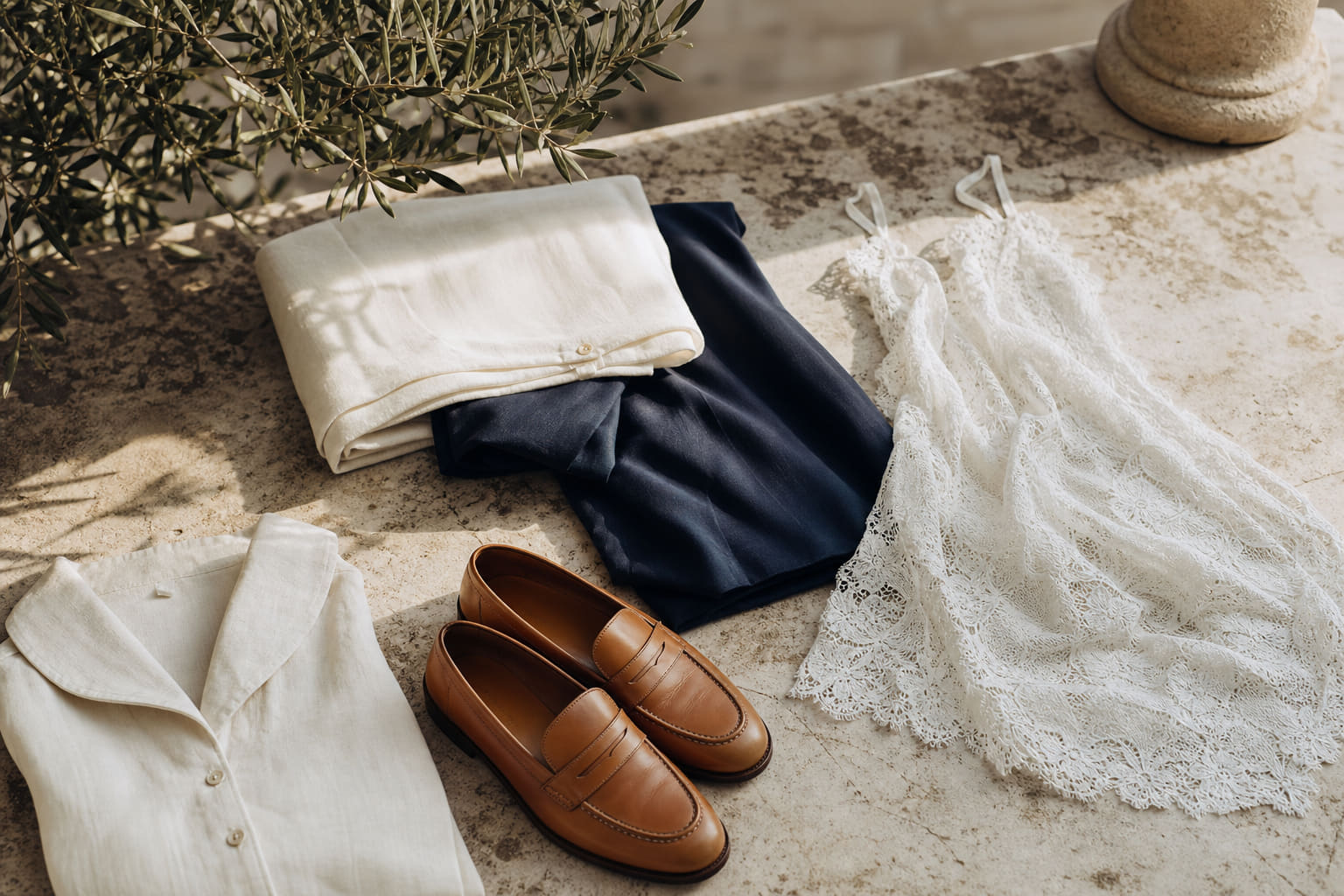
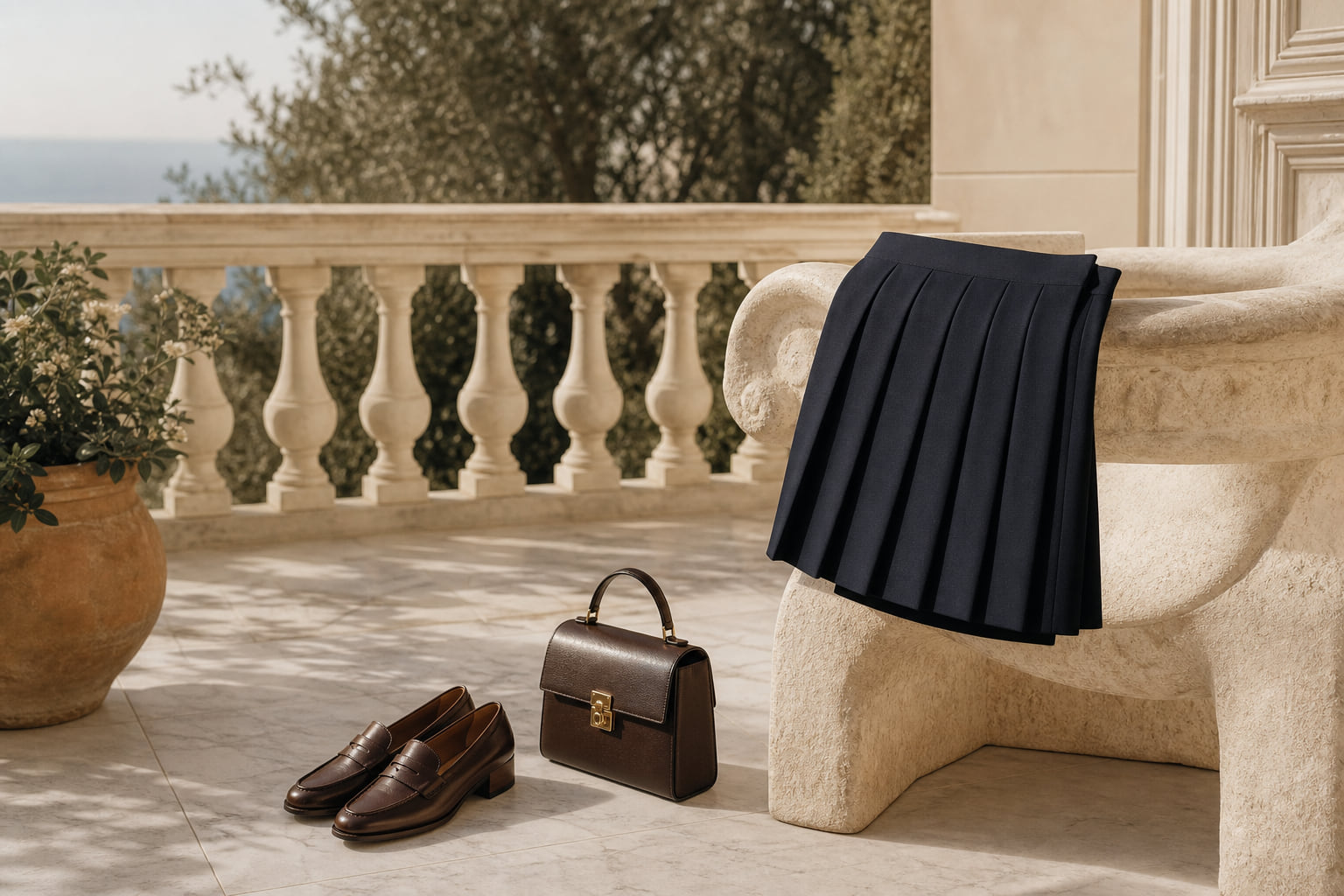
Heel height interacts directly with hem length. A lower heel, a block heel, a loafer, or a flat, visually grounds the silhouette and keeps the proportions from tipping into costume territory. A very high heel with a very short hem pushes the look toward a different register entirely. For the old money approach, the loafers from our collection are the natural pairing: they add weight at the foot, which balances the lightness of the short hem.
For women uncertain about which length reads as most elegant across different contexts, our detailed breakdown of best skirt lengths for an elegant look in 2026 gives specific guidance by occasion and body proportion.
One practical note: if you are between sizes in a pleated mini, size up rather than down. A skirt that is slightly generous at the waist will allow the pleats to hang correctly. A skirt that is too tight will pull the pleats open and lose the entire structural effect.

Occasion Dressing: Where the Pleated Mini Actually Belongs
The pleated mini skirt is more versatile by occasion than its reputation suggests, provided the fabric and pairing are appropriate. The range runs from a polished office look to a summer lunch to a more formal evening occasion, and the variables that shift it between contexts are fabric weight, colour, and what sits above the waist.
Daytime and casual occasions call for lighter fabrics and simpler tops. A cotton or linen-blend pleated mini with a fitted knit top and loafers is a complete, considered daytime look. Our Apricot Linen Blend Short Skirt works exactly in this register: the natural fibre and neutral tone keep the look relaxed without losing structure.
Smart casual and semi-formal contexts are where the suit set approach earns its place. A pleated mini in a structured fabric, paired with a matching jacket or waistcoat, can move through a business lunch, a gallery opening, or a smart dinner without feeling out of place. The coordination of the set is what carries the formality.
Evening occasions are possible with the right fabric and a deliberate accessory choice. A jacquard or textured pleated mini with a silk or satin top and a single statement piece, a brooch, a structured clutch, a fine chain, reads as dressed without being overdressed. For ideas on how a brooch can anchor an evening look, our piece on the comeback of brooches in old money circles is worth reading alongside this.
For the warmer months, the Contrast Collar Pleated Dress Sleeveless Two-Piece Style in Navy and White offers a complete warm-weather solution: the contrast collar adds visual interest at the neckline while the pleated skirt portion keeps the silhouette moving. Browse the full mini dresses collection for further options that sit within this aesthetic.
The one context where the pleated mini skirt genuinely does not belong is very formal occasions where floor-length or midi-length is the clear expectation. For those moments, our evening dresses collection offers the appropriate alternatives. The Candie Knit Dress with Embroidered Lapel and Ruffled Skirt is a strong option when the occasion calls for more length but the same level of refinement.

Care and Longevity: Keeping Pleats Crisp Over Time
A pleated skirt is only as good as its pleats, and pleats are only as good as the care they receive. The most common mistake is machine washing a pleated skirt without any preparation, which causes the pleats to lose their definition after two or three cycles.
The correct approach depends on fabric. Wool and wool-blend pleated skirts should be hand washed in cool water or dry cleaned. If you choose hand washing, press the pleats flat with your hands while the skirt is still wet, then hang it vertically to dry so gravity helps set the fold lines. Do not wring or bundle the skirt during drying.
Ponte and synthetic blends are more forgiving and can generally be machine washed on a delicate cycle inside a mesh laundry bag. Again, reshape the pleats while the skirt is damp and allow it to air dry flat or on a hanger.
Pressing pleats after washing is the step most women skip, and it is the step that makes the most visible difference. Use a pressing cloth between the iron and the fabric to avoid shine marks, particularly on wool crepe or jacquard. Press from the waistband downward, following the direction of the original pleat. For knife pleats, a piece of card slipped inside each pleat while pressing will give a very sharp edge.
Storage matters too. Hang pleated skirts rather than folding them. Folding creates horizontal crease lines across the pleats that are difficult to remove without re-pressing. If space requires folding, align the pleats carefully before folding and store the skirt flat rather than compressed.
With correct care, a well-made pleated mini skirt in a quality fabric will hold its structure for years. That longevity is part of what makes it a considered purchase rather than a seasonal one. Browse the full skirts collection to see the range of options built with exactly this kind of durability in mind.

| Fabric | Best Occasion | Pleat Hold | Care | Ideal Season |
|---|---|---|---|---|
| Wool Crepe | Smart casual, semi-formal | Excellent | Hand wash or dry clean | Autumn / Winter |
| Ponte Knit | Everyday, office | Very good | Machine wash delicate | Year-round |
| Jacquard | Evening, formal casual | Excellent | Dry clean recommended | Autumn / Spring |
| Linen-Cotton Blend | Daytime, summer casual | Moderate | Machine wash cool | Spring / Summer |
| Satin / Silk-faced | Evening only | Good when cut correctly | Dry clean only | Autumn / Winter |
| Cotton Poplin | Casual daytime | Moderate | Machine wash | Spring / Summer |
Frequently asked questions
Is a pleated mini skirt appropriate for women over 40?
Yes, provided the fabric is structured and the pairing is intentional. A pleated mini in wool crepe or ponte, worn with a fitted jacket or tailored top and a low heel, reads as elegant at any age. The question is always about proportion and fabric quality, not age. Our guide on best skirt lengths for an elegant look in 2026 addresses this directly with specific styling recommendations.
How do I keep the pleats from flattening during the day?
Choose a fabric with natural recovery: wool crepe and ponte knit both spring back after sitting. Avoid sitting for long periods with the skirt spread flat under you; instead, smooth the pleats downward when you sit. Re-pressing with a cool iron and pressing cloth after washing will restore any pleats that have softened with wear.
Can a pleated mini skirt work in a professional setting?
In most contemporary professional environments, yes. The condition is that the skirt is part of a coordinated, tailored look: a matching jacket, a structured blouse, or a waistcoat set. The hem should sit at mid-thigh rather than very high, and the fabric should be matte and structured rather than shiny or casual. A suit set format removes any ambiguity about the register of the look.
What shoes work best with a pleated mini skirt?
Low-heeled loafers, block-heeled mules, and ankle strap flats all work well because they add visual weight at the foot, which balances the lightness of the short hem. Very high stilettos can work for evening but shift the proportion significantly. Flat loafers are the most consistently elegant choice for daytime.
The pleated mini skirt has not returned to adult fashion because trends demanded it. It has returned because women who dress with intention found it useful: structured, feminine, dynamic, and genuinely versatile when made in the right fabric and worn with considered pairing. The conversation about whether it is appropriate has been replaced by the more interesting conversation about how to wear it well. Start with fabric, think carefully about proportion, and let the rest follow. Explore the full range of pleated skirts and coordinated sets to find the pieces that fit your wardrobe and your life.