


T-Shirt Collar Bacon: How to Fix and Prevent Stretched Necks
Reading time 14 min • 2791 words
There is a specific kind of disappointment reserved for pulling a t-shirt from the wardrobe and finding the neck has gone soft and wavy, curling outward like a strip of cooked bacon. It looks careless, and on a man who takes his appearance seriously, it undermines an otherwise composed outfit. The good news is that collar bacon is almost never a manufacturing defect. It is a care and handling problem, which means it is solvable.
The condition has a straightforward cause: the knitted rib that forms the neckband loses its tension when exposed to repeated heat, mechanical stress, or the wrong kind of pulling. Understanding the mechanics behind it takes about two minutes, and the fixes are cheaper than replacing a shirt every season.
This guide covers why it happens, how to restore a collar that has already gone, and, more importantly, how to keep every t-shirt and men's shirt in your wardrobe looking structured for as long as possible.
Key takeaways
- Collar bacon is caused by heat, friction, and pulling the neck opening over your head the wrong way during dressing and washing.
- Washing t-shirts inside out in cold water on a gentle cycle is the single most effective preventive step.
- Never tumble-dry a quality cotton t-shirt; lay it flat or hang it from the body, not the collar.
- Fabric weight and fibre content matter: heavier, tighter-knit cotton and lyocell blends resist distortion far longer than thin jersey.
- Once a collar has fully stretched, a targeted steam treatment can partially restore it, but prevention is always easier than repair.
In this guide
- What Is Collar Bacon and Why Does It Happen
- The Role of Fabric Weight and Fibre in Collar Longevity
- How to Fix a T-Shirt Collar That Has Already Stretched
- How to Wash T-Shirts Without Destroying the Collar
- Dressing and Storage Habits That Preserve Collar Shape
- Choosing T-Shirts That Resist Collar Bacon From the Start
- Frequently asked questions
What Is Collar Bacon and Why Does It Happen
Collar bacon is the informal name for the wavy, distorted ripple that develops along the neckband of a t-shirt after repeated wear and washing. The term comes from the visual resemblance to a rasher of bacon curling in a pan. It is not a seam failure. It is a loss of elasticity in the rib-knit collar itself.
A t-shirt neckband is constructed from a separate strip of rib-knit fabric, typically a 1x1 or 2x2 rib, which is slightly shorter than the neck opening it covers. When sewn in, this strip is stretched to fit, giving it its natural recovery tension. That tension is what keeps the collar lying flat against your neck.
Three things destroy that tension over time:
- Heat: Tumble dryers, hot wash cycles, and even leaving a shirt in a hot car accelerate the breakdown of cotton fibres and the elastic memory of the rib. According to textile science on fibre degradation, repeated thermal stress causes permanent molecular-level changes in cellulose-based fibres, reducing their ability to return to their original length.
- Mechanical friction: The agitation cycle of a standard washing machine stretches and twists the collar repeatedly. Over dozens of washes, this compounds into visible distortion.
- Dressing habits: The most overlooked cause. Gripping the collar and pulling it forward to get your head through stretches the neckband beyond its recovery point, especially when the fabric is warm and pliable after being worn.
The result is a collar that has been permanently elongated in some spots and compressed in others, creating that characteristic wave.
Expert insightThe collar is almost always the first part of a t-shirt to fail because it is knitted at a different tension to the body. Treat it as the most vulnerable point in the garment, not an afterthought.

The Role of Fabric Weight and Fibre in Collar Longevity
Not all t-shirt fabric is equally vulnerable. The thickness of the knit and the fibre content determine how long a collar holds its structure.
Fabric weight is measured in grams per square metre (GSM). A thin fashion t-shirt typically runs between 130 and 160 GSM. A mid-weight garment sits at 180 to 200 GSM. Anything above 200 GSM qualifies as heavyweight. The heavier the fabric, the more body it has, and the more the rib collar can resist deformation under stress. Lightweight t-shirts, while comfortable, give the collar very little structural support.
Fibre content matters equally. Standard ring-spun cotton is the most common choice and performs well when the fabric is heavy enough. Combed cotton, where short fibres are removed before spinning, produces a tighter, more uniform yarn that holds shape better and pills less. Lyocell (sold commercially as Tencel) is worth noting here: its fibres are naturally smoother and have a lower tendency to distort under mechanical stress, which is why lyocell blends tend to keep their form longer than pure cotton at the same weight.
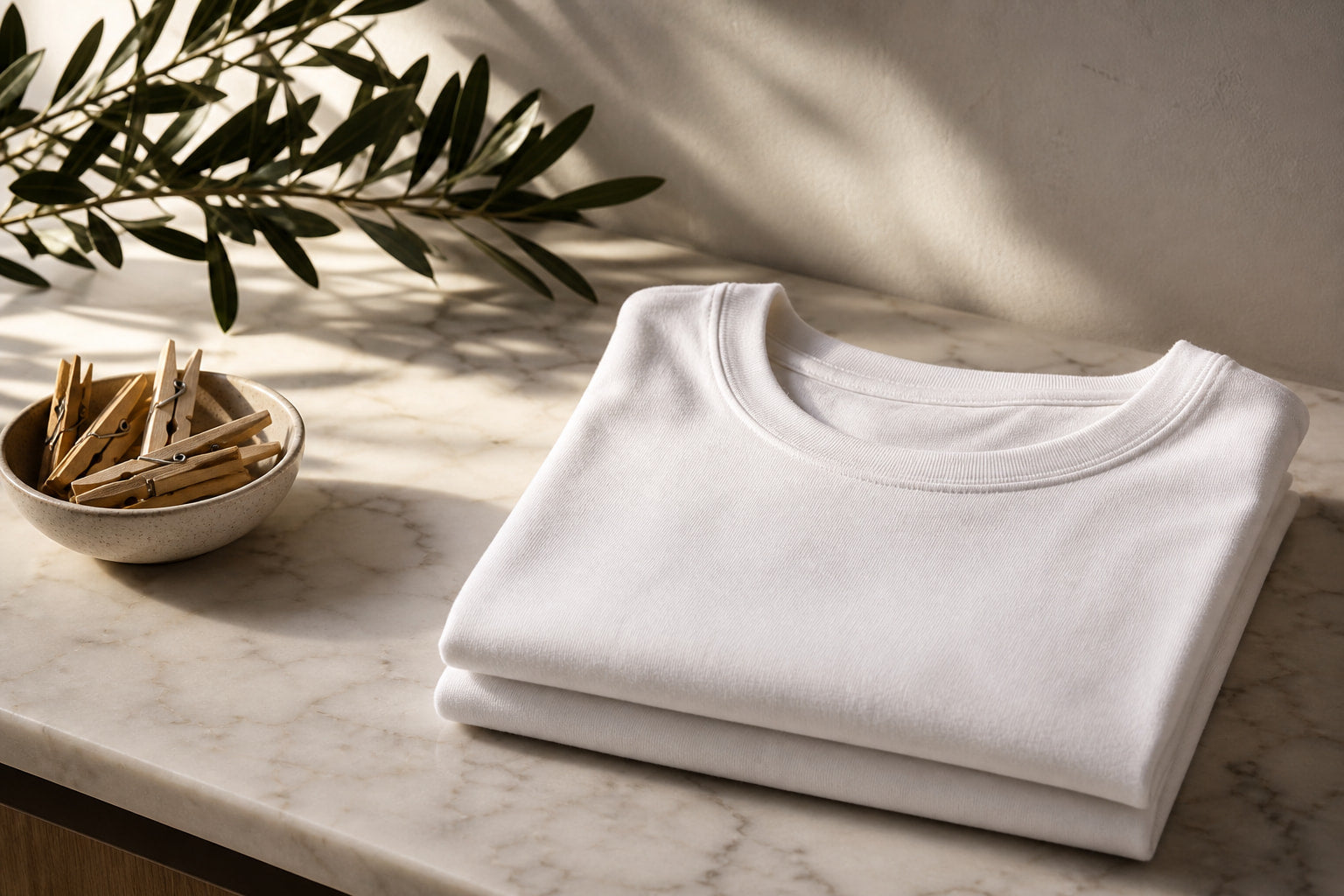
The Belle Montecarlo T-Shirt Off-White uses a heavyweight construction that addresses this directly. The denser knit means the rib collar has genuine structural support rather than relying entirely on the elasticity of the yarn.
Synthetic blends, particularly those with added polyester, add recovery memory to the rib, which is why a small percentage of elastane or polyester in the neckband is a legitimate engineering choice rather than a cost-cutting one. The trade-off is breathability and the way the fabric ages, which is why quality houses tend to use natural fibres with careful construction rather than relying on synthetics to compensate for thin fabric.
Expert insightWhen comparing two t-shirts, hold the neckband between two fingers and stretch it gently, then release. A well-made rib snaps back quickly and completely. A weak one recovers slowly or not at all.

How to Fix a T-Shirt Collar That Has Already Stretched
If your collar has already gone, the situation is not hopeless, but you need realistic expectations. Partial restoration is achievable. Full recovery to factory condition is rarely possible once the fibres have been permanently deformed.
Steam treatment is the most effective method. Use a garment steamer or a steam iron held two to three centimetres above the collar without touching it. Work in short sections, using your fingers to gently reshape the rib back into a flat, even position as the steam relaxes the fibres. The heat temporarily restores some mobility to the cotton, allowing you to guide it back toward its original shape. Once repositioned, allow the collar to cool completely before moving the garment. Repeat two or three times for best results.
The boiling water method is a more aggressive version of the same principle. Bring a small pot of water to a simmer, hold the collar area over the steam for thirty seconds, reshape by hand, then lay flat to dry. Do not submerge the garment. This works reasonably well on moderate distortion but carries more risk of further damage if the water is too hot or the fabric too thin.
Freezing is sometimes recommended online and is largely ineffective for collar bacon. It may temporarily stiffen the fabric but does nothing to restore the molecular structure of stretched fibres.
For shirts rather than t-shirts, collar care follows slightly different rules. A well-structured collar on a high-count fine white linen shirt benefits from collar stays and careful pressing to maintain its line. You can read more about that approach in our guide to the best collar stays to keep your shirt looking crisp.
If the distortion is severe, the honest answer is that the garment has reached the end of its useful life in a formal context. Retire it to workwear or home use and replace it with a heavier, better-constructed piece.
Expert insightAfter steaming, lay the t-shirt flat with the collar in the correct position and place a folded towel inside the neck to hold the shape while it dries. Gravity works against you if you hang it while still warm.

How to Wash T-Shirts Without Destroying the Collar
The washing machine is the primary villain in most collar bacon stories. These specific habits will extend the life of any quality t-shirt significantly.
Wash inside out, always. This reduces direct friction on the collar's outer surface and protects the face of the fabric from abrasion against other garments. It takes three seconds and makes a measurable difference over time.
Cold water only. Wash at 30 degrees Celsius or lower. Hot water relaxes the tension in rib-knit fabric during the wash cycle and the collar dries in a distorted position. Cold water cleans cotton effectively, particularly with a quality detergent, and causes far less fibre stress.
Use the delicate or gentle cycle. The standard cotton cycle on most machines runs at high spin speeds with aggressive agitation. The delicate cycle reduces both, which is exactly what you want for anything with a knitted collar.
Use a mesh laundry bag. Placing the t-shirt in a mesh bag before washing prevents the collar from snagging on zips, buttons, or other garments during the cycle. It also reduces the chance of the collar getting caught and stretched during the spin.
Never use the tumble dryer. This is non-negotiable. The combination of heat and tumbling action is the fastest known route to collar bacon. Lay t-shirts flat on a drying rack or hang them from the body hem with two clips, never from the collar or shoulders, which deform the neckband under the weight of wet fabric.
For guidance on keeping white pieces in particular looking their best over time, our article on how to keep white shirts brilliant white without bleach covers the full process without compromising fabric integrity.
Dressing and Storage Habits That Preserve Collar Shape
Washing is only part of the equation. How you put a t-shirt on and how you store it account for a significant portion of collar wear.
Dressing technique. The most destructive habit is gripping the front of the neckband and pulling the shirt over your head by stretching the collar forward. Instead, gather the back of the shirt, place your hands inside the collar opening, and widen it gently before pulling over your head. This distributes the stretch evenly across the rib rather than concentrating it at one point. It is a small adjustment that becomes automatic within a week.
Folding versus hanging. T-shirts should be folded and stored flat in a drawer rather than hung. Hanging a t-shirt on a standard hanger places constant downward tension on the collar and shoulders, gradually stretching both. If you must hang them, use a trouser hanger clipped to the hem.
Storage environment. Heat and humidity accelerate fibre degradation even in storage. A cool, dry drawer is preferable to a wardrobe shelf in a warm room. Avoid storing t-shirts compressed under heavy items for extended periods, as this can permanently crease the collar.
For men building a considered wardrobe, the same principles of careful handling apply to more structured pieces. A retro vintage lyocell linen shirt or a well-cut contemporary navy blue linen shirt rewards the same attentive care with years of reliable wear. The broader Lovau men's old money collection is built on the assumption that a man buys fewer, better pieces and maintains them properly.

Choosing T-Shirts That Resist Collar Bacon From the Start
Prevention is always easier than repair. When buying a t-shirt with the intention of wearing it for years rather than seasons, these construction details tell you whether the collar will hold.
Check the rib width. A wider collar rib, typically two centimetres or more, distributes stress over a larger area and resists distortion better than a narrow one-centimetre band. Run your thumb along the inside of the neckband: it should feel dense and springy, not thin and slack.
Look at the stitch count. A tighter stitch count in the body knit means the collar attachment seam has more fabric to anchor to. Hold the shirt up to light and look at the knit structure. A fine, dense knit indicates quality construction.
Consider the collar construction method. Some manufacturers use a twin-needle coverstitch to attach the collar, which creates a flat, secure seam with good recovery. Others use a single-needle lockstitch, which is more prone to popping and distorting under stress. The coverstitch is visible as two parallel lines of stitching on the outside of the collar.
Fabric weight as a buying filter. For a t-shirt you intend to wear regularly, aim for a minimum of 180 GSM. The Ayrton Senna Donington Park T-shirt and the Belle Montecarlo T-Shirt White both reflect this approach: garments built to last rather than to be discarded after a season.
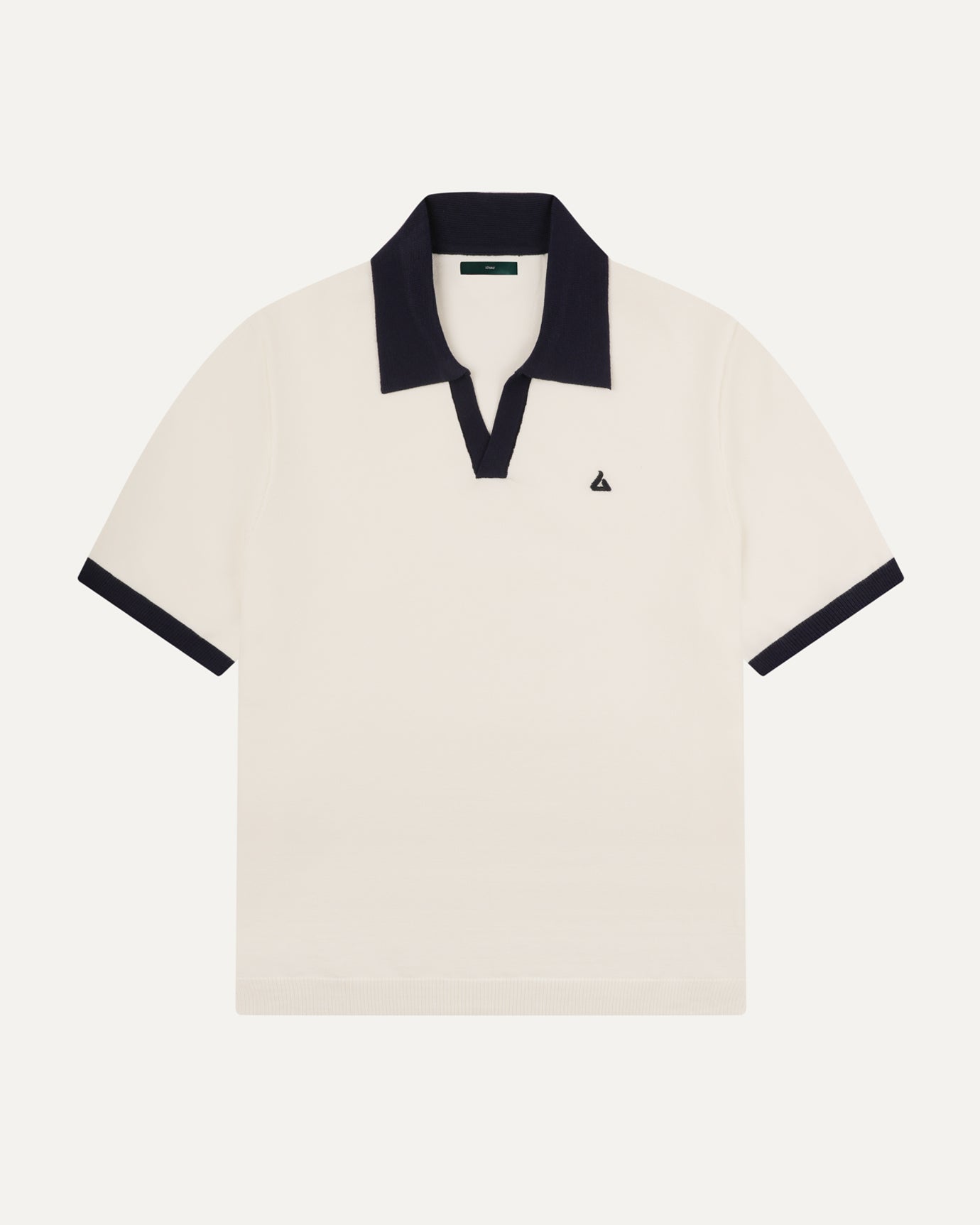
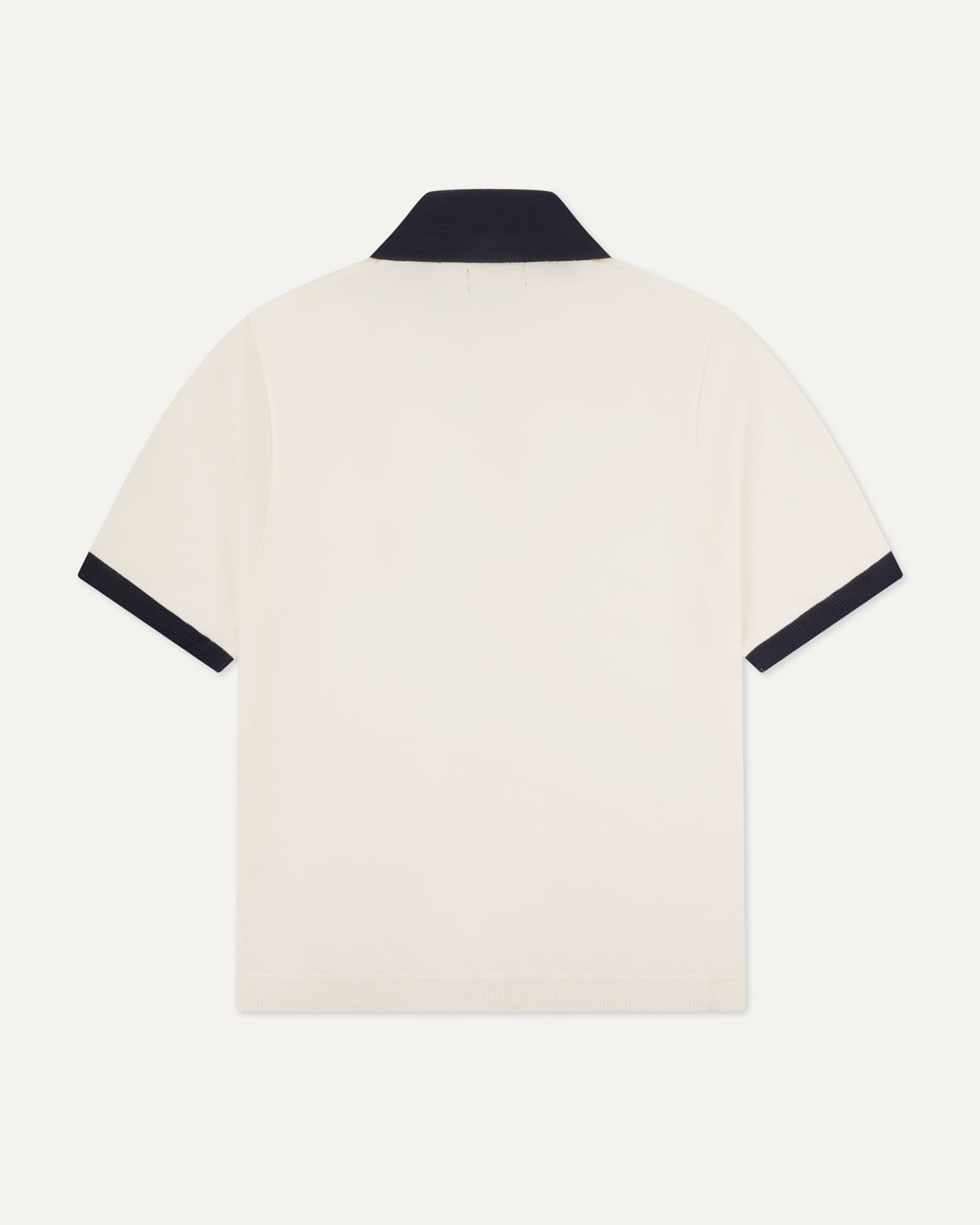
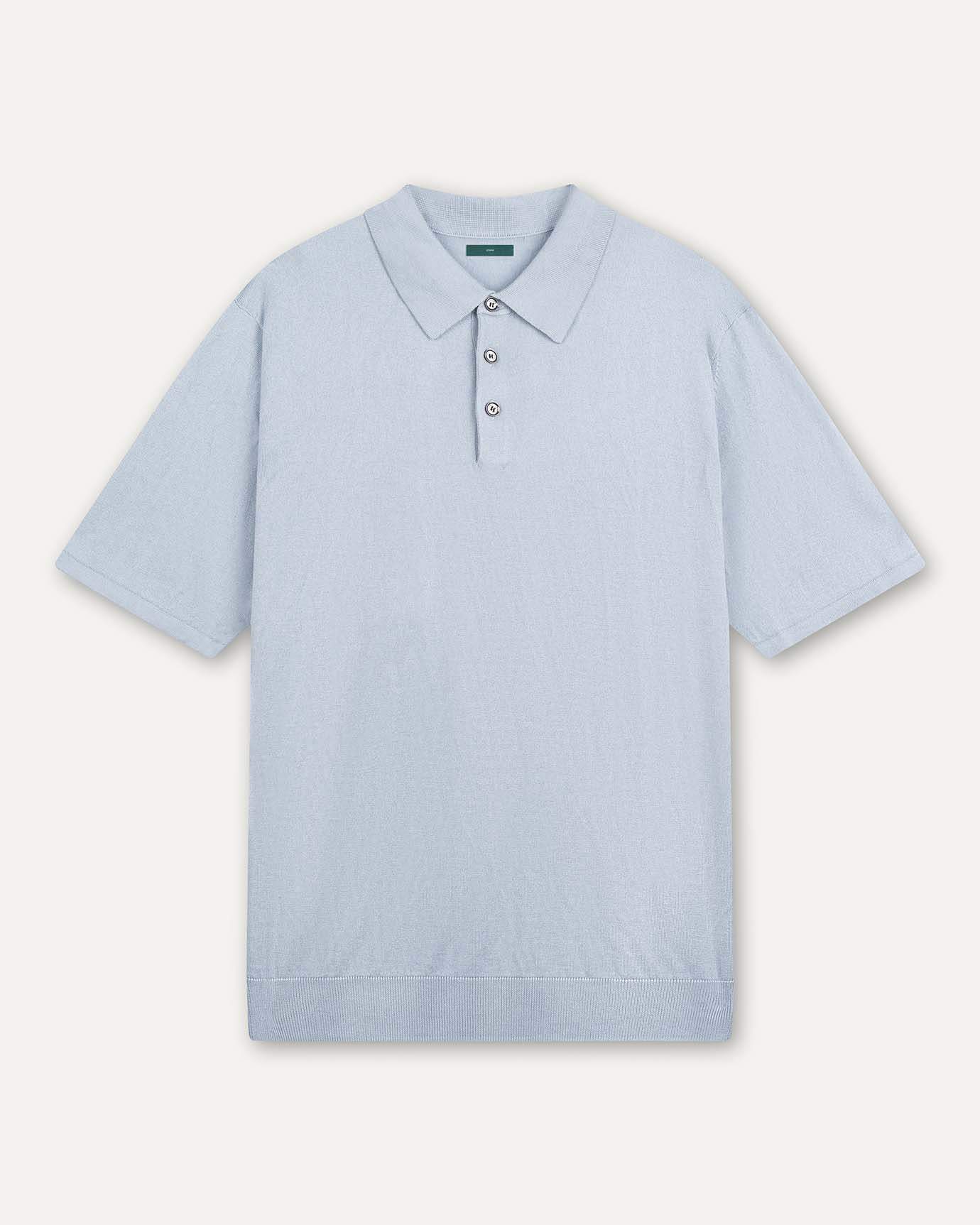
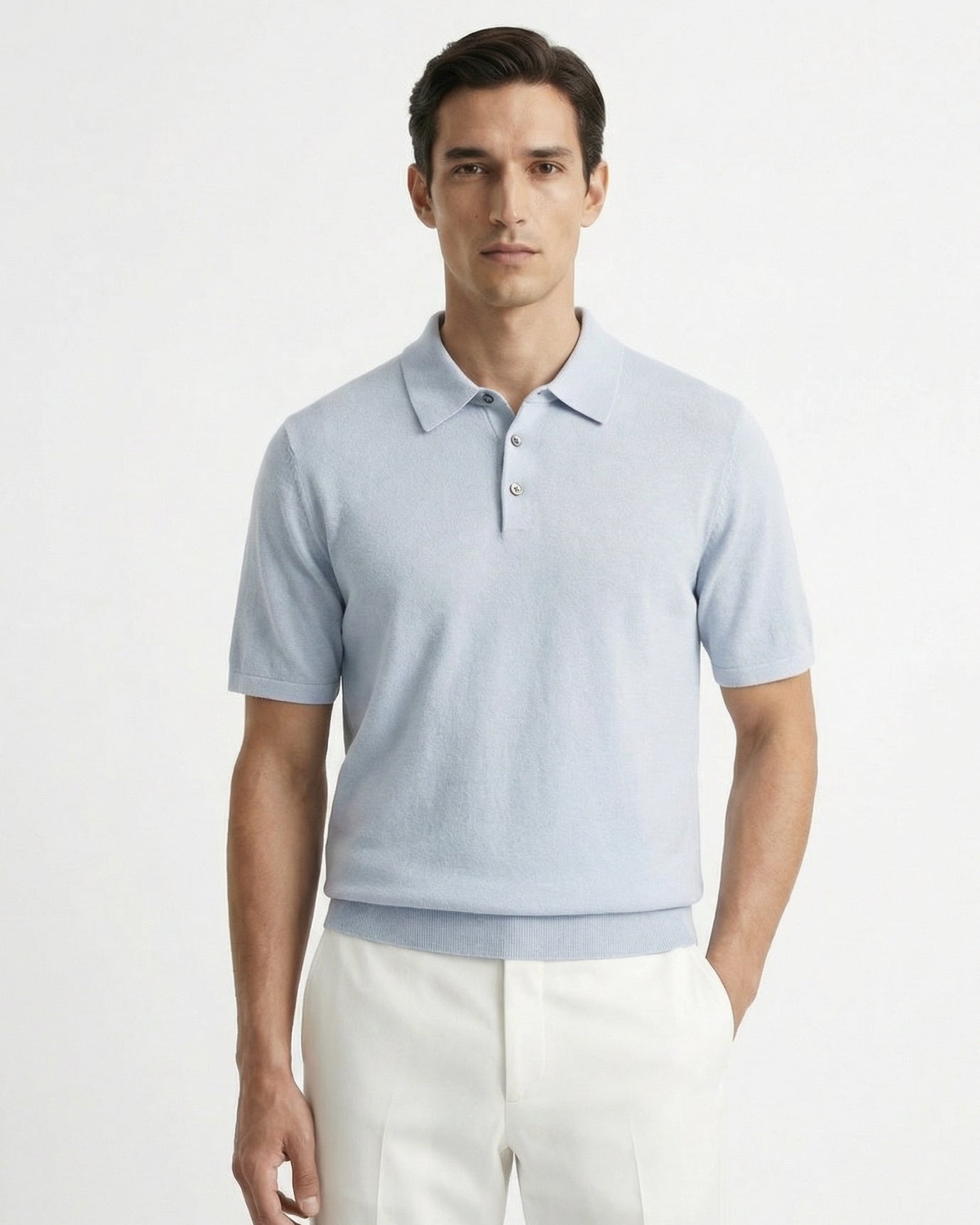
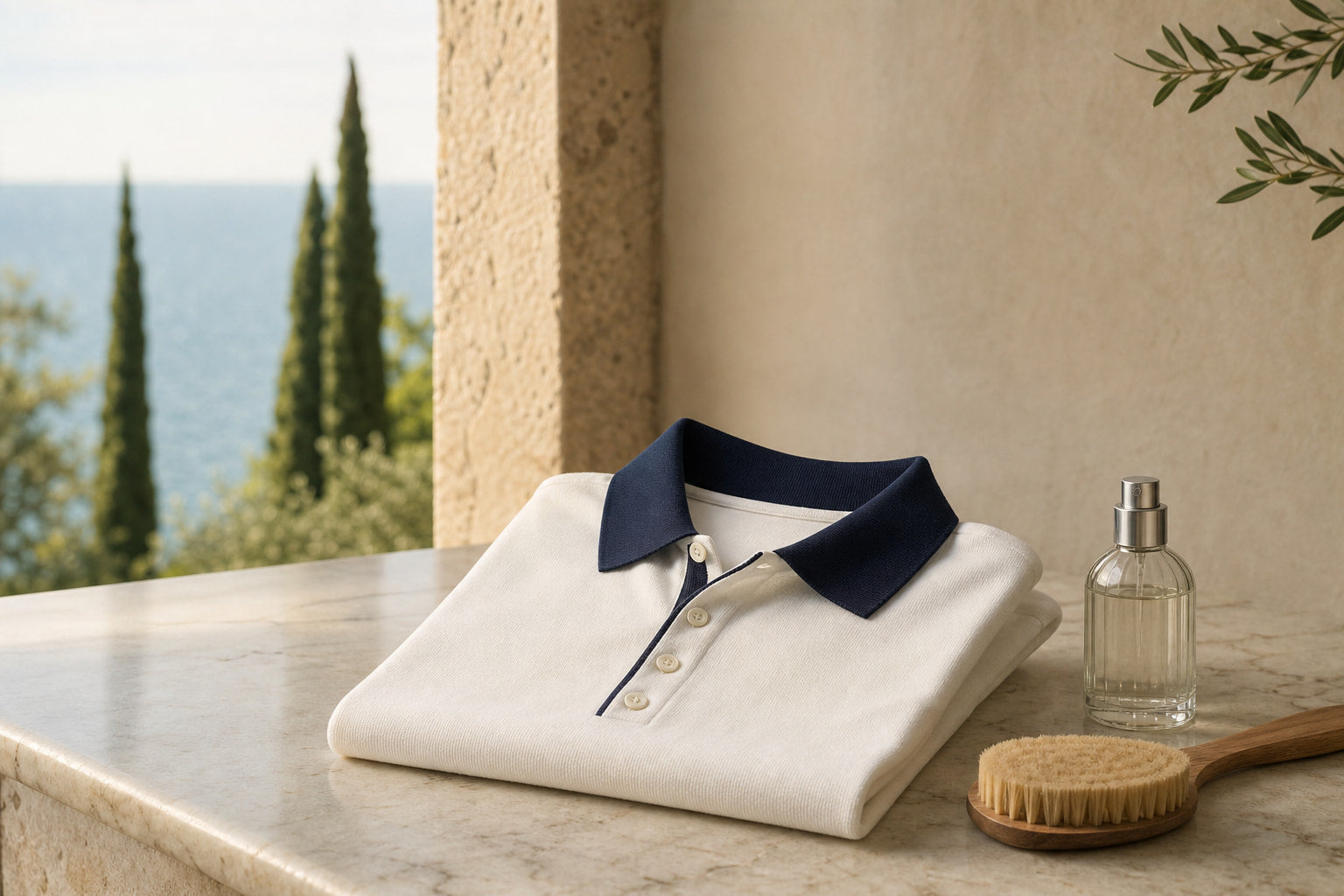
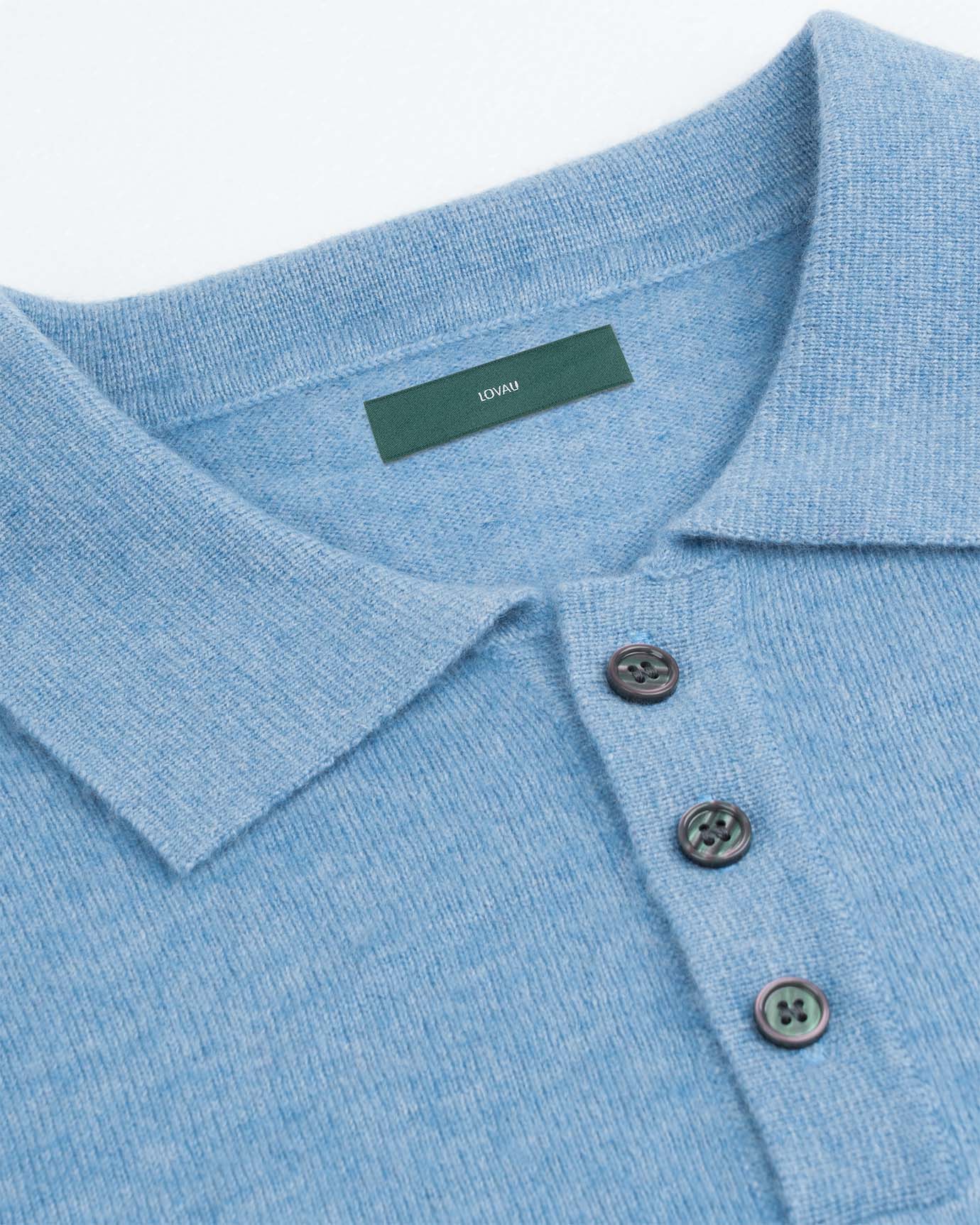
For polo shirts, where the collar is a more prominent structural element, a knitted construction adds inherent rigidity. The Tibetan Polo Collar Knitted Shirt uses a collar that is knitted as a continuous piece rather than sewn from a separate strip, which eliminates the attachment seam as a failure point entirely. More options across this category are in the man short sleeve polo shirts collection.
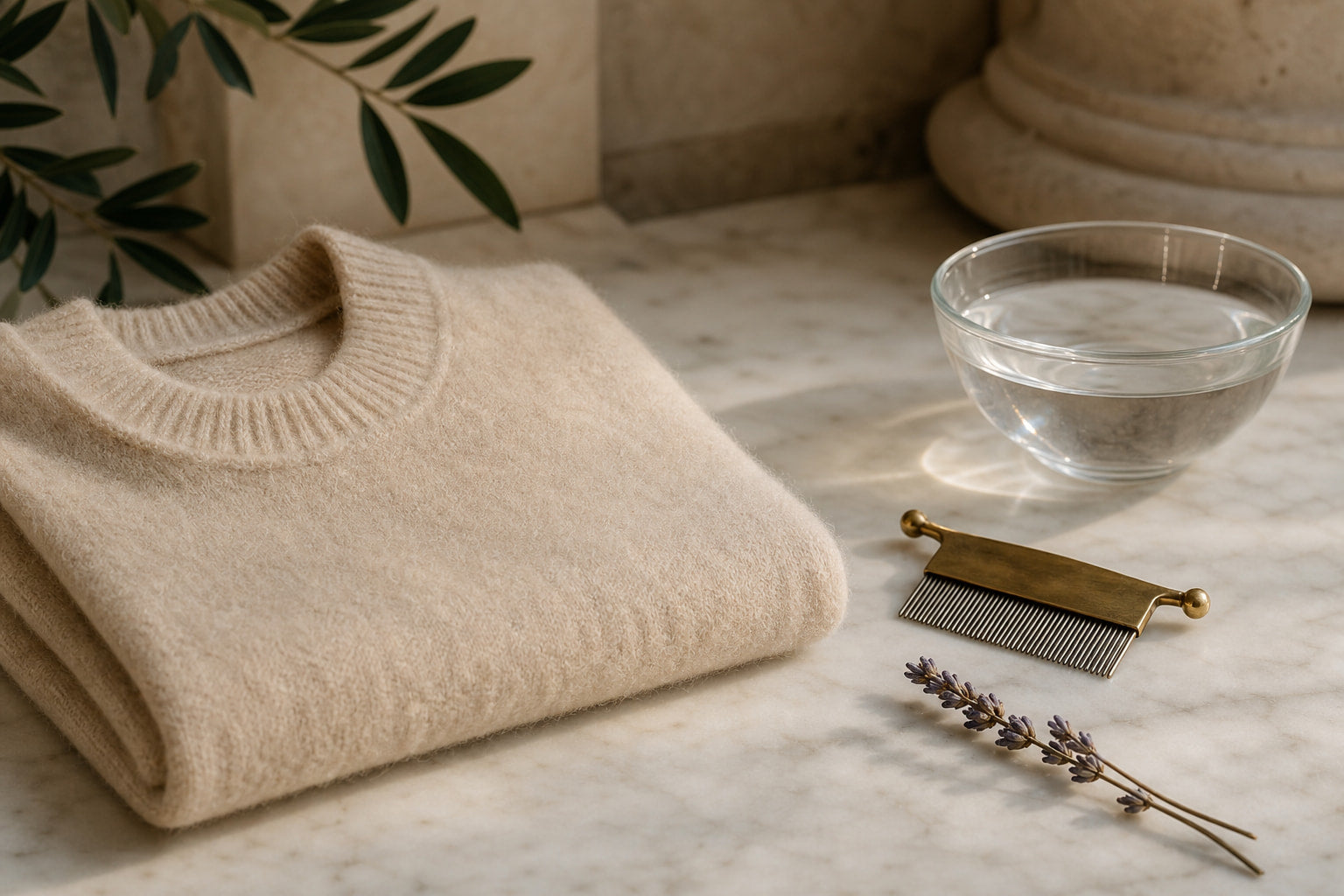
For further reading on maintaining knitwear pieces, our guide on how to wash delicate knitwear without shrinking it covers the specific handling that knitted collars and polo shirts require. And for a broader understanding of how fabric construction affects collar behaviour, the technical detail is worth understanding once.

| Fabric Type | Typical GSM Range | Collar Durability | Wash Temperature | Drying Method | Best For |
|---|---|---|---|---|---|
| Lightweight cotton jersey | 130-160 GSM | Low, distorts quickly | Cold only (30°C) | Flat dry only | Occasional wear, layering |
| Mid-weight combed cotton | 180-200 GSM | Good, holds shape well | Cold to 30°C | Flat dry or hang from hem | Regular daily wear |
| Heavyweight cotton (200+ GSM) | 200-240 GSM | Excellent, very resistant | Cold to 30°C | Flat dry preferred | Long-term investment pieces |
| Cotton/lyocell blend | 160-200 GSM | Good, smooth fibre resists distortion | Cold, gentle cycle | Flat dry only | Warm climates, sensitive skin |
| Cotton/polyester blend | 150-190 GSM | Good elasticity recovery in rib | Cold to 40°C | Low heat tumble acceptable | Active or casual use |
| Rib-knit polo collar (pure cotton) | N/A, knitted structure | Excellent, continuous knit | Cold, gentle cycle | Flat dry only | Smart casual, structured look |
Frequently asked questions
Can collar bacon be permanently fixed at home?
Partially, yes. Steam treatment reshapes distorted rib fibres and can significantly reduce the wavy appearance. However, if the collar has been stretched repeatedly over many washes, the fibre structure has changed permanently and full restoration is not realistic. The steam method works best on moderate distortion caught early. For severe cases, the garment is better retired from smart use.
Does washing a t-shirt by hand instead of machine prevent collar stretching?
Yes, meaningfully so. Hand washing eliminates the mechanical agitation that causes most collar distortion. Use cool water, a small amount of gentle detergent, and avoid wringing the collar. Press water out gently by folding the shirt and applying light pressure. Lay flat to dry. For pieces you intend to keep for years, hand washing is worth the extra two minutes.
Why does my t-shirt collar curl outward rather than lying flat?
Outward curling usually means the collar rib has stretched more on the outer edge than the inner edge, causing it to flip. This is often a result of tumble drying, where centrifugal force pulls the outer edge of the collar outward repeatedly. Steam the collar while holding it flat and allow it to cool in position. Going forward, lay the shirt flat to dry with the collar pressed down correctly.
Are polo shirts less prone to collar bacon than crew-neck t-shirts?
Generally, yes. A structured polo collar, particularly one that is knitted as a continuous piece rather than cut and sewn, has more inherent rigidity and is less vulnerable to the stretching that affects a simple rib neckband. The Tibetan Polo Collar Knitted Shirt is a good example of this construction. The collar still needs careful washing and flat drying, but the starting point is more resistant to distortion.
Collar bacon is a solvable problem. Cold washes, gentle cycles, flat drying, and the simple habit of not pulling your shirt on by the neckband will keep any quality t-shirt looking composed for years longer than average. The men who seem to have wardrobes that never age are not buying new things constantly. They are maintaining what they have with a small amount of consistent attention. Start with the care label, work through the habits in this guide, and if you are choosing a new piece, use our men's old money collection as a reference for what well-constructed, long-wearing garments actually look like.