


Suede vs Leather Loafers: Which Should You Choose?
Reading time 12 min • 2396 words
The loafer is one of the few shoe silhouettes that has remained genuinely relevant across every decade since the mid-twentieth century. Its appeal is architectural: a clean line, no laces, and enough versatility to move from a linen suit to tailored chinos without losing credibility. But the material you choose changes everything about how the shoe looks, how it ages, and where it belongs.
Suede and leather are not interchangeable. They come from the same animal hide but are processed differently, and that difference produces two shoes with distinct personalities. Suede is napped, matte, and tactile. Leather is smooth, reflective, and formal. Understanding what separates them, concretely, is the first step toward buying the right pair rather than the wrong one.
This guide covers the material properties, the occasions each suits, the care each demands, and the colours worth owning. By the end, you will have a clear answer for your wardrobe specifically, not a vague one.
Key takeaways
- Suede loafers read as relaxed and textural; polished leather loafers read as formal and precise. The occasion should guide the choice.
- Suede requires a protective spray and regular brushing; leather rewards consistent conditioning and polishing.
- Navy, tan, and grey suede loafers are the most versatile starting points for a man building his first loafer wardrobe.
- Full-grain leather loafers, worn and cared for properly, will outlast most suede pairs by several years.
- You do not have to choose only one. A suede pair for spring and summer, a leather pair for autumn and formal occasions, is the sensible approach.
In this guide
What Suede and Leather Actually Are
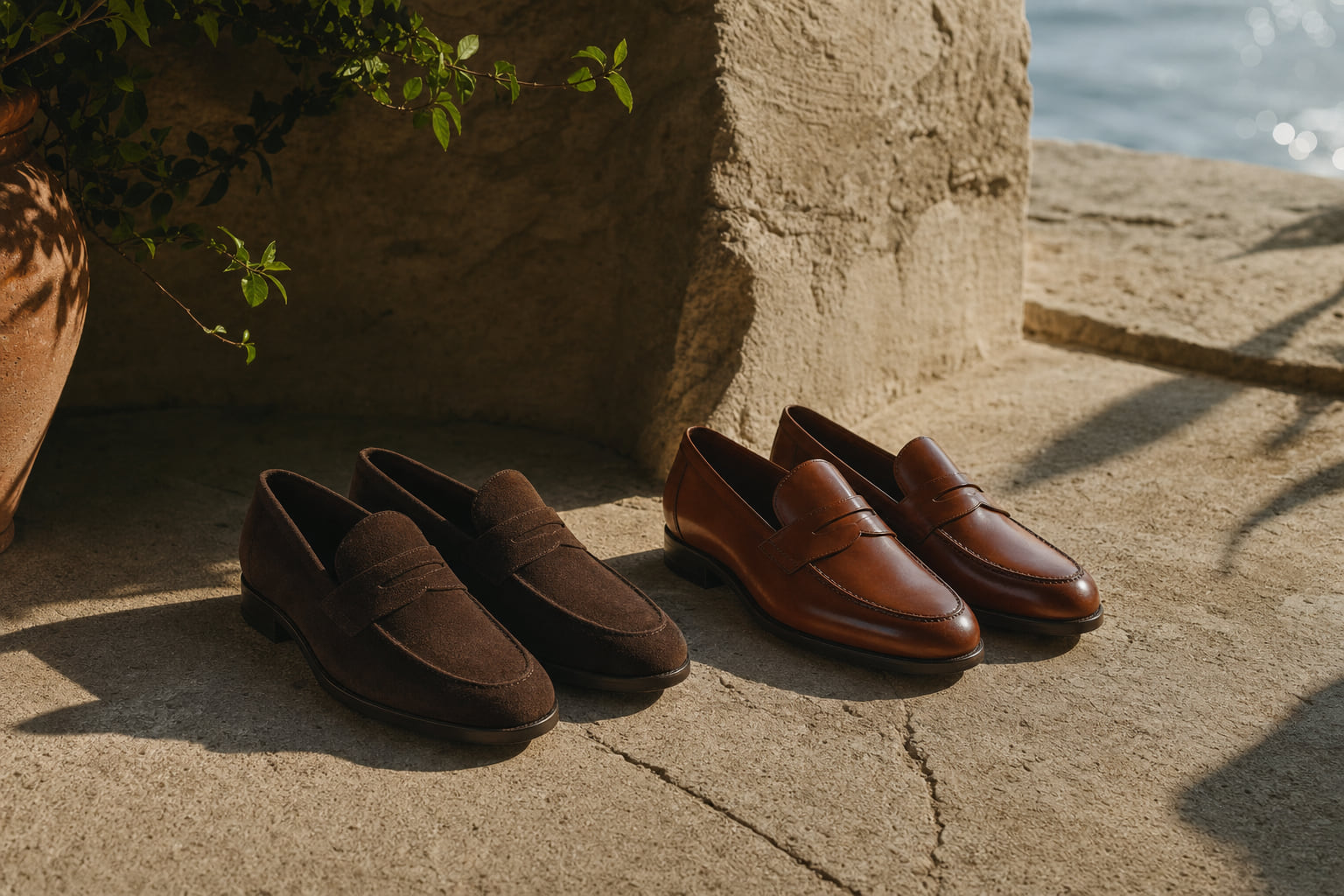
Both materials originate from cowhide, but they are produced from different layers of the skin. Full-grain leather uses the outermost layer of the hide, the tightest and most durable part. It is sanded minimally, retains the natural grain, and develops a patina over time that makes each pair of shoes genuinely unique. Suede is cut from the inner split of the hide, the softer underside. The surface is buffed to raise a fine nap, which gives suede its characteristic velvet-like texture and matte finish.
The structural consequence of this difference is significant. Full-grain leather is denser and more resistant to moisture and abrasion. Suede is softer and more pliable straight out of the box, but it is also more vulnerable to water, oil, and scuffing. Neither is categorically superior. They simply perform differently under different conditions.
For men exploring the loafers old money style aesthetic, both materials have deep European roots. Suede loafers became associated with the relaxed elegance of the Italian Riviera in the 1960s. Polished leather loafers have been a cornerstone of English tailoring tradition for considerably longer. Knowing that history helps calibrate where each shoe belongs in your rotation.
Expert insightWhen assessing quality at purchase, press your thumb lightly against the suede. The nap should spring back evenly. On leather, look at the grain pattern near the toe: irregular, natural variations indicate full-grain hide rather than a corrected or synthetic surface.

Occasion and Formality: Where Each Material Belongs
The clearest practical distinction between suede and leather loafers is formality. Polished leather loafers occupy the middle-to-upper range of the dress code spectrum. A pair of classic brown leather loafers works alongside tailored trousers, a blazer, or a well-pressed suit in a business-casual context. They hold their own at a dinner, a gallery opening, or any occasion where a certain crispness is expected.
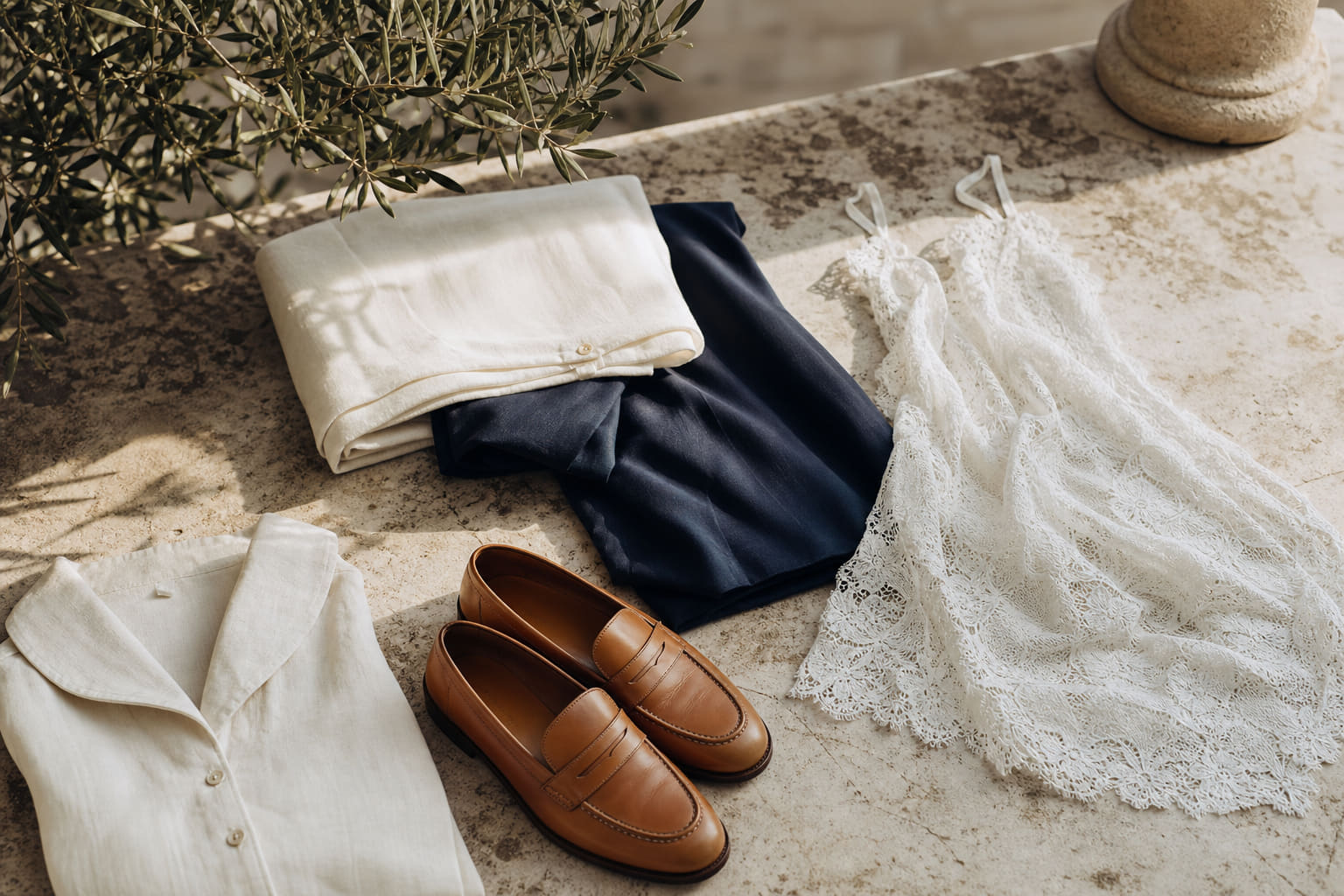
Suede loafers sit one register below, in the best possible way. They carry a relaxed confidence that polished leather cannot replicate. A pair of navy blue slip-on suede loafers with tailored chinos and a linen shirt is a distinctly Mediterranean combination, one that reads as considered without being stiff. Suede is the correct choice for warm-weather travel, weekend lunches, and any occasion where the goal is elegance without formality.
There are, of course, overlapping zones. Smart-casual dress codes, which now dominate most European social contexts, accommodate both materials comfortably. The rule of thumb: if the occasion involves a tie, choose leather. If it involves the sea, choose suede. Everything in between is a matter of personal judgement and the specific colour you are working with.
For a more detailed breakdown of how colour interacts with these decisions, the loafer colours guide covers the full spectrum with specific pairing advice.
Expert insightA dark suede, such as black or charcoal, can read more formally than a light tan leather. Material and colour work together, not independently. Never assess formality by material alone.

Care, Maintenance, and Longevity
This is where the two materials diverge most sharply in terms of daily commitment.
Caring for leather loafers is a straightforward but consistent practice. A good leather shoe needs to be wiped clean after each wear, conditioned every four to six weeks with a quality cream, and polished when the surface loses its depth. Cedar shoe trees are not optional; they maintain the shape and draw out moisture. Treated properly, a pair of handmade genuine leather loafers will last a decade or more and improve in character the entire time. Leather is a long-term investment.
Caring for suede loafers requires a different approach. Before the first wear, apply a quality suede protector spray, this creates a barrier against water and light staining. After each wear, use a soft suede brush to restore the nap and remove surface dust. For dried mud or scuff marks, a dedicated suede eraser works well. Suede should never be treated with standard leather conditioner or polish, as these will flatten the nap permanently and leave a greasy residue.
The honest assessment: leather rewards patience and forgives neglect better than suede does. A leather shoe that has been ignored for six months can be brought back to life with a thorough conditioning and polish session. Suede that has been soaked or heavily stained is much harder to recover. For men who travel frequently or wear their shoes hard, leather offers more resilience. For men who are careful with their wardrobe, suede rewards that attention with a texture and softness that leather simply cannot match.
If longevity and investment value are your primary criteria, the best fashion investment pieces guide puts leather footwear in the context of a broader capsule strategy.
Colour, Texture, and Seasonal Pairing
Suede and leather each have colour ranges where they perform at their best, and those ranges do not fully overlap.
Suede loafers look most natural in earthy, desaturated tones: camel, tan, grey, navy, army green, and off-white. The matte texture absorbs light rather than reflecting it, which means these colours read as soft and organic rather than bold. A pair of camel slip-on suede loafers worn with stone-coloured chinos and a navy linen shirt is one of the most reliable warm-weather combinations in a man's wardrobe. Army green suede, as in the Mykonos army green loafers, pairs particularly well with khaki, cream, and mid-grey.
Leather loafers carry colour differently. The natural sheen amplifies depth, so darker tones like black, chocolate brown, and burgundy have a richness in leather that suede cannot replicate. Tan and cognac leather, meanwhile, develops a warmth as it ages that makes it feel almost amber under warm light. A pair of apricot leather loafers in a warm tan shade works across three seasons with remarkable ease.
Seasonally, suede belongs to spring and summer. Its softness and matte finish suit the casual rhythm of those months. Leather is a four-season material, but it comes into its own in autumn and winter, when its weight and polish feel proportional to heavier fabrics. For a deeper look at how these rules apply to specific colour combinations, the article on black leather vs brown suede accents is worth reading alongside this one.
Expert insightGrey suede is the most underrated loafer colour in a man's wardrobe. It reads as neutral as black but carries far more texture and warmth. The Florence gray suede loafers demonstrate exactly how much quiet authority a grey suede can carry.

How to Choose Based on Your Wardrobe
The right answer depends on what you already own and how you actually dress, not on which material is abstractly superior.
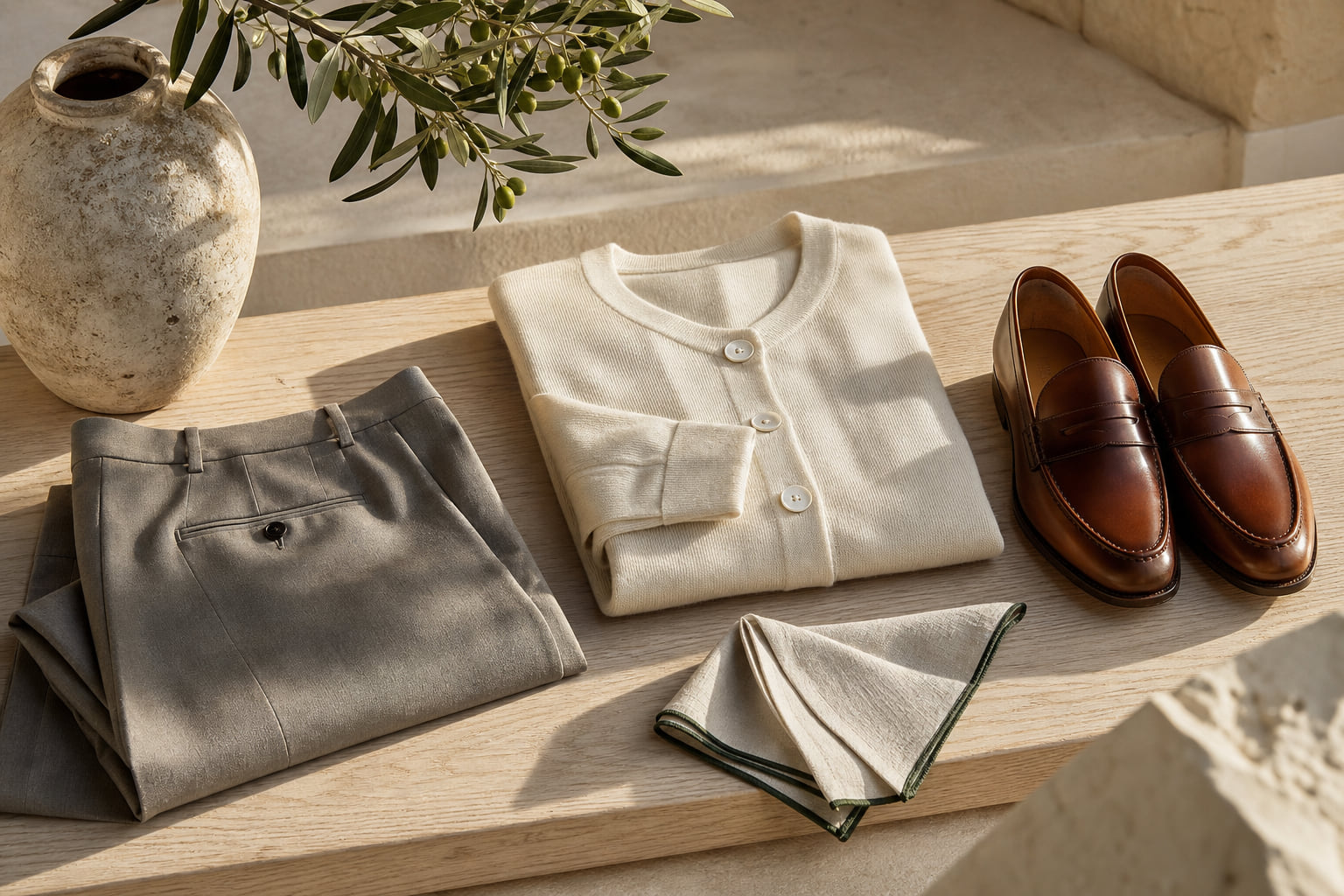
If your wardrobe is built around tailored pieces, structured trousers, blazers, and dress shirts, then leather loafers will integrate more naturally. They match the precision of those garments. The Positano brown leather loafers are a strong entry point: a clean silhouette, genuine leather construction, and a brown that works across navy, charcoal, and cream.
If your wardrobe leans toward relaxed, warm-weather pieces, linen trousers, chinos, casual shirts, and lightweight knitwear, then suede loafers will serve you better most of the time. They belong to that register. The Florence black suede loafers offer a slightly dressier suede option that can bridge casual and smart-casual without effort.
If you are building from scratch, the most practical approach is to buy one suede pair and one leather pair, in complementary colours. Navy or camel suede for spring and summer, dark brown or tan leather for the rest of the year. This two-shoe foundation covers the vast majority of occasions a man in his thirties or forties will encounter. For more guidance on building that foundation deliberately, the old money capsule wardrobe guide lays out the full framework.
Also worth considering: the men's footwear collection shows the full range of materials and silhouettes available, which helps contextualise where loafers sit within a complete shoe wardrobe.

Construction Details Worth Checking Before You Buy
Material is only part of the equation. Two loafers in the same suede can feel completely different underfoot and age completely differently depending on how they are constructed.
Sole type matters significantly. A leather sole is traditional and breathable but requires more care and is slippery on wet surfaces. A rubber or crepe sole is more practical for daily wear and offers better grip. Many well-made loafers now use a leather upper sole with a thin rubber outer layer, which balances tradition and practicality.
Insole construction affects comfort over the course of a full day. A leather insole will mould to the shape of your foot over time, a process that takes a few weeks of wear but produces a fit that becomes genuinely personal. Synthetic insoles do not do this. For a shoe you intend to wear regularly, a leather insole is worth seeking out.
Stitching and finishing are the most immediate quality signals. On a well-made loafer, the stitching along the welt should be tight, even, and uninterrupted. Any loose threads, uneven spacing, or glue residue visible at the seam line are signs of shortcuts in production. The Paris Vintage handmade leather loafers are a useful reference point for what careful finishing looks like at this price tier.
For men weighing these options against the broader landscape of men's old money style, the construction details above are the difference between a shoe that lasts two seasons and one that lasts two decades. Buy less, but buy better.

| Attribute | Suede Loafers | Leather Loafers |
|---|---|---|
| Texture | Matte, napped, soft to the touch | Smooth, reflective, firm |
| Formality level | Smart-casual to casual | Business-casual to formal |
| Best seasons | Spring, Summer | All year, especially Autumn and Winter |
| Water resistance | Low, requires protective spray | Moderate to high, improves with conditioning |
| Care routine | Brush, suede eraser, protector spray | Condition, polish, cedar shoe trees |
| Longevity | 3 to 7 years with good care | 7 to 15+ years with consistent care |
| Best colour range | Camel, navy, grey, army green, off-white | Black, dark brown, tan, cognac, burgundy |
Frequently asked questions
Can suede loafers be worn in light rain?
With a quality suede protector spray applied before the first wear and reapplied every six to eight weeks, suede loafers can handle light drizzle without permanent damage. Avoid wearing them in heavy rain or standing water. If they do get wet, allow them to dry naturally at room temperature, away from direct heat, then brush the nap back with a suede brush once fully dry.
Are leather loafers more formal than suede?
Generally, yes, but colour plays a significant role. A polished black leather loafer sits firmly in the formal register. A light tan leather loafer in a casual silhouette reads as smart-casual. Conversely, a dark charcoal suede loafer can approach business-casual territory. The black vs brown loafers guide addresses how colour shifts the formality reading across both materials.
Which is better for summer, suede or leather?
Suede is the stronger choice for summer. Its matte finish and soft texture suit the lighter fabrics and relaxed mood of the season. Leather, particularly in darker colours, can look heavy against linen or light chinos in strong sunlight. That said, a tan or cognac leather loafer in a slim silhouette remains entirely appropriate for summer evenings or smarter summer occasions.
How do I know if a suede loafer is made from genuine leather?
Genuine suede should feel consistently soft and pliable, with a fine, even nap across the surface. The reverse side, visible at the collar lining or tongue, should show natural leather fibres rather than a uniform synthetic backing. Synthetic suede tends to feel slightly plasticky under pressure and has an unnaturally even texture. At Lovau, all suede loafers in the Florence and Mykonos ranges use genuine cowhide construction.
Suede and leather loafers are not competitors. They are complements, each suited to a specific register, season, and set of occasions. If you dress primarily in tailored or business-casual clothes, start with leather. If your wardrobe is built around warm-weather ease and relaxed elegance, start with suede. If you have the latitude to own both, the combination covers almost every situation a man will encounter across a full year. The best loafers for men in 2026 covers specific recommendations across both materials if you want a single chosen reference for your next purchase.