


Best Dresses to Hide a Tummy and Still Look Elegant
Reading time 13 min • 2540 words
There is a persistent myth that dressing to flatter a rounder midsection means hiding inside shapeless fabric or resigning yourself to boring, tent-like silhouettes. It does not. The most flattering dresses for a tummy are also, more often than not, the most elegant ones: structured midis, softly belted silhouettes, and dresses with considered necklines that draw the eye exactly where you want it.
The principle is not camouflage. It is proportion. A well-chosen dress creates the visual impression of a defined waist, an elongated line, and a balanced silhouette, without a single piece of shapewear and without sacrificing your personal style. The details that achieve this, length, fabric weight, neckline shape, and the placement of a tie or belt, are precisely the details that define refined, timeless dressing.
This guide walks through every element that matters, from the specific cuts that work to the fabrics that do the heavy lifting, with concrete options from our midi dresses collection that illustrate each point.
Key takeaways
- Midi length is the most consistently flattering option because it draws the eye vertically and away from the midsection.
- A fabric tie at the waist, positioned just above the natural waist, creates the illusion of definition without compressing.
- Structured fabrics like ponte, jacquard, and woven crepe hold their shape and do not cling, making them far more forgiving than jersey.
- V-necks, square necks, and lapel collars draw attention upward toward the face and shoulders.
- Avoid wide horizontal seams or gathered fabric sitting directly across the widest part of the abdomen.
In this guide
Why Midi Length Is the Most Flattering Choice
The midi dress, typically falling between the knee and mid-calf, has a structural advantage that shorter and longer hemlines simply do not offer. It creates a long, unbroken vertical line from shoulder to hem, which is the single most reliable way to make the eye travel up and down rather than across the midsection.
A mini dress cuts the body at one of its widest horizontal points and draws attention directly there. A floor-length gown, while beautiful, can make the body appear wider if the fabric is heavy or the fit is imprecise. The midi sits in the ideal middle ground, grounding the silhouette, adding elegance, and giving a waist-tie or empire detail the canvas it needs to read clearly.
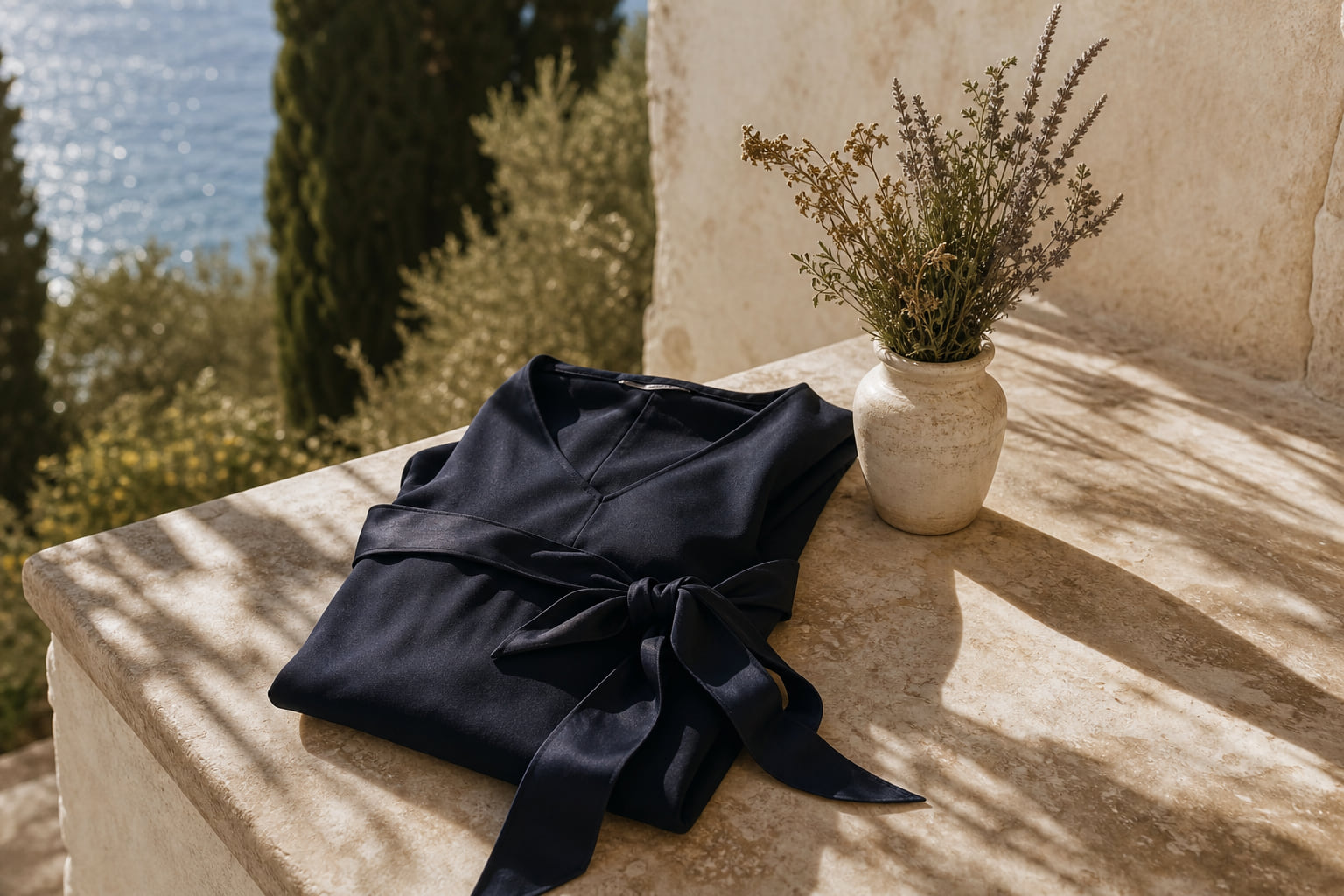
For reference, the Giulia Midi Black Dress is a clean example of this principle in practice. Its single-colour column in a structured woven fabric creates an uninterrupted vertical line, and the midi hem means the eye never stalls at an unflattering horizontal point. The same dress is available in navy blue, burgundy, and several other tones, all of which share the same elongating effect. Dark, saturated solids reinforce the slimming quality of the silhouette further.
If you are weighing length options more broadly, our article on maxi vs midi dresses and which is more flattering covers the trade-offs in detail.
Expert insightA midi hem that grazes the widest part of the calf, rather than the ankle, keeps the leg looking long. If you are petite, aim for the dress to land two to three inches below the knee rather than at mid-calf.

The Waist Tie: Where It Sits Changes Everything
A fabric tie is one of the most effective tools in flattering dressing because it creates a defined waist without the rigidity of a structured belt. But placement is everything. A tie positioned at the true natural waist, roughly two to three inches above the navel, is universally more flattering than one that sits at the hip or at the widest part of the abdomen.
The Olivia Classic Square Neck Waist-Tie Mid-Length Dress demonstrates this well. The tie fastens at the natural waist, the square neckline pulls the eye upward toward the collarbone and face, and the skirt falls away from the body below the tie, creating breathing room across the hips and lower abdomen without adding bulk. This is the dress for a lunch, a gallery visit, or a smart-casual dinner where you want to look considered without overthinking it.
For evenings or occasions that call for something more ornate, the Long Embroidered Dress with Lapel Collar and Tie Waist Detail applies the same logic in a more formal register. The lapel collar is an underused tool in women's dressing: it creates a strong vertical line from shoulder to chest that is genuinely slimming, and it gives the eye something interesting to rest on above the waist. The embroidered fabric adds texture and visual weight to the upper body, which further balances a rounder midsection.
When tying the bow, keep it flat and centred rather than large and voluminous. A large bow sitting directly on the abdomen will add visual bulk precisely where you do not want it.
Expert insightIf the dress tie is very long, wrap it once around the waist before knotting. This keeps the bow compact and positions it higher, which reads as more waist definition rather than a decorative afterthought.

Necklines That Draw the Eye Upward
The neckline is the first thing a viewer's eye finds, and a well-chosen one keeps attention on your face, shoulders, and collarbone rather than the midsection. Three shapes work particularly well for this purpose.
Square necks are among the most flattering shapes available. They widen the visual frame of the shoulders, create a strong horizontal line high on the body, and make the waist appear proportionally narrower by contrast. Our article on why square neck dresses are so flattering explores the geometry behind this in full.
V-necks work by creating a downward-pointing triangle that draws the eye toward the centre of the chest, elongating the neck and upper body. They are particularly effective on fuller busts because they create length rather than width.
Lapel and collar details add structure and formality to the upper body, shifting visual interest to the face and shoulders. The Long Embroidered Dress with Lapel Collar is a strong example of a collar used with genuine intent rather than decoration.
What to avoid: boat necks and wide crew necks that sit flat across the chest can widen the upper body without adding height, which works against the vertical line you are trying to build. Similarly, halter necks and spaghetti straps, while elegant on some figures, narrow the shoulder frame and can make the midsection appear proportionally wider.
For a dress that pairs a flattering neckline with a waist-defining detail, the Kimberly Waist-Slimming Strap Dress is worth examining. The strap detail creates vertical lines from shoulder to waist, and the name is self-explanatory in its intention.

Fabric Weight and Structure: The Invisible Foundation
Fabric is where flattery is either built or undone. The most common mistake is reaching for soft, drapey jersey or lightweight satin because it feels comfortable. These fabrics cling to and follow every contour of the body, which means they reveal rather than shape.
The fabrics that flatter a tummy are those with enough body to skim the surface without clinging:
- Ponte and scuba knit: thick, firm, and smooth. They hold a clean line without restricting movement and do not require lining.
- Woven crepe: slightly textured, which breaks up the light and prevents the fabric from reading as tight even when fitted.
- Jacquard and brocade: the woven pattern adds surface interest that distracts the eye from the underlying silhouette. Heavier and more formal.
- Structured cotton blends: breathable for daywear, hold their shape across a full day of wear.
What to avoid is thin, slippery satin and lightweight jersey, particularly in pale colours or shiny finishes. Both materials will highlight rather than smooth.
The Apricot Ruffled Tie Dress uses ruffle detail strategically: the volume sits at the neckline and hem rather than across the abdomen, and the tie cinches the waist to create definition. The warm apricot tone and surface texture keep the eye moving rather than settling.
For more structured options and a broader view of what is available this season, the Lovau Woman Designer collection covers the full range of silhouettes with this kind of considered construction.
The relationship between fabric weight and body proportion is well-documented in fashion history. Silhouette in fashion has been a central concern of couture since the nineteenth century, and the principle of structured fabric creating perceived shape remains as relevant now as it was in the era of Balenciaga.
Expert insightHold fabric up to a light source before buying. If you can see your hand through it, it will cling. A fabric that blocks the light will skim.

Prints, Colour, and Pattern Placement
Solid colours, particularly mid-to-deep tones, remain the most reliable choice for a clean, elongating silhouette. Navy, forest green, burgundy, and black all absorb light rather than reflecting it, which flattens and smooths the appearance of the body. The Giulia Midi range is available in eight colourways, and the Giulia Midi Green Dress and Giulia Midi Burgundy Dress are particularly good examples of how a saturated solid reads as polished and slim simultaneously.
Prints are not off-limits, but scale and placement matter considerably:
- Small, all-over prints in tonal colourways are generally safe. They add interest without creating visual blocks.
- Vertical stripe or elongated floral prints reinforce the vertical line of a midi silhouette.
- Large, bold prints centred on the midsection will draw the eye directly there. If you love a print, look for a dress where the pattern is concentrated on the bodice, neckline, or hem.
The Polka Dot Midi Dress handles print well: the repeat is small enough that it reads as texture from a distance rather than pattern, and the midi cut does the structural work of elongating the silhouette. The Midi French Dress Flowery follows a similar logic with a delicate floral print that does not cluster at the waist.
For colour guidance this season, the article on best midi dress colours for 2026 is a useful reference.
Harper's Bazaar has consistently noted that monochromatic dressing is one of the most reliable strategies for a streamlined, elongated silhouette, a point that holds true across decades of styling advice.

Occasions and How to Style Each Look
Knowing which dress to reach for in which context removes the guesswork from getting dressed.
Daytime and smart-casual: The Olivia Classic Square Neck Waist-Tie Mid-Length Dress at $97 is the most versatile option here. Pair it with block-heeled sandals and a structured tote. The square neck and midi hem work from a weekday meeting to a weekend lunch without adjustment.
Summer and resort: The Midi French Dress Flowery and Apricot Ruffled Tie Dress both suit warm-weather occasions. The waist tie on the Apricot dress works particularly well with flat espadrilles or low wedges. Browse the full summer dresses collection for more options in this register.
Evening and formal: The Long Embroidered Dress with Lapel Collar and Tie Waist Detail at $125 is the correct choice for a dinner, a gallery opening, or any occasion where you want to look genuinely dressed. The embroidery and collar detail do the work so you do not have to layer accessories. Keep jewellery minimal, a simple gold chain or pearl earrings, and let the dress speak.
Day-to-evening transition: A solid-colour midi like the Giulia range transitions cleanly from day to evening with a change of shoes and the addition of a small evening bag. The day dresses collection covers the full range of options for this kind of versatile dressing.
Regardless of occasion, the principle remains the same: the dress should do the work. Choose the cut and fabric carefully, and the styling takes care of itself.

| Style | Key Flattering Feature | Best Occasion | Fabric to Choose | Avoid |
|---|---|---|---|---|
| Waist-tie midi | Defines waist above abdomen, skirt skims hips | Day, smart-casual, dinner | Woven crepe, structured cotton | Thin jersey, sheer fabrics |
| Empire waist midi | Seam sits above the midsection entirely | Evening, resort, summer | Ponte, silk blend, jacquard | Clingy satin, lightweight chiffon |
| Square neck midi | Draws eye to collarbone, widens shoulder frame | Daywear, lunch, gallery | Structured cotton, scuba knit | Boat neck, wide crew neck |
| Lapel collar dress | Strong vertical line from shoulder to chest | Formal, evening, work | Embroidered woven, jacquard | Soft jersey, unstructured linen |
| Wrap-style midi | Adjustable fit, angled front creates V-line | Versatile, all occasions | Ponte, woven crepe | Thin polyester, shiny satin |
| Printed midi (small print) | Texture distracts from silhouette | Casual, resort, weekend | Cotton blend, structured jersey | Large centred print, pale sheer |
Frequently asked questions
What type of dress is most flattering for a round tummy?
A waist-tie midi dress in a structured fabric is the most consistently flattering choice. The tie creates definition above the widest point of the abdomen, and the midi length draws the eye vertically rather than across the midsection. The Olivia Classic Square Neck Waist-Tie Mid-Length Dress is a strong example of all these principles working together.
Should I avoid wrap dresses if I have a tummy?
No, but fabric choice matters. A wrap dress in a firm woven crepe or ponte knit will skim the body cleanly. A wrap dress in thin jersey or lightweight satin will cling and pull at the waist, which works against you. The angled front line of a wrap creates a natural V-shape that is genuinely elongating when the fabric has enough body to hold its shape.
Are empire waist dresses good for hiding a tummy?
Yes, particularly for women who carry weight primarily in the lower abdomen. The empire seam sits just below the bust, and the skirt falls away from the body from that point, bypassing the midsection entirely. The key is to ensure the fabric below the seam has enough weight to fall straight rather than clinging as it passes over the hips.
What colours and prints work best for a flattering silhouette?
Deep, saturated solids, navy, burgundy, forest green, and black, are the most reliable because they absorb light and create a clean, uninterrupted line. Small all-over prints in tonal colourways also work well. Large prints centred on the abdomen, and pale or shiny fabrics, are the combinations most likely to draw attention to the midsection. See our guide on best midi dress colours for 2026 for a full seasonal breakdown.
Dressing to flatter a tummy is not a compromise, and it does not require a separate wardrobe category. The cuts and details that do this job most effectively, the structured midi, the natural-waist tie, the strong neckline, the firm woven fabric, are precisely the elements that define elegant, timeless dressing. Buy well, buy with intention, and the silhouette takes care of itself. Start with our full edit of flattering midi dresses to find the cut and colour that suits you best.